The number on the front of the box is a piece count, and it is the specification golfers are most confident about and least able to use. Underneath that number is a specific stack of materials, each one added so the ball behaves differently at a different clubhead speed. Here is what each layer is, how thick it actually is, and which part of it you can realistically detect.
What is actually inside a golf ball
Every golf ball is the same three ideas in different proportions. A core that stores and returns energy, a cover that does the gripping and the surviving, and in anything above the cheapest tier, one or more thin casing layers in between.
The core is a moulded rubber sphere and it is most of the ball. A Callaway golf ball patent specifies a core built from a polybutadiene mixture at a diameter between 1.35 and 1.64 inches, with the casing layer and the cover described in thousandths of an inch on top of it.
| Part | What it is made of | Dimension in the patent |
|---|---|---|
| Core | Polybutadiene rubber mixture | 1.35 to 1.64 inches across |
| Casing or mantle | Thermoplastic layer, Shore D 50 to 70 | 0.020 to 0.075 inches thick |
| Cover | Polyurethane or an ionomer resin, Shore D 30 to 60 | 0.015 to 0.044 inches thick |
Read those three rows together and the scale of the thing becomes clear. A conforming ball measures at least 1.680 inches across, so a core at the top of that range leaves roughly two hundredths of an inch per side for everything else. The entire argument about layers takes place inside a skin thinner than a stack of four sheets of paper.
The second thing worth noticing is that the cover is specified softer than the layer beneath it. A polyurethane cover sits at Shore D 30 to 60 in that filing while the casing layer runs 50 to 70. The ball is deliberately built soft on the outside and firmer underneath, which is the arrangement that lets a wedge bite the surface without the whole ball going dead off a driver.
Two, three, four and five pieces
Piece count is simply how many distinct materials sit between the middle of the ball and the air. Each additional one exists to give the designer another speed at which the ball can be made to behave differently.
| Pieces | The build | What the extra layer buys | The cost of it |
|---|---|---|---|
| Two | Core plus cover | Nothing extra. One response at every speed | No way to separate driver spin from wedge spin |
| Three | Core, casing layer, cover | Low driver spin with high wedge spin | More moulding steps, higher price |
| Four | Dual core or a second casing layer, cover | A distinct response at mid iron speeds | Another interface that has to be concentric |
| Five | Three casing layers under the cover | Four separable speed bands | The most manufacturing steps of any ball sold |
Vice publish their range in exactly these terms, which makes it the clearest worked example available. Their ball comparison lists the Vice Tour as a three layer design with a Surlyn cover, the Vice Pro Royal as a three layer design with a cast urethane cover, and the Vice Pro Plus as a four layer design with a cast urethane cover.
That is the whole point in one product line. Layer count and cover material are two separate dials, and a maker can turn either without touching the other. A three piece ball with an ionomer cover and a three piece ball with a urethane cover are not variations on a theme. They are different objects that happen to share a number.
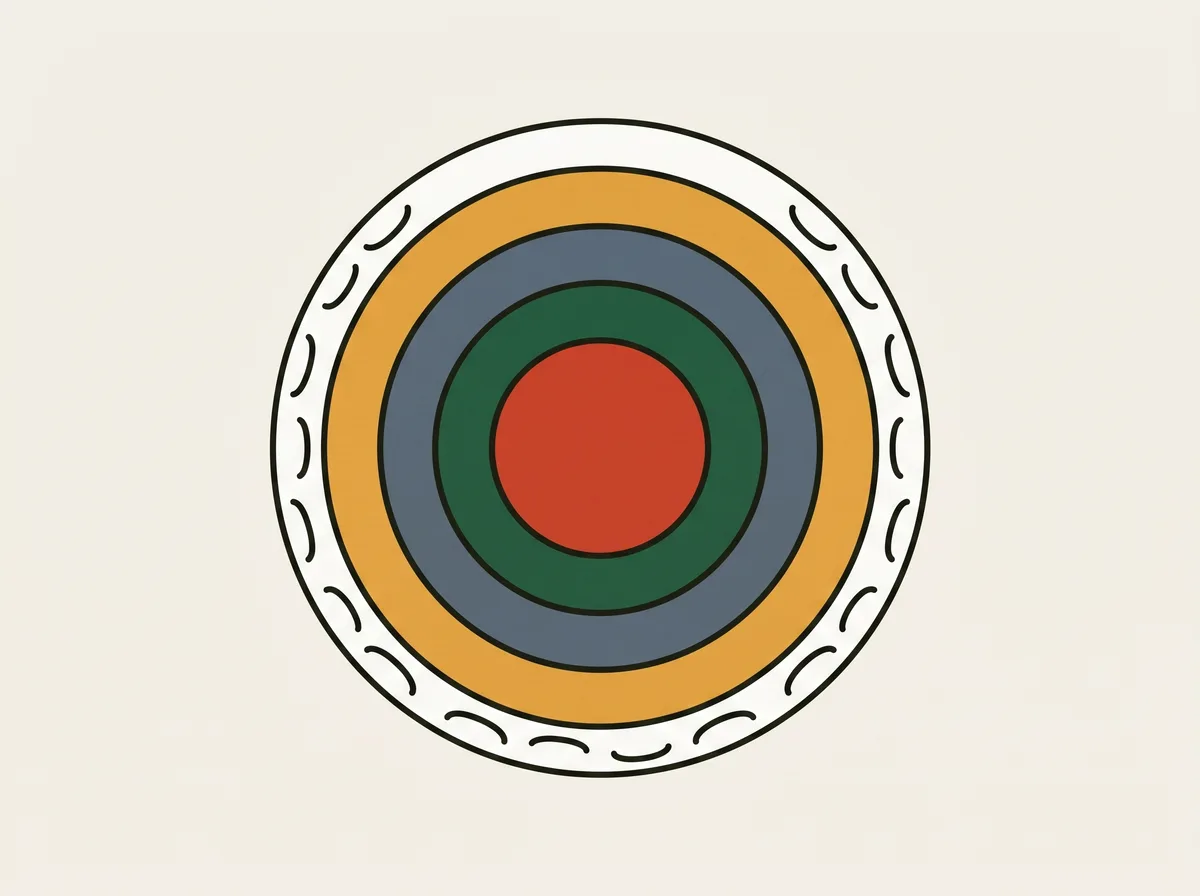
Whether more layers is better is genuinely argued inside the industry and not settled by anything published. More layers give a designer finer control over how spin changes between clubs. They also add moulding steps, and every step is an opportunity for a layer to sit fractionally off centre. Good engineers disagree about where the trade turns, and no maker publishes the tolerance data that would let anyone outside settle it.
Why the cover matters more than the piece count
Spin around the green comes from friction, and friction is the only part of the equation the ball controls. TrackMan's coaching material puts it plainly: spin rate is produced mainly by spin loft, speed, friction and centeredness of impact. Three of those four belong to the swing. The fourth belongs to the cover.
Urethane is a soft, high friction elastomer that deforms into the grooves of a wedge and holds on for the fraction of a second the ball is on the face. Ionomer, which most golfers know by the trade name Surlyn, is a stiffer resin that skids across the same grooves. The patent above lists both as cover options for the same ball design, so this is a choice made per model rather than a tier.
| Urethane cover | Ionomer or Surlyn cover | |
|---|---|---|
| Greenside spin | High. Grips the grooves | Low. Skids across them |
| Durability | Scuffs on a thin strike or a cart path | Very hard to mark |
| Driver spin | Slightly higher | Slightly lower |
| Feel | Softer, quieter off the face | Firmer, clicky off a putter |
| Price tier | Premium | Value and mid |
Cast and thermoplastic urethane are worth separating too, because makers name them and golfers do not know why. A cast cover is formed by a chemical reaction inside the mould and tends to be softer and grippier. A thermoplastic cover is melted and formed and tends to be tougher. The gap between them has narrowed enough that it is now a preference rather than a verdict, but if a maker states which one they used, they are telling you which side of that trade they picked.
Dimples, and what they are actually for
Dimples are not decoration and they are not there for spin. They exist to reduce drag, and the effect is enormous.
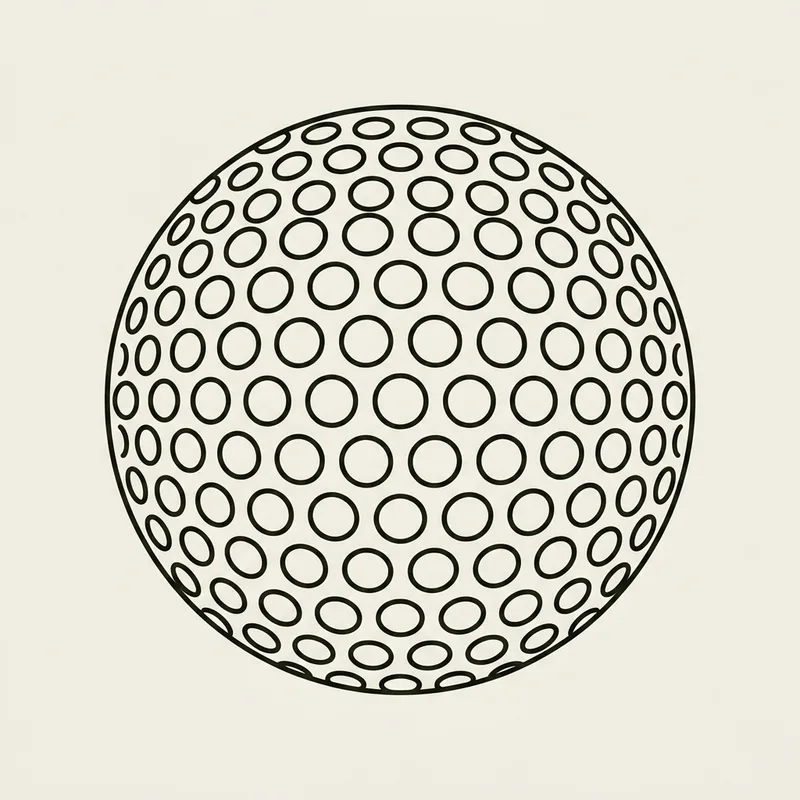
Writing in Scientific American, Tom Veilleux and Vince Simonds explain the mechanism: dimples create a thin turbulent boundary layer of air that clings to the ball's surface, which lets the flow follow the ball further around its back side and shrinks the wake behind it. The result is that a dimpled ball has about half the drag of a smooth one. They also note that ball spin supplies about half of a golf ball's lift and the dimples supply the other half.
Their figures for a typical ball are 300 to 500 dimples at an average depth of about 0.010 inches. That depth is the number worth holding on to, because it explains why dimple design is a serious engineering problem and dimple count is not a serious shopping criterion. Ten thousandths of an inch is the whole working range, and shape, depth, edge angle and coverage all move within it.
So a ball with 388 dimples is not better or worse than one with 318. The count is an output of a pattern, not an input to performance, and no maker publishes the depth profiles that would let anyone compare two patterns honestly. Treat a dimple count as a model identifier rather than a specification.
What the rules constrain, and what they leave open
Golf balls are tightly regulated objects, and reading the regulation is the fastest way to see how much freedom a designer actually has.
Notice what is absent. Nothing caps the number of layers. Nothing specifies a cover material. Nothing regulates how many dimples a ball may carry or how deep they may be. The rules fence in weight, size, materials class, symmetry and how far the thing goes, and inside that fence a designer can build almost anything.
The two clauses worth reading twice are the ones about concentric components and symmetry, because they are the constraints that make manufacturing hard. A five piece ball has four interfaces that all have to sit true, and the ball has to fly the same way whichever way you tee it up. That is the real reason more layers cost more, and it has nothing to do with materials cost.
How much of this matters if you shoot in the nineties
This is the section the ball marketing does not run, and it is the honest one.
Construction differences show up in the gap between two well struck shots. Amateur scoring is decided somewhere else entirely. Shot Scope's tracked database, discussed in their analysis of the golf ball rollback, shows that nearly three quarters of amateur golfers hit their tee shot less than 250 yards, and that a 15 handicapper is twice as likely to hit the green with a 7 iron as with a 5 iron.
Read that second figure again. The same golfer, the same green, and the club in hand halves or doubles the outcome. No cover material moves a number like that.
The full swing picture is the same. TrackMan's published benchmarks put the average male amateur, at a 14.5 handicap, at 3,275 rpm of driver spin against 2,545 rpm on the PGA Tour, and a 10 handicap at 3,192 rpm. The spread between handicap groups is hundreds of rpm wide. The spread between two premium balls hit identically is smaller than the spread between two swings by the same golfer on consecutive holes.
Buying on construction without being sold to
Two things on any ball box are checkable, comparable and worth reading. Cover material, and layer count. Everything else is either a number nobody can interpret or an adjective.
Durability is the quiet part of the calculation. A urethane cover takes a visible scar from a thinned wedge, a rake or a cart path, and the scarred area is precisely the area doing the gripping. The real cost of a premium ball is not the price on the box, it is the price divided by how many holes each one survives. A golfer losing three a round is paying that division far more often than they think, and beginner ball picks is the sensible aisle for them.
Then commit to one model. Every carry number you trust and every chip whose release you can judge was learned against a specific ball, which is why wedge distance control collapses the moment you start playing whatever you found in the trees. Firmness is a separate axis from all of this, and how compression is measured covers why the figures in circulation are less solid than they look.
If you are working out what the ball is doing off the tee rather than around the green, the numbers to watch are launch and spin together rather than either alone, and launch monitor numbers explained sets out which of them a ball can actually move. Off the tee itself, how you set up to a driver changes spin by more than any cover ever will.
Key takeaways
- Every golf ball is a rubber core, a cover, and in anything above the value tier one or more thin casing layers in between.
- A Callaway patent puts the core at 1.35 to 1.64 inches across, the casing layer at 0.020 to 0.075 inches thick and the cover at 0.015 to 0.044 inches. Everything outside the core is a very thin skin.
- Covers are specified softer than the layer beneath them, which is what lets a wedge bite without the ball going dead off a driver.
- Piece count is how many speeds the ball can be made to respond differently at. Two piece balls have one response, five piece balls have four.
- Layer count and cover material are independent. Vice publish a three layer Surlyn ball and a four layer cast urethane ball in the same range.
- Cover material decides greenside spin. TrackMan lists friction as one of the four inputs to spin rate, and the cover is the only one the ball controls.
- Dimples cut drag by about half and supply roughly half of the ball's lift. Typical counts run 300 to 500 at about 0.010 inches deep, and the count itself is not a performance figure.
- The equipment rules cap weight, size, materials class and symmetry. They say nothing about layers, cover material or dimple count.
- Construction differences are smaller than the shot to shot variation of a mid handicap swing, which is why the ball is the last variable to spend on rather than the first.
Common questions
What is the difference between a 2 piece and a 3 piece golf ball?
A two piece ball is a core with a cover bonded straight onto it, so it gives one response at every clubhead speed. A three piece ball adds a thin casing layer between the two, which lets the designer hold driver spin down while allowing the cover to spin heavily on a wedge. That separation is the entire reason the extra layer exists.
Is urethane or Surlyn better?
Neither, until you say what for. Urethane grips the grooves and produces greenside spin, and it scuffs. Surlyn, which is an ionomer resin, resists marking almost indefinitely and skids across the same grooves. A golfer who checks pitch shots wants urethane. A golfer losing several balls a round wants the one that survives.
How many layers should a golf ball have?
Fewer than the marketing implies, unless your strike is repeatable. Three pieces with a urethane cover is the construction that separates driver spin from wedge spin, and it is the point of diminishing returns for most amateurs. Four and five piece balls refine that separation further and the refinement is easily swamped by an inconsistent strike.
What are golf balls made of?
A polybutadiene rubber core, thermoplastic casing layers in multi piece designs, and a cover of either polyurethane or an ionomer resin. The equipment rules require a ball to be constructed entirely from elastomeric materials, with anything else present only in trace amounts.
Does the number of dimples matter?
Not as a shopping criterion. Typical balls carry 300 to 500 dimples at around a hundredth of an inch deep, and performance comes from the shape, depth, edge angle and coverage of the pattern rather than from how many there are. No maker publishes enough of that detail to compare two patterns, so treat the count as a model identifier.
Why do golf balls have dimples at all?
To cut drag. Dimples trip the airflow into a thin turbulent boundary layer that clings to the surface, so the air follows the ball further round its back and leaves a smaller wake behind it. Scientific American puts the result at roughly half the drag of a smooth ball, with the dimples also supplying about half of the ball's lift.
Do more layers mean more distance?
No. Every conforming ball is built against the same overall distance limit, so no construction can be meaningfully longer than another. Extra layers buy control over how spin changes between clubs, which affects how a ball flies and stops rather than how far it goes.
What is a mantle layer in a golf ball?
The thin casing between the core and the cover, also called a casing or boundary layer. In the patent specification above it is a thermoplastic layer 0.020 to 0.075 inches thick at Shore D 50 to 70, firmer than the cover over it. Its job is to respond to a fast driver strike differently from the way the cover responds to a slow wedge strike.
Do the rules limit how a golf ball is built?
Only loosely. A ball must weigh no more than 45.93 grams, measure at least 42.67 millimetres across, be made entirely from elastomeric materials, contain no moving parts or non concentric components, and behave symmetrically. Layer count, cover material and dimple pattern are all unregulated.
Is a cast urethane cover better than thermoplastic urethane?
They are two ways of forming the same class of material. Cast covers are made by a chemical reaction inside the mould and tend to be softer and grippier. Thermoplastic covers are melted and formed and tend to be tougher. The performance gap has narrowed to a preference, but a maker naming one is telling you which side of the trade they chose.
Does golf ball construction matter for a high handicapper?
Less than almost anything else you could change. Shot Scope's data has a 15 handicapper twice as likely to hit the green with a 7 iron than a 5 iron, and TrackMan has driver spin varying by hundreds of rpm between handicap groups. Those gaps dwarf the difference between two well made balls, so construction becomes worth paying for once the strike is consistent enough to reveal it.
On this page
- What is actually inside a golf ball
- Two, three, four and five pieces
- Why the cover matters more than the piece count
- Dimples, and what they are actually for
- What the rules constrain, and what they leave open
- How much of this matters if you shoot in the nineties
- Buying on construction without being sold to

Tom Ashworth
Tom Ashworth is a PGA Professional who has taught golf since 2012, working mainly with beginners and mid-handicappers at club level in Surrey. He reviews the instruction guides on Learn Golf for technical accuracy before they publish.
Most of his teaching is with players in their first three years of the game, and most arrive having been told too much: six swing thoughts collected from videos, half of them contradicting each other. His approach is to check the grip and the alignment before touching the swing, on the basis that most bad ball flight is decided at address.