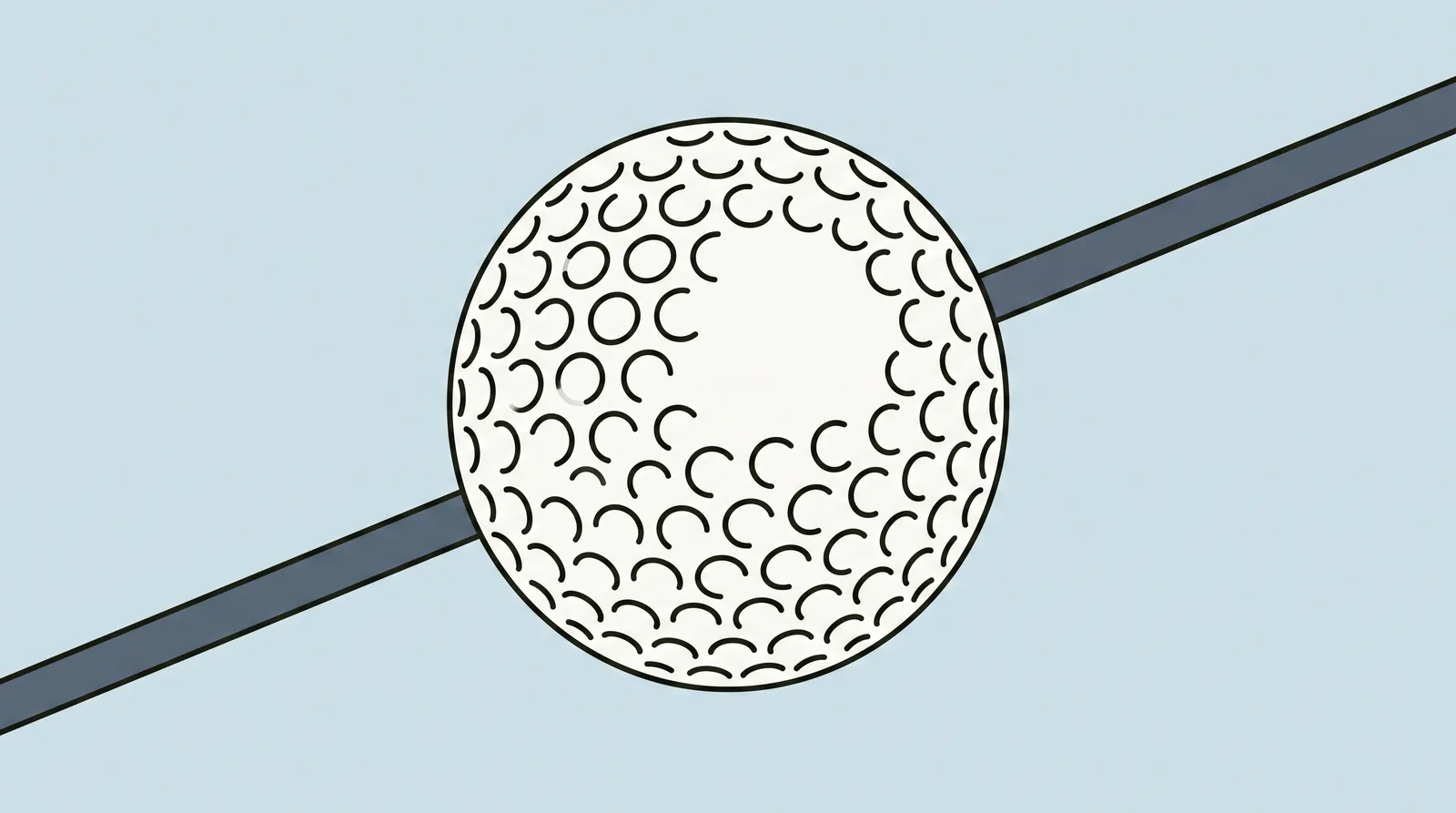
Spin is the parameter golfers talk about most and understand least. It gets blamed for slices, credited for one-hop stops, and quoted in figures nobody can place against anything. Underneath the confusion sits one physical fact that fixes most of it: the ball rotates about a single axis, and everything from a towering drive to a slice is that one rotation doing different work.
Every left and right below assumes a right-handed golfer.
One ball, one axis
Start here, because the rest depends on it. TrackMan defines spin rate as the rate of rotation of the ball about "the imaginary line the golf ball rotates around", measured immediately after it leaves the face. Note the singular. There is one line. The ball does not carry a backspin component and a separate sidespin component stacked on top of each other, because a rigid object cannot rotate about two axes at once.
What varies is the angle of that single line. Spin axis is TrackMan's word for it: the tilt of that imaginary line relative to the horizon. Level axis, no curve. Tilted right, the ball bends right. Tilted left, it bends left. TrackMan treats anything between minus 2 and plus 2 degrees as effectively straight, and puts a spin axis of 10 on a 150 yard shot at roughly 11 yards of curve, rising to about 15 yards on a 200 yard shot.
So "sidespin" is a description of a symptom that has been mistaken for a mechanism. The lift a spinning ball generates acts at right angles to its axis. When the axis is level, all of that force pushes the ball upward and the flight is straight. Tilt the axis and part of the same force pushes sideways instead. Nothing was added. The same rotation was pointed somewhere else.
The direction half of this, the nine shapes and how much a given gap curves the ball, belongs to the ball flight laws. This page is about the other half: how much the ball is spinning in the first place.
What raises spin and what lowers it
Four inputs matter, and one of them dominates.
Spin loft is the three-dimensional angle between the direction the club head is moving and the direction the face is pointing. Subtract attack angle from dynamic loft and you have a close approximation. More spin loft, more spin. TrackMan is direct about the relationship in both directions: raising dynamic loft or steepening the attack angle increases spin, and reducing dynamic loft or shallowing the attack angle decreases it.
Club speed is the second. All else being equal, a faster swing spins the ball more, which is why the same golfer's spin numbers climb on the days the swing feels free.
Loft on the club is the third, and it is the reason the numbers below rise so steeply from driver to wedge. Take a lower lofted club and swing easier and spin comes down without any change to the motion.
Strike height on the face is the fourth and the most overlooked. TrackMan's guidance on changing spin rate states that impact low on the clubface can increase spin rate by as much as 1,000 rpm, and that striking higher on the face reduces it. On a driver that is a larger swing in the number than most technique changes produce.
| Change this | Spin goes | Why |
|---|---|---|
| More dynamic loft at impact | Up | Widens spin loft |
| Steeper attack angle | Up | Widens spin loft |
| More club speed | Up | Same geometry, more energy |
| More loft on the club | Up | Widens spin loft before you swing |
| Strike low on the face | Up | Up to 1,000 rpm on TrackMan's figure |
| Strike high on the face | Down | Gear effect works the other way |
| Grass or water between face and ball | Down | Friction is lost |
Driver spin: the amateur problem
Here is where the published data earns its keep.
| Driver spin rate | Figure |
|---|---|
| PGA Tour average | 2,545 rpm |
| LPGA Tour average | 2,506 rpm |
| Male amateur, scratch or better | 2,896 rpm |
| Male amateur, 5 handicap | 2,987 rpm |
| Male amateur, 10 handicap | 3,192 rpm |
| Male amateur, average 14.5 handicap | 3,275 rpm |
| Female amateur, scratch or better | 2,831 rpm |
| Female amateur, 10 handicap | 3,207 rpm |
| Female amateur, 15 handicap | 3,287 rpm |
Those are TrackMan's published spin rate benchmarks, tour figures from tournament measurement and amateur figures from their combine data. Read down the male column and the pattern is a straight line: spin rises as handicap rises, and the average club golfer is spinning a driver several hundred rpm more than a scratch player at a similar speed.
The reason is spin loft rather than effort. TrackMan's spin loft benchmarks put the PGA Tour driver average at 14.7 degrees and the male scratch amateur at 14.8, almost identical. The 10 handicap sits at 17.3 and the average male amateur at 18.3. Three and a half extra degrees of separation between path and face is the whole story, and it usually comes from hitting down on a teed ball and adding loft to compensate.
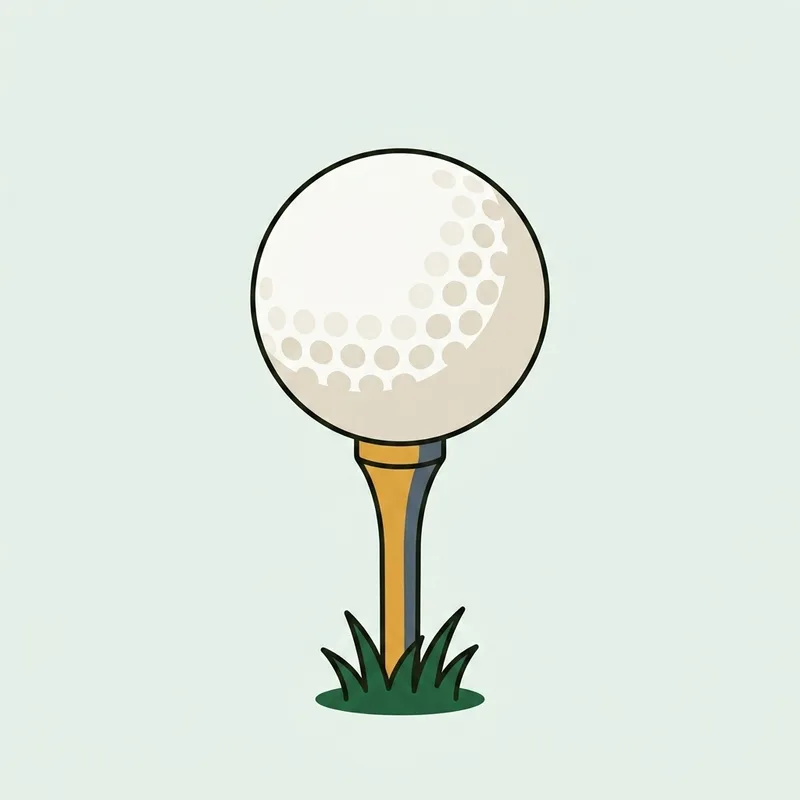
That makes the driver fix mostly a setup and strike job rather than a swing rebuild. Ball forward, tee high enough that the equator sits above the crown, and contact above the centre of the face. Each of those shallows the attack angle or moves the strike higher, and both reduce spin loft. The mechanics of that delivery are covered in hitting a driver, and if the number will not come down after the setup work, the club itself is a candidate, which is what driver loft is for.
Iron spin, and why more is fine
Irons run at multiples of the driver number and that is the design working. TrackMan's tour figures put a PGA Tour 6 iron at 6,204 rpm and an LPGA Tour 6 iron at 5,904 rpm. Their optimised model output for a 6 iron swung at 80 mph is 5,956 rpm.
High iron spin is what makes a ball stop on a green. The failure mode with irons is almost never too much spin, it is too little, and it usually shows up as a shot that lands hot and releases through the back. That comes from thin contact, a flyer lie, or worn grooves rather than from anything the golfer is doing on purpose.
Wedge spin, and the three things that kill it
Wedges spin most and lose it most easily. TrackMan's optimised figure for a pitching wedge at 72 mph is 8,408 rpm, which is a model output for that speed rather than a measured amateur average. TrackMan does not publish an amateur wedge benchmark by handicap, so treat the wedge number as a direction to move in rather than a target to hit.
Spin on a wedge shot is a friction problem, and friction has three enemies.
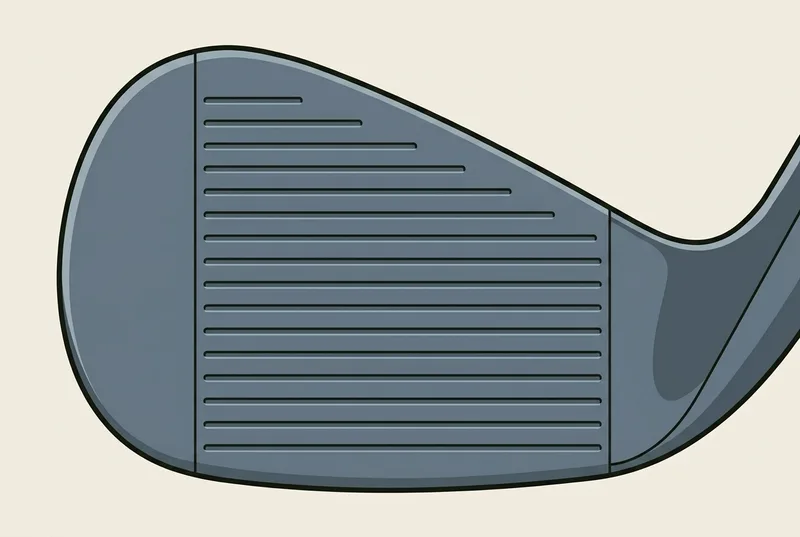
Grass is the first. Blades trapped between the face and the ball at impact stop the two surfaces gripping each other, which is why a ball sitting in light rough comes out with less spin and runs further than the same shot from a fairway. This is the flyer, and it is a lie problem rather than a technique problem.
Water is the second, and it does the same job faster. A wet face, a wet ball or morning dew all cut friction, which is why early-round wedge shots release more than the same swing at two in the afternoon.
Worn grooves are the third and the slowest to notice. Grooves channel grass and moisture away from the contact patch. As the edges round off over a few seasons they do it less well, and the spin loss arrives gradually enough that most golfers blame their swing. TrackMan's Spin Index measures exactly this: your actual spin against the spin your delivery should have produced. They attribute readings below 100% to poor contact, moisture or grass interference, and readings above 100% to high friction, clean grooves or gear effect.

The practical consequence is that most wedge spin is bought with a towel rather than with technique. Clean the face before every wedge shot, not before every third one. Which wedges to carry and how they should be gapped is a separate question covered in wedge loft, and the model options are in wedge picks.
Too little spin is also a fault
The distance-chasing version of golf advice treats spin as pure cost. It is not.
TrackMan lists two consequences of a spin rate that is too low. The ball may roll too much on the green, and the flight can nose-dive, dropping abruptly at a shorter distance than it should. The second one is the reason a driver with the spin stripped out of it does not carry further. Spin generates the lift that holds the ball up, and a ball with too little of it runs out of flight early and lands steeply on nothing.
That is why the tour driver figure sits around 2,500 rpm rather than at zero. There is a window for every club and every speed, and the slower the swing the more spin it needs to stay airborne. A golfer at 85 mph optimising toward a tour number is optimising toward a flight their speed cannot support.
Reading your own numbers
Three habits make a spin reading useful rather than decorative.
- Read spin next to launch angle, never on its own. High launch with high spin is a ballooning flight. Low launch with high spin is the worst combination there is. Low launch with low spin is a shot that dives. The pair tells you something the single number cannot.
- Look at the spread across ten balls before you look at the average. Ten drives between 2,400 and 4,200 rpm is a strike problem, and the average of that set is a fiction.
- Note the ball and the surface. Range balls spin differently from a premium ball, and a mat gives the club nothing to dig into. Compare a session to your own previous sessions on the same setup rather than to a published figure.
Where every other number on the screen fits alongside this one is set out in launch monitor numbers. The strike quality that most of these fixes depend on is covered in impact position, and how the ball itself changes the picture is in golf ball compression.
Key takeaways
- A golf ball rotates about one axis. Sidespin is not a separate spin, it is the tilt of that single axis.
- Total spin is controlled by spin loft. Axis tilt is controlled by the gap between face angle and club path. Two dials, two causes.
- TrackMan puts the PGA Tour driver average at 2,545 rpm and the average 14.5 handicap male amateur at 3,275 rpm.
- The amateur driver spin gap is a spin loft gap: 18.3 degrees against 14.7 on the PGA Tour.
- Strike height matters more than most technique changes. TrackMan puts a low face strike at up to 1,000 rpm of extra spin.
- Iron spin runs at multiples of driver spin by design, and the usual iron fault is too little rather than too much.
- Wedge spin is friction. Grass, water and worn grooves are what take it away.
- Too little spin makes the ball nose-dive and roll out. There is a window, not a minimum.
- Read spin against launch angle and against the spread of your own ten balls, not against a tour figure.
Common questions
What is a good spin rate for a driver?
There is no single figure, because the right number depends on club speed and launch angle together. As context, TrackMan puts the PGA Tour average at 2,545 rpm, the LPGA Tour at 2,506 rpm and the average 14.5 handicap male amateur at 3,275 rpm. A slower swing needs more spin than a faster one to stay in the air, so a golfer at 85 mph chasing a tour number is chasing the wrong target.
Is sidespin a real thing in golf?
No. A golf ball rotates about a single axis, and TrackMan's own definition describes one imaginary line that the ball rotates around. What golfers call sidespin is that line being tilted rather than level. The distinction matters because tilting the axis back to level and reducing the total amount of spin are two different jobs with two different causes.
How do I lower my driver spin rate?
Shallow the attack angle and move the strike higher on the face, because both narrow spin loft. In practice that means the ball further forward in the stance, the tee high enough that the ball's equator sits above the crown of the driver, and contact above the centre of the face. If the number stays high after those changes, the loft or the head design is the next place to look.
Why does my driver balloon?
Almost always high spin combined with high launch, and usually caused by hitting down on the ball with extra dynamic loft to get it airborne. The two faults reinforce each other. A steep attack angle widens spin loft, and the added loft that the golfer uses to compensate widens it again.
What is spin loft?
TrackMan defines it as the three-dimensional angle between the direction the club head is moving and the direction the face is pointing at impact. Subtracting attack angle from dynamic loft gives a close approximation. It is the main lever on spin: more spin loft produces more spin and a lower smash factor.
Why is my iron spin so low?
Usually the lie or the grooves rather than the swing. Grass caught between the face and the ball stops the two surfaces gripping, which is what a flyer is. Water does the same. Worn grooves lose the ability to clear either away, and the loss happens slowly enough that most golfers never connect it to the club.
Do I need more spin to stop the ball on the green?
Spin helps, but landing angle does most of the work on a normal green. A high shot coming down steeply stops without any special spin, and a low shot with enormous spin will still release if it arrives flat. Chasing spin as a way to hold greens is usually the wrong project for a club golfer.
Does the golf ball change spin rate?
Yes, particularly on short shots. Cover material and construction change how much friction the ball generates against the face, which is why a premium urethane ball checks on a wedge shot where a firm two-piece ball runs on. The difference is much smaller with a driver, where spin is set mainly by the delivery.
Can spin rate be too low?
Yes. TrackMan lists two consequences of spin that is too low: the ball rolls too much on the green, and the flight can nose-dive, dropping abruptly at a shorter distance than expected. Spin is what generates the lift holding the ball up, so stripping it out costs carry rather than adding it.
Does hitting the ball low on the face increase spin?
It does. TrackMan states that impact low on the clubface can increase spin rate by as much as 1,000 rpm, and that striking higher on the face reduces it. That is gear effect, and on a driver it is a larger change than most swing adjustments produce, which is why strike height is worth checking before anything else.
How accurate is a launch monitor's spin number?
It depends on the device. Some units measure the ball's rotation directly, often with a marked ball or a dot on it. Others calculate spin from ball speed and launch angle using a model, which means the number is only as good as the assumption behind it and cannot reveal a strike fault. Check which method your unit uses before you act on the reading.

Tom Ashworth
Tom Ashworth is a PGA Professional who has taught golf since 2012, working mainly with beginners and mid-handicappers at club level in Surrey. He reviews the instruction guides on Learn Golf for technical accuracy before they publish.
Most of his teaching is with players in their first three years of the game, and most arrive having been told too much: six swing thoughts collected from videos, half of them contradicting each other. His approach is to check the grip and the alignment before touching the swing, on the basis that most bad ball flight is decided at address.