Weight shift is the piece of swing advice most likely to make a golfer worse. Told to move their weight forward, most people slide their hips toward the target, which moves the body without moving anything useful and adds a new fault on top of the old one. What good players are doing is different, faster, and mostly happens before the club has finished going back.
Left and right assume a right-handed golfer throughout, and the lead side is the one closer to the target. The whole motion in order sits in golf swing basics.
Weight and pressure are not the same measurement
This distinction is the reason so much weight shift instruction fails, and it takes thirty seconds to understand.
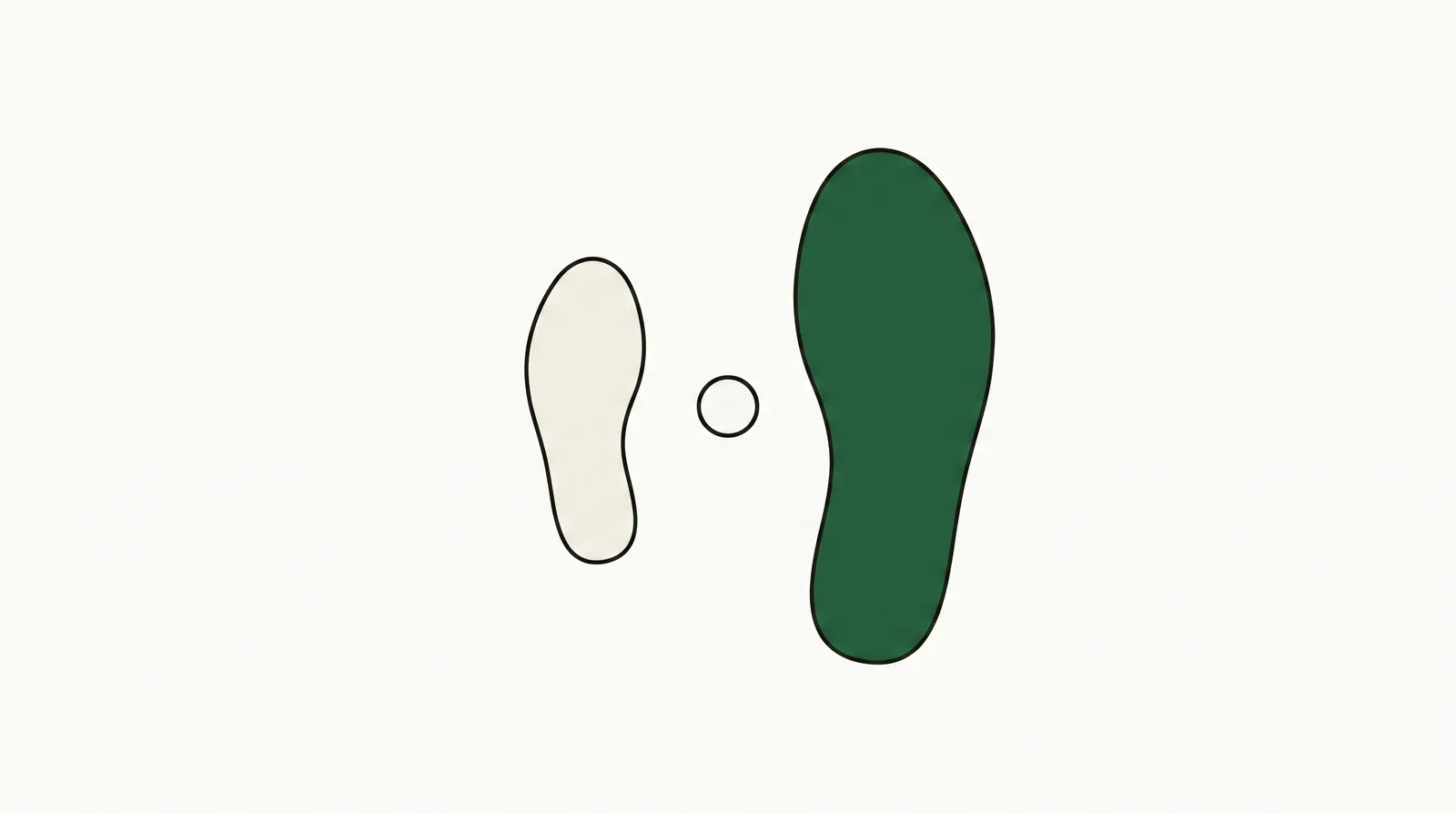
Weight refers to where the mass of your body is, which barely moves. Pressure refers to how hard each foot is pushing into the ground, which changes enormously and very fast. A force plate measures pressure. Your eyes, watching a video, are guessing at weight.
The two can point in opposite directions at the same moment. Pressure can be surging into the lead foot while the upper body is still behind the ball, and that combination is exactly what a good downswing looks like. A golfer who tries to move their weight forward instead usually drags their whole body toward the target, which is a different fault with its own name.
What actually moves, and when
The Titleist Performance Institute puts a usefully concrete number on the outcome. In their description of hanging back they note that a player should be approximately four inches closer to the target at impact compared to their address position. Four inches. Not a foot, not a lunge.
| Point in the swing | Where the pressure is | What it should feel like |
|---|---|---|
| Address | Roughly even, maybe slightly favouring the lead side with short irons | Balanced, weight in the middle of the feet |
| Halfway back | Building into the trail foot, into the heel and instep | Loaded, like the inside of the trail leg is under tension |
| Top of the backswing | Already beginning to move toward the lead foot | Nothing, if it is happening correctly |
| Transition | Moving hard toward the lead side, with a slight downward push | A sense of the ground pushing back |
| Impact | Mostly on the lead foot | Braced, like standing on one leg |
| Finish | Effectively all on the lead foot, trail heel high | Balanced enough to hold for three seconds |
The row that surprises people is the third one. The move toward the lead side starts at or before the top of the backswing, which means the club and the lower body are travelling in opposite directions for a moment. That overlap is not a fault, it is the whole point, and it is covered from the club's side in the golf downswing.
The ground pushes back
Modern force plate research has changed how this is taught, and the useful part is easy to summarise.
TPI's work on ground reaction forces describes players squatting before they jump: a brief unweighting during the transition, followed by an aggressive vertical push into the ground. That vertical force contributes to rotational speed and therefore to club head speed. Their comparison with the short game is instructive, because elite chippers do the opposite and stand up slightly through the strike, which is why a full swing pattern imported into a chip shot causes so much damage.
Timing matters as much as amount. TPI's article on vertical force notes that one of the hallmarks of elite ball strikers is that they tend to get to their lead side much earlier than higher handicappers, and that force applied too late is difficult to translate into club speed at all.
The visual version of this is a small dip at the change of direction. The hips settle an inch or two lower while the club is still finishing its backswing, and then the legs extend again through the strike. It is the same sequence you would use to jump, compressed into about a quarter of a second, and it is far smaller than the word squat suggests.
Fault one: hanging back
This is the most common weight shift fault in amateur golf and the easiest to spot on video.
TPI defines hanging back as a lack of weight shift towards the target on the downswing, where the player is usually still on their back foot at impact. They list three causes: mobility or stability restrictions in the lead hip and ankle, a reverse pivot where the weight went the wrong way in the backswing to begin with, and insufficient lower body power so that the upper body ends up running the swing.
The cost shows up in the strike. With the body still behind the ball, the lowest point of the swing arc sits behind the ball too. TrackMan describes low point as the point on the swing arc where the club head is at its lowest, and its relationship to attack angle is direct: a low point behind the ball means the club is already climbing when it reaches the ball. That produces the classic pair of misses, a fat shot when the club catches the ground first and a thin one when it does not, which is why fat shots and topped shots so often arrive in the same round from the same fault.
Fault two: sliding
The overcorrection is worse than the original problem, because it looks like progress.
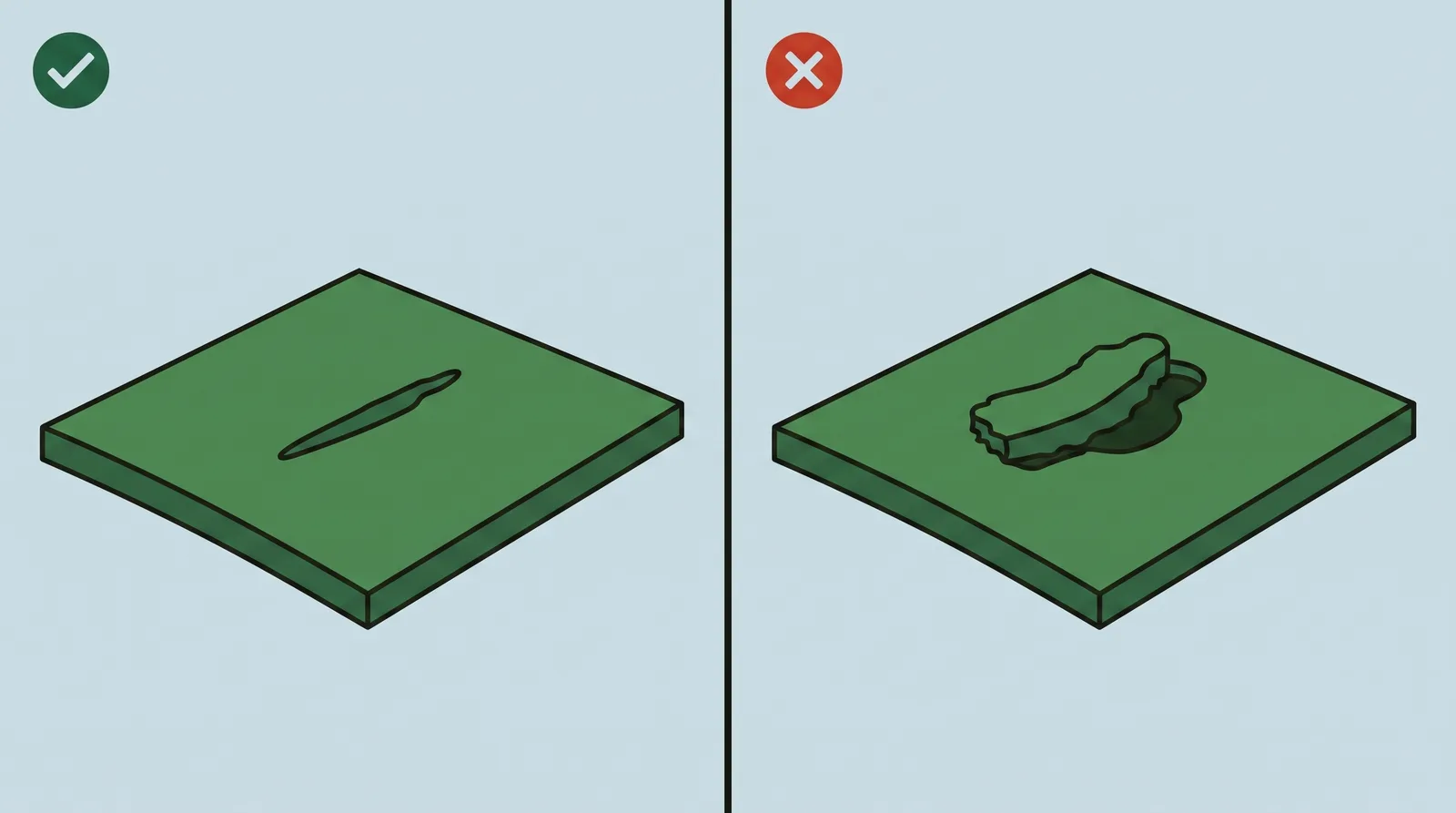
TPI defines a slide as any excessive lower body lateral movement towards the target during the downswing, and points out that the upper body needs a stable lower body to accelerate against. The physical causes they list are limited hip internal rotation, poor separation between trunk and pelvis, and weak glute stabilisation, particularly the glute medius.
A slider has genuinely moved their pressure forward and gained nothing, because the lower body kept travelling instead of stopping and rotating. The club gets stuck behind the body, and the usual rescue is a flip of the hands at the last moment.
The reverse pivot, which is the one that comes first
Both of the faults above are sometimes just the second half of a backswing that went wrong.
In a reverse pivot the weight moves toward the lead foot during the backswing instead of into the trail foot. From there the only way to make the downswing feel powerful is to fall backward, so the golfer hangs back automatically. Fixing the downswing without fixing this is wasted effort, because the pressure is in the wrong place before the downswing begins.
The quick self-test needs no equipment. Take the club to the top and hold it, then have someone push gently on your trail shoulder. Loaded into the trail side, you will barely move. Reverse pivoted, you will stumble immediately. It is covered from the other end in the golf backswing.
Three drills, in the order to do them
Work through these in sequence. The first two teach the movement, the third tests whether it survives a real swing.
How much weight on the lead foot at impact
This is where the honest answer is a range rather than a number, and where the teaching genuinely disagrees.
Force plate readings during the downswing routinely exceed a golfer's own body weight, because pressure is a force rather than a proportion, so any single percentage quoted for impact deserves suspicion unless the measurement conditions come with it. What is not disputed is the direction and the timing: most of the load is on the lead foot by impact, and it arrived there earlier than most amateurs believe.
What good weight shift will and will not do
It will change your strike, because it moves the low point of the swing forward, and it will change the shape of your divots. It is also a genuine source of club head speed, which is one of the reasons losing distance so often traces back to a shift that has quietly stopped happening as a golfer gets older or stiffer.
It will not straighten a curve on its own. Curve comes from the relationship between face and path, so a golfer who fixes their pressure shift and still slices has a face problem that was always there. What changes is the quality of the contact, which is visible in the last frame of the swing described in the golf follow through.
How long before it changes
If the cause is habit, three to four weeks of the drills above at three sessions a week is enough to feel different, and a couple of months before it holds up on a course. If the cause is a physical restriction, and lead hip internal rotation is the usual culprit, the timeline is longer and technique drills alone will not get there.
The test is simple. Do the drills for two weeks. If the movement is available in the drill but disappears in a full swing, it is a habit and it will come. If you cannot produce it even in the drill, it is a mobility problem and it needs a screen from someone qualified.
Key takeaways
- Weight is where your mass is. Pressure is how hard each foot pushes into the ground. Only the second one moves much.
- The move toward the lead side starts at or before the top of the backswing, not on the way down.
- A golfer should be roughly four inches closer to the target at impact than at address, not a foot.
- The transition involves a small dip and then a push up against the ground, like the start of a jump.
- Hanging back leaves the low point behind the ball, which produces fat and thin shots from the same swing.
- Sliding is the overcorrection, and it costs as much as the fault it replaced.
- A reverse pivot in the backswing makes a good downswing shift almost impossible, so check that first.
- Weight shift improves your strike and your speed. It does not straighten curve on its own.
Common questions
What is the difference between weight shift and pressure shift?
Weight describes where the mass of your body sits, and it moves surprisingly little. Pressure describes how hard each foot pushes into the ground, and it changes fast and dramatically. Force plates measure pressure, video only suggests weight, which is why the two terms get confused.
When should my weight start moving forward?
At or slightly before the top of the backswing. For a brief moment the lower body is moving toward the target while the club is still going back, and that overlap is what separates a good transition from a late one. Waiting until the club starts down is too late.
How much weight should be on my front foot at impact?
Most of it, though any specific percentage should be treated carefully because force readings during a downswing can exceed body weight. What is agreed is the direction and the timing rather than an exact figure, so judge it by whether you can hold a balanced finish.
What does hanging back mean in golf?
It means failing to move toward the target during the downswing, so you are still on the back foot at impact. It moves the lowest point of the swing arc behind the ball, which produces heavy and thin strikes and costs club head speed.
Why do I slide instead of rotating?
Usually because the lead hip cannot rotate internally far enough, so the pelvis travels sideways instead. Weak glute stabilisation contributes too. It is often the result of being told to get the weight forward and interpreting that as a sideways push.
Is a reverse pivot the same as hanging back?
They are linked but not identical. A reverse pivot happens in the backswing, with the weight moving toward the lead foot instead of into the trail foot. Hanging back happens in the downswing. A reverse pivot almost guarantees hanging back, because there is nothing loaded to push off.
Should I feel my weight on the heels or the toes?
Neither extreme. In the backswing the pressure should load into the trail heel and instep rather than the outside of the foot, and through impact it should feel braced through the middle of the lead foot. Falling toward the toes usually means posture was lost.
Can weight shift problems be caused by my body rather than my technique?
Frequently. Limited internal rotation in the lead hip, restricted ankle mobility, and weak glutes all force compensations that look exactly like technique faults. If a drill produces the movement but a full swing never does, that points at habit. If the drill itself is impossible, that points at the body.
Does weight shift matter as much with a driver?
Yes, and the pattern is slightly different. The driver swing wants the upper body staying further behind the ball at impact while the pressure has still moved forward, which is what produces a shallower angle of attack. The pressure shift itself is not optional either way.
Will fixing my weight shift add distance?
It can add speed, because pushing against the ground is one of the sources of it, but nobody can promise you a number. The more reliable gain is a better strike, since moving the low point forward puts the middle of the face on the ball more often.
On this page
- Weight and pressure are not the same measurement
- What actually moves, and when
- The ground pushes back
- Fault one: hanging back
- Fault two: sliding
- The reverse pivot, which is the one that comes first
- Three drills, in the order to do them
- How much weight on the lead foot at impact
- What good weight shift will and will not do
- How long before it changes

Tom Ashworth
Tom Ashworth is a PGA Professional who has taught golf since 2012, working mainly with beginners and mid-handicappers at club level in Surrey. He reviews the instruction guides on Learn Golf for technical accuracy before they publish.
Most of his teaching is with players in their first three years of the game, and most arrive having been told too much: six swing thoughts collected from videos, half of them contradicting each other. His approach is to check the grip and the alignment before touching the swing, on the basis that most bad ball flight is decided at address.