Your coach says you are swaying. You feel like you are turning. Both of you are describing the same motion and only one of you can see it, which is the whole problem with this fault. A sway is lateral movement substituting for rotation, and it quietly causes most of the strike inconsistency in amateur golf. This guide covers how to tell the difference and what actually fixes it.
Turning versus sliding
In a good backswing, the hips and torso rotate around a centre that stays roughly where it started. The trail hip turns behind you. The head stays within a few inches of its address position. Weight moves into the trail side, but the body has not travelled.
In a sway, the whole lower body slides laterally away from the target. The trail hip moves out beyond where it started, the trail leg straightens, and the head follows the body sideways.
The confusing part is that both produce a feeling of weight on the trail side, which is why golfers who sway will tell you honestly that they are turning.
| What to look at | Turning | Swaying |
|---|---|---|
| Trail hip at the top | Has moved back, behind you | Has moved sideways, outside the foot |
| Trail knee | Retains some flex | Straightened and locked |
| Head | Within a few inches of address | Travelled visibly toward the trail side |
| Weight | Into the trail heel and instep | Onto the outside of the trail foot |
| Feeling | Coiled, like a spring under tension | Loose, and easy |
That bottom row is the tell that costs golfers the most. A proper turn feels like resistance. A sway feels comfortable, because sliding sideways is the path of least effort and creates no tension to store.
Why the reverse pivot follows
Swaying and the reverse pivot are usually the same golfer, one shot apart.
Slide away from the target in the backswing and the body has to get back somehow. Most golfers do it by falling toward the target on the downswing, or by leaning back to counterbalance at the top and then hanging back through impact. The second version is the reverse pivot: weight on the lead foot at the top of the backswing and on the trail foot at impact, which is exactly backwards.
The result is a low point behind the ball, and that produces fat shots and thin shots depending on how much you rescue it. If that pattern sounds familiar, inconsistent ball striking covers what the strike is telling you.
Diagnose it in one video
You cannot feel this fault. You have to see it, and it takes one phone video from face-on, not down the line.
- Set your phone at hip height, directly in front of you, facing your chest.
- Hit three shots with a 7 iron at normal speed.
- Play the video back and pause at the top of the backswing.
- Compare your trail hip against where it was at address. If it has moved outside the line of your trail foot, you are swaying.
- Check the trail knee at the same frame. If it has straightened, that confirms it.
Most phone camera apps let you scrub frame by frame, and the top of the backswing is the only frame you need. Do this before and after any drill, because a sway feels identical whether you have fixed it or not.
The fix: give the trail leg something to work against
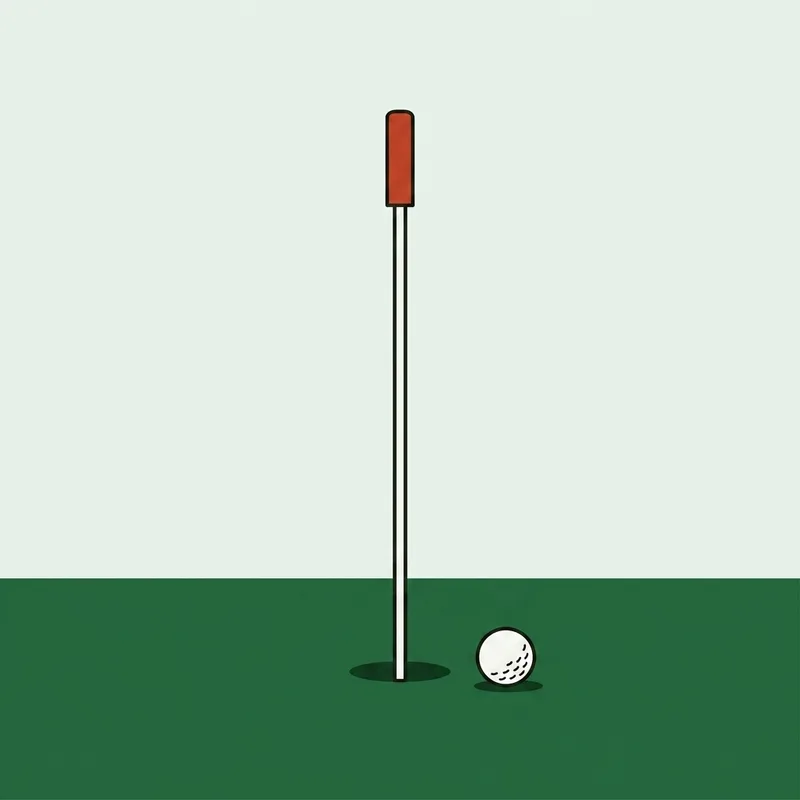
Every effective drill here does the same thing. It gives your trail hip a physical boundary so rotation becomes the only available option.
The causes worth checking first
Two of them are physical rather than technical, and no amount of drilling fixes a body that cannot make the movement.
Hip mobility. Turning the trail hip behind you requires internal rotation in that hip joint. If it is restricted, the body will substitute a slide because it has no alternative. This is extremely common in golfers who sit at a desk. A physiotherapist or a golf-specific screen will identify it in minutes.
Stance width. A stance that is too wide invites a slide, because the base is broad enough to travel across without losing balance. Shoulder width for a mid iron is the reference, and plenty of golfers who sway are standing significantly wider than that. Our golf stance guide has the widths by club.
The third cause is simply an idea. Golfers who have been told to "get behind the ball" or to "load the right side" often produce a slide, because both cues describe a position without specifying how to reach it.
Fixing the backswing usually exposes what happens next, since a properly coiled position needs a downswing that starts from the ground rather than from the shoulders. That sequence is in the golf downswing, and the checkpoints on the way up are in the golf backswing.
Key takeaways
- A sway is lateral movement replacing rotation. Turning and sliding feel almost the same from inside.
- Check it on a face-on video at the top of the backswing. Trail hip outside the trail foot means a sway.
- A straightened trail knee at the top confirms it. A proper turn keeps some flex.
- Rotation stores energy against a braced trail leg. Sliding stores none, which is why swayers lose distance.
- The reverse pivot usually follows a sway, and produces a low point behind the ball.
- The alignment stick just outside the trail hip is the fastest fix, because the feedback is immediate.
- Check hip mobility and stance width before assuming it is purely technical.
Common questions
What is swaying in the golf swing?
Moving your body laterally away from the target during the backswing instead of rotating around a stable centre. The trail hip slides outside the trail foot, the trail knee straightens, and the head travels sideways with the body.
How do I know if I am swaying or turning?
Film yourself face-on and pause at the top of the backswing. If your trail hip has moved outside the line of your trail foot, you are swaying. You cannot feel the difference, because both produce a sensation of weight on the trail side, which is why this fault survives so long.
Why does swaying cost me distance?
Because rotation against a braced trail leg creates a stretch between your hips and shoulders that you release into the ball, and sliding creates none. When your hips and shoulders travel together nothing stores, so there is nothing to unwind. Swayers usually feel like they are swinging hard for very little return.
What is a reverse pivot?
Weight ending up on your lead foot at the top of the backswing and on your trail foot at impact, which is the reverse of what should happen. It commonly follows a sway, because a body that has slid away from the target leans back to counterbalance and then hangs back through impact.
Does swaying cause fat shots?
Yes, frequently. Lateral movement shifts the low point of your swing arc, and if you do not return exactly the same distance you slid, the club bottoms out in the wrong place. Sliding away and failing to get back produces fat shots. Over-correcting produces thin ones.
How do I stop swaying off the ball?
Give your trail hip something to work against. Push an alignment stick into the ground just outside your trail hip and make backswings without touching it. That single piece of feedback fixes more sways than any verbal cue, because you cannot feel the fault but you can feel the stick.
Can hip mobility cause swaying?
Yes, and it is commonly the real cause. Turning the trail hip behind you needs internal rotation in that joint, and if it is restricted your body substitutes a lateral slide because it has no other option. If drills produce no change over several weeks, get your hip mobility screened.
Is a little lateral movement acceptable?
Yes. Some lateral motion is normal and functional, especially with a driver, and plenty of good players show a small amount. The fault is when sliding replaces turning rather than accompanies it. The working threshold is the trail hip staying inside the line of the trail foot.
Should I keep my head perfectly still to stop swaying?
No. A rigidly still head restricts the shoulder turn and often produces a reverse pivot instead, which is a worse fault. The head should stay within a few inches of where it started, not be frozen in place. Rotate around it rather than clamping it.
Does a wider stance help or cause swaying?
It usually causes it. A wide base gives you room to travel sideways without losing balance, which makes sliding feel stable and available. Shoulder width for a mid iron is the reference point, and a lot of golfers who sway are standing noticeably wider than that.
Tom Ashworth
Tom Ashworth is a PGA Professional who has taught golf since 2012, working mainly with beginners and mid-handicappers at club level in Surrey. He reviews the instruction guides on Learn Golf for technical accuracy before they publish.
Most of his teaching is with players in their first three years of the game, and most arrive having been told too much: six swing thoughts collected from videos, half of them contradicting each other. His approach is to check the grip and the alignment before touching the swing, on the basis that most bad ball flight is decided at address.