The backswing is the part of the swing golfers spend the most time on and understand the least. It cannot produce distance and it cannot hit the ball, so on its own it does nothing. What it does is decide what the downswing is allowed to do, which is why a backswing fault always shows up somewhere else. This guide walks the motion from address to the top and names what breaks at each stage.
Left and right assume a right-handed golfer throughout. The whole motion is covered at overview depth in golf swing basics; this page is the detail underneath it.
What the backswing is for
There are three jobs and none of them is power. The backswing has to move the club away without moving your body out of position, put the club somewhere it can return from, and load the trail side enough that the downswing has something to unwind.
That last one is where the confusion starts. Loading is not the same as reaching. A golfer who turns 80 degrees and stays centred is loaded; a golfer who slides six inches to get to 100 degrees has simply moved, and now has to move back before anything useful can happen.
The takeaway: the first foot of the swing
The first foot of movement sets up everything after it, which is why it gets a name of its own. In a one-piece takeaway, the club head, hands, arms, shoulders and chest all move away from the ball together as a single unit, with no independent hand action.
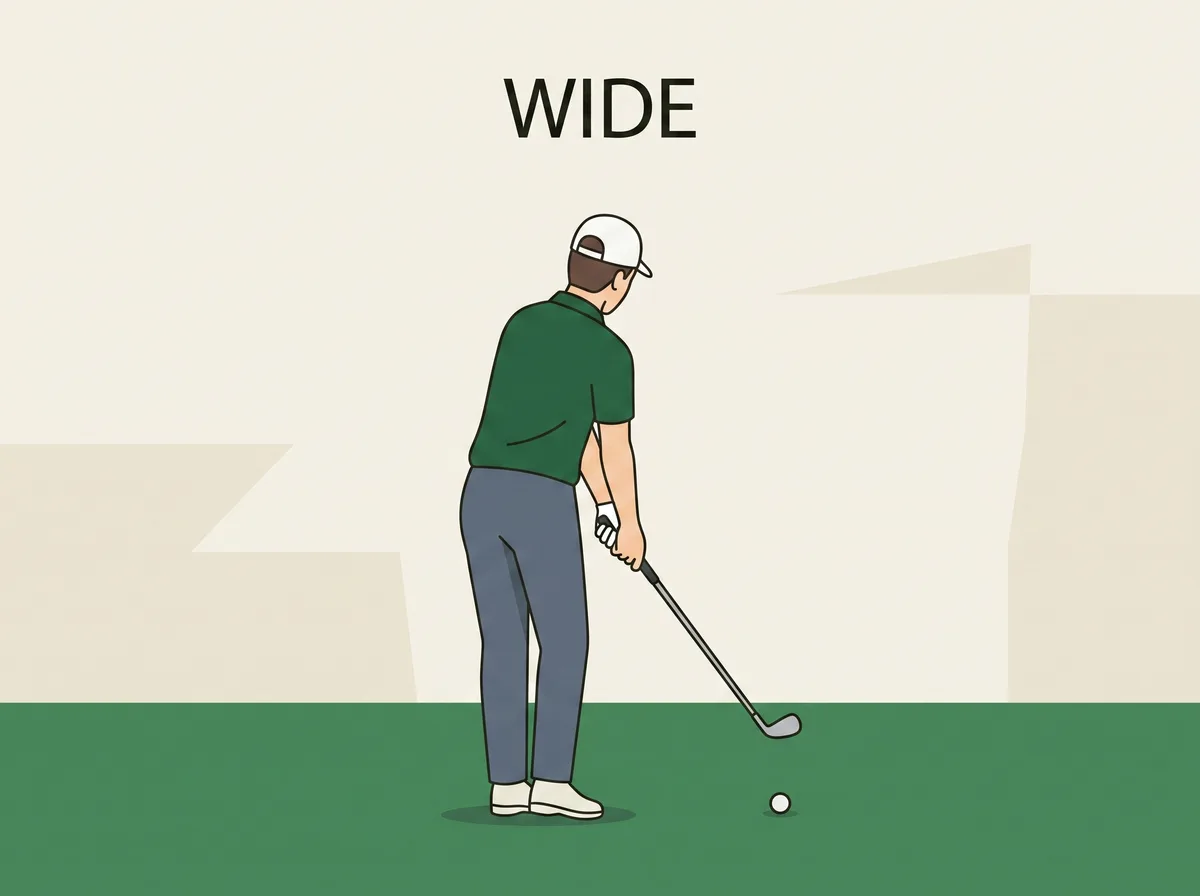
The failure mode is the hands snatching the club inside while the chest stays where it is. It happens because the inside path is shorter and feels quicker, and it is almost always accompanied by the forearms rolling, which opens the face early. From there the arms have to lift to get any height, and the club ends up behind the body and above it at the same time, which is the hardest position in golf to recover from.
The four moments, and what each one is telling you
Positions are a language for describing a motion, not a set of poses to hit. Used as checkpoints in slow motion they are useful; used as targets at full speed they produce a golfer who stops four times on the way back.
| Moment | Where the hands are | What the clubface does | What it proves |
|---|---|---|---|
| First foot | Still in front of the chest | Stays on the same angle as the spine | The chest turned rather than the hands pushing |
| Shaft horizontal | In front of the trail hip | Roughly matching the spine angle, toe up-ish | Nothing has rolled or lifted yet |
| Lead arm horizontal | Above and outside the trail thigh | Pointing where the lead wrist points | The wrists have set without being forced |
| Top | Over or just inside the trail shoulder | Consistent with the lead wrist, flat or slightly cupped | The turn ran out before the arms did |
The middle two are worth more of your attention than the top. By the time the club reaches the top, any fault that exists was created earlier, and the top position is just where it became visible.
Setting the wrists
Wrist set is where good instruction and bad instruction diverge most sharply. The angle between the lead forearm and the shaft has to appear somewhere on the way back, and the argument is about whether you should make it happen or let it happen.
The case for letting it happen is simple. The club head has mass, it is at the end of a long lever, and the change of direction from address to backswing loads the wrists on its own. Golfers who set the wrists deliberately and early tend to end up steep, with the club disconnected from the chest turn, and a steep club is harder to fix than a shallow one.
If the club feels heavy at the top, the set happened. If it feels light and controlled, you probably lifted it there with the arms, and the difference is easy to hear on a range mat because the light version brushes the mat on the way back.
The top of the backswing
The top is not a position you arrive at and hold. It is the moment the club changes direction, and in a well-sequenced swing part of the body is already moving forward while the club is still going back.
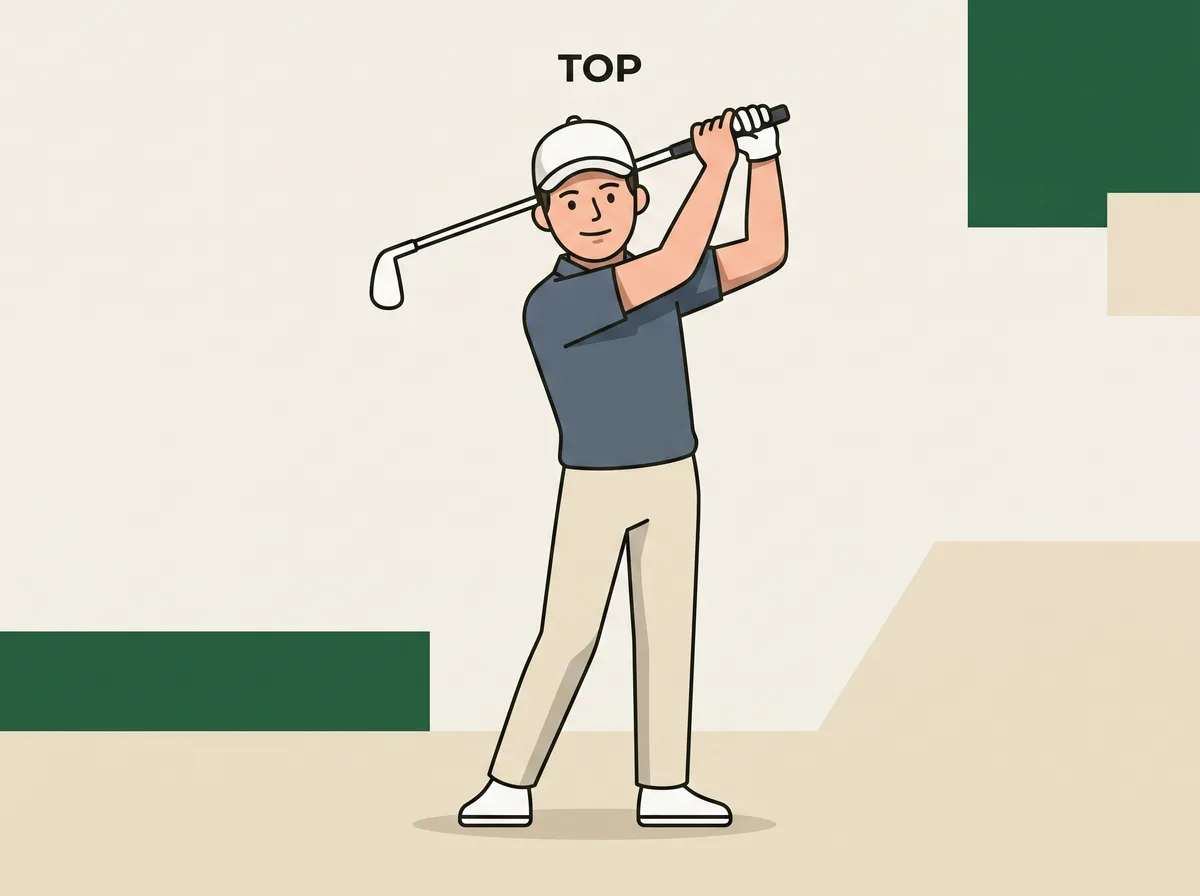
The number people chase here is separation between the hips and the shoulders, usually called the X-factor. TPI's analysis is that 45 degrees is the tour average for both men and women, and that more is not automatically better. They describe a player who reached 80 degrees of separation, produced by past 100 degrees of shoulder turn against only 26 degrees of pelvis rotation, which is a mobility problem wearing the costume of a power position.
How far back is far enough
This is contested, and honest coaches disagree in public about it. One camp wants the shaft parallel to the ground at the top on the grounds that a longer arc has more time to build speed. The other treats parallel as beyond what most amateurs can control and prefers a three-quarter position that repeats.
Swing length also changes with the club, shortening naturally as the shaft shortens. That happens by itself and does not need managing, and if you are consciously shortening the swing for a wedge you have found a different problem.
The four ways a backswing breaks
Each of these is a physical restriction expressing itself as a swing fault, which is why the usual advice of trying harder does not fix them.
| Fault | What it looks like | What is usually underneath it |
|---|---|---|
| Sway | The hips travel away from the target, weight to the outside of the trail foot | Limited trail hip internal rotation, weak glute medius |
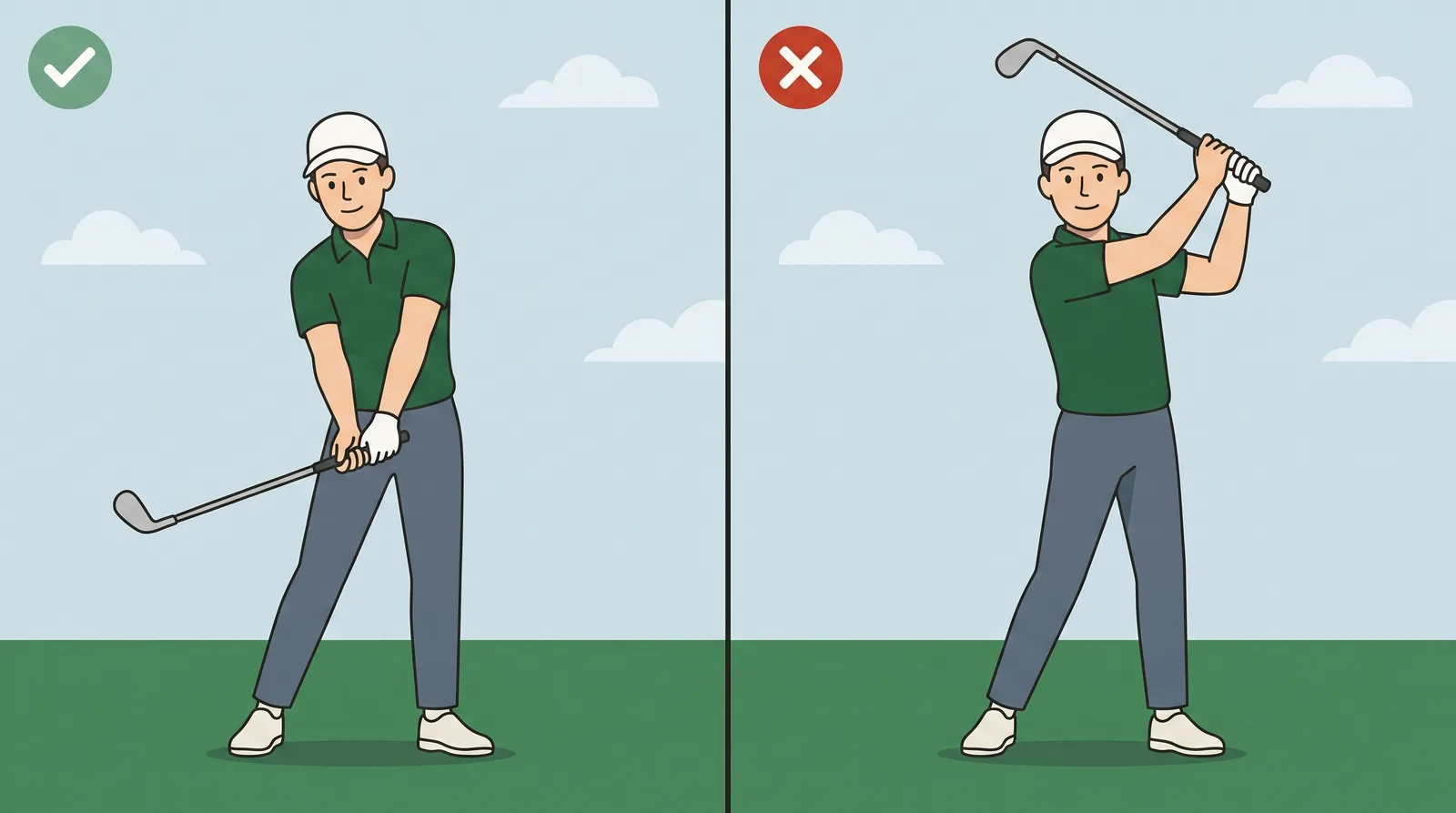
| Lift | Arms rise, chest barely turns, club steep at the top | Restricted thoracic rotation, or simply a habit |
| Roll | Forearms rotate early, face opens, club runs behind the body | Almost always a habit rather than a restriction |
| Reverse spine | Upper body tilts back towards the target on the way up | Limited separation between trunk and pelvis, weak core |
TPI defines a sway as lateral lower body movement away from the target that puts the weight on the outside of the trail foot, and lists insufficient hip internal rotation among its causes. The full fix, including the drills, is in how to stop swaying.
Reverse spine angle deserves more attention than it gets. TPI describes it as excessive backward or lateral upper body bend during the backswing and calls it one of the prime causes of lower back pain in golfers. It is the one fault on this list worth taking to a professional rather than working on alone.
Two drills that change the shape
Both of these work on the same idea from different directions, and neither requires a training aid.
How to check your own backswing
You need one of three things: a mirror, a phone on a bag, or a friend who will tell you the truth. A mirror is best for slow work because the feedback is instant and you can correct inside the same rep.
Film from down the line, with the camera at hip height and directly behind the club head pointing along the target line. Half the backswing footage golfers show a coach is unusable because the camera sat too high, which flattens the shaft and makes an on-plane swing look laid off. There is more on reading that view in golf swing plane.
Check one thing per session. Watch shaft horizontal for a week, then lead arm horizontal for a week, then stop watching and swing. The most common self-coaching error is looking at four positions at once and concluding that everything is wrong.
Where the backswing ends is where the real work starts, and the change of direction is a different subject with different faults. That is covered in the golf downswing, and how the two halves relate in time is in golf swing tempo.
Key takeaways
- The backswing produces no speed. It decides what the downswing is able to do.
- The first foot moves as one piece: club, hands, arms and chest together.
- Forearm roll in the takeaway opens the face early and everything after it is a compensation.
- Shaft horizontal and lead arm horizontal are worth more attention than the top.
- Wrists set from the weight of the club head and the change of direction, not from effort.
- Tour average hip to shoulder separation is around 45 degrees, and more is not better.
- Backswing length is personal: stop before the lead heel lifts or the lead arm bends.
- Sway and reverse spine angle are usually mobility problems wearing a technique costume.
- Film from down the line at hip height, and check one position per session.
Common questions
What is a one-piece takeaway?
The club head, hands, arms, shoulders and chest all move away from the ball together for the first foot or so, with no independent hand or wrist action. It is a way of guaranteeing the chest starts the swing rather than the hands.
Where should the club be halfway back?
With the shaft horizontal, the hands sit in front of the trail hip and the clubface sits on roughly the same angle as your spine. If the hands have run behind your body or the face is pointing at the sky, something rolled or lifted earlier.
Should I hinge my wrists in the backswing?
They should hinge, but you should not do it deliberately. The weight of the club head plus the change of direction sets the angle on its own by the time the lead arm is horizontal. Golfers who set early usually end up steep and disconnected from the chest turn.
How far back should my backswing go?
As far as you can turn with the lead heel on the ground and the lead arm straight. That is a personal length, and for most amateurs it is noticeably shorter than what they currently do. Buying extra length with a lifted heel or a bent arm costs more than it returns.
Why does my backswing feel too short now?
Because a connected turn covers less visible distance than an arm lift, so a correct backswing usually looks and feels shorter than the incorrect one it replaced. Film it before deciding, since the feeling is unreliable for about two weeks after any change.
Is it bad to lift my lead heel in the backswing?
Not automatically. Plenty of good players lift it, and it can help golfers with restricted hips reach a full turn. It is a problem only when it is being used to buy length your turn has not earned, which you can test by keeping it down and seeing how much shorter the swing gets.
What causes swaying in the backswing?
Excessive lateral movement away from the target, usually from limited internal rotation in the trail hip, weak glute strength, or a stance too wide for your mobility. The weight ends up on the outside of the trail foot instead of loading into it.
Should the clubface be open or closed at the top?
Neither, in the sense that matters. What you want is the face consistent with your lead wrist, so that returning the wrist to a neutral position also returns the face. A cupped lead wrist opens it, a bowed one shuts it, and both are workable if they are consistent.
Does the backswing change from club to club?
Only in length, and that happens automatically because the shafts are different lengths. The shape, the sequence and the connection are identical from wedge to driver. Consciously shortening a wedge backswing usually means the full swing is too long.
How long does it take to change a backswing?
Two to three weeks of consistent practice before a single change stops feeling foreign, and closer to three months before it holds up under pressure on a course. Change one thing at a time or you will not know which change did what.
Tom Ashworth
Tom Ashworth is a PGA Professional who has taught golf since 2012, working mainly with beginners and mid-handicappers at club level in Surrey. He reviews the instruction guides on Learn Golf for technical accuracy before they publish.
Most of his teaching is with players in their first three years of the game, and most arrive having been told too much: six swing thoughts collected from videos, half of them contradicting each other. His approach is to check the grip and the alignment before touching the swing, on the basis that most bad ball flight is decided at address.