Best Launch Monitors: Four Picks and What They Measure
Every launch monitor gives you a page of numbers. The question worth asking is which of them the sensor actually saw and which it worked out afterwards, because the makers vary enormously in how plainly they say so.
Some links here earn us a commission at no extra cost to you. It never changes what we recommend or the order we rank it. How this works.
A launch monitor turns a golf swing into about twenty numbers, and the marketing rarely tells you which ones the sensor actually saw. Some are measured at impact. Some are worked out afterwards by a flight model that never watched the ball land. Both appear in the same font on the same screen, and knowing which is which is the difference between practising usefully and chasing a number that was an estimate all along.
The four, compared
Three sensing approaches are in play here and the naming is unhelpful. Radar bounces a Doppler signal off the ball and watches it fly. Photometric means high-speed cameras photographing the ball at and just after impact, which is what almost everyone means when they say camera. So the useful split is optical against radar, with one unit here doing both. What follows works through what that choice costs you in room, in ball marking and in which numbers are real.
| Pick | Best for | Sensing | Ball data | Club data | Space needed | Price |
|---|---|---|---|---|---|---|
| SkyTrak ST MAX | The one to buy if you only buy one | Photometric camera plus dual Doppler radar | 9 metrics listed, carry and total distance among them | 5 metrics, and no stickers or marked balls needed | Sits beside the ball. No room minimum on the product page | Around £1,995 to £2,995 |
| FlightScope Mevo Gen2 | Outdoors, and anyone who mostly practises on a range | 3D Doppler radar with synchronised image processing, which FlightScope call Fusion Tracking | 17 full swing parameters, the same 17 for chipping, 3 for putting | Club speed, smash factor, angle of attack and spin loft, inside that same count | 2.4 m from unit to tee, plus 2.4 m of ball flight indoors | Around £1,199 |
| Bushnell Launch Pro | Ball data with no subscription attached | Three-camera auto-calibrating infrared photometric system | 13 metrics on the built-in 3 inch screen, no subscription | 4 metrics, needs a subscription and the supplied club markers | Sits beside the ball. No room minimum on the product page | Around £1,890 to £2,790 by model, plus a subscription for club data |
| Garmin Approach R50 | One box that is also the simulator | Three-camera photometric | Not split out. Garmin quote more than 15 ball and club metrics combined | Inside that count, and it needs the supplied club stickers | Sits beside the ball. Not published in Garmin's launch material | Around £4,250 to £4,300 |
Prices in this category move further and faster than anywhere else in golf equipment, and the same unit can appear at list and at a third off in the same month. Bands here are wide on purpose.
SkyTrak ST MAX: the one to buy if you only buy one
The SkyTrak ST MAX is the most sensible piece of hardware on this page for a home bay. A photometric camera reads the ball and two Doppler radar units read the club through impact, and SkyTrak name what each side produces: nine ball metrics including ball speed, back spin, side spin, launch angle, side angle, descent angle and shot shape, plus five club metrics covering head speed, smash factor, club path, face angle and face to path.
What makes it liveable is what it does not need. No club stickers, no marked balls, no calibration ritual before every session. Anyone who has spent an evening rotating a sticker to face a radar unit will understand why that is worth several hundred pounds on its own.
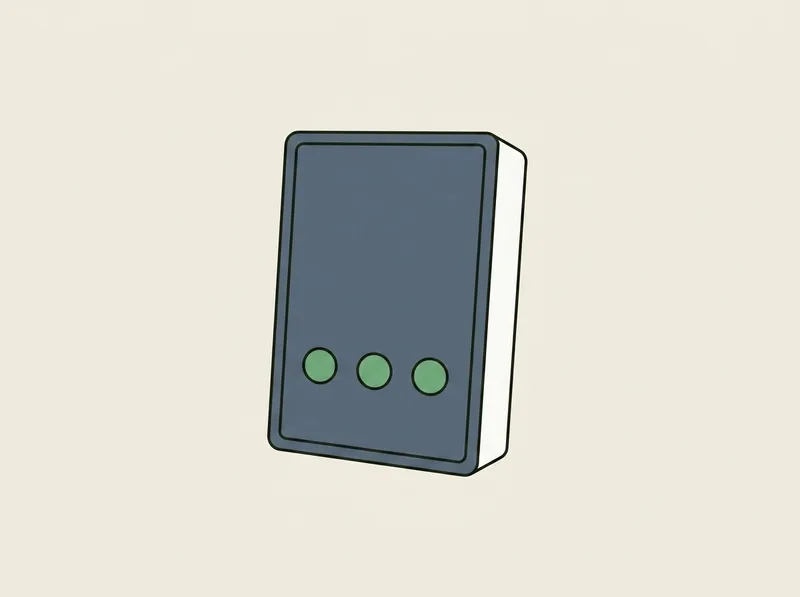 Around £1,995 to £2,995
SkyTrak ST MAX
- Sensing
- Photometric camera plus dual Doppler radar
- Ball data
- 9 metrics listed, carry and total distance among them
- Club data
- 5 metrics, and no stickers or marked balls needed
- Space needed
- Sits beside the ball. No room minimum on the product page
- Battery
- Rechargeable lithium polymer, 4 hours
- Subscription
- Essential, Core or Elite membership for cloud data and course play
- Camera on the ball and radar on the club, so club head speed is read rather than reverse engineered from ball speed.
- No club stickers and no marked balls, which is the single biggest practical difference between owning one of these and enjoying one.
- SkyTrak name all nine ball metrics and all five club metrics on the product page, which is more than most makers bother with.
- Carry and total distance sit in the ball data list without being flagged as modelled, which they necessarily are indoors.
- No minimum room size published for this model, so you are sizing your bay from someone else's blog.
- Four hours of battery, and the useful features assume an active membership.
VerdictThe default pick for a home bay, because it reads both the ball and the club without asking you to stick anything to anything. The gap is disclosure rather than hardware: the parameter list is generous and it does not separate what the sensor saw from what the software worked out.
The honest criticism is a disclosure one. Carry distance and total distance sit in the ball data list alongside ball speed, and indoors those two cannot possibly be measured, because the ball hits a screen after a few feet. They are modelled from the launch conditions, which is fine and standard, and listing them without saying so is the pattern this whole category shares.
FlightScope Mevo Gen2: the one for outdoors
The FlightScope Mevo Gen2 is a Doppler radar unit, and radar has one advantage nothing optical can match: outdoors, with the sky open, it watches the actual ball rather than predicting it. FlightScope combine 3D radar with synchronised image processing, which they call Fusion Tracking, and quote 20 parameters: 17 on the full swing, the same 17 on chip shots and three on putts. A Pro Package adds the complete D-Plane set of club path, face to path, dynamic loft and low point.
FlightScope also do the thing nobody else on this page does, which is print the space requirement on the product page. They ask for 2.4 metres between the unit and the tee and another 2.4 metres of ball flight indoors, which is just under eight feet each way. That is honest, it is inconvenient, and it will disqualify a lot of garages before any other specification matters.
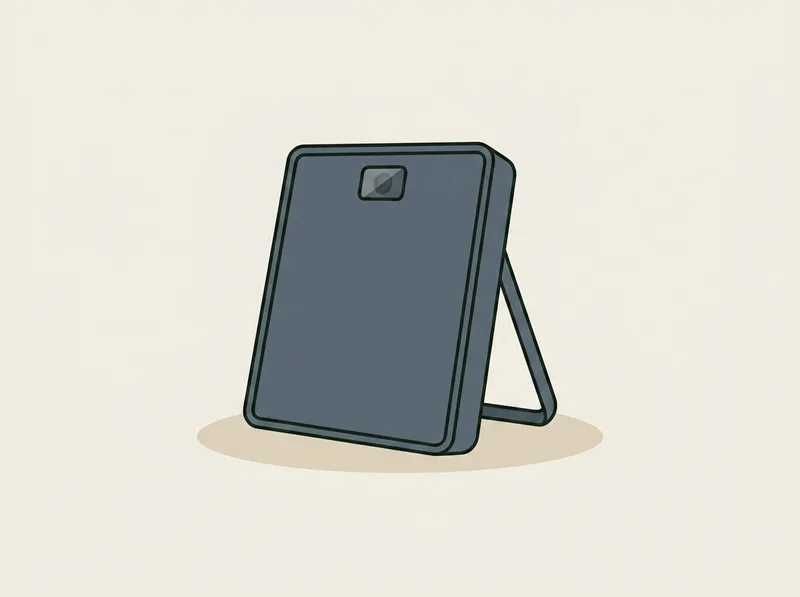 Around £1,199
FlightScope Mevo Gen2
- Sensing
- 3D Doppler radar with synchronised image processing, which FlightScope call Fusion Tracking
- Ball data
- 17 full swing parameters, the same 17 for chipping, 3 for putting
- Club data
- Club speed, smash factor, angle of attack and spin loft, inside that same count
- Space needed
- 2.4 m from unit to tee, plus 2.4 m of ball flight indoors
- Battery
- Up to 6 hours, rechargeable lithium ion
- Marking
- Aluminium stickers or Titleist RCT balls required for indoor spin
- The only maker of the four that publishes a plain space requirement on the product page, in metres and in feet.
- Outdoors it tracks real ball flight rather than modelling it, which no camera unit can do at any price.
- An eight course E6 Connect bundle is included for the life of the unit, so it is usable as a simulator on day one.
- Radar still has to sit nearly eight feet behind the ball, which rules out a good many garages before you start.
- Indoor spin needs aluminium stickers on the ball or Titleist RCT balls, and that is an ongoing chore and an ongoing cost.
- The full D-Plane set sits behind a Pro Package costing more than half the price of the unit again.
VerdictThe right buy for a golfer whose practice mostly happens outdoors, on a range or in a net with real sky above it, because that is where radar stops estimating. It replaced the Mevo+ at the end of 2025 and fixed that unit's two worst habits, doubling the battery and cutting the room requirement by about a quarter. It is still the only device here that needs real depth behind the golfer.
Indoors there is a second condition. FlightScope state that spin measurement needs aluminium stickers on the ball or Titleist RCT balls, because a radar cannot read spin off a plain ball in a few feet of flight. That is a consumable and a chore, and it is the honest cost of putting radar in a room that is too small for it.
The Gen2 arrived at the end of 2025 to replace the Mevo+, and the two changes that matter are both about living with it. Battery life doubled to six hours, and the room requirement came down by roughly a quarter. If you are looking at a secondhand Mevo+ on price, those are the two things you are giving up.
Bushnell Launch Pro: the ball data one
The Bushnell Launch Pro is a photometric unit built around three auto-calibrating infrared cameras, and its selling point is what happens straight out of the box. Thirteen ball metrics appear on the unit's own 3 inch screen with no app, no laptop and no subscription: carry, ball speed, total spin, launch angle, horizontal launch angle, spin tilt axis, back spin, side spin, apex, descent angle, offline, curve and hang time.
Club data is a separate arrangement. Head speed, smash factor, club path and angle of attack unlock with a Silver or Gold subscription, and Bushnell state plainly that collecting them requires the included club markers. That plainness is worth crediting even while the arrangement itself is expensive.
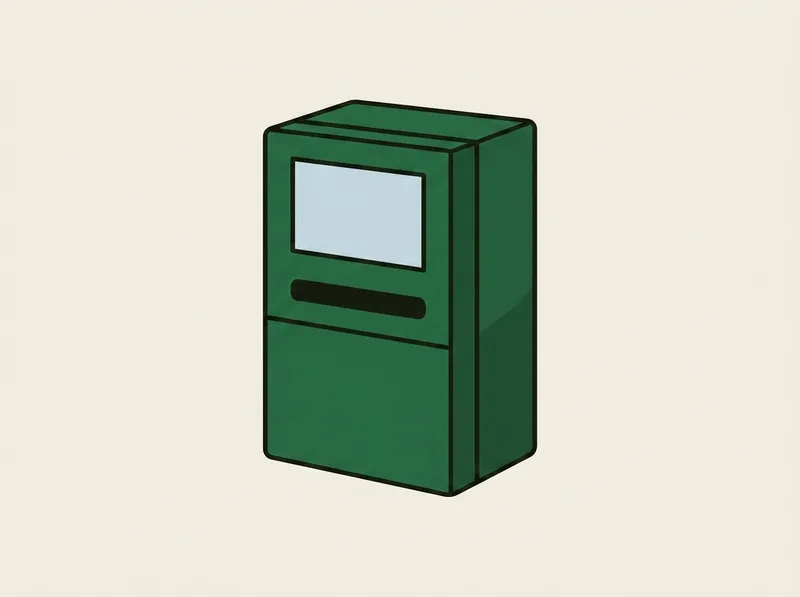 Around £1,890 to £2,790 by model, plus a subscription for club data
Bushnell Launch Pro
- Sensing
- Three-camera auto-calibrating infrared photometric system
- Ball data
- 13 metrics on the built-in 3 inch screen, no subscription
- Club data
- 4 metrics, needs a subscription and the supplied club markers
- Space needed
- Sits beside the ball. No room minimum on the product page
- Battery
- 5 to 7 hours
- Subscription
- Free for ball data, Silver or Gold for club data and courses
- Thirteen ball metrics work out of the box on the unit's own screen with no app, no PC and no subscription.
- Bushnell name the four club parameters and state plainly that collecting them needs the included markers.
- The longest battery here at 5 to 7 hours, and it works indoors and outside.
- Club data is a permanent annual charge, and the higher tier costs more per year than some rivals cost to run at all.
- Five pounds in weight, which makes it the least portable of the four.
- Bushnell describe the accuracy as tour level rather than publishing a tolerance, which is a claim and not a number.
VerdictThe pick for a golfer who wants trustworthy ball numbers immediately and is relaxed about paying yearly for the club side. Buy it understanding that the sticker price gets you thirteen metrics and the rest is a subscription, and price three years of that in before comparing it with anything else here.
Run the numbers on ownership rather than on purchase. Three years of the higher tier adds meaningfully to the sticker price, and it is money you keep paying for data the hardware is already capable of producing. Whether that is reasonable depends entirely on whether you want the club side at all, and plenty of golfers genuinely do not.
Garmin Approach R50: the one that is also the simulator
The R50 is a three-camera photometric unit with a 10 inch touchscreen and more than 43,000 courses built into it, which means it is the only device here that is a complete indoor setup on its own. No PC, no projector, no separate tablet. Garmin quote more than 15 ball and club metrics, up to four hours of battery, and state that club data requires the supplied tracking stickers.
The specification worth singling out is spin. Garmin state that the R50 measures total spin and spin axis both indoors and outdoors, and contrast that directly with their own radar unit, which calculates spin axis from ball flight outdoors and from launch direction and club path indoors. That is a maker being unusually clear about measured against calculated, and it is exactly the disclosure the rest of this category avoids.
 Around £4,250 to £4,300
Garmin Approach R50
- Sensing
- Three-camera photometric
- Ball data
- Not split out. Garmin quote more than 15 ball and club metrics combined
- Club data
- Inside that count, and it needs the supplied club stickers
- Space needed
- Sits beside the ball. Not published in Garmin's launch material
- Battery
- Up to 4 hours
- Screen
- 10 inch built-in colour touchscreen, 43,000 courses
- Garmin state that spin rate and spin axis are measured indoors and outdoors, not calculated from launch direction and club path.
- A 10 inch screen and more than 43,000 courses built in, so it needs no laptop, no projector and no second device.
- Camera sensing sits beside the ball rather than behind you, which Garmin themselves give as the reason it needs less room than their radar unit.
- Comfortably the most expensive here, and by a margin that buys a whole competing setup.
- Club data needs the supplied stickers, and stickers are consumable.
- Garmin publish a combined ball and club metric count rather than naming what is measured against what is derived.
VerdictThe pick for someone who wants an indoor setup without assembling one, because the screen, the courses and the sensor arrive as a single object. It is the most money on this page by a distance, and the case for it is convenience rather than data nobody else has.
Garmin also give the clearest published explanation of why camera units need less room: the cameras sit beside the ball, where a radar unit has to sit behind the golfer. What they do not publish anywhere in the launch material is an actual room dimension, which is a strange gap on a device whose main advantage is fitting in smaller spaces.
Measured and calculated are not the same number
This is the section the box does not have room for, and it is the one that changes how you practise.
| Approach | What the sensor sees | What it works out afterwards |
|---|---|---|
| Doppler radar | The ball in flight, for as far as the room or the sky allows, plus club delivery | Carry, total and roll once the ball leaves the tracked window |
| Photometric camera | The ball at impact and for the first few inches, plus the club if it is marked | Everything after that, from a flight model |
| Camera plus radar | The ball optically at impact, the club by radar through impact | Carry, total and roll, exactly as the other two do |
The practical consequence is straightforward. Ball speed, launch angle, spin and club delivery are the numbers to trust and to practise against, because on a modern unit they are read rather than inferred. Carry distance indoors is a model output on every device here, including the expensive ones, and it will shift if the software's ball model, altitude setting or temperature assumption changes.
That is not a reason to distrust carry numbers. It is a reason to treat them as internally consistent rather than absolute, which means a launch monitor is excellent for comparing today against last month on the same unit and poor for comparing your number against someone else's. What the numbers actually mean works through each parameter properly, and spin rate is the one most commonly misread.
How much room you actually need
Room depth is where most home launch monitor plans quietly die, and it is decided by the sensing technology rather than by the price.
Radar needs to see the ball leave and travel. FlightScope's published 2.4 metres behind the tee plus 2.4 metres of ball flight puts a Mevo Gen2 bay at roughly 16 feet front to back before you have allowed anywhere to stand. Optical units sit a foot or so to the side of the ball and need only enough depth for a safe swing and a screen or net, which is why they dominate garage conversions.
Three of the four makers here do not print a minimum room size on the product page. That is a genuinely poor showing on the one specification a buyer cannot work out for themselves, and the practical advice is to measure your ceiling height and your depth first, then shop, rather than the other way round. Setting up a home simulator covers the room side in full, and practising golf at home covers what is possible when the room is smaller than any of this.
The accuracy figures nobody publishes
Accuracy claims are where this category is at its least honest, and it is worth being blunt about the pattern.
SkyTrak describe the ST+ as precise to within two yards of professional units costing many times more. Bushnell describe the Launch Pro as delivering tour level accuracy indoors and outside. Neither is a tolerance. Both are comparisons, and a comparison to an unnamed reference under unstated conditions cannot be checked by anyone.
Numbers like "within one mile per hour" circulate constantly in this category and are almost never traceable to a published manufacturer tolerance. Where a figure like that appears without a maker's own specification behind it, treat it as marketing that has been repeated until it sounded like data.
The reference the industry actually orients itself around is TrackMan, which describes its technology as optically enhanced radar tracking and publishes definitions for more than forty parameters including club path, face angle, dynamic loft, attack angle and spin axis. Those definitions are worth reading whichever unit you buy, because they are what every other maker's parameter names are copying.
What it costs once you own it
The purchase price is roughly half the decision, and the running costs are structured very differently across the four.
SkyTrak gate cloud storage and course play behind Essential, Core or Elite membership tiers. Bushnell give ball data free and charge annually for club data and courses. Garmin ask for a Garmin Golf membership for some features. FlightScope include an E6 Connect licence for twelve courses and sell the Pro Package as a one-off rather than a subscription, which is the friendliest structure here.
Consumables matter too. Bushnell and Garmin both need club stickers for club data. FlightScope needs aluminium stickers or specific balls for indoor spin. SkyTrak needs neither. Over three years those add up to a real number, and none of them appear on a comparison chart.
Which of these pages you actually want
This is the general launch monitor page, and general is doing real work in that sentence. Two adjacent searches deserve genuinely different answers.
- If the budget is under about a thousand pounds, the whole conversation changes: fewer measured parameters, more modelling, and outdoor-first radar units built to a price. Budget launch monitors starts there.
- If what you actually want is a room you can play golf in, the sensor is one component among an enclosure, a screen, a mat and a projector. Full simulator packages covers the whole build, and a retailer that carries several sensor brands side by side is worth more than any single manufacturer's website when you are pricing one.
The other honest option is not buying one at all. An hour with a fitter on a professional unit costs a fraction of any device here and answers most of the questions people buy launch monitors to answer, and what a club fitting measures explains what happens in the bay. If your goal is a single number, how to measure swing speed covers the far cheaper devices that do only that.
Key takeaways
- The SkyTrak ST MAX is the default pick for a home bay: camera on the ball, radar on the club, and no stickers or marked balls to manage.
- The FlightScope Mevo Gen2 is the outdoor pick, because radar outdoors tracks real ball flight instead of modelling it. Indoors it needs the most room and marked balls for spin.
- The Bushnell Launch Pro gives 13 ball metrics with no subscription and charges annually for the four club metrics. Price three years of that before comparing it.
- The Garmin Approach R50 is a complete indoor setup in one box, and it is the only maker here that states plainly which spin figures are measured rather than calculated.
- Ball speed, launch angle, spin and club delivery are measured. Carry and total distance indoors are always modelled, on every unit at every price.
- Radar sits behind you and needs roughly 16 feet front to back. Optical units sit beside the ball and fit ordinary garages.
- Accuracy claims in this category are comparisons rather than tolerances. Figures like "within one mile per hour" are rarely traceable to a published specification.
- Subscriptions, stickers and marked balls are the real running costs, and they differ more between these four than the hardware does.
Common questions
What is the best launch monitor for home use?
For most home bays the SkyTrak ST MAX, because it reads ball data optically and club data by radar without needing stickers or specially marked balls, and it sits beside the ball rather than behind you. If your practice mostly happens outdoors, radar suits you better and the FlightScope Mevo Gen2 is the pick.
What is the difference between radar and camera launch monitors?
Radar tracks the ball in flight using a Doppler signal and has to sit behind the golfer, which needs depth. Camera systems, properly called photometric, photograph the ball at impact from the side and need very little room. Radar is stronger outdoors where it can watch real ball flight; cameras are stronger indoors where there is no flight to watch.
Which launch monitor data is actually measured?
On a modern unit, ball speed, launch angle, launch direction and spin are read by the sensor, and club delivery is read where the device tracks the club. Carry distance, total distance, roll and apex indoors are outputs of a flight model. Makers rarely separate the two in their parameter lists, so read them assuming distance figures are modelled.
How much space do I need for a launch monitor?
It depends entirely on the technology. FlightScope publish 2.4 metres from unit to tee plus 2.4 metres of ball flight indoors for the Mevo Gen2, which is around 16 feet of depth. Camera units sit about a foot to the side of the ball and need only enough room to swing safely and hit into a screen or net. Measure your ceiling height first, because that disqualifies more rooms than depth does.
Do I need special golf balls for a launch monitor?
Sometimes. FlightScope state that indoor spin measurement on the Mevo Gen2 needs aluminium stickers or Titleist RCT balls. Bushnell and Garmin need stickers on the club face to read club data, not on the ball. SkyTrak's ST MAX needs neither. It is a small ongoing cost that never appears on a comparison chart.
Are launch monitors accurate enough to fit clubs with?
For relative comparisons, yes. Testing two shafts back to back on the same unit in the same session is a job any of these do well. Fitting against absolute numbers is a different matter, because a carry figure that is modelled cannot be compared with someone else's, and a proper fitting bay uses a reference-grade unit for exactly that reason.
How much should I spend on a launch monitor?
Under about £1,000 buys a device that measures fewer parameters and models more. Between roughly £1,000 and £3,000 buys measured ball data and, in some cases, measured club data. Above that you are usually paying for a built-in screen, a simulator experience or a professional-grade sensor rather than for better ball numbers.
Can I use a launch monitor during a round of golf?
No. Rule 4.3a permits distance and direction only, and prohibits measuring conditions or getting an interpreted recommendation such as a club selection, which is precisely what a launch monitor does. On a practice ground outside a round, no such restriction applies.
Does a launch monitor need a subscription?
Some do, in different ways. Bushnell give ball data free and charge annually for club data and courses. SkyTrak gate cloud storage and course play behind membership tiers. Garmin ask for a membership for certain features. FlightScope sell their advanced package as a one-off. Add three years of whichever applies before comparing prices.
Will a launch monitor improve my golf?
It will if you use it to change something measurable. Strike quality, spin and launch angle respond to practice and are read directly, so they are worth chasing. Watching a modelled carry number go up and down teaches very little, and a device bought to confirm how far you hit it usually ends up in a cupboard by the second winter.
What is smash factor and is it measured?
Smash factor is ball speed divided by club speed, so it is calculated rather than measured. It is still the most useful single number on the screen, because it barely changes with how hard you swing and changes a lot with where on the face the ball is struck. Around 1.50 with a driver is close to the practical ceiling.
How we put this together
- Published manufacturer specifications for each unit, taken from the maker's own product page, press material or data glossary rather than a retailer's summary.
- Which parameters each maker states are measured by the sensor and which are derived from a flight model, and where a maker does not separate the two, that is recorded rather than guessed at.
- Published space requirements, because the number that decides whether a unit fits a garage is the one most often left off the listing.
- Ongoing cost: subscription tiers, what is locked behind them, and whether stickers or marked balls are needed to get the advertised data.
- The Rules of Golf position on devices that measure conditions and give interpreted information, which decides where these can and cannot be used.
On this page
- The four, compared
- SkyTrak ST MAX: the one to buy if you only buy one
- FlightScope Mevo Gen2: the one for outdoors
- Bushnell Launch Pro: the ball data one
- Garmin Approach R50: the one that is also the simulator
- Measured and calculated are not the same number
- How much room you actually need
- The accuracy figures nobody publishes
- What it costs once you own it
- Which of these pages you actually want
- How we put this together

Tom Ashworth
Tom Ashworth is a PGA Professional who has taught golf since 2012, working mainly with beginners and mid-handicappers at club level in Surrey. He reviews the instruction guides on Learn Golf for technical accuracy before they publish.
Most of his teaching is with players in their first three years of the game, and most arrive having been told too much: six swing thoughts collected from videos, half of them contradicting each other. His approach is to check the grip and the alignment before touching the swing, on the basis that most bad ball flight is decided at address.