Getting to a range twice a month is not enough repetition to change anything. Ten minutes on four evenings is, and it costs nothing and needs no daylight. The catch is that only some golf skills survive being practised indoors, and the ones that do not will quietly waste months of your time while feeling productive.
What transfers, and what only feels like practice
The dividing line is simple: a skill transfers from home if the feedback you need arrives without the ball having to fly anywhere. Everything else needs a range.
| What you practise at home | Does it transfer | Why |
|---|---|---|
| Putting from inside 10 feet | Fully | The stroke, the start line and the strike are all visible on a flat surface |
| Long putt speed control | Partly | The stroke transfers, the pace does not, because your carpet is not your greens |
| Chipping to a landing spot | Mostly | Carry is short enough to judge indoors with a soft ball |
| Grip, posture, ball position | Fully | These are positions, and a mirror judges them better than any coach at the range |
| Takeaway and sequence rehearsal | Fully | No ball needed, and slow repetitions are what change a motor pattern |
| Full swings into a net | Partly | Strike and tempo yes, direction and distance no |
| Wedge distance control | No | It is a distance skill and it needs measured carry numbers |
| Green reading | No | Nothing at home slopes like a green does |
Putting is the block that pays for the whole thing
If you only practise one thing indoors, practise the putts you are actually missing, which are almost never the ones you think.
Shot Scope's tracking of how often golfers three-putt has a 25 handicap holing nine putts in ten from inside three feet, then dropping to only slightly better than one in two from three to six feet. That collapse across three feet of distance is the single most fixable thing in amateur golf, and it is a start line problem rather than a stroke problem, which is exactly what a flat surface at home is good for.
The other side of the same coin is the long putt, and here home practice is only half useful. The stroke transfers and the pace does not, because no mat rolls at the speed of the greens you play. Practise the mechanics indoors and calibrate the speed on a real green before you play.
Chipping indoors and in a garden
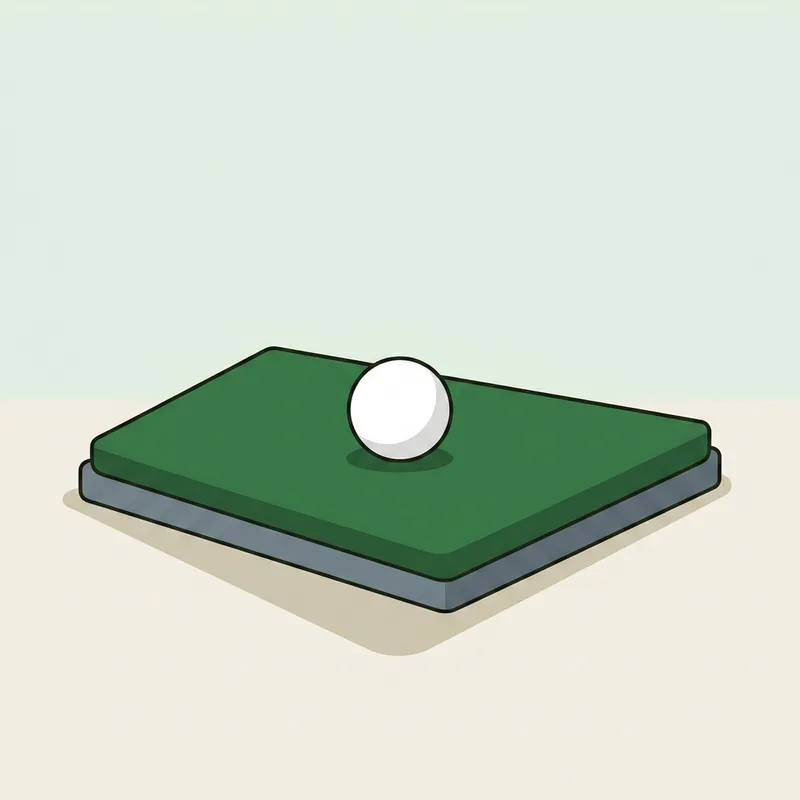
Short chipping is the second block worth having, and it needs less space than people assume. A shot that carries three yards and rolls six is a real chip, and the skill it trains is the one that matters: choosing and hitting a landing spot.
Use foam or limited flight balls indoors and in any garden with neighbours, windows or people in it. A real golf ball off a wedge does not need much of a swing to break something, and the rule is not negotiable in a small space. The technique itself does not change, which is covered in how to chip a golf ball.
Full swings into a net: keep the strike, lose the flight
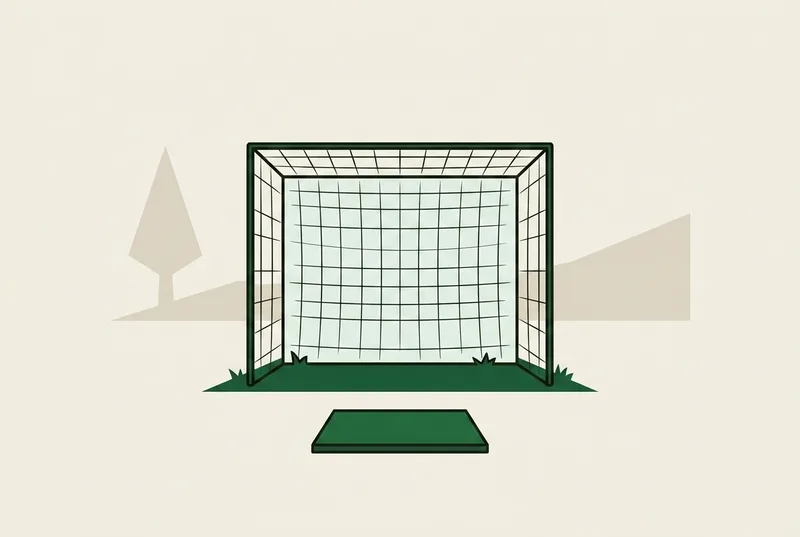
A net is honest about two things and silent about everything else. It tells you where the club met the ball, because you can feel and hear it and see the mark on the face. It tells you nothing about direction or distance, because the ball stops after two feet.
That silence matters more than golfers expect. Even indoor systems that report numbers are calculating a flight rather than watching one: TrackMan's own explanation of how normalisation works notes that the software computes the ball flight from launch data in calm conditions at a set altitude and temperature, and converts non-premium balls to a premium ball model before doing it. The number on the screen is a model, and it is only as good as its inputs.
So use a net for tempo, strike, and rehearsing a change under something close to real speed. Do not use it to judge whether a swing change is working, because the evidence you would need is exactly the part the net removed. Setting one up safely, including ceiling height and how far back to stand, is covered in practising with a golf net.
The no-ball work that changes the most
The highest-return home practice involves no ball at all, and almost nobody does it, because it does not feel like golf.
Grip and setup drift constantly and invisibly, and both are positions rather than movements, which makes a mirror the ideal tool. Two minutes rehearsing a neutral hold from how to grip a golf club, checked in a mirror, is worth more than a bucket of balls with a grip that has quietly turned weak over a month.
Mobility is the other one, and it is measurable at home. The Titleist Performance Institute's seated trunk rotation test asks you to sit with knees and feet together and rotate the upper body past 45 degrees to each side. Falling short of that on one side is common, and it is the sort of restriction that shows up in the swing as a compensation rather than as stiffness. Working on it is covered in golf stretches.
A weekday routine that survives real life
Fifteen minutes on four evenings is a realistic ceiling for most people with jobs, and it is more than enough. The split below assumes you have a mat and a net or a garden. Drop the net block if you have neither and the rest still works.
| Evening | Minutes | What |
|---|---|---|
| Monday | 12 | Gate ladder putting, then long putt strokes on the mat for tempo |
| Tuesday | 10 | Mirror minute, then slow motion takeaway rehearsals |
| Thursday | 15 | Chipping to a towel with three clubs, foam balls |
| Saturday | 15 | Net work: half swings for strike, then full swings with a full routine |
That is 52 minutes a week, which is roughly one range session, spread across four exposures instead of one. Give it six weeks before judging it, and expect the putting to move first because it gets the most repetitions.
The specific short game and putting drills worth cycling through, most of which work on a carpet, are collected in putting drills and the stroke fundamentals underneath them in how to putt.
Key takeaways
- A skill transfers from home if its feedback arrives without the ball flying anywhere.
- Putting, short chipping, grip and setup, and mobility all transfer almost fully.
- Direction, distance and green reading do not, and no amount of net practice changes that.
- Four ten to fifteen minute sessions a week beat one long one, because frequency is what home practice is good at.
- The three to six foot band is where amateur putting collapses and where a mat pays for itself.
- Use foam or limited flight balls anywhere with windows, people or neighbours.
- A net keeps a swing honest and cannot test a swing change.
- Numbers from indoor systems are calculated ball flights, not observed ones.
- Two minutes of mirror work five days a week prevents most silent grip and posture drift.
Common questions
Can you actually get better at golf practising at home?
Yes, at the specific skills that do not need ball flight. Putting inside ten feet, short chipping, grip and setup, tempo and mobility all improve at home. Distance control and shot shape do not, so home practice is a supplement to range time rather than a replacement for it.
How much space do I need to practise golf indoors?
Putting needs about ten feet of floor. Chipping with foam balls needs a room. Full swings need roughly ten feet of ceiling height for most golfers with an iron, and a little more if you are tall, so measure with a club above your head before buying a net.
Is a putting mat worth it?
For most golfers, yes, because it removes the friction that stops short sessions happening at all. Choose length and a true flat roll over gimmicks, and avoid anything with a funnelled hole or a slope, since both hide a stroke that is starting the ball offline.
Can I hit real golf balls into a net at home?
Into a proper net, yes, with a hitting mat and enough clearance. Not in a garden with neighbours, windows or anyone else present, and not with a driver unless the net is rated for it. Foam and limited flight balls cover every other situation and remove the risk entirely.
What can I practise without any equipment at all?
Grip, posture and ball position in a mirror, slow motion takeaway and sequence rehearsals, putting stroke rehearsals against a skirting board to check face angle, and mobility work. That list covers a surprising share of what actually limits an amateur swing.
Will practising on carpet ruin my putting stroke?
No, but it will mislead your speed. Carpet and most mats roll differently from real greens, so treat indoor putting as start line and stroke work, then spend ten minutes on a real practice green calibrating pace before you play.
How long before home practice shows up in my scores?
Six weeks at four short sessions a week is a fair first checkpoint, and putting usually moves first because it gets the most repetitions. Nothing here promises a number, and anything that changes inside a fortnight was probably a setup fault rather than a skill.
Is a hitting mat bad for your wrists?
A thin mat over concrete can be, because the ground does not give the way turf does. Mats with a decent base absorb more, and hitting slightly less steeply helps, but if you are getting sore, cut the volume rather than pushing through it.
Should I use a launch monitor at home?
Only once you already know what you want to measure. Carry consistency and strike quality are useful; chasing club speed on a screen is not. Remember that indoor units calculate flight from launch conditions rather than watching the ball, so treat the numbers as a comparison tool rather than as gospel.
How do I practise chipping without wrecking the garden?
Chip off a small mat rather than off the lawn, use foam balls, and aim at a towel rather than a target you can damage. If you have turf you are willing to sacrifice, keep it to one patch and rotate the spot every session so it can recover.
Tom Ashworth
Tom Ashworth is a PGA Professional who has taught golf since 2012, working mainly with beginners and mid-handicappers at club level in Surrey. He reviews the instruction guides on Learn Golf for technical accuracy before they publish.
Most of his teaching is with players in their first three years of the game, and most arrive having been told too much: six swing thoughts collected from videos, half of them contradicting each other. His approach is to check the grip and the alignment before touching the swing, on the basis that most bad ball flight is decided at address.