The three-footer is the shot golfers claim they should never miss and miss constantly. It is also the one place where the amateur game gives away the most, because the stroke required is tiny and the difference is almost entirely in aim, speed and what happens between your ears. This guide covers where the misses come from and the practice that removes them.
The gap is real, and it is bigger than you think
Golfers assume short putting is the part of the game where they are closest to a professional. The tracked data says the opposite.
Read those numbers carefully, because they contain the whole strategy. Inside three feet you are already close to a professional. Between three and six feet you are giving away more than 30 percentage points, which is the largest gap anywhere in putting. That band is where the work belongs.
| Distance | Tour leader | Scratch | Average golfer | Where the work is |
|---|---|---|---|---|
| 0 to 3 ft | 100% | 98% | 94% | Almost nothing to gain |
| 3 to 6 ft | 92% | 76% | 59% | The whole opportunity |
| 6 to 9 ft | 70% | 49% | 45% | Worth some, but expect misses |
Cause one: the face is not square
At six feet, the face angle at impact accounts for the overwhelming majority of where the ball starts. A face open or closed by a single degree at that distance moves the ball about an inch offline, which is the difference between the middle of the cup and a lip out.
There is no stroke fix for this that beats aiming properly in the first place. Most golfers who miss short putts are aimed offline at address and are making an unconscious compensation during the stroke to rescue it, which works about half the time.
Set the face at the target before you set your feet. Use the line on the ball if you use one, get down behind it, and aim the face at the specific blade of grass you have chosen rather than at the hole in general. The setup detail is in putting stance and setup, and it is worth reading before any of the drills here.
Cause two: the ball is dying at the hole
Soft putts break more, and they are far more sensitive to every imperfection between the ball and the cup. A putt rolling at pace holds its line through spike marks, old cup edges and grain. A putt trickling in at dying speed gets pushed around by all of them.
The target is a pace that would carry the ball roughly 12 to 18 inches past the hole if it missed. Not two feet, which brings three-putts into play, and not dead weight, which gives away the front edge.
A putt that finishes 12 to 18 inches past was travelling at a pace that ignores most imperfections. A putt that dies at the front edge was at the mercy of every one of them, and for the last foot of its journey it had no realistic chance of dropping.
The exception is a severe downhill putt, where dying pace is the only option and the read has to do the work. Everywhere else, past the hole is the correct miss. There is more on speed as a system in putting distance control.
Cause three: you moved to watch it
The stroke on a four-footer lasts under a second. There is nothing to see and everything to lose by looking.
Lifting the head to track the ball pulls the lead shoulder up and open, which opens the face through impact. It happens fastest on the putts you most want to hole, which is why short putting collapses under pressure rather than degrading gradually.
Keep your eyes on the spot where the ball was until you hear it drop or you are certain it has missed. Golfers find this uncomfortable for about two weeks and then find it is the single change that held.
What to do when you are already missing them
A short putting slump is mostly a confidence problem wearing a technical costume, and the standard response of experimenting mid-round makes it permanent.
Pick one thing and hold it for the rest of the round. Usually that is pace: commit to every short putt finishing a foot past. Do not change your grip, your stance and your aim point on consecutive holes, because you will lose the ability to tell what is actually happening.
If it persists past a couple of rounds, go back to setup rather than to stroke. Eye line and face aim account for most short putt misses, and both are checkable in a minute on a practice green. Genuine involuntary stroke faults are a different problem, covered in the putting yips.
The wider mental piece matters here more than in any other shot, because short putts are the only place in golf where the difficulty is almost entirely psychological. The golf mental game covers the routine side of it.
Key takeaways
- The three to six foot band is where amateurs give away the most: 59% against 92% on tour.
- Inside three feet you are already close to professional standard. Do not spend practice time there.
- Aim the face at the target before setting your feet. Face angle decides where a short putt starts.
- Roll every short putt at a pace that would finish 12 to 18 inches past the hole.
- Play short putts straighter than they look. At proper pace, small breaks mostly disappear.
- Keep your eyes down until you hear the result. Looking up opens the face.
- In a slump, commit to one change for a whole round rather than experimenting hole to hole.
Common questions
Why do I keep missing short putts?
Most often the face is not square at impact because you aimed offline at address and compensated during the stroke. The other two causes are pace too soft, which lets every imperfection move the ball, and lifting your head to watch, which opens the face. Check aim first.
What percentage of short putts should I hole?
Tracked amateur data puts an average golfer at about 59% from three to six feet and 94% inside three feet, against 92% and 100% for a tour putting leader. If you are holing more than 60% from three to six feet you are already above average, and the realistic target is somewhere in the seventies.
How hard should I hit a short putt?
Hard enough that it would finish about 12 to 18 inches past the hole if it missed. That pace holds its line through spike marks and old cup edges. Dying the ball at the front edge gives away both the hole size and any imperfection in the last foot.
Should I play break on a three foot putt?
Very little. At proper pace, breaks of a ball or two on a short putt are effectively nothing, and aiming at the edge of the cup leaves you no margin. Play them straighter and firmer than they look unless the slope is severe.
Why do I miss short putts under pressure?
Because the stroke is short enough that a small physical change ruins it, and pressure produces exactly those small changes: gripping harder, decelerating, and looking up early. The fix is a routine that is identical every time plus keeping your eyes down, not a different stroke.
Should I look at the hole when putting short putts?
It works for some golfers and not others. It tends to help if your problem is anxiety and steering, and to hurt if your problem is aim. Treat it as a specific remedy to try if conventional practice is not working rather than as a general technique.
How much should I practise short putts?
More than you do, and from further out than you do. Twenty putts from four to six feet, twice a week, beats an hour of two-footers. The three to six foot band is where the strokes are, and it is the range most golfers avoid because missing feels bad.
Does my putter matter for short putts?
Less than aim does, but length and lie angle affect where the face points at address, which is the thing that matters most here. A putter too long for you forces an upright posture and an eye line outside the ball, which makes consistent aim harder. Fitting is cheap and worth doing before buying anything new.
Why do I miss short putts to the same side every time?
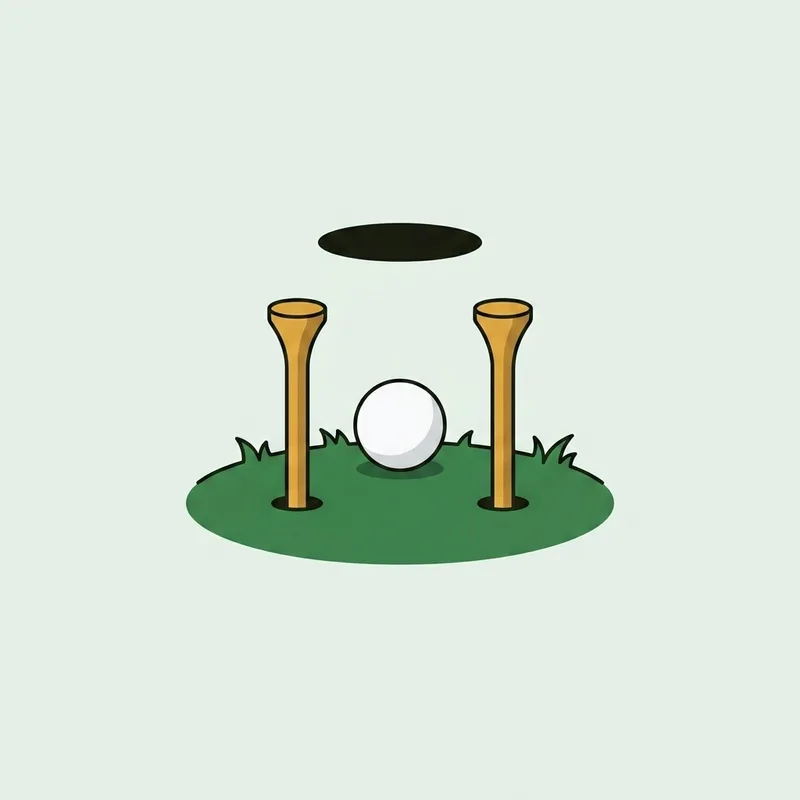
That is an aim problem, not a stroke problem. A consistent directional miss means your face is consistently pointing that way at address and your compensation is not quite enough. Have someone check your face aim from behind, or use the two-tee gate to give yourself objective feedback.
Is it better to be short or long on a short putt?
Long, every time, within reason. A ball that finishes a foot past had a chance to go in for its whole journey. A ball that comes up short never had one, and the last foot of a dying putt is where all the deflection happens.
Tom Ashworth
Tom Ashworth is a PGA Professional who has taught golf since 2012, working mainly with beginners and mid-handicappers at club level in Surrey. He reviews the instruction guides on Learn Golf for technical accuracy before they publish.
Most of his teaching is with players in their first three years of the game, and most arrive having been told too much: six swing thoughts collected from videos, half of them contradicting each other. His approach is to check the grip and the alignment before touching the swing, on the basis that most bad ball flight is decided at address.