The problem with learning golf left-handed is not the golf. It is that every book, video and article you will read was written for somebody standing the other way round, and the translation is usually left to you with a one-line disclaimer. Most of it mirrors cleanly. A few things do not, and those are where left-handers pick up faults. This page is the translation key.
The translation rule
Golf instruction uses "left" and "right" when it means "lead" and "trail", and that is the whole source of the confusion.
Lead means the side nearer the target. Trail means the side further from it. For a right-hander the lead hand is the left hand; for you it is the right. Every reference to the left hand, left hip, left knee or left side in a right-handed article is a reference to the lead side, and it converts by substitution rather than by thinking.
| Right-handed article says | Read it as | Which for you means |
|---|---|---|
| Left hand, left arm | Lead hand, lead arm | Your right hand and arm |
| Right hand, right side | Trail hand, trail side | Your left hand and side |
| Ball off the left heel | Ball off the lead heel | Off your right heel |
| Weight into the left side | Weight into the lead side | Onto your right side |
| Shoulders open, aiming left | Shoulders open, aiming lead-side | Aiming right of target |
| A slice curves right | A slice curves away from you | Curves left across the ground |
That last row is the one that catches people, because a slice is defined by which way it curves relative to the player rather than by a compass direction. A right-hander's slice moves the ball to the right side of the fairway. Yours moves it to the left side, and it is still a slice, caused by the same face-to-path relationship and fixed the same way. Our guide to fixing a slice works unchanged once the directions are swapped.
The ball flight laws are not directional, but every diagram of them is
The physics does not care which way you stand. The ball starts close to where the face points and curves away from the path, and the size of the curve is the gap between the two. TrackMan defines that gap as face to path, face angle minus club path, and the rule holds identically for both handednesses.
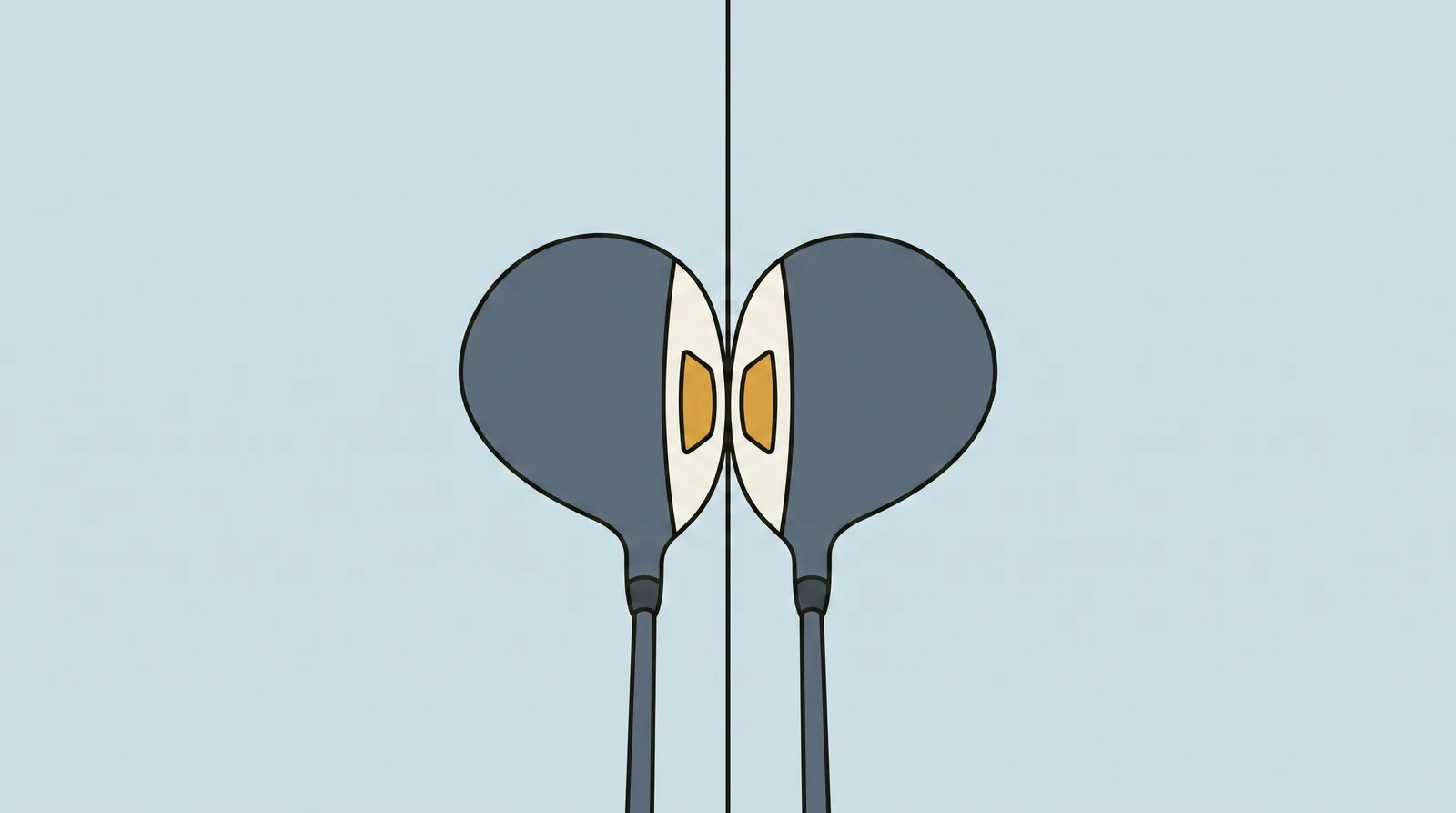
What is directional is every illustration of it, including the one below. It is drawn for a right-hander, which is the convention across the whole industry and on the rest of this site.
Read every ball flight diagram you meet that way. Flip it across the vertical, keep the shot name, and the mechanics survive the flip untouched. The same applies to alignment illustrations: a golfer with open shoulders is aimed lead-side of the target, which for a right-hander is left and for you is right. Our golf alignment guide is written right-handed and says so at the top.
Four things that do not simply mirror
This is the short list worth memorising, because mirroring these gives you a wrong answer rather than a confusing one.
Green reading does not flip. A putt described as right to left is right to left for everyone, because break is always described from behind the ball looking at the hole and both handednesses stand in the same place to look. Nothing in our how to read greens guide needs converting. What does mirror is the stroke itself and which hand does what in it.
The golf course does not flip. A dogleg that bends one way bends that way for both of you, and the water sits where it sits. Because your natural miss goes to the opposite side of the hole from a right-hander's, the same trouble meets you from the other direction, and course strategy written for a right-hander is the one category of golf advice that mirrors incorrectly. Work the holes out yourself using our golf course management framework rather than copying a right-hander's plan.
Relief under the Rules genuinely differs. Your area of intended stance is on the opposite side of the ball, so a cart path, sprinkler head or ground under repair can interfere with one handedness and not the other from the identical lie. Rule 16.1 makes interference with the area of intended stance grounds for free relief, so you are sometimes entitled to a drop where your playing partner is not, and sometimes not entitled where they are. Committees can also adopt a local rule removing stance-only relief, so check the card.
Where people stand around you. Every convention about staying out of a player's eyeline is written for a right-handed setup. Playing partners who habitually stand in the correct place for each other will be standing in the wrong place for you, without meaning anything by it, and the fix is to say so once.
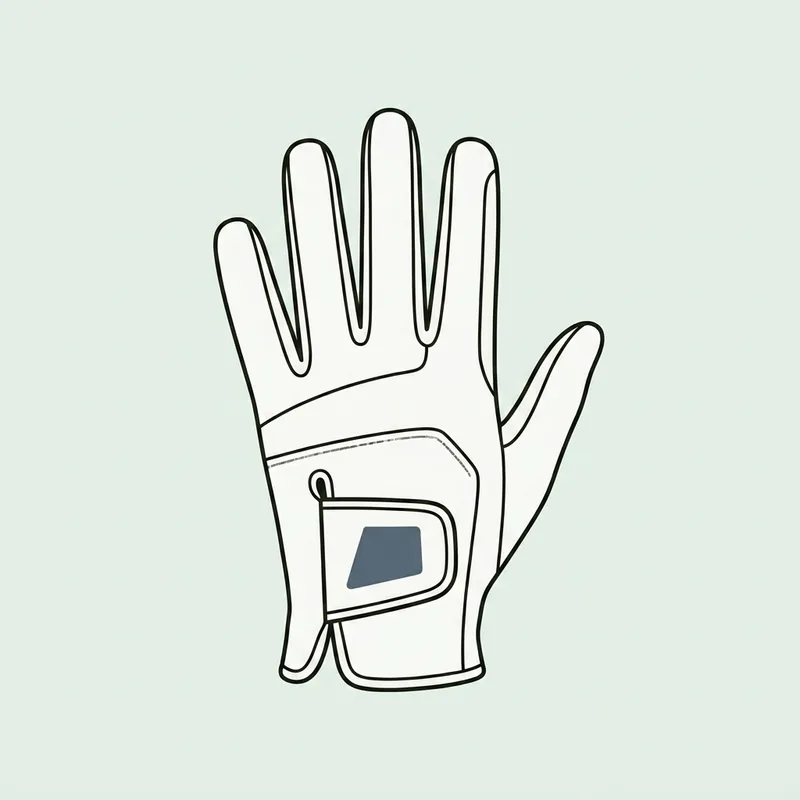
The glove is a small one that trips up new left-handers ordering online. It goes on the lead hand, which for you is the right, and retailers list gloves by the hand they fit rather than by the golfer's handedness. Read the listing carefully, because both conventions are in circulation. Our best golf gloves picks are available in both.
Buying left-handed clubs
New equipment is the easy part now. Mainstream models from the major manufacturers are built in left-handed versions, and a beginner buying a current game-improvement set will find what they need without difficulty.
The friction sits in four specific places, and knowing them saves a lot of wasted driving.
- Used stock is much thinner. Any pre-owned inventory is a reflection of what was sold years ago, so expect fewer listings, longer waits and less choice of shaft.
- Fitting carts and demo days are stocked right-handed by default. Ring ahead and ask specifically, because turning up and hoping does not work.
- Putters are the narrowest category, particularly in the more unusual head shapes and in anything from a small maker.
- Limited runs, tour issue heads and one-off releases frequently never appear left-handed at all.
None of that changes the buying criteria, only the search. The specifications that matter are the same ones in our golf club fitting guide, and the condition checks are the same ones in how to check a used golf club. Our buying used golf clubs guide covers where to look and what a fair price is.
Should a left-hander learn right-handed?
This one is genuinely contested, and anyone who gives you a flat answer is overselling their case.
The argument for learning right-handed is entirely practical. Every piece of instruction reads directly, every borrowed club fits, demo stock is available everywhere, and the used market is four or five times deeper. For a complete beginner with no established preference either way, those are not trivial advantages.
The argument against is that the preference usually already exists. Golf is a two-handed rotational action rather than a one-handed skill, so the useful test is not which hand you write with. It is which way round you naturally swing a bat or an axe, and plenty of people who write left-handed swing right-handed and the reverse. If you already swing one way without thinking about it, forcing the other side buys convenience at the cost of every athletic instinct you have.
Our view: if you have never swung a club and have no clear preference when handed one, try both for a session and let the ball decide, because the practical advantages of right-handed are real. If you have a preference, keep it. Coaches genuinely differ on this, and the ones who push beginners to the right-handed side usually do so on availability grounds rather than biomechanical ones. That is an honest argument, not a technical one.
Everything else about starting the game is identical, and our complete beginner guide applies without a single change. It carries the same right-handed disclaimer as the rest of the site, and by now you have the substitution rule to read past it.
Key takeaways
- Substitute lead and trail for left and right, and almost all right-handed instruction converts instantly.
- Shot names are defined relative to the player. A ball curving away from you is a slice for everybody.
- Ball flight diagrams are drawn right-handed. Flip the picture, keep the name.
- Green reading is already described from behind the ball, so break direction needs no flipping.
- The golf course is not a mirror image, so course strategy is the one category that converts badly.
- Rule 16.1 relief depends on the area of intended stance, which sits on the opposite side of the ball for you.
- Gloves are sold by the hand they fit. Yours goes on the right.
- New mainstream clubs are built both ways. The shortage is in used stock, demo carts, putters and limited runs.
Common questions
How do I convert right-handed golf instruction?
Read every left as lead and every right as trail. Lead is the side nearer the target, which for you is the right side. That single substitution converts almost all instruction correctly, and the handful of exceptions are green reading, course strategy and rules relief.
Does a left-handed golfer slice the same way?
A slice curves away from the player, so a right-hander's slice moves right across the ground and yours moves left. It is the same fault with the same cause, a clubface open to the swing path, and the same fixes apply once the directions are swapped.
Do ball flight laws work the same for left-handers?
Yes, exactly. The ball starts near where the face points and curves away from the path, and the size of the curve is the gap between them. Only the illustrations are directional, and every one you will find is drawn for a right-hander.
Do left-handers read greens differently?
No, and this is the exception worth remembering. Break is described from behind the ball looking at the hole, and both handednesses stand in the same place to do it. A right-to-left putt is right-to-left for everyone. The stroke mirrors; the read does not.
Are the Rules of Golf different for left-handed players?
The Rules are identical, but their application can differ on the same lie. Interference with your area of intended stance is grounds for free relief under Rule 16.1, and your stance sits on the other side of the ball, so an obstruction can interfere with you and not with a right-hander.
Is it hard to find left-handed golf clubs?
Not for current mainstream models, which are built both ways. It is harder for used clubs, for putters, for anything in a limited run, and for demo and fitting stock, which is right-handed by default at most shops. Ring ahead rather than turning up.
Should a left-handed beginner learn to play right-handed?
Only if there is no existing preference. Golf is a two-handed rotational action, so the useful test is which way you naturally swing a bat rather than which hand you write with. If a side already feels natural, the equipment convenience of the other one is not worth losing it.
Which hand does a left-handed golfer wear a glove on?
The right hand, because the glove goes on the lead hand and your lead hand is the right one. Retailers list gloves by the hand they fit rather than by the golfer's handedness, and both conventions appear online, so read the listing.
Does the golf course play differently for a left-hander?
Yes, and this is the one thing that does not mirror at all. The hole is laid out the way it is laid out, but your natural miss goes to the opposite side, so the same hazards meet you from the other direction. Work the strategy out yourself rather than copying a right-hander's.
What percentage of golfers are left-handed?
Nobody knows with any confidence. No governing body counts it and no manufacturer publishes the split, so the figures circulating online are estimates rather than measurements. Treat any specific number as unsourced.
Do left-handed golf clubs cost more?
Not as a rule when new, because they are built alongside the right-handed versions. Used prices can run higher simply because supply is thinner, and the practical cost is usually time spent searching rather than money.
Tom Ashworth
Tom Ashworth is a PGA Professional who has taught golf since 2012, working mainly with beginners and mid-handicappers at club level in Surrey. He reviews the instruction guides on Learn Golf for technical accuracy before they publish.
Most of his teaching is with players in their first three years of the game, and most arrive having been told too much: six swing thoughts collected from videos, half of them contradicting each other. His approach is to check the grip and the alignment before touching the swing, on the basis that most bad ball flight is decided at address.