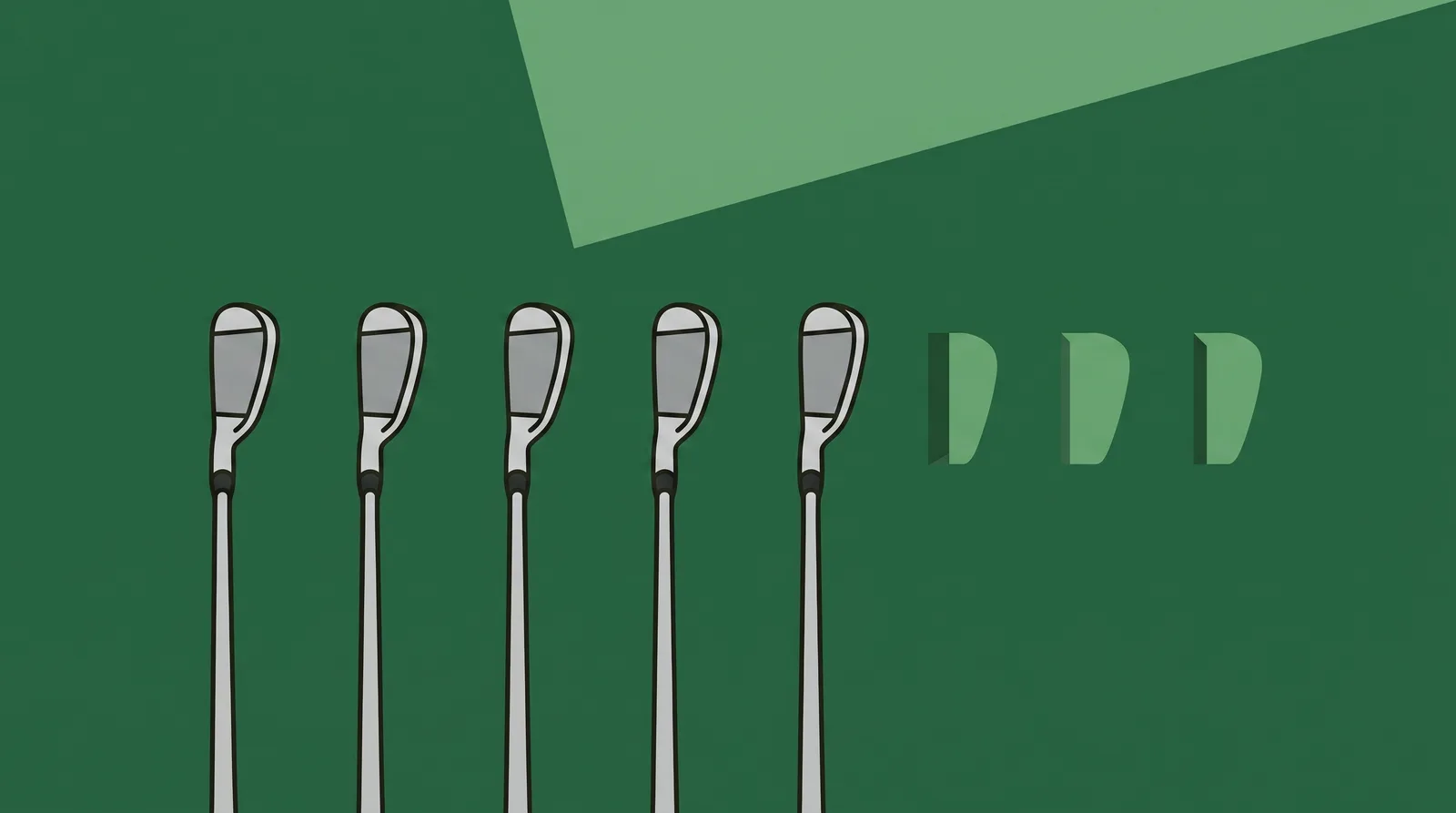
Walk into a golf shop as a beginner and you will be shown a fourteen-club set for four figures. You do not need it, and buying it early costs you twice: once at the till, and again in the two years you spend hitting clubs you cannot yet use. Here is the short bag that covers every shot you can actually hit today. If you are still deciding whether to take the game up at all, start with our complete beginner guide instead.
The seven clubs that cover everything
Golf has a lot of clubs because good players need fine control over distance. You do not have that control yet, so gaps of 20 yards between clubs are irrelevant to you. What matters is having something for long, medium, short and on the green.
| Club | Rough carry | What it is for |
|---|---|---|
| Driver or 3 wood | 150 to 200 yards | Tee shots on par 4s and par 5s |
| Hybrid (4 or 5) | 130 to 160 yards | Long approach shots, and off the tee when the driver misbehaves |
| 7 iron | 110 to 140 yards | Your reference club. Most approach shots |
| 9 iron | 90 to 115 yards | Shorter approaches |
| Pitching wedge | 70 to 100 yards | Approach and longer chips |
| Sand wedge | Under 70 yards | Bunkers, greenside chips, anything soft |
| Putter | On the green | Around a third of every shot you take |
Those carry numbers are wide on purpose. Distance varies enormously with swing speed, and comparing yours to anyone else's this early is a waste of energy.
What to skip, and why
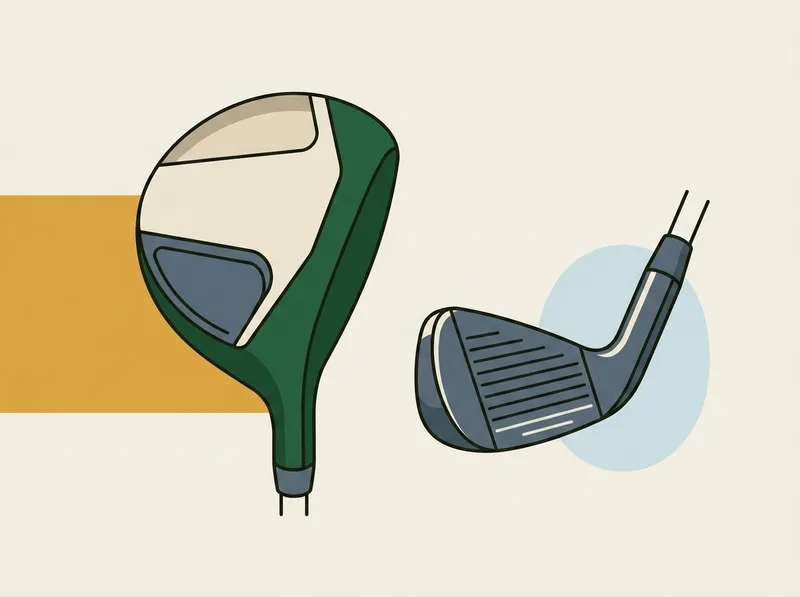
The long irons are the clubs that make people quit. A 3 iron has about 20 degrees of loft and a tiny sweet spot, which means it needs both speed and a precise strike to get airborne at all. Most beginners produce a low skidding shot that travels less far than their 7 iron.
Hybrids exist because manufacturers accepted this. They put the same loft on a wider, lower-slung head that launches the ball high with far less speed. A 4 hybrid does the job of a 4 iron and is dramatically easier to hit.
Skip these until you are consistently breaking 100:
- 3, 4 and 5 irons. Replace with one hybrid.
- A second and third wedge. A gap wedge and lob wedge only matter once you can control distance with the two wedges you have.
- A 5 wood and 7 wood. Useful clubs, but they overlap with a hybrid you already own.
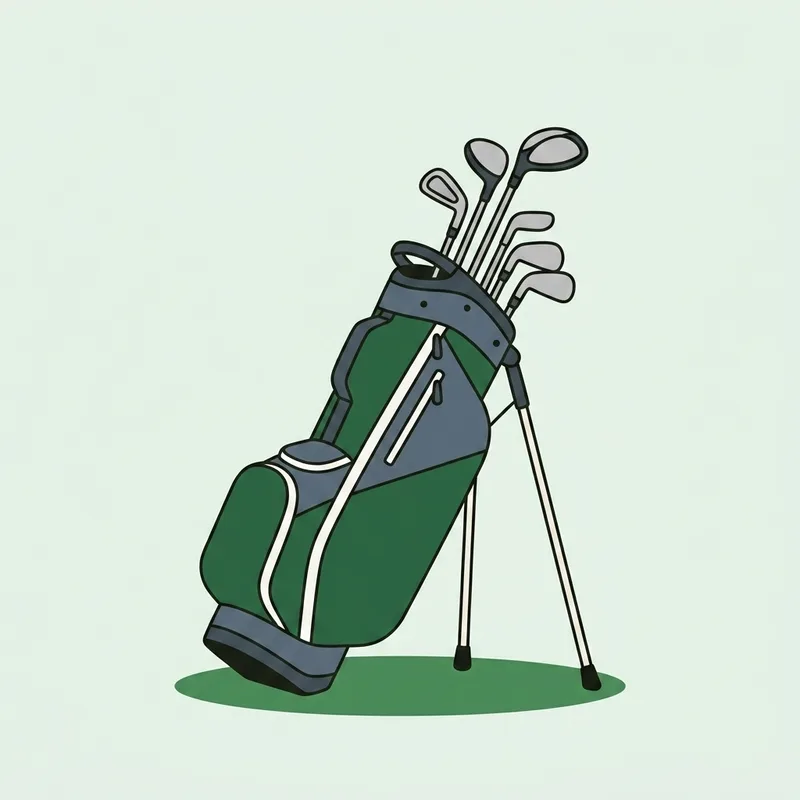
Buying new, buying used, or renting
New is the most expensive way to make this decision and the least informative, because you do not yet know what suits you.
Used is where almost every sensible first bag comes from. Club technology moves slowly at the beginner end, and a five-year-old game-improvement iron performs nearly identically to this year's model. A full used starter set typically runs a third to a half of new.
If you would rather buy new, our picks are in best golf clubs for beginners. Renting or borrowing for the first three or four rounds is better still if you can. It costs almost nothing and tells you whether you actually enjoy the game before you spend anything.
Getting the specification roughly right
Two things matter far more than brand, and both are easy to get wrong when buying blind.
Shaft flex controls how much the shaft bends during the swing. Too stiff and you will struggle to launch the ball or square the face, which is one of the quieter causes of a persistent slice. Most beginners need regular or senior flex, not stiff. Our golf shaft flex guide covers how to work out which you need from your swing speed.
Length matters if you are notably tall or short. Standard clubs suit roughly 5'7" to 6'1". Outside that range, a club that is too long or short forces you to compensate at address, and those compensations become swing faults. Our golf club fitting guide explains what a fitting actually measures and when it is worth paying for.
What it should cost
A realistic first setup, buying used:
- Seven-club set: £220 to £400
- Stand bag: £35 to £65, often included
- Balls, tees and a glove: £25
- Shoes: £40 to £70 or trainers for your first few rounds
That puts a complete, entirely adequate setup at roughly £330 to £560. Our guide to how much golf costs breaks down the first twelve months including green fees and practice. The consumable line is the one that keeps recurring rather than the one that hurts on day one, and which golf tees to buy is worth two minutes before you buy a bag of the wrong length.
When to add clubs
Add clubs when a gap becomes a problem you can feel, not on a schedule.
The usual first addition is a gap wedge, once you can control distance well enough to notice a 30 yard hole between your pitching wedge and sand wedge. After that, most people add a 5 wood or a second hybrid, then fill in the shorter irons.
By the time you are breaking 90 you will probably carry eleven or twelve clubs and know exactly why each one is there. That is a much better bag than fourteen clubs chosen for you on day one.
Once you have the clubs, the next thing worth getting right is how you hold them. Start with how to grip a golf club, because the grip decides where the face points, and the face decides where the ball goes.
Key takeaways
- Seven clubs cover every shot a beginner can hit: driver or 3 wood, hybrid, 7 iron, 9 iron, pitching wedge, sand wedge, putter.
- Skip the 3, 4 and 5 irons. Replace all three with one hybrid.
- Fourteen is a legal maximum, not a target, and there is no minimum.
- The putter gets used around forty times a round, more than every other club combined.
- Buy used for a first set. The performance gap at this level is negligible and the price gap is not.
- Shaft flex and length matter more than brand. Most beginners need regular or senior flex.
- Add clubs when you feel a gap, not on a schedule.
Common questions
How many golf clubs does a beginner need?
About seven. A driver or 3 wood, one hybrid, a 7 iron, a 9 iron, a pitching wedge, a sand wedge and a putter will cover every situation in your first year. The rules allow up to fourteen but set no minimum.
Should a beginner buy a full 14-club set?
No. A full set costs more, and the extra clubs are the hardest ones in golf to hit. You will carry seven clubs you cannot use while paying for all fourteen. Buy short and add as you improve.
Do beginners need a driver?
Not immediately. A 3 wood is shorter, has more loft and is significantly easier to hit straight, and it will cost you very little distance at beginner swing speeds. Many golfers are better off leaving the driver alone for their first season.
Are hybrids better than long irons for beginners?
Yes, clearly. A hybrid carries the same loft on a wider, lower head that launches the ball much more easily. Most beginners hit a 4 hybrid further and straighter than a 4 iron, and more consistently.
Should I buy used golf clubs as a beginner?
Used is the sensible default. Performance at the beginner end has barely moved in five years, so a used set typically costs a third to a half of new for nearly identical results. Check the grips and grooves, or buy from a retailer who grades condition.
What shaft flex does a beginner need?
Usually regular, sometimes senior. Stiff shafts require more swing speed than most beginners have and tend to leave the clubface open, which produces a slice. If you are unsure, regular is the safer error.
How much should a beginner spend on golf clubs?
A complete used setup including bag, balls and a glove runs roughly £330 to £560. Spending more than that before you have played a full season rarely improves anything except how the bag looks.
Do I need a golf bag straight away?
You need something to carry seven clubs, and a basic stand bag does it for £35 to £65. Many used sets include one. A cart bag or a trolley is worth considering later, once you know whether you prefer to walk.
Should I get fitted for clubs as a beginner?
A full fitting is premature, because your swing will change substantially in your first year. A quick check on shaft flex and club length is worth doing though, and most shops will do that for free or as part of a purchase.
What is the most important club for a beginner?
The putter, comfortably. It accounts for around forty shots a round, which is more than your driver and every iron combined. It is also the club most beginners spend the least on and practise with least. See best putters for beginners for models worth the money.
Tom Ashworth
Tom Ashworth is a PGA Professional who has taught golf since 2012, working mainly with beginners and mid-handicappers at club level in Surrey. He reviews the instruction guides on Learn Golf for technical accuracy before they publish.
Most of his teaching is with players in their first three years of the game, and most arrive having been told too much: six swing thoughts collected from videos, half of them contradicting each other. His approach is to check the grip and the alignment before touching the swing, on the basis that most bad ball flight is decided at address.