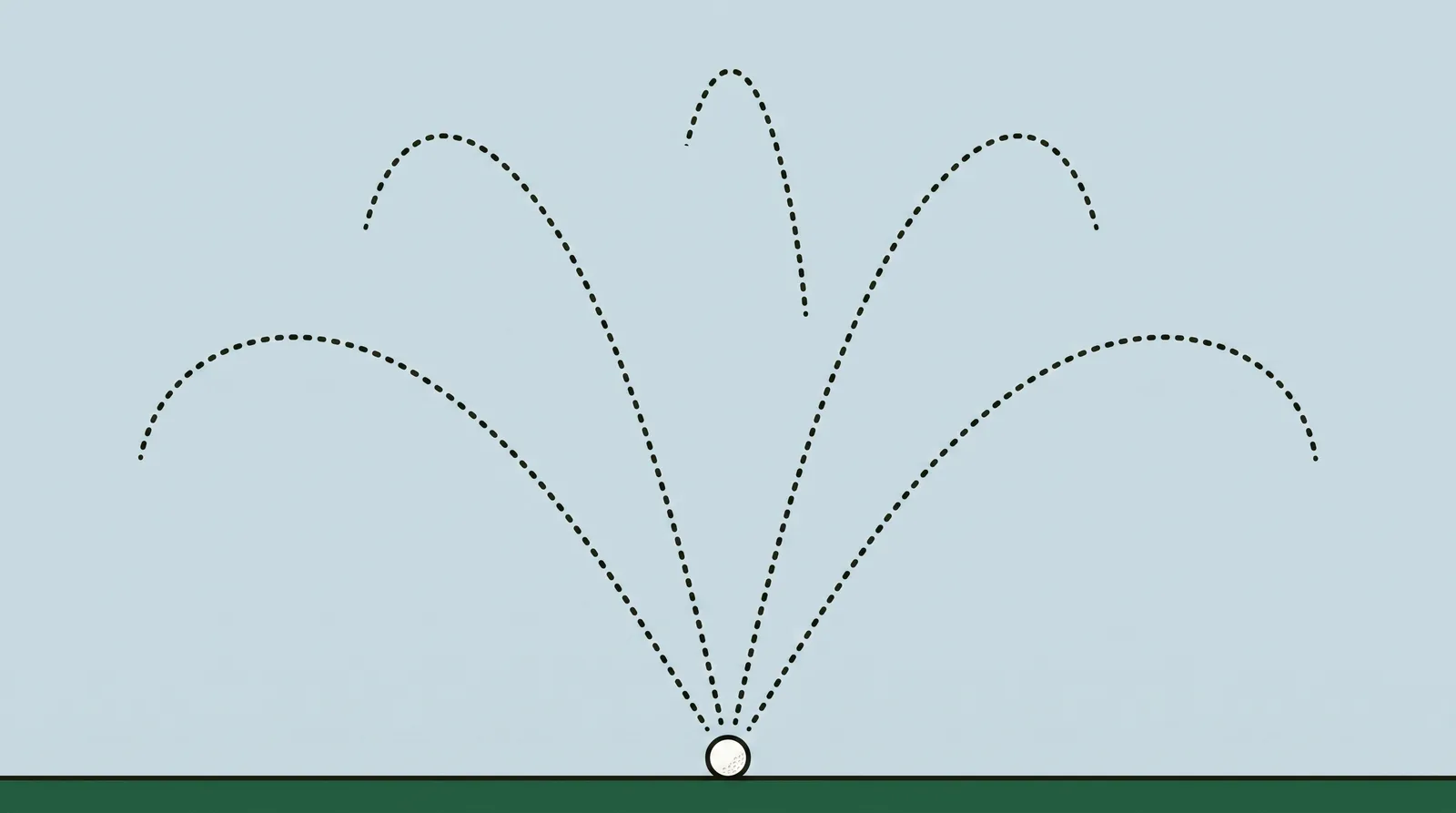
Ball flight is the only honest feedback in golf. The swing felt fine, the video looked fine, and the ball still finished forty yards from where it was aimed. Two measurements decide that outcome, and neither of them is how the motion looked. This guide covers what those numbers do, the nine shapes they produce, how much curve each gap is worth, and how to read your own flight without a launch monitor.
Every left and right below assumes a right-handed golfer. If you play left-handed, mirror them and nothing else changes: face left of path still curves the ball towards the face, it just curves the other way across the ground.
The two numbers that decide every shot
Face angle is where the clubface points at the moment of collision, measured against your target line. Club path is the direction the club head is actually travelling at that same moment.
TrackMan describes face angle as the most important number for determining the starting direction of the shot, because the ball launches very closely to where the face is aimed. That single sentence rewrites most of the advice a slicing golfer has been given.
Club path uses a simple sign convention. A positive number means the club is travelling right of the target line, which most golfers call in-to-out. A negative number means it is travelling left, which is out-to-in. Zero is straight down the line.
The gap between the two has its own name. TrackMan calls it face to path, defined as face angle minus club path, and states the rule plainly: the ball curves towards the face angle and away from the club path whenever that gap is not zero.
Why the old ball flight laws were backwards
For most of the last century, teaching used the opposite model. The ball was thought to start on the swing path and curve towards the face, which is why generations of golfers were told a slice came from swinging across the ball and nothing else.
Radar measurement showed the reverse. The ball starts close to the face and curves away from the path. That inversion matters because it changes the first thing you should fix. Under the old model you chased the path. Under the measured model, the face is what sets the start line, so it is the number with the biggest effect on where the ball ends up.
This is why two golfers can describe the same miss and need opposite work, and why a tip that transformed a friend's driving does nothing for you. Their gap was the other way round.
The ball flight chart: all nine shapes
Three possible start lines multiplied by three possible curves gives nine shot shapes. Every ball you have ever hit is one of them.
| Shape | Start line | Curve | Face at impact | Path relative to the face |
|---|---|---|---|---|
| Pull | Left | None | Left of target | Matching the face |
| Pull draw or pull hook | Left | Left | Left of target | Right of the face |
| Pull fade or pull slice | Left | Right | Left of target | Left of the face |
| Straight | At target | None | At target | Matching the face |
| Draw or hook | At target | Left | At target | Right of the face |
| Fade or slice | At target | Right | At target | Left of the face |
| Push | Right | None | Right of target | Matching the face |
| Push draw or push hook | Right | Left | Right of target | Right of the face |
| Push fade or push slice | Right | Right | Right of target | Left of the face |
Read the table as a diagnosis rather than a label. The start line tells you the face. The curve tells you the gap. A ball that starts left and finishes further left is a face aiming left with a path even further right of it, which is a very different problem from a ball that starts left and slices back.
Draw and hook describe the same curve at different sizes, as do fade and slice. There is no separate mechanism for the big version. A hook is a draw with a wider gap, which is worth knowing before you start hunting for a cause that does not exist.
How much curve a gap is actually worth
The relationship is close to linear, which makes it possible to estimate your own numbers from the shape of the flight. TrackMan's face to path data gives worked examples from tour swings.
| Player and club | Face to path | Resulting curve |
|---|---|---|
| PGA Tour driver | 2 degrees closed to path | About 19 yards left |
| PGA Tour driver | 5 degrees open to path | About 44 yards right |
| PGA Tour 6 iron | 2 degrees open to path | About 8 yards right |
| PGA Tour 6 iron | 5 degrees closed to path | About 20 yards left |
| LPGA Tour driver | 2 degrees open to path | About 14 yards right |
| LPGA Tour driver | 5 degrees closed to path | About 32 yards left |
Two things jump out. The driver curves roughly twice as much as a 6 iron for the same gap, because it has less loft and therefore tilts more of its spin sideways. And a gap you cannot see at address, five degrees, is worth about forty yards off the tee.
Where the strike fits in
Face and path assume you hit the middle of the club. Most amateurs do not, and the miss changes the flight on its own.
Impact location is one of the six numbers TrackMan tells amateurs to learn, and it earns the place. A driver head is curved across its face, so a strike out towards the toe imparts a small amount of draw spin and a strike towards the heel imparts fade spin, regardless of what the face and path were doing. Strike the ball low on the face and you lose ball speed whatever the direction was.
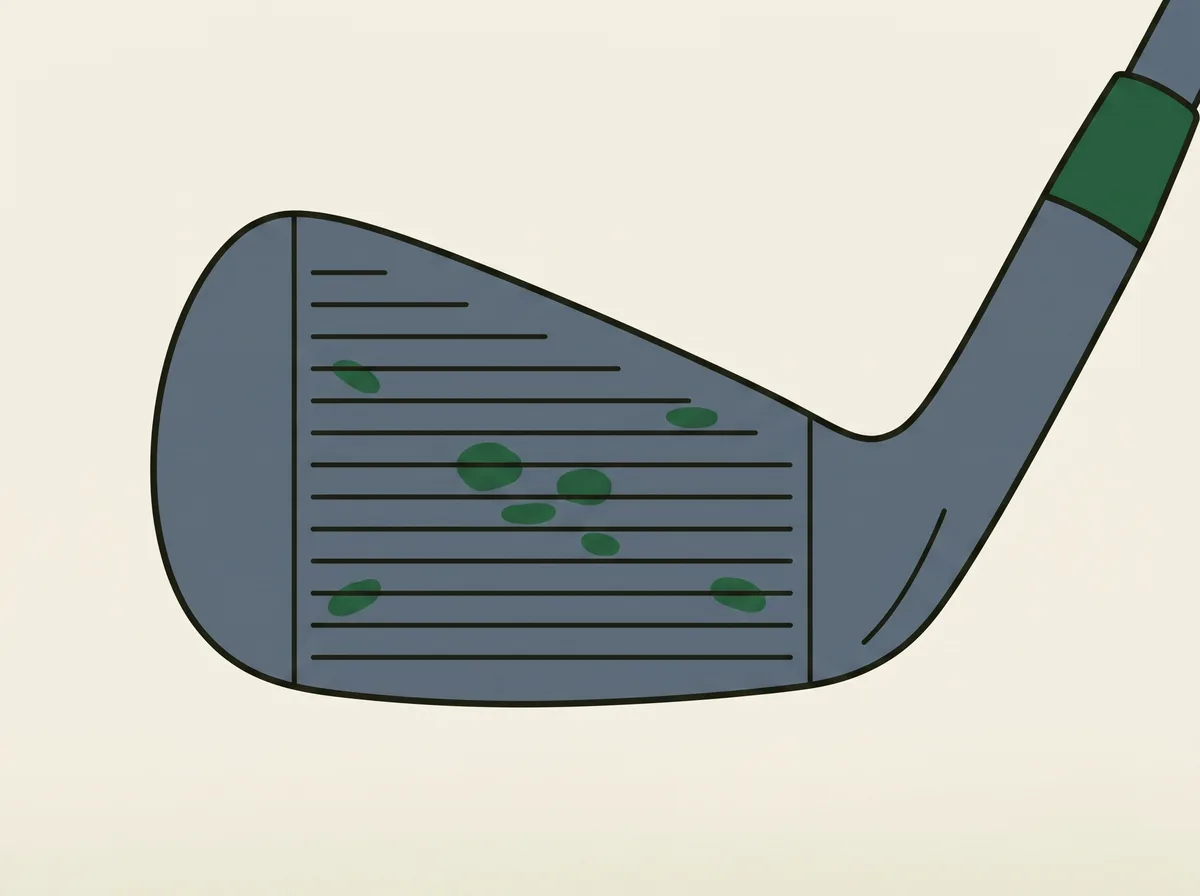
Buy a roll of impact tape or use dry shampoo on the face for one session. If your marks are scattered, work on strike before you work on anything in this guide, because face and path are being measured from a different point on the club every swing. The individual parameters and what they mean are unpacked in launch monitor data explained.
The vertical half of ball flight
Face and path handle left and right. Attack angle handles up and down, and it decides height, spin and whether the strike is any good at all.
Attack angle is whether the club head is moving downwards or upwards when it meets the ball. TrackMan's attack angle data puts the PGA Tour average at minus 0.9 degrees with a driver and minus 3.7 degrees with a 6 iron, and the average male amateur at minus 1.8 degrees with a driver.
| Player | Driver attack angle |
|---|---|
| PGA Tour average | Minus 0.9 degrees |
| LPGA Tour average | Plus 2.8 degrees |
| Male amateur, scratch or better | Minus 0.9 degrees |
| Male amateur, average at 14.5 handicap | Minus 1.8 degrees |
| Male amateur, bogey golfer | Minus 2.1 degrees |
The LPGA number is the interesting one. Those players hit up on the driver by nearly three degrees and generate more distance per unit of club speed than the men's tour average as a result. Hitting down on a teed driver is a distance leak, and it is the single most common one among amateurs.
With an iron the sign reverses. The club should still be descending when it reaches the ball, which is another way of saying the lowest point of the arc arrives after the ball rather than before it. When it arrives early you hit the ground first, which is covered in how to stop hitting fat shots.
How to read your own ball flight
Everything above is readable from the ground if you watch the right part of the shot.
Watch the first twenty yards and nothing else. That is the face. Where the ball finishes is the face plus the curve plus the slope plus the wind, which is three too many variables to learn from. Golfers who judge a shot by its resting place consistently misdiagnose themselves.
Position matters as much as attention. Start line only reads from directly behind the ball, on the target line. Filmed from the side you can see the swing perfectly well and still have no idea where the ball set off, which is the number you came for.
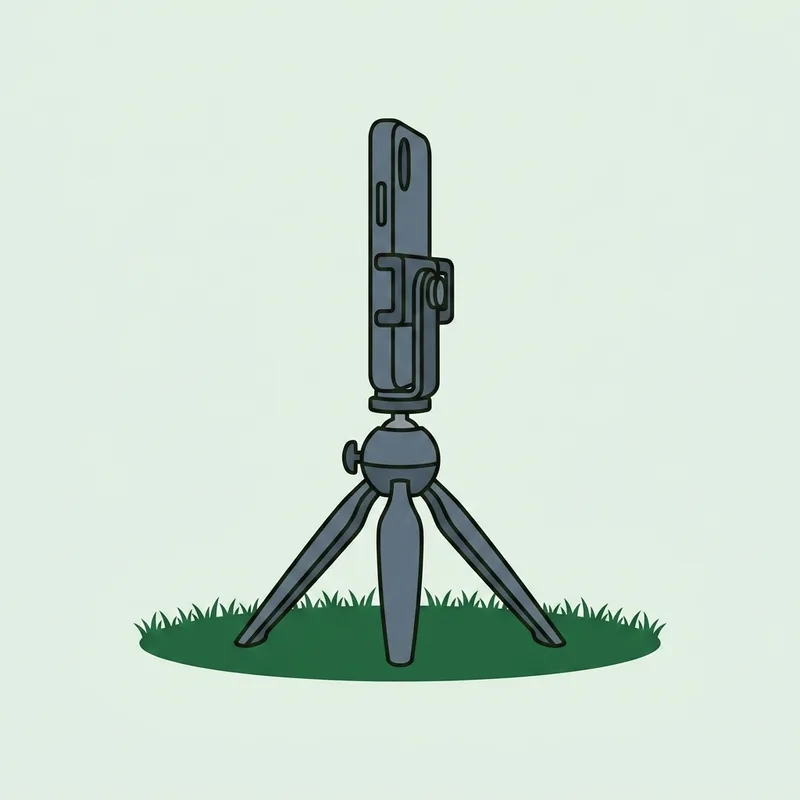
Three shots is enough. Set the phone down directly behind the ball on the target line, hit three balls at one specific target and note only where each one started. If all three start in the same place, your face is repeatable and the curve is a path problem. If they start in three different places, the face is the job.
Which number to fix first
There is a genuine disagreement here and it is worth naming rather than papering over.
The face is set mostly by the grip and by how the hands release, so it is usually the cheaper fix. The path is set by aim, sequence and where the club approaches from, so it takes longer. Our view is face first for most golfers, because a square face on a poor path is a small pull or push that still finds grass, while an open face on a perfect path is still a slice.

Grip is where face work starts, and how to grip a golf club covers the three joining styles and what strength actually means. Path work starts with aim, because the club follows the shoulders rather than the feet, which is the point of golf alignment.
If your gap sends the ball right, the sequence of fixes is in how to fix a slice. If it sends the ball left, it is in how to fix a hook. The two guides are mirror images because the underlying relationship is the same one.
Shaping shots on purpose
Once face and path are numbers you can move, a curve stops being a fault and becomes a choice.
A draw needs the face slightly closed to the path, with both aimed right of the target so the ball starts right of the flag and works back. A fade needs the face slightly open to the path, with both aimed left. In each case the size of the gap is the size of the curve, which is why a deliberate shape uses two or three degrees rather than ten.
The full setup for each is in how to hit a draw and how to hit a fade. Do not start there. A golfer who cannot yet hit the middle of the face is trying to control a gap they cannot yet measure, and the reliable result is a bigger miss in both directions.
Key takeaways
- The clubface sets the start line. The ball launches very close to where the face points.
- The gap between face and path sets the curve. The ball curves towards the face and away from the path.
- Neither number causes a curve alone. A big out-to-in path with a matching face is a straight pull, not a slice.
- Five degrees of face to path is worth roughly forty yards of curve with a driver.
- A driver curves about twice as much as a 6 iron for the same gap, because it has less loft.
- Strike location changes the flight on its own, so fix a scattered strike pattern before chasing degrees.
- Attack angle is the vertical half: down with an iron, ideally up with a driver.
- Watch the first twenty yards of flight, not where the ball finishes.
Common questions
What are the ball flight laws in golf?
They describe how the clubface and the club path combine to produce a shot. The face determines where the ball starts, and the difference between the face and the path determines how much the ball curves and in which direction. Strike location and attack angle then modify the result.
Does the ball start on the path or on the face?
On the face, or very close to it. The older teaching model had this the other way round, and radar measurement corrected it. That correction is why fixing the face is usually the fastest route to a straighter ball.
Why does my golf ball curve so much?
Because the face and the path are pointing in noticeably different directions at impact. With a driver, a five degree gap is worth around forty yards of curve, and five degrees is far too small to see when you look down at the club at address.
What is face to path in golf?
It is the face angle minus the club path, expressed in degrees. A negative number means the face is closed to the path and the ball curves left for a right-handed golfer. A positive number means the face is open to the path and the ball curves right.
Why does the ball start left and curve right?
Your path is travelling well left across the ball, which sends the start line left, and your face is open to that path, which bends the ball back right. It is the most common shape in amateur golf and it usually finishes somewhere near the original target, which is why it survives for years.
Do the ball flight laws work the same for left-handers?
Yes, mirrored. The ball still starts near the face and curves away from the path. A face closed to the path curves the ball towards the lead side for both, which is left for a right-hander and right for a left-hander.
Why does my driver curve more than my irons?
Loft. A lofted club puts more of its spin into backspin, which resists sideways tilt, while a driver tilts more of the same spin sideways. TrackMan's own figures show a driver producing roughly double the curve of a 6 iron for an identical face-to-path gap.
Can I have a good path and still slice it?
Yes, and it is common. A neutral path with a face that is three or four degrees open to it produces a straight-starting ball that curves right all day. This is why path-only fixes so often fail to remove a slice.
Do I need a launch monitor to use this?
No. Watch the first twenty yards of flight from directly behind the ball and you have the face. Watch the curve and you have the gap. A launch monitor turns those two observations into numbers, which is useful, but the diagnosis does not depend on it.
What is a good attack angle?
Downwards with an iron, around three to four degrees, so the ball is struck before the ground. Upwards with a driver, because the ball is teed and an ascending strike adds distance. TrackMan puts the LPGA Tour average at nearly three degrees up with a driver, against minus 1.8 degrees for the average male amateur.
On this page
Tom Ashworth
Tom Ashworth is a PGA Professional who has taught golf since 2012, working mainly with beginners and mid-handicappers at club level in Surrey. He reviews the instruction guides on Learn Golf for technical accuracy before they publish.
Most of his teaching is with players in their first three years of the game, and most arrive having been told too much: six swing thoughts collected from videos, half of them contradicting each other. His approach is to check the grip and the alignment before touching the swing, on the basis that most bad ball flight is decided at address.