Photographs sell a used club on its cosmetics, and cosmetics are the one thing about a club that barely matters. The specification you cannot see in a listing is what decides whether it plays, and the wear you can only feel with your hands is what decides how long it lasts. This is the check worth running before you pay, whether the club is in your hands at a shop counter or has just arrived in a box. If you have not already decided which clubs are worth buying used in the first place, buying used golf clubs is worth reading first.
Why the order matters
Every check on this page fixes a different kind of problem, and they are not equally serious. A worn grip costs about £8 to £12 and ten minutes to replace, so it should never be a reason to walk away from an otherwise good club. A wrong shaft specification cannot be fixed at any price without buying a new shaft, which usually costs more than the club did. Checking in the wrong order means noticing a cosmetic problem and missing a structural one, so specification comes first, wear comes second, and everything else follows from there.
Confirm the specification first
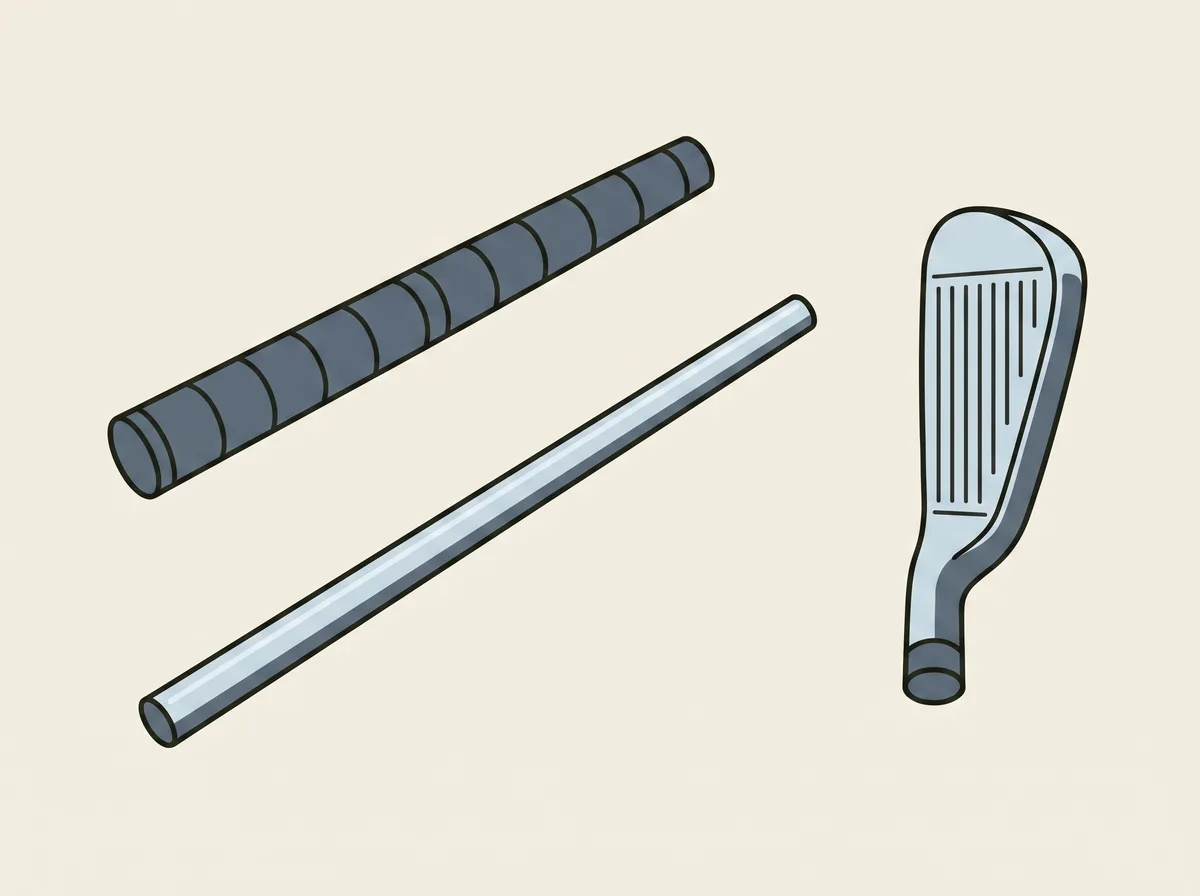
Before anything about condition, confirm the club actually matches what you need. Shaft flex, length and lie angle should be stated on any listing worth trusting, and if they are missing, ask before you buy rather than assuming. Our shaft flex guide covers how to work out what suits your swing speed if you have not been fitted.
If you have static measurements from a fitting, or even just your height and wrist-to-floor distance, Ping's colour code chart gives a quick sanity check on whether a stated length and lie are in the right region for your build. It will not replace a proper fitting, but it takes two minutes and catches a club that is obviously wrong before you spend anything. What a full fitting actually measures covers the rest of what a listing's numbers are standing in for.
Check the grip
Run a thumb across the grip and press it lightly. It should have some give and a slight tack to it. A grip that feels hard, shiny or slick has oxidised with age and will not be doing its job, whatever it looks like in a photo.
Then hold the club with one hand on the grip and the other on the shaft just below it, and twist gently in opposite directions. A properly seated grip will not move. Any twist at all means the grip has come loose from the shaft, which is either a quick regrip job or, occasionally, a sign the club has been reshafted poorly. Either way, a worn or loose grip is the cheapest problem on this list to fix and should never be the reason you turn a good club down. How to regrip a golf club covers doing it yourself for the price of the grips.
Check the shaft
On a steel shaft, look along its length for any dent, however small. A dent that would look cosmetic on a car panel is structural on a golf shaft, because it creates a weak point the shaft will eventually fail at under load. A dented steel shaft is not a club to buy at any price, since replacing the shaft usually costs more than the club is worth.
On a graphite shaft, look and feel for cracking or splintering, particularly near the grip end and near the head, which are the two places graphite fails first. A hairline crack can be almost invisible to the eye but will usually show as a rough patch under a fingernail run gently along the shaft.
Measure the length if it matters to you: from the sole of the club to the top of the grip, using a straight tape. Standard lengths vary by club and by manufacturer, so compare against a club you already know fits rather than against a single number, and treat a significant difference as a question to ask rather than an automatic problem.
Check the face and the grooves
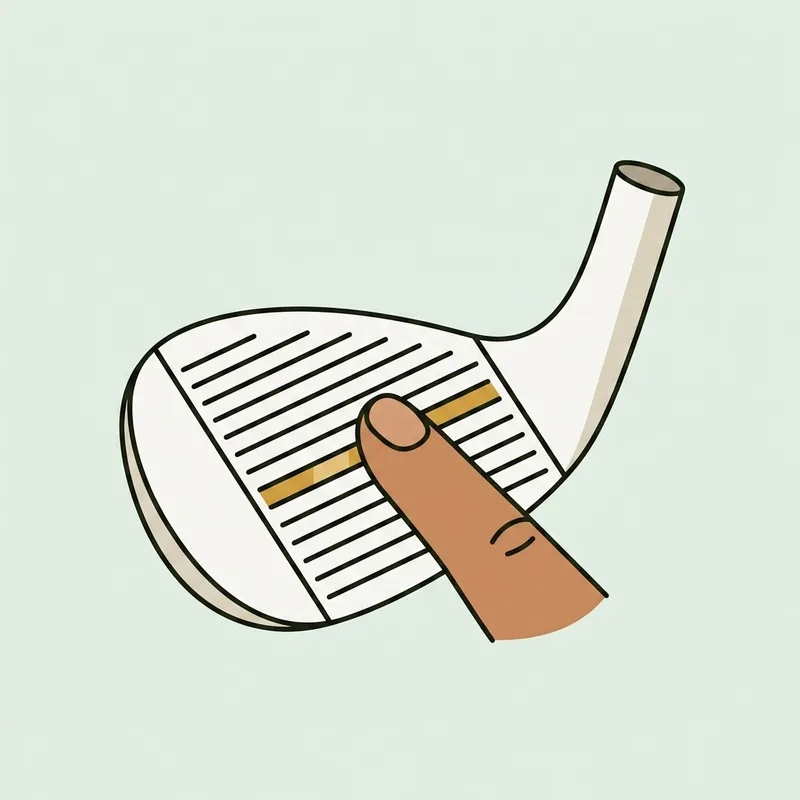
For an iron or a wedge, run a fingertip firmly across the grooves, from one side of the face to the other. Sharp grooves catch slightly against the skin. Worn grooves feel smoother, almost polished, particularly in the centre of the face where most strikes land. A wedge with worn grooves has lost spin it cannot get back, and it is the one part of a used club where cosmetic condition and functional condition can look completely different from each other.
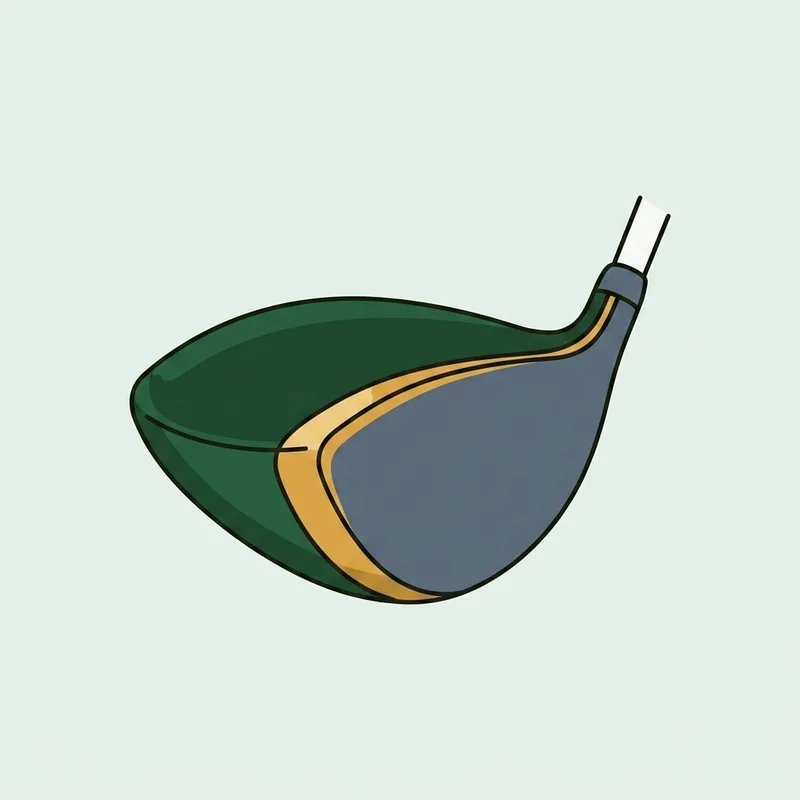
For a driver or a fairway wood, tilt the head so light catches the seam where the crown meets the face. Years of repeated impact can eventually produce a hairline crack along that seam, which is rare but serious, since it usually means the face has lost its spring effect and needs replacing entirely.
Check the head is secure
Hold the club by the grip and give it a firm, controlled shake near your ear. A rattle usually means one of two things: a loose adjustable weight, common on modern drivers and fairway woods with a movable weight system, or a failed epoxy bond at the hosel on an older club, which is a proper repair rather than a quick fix. Either is worth knowing about before you pay, even if it does not rule the club out.
While you have it in hand, check the hosel, the joint where the shaft meets the head, for any visible gap or movement. A tight, seamless joint is what you want to see. Any wobble at that joint is the same underlying problem as the rattle and should be priced in or walked away from, depending on how much the club otherwise suits you.
Checking a putter is slightly different
A putter has no grooves to wear and rarely takes the kind of repeated hard impact that damages a face, so the checks shift. Look at the face insert, if it has one, for flattening or excessive wear in the centre, which changes how the ball comes off the face. Check that the alignment lines or dots on the top of the head are still crisp enough to actually use, since a scuffed alignment aid is a real functional loss on the one club where alignment matters most. Everything else, grip, shaft straightness and head security, applies exactly as it does to any other club. What each club is actually for covers how a putter's job differs from the rest of the bag if any of this needs more context.
Spotting a counterfeit
Fakes are concentrated on marketplace listings and unfamiliar sites rather than on graded sellers, and the tell is usually the price rather than the club itself. A genuine current-generation driver selling for a fraction of its real value is the warning sign, not the opportunity. Beyond price, a few physical checks help: a counterfeit often feels noticeably too light or too heavy for its size, the paint fill in the stamping can look slightly off compared to official product photos, and finishing details like the texture on the sole or the crown graphics are frequently the weakest part of the copy. None of these checks are foolproof on their own, which is why buying from a seller that authenticates what it sells removes the problem rather than just reducing it.
| What to check | How to check it | Red flag |
|---|---|---|
| Specification | Read the listing, or ask directly | Shaft flex, length or lie not stated |
| Grip | Feel for tack, twist gently to test the seat | Hard, shiny surface, or any movement |
| Shaft (steel) | Look along the full length | Any visible dent |
| Shaft (graphite) | Feel near the grip end and the head | Roughness, splintering, hairline cracks |
| Grooves | Run a fingertip across the face | Smooth or polished feel, especially centre-face |
| Driver or wood face | Tilt to catch the light on the crown seam | A visible hairline line or crack |
| Head connection | Shake gently near your ear, check the hosel | A rattle, or any visible gap at the joint |
| Authenticity | Compare price and finish to the genuine model | A price that looks too good, rough finishing detail |
If something is wrong, use the return
Every check on this page takes under two minutes with the club in hand, and most of it is impossible to do from a photograph, which is exactly why a return policy matters more than the listing photos do. Buying somewhere with a genuine returns window turns a specification you got wrong into a free correction rather than a wasted purchase. Our comparison of where to buy used clubs covers which routes offer that and which do not, and if the club turns out wrong for you rather than faulty, where to sell used clubs covers moving it on without much of a loss.
Key takeaways
- Check specification before condition. A perfect-looking club in the wrong flex, length or lie plays worse than a scuffed one that fits.
- A hard, shiny grip or any twist when tested means it needs replacing, and at roughly £8 to £12 a club that should never be a dealbreaker on its own.
- Any dent in a steel shaft is structural, not cosmetic, and a graphite shaft should be checked for cracking near the grip and the head.
- Worn grooves feel smooth under a fingertip, particularly in the centre of the face, and cannot legally be sharpened back up.
- A rattle when the club is shaken usually means a loose weight or a failed hosel bond, both worth knowing about before you pay.
- Fakes are usually given away by price rather than appearance. Buying from a seller that authenticates its stock removes the guesswork entirely.
- Every check here takes about two minutes with the club in hand, which is exactly why a genuine returns window matters more than good photographs.
Common questions
How do I check if a used golf club is worth buying?
Confirm the specification first, shaft flex, length and lie, since that is what you cannot see in a photograph and the thing most likely to be wrong. Then check the grip, the shaft for dents or cracks, the grooves for wear, and give the head a gentle shake to check for a rattle. All of it takes about two minutes.
How can I tell if a golf club's grooves are worn out?
Run a fingertip firmly across the face from one side to the other. Sharp grooves catch slightly against the skin, while worn ones feel smoother, particularly in the centre of the face where most strikes land. Worn grooves cost spin and control and cannot be legally restored by sharpening at home.
How do I know if a used golf club shaft is the right flex?
Check that the listing states the flex, then compare it against your swing speed using a shaft flex guide. If you have never measured your speed, using your approximate carry distance as a rough guide is better than buying blind. A shaft with no stated flex should be treated as unavailable rather than as a bargain.
How can I check a used driver or fairway wood for damage?
Tilt the head so light catches the seam where the crown meets the face and look for any hairline line or crack, which usually means the face has lost its spring effect. Also give the club a gentle shake near your ear, since a rattle can indicate a loose adjustable weight.
What does a rattling club head mean?
Usually a loose adjustable weight, common on modern drivers and fairway woods, or on older clubs a hosel bond that has started to fail. Neither is necessarily a reason to walk away, but both are worth knowing about and pricing in before you buy.
How do I check if a used golf club is genuine and not a counterfeit?
Treat an unusually low price as the main warning sign rather than the appeal. Beyond that, check the weight feels right for the club's size, compare the paint fill in the stamping against official photographs, and look closely at finishing details like sole texture. Buying from a seller that authenticates its stock removes the guesswork.
Can a bent or dented golf club shaft be fixed?
A dent in a steel shaft cannot be safely repaired. It is a structural weak point and the shaft needs replacing, which usually costs more than the club is worth. A bent shaft is a similar story. Neither is a club to buy expecting to fix cheaply.
What condition should a used golf club grip be in?
It should have some give and a slight tack when pressed, not feel hard or shiny. It should also not twist on the shaft when tested gently by hand. A worn grip is the cheapest problem on a used club to fix, at roughly £8 to £12 and a few minutes per club.
Should I test hit a used club before buying it?
If you are buying in person, yes, if the seller allows it. If you are buying online, that is exactly what a genuine returns window is for, and it is worth prioritising a seller who offers one over a slightly cheaper listing that does not.
Are old golf clubs still legal to use?
Almost always for ordinary play. The groove specification changed for clubs manufactured from 1 January 2010, and applies to everything except drivers and putters, but older clubs remain legal outside elite competitions that adopt the relevant Local Rule. For casual and most club golf, this is a footnote rather than a reason to avoid an older club.

Tom Ashworth
Tom Ashworth is a PGA Professional who has taught golf since 2012, working mainly with beginners and mid-handicappers at club level in Surrey. He reviews the instruction guides on Learn Golf for technical accuracy before they publish.
Most of his teaching is with players in their first three years of the game, and most arrive having been told too much: six swing thoughts collected from videos, half of them contradicting each other. His approach is to check the grip and the alignment before touching the swing, on the basis that most bad ball flight is decided at address.