Fourteen clubs is one of the few numbers in golf that is genuinely fixed, and it is also one of the most misunderstood. It is a maximum with no matching minimum, it applies from the moment you play your first stroke, and the penalty for carrying fifteen is real enough that tour players have lost tournaments to it. Here is the rule, and what a sensible fourteen looks like.
What the rule actually says
Rule 4.1b of the Rules of Golf limits a player to no more than 14 clubs. The count is taken at the start of the round and it is your responsibility, not the starter's and not your playing partner's.
Three details inside the rule catch people out.
You cannot share clubs. Rule 4.1b(2) says a player must not make a stroke with a club being used by anyone else playing on the course, even someone in a different group or a different competition. The one exception is in partner formats, where partners may share if they carry no more than fourteen between them.
You cannot replace a lost club. If you start with fourteen and one goes missing during the round, you finish with thirteen. The rule is explicit about this.
You cannot borrow to top up. If you start with twelve you may add up to fourteen during the round, but not by borrowing from another player on the course, and not by building a club from parts anybody is carrying.
The four-stroke cap is worth reading twice. It is not four strokes per hole and it is not the end of your round. Discover a fifteenth club on the third tee, declare it, put it out of play and you take four strokes and carry on. The disqualification only comes from using a club you have already withdrawn.
Is there a minimum?
No. The rule sets a ceiling and nothing else, so three clubs, seven clubs or fourteen are all equally legal in a club competition. Nobody will comment and the committee has no grounds to object.
This matters for beginners more than anyone, because a shorter bag genuinely plays better when your distances are not yet consistent. The argument for that, and the seven clubs worth carrying, is in what clubs a beginner needs.
What a standard fourteen looks like
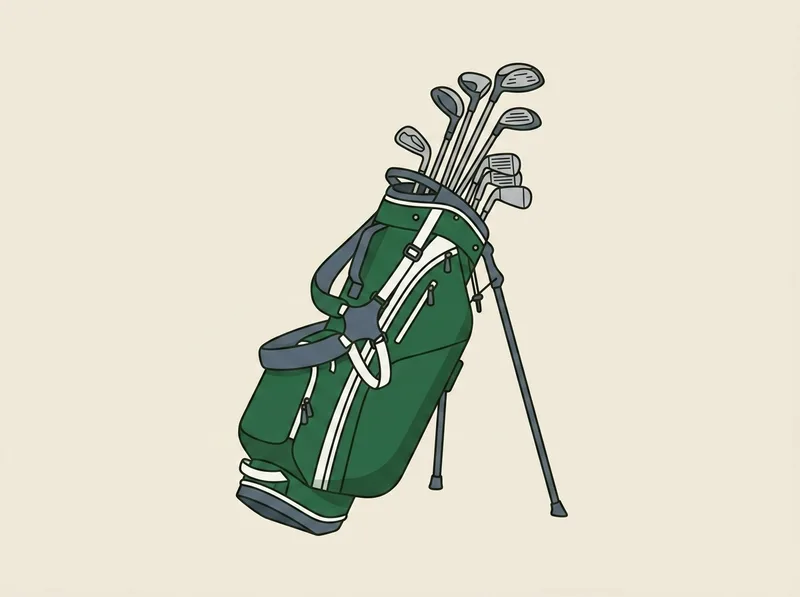
There is no official composition. Fourteen is a budget and every golfer spends it differently, but the common shape looks like this.
| Category | Typical count | What they cover |
|---|---|---|
| Driver | 1 | Tee shots on longer holes |
| Fairway woods | 1 to 2 | Long approaches and safer tee shots |
| Hybrids | 1 to 3 | The gap where long irons used to sit |
| Irons | 5 to 7 | Most approach shots |
| Wedges | 2 to 4 | Inside full-swing distance, and bunkers |
| Putter | 1 | Every green, every hole |
The trade is between the long end and the short end. Add a second fairway wood and you lose a wedge. Carry four wedges and something at the top of the bag has to go. Nobody carries a full spread of everything, because fourteen slots do not stretch that far.
What each category is actually for is set out in golf club types explained, and the loft numbers that separate them are in the golf iron loft chart.
How the fourteen get chosen
The word for this is gapping, and it is the only principle that matters once you have more clubs than you strictly need.
The idea is that each club should cover a distance band the others do not, with roughly even spacing between them. A bag with a 7 iron and an 8 iron that both go the same distance has wasted a slot, and a bag with a 45 yard hole between the pitching wedge and the sand wedge has a shot you cannot hit.
Shot Scope makes the case that this should be worked out from on-course data rather than range data, because real rounds involve awkward stances, different lie types and the pressure of hitting an actual target. Their tracked data also shows how specific the choices get: the typical 15 handicap reaches for a lob wedge on 23% of greenside up and down attempts and converts roughly one in four.
Range numbers are almost always longer than course numbers, and gapping built on them puts every club slightly too far apart. Your own figures, and how they compare, are in the golf club distance chart.
The wedge question
Wedges are where most of the fourteen-club argument happens, because they are the easiest clubs to over-collect.
A pitching wedge and a sand wedge cover the majority of shots inside 100 yards. A gap wedge earns its place once you can feel a genuine hole between them, usually around 30 yards wide. A lob wedge is a specialist club that rewards a golfer who can already control the face and punishes one who cannot.
The loft spacing that keeps them from overlapping is covered in the wedge loft guide. The short version is that four to six degrees between wedges is the workable range, and any two wedges within three degrees of each other are one club pretending to be two.
What else lives in the bag
The fourteen-club limit applies to clubs only. Everything else in the bag is governed by the equipment rules rather than the club count, and none of it counts against your total.
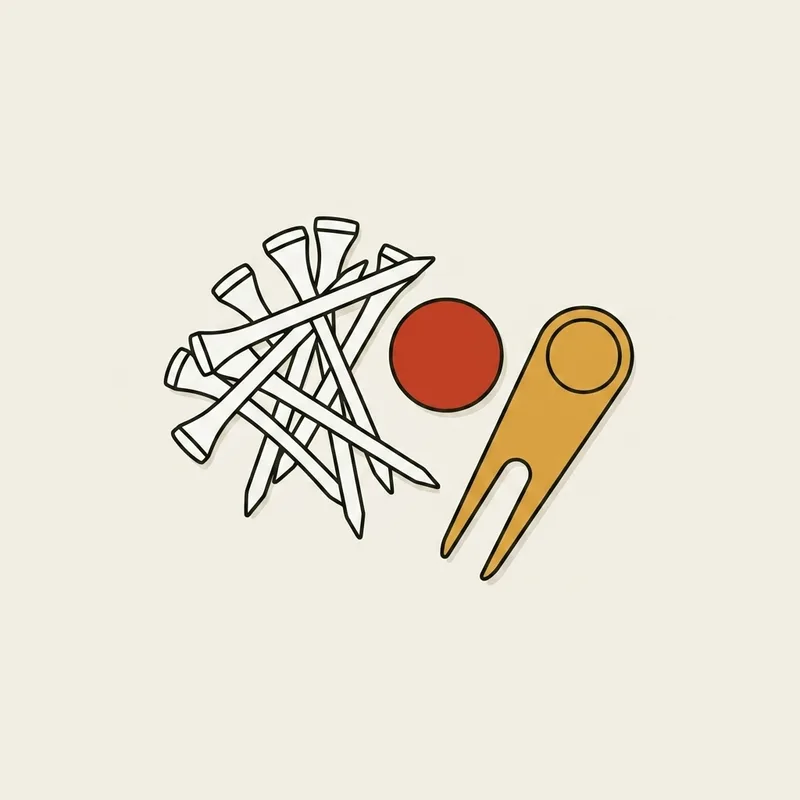
A workable bag holds more than most beginners expect:
- Six or more balls, because losing three on one hole is not unusual early on
- A handful of tees in at least two lengths, long for the driver and short for irons
- A ball marker and a pitchmark repair tool
- A glove, and a spare if you play in the rain
- A towel, ideally damp, for clubfaces and grips
- A rangefinder or GPS, both of which are permitted in almost all everyday play
- Water, sunscreen and a rain jacket in the pocket you never open
Which bag carries all that comfortably is a separate decision, and it is a bigger one than it looks once you know whether you walk or ride. The options are compared in best golf bags.
Off the tee, the count matters less than the choice
There is a temptation to solve every problem by adding a club, and the data suggests the bigger gains are in using the ones already there.
Shot Scope's analysis of what club to hit off the tee looks at how driver performance compares with shorter clubs across handicap groups, which is exactly the question a golfer should answer before spending a slot on a second fairway wood. Working out which clubs you actually score with is cheaper than buying another one, and it is the same exercise as fitting the set to your swing in the golf club fitting guide.
Buying up to fourteen
Getting to a full set is a multi-year process for most golfers and does not need to happen in one purchase.
The sensible order is to buy what fills a gap you can feel, rather than completing a set for its own sake. Used clubs make the whole exercise cheaper and the performance difference at the amateur end is small, which is the case made in buying used golf clubs.
Whatever you add, the count is still your responsibility on the first tee. Fourteen clubs, checked before you play, and nothing borrowed once you have started.
Key takeaways
- Fourteen clubs is the maximum under Rule 4.1b, and there is no minimum at all.
- The penalty in stroke play is two strokes per hole where the breach happened, capped at four strokes for the round.
- Take the extra club out of play as soon as you notice. Playing a stroke with a withdrawn club is disqualification.
- You cannot share clubs with another player on the course, except with a partner in partner formats when the pair carry fourteen between them.
- A lost club cannot be replaced during the round.
- No standard fourteen exists. The mix is a budget, and adding at the long end costs you something at the short end.
- Gapping is the principle that decides the set, and it works best from on-course distances rather than range numbers.
- Balls, tees, gloves, towels and rangefinders do not count towards the fourteen.
- A club you have not hit in a month is a slot going to waste.
Common questions
How many clubs are you allowed in a golf bag?
Fourteen. Rule 4.1b of the Rules of Golf sets that as a maximum for the clubs you start the round with, and it applies in every format of play. There is no minimum number.
What is the penalty for carrying 15 clubs?
In stroke play, two penalty strokes for each hole where the breach happened, with a maximum of four strokes in the round. In match play, the match score is adjusted by deducting one hole per affected hole, up to two holes.
Can I carry fewer than 14 clubs?
Yes, and there is no lower limit. A round played with seven clubs is entirely legal in club competition. Many beginners score better with a short bag because club selection becomes simpler.
Does the putter count towards the 14 clubs?
Yes. Every club counts, including the putter, so a bag with a driver, three woods, nine irons and a putter is already at fourteen.
Do golf balls and tees count towards the club limit?
No. The fourteen-club limit applies only to clubs. Balls, tees, gloves, ball markers, towels, rangefinders and everything else in the bag are covered by separate equipment rules.
Can I borrow a club from my playing partner?
Not in individual play. Rule 4.1b(2) prohibits making a stroke with a club being used by anyone else playing on the course. Partners in a recognized partner format may share, provided they carry no more than fourteen clubs between them.
What happens if I break a club during a round?
A club damaged during a round can still be used, or repaired, or replaced with another club, provided the damage was not caused by abuse. If you replace it, the damaged club must be taken out of play before your next stroke.
Can I add a club during a round?
Only if you started with fewer than fourteen, and only up to that limit. You may not borrow from another player on the course or assemble a club from parts, and you may not unreasonably delay play to do it.
What is the most common 14-club setup?
A driver, one or two fairway woods, one or two hybrids, five to seven irons, two to four wedges and a putter. The exact split is personal, and it usually shifts towards more wedges as a golfer improves.
How many wedges should I carry?
Two is enough for most amateurs, three once you can control distance well, four only if you genuinely have four separate distances for them. Any two wedges within three degrees of loft of each other are doing one job.
Who is responsible for counting the clubs?
You are. The starter does not check and a playing partner has no obligation to warn you. Counting the bag before the round is the only reliable defense, and it takes about ten seconds.

Tom Ashworth
Tom Ashworth is a PGA Professional who has taught golf since 2012, working mainly with beginners and mid-handicappers at club level in Surrey. He reviews the instruction guides on Learn Golf for technical accuracy before they publish.
Most of his teaching is with players in their first three years of the game, and most arrive having been told too much: six swing thoughts collected from videos, half of them contradicting each other. His approach is to check the grip and the alignment before touching the swing, on the basis that most bad ball flight is decided at address.