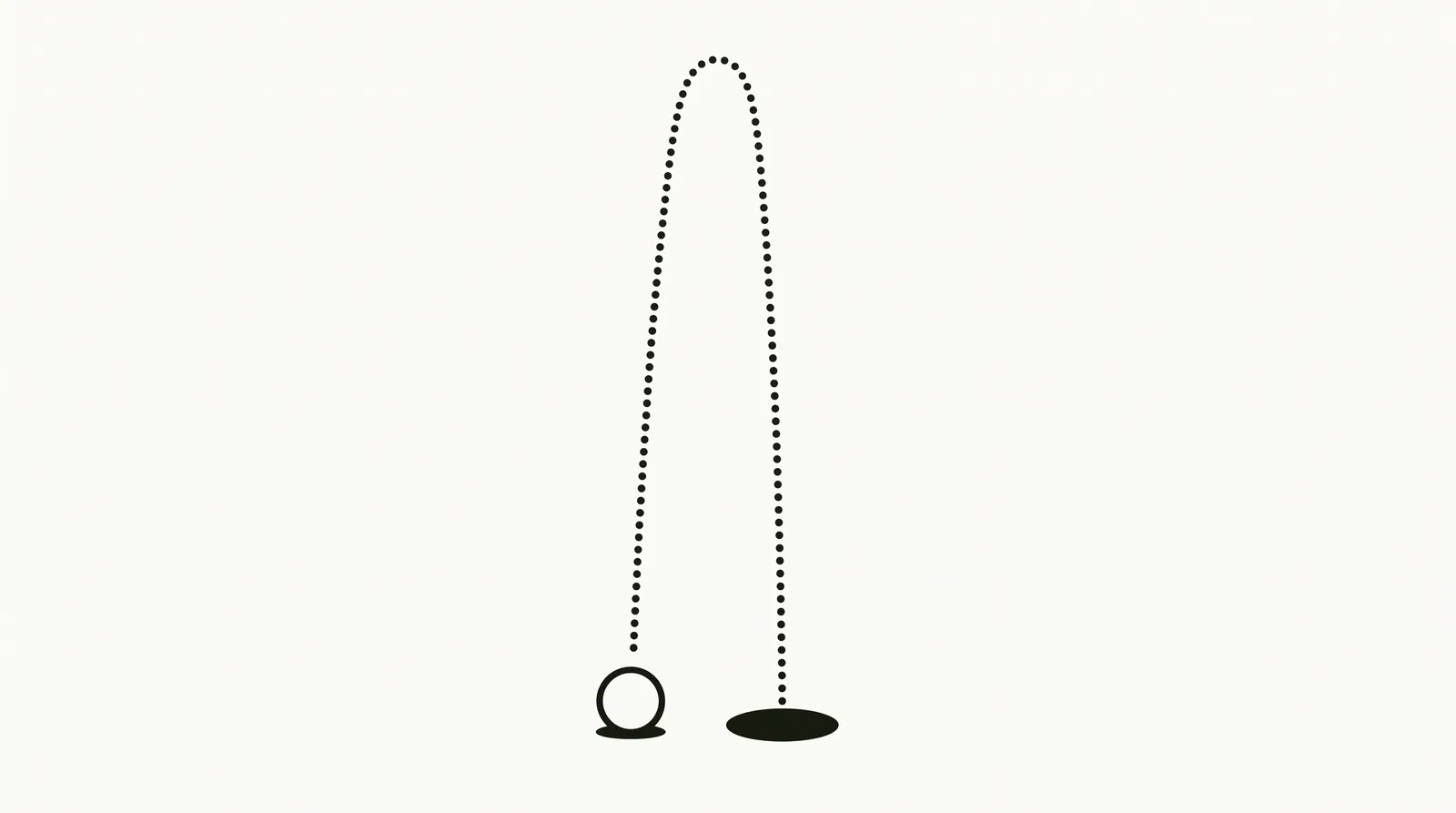
Short-sided, a bunker between you and a flag cut four paces from the edge, and no room to run the ball anywhere. This is the one shot that solves it, and it is also the shot most likely to leave you standing in that bunker a moment later. This guide covers how a flop works, the lie it demands, and the honest answer to whether you should be playing it at all.
What a flop shot actually is
A flop is a pitch with the clubface laid wide open, played with a long swing that produces almost no distance. The open face turns most of the club's speed into height instead of length, so the ball climbs steeply, travels a short way, and drops almost vertically with very little run.
That trade is the whole shot. You are making a swing that would send a normal pitch fifty yards and getting fifteen out of it, and everything difficult about the flop comes from that mismatch.
The honest case against playing it
There is a reason tour players make this look routine and club golfers do not, and it is not only practice time. The shot has a narrow window of conditions and a very expensive failure mode.
Those numbers describe the lofted shot in general rather than the flop specifically, and the flop is the most extreme version of it. If a golfer loses ground choosing a 60 degree wedge over a pitching wedge, laying that same wedge wide open makes the trade worse rather than better.
There is a physics cost underneath it. TrackMan defines spin loft as the angle between the direction the clubhead is travelling and the direction the face is pointing, and notes that a higher spin loft produces a higher spin rate and a lower smash factor. Laying the face open pushes spin loft to its extreme, so very little clubhead speed reaches the ball. That is what you want when it works, and it is why a strike slightly off centre is punished so heavily.
When it is genuinely the only option
Four conditions have to be true together. If any one is missing, something else is the better play.
| Condition | What it means | If it is missing |
|---|---|---|
| The lie is good | Grass under the ball for the sole to slide through | Play a normal pitch, the leading edge will reach the ball first |
| Something is in the way | A bunker, a steep bank, a collar of heavy rough | Run the ball along the ground instead |
| No green to work with | The flag is a few paces from the edge you are playing from | Land it short and let it release |
| Stopping matters | The green runs away, or is firm and fast | Any shot that lands softly will do |
The classic case is short-sided over a bunker to a pin cut close to the near edge with the green sloping away behind it. A running shot cannot be played and a normal pitch does not stop soon enough. That is the flop's job. The far more common case is a golfer with fifteen paces of green to work with who reaches for a lob wedge anyway.
The lie decides everything
Before technique and before club, look at what the ball is sitting on. This shot needs the sole to slide underneath the ball, which requires somewhere for the sole to go.
| Lie | Is a flop on | Why |
|---|---|---|
| Ball sitting up in light rough | Yes, the ideal lie | Room under the ball for the sole to pass through |
| Fluffy fringe or soft collar | Yes | Same cushion, slightly less predictable spin |
| Closely mown fairway grass | Marginal | Enough turf to work with, small margin for error |
| Bare, hardpan or a very tight lie | No | The sole bounces off firm ground into the ball's middle |
| Ball sitting down in deep rough | No | The grass closes the face and kills the speed unpredictably |
| Wet, matted grass | No | The sole snags and the shot comes up short |
A tight lie is the single worst place to attempt this shot, because the open face has already raised the leading edge and firm ground gives the sole nothing to cut into. Those lies need a different approach, set out in chipping from tight lies.
The setup
The setup does most of the work and it is far more extreme than a normal pitch setup. Half measures produce a shot that is neither one thing nor the other.
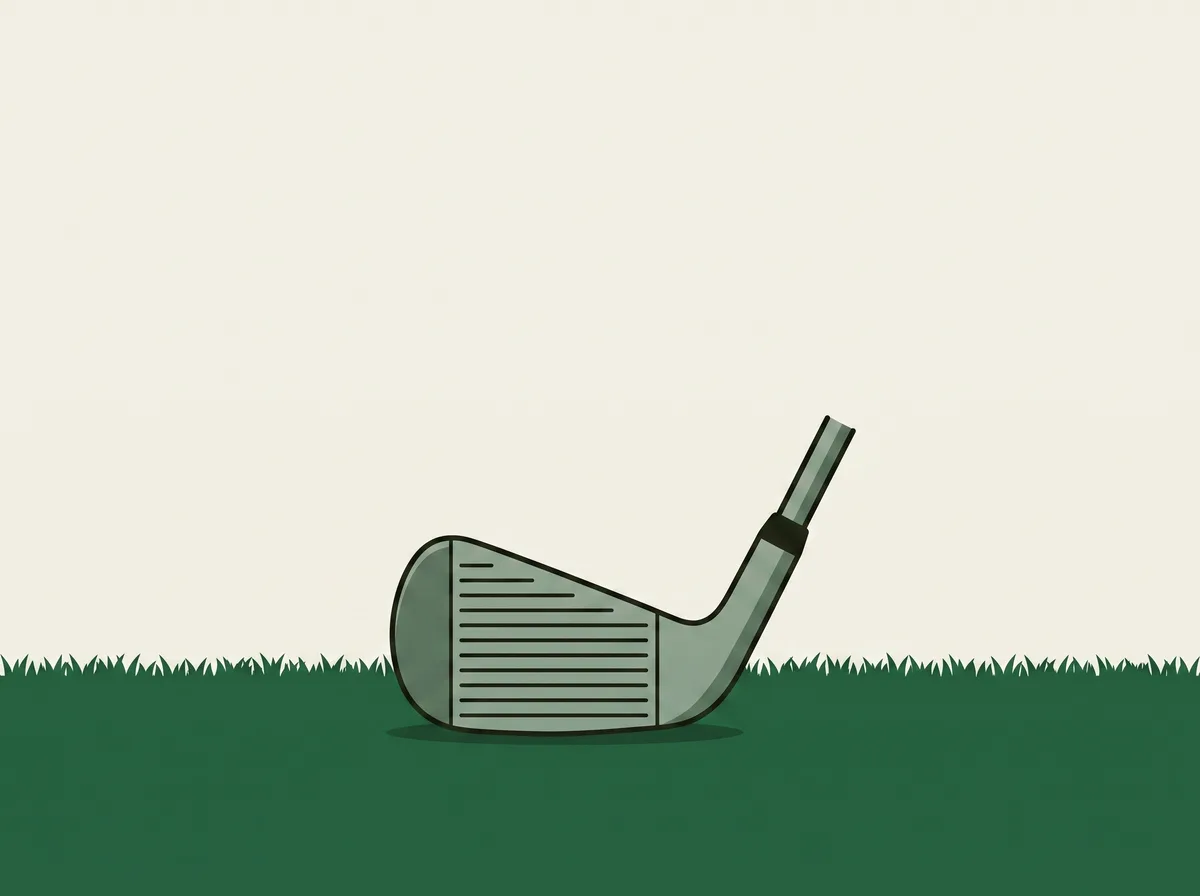
- Open the clubface first, before your hands go on the club, until the face points well up toward the sky. Then take your normal grip on the already-open club.
- Widen your stance to a little more than shoulder width, which keeps the low point stable through a long swing.
- Aim your feet, knees and hips left of the target, roughly as far left as you have opened the face to the right.
- Play the ball forward of centre, around opposite the inside of your lead heel.
- Keep your weight even between your feet or a fraction forward. Do not lean back trying to add height.
- Let the handle sit level with the ball, never pressed forward, because forward shaft lean removes the loft you just added.
The swing
The swing is long, smooth and committed, and it feels like far too much for the distance involved. That feeling is correct and you have to ignore it.
Hinge the wrists early, as on any full pitch shot, and swing along the line of your feet rather than at the flag. The face points at the target even though your body does not, so a swing along your toe line delivers the ball where you want it. Then keep the clubhead accelerating, with the sole sliding along the turf under the ball and a finish that is high and full.
Speed is not optional. A flop played at chip speed leaves the face open, the ball dead and the shot short.
Bounce is what saves you
The sole of a wedge is angled so the trailing edge sits below the leading edge, and that angle is bounce. On a flop it is the only thing stopping the leading edge digging in behind the ball. Titleist's guide to wedge bounce groups it into low bounce of roughly 4 to 6 degrees for firm turf and shallow swings, mid bounce of about 7 to 10 degrees for normal conditions, and high bounce above 10 degrees for soft ground and steep swings.
| Bounce | Degrees | On a flop |
|---|---|---|
| Low | 4 to 6 | Digs on soft turf, the leading edge catches before the sole |
| Mid | 7 to 10 | The safest choice for most golfers and most conditions |
| High | Above 10 | Skids well on soft ground, can bounce into the ball off firm turf |
There is an awkward fact in that table. Many lob wedges are sold with low bounce, because low bounce suits the firm tight lies skilled players use them from, which makes the club most golfers reach for the one least suited to flopping from ordinary parkland turf. Opening the face adds effective bounce, but not enough to close that gap.
The two ways it goes wrong
Both misses come from the leading edge and they are opposites. The thin is the expensive one: the club reaches the ball before the sole has done its job, the leading edge strikes the equator, and a fifteen yard shot travels sixty. It is caused either by trying to help the ball up or by a lie that never had room underneath it.
The chunk is the other. The club enters the ground too far behind the ball, the sole digs instead of skidding, and the ball moves a few feet. It is the same fault as any fat short game shot, and the diagnosis sits in how to stop chunking chips.
Should you practise this at all
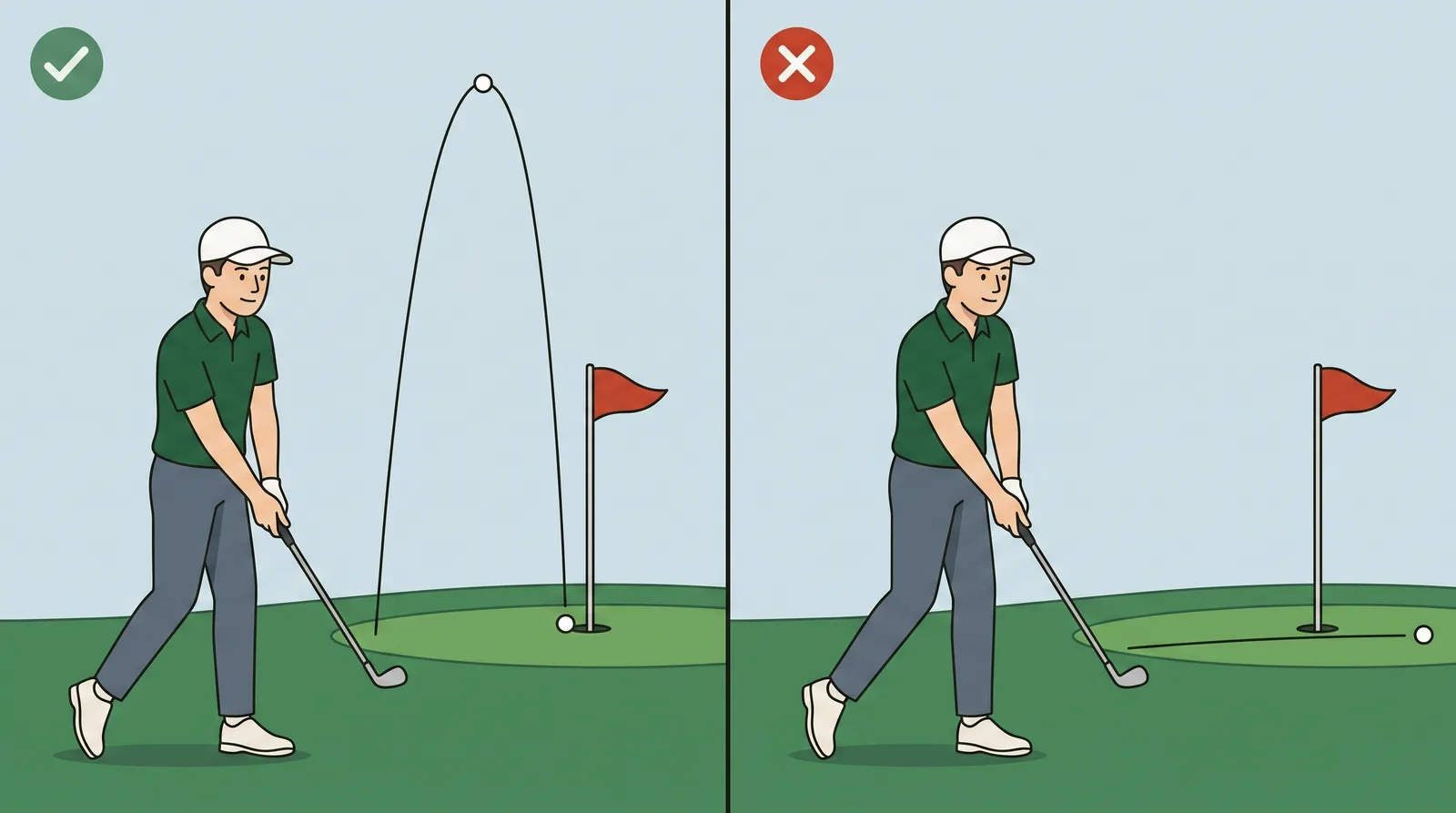
This is genuinely argued among good coaches, and it is worth setting out both sides rather than pretending there is a consensus.
Where the shot fits
One question is worth asking before the club comes out: is there any way to keep this ball on the ground. If there is, take it. A running shot that finishes fifteen feet away beats a flop that finishes six feet away one time in three and in the bunker the other two, and that calculation is good course management applied to twenty yards.
Shot Scope's five key scoring stats put the average golfer's chance of getting up and down from inside 50 yards at roughly one in three. That is the baseline the flop has to beat, and from a marginal lie it does not come close. Where the decision goes the other way, commit fully, because a half-hearted flop combines the risk of the lofted shot with the deceleration of a nervous one.
For a golfer who plays twice a month, the shot is worth knowing about mainly so it can be ruled out in two seconds. For one who already gets up and down reliably and now loses strokes only from short-sided lies, it is the next real skill. The skill worth building before it is knowing what your wedges carry at normal swing lengths, which is the job of wedge distance control.
It is also the exact opposite of the shot that should be your default, the bump and run. The wider choice between running and flying the ball is set out in chipping and pitching compared, and the greenside version of the same open-face principle, where the club never touches the ball, is in the bunker guide.
Key takeaways
- A flop is a pitch with the face laid wide open, turning a long swing into height rather than distance.
- It is the only short game shot where a slight thin costs the whole shot rather than a few yards.
- Four conditions must hold together: a good lie, an obstacle, no green to work with, and a need to stop the ball.
- The lie is the first check. A tight or bare lie makes the shot unplayable whatever your technique.
- Open the clubface before taking your grip, then aim your body left and swing along your toe line.
- Weight stays centred. Leaning back to add height is the fault behind almost every failed flop.
- Bounce stops the leading edge digging, and many lob wedges carry too little of it for soft turf.
- Shot Scope has amateurs getting up and down 8 percent more often with an 8 iron, 9 iron or pitching wedge.
- Arccos has a 15 handicap averaging 2.68 strokes to hole out with a pitching wedge against 2.85 with a 60 degree wedge.
- Whether an amateur should learn this shot at all is genuinely disputed.
Common questions
What is a flop shot in golf?
A short, very high shot played with the clubface laid wide open and a long swing, so the ball climbs steeply, travels a short way and lands almost vertically with very little run. It solves one problem: clearing an obstacle and stopping quickly when there is no green to work with.
Do I need a lob wedge to hit a flop shot?
No, but it helps. A sand wedge with the face laid open produces a high soft shot from a good lie, and it is often the safer club because sand wedges usually carry more bounce. What you cannot do is flop with a pitching wedge, because there is not enough loft to open.
Why do I thin my flop shots over the green?
The leading edge reached the ball before the sole did, for one of two reasons. Either the lie was too tight to let the sole slide underneath, or your weight fell back and raised the low point behind the ball. The lie is the more common culprit and the easier to check.
How hard should I swing on a flop shot?
Much harder than the distance suggests, and smoothly. The open face converts most of the clubhead speed into height rather than length, so a fifteen yard flop needs a swing that would send a normal pitch a great deal further. A tentative swing leaves the face open and the ball dead.
Can you hit a flop shot off a tight lie?
Not reliably, and it produces the worst outcome of any lie. With no grass under the ball the sole bounces off firm ground into the ball's middle, and a fifteen yard shot travels sixty. Play a lower shot with less loft and accept that the ball will run.
Is a flop shot the same as a lob shot?
They describe the same family of shot and most golfers use the words interchangeably. If any distinction is drawn, a lob is the general high soft shot and a flop is the extreme version with the face at its most open. The technique does not change between the two names.
When should I not attempt a flop shot?
Whenever any of the four conditions is missing. If the lie is bare, if nothing is in the way, if there is a decent stretch of green to run the ball across, or if a normal pitch would finish fine, something lower risk is available.
How much bounce should a lob wedge have for flop shots?
Mid bounce of roughly 7 to 10 degrees suits most golfers on most turf, using Titleist's grouping. Low bounce of 4 to 6 degrees is built for firm ground and will dig on soft turf. Opening the face adds effective bounce, but it cannot make up a large deficit.
Should a high handicapper learn the flop shot?
Probably not yet. Practice time is finite, the running shot comes up far more often, and tracked amateur data has golfers scoring better with less lofted clubs around the green. Build a reliable chip and a measured pitch first, then revisit this.
Tom Ashworth
Tom Ashworth is a PGA Professional who has taught golf since 2012, working mainly with beginners and mid-handicappers at club level in Surrey. He reviews the instruction guides on Learn Golf for technical accuracy before they publish.
Most of his teaching is with players in their first three years of the game, and most arrive having been told too much: six swing thoughts collected from videos, half of them contradicting each other. His approach is to check the grip and the alignment before touching the swing, on the basis that most bad ball flight is decided at address.