Every other part of the setup comes with a number attached. Stance width has one, ball position has one, even grip pressure gets a scale out of ten. Distance from the ball has none, which is why golfers keep asking for one and why the answers they get contradict each other. The reason is that this is the one setup element you do not set directly.
Left and right below assume a right-handed golfer. The distance itself does not mirror, but the lie angle effects near the end of this page do, so left-handed players should swap those two directions.
Distance to the ball is an output, not an input
Three things decide how far you stand from the ball, and only one of them is a choice you make consciously.
The length of the club is the largest factor and it is fixed. A driver is roughly six inches longer than a 9 iron, so you will stand further from the ball with it whether you intend to or not.
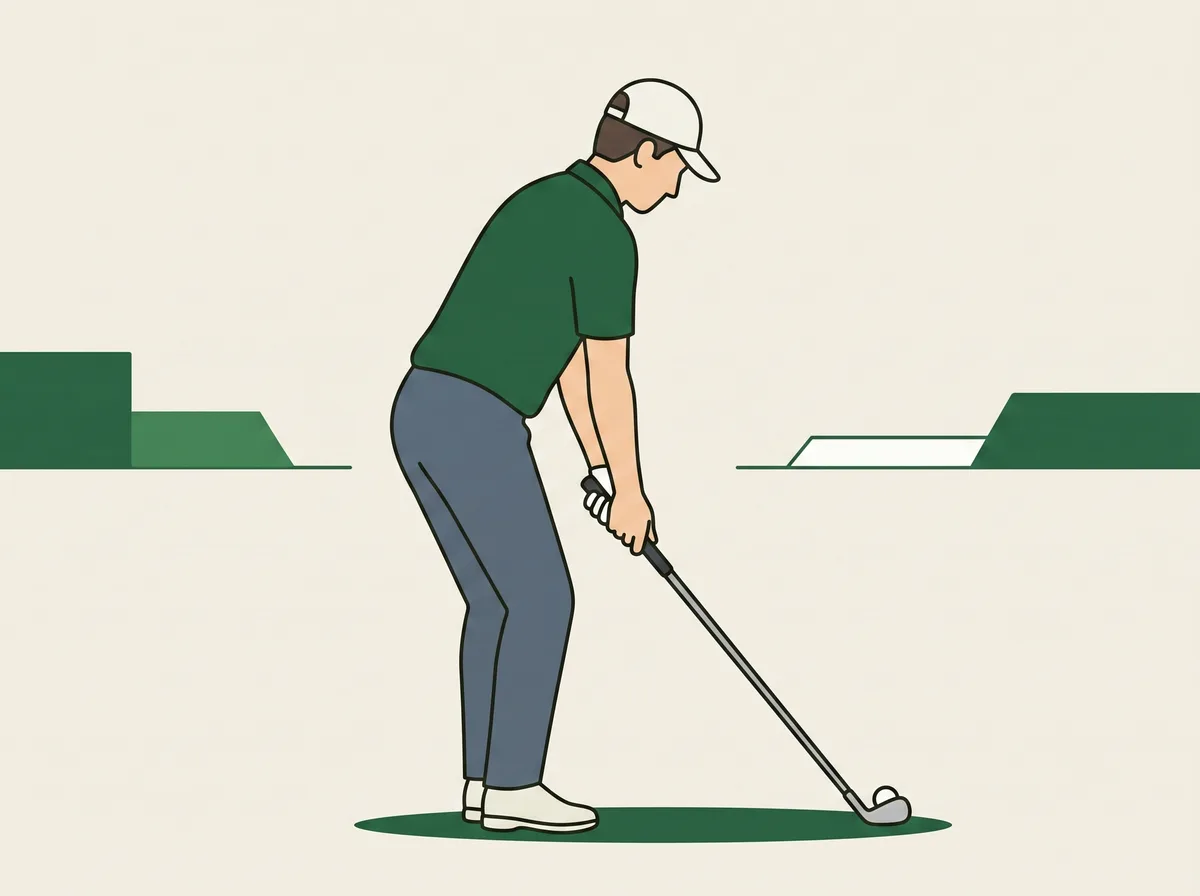
Your posture is the second, and it is the one that actually varies. Bend more from the hips and your arms hang closer to a vertical line under your shoulders, which brings the whole club nearer your body. Stand up straighter and the arms have to reach forward to get the clubhead down to the ground.
Your arm hang is the third, and it should be passive. Arms that hang under the shoulders under gravity produce one distance. Arms pushed out away from the chest produce another, and it is always too far.
So the honest answer to "how far should I stand" is that you do not decide. You build golf posture, let the arms drop, and the distance arrives on its own. Anyone who gives you a measurement in inches is describing the result of their own posture, not a rule.
The two checks that work
Neither of these is a measurement. Both are ways of finding out whether your posture has produced a sensible distance.
The hand-width check is the quick one. Take your normal address with a mid iron and look at the space between the butt end of the grip and the top of your thighs. About one hand width, laid flat, is the range most golfers end up in. Two hand widths means you are reaching. No gap at all means the club has nowhere to go.
The gravity check is the honest one, because it removes your opinion from the process. Take your posture with no club, let both arms hang completely dead from the shoulders, and note where your hands finish. Then take the grip without moving your hands towards or away from your body, and set the clubhead behind the ball wherever it lands. That is your distance.
How it changes club to club
It changes with club length, which means it changes on its own. What should not change is the posture underneath it.
| Club | Where you end up | Why |
|---|---|---|
| Driver | Furthest from the ball | Longest club in the bag, and the ball is teed forward |
| Fairway wood | Slightly closer than driver | Shorter shaft, ball on the ground |
| Hybrid and long iron | Middle of the range | Shaft length between wood and mid iron |
| Mid iron | The reference position | The club most people should set their posture with |
| Wedge | Closest to the ball | Shortest shaft, and the most upright lie angle |
| Putter | Closest of all, eyes near the ball line | Different setup rules entirely |
Set your posture with a 7 iron and let everything else follow from shaft length. Golfers who consciously adjust their distance club by club end up with six different postures and no reference point at all.
What standing too far away does
These are tendencies rather than laws, and a good coach will tell you the same fault can produce different misses in different golfers. The patterns are consistent enough to be worth knowing.
Reaching for the ball pulls your weight towards your toes and tips the upper body forward. From there the swing has two escape routes and neither is good. Some golfers fall further forward through the downswing and catch the ball thin or off the toe. Others stand up out of the shot to make room, which brings the hips towards the ball and produces the same result from the opposite direction.
That second pattern has a name. TPI calls it early extension and describes it as the lower body having moved closer to the golf ball during the downswing, leaving the player feeling stuck or trapped with no room for the arms. They attribute it primarily to physical limitations in hip and trunk mobility, noting that those limitations will always prevent a good address position in the first place, which is worth reading before you assume the fix is purely technical.
Reaching also stretches the lead arm early, which moves the bottom of the swing arc backwards. TrackMan defines low point as the lowest point on the swing arc at maximum compression, and an arc bottoming out behind the ball is the mechanism behind a fat shot.
What standing too close does
The opposite error is less common and easier to feel, because the club runs out of room and you notice.
Crowding the ball forces the hands up and in during the takeaway, producing a steep, narrow backswing. Coming down, the arms have nowhere to extend, so most golfers push the hands away from the body through impact to create space. The clubhead moves out towards the ball, and contact drifts towards the heel and the hosel.
That is the setup ingredient in one of golf's least popular shots, and it is one of several causes rather than the only one. The full diagnosis is in how to fix a shank.
Why the strike matters more than the shape
Getting the distance roughly right is a strike issue, and strike is where amateur scoring actually lives.
TrackMan's data on smash factor, which measures how well club speed converts into ball speed, puts PGA Tour drivers at 1.49 and a 14.5 handicap at 1.44. They illustrate what that difference is worth by noting that at 100 mph of club speed, a 1.40 conversion produces 140 mph of ball speed and a 1.50 produces 150 mph, a difference of roughly 20 yards. Their own coaches are careful to point out that smash factor is not purely a measure of centeredness, but a setup that has you reaching or crowding is one of the reliable ways to stop finding the middle of the face.
Nothing in the setup adds distance on its own, and no adjustment to where you stand will move those percentages by itself. What it does is stop you giving away strikes that were otherwise fine, which is a smaller claim and a truer one. Where the rest of your ball striking is leaking is covered in inconsistent ball striking.
Lie angle, and the part that is a fitting question
There is a limit to how much of this is technique. The sole of an iron is built to sit flat on the ground at impact, and that only happens if the club's lie angle suits your height, your arm length and the distance you stand.
If the toe of the club sits up in the air at address, the lie is too upright for you or you are standing too close. Through impact, a toe-up strike tends to send the ball left of where the face was aimed for a right-handed golfer. A toe-down strike, from a lie that is too flat or from standing too far away, tends to send it right. Left-handers should reverse both.
This is the point at which the answer stops being "adjust your posture" and starts being "get the clubs looked at", particularly for anyone notably tall, notably short, or with unusually long or short arms. What a proper session measures is in the golf club fitting guide.
Two ways to check your own
Both of these take a few minutes and neither needs a coach watching.
How it drifts and how to keep it honest
Distance to the ball creeps, and it creeps in one direction. Tired golfers stand up, standing up means reaching, and reaching becomes normal within a few rounds.
Three habits hold it in place. Build your address the same way every time, hips first and arms last, which is one of the things a pre-shot routine protects. Check the sole of the club sits flat behind the ball before every full shot, because it takes half a second and it catches most of the drift. And use a mid iron as the reference club when you are checking anything, since driver and wedge setups are both special cases.
The rest of the setup only works from a sensible distance. Where the ball sits between your feet is in golf ball position, how wide those feet go is in golf stance, and which way the whole arrangement points is in golf alignment.
Key takeaways
- There is no correct measurement. Distance to the ball is produced by posture, arm hang and club length.
- Build the posture first, let the arms hang dead, and set the club wherever it lands.
- About one hand width between the butt of the grip and the thighs is where most golfers with a mid iron end up.
- Set your reference position with a 7 iron and let shaft length handle the rest of the bag.
- Standing too far away tips weight onto the toes and invites either a thin strike or standing up out of the shot.
- Standing too close crowds the hands, steepens the backswing and pushes contact towards the heel.
- Fix it by changing the hip hinge, not by shuffling the feet forwards or backwards.
- If the toe or heel of the club sits off the ground at address, the answer may be lie angle rather than technique.
- The club falling near the ball when you let go of it is the fastest self-check available.
- Nothing here promises distance. It stops you giving away strikes you would otherwise have made cleanly.
Common questions
How far should I stand from the golf ball?
There is no universal measurement. Set your posture, let your arms hang from the shoulders without reaching, and the ball ends up where the clubhead naturally rests. With a mid iron that usually leaves about a hand's width between the butt of the grip and your thighs.
Should I stand closer to the ball with a wedge?
Yes, and it happens automatically. A wedge is the shortest club in the bag with the most upright lie angle, so the same posture puts you nearer the ball. Do not add an extra adjustment on top of it.
How far should I stand from the ball with a driver?
Further than with any other club, again because of shaft length rather than any change in setup. Keep the same hip hinge and arm hang, and let the longer club place you where it places you.
What happens if I stand too close to the golf ball?
The arms have no room, the backswing gets steep and narrow, and most golfers push the hands away from the body through impact to make space. Contact drifts towards the heel, which is one of several setup causes of a shank.
What happens if I stand too far from the golf ball?
Your weight moves onto the toes and the upper body tips forward. From there you either fall further forward and catch the ball thin or off the toe, or stand up out of the shot to create room, which is early extension.
How do I know if I am standing too far from the ball?
Let go of the club at address and let it fall. If it lands well inside the ball you were reaching. Alternatively, look at the gap between the butt of the grip and your thighs: two hand widths or more is too far.
Does distance from the ball change with height?
Less than people expect, because a taller golfer has longer arms as well as a longer body and standard club length suits a wide range. Where it does matter is lie angle, which is why notably tall or short golfers benefit most from a fitting.
Should the club sole sit flat behind the ball?
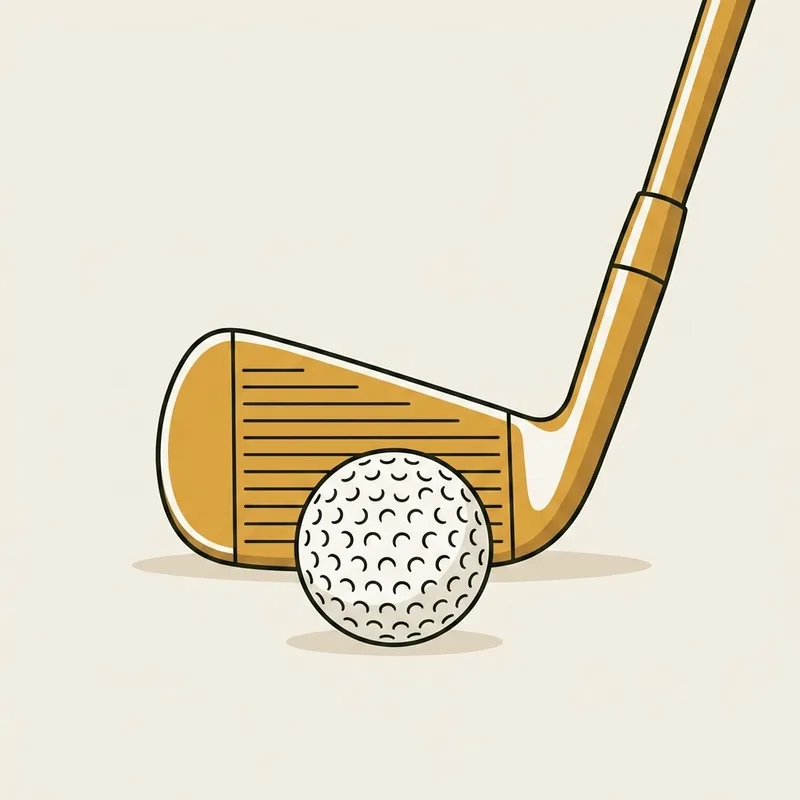
Yes. If the toe is off the ground the lie is too upright for you or you are standing too close. If the heel is off the ground the lie is too flat or you are too far away. Either way the strike will not be neutral.
Can standing in the wrong place cause a slice?
Indirectly. Reaching for the ball encourages the upper body to tip and the swing to work across the ball, which is one contributor among several. A slice is mainly a face and path problem, and the setup makes it easier or harder rather than causing it outright.
Does distance from the ball change for chipping?
Yes, and deliberately. Chip setups are narrower and more upright, with the hands closer to the body and often gripped down the shaft, which brings you nearer the ball than a full shot with the same club.
How long does it take to fix standing too far from the ball?
Expect two or three weeks of range sessions before a corrected distance feels normal, and expect the strike to get slightly worse first. Golfers who have been reaching have built compensations around it, and those take longer to fade than the setup change takes to make.
On this page
- Distance to the ball is an output, not an input
- The two checks that work
- How it changes club to club
- What standing too far away does
- What standing too close does
- Why the strike matters more than the shape
- Lie angle, and the part that is a fitting question
- Two ways to check your own
- How it drifts and how to keep it honest
Tom Ashworth
Tom Ashworth is a PGA Professional who has taught golf since 2012, working mainly with beginners and mid-handicappers at club level in Surrey. He reviews the instruction guides on Learn Golf for technical accuracy before they publish.
Most of his teaching is with players in their first three years of the game, and most arrive having been told too much: six swing thoughts collected from videos, half of them contradicting each other. His approach is to check the grip and the alignment before touching the swing, on the basis that most bad ball flight is decided at address.