Best Putters for Beginners: Fit First, Spend Later
A beginner's putter has one job that money cannot buy and three that it can. Here is which is which, and four clubs that publish enough for you to tell.
Some links here earn us a commission at no extra cost to you. It never changes what we recommend or the order we rank it. How this works.
A putter is the cheapest club in the bag to get right and the one beginners most often get wrong, usually by buying a good head at a length that does not fit them. The head is a preference. The length is a measurement, and it is the only part of this purchase where being wrong reliably costs you shots. What follows is four putters that publish enough for you to check, and the evidence for how much a new one can actually buy.
The four, compared
Every putter here is legal by a wide margin, and putters get design latitude no other club gets. What separates these four is head weight, how much the face wants to rotate, and how much of that each maker is willing to state.
| Pick | Best for | Head weight | Toe hang | Lengths | Loft and lie | Price |
|---|---|---|---|---|---|---|
| Cleveland HB Soft 2 | Published fitting data at the lowest price here | 355g on one model, 365g on the other eight | Published per model as moderate or face balanced | 34 and 35 inches stock, 32 to 38 to order | 3° loft, 70° lie | Around £120 to £150 |
| Ping Scottsdale TEC | A high stability mallet with the alignment worked out | 360g on the Hayden | Face balanced, listed as a straight stroke type | 35 inches standard, custom to order | 3° loft with a 2° adjustment range, lie quoted from vertical | Around £360 to £375 |
| Cobra MIM Nova | Zero toe hang, published as a number | 360g at 34 inches, 365g at 35 inches | 0.0°, published as a figure | 34 and 35 inches stock, 33 to 37 to order | Loft built to order from 1° to 4°, 70° lie | Around £220 to £270 |
| Odyssey Ai-ONE | The widest choice of shape at a beginner price | Not published on the range page | Not published on the range page | Not published on the range page | Not published on the range page | Around £160 to £250 |
Prices in this category do not fall the way iron and driver prices do. A putter has no performance ceiling to chase and no moving parts, so last year's model is not discounted by a third the way last year's driver is.
Cleveland HB Soft 2: the most information for the least money
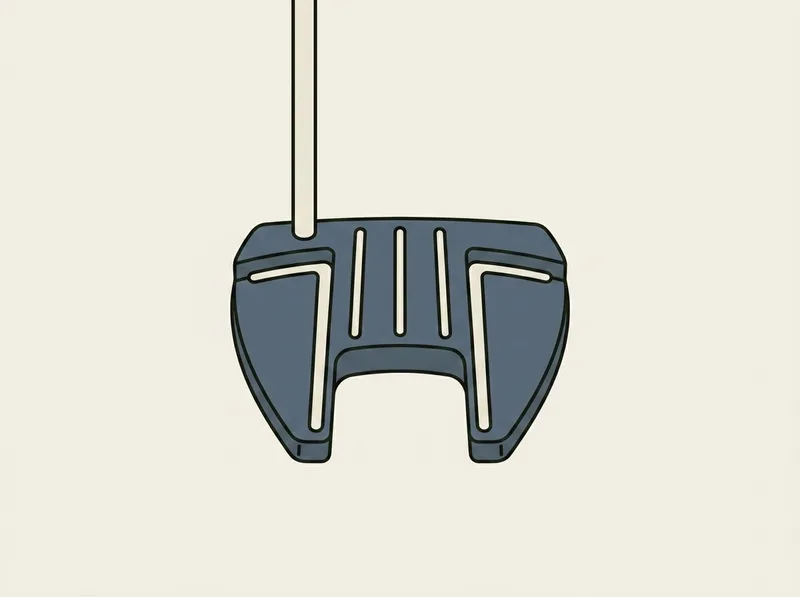
The Cleveland HB Soft 2 publishes a single table covering all nine heads, and it lists hosel type, toe hang, stroke type, head weight, alignment aid, grip, available lengths, lie and loft for every one. That is more usable fitting information than putters costing three times as much give you.
The numbers themselves are conventional and that is the point. Every head is 3 degrees of loft and 70 degrees of lie, head weight is 365g apart from one model at 355g, and stock lengths are 34 and 35 inches with custom builds from 32 to 38 inches available. Grips come as a standard pistol or an oversize, both at 72g.
 Around £120 to £150
Cleveland HB Soft 2
- Head weight
- 355g on one model, 365g on the other eight
- Toe hang
- Published per model as moderate or face balanced
- Lengths
- 34 and 35 inches stock, 32 to 38 to order
- Loft and lie
- 3° loft, 70° lie
- Alignment
- One line or three lines depending on model
- Range
- Nine heads, from a plumber's neck blade to a winged mallet
- Cleveland publish hosel type, toe hang, stroke type, head weight, alignment and grip for every head in one table, which nothing else at this price does.
- Nine models covering blades, winged mallets and centre shafted heads inside one fitting system.
- The cheapest putter here by a clear margin, and it is not a budget build.
- Only 34 and 35 inches are stock, and 33 inches is the length plenty of golfers actually need.
- Toe hang is described in words rather than degrees, so cross shopping against a published figure takes a step.
- The model numbering is opaque enough that working out which head is which takes a chart.
VerdictThe right first putter for almost anyone, because the fitting information is published and the money saved pays for a proper length. If you are under about five foot eight, order a shorter shaft rather than taking a stock one.
What makes this the recommendation is the mapping. Cleveland tell you which stroke each head suits: the plumber's neck and slant models are marked moderate toe hang and slight arc, and the single bend and centre shafted models are marked face balanced and straight. So the choice becomes a two step decision rather than a guess about a shape.
The gap is length. Stock is 34 and 35 inches, which is a range built around the middle of the adult population rather than around you. If a 34 inch putter forces your hands away from your body, order a 33 and pay whatever the custom charge is. Where your eyes should sit over the ball is how you find out.
Ping Scottsdale TEC: a stable mallet with a proper grip
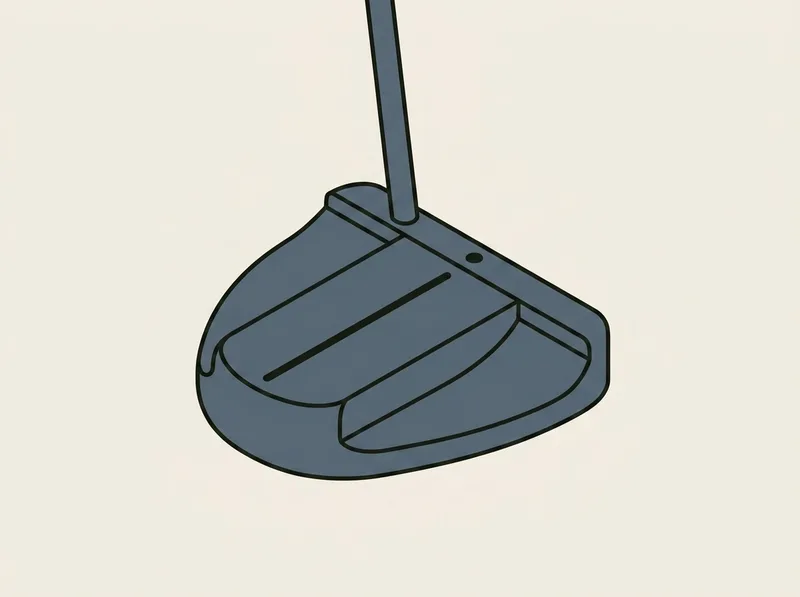
The Ping Scottsdale TEC range runs to four heads and Ping publish the specification for each individually. The Hayden is a mallet with an aluminium body and a stainless steel sole plate, a one-piece PEBAX insert, a head weight of 360g, 3 degrees of loft with a plus three and minus two adjustment range, and a straight stroke type.
The aluminium and steel combination is worth understanding rather than skimming. A light body with a dense sole plate puts the mass low in the head, which is what keeps the ball rolling rather than hopping off the face. That is a real design decision and it is the reason the material choice is not just a weight saving.
 Around £360 to £375
Ping Scottsdale TEC
- Head weight
- 360g on the Hayden
- Toe hang
- Face balanced, listed as a straight stroke type
- Lengths
- 35 inches standard, custom to order
- Loft and lie
- 3° loft with a 2° adjustment range, lie quoted from vertical
- Face
- One-piece PEBAX insert
- Materials
- Aluminium body with a stainless steel sole plate
- Ping publish head weight, stroke type, materials, face construction, shaft and grip for every model in the range.
- A SuperStroke Pistol Tour grip is standard on almost every head, which is a genuine upgrade rather than a stock filler.
- The aluminium body with a steel sole plate pushes weight low, which is what makes a light material worth using in a putter at all.
- Standard length is 35 inches, which is too long for a large share of the golfers buying a first putter.
- Lie is quoted from the vertical rather than the horizontal, which trips up anyone comparing numbers across brands.
- Ping build to order, so trying one usually means a fitting appointment rather than a shop wall.
VerdictThe pick for a golfer who wants a stable mallet and a proper grip without moving into milled money. Order it short unless you are tall, because the stock length is the one thing on this club most likely to be wrong for you.
Ping describe the alignment as a long line drawing the eye forward toward a small dot on the top rail, which is a more considered approach than the usual two parallel stripes. A SuperStroke Pistol Tour grip is standard on almost every head in the range.
The problem is the same one the Cleveland has, only worse. Standard length is 35 inches, which is a long putter for most golfers and a very long putter for anyone under about five foot ten. Ping build to order, so the fix is free at the point of purchase and expensive afterwards.
Cobra MIM Nova: toe hang published as a number
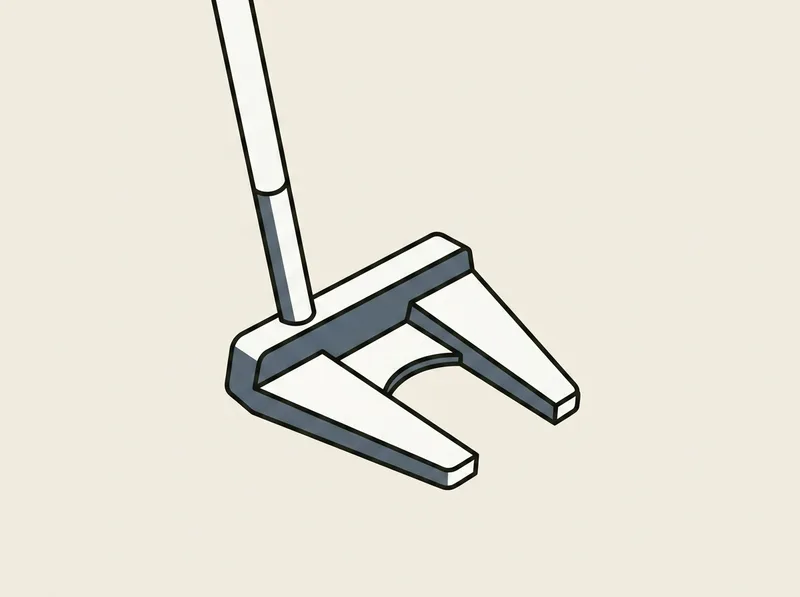
Most makers describe toe hang in words. Cobra publish it as a figure, and the Cobra MIM Nova is listed at 0.0 degrees, which is as face balanced as a putter can be. It is a fang mallet on a single bend hosel, 360g at 34 inches and 365g at 35, with a 70 degree lie.
The unusual option is loft. Cobra build the Nova with a choice of 1, 2, 3 or 4 degrees, where almost every other putter arrives at 3 and stays there. That matters for a golfer whose hands sit ahead of the ball at address, because forward press removes loft at impact and a putter with too little of it will bounce the ball rather than roll it.
 Around £220 to £270
Cobra MIM Nova
- Head weight
- 360g at 34 inches, 365g at 35 inches
- Toe hang
- 0.0°, published as a figure
- Lengths
- 34 and 35 inches stock, 33 to 37 to order
- Loft and lie
- Loft built to order from 1° to 4°, 70° lie
- Shape
- Fang mallet with a single bend hosel
- Fittings
- KBS CT Tour shaft, SuperStroke Zenergy GT 1.0 grip
- Toe hang is published as an actual number rather than a description, and 0.0 degrees is as face balanced as a putter gets.
- Loft is a build option from 1 to 4 degrees, which almost nobody offers and which matters if you press your hands forward.
- Custom lengths run from 33 to 37 inches in quarter inch steps at no extra step in the ordering process.
- One head shape in the Nova, so if the fang mallet does not look square to you there is nothing to swap to within the model.
- Priced above the Cleveland for a specification that is comparable rather than better.
- A zero toe hang head works against a stroke that already has natural arc.
VerdictThe right buy for a beginner whose putts push right because the face is open at impact, and who wants that decision made on a published number. If your stroke already curves inside the line, this is the wrong shape for you.
Custom lengths run from 33 to 37 inches in quarter inch steps, which is the widest fitting range here and the reason this putter earns a place despite costing more than the Cleveland.
Zero toe hang is not a universal good. A face balanced head resists rotating open going back, which helps a golfer whose putts push right and fights one whose stroke already has natural arc. Buy this because your misses go right, not because face balanced sounds modern.
Odyssey Ai-ONE: the widest choice, the thinnest page
The Ai-ONE range runs to eleven models covering blades, mid mallets, centre shafted heads and a zero torque design, all built around a multi-material insert that Odyssey say is designed to even out ball speed across the face. That description is aimed at exactly the right problem for a beginner, because inconsistent strike location produces inconsistent distance, and distance is where beginners lose putts.
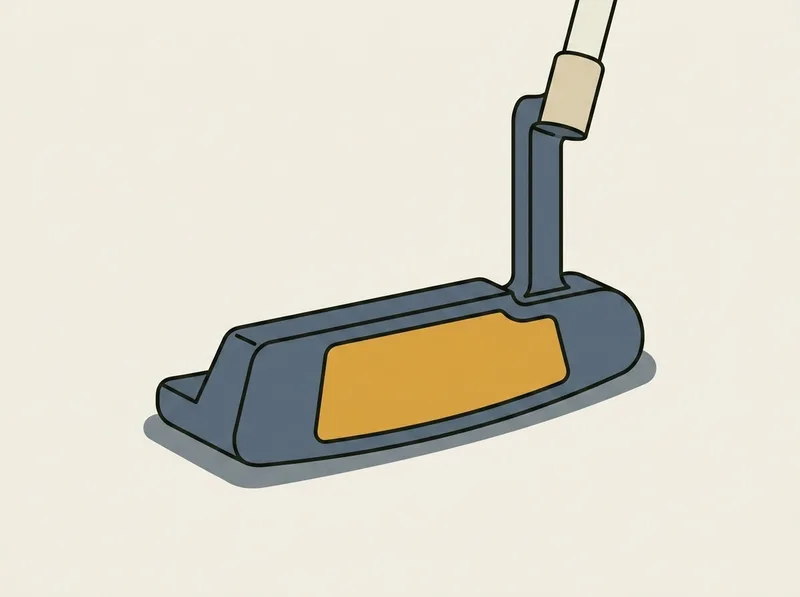 Around £160 to £250
Odyssey Ai-ONE
- Head weight
- Not published on the range page
- Toe hang
- Not published on the range page
- Lengths
- Not published on the range page
- Loft and lie
- Not published on the range page
- Range
- Eleven models, from a blade to a zero torque mallet
- Face
- Multi-material insert designed to even out ball speed across the face
- Eleven heads in one family, which is more shapes than anyone else here offers at a comparable price.
- The insert is aimed squarely at the problem a beginner actually has, which is inconsistent ball speed from strikes away from the middle.
- Odyssey putters are stocked more widely than anything else on this page, so you can roll a few putts before buying.
- The range page carries no specification table at all, so head weight, toe hang and length have to be read off each individual model.
- Prices swing widely across the eleven heads, so the range name on its own tells you nothing about what you will pay.
- Eleven models with similar names is genuinely hard to navigate without help.
VerdictThe pick for a golfer who wants to try several shapes in a shop and buy the one that looks square. The missing range level specification is a nuisance rather than a fault, and every figure exists on the individual model pages.
The row above is mostly empty and it is not an oversight. Odyssey's range page for the Ai-ONE carries no specification table at all, so head weight, toe hang, length, lie and loft are not stated at range level. Every figure exists on the individual model pages, which means comparing eleven heads against each other is eleven separate visits.
That is a nuisance rather than a fault, and it is offset by the one practical advantage nothing else here has. Odyssey putters are on more shop walls than any other brand, so you can roll six putts with three shapes before deciding, which is worth more than any specification table.
What a new putter can actually buy you
This is where a beginner putter page has to be honest, because the tracked data is not flattering to the category.
Read those figures carefully, because they say something most golf marketing would rather you did not notice. From 6 to 12 feet, a complete beginner holes roughly eight putts in ten compared with a scratch golfer's ten. The gap on the green is small at every distance, and the shots are being lost before the ball gets there.
What that means for this purchase is straightforward. A putter that fits will help you start the ball where you aimed, which shows up inside six feet. It will do nothing at all for the 40 footer you left twelve feet short, and that is where the strokes actually are.
Distance control is the whole problem
The tracked evidence on three putts makes the same point from the other direction.
Shot Scope's three putt dataset puts a 25 handicap golfer at one three putt every 7.6 holes, a 15 handicap at one every 9.7 and a 5 handicap at one every 16.7. The same source has a 25 handicapper holing nine in ten from inside three feet and just under half from three to six feet.
Nine in ten from three feet is a perfectly good short putting stroke. The difference between that golfer and a good one is almost entirely how often they are putting from three feet in the first place, which is distance control on the first putt and nothing else.
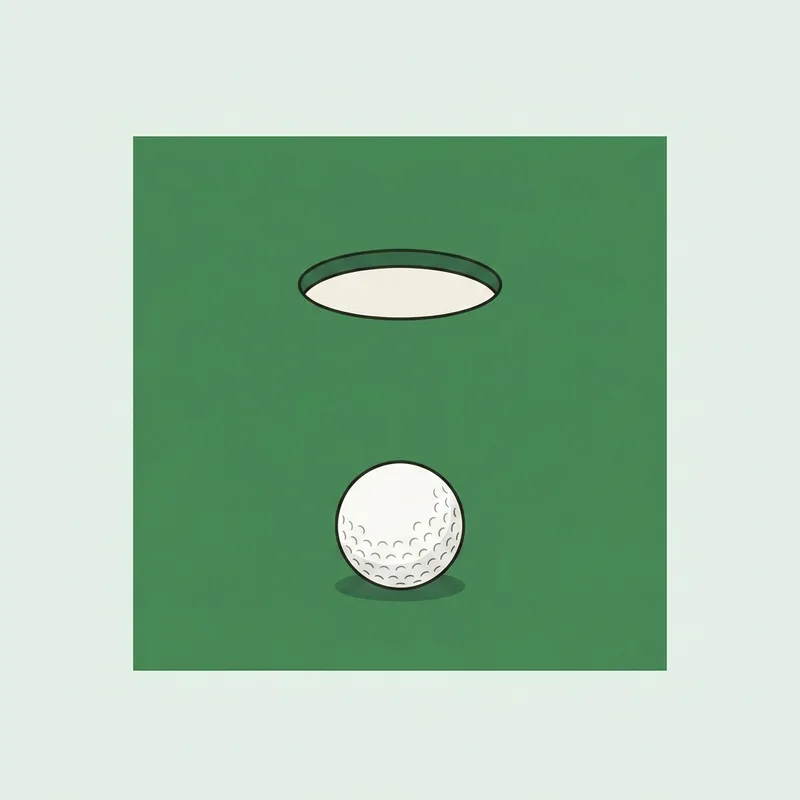
Length is the only fitting number that reliably costs you shots
Three of the four putters here come standard at 34 or 35 inches, and both of those are the middle of a range rather than a fit.
The mechanism is simple and it is geometric. A putter that is too long pushes your hands further from your body, which raises your shoulders and moves your eyes inside the ball. From there the club must travel further inside the target line going back, and the face arrives shut, so a stroke that is technically correct produces a putt that starts left of where you aimed for a right hander.
The test costs nothing. Set up as you normally would, let a ball drop from the bridge of your nose, and see where it lands. Over the ball or fractionally inside it is right. A hand span inside it means the putter is too long.
| Symptom | Likely cause | The fix |
|---|---|---|
| Putts start consistently left for a right hander | Putter too long, eyes inside the line | Shorten the shaft, or buy shorter |
| Ball hops or skids for the first foot | Too little effective loft, hands pressed forward | More loft at build, or move the ball forward |
| Distance varies wildly on long putts | Strike location, not the putter | Practice, and a face that evens out ball speed |
| Short putts pushed right for a right hander | Face open at impact | A face balanced head with little or no toe hang |
Shortening a putter costs about the price of a sleeve of balls at most shops, and it changes more than any head on this page. That is why the money saved on the Cleveland is better spent on the build than on a milled face.
Blade or mallet, and what the shop will not tell you
Take the one that looks square to your eye. That advice sounds like a dodge and it is the most useful thing anybody will tell you about a putter head.
A mallet places more mass further back from the face, so it twists less on a strike away from the middle and gives a larger canvas for an alignment aid. A blade concentrates mass near the face and usually has more toe hang. Neither rolls the ball better on a putt struck out of the middle.
The part worth knowing is that a long alignment line helps some golfers and misleads others. A line you cannot set square is worse than no line at all, because it gives you false confidence in an aim that is wrong. If your putts start consistently to one side and your stroke looks fine on video, try a head with no line before you change anything about your technique. Reading the green is the other half of that problem and the half that is free.
The general putter roundup works through toe hang, insert construction and head weight properly for a golfer whose stroke has settled.
What to spend, and the used option
A putter has no wearing parts, which makes it the single best used buy in golf and the one club category where age is genuinely irrelevant.
| Budget | What it buys | Who it suits |
|---|---|---|
| £40 to £90 | A used putter from a decent brand, then cut to length | A first season, and the sensible default |
| £120 to £230 | A current model with the fitting information published | Playing regularly and keeping it for years |
| £230 to £380 | A wider range of shapes, or an upgraded grip as standard | A golfer who has tried several and knows the shape |
The top row is worth taking seriously rather than treating as a compromise. Spend £60 on a used mallet, spend £30 having it cut and regripped to a length that fits you, and you own a better putter for your stroke than a stock 34 inch model at four times the price.
Where the money genuinely does more is on the surface you practise on. A putting mat gets used in January when the course does not, and distance control is the one part of putting that improves fastest with repetition. Putting drills that work covers what to do on it, and what a realistic putts per round figure looks like is a better target than a number you read on television.
If you are still assembling a bag rather than replacing one club, a complete beginner set usually includes a putter that is good enough for a first season, and the fundamentals of the stroke will do more than any purchase on this page.
Key takeaways
- The Cleveland HB Soft 2 publishes hosel, toe hang, stroke type, head weight, alignment and grip for all nine heads in one table, and costs the least here.
- The Ping Scottsdale TEC Hayden is a 360g aluminium mallet with a steel sole plate and a PEBAX insert, standard at 35 inches.
- The Cobra MIM Nova publishes toe hang as 0.0 degrees and builds loft to order from 1 to 4 degrees, with custom lengths from 33 to 37 inches.
- The Odyssey Ai-ONE offers eleven shapes and no specification table at range level, so every figure has to be read off the individual model pages.
- Shot Scope have a scratch golfer holing 42.8% from 6 to 12 feet against 35.0% for a 25 handicap. The gap on the green is small at every distance.
- Three putts come from the first putt. A 25 handicap leaves 59% of putts short and three putts once every 7.6 holes.
- Length is the only fitting number that reliably costs shots. Too long moves your eyes inside the line and turns a square stroke into a pull.
- A putter has no wearing parts, so a used head cut to the right length beats a stock length new one at four times the price.
Common questions
What is the best putter for a beginner?
For most beginners the Cleveland HB Soft 2, because Cleveland publish the fitting information for all nine heads in one table and it costs less than everything else here. Whatever you buy, spend the difference on getting the length right rather than on the head.
How much should a beginner spend on a putter?
Between £40 and £200 covers everything that changes how you putt. A used putter from a decent brand, cut and regripped to fit you, is a better club for your stroke than a stock length new one costing four times as much. Above £300 you are buying finish and resale value.
Should a beginner use a blade or a mallet putter?
Take the one that looks square to your eye at address. A mallet twists less on an off-centre strike and gives more room for an alignment aid, a blade usually has more toe hang and suits a stroke with visible arc. Neither rolls the ball better out of the middle.
What length putter should a beginner buy?
The one that lets your arms hang under your shoulders with your eyes over or just inside the ball. Stock is 34 or 35 inches because that fits the middle of the adult population, not because it fits you. Too long is far more common than too short and it makes straight putts start left for a right hander.
Will a new putter lower my score?
A little, and less than getting your current one cut to length would. Shot Scope's tracked data has a 25 handicap golfer holing 35% from 6 to 12 feet against 42.8% for a scratch player, so the gap on the green is small. The strokes are lost getting there and in distance control on long putts.
What is toe hang and does a beginner need to worry about it?
Balance the shaft on a finger. If the toe falls toward the floor the putter has toe hang, if the face stays pointing at the ceiling it is face balanced. It is a proxy for how much the head wants to rotate. Match it loosely to your stroke, and do not buy a putter to impose a stroke you do not currently have.
Are more forgiving putters worth it for beginners?
Somewhat, and less than the marketing suggests. A miss away from the middle on a 20 foot putt leaves you a foot or two short rather than 30 yards offline, so forgiveness matters less on a putter than on any other club. Where it does help is consistency of distance, which is where beginners lose most.
Should a beginner get fitted for a putter?
For length and lie, yes, and it costs almost nothing. Those are static errors that repeat on every stroke. For head weight and toe hang it is worth waiting, because a beginner's stroke changes substantially over the first two seasons and fitting to a moving target wastes the fee.
Is a used putter a good idea?
Yes, and it is the best used buy in golf. A putter has no wearing parts, no grooves to erode and no face technology that expires, so a head from ten years ago rolls the ball exactly as it did when new. Budget for a regrip and a shaft cut and you have a fitted putter for the price of a stock one.
How many putts should a beginner take per round?
Somewhere between 34 and 40 is normal, and the number on its own is misleading because it counts putts rather than the chips that got you there. A better target is three putts. Shot Scope put a 25 handicap at one every 7.6 holes, so getting that to one every twelve is a real and reachable improvement.
How we put this together
- Published manufacturer specification tables read on the maker's own site, including head weight and toe hang wherever they are stated.
- The four things that decide whether a putter fits: length, lie, head weight and how much the face wants to rotate, judged on published figures rather than on feel.
- Shot Scope tracked make percentages by handicap and distance, which show how much of the gap between a beginner and a scratch golfer is actually on the green.
- Shot Scope's three putt dataset, because distance control rather than the stroke is where a beginner's putts are lost.
- Where a maker does not publish a figure on their own page, this page records the gap rather than borrowing a number.
On this page
- The four, compared
- Cleveland HB Soft 2: the most information for the least money
- Ping Scottsdale TEC: a stable mallet with a proper grip
- Cobra MIM Nova: toe hang published as a number
- Odyssey Ai-ONE: the widest choice, the thinnest page
- What a new putter can actually buy you
- Distance control is the whole problem
- Length is the only fitting number that reliably costs you shots
- Blade or mallet, and what the shop will not tell you
- What to spend, and the used option
- How we put this together
Tom Ashworth
Tom Ashworth is a PGA Professional who has taught golf since 2012, working mainly with beginners and mid-handicappers at club level in Surrey. He reviews the instruction guides on Learn Golf for technical accuracy before they publish.
Most of his teaching is with players in their first three years of the game, and most arrive having been told too much: six swing thoughts collected from videos, half of them contradicting each other. His approach is to check the grip and the alignment before touching the swing, on the basis that most bad ball flight is decided at address.