Best Golf Swing Analyzers: What They Measure and Why
A launch monitor watches the ball. A swing analyzer watches you, or the club, and never sees the shot at all. That difference decides which of the two is worth your money, and most buyers never have it explained.
Some links here earn us a commission at no extra cost to you. It never changes what we recommend or the order we rank it. How this works.
A swing analyzer and a launch monitor are sold in the same aisle and they answer opposite questions. A launch monitor measures the ball and works backwards. A swing analyzer measures the club or the body and never sees the ball at all. If you buy the wrong one, you get an accurate answer to a question you were not asking.
What a swing analyzer is, and what it is not
This needs saying plainly before anything else, because the two categories get shelved together and they are not alternatives.
A launch monitor sits beside or behind the ball and measures what the ball did: speed, launch angle, spin, direction. Everything it tells you about your swing is inferred from that, and the good ones also track the club through impact. It is a results instrument. What every launch monitor parameter means works through that side in full.
A swing analyzer measures the motion itself. A sensor on your wrist reads what your wrist did. A sensor on the grip reads what the handle did. A camera-based system reconstructs what your whole body did. None of them knows whether the shot was any good, and that is the point: they measure the input rather than the output, which is what you can actually change.
| Pick | Best for | What it reads | Where it sits | Live feedback | Ongoing cost | Price |
|---|---|---|---|---|---|---|
| HackMotion Core | Wrist angles, which drive the club face | Wrist angles and movement through the swing | Worn on the lead wrist | Yes, live audio and vibration during practice | Not stated as required for the Core package | Around £275 to £345 |
| Blast Golf | Tempo and putting, for the least money | Club motion, full swing and putting stroke | Clipped to the grip of any club | After the swing, in the app | One month included, premium features subscription | Around £170 to £180 |
| deWiz | Changing a swing while you are still making it | Backswing length, tempo and hand speed | Worn on the wrist, band fits 155 to 200 mm | Yes, including a stimulus during the swing | deWiz Plus at a stated monthly rate after a free month | Around £575 to £600 |
| Sportsbox AI 3DGolf | Whole-body movement with no hardware at all | Whole-body 3D motion from a single phone video | Nowhere. A phone on a tripod films you | No, analysis happens after the swing | Subscription, tiers not priced publicly | Subscription, price not published on the maker's site |
HackMotion Core: the wrist, measured properly
HackMotion Core is a sensor worn on the lead wrist that reads wrist angles and movement through the swing, feeding a mobile app that gives live audio feedback and guided drills. HackMotion sell it in three packages: Core for full swing, Plus which adds putting, and Pro aimed at coaches.
The reason it ranks first is what wrist angle does. The club face at impact is controlled more directly by lead wrist flexion and extension than by anything else a golfer can consciously change, and a face that is open or shut relative to the path is the cause of most shots people want to fix. Measuring the wrist is measuring the thing immediately upstream of the outcome.
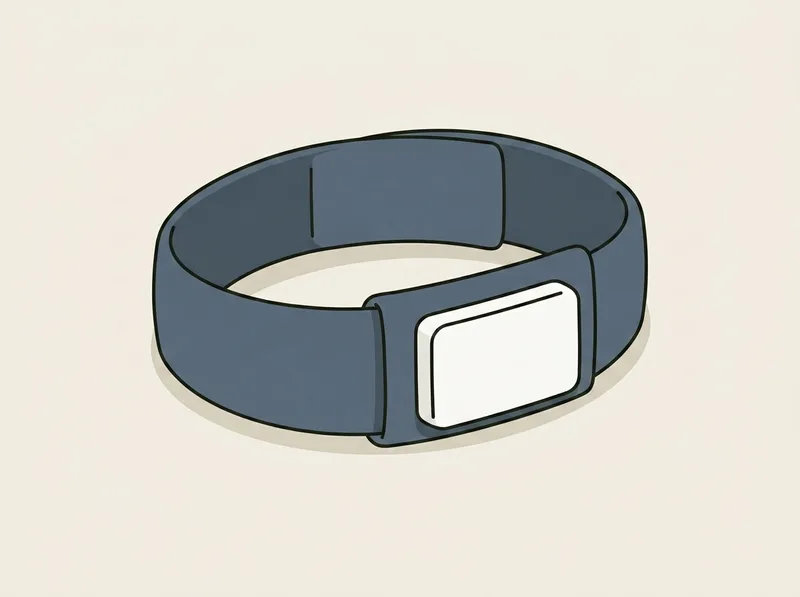 Around £275 to £345
HackMotion Core
- What it reads
- Wrist angles and movement through the swing
- Where it sits
- Worn on the lead wrist
- Live feedback
- Yes, live audio and vibration during practice
- Ongoing cost
- Not stated as required for the Core package
- Packages
- Core for full swing, Plus adds putting, Pro for coaches
- App
- Mobile app with guided drills and progress tracking
- Hardware
- Two sensor generations currently listed
- Wrist angle is the most direct physical input to club face angle, which makes it the most actionable single measurement any of these produce.
- Live audio feedback during the swing, so you can hunt for a position rather than review it afterwards.
- The package structure is clear about what each tier adds rather than hiding putting behind a subscription.
- It reads your wrist and nothing else, so it will not tell you what the club path or the ball did.
- HackMotion currently list two sensor generations on their own pricing page, which makes the buying decision more complicated than it needs to be.
- The Plus and Pro tiers step up steeply in price for functions many golfers will not use.
VerdictThe best first swing analyzer for most golfers, because wrist angle is upstream of the club face and the club face is upstream of nearly every shot people want to fix. Buy it understanding that it is deliberately narrow: one joint, measured well, with nothing said about the rest of you.
The live feedback matters as much as the measurement. A number you read after the swing tells you what happened. A tone that changes while you are moving lets you hunt for a position, which is a different and faster learning mechanism. The narrowness is deliberate and it is also the limitation: it reads one joint and says nothing about your hips, your path or the ball.
One practical note. HackMotion currently list two sensor generations on their own pricing page, with the newer one on a stated ship date. That is worth knowing before ordering, because buying the outgoing hardware at a discount and buying the incoming hardware are both reasonable choices and the page does not make the difference loud.
Blast Golf: tempo, putting and a lot less money
Blast Golf is a small sensor that attaches to the grip of any club using grip attachments, and moves between clubs as you need it. On the full swing it captures swing speed, peak hand speed, backswing time, downswing time, total swing time, swing tempo and attack angle. On the putting stroke it captures backstroke and forward stroke times, tempo, total stroke time, backstroke length, loft change and impact stroke speed, plus direction metrics including face angle at impact.
The putting list is longer and better than the full swing list, and that is the honest way to think about this device. A putting stroke is a short, slow, two-dimensional motion, which is exactly what a small motion sensor on a handle can describe accurately. The putting stroke is the part of golf where measurement is most likely to change something quickly.
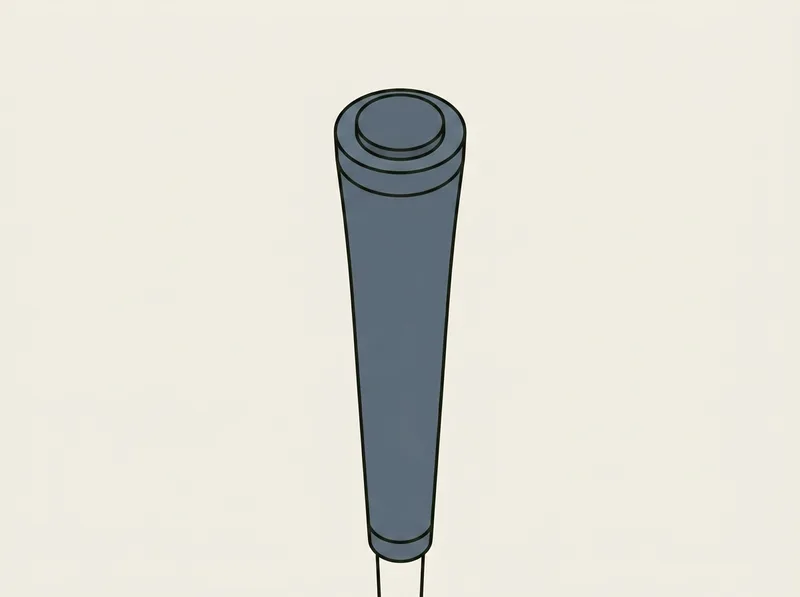 Around £170 to £180
Blast Golf
- What it reads
- Club motion, full swing and putting stroke
- Where it sits
- Clipped to the grip of any club
- Live feedback
- After the swing, in the app
- Ongoing cost
- One month included, premium features subscription
- Full swing
- Swing speed, hand speed, backswing and downswing time, tempo, attack angle
- Putting
- Stroke times, tempo, backstroke length, loft change, face angle at impact
- Transfer
- Grip attachments, so one sensor moves between clubs
- The cheapest device here by a clear margin, and the only one that covers putting properly at this price.
- It moves between clubs on grip attachments, so one sensor serves the driver, a wedge and the putter.
- Tempo is a genuinely trainable number and this measures it in three parts, backswing, downswing and total.
- Sitting on the grip, it reads what the handle did rather than what the head or the face did, and infers the rest.
- The subscription starts after a month and the more useful analysis sits behind it.
- Blast do not publish a battery life figure on the product page.
- Blast run no UK or European storefront, and British stock comes and goes through third party retailers rather than the maker.
VerdictThe best value in swing measurement and the obvious first purchase for anyone whose problem is rhythm or putting rather than the golf swing itself. It is a motion sensor on a handle, so treat its full-swing numbers as descriptions of the club rather than of your body.
Tempo is the other genuinely useful output. Blast split it into backswing time, downswing time and the ratio between them, and tempo is one of the few things in a golf swing that responds to being measured almost immediately. How tempo works and what to aim for covers what to do with the number.
The limitation is structural and worth stating. A sensor on the grip knows what the handle did. The club head is four feet away at the end of a shaft that bends, and anything the app says about the head or the face is calculated from the handle rather than read from the head. That is fine, and it is not the same as measurement.
deWiz: feedback while you are still swinging
deWiz is a wrist-worn device with a band fitting 155 to 200 mm, up to twenty hours of battery, and an app on iOS and Android that builds 3D interactive swing models. It measures backswing length, tempo and hand speed, and deWiz Plus adds further features for a stated monthly rate after a free first month.
Three measured parameters is the shortest list on this page and it is not the weakness it looks like. Backswing length is one of the few swing characteristics that is both easy to measure precisely and hard to change by watching video, because by the time you have seen it the swing is over. The device's answer is to deliver a stimulus during the swing when you exceed the length you set.
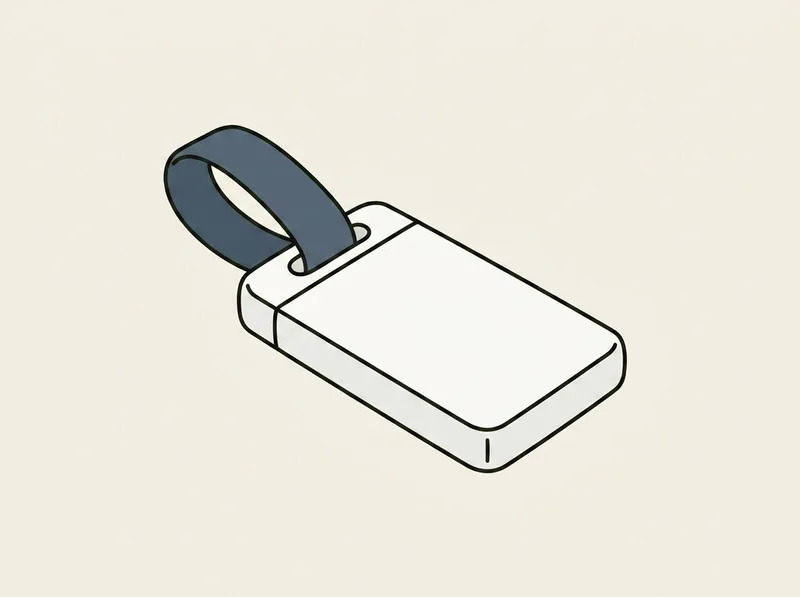 Around £575 to £600
deWiz
- What it reads
- Backswing length, tempo and hand speed
- Where it sits
- Worn on the wrist, band fits 155 to 200 mm
- Live feedback
- Yes, including a stimulus during the swing
- Ongoing cost
- deWiz Plus at a stated monthly rate after a free month
- Battery
- Up to 20 hours
- App
- 3D interactive swing models on iOS and Android
- Returns
- 30 day money back policy
- Twenty hours of battery, which is by far the longest here and removes charging as a reason not to use it.
- The feedback arrives during the swing rather than after it, which is a different training mechanism from everything else on this page.
- A short, honest parameter list rather than a long one padded with derived numbers.
- It costs more than two of the other three devices here combined.
- Three measured parameters is the narrowest list on this page, and none of them is about the club face.
- The interrupt-driven training method is not to everyone's taste and there is no way to know that before buying.
VerdictThe pick for a golfer who already knows what they are trying to change and has failed to change it by watching video afterwards, because the in-swing stimulus works on a different mechanism from any amount of post-shot review. At this price it is a specialist purchase and not a first analyzer.
That mechanism is the whole product, and it is genuinely different from everything else here. It is also the reason to be cautious: some golfers find an interrupt mid-swing clarifying and some find it intolerable, and there is no way to know which you are before buying. The thirty day return policy is doing real work on this one.
Twenty hours of battery deserves a mention on its own. The reason wearable training devices end up in drawers is almost never that they did not work. It is that they were flat, and a device you charge monthly rather than weekly is one you keep using.
Sportsbox AI 3DGolf: no sensor at all
Sportsbox AI 3DGolf takes a single video recorded on a phone and reconstructs the swing in three dimensions, tracking more than thirty body and club points and presenting the motion from six viewing angles including face on, down the line, from above and from behind. It reports whole-body measurements such as chest turn, pelvis turn and backswing rotation.
The appeal is obvious and it is not really about the technology. There is no sensor to charge, no strap to fit, nothing to lose in a bag and nothing to remember before a session. That removes the single most common reason wearable analyzers stop being used, and it is the reason a phone-based system can end up delivering more value than better hardware that sits in a drawer.
 Subscription, price not published on the maker's site
Sportsbox AI 3DGolf
- What it reads
- Whole-body 3D motion from a single phone video
- Where it sits
- Nowhere. A phone on a tripod films you
- Live feedback
- No, analysis happens after the swing
- Ongoing cost
- Subscription, tiers not priced publicly
- Points
- Over 30 tracked body and club points
- Views
- Six viewing angles from one recording
- Metrics
- Includes chest and pelvis turn and backswing rotation
- No sensor to charge, lose, break or remember, which is the single biggest reason wearable analyzers stop being used.
- It measures the whole body rather than one joint, which is the only device here that can tell you what your hips did.
- Six viewing angles reconstructed from one recording, so you are not filming twice.
- Sportsbox do not publish a consumer subscription price on their own site, so you cannot cost it before signing up.
- There is no live feedback, so it is a review tool rather than a practice tool.
- A reconstruction from video is an inference, however good, and it is not the same thing as a sensor reading a joint directly.
VerdictThe right choice for a golfer who wants to see what their body is doing and does not want another gadget to charge, and it is the only device here that addresses the whole motion. It ranks last because a product whose entire cost is a subscription should publish what that subscription costs.
It is also the only device here that measures the whole body. Every other product on this page reads one joint or one handle. If your question is what your hips are doing, or whether your chest has stopped turning, nothing else here can answer it.
What keeps it at the foot of the page is pricing. Sportsbox do not publish a consumer subscription price on their own site, and a product whose entire cost is recurring ought to state what that recurring cost is. There is also no live feedback: this is a review tool used after the fact, not a practice tool used during.
What each type can and cannot know
The single most useful thing to understand before buying is that sensor position sets a hard ceiling on what any of these can measure.
| Sensor position | What it can read directly | What it cannot know |
|---|---|---|
| Lead wrist | Wrist flexion, extension and deviation through the swing | Club path, ball flight, what your lower body did |
| Club grip | Handle speed, timing, tempo, stroke length | What the head or the face did, independent of the handle |
| Whole-body video | Joint positions and rotations of the whole motion | Anything at impact resolution, or the ball |
| Beside the ball | Ball speed, launch, spin, and the club through impact | Everything before the last few inches of the downswing |
That last row is a launch monitor, and it is on the table deliberately. A launch monitor and a swing analyzer overlap almost nowhere, which is why golfers who are serious about practice tend to end up with one of each rather than choosing between them. Budget launch monitors covers the entry point on that side, and the full launch monitor comparison covers the rest.
Wrist angle is where most fixes actually live
If you buy nothing on this page, this is the part worth taking away.
The face angle at impact accounts for the large majority of where a golf ball starts, and the path decides how it curves from there. Lead wrist extension, which most golfers know as a cupped or flat wrist at the top and through impact, is the most direct physical control a player has over that face angle. More extension tends to open the face, more flexion tends to close it, and almost every golfer fighting a slice has more extension through impact than they think.
This is why a wrist sensor punches above its price and why the fix it points at connects directly to how you hold the club. How the grip is built sets your starting wrist position before the swing begins, and fixing a slice is a face and path problem before it is anything else. A device that measures the wrist is measuring the last thing in the chain you can still consciously influence.
Can you wear one during a round?
Every device on this page is worn or set up rather than carried, so the Rules question is real.
Outside a round, on a practice ground, none of this applies and you can measure whatever you like.
What these cost to keep running
Three of these four carry a recurring cost and the structures differ enough to change the ranking over three years.
Blast include one month and put premium analysis behind a subscription afterwards. deWiz include a free first month and then charge a stated monthly rate for deWiz Plus, with the rest of the device's functions included. HackMotion do not state a required subscription for the Core package. Sportsbox are subscription only and do not publish the price.
Add three years of whichever applies before comparing sticker prices, because the cheapest device here can become the second cheapest quite quickly. The pattern is familiar from the rest of golf technology and it is not unique to this category.
Where these sit against everything else
A swing analyzer is one option among several for the same money, and it is not automatically the best one.
Below roughly £100, most of what is useful is mechanical rather than electronic: alignment aids, impact tape, a mirror, a training grip. Golf training aids compared covers that ground, and a lot of it works. Between roughly £100 and £300 you are choosing between a swing analyzer and a good physical trainer, and swing trainers compared covers the alternative. Above roughly £500 you are choosing between a swing analyzer and a launch monitor, and for most golfers the launch monitor is the better first purchase, because ball flight is the feedback loop you already understand.
The one thing worth spending on before any of it is practice structure. A device measures what you do. It cannot make you do it often enough to matter, and how to actually practise is the free part that makes everything else on this page work.
Key takeaways
- A swing analyzer measures the club or the body. A launch monitor measures the ball. They overlap almost nowhere and are not alternatives.
- HackMotion Core is the best first analyzer for most golfers because wrist angle is the most direct physical input to club face angle.
- Blast Golf is the cheapest here, moves between clubs on grip attachments, and is strongest on putting and tempo, though it has no UK storefront behind it.
- deWiz gives a stimulus during the swing rather than a number afterwards, runs for twenty hours, and costs more than two of the others combined.
- Sportsbox AI 3DGolf needs no hardware and reads the whole body, and does not publish a consumer subscription price.
- Sensor position sets a hard ceiling on what any device can know. A grip sensor cannot see the face, and a wrist sensor cannot see your hips.
- Three of the four carry a subscription. Price three years before comparing sticker prices.
- These devices measure rather than diagnose. A number without a target is just a number, so the lesson usually comes first.
Common questions
What is the best golf swing analyzer?
HackMotion Core for most golfers, because it measures wrist angle, which is the most direct physical control a player has over the club face. Blast Golf is the value pick and the better choice if your interest is putting or tempo. deWiz suits someone who already knows what they want to change and cannot change it.
What is the difference between a swing analyzer and a launch monitor?
A launch monitor measures the ball after impact, and the better ones also read the club through impact. A swing analyzer measures the motion itself, from a sensor on your wrist, on the grip or from video, and never sees the ball. One tells you what happened to the shot, the other tells you what you did.
Do golf swing analyzers actually work?
They measure accurately within the limits of where the sensor sits. Whether they improve your golf depends entirely on whether you know what you are trying to change, because none of them diagnoses anything. Golfers who use one alongside coaching tend to keep using it, and golfers who buy one instead of coaching tend not to.
Which is better, a wrist sensor or a grip sensor?
They read different things. A wrist sensor measures your joint angles, which is what controls the club face. A grip sensor measures what the handle did, which is best for timing, tempo and putting stroke length. If you want to fix ball flight, the wrist. If you want to fix rhythm or putting, the grip.
Can I use a swing analyzer during a competition?
Not while it is giving you feedback. Rule 4.3a(3) allows recording information during a round for use afterwards and prohibits interpreting it during the round or using physiological information recorded in it, and Rule 4.3a(6) prohibits using a training or swing aid in a way that helps you prepare for or make a stroke. Keep these for the range and for practice rounds.
Do swing analyzers need a subscription?
Three of the four here do in some form. Blast include one month and then charge for premium features. deWiz include a free month and then charge a stated monthly rate for the Plus tier. Sportsbox is subscription only. HackMotion do not state a required subscription for the Core package.
Can a phone app replace a swing analyzer?
Partly, and it depends what you want. Free video from down the line answers a surprising number of questions and costs nothing. A 3D reconstruction app goes further and gives whole-body measurements, and what no app can do is give you feedback during the swing, which is what the wearable devices exist for.
Will a swing analyzer help a beginner?
Rarely in a first season. Early on the useful changes are large and visible, and a coach or a phone video will show them faster than a sensor will. These devices earn their money when the remaining faults are small enough that you cannot see them and consistent enough to be worth measuring.
What does wrist angle have to do with a slice?
A slice is an open club face relative to the swing path, and lead wrist extension is the most direct physical cause of an open face. Most golfers fighting a slice have more extension through impact than they realise, and it is very hard to feel. That combination of high impact and low awareness is what makes it worth measuring.
How long do the batteries last on these devices?
It varies more than it should and not every maker publishes a figure. deWiz state up to twenty hours, which is the longest here. Blast publish no battery life on their product page. It matters more than it sounds, because a flat device is the single most common reason these end up unused.
Is a swing analyzer better value than a launch monitor?
For a golfer who already understands their ball flight and wants to change a specific motion, yes, and it costs far less. For most golfers a launch monitor is the better first purchase, because ball speed, launch and spin connect to a feedback loop you already have from watching shots. The two are complements rather than competitors.
How we put this together
- Published manufacturer specifications and feature lists, taken from each maker's own product or pricing page rather than a retailer's summary.
- What each device physically measures, kept separate from what its software infers, because a wrist sensor and a grip sensor are reading completely different things and both get sold as swing analysis.
- Where the sensor sits, since that decides what it can possibly know: a sensor on the grip cannot see your body and a sensor on your wrist cannot see the club face.
- Whether feedback arrives during the swing or after it, which is the difference between a training device and a measuring device.
- Ongoing cost, including subscriptions and what sits behind them, and whether a maker publishes a consumer price at all.
- The Rules of Golf position on devices worn during a round, which decides whether any of these can be used in a competition.
On this page
- What a swing analyzer is, and what it is not
- HackMotion Core: the wrist, measured properly
- Blast Golf: tempo, putting and a lot less money
- deWiz: feedback while you are still swinging
- Sportsbox AI 3DGolf: no sensor at all
- What each type can and cannot know
- Wrist angle is where most fixes actually live
- Can you wear one during a round?
- What these cost to keep running
- Where these sit against everything else
- How we put this together

Tom Ashworth
Tom Ashworth is a PGA Professional who has taught golf since 2012, working mainly with beginners and mid-handicappers at club level in Surrey. He reviews the instruction guides on Learn Golf for technical accuracy before they publish.
Most of his teaching is with players in their first three years of the game, and most arrive having been told too much: six swing thoughts collected from videos, half of them contradicting each other. His approach is to check the grip and the alignment before touching the swing, on the basis that most bad ball flight is decided at address.