Best Golf Nets: What Speed Yours Is Actually Rated For
A golf net has one specification that can hurt you and it is the one most makers leave off the page. Here are four nets, what each one publishes, and how to check a rating against your own club speed.
Some links here earn us a commission at no extra cost to you. It never changes what we recommend or the order we rank it. How this works.
A golf net is the only piece of practice gear you buy that has a failure mode involving a golf ball travelling back towards your face. There is one specification that governs it, most makers do not publish it, and almost every roundup skips over that fact. Here are four nets, what each one actually states, and how to check a rating against the speed you swing at.
The four, compared
All four are freestanding nets rather than netting hung from a frame you build, which is the right format for almost everybody: they pack away, they need no fixings in a wall, and they cost a fraction of a permanent cage. None of the four includes a hitting mat.
| Pick | Best for | Rated for | Hitting area | Depth | Ball return | Price |
|---|---|---|---|---|---|---|
| The Net Return Pro Series V2 | The only net here that publishes a speed rating | 225 mph ball speed, published | 8 ft wide by 7 ft 6 in high | 3 ft 6 in | Yes, automatic | Around £695 to £1,140 by size |
| Spornia SPG-7 Golf Practice Net | Depth, and a ball return without the premium price | Not published | 7 ft by 7 ft, plus a 1.5 ft roof | 7 ft | Yes, automatic | Around £325 to £360 |
| Longridge Deluxe Golf Practice Net | The widest opening, for a swing that wanders | Not published | 305 cm by 213 cm, about 10 ft by 7 ft | 151 cm, about 5 ft | No | Around £80 to £100 |
| Pure2Improve Practice Golf Net | The cheapest thing here that is still a real net | Not published | 2.40 m by 2.10 m, about 7 ft 10 in by 6 ft 11 in | Not published | No | Around £50 to £80 |
One net in four publishes the number that decides whether it is safe to hit a driver into. That is the single most important thing on this page, so it goes first, before any of the products.
The number that decides whether a net is safe
Speed ratings on golf nets are almost always quoted as ball speed, not club head speed, and the two are very different figures. Converting between them is the sum most buyers never do.
TrackMan's explanation of smash factor gives the relationship plainly: a golfer would hope for a smash factor near 1.50 with a driver, which means a 100 mph club speed produces a ball speed of 150 mph. So a net rated to 150 mph ball speed is a net rated to roughly a 100 mph driver swing, and not a mile per hour more.
Then you need your own number. TrackMan's published club speed data puts the average male amateur, at a 14.5 handicap, at 94 mph with a driver. A 10 handicap averages 95 mph, a 5 handicap 101 mph, and a scratch amateur 110 mph. PGA Tour average is 115 mph. On the women's side, a scratch amateur averages 90 mph, a 10 handicap 83 mph and a 15 handicap 79 mph.
| Your driver club speed | Ball speed at 1.50 smash | Who that is, roughly |
|---|---|---|
| 79 mph | 119 mph | 15 handicap, female amateur |
| 90 mph | 135 mph | Scratch female amateur |
| 94 mph | 141 mph | The average male amateur |
| 101 mph | 152 mph | 5 handicap male amateur |
| 110 mph | 165 mph | Scratch male amateur |
| 115 mph | 173 mph | PGA Tour average |
That is the honest framing for this whole category, and it is not a small point. A net rated below your driver speed is not a minor specification miss in the way that a slightly heavier carry bag is. It is a structure you are firing a ball into at a hundred and forty miles an hour from eight feet away, in a garage, often with somebody else in the house. If you do not know what it will take, the safe assumption is not a driver.
The practical version: if a maker publishes no rating, treat the net as an iron and wedge net until you have asked them directly and got a number in writing. Nets do also weaken with sun exposure, which is why the top pick specifies UV-treated netting and why an old net left out over two summers is not the net you bought. If you have never had your speed measured, measuring your club speed takes one session and settles the question properly.
The Net Return Pro Series V2: the only published number
The Net Return Pro Series V2 gives an 8 ft wide by 7 ft 6 in high opening, 3 ft 6 in of depth, weighs 28 lb, sits on an aircraft-grade aluminium frame, carries a three year warranty, and is rated by its maker to 225 mph ball speeds. Assembly is quoted at up to five minutes with no tools.
Everything about that list is unusual for the category. Not the numbers themselves, but the fact that there are numbers. Depth, weight, frame material, warranty and a speed rating are all stated, which lets you plan a garage around it rather than hoping.
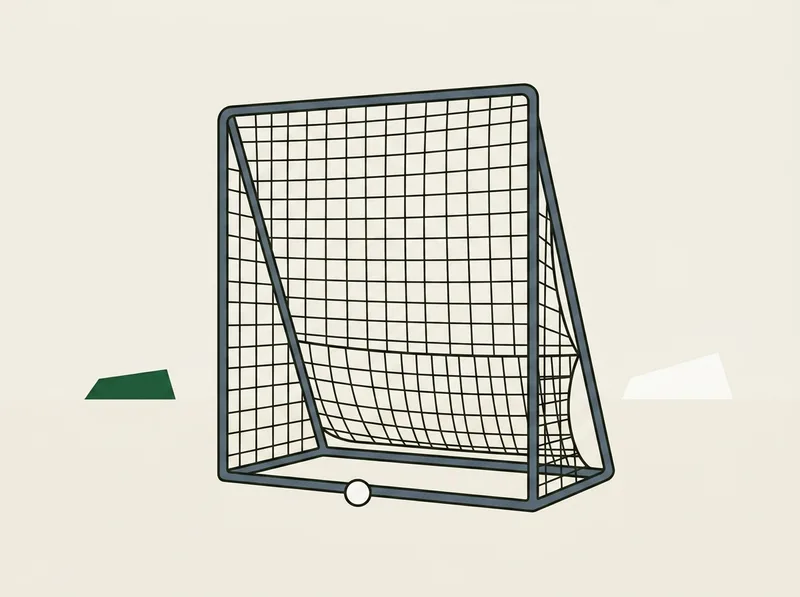 Around £695 to £1,140 by size
The Net Return Pro Series V2
- Rated for
- 225 mph ball speed, published
- Hitting area
- 8 ft wide by 7 ft 6 in high
- Depth
- 3 ft 6 in
- Ball return
- Yes, automatic
- Weight
- 28 lb
- Frame
- Aircraft-grade aluminium, per the maker
- Warranty
- 3 years
- Mat included
- No, turf sold separately
- Publishes a maximum ball speed of 225 mph, which is a number you can check your own swing against.
- The ball comes back to your feet, so a session is swings rather than swings and walking.
- Three year warranty and 28 lb, both published, on a product category where most makers publish neither.
- Costs more than any other net here by a wide margin, before you have bought a mat.
- 3 ft 6 in deep, so it needs real floor front to back as well as width.
- The turf is a separate purchase, and in Britain it costs more again than the net itself.
VerdictThe right buy for anyone who swings a driver indoors or in a garage, because it is the only net on this page that lets you verify the rating rather than trust the photography. For a golfer who only wants to hit wedges into a garden, it is a great deal more net than the job needs.
The ball return is the other reason it leads. The net feeds the ball back to your feet, so a twenty minute session is swings rather than ten minutes of swings and ten of picking up, and that changes how often it gets used.
The cost is genuinely high and worth naming plainly. It is the most expensive net here by a wide margin, and the hitting turf is a separate purchase that costs more again in Britain than the net does. If you are hitting wedges into a garden twice a month, this is the wrong end of the market.
Spornia SPG-7: the deepest net here, and no rating
The Spornia SPG-7 is a 7 ft by 7 ft cube with an extra 1.5 ft roof panel, weighing 20 lb, with a one year warranty and an automatic ball return. It pops up rather than bolting together, and it ships with a noise reduction target sheet, a chipping basket and a carry bag.
Depth is its real argument. Seven feet is the deepest pocket in this roundup by two clear feet, and depth is what turns a ball's energy into slow fabric movement instead of a sharp rebound. A shallow net stops the ball; a deep one absorbs it. That difference is audible from the next room, which matters if you practise in the evening.
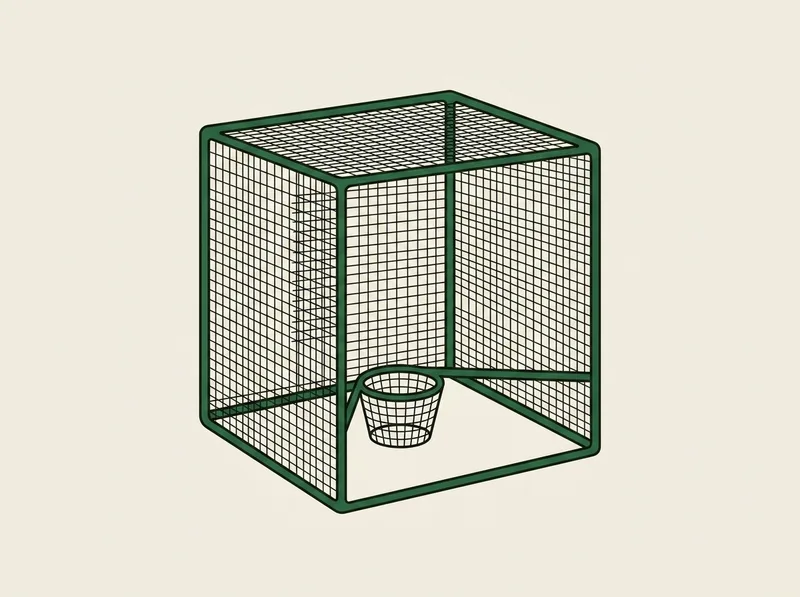 Around £325 to £360
Spornia SPG-7 Golf Practice Net
- Rated for
- Not published
- Hitting area
- 7 ft by 7 ft, plus a 1.5 ft roof
- Depth
- 7 ft
- Ball return
- Yes, automatic
- Weight
- 20 lb
- Frame
- Not published
- Warranty
- 1 year
- Mat included
- No
- Seven feet of depth, which is two clear feet more pocket than anything else here and the reason it swallows a ball so quietly.
- Twenty pounds and a pop-up frame, so one person can carry it out and put it up alone.
- Comes with a target sheet and a chipping basket, so a session has something to aim at.
- Publishes no speed rating of any kind while telling you to use any club including a driver.
- Seven feet deep is a lot of garage, and the roof panel puts total height near eight and a half feet.
- One year warranty, against three on the net above.
VerdictThe best net here if depth is what you care about, and the depth is genuine rather than a marketing figure. The gap is that Spornia invite you to hit driver into it and publish nothing at all about what it will take, which is a straightforward mark against an otherwise good product.
The problem is what is not on the page. Spornia tell you to use any club including a driver, and publish no ball speed rating, no club speed rating, no netting material and no netting ply anywhere on the product page or in their FAQ. That is not a small omission on a product whose whole safety case is the netting, and it is the reason this net sits second rather than first despite being the better value.
Longridge Deluxe: ten feet of opening, five feet of pocket
The Longridge Deluxe Golf Practice Net unfolds to 305 cm wide by 213 cm high with 151 cm behind it, which is a shade over 10 ft by 7 ft with five feet of depth. It arrives with a built-in ground sheet, a carry bag and a detachable 18-hole target sheet, and UK retailer listings put it at 8 kg.
Width is the specification most people underweight, and it is the one that decides whether a genuinely bad shot is caught. Shot Scope's tracked scoring benchmarks put golfers scoring in the 100s at 6.5 tee shots in trouble per round, against 3.3 for those scoring in the 80s. Someone missing that often has a dispersion pattern, and a seven foot opening is not generous against it. Ten feet is.
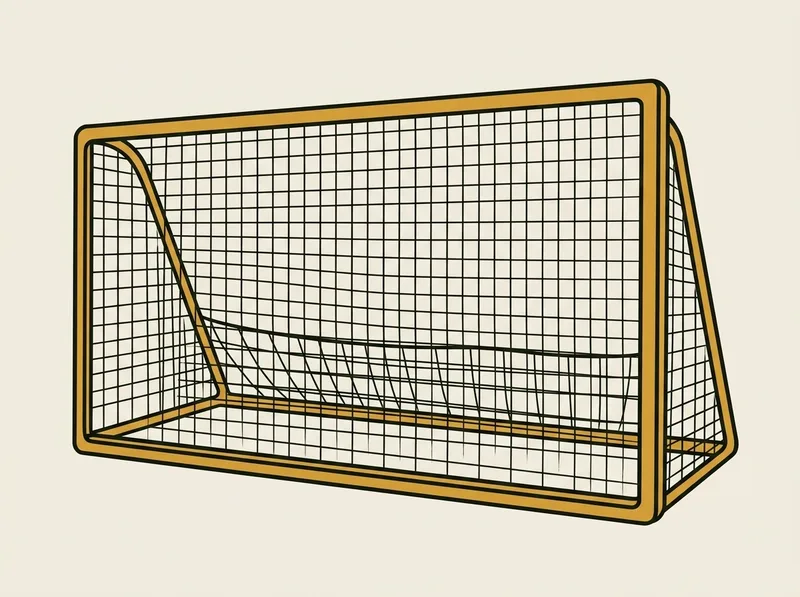 Around £80 to £100
Longridge Deluxe Golf Practice Net
- Rated for
- Not published
- Hitting area
- 305 cm by 213 cm, about 10 ft by 7 ft
- Depth
- 151 cm, about 5 ft
- Ball return
- No
- Weight
- 8 kg, from UK retailer listings
- Frame
- Not published
- Warranty
- Not published
- Mat included
- No, sold separately
- Ten feet of opening, which is three feet more than the pop-up and the single most useful spec for a wild striker.
- Five feet of pocket behind that opening, which is more depth than the most expensive net on this page has.
- A built-in ground sheet, a carry bag and a detachable 18-hole target sheet, so a session has something to aim at.
- No published speed rating, no published frame material and no published netting specification of any kind.
- Longridge run no website of their own, so every figure here comes from UK retailer listings rather than a maker's page.
- No ball return, so every shot is a walk unless you empty a bucket first.
VerdictThe most net for the money on this page by a distance, and the right buy for a golfer whose miss is a wide one, because width is the specification that decides whether a bad shot is caught or is in next door's garden. What you are not buying is a specification sheet, so treat it as an iron and wedge net until somebody at Longridge gives you a number.
The depth is the surprise. Five feet of pocket is more than the net at the top of this page carries, on a product costing a fraction of it, and depth is the specification that decides whether a ball is absorbed or fired back at your shins.
What is missing is the rest of the sheet, and here the gap is unusually wide. Longridge run no website of their own, so there is no maker's page to read: no frame material, no netting ply, no packed size, no warranty and no speed rating exists anywhere to be found. Every number above comes from a retailer describing somebody else's product, which is a weaker source than a manufacturer's own listing and is worth knowing before you swing hard at it.
Pure2Improve Practice Net: the cheap one, used properly
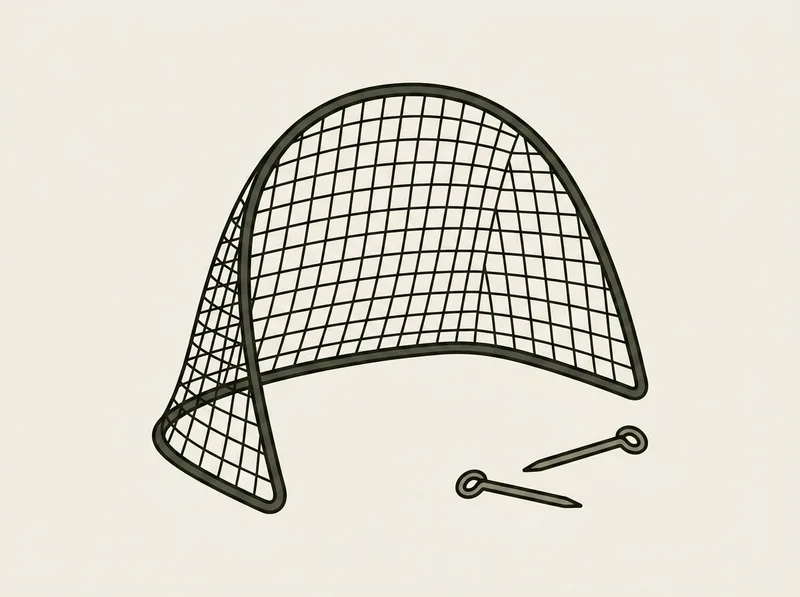
The Pure2Improve Practice Net gives a 2.40 m by 2.10 m opening, near enough 7 ft 10 in by 6 ft 11 in, on what the maker calls extra-strong fibreglass support poles with high strength polyester netting. It ships fully assembled with a nylon carry bag and folds flat. Nothing else is published: no depth, no weight, no warranty and no speed rating.
At this money that is close to what you would expect, and it does not make the net useless. It makes it a net with a defined job, and Pure2Improve say so themselves: their own description sells it for pitches and chips. For chipping, pitching, wedges and half swings in a garden, the opening is generous, setup is a couple of minutes, and the price makes it a decision you can reverse.
 Around £50 to £80
Pure2Improve Practice Golf Net
- Rated for
- Not published
- Hitting area
- 2.40 m by 2.10 m, about 7 ft 10 in by 6 ft 11 in
- Depth
- Not published
- Ball return
- No
- Weight
- Not published
- Frame
- Fibreglass support poles
- Warranty
- Not published
- Mat included
- No
- Roughly a tenth of the price of the top pick, for almost exactly the same width of opening.
- Arrives fully assembled and folds into a nylon carry bag, so it is a garden net rather than a permanent fixture.
- Pure2Improve run their own British shop, so the price is the maker's own in sterling rather than a marketplace guess.
- No published depth, no published weight, no published warranty and no speed rating.
- Fibreglass poles flex, so ball speed goes into moving the frame as well as into the net.
- Its maker sells it for pitches and chips, which is a quiet way of saying it is not a driver net.
VerdictThe right buy for chipping, wedges and half swings in a garden, where the price makes it a low risk decision and the opening is wider than most gardens are deep. It is the one on this page to be most careful about with a driver, because nothing published tells you what it will take and Pure2Improve's own description points at the short game.
Driver is the question, and the honest answer is that nobody can tell you. Fibreglass poles are the least rigid structure in this roundup by design, since they flex rather than resist, and flex in a frame means the netting position moves as the ball arrives. Combine that with no published rating and a maker who describes the product as a short game net, and the sensible policy is irons and shorter, at least until you have watched how the frame behaves with a 5 iron.
What actually decides a golf net
Marketing copy for nets is almost entirely adjectives. Five things are not.
| What to look at | What it changes | What good looks like |
|---|---|---|
| Published speed rating | Whether you can hit driver at all | A stated ball speed figure, above your own by a wide margin |
| Depth | Whether the ball is absorbed or rebounded | 3 ft minimum, more is quieter and calmer |
| Width | Whether a bad shot is caught | 8 ft if your strike is reliable, 10 ft if it is not |
| Frame type | Whether the structure holds position at impact | Rigid tube over a flexing bow, for full swings |
| Packed weight and size | Whether it gets put away, and therefore used | A published weight and a carry bag |
The two nobody checks are depth and frame type, and they interact. A shallow net on a rigid frame stops a ball hard and bounces it back at your shins. A deep net on the same frame turns the same shot into a soft, slow catch. If you have the floor space front to back, depth is worth more than almost anything else on the list.
Footprint, put up and packed away
Nets are sold on the size of the opening and used in the size of the room, and those are different measurements. Work in three dimensions before you buy.
Height is usually the binding constraint indoors. Practising golf at home covers the ceiling test: most golfers need roughly ten feet of clearance for a full iron swing, more if you are tall. A 7 ft 6 in net in a garage with an 8 ft ceiling is not a net you can swing a driver in front of, whatever it is rated to.
Depth eats more room than people plan for. The Spornia is seven feet deep before you have stood anywhere, and you need to stand far enough back that a shanked ball still meets netting. Add the depth to your stance distance and check that against the room rather than against the width of the opening.
Packed size decides whether it gets used. Only two of these four publish a weight in their own listing, at 28 lb and 20 lb, a third turns up as 8 kg on retailer pages, and not one of them publishes a folded size. A net that lives permanently in the middle of a garage gets dismantled by somebody eventually, and a dismantled net rarely goes back up.
The net is half the purchase. The mat is the other half
None of these four includes a hitting mat, and a net without one is not a usable setup. You are either hitting off your lawn, which will be bare inside a fortnight, or off concrete, which is a wrist injury with a countdown on it.
Ceiling height, distance from the net, what to put behind it and what to hit are all setup questions rather than buying questions, and they are covered in setting up a practice net.
What a net cannot tell you
A net removes ball flight. That is the point of it, and it is also the entire limit, and it is worth being blunt about because it decides what net practice is good for.
Strike, sound, contact and tempo all survive. You can feel a fat one, hear a thin one, and see the mark on the face. Direction and distance do not survive, because the ball stops after two feet and never gets far enough to curve.
If you want the missing numbers back, that is a launch monitor's job rather than a net's, and launch monitors is the separate decision. Even then the flight is calculated from launch conditions rather than watched, so it is a comparison tool. The genuine test is still a proper range session with a target and a full routine.
What to spend
The useful range is wide in this category because the top and bottom are genuinely different products rather than the same product at different margins.
- £50 to £80: a light fibreglass frame net for wedges, chips and half swings in a garden.
- £80 to £140: ten feet of opening and five of depth, with nothing published about what any of it stops.
- £325 to £360: seven feet of depth, an automatic ball return, and a net you can leave up.
- £695 and up: a published speed rating, a three year warranty, and a structure specified for driver.
The jump worth making is from no published rating to a published one, and it is the only step on that list about safety rather than convenience. Everything else is comfort, quietness and how often the thing gets used. Note also that the ladder is not a straight line: the £80 net here has more depth than the £695 one, so paying more buys you a rating and a warranty rather than more netting. Budget for the mat in the same breath, because a net at £70 with no mat is not a £70 setup, it is an unfinished one.
Key takeaways
- Only one of these four nets publishes a speed rating. The Net Return Pro Series V2 states 225 mph ball speed, and the other three publish nothing at all.
- Net ratings are quoted in ball speed. A 1.50 smash factor means a 100 mph driver swing produces roughly 150 mph of ball speed, which is the figure a rating has to clear.
- The average male amateur swings a driver at 94 mph, a scratch amateur at 110 mph, so most published ratings that do exist sit far above amateur speeds. The problem is the ones that do not exist.
- Where no rating is published, treat the net as an iron and wedge net until the maker gives you a number.
- Depth decides whether the ball is absorbed or rebounded. The Spornia's seven feet leads, and the £80 Longridge has five where the top pick has three and a half.
- Width decides whether a bad shot is caught. Ten feet suits a wandering strike; seven does not.
- None of these four includes a hitting mat, and a net without one means hitting off lawn or concrete.
- A net keeps strike and tempo honest and reports nothing about direction or distance, so it maintains a swing rather than testing one.
- Only two of the four publish a weight in their own listing, and none publishes a folded size, which is the specification that decides whether it gets put away and used again.
Common questions
What is the best golf net?
For anyone hitting a driver, the Net Return Pro Series V2, because it is the only net here that publishes a maximum ball speed, at 225 mph, along with its weight, depth, frame material and a three year warranty. The Spornia SPG-7 is the better value if depth and a ball return matter more than a verified rating.
Are golf nets safe to hit a driver into?
Only if the maker publishes a rating that clears your ball speed. A 100 mph driver swing produces roughly 150 mph of ball speed at a good strike, so a rating has to sit above that with margin. Where no rating is published there is nothing to check, and the sensible policy is irons and wedges only.
What speed should a golf net be rated for?
Work out your own ball speed first. Club speed multiplied by about 1.5 gives you a driver ball speed, so a 95 mph swing is around 143 mph. Anything rated above roughly 180 mph covers every amateur swing comfortably, and a published 225 mph covers tour speeds.
How much space do I need for a golf net?
Add the net's depth to the distance you stand back, and check ceiling height separately. Most golfers need around ten feet of clearance above them for a full iron swing, so a low garage rules out full swings regardless of how tall the net is.
Do I need a hitting mat with a golf net?
Yes, unless you are willing to destroy a patch of lawn. None of the nets on this page includes one. Hitting off concrete without a proper mat is how wrists get hurt, and a thin mat over a hard floor is only marginally better.
Can I practise in a garage with a golf net?
Often yes with irons and wedges, and less often with a driver, because ceiling height is usually the constraint rather than the net. Measure with a club held above your head before buying anything, and remember the net's own depth eats into the room as well.
Will a golf net fix my slice?
No. A net stops the ball before it has curved, so it cannot show you what your ball flight is doing. Net practice keeps strike and tempo ticking over between range visits, and the actual diagnosis has to happen somewhere the ball flies.
How long does a golf net last?
Nobody publishes a useful figure, which is part of the problem. What is known is that sunlight degrades netting, so a net left outdoors all year is weaker each season, and UV treatment is worth looking for on the specification. Indoor nets and nets that get packed away last considerably longer.
Is a deeper golf net better?
Usually yes, for two reasons. A deep pocket absorbs the ball's energy gradually rather than stopping it hard, which means less rebound towards your shins, and it is noticeably quieter. The trade is floor space, since seven feet of net depth is seven feet you cannot stand in.
Do golf nets with a ball return work?
The good ones genuinely do, and the effect is on how much you practise rather than on how well. A return turns a session into swings instead of swings and bending down, which roughly doubles the reps you get in the same time. Two of the four nets here return the ball automatically.
Can I use real golf balls in a net indoors?
With a proper net, a proper mat and enough clearance, yes. Without a published speed rating, foam or limited flight balls are the safer choice, and they are also the right answer in any garden with windows, neighbours or people in it.
How we put this together
- Published manufacturer specifications for each net, taken from the maker's own listing rather than a retailer's summary or a review site.
- Where a maker publishes no speed rating, this page records that as Not published and counts it against the product, because it is the only specification on a golf net that carries a safety consequence.
- TrackMan's published club speed figures by handicap, and their published smash factor relationship, which is what converts a rating quoted in ball speed into something a golfer can check against their own swing.
- Frame depth, hitting area and packed weight, because those three decide whether a net fits the space you actually have rather than the space in the photograph.
- Shot Scope's tracked amateur data on how often tee shots find trouble, which is what decides whether a narrow net is wide enough for your dispersion.
- Whether a hitting mat is included, since none of these four ship with one and the ground under the ball is half the purchase.
On this page
- The four, compared
- The number that decides whether a net is safe
- The Net Return Pro Series V2: the only published number
- Spornia SPG-7: the deepest net here, and no rating
- Longridge Deluxe: ten feet of opening, five feet of pocket
- Pure2Improve Practice Net: the cheap one, used properly
- What actually decides a golf net
- Footprint, put up and packed away
- The net is half the purchase. The mat is the other half
- What a net cannot tell you
- What to spend
- How we put this together

Tom Ashworth
Tom Ashworth is a PGA Professional who has taught golf since 2012, working mainly with beginners and mid-handicappers at club level in Surrey. He reviews the instruction guides on Learn Golf for technical accuracy before they publish.
Most of his teaching is with players in their first three years of the game, and most arrive having been told too much: six swing thoughts collected from videos, half of them contradicting each other. His approach is to check the grip and the alignment before touching the swing, on the basis that most bad ball flight is decided at address.