Best Golf Simulators: Four Setups and How to Choose
A golf simulator is never really one product. It is a sensor, a screen, an enclosure, a mat and some software, sold in every combination from one box to a full room. Here is what to buy at four different levels and what each one assumes you already have.
Some links here earn us a commission at no extra cost to you. It never changes what we recommend or the order we rank it. How this works.
A golf simulator is not one product, whatever the marketing on any single box suggests. It is a sensor that reads the ball or the club, software that turns that data into a course and a shot, a screen to hit into, an enclosure to catch what misses the screen, and usually a mat underneath. Some setups bundle several of those into one purchase. Most do not, and the gap between "a golf simulator costs £500" and "a golf simulator costs £12,000" is almost always the gap between one component and the whole room.
How these compare
GolfBays specs the whole room as one purchase. The other four sit at different points on the same spectrum rather than competing head to head: the RSG ONE is sold either as a sensor or as a bundle that already includes a mat and a net, and the remaining three are sensors that need a screen and an enclosure built around them, ranked here on the sensor and software rather than on a full room price, because the room price depends entirely on what you build.
| Pick | Best for | Sensing | Software | Setup type | Space needed | Price |
|---|---|---|---|---|---|---|
| GolfBays | Buying the sensor, screen, enclosure and software as one build instead of four | Not one sensor. Carries nine brands including SkyTrak, Uneekor, TrackMan and Foresight | Matched to whichever sensor is chosen, not sold on one platform alone | Full-service retailer, specs the sensor, screen, enclosure, mat and software together | Anything from a mat-only setup to a full commercial install | Complete packages from around £1,500, premium and commercial builds £10,000 to £25,000+ |
| Uneekor EYE MINI | The one to buy if you only buy one | Two high-speed infrared cameras, full ball and club data | Works with GSPro, E6 Connect and TGC, plus Uneekor's own course library | Sensor only. Needs a separate screen and enclosure | A dedicated bay, roughly the size of a single garage | Around £3,000 for the sensor, £7,500 to £8,000 as a package with screen and enclosure |
| TruGolf Apogee with E6 Connect | The deepest course library | Camera-based launch monitor | E6 Connect included, TruGolf's course library | Sensor and software bundle. Needs a separate screen and enclosure | A dedicated bay, comparable to the Uneekor | Around £7,500 to £8,500 for the sensor with E6 software included |
| Full Swing KIT | One box built to commercial standard | Dual-mode radar plus camera, full ball and club data | GSPro and Full Swing's own FS Golf software | Sensor and screen system. Still needs an enclosure and mat | A dedicated bay, built to the ceiling heights of a commercial install | Around £5,000 to £6,000 for the sensor |
| RSG ONE | The cheapest way into this category that still measures the ball | Camera and infrared sensor unit, down the line, ball data with a putting mode | RSG Club, 10 courses included, 36 or more on the Premium tier | Sensor alone, or a starter bundle that adds a mat and a net | 14 ft by 10 ft minimum for a safe hitting area, per Red Stakes | Around £2,250 for the sensor alone, or £2,700 to £2,800 for the starter bundle |
GolfBays: buying the whole room from one place
Sourcing a full bay from separate manufacturers works, but it also means matching a sensor, a screen, an enclosure and a mat from four different companies and hoping the dimensions agree with each other.
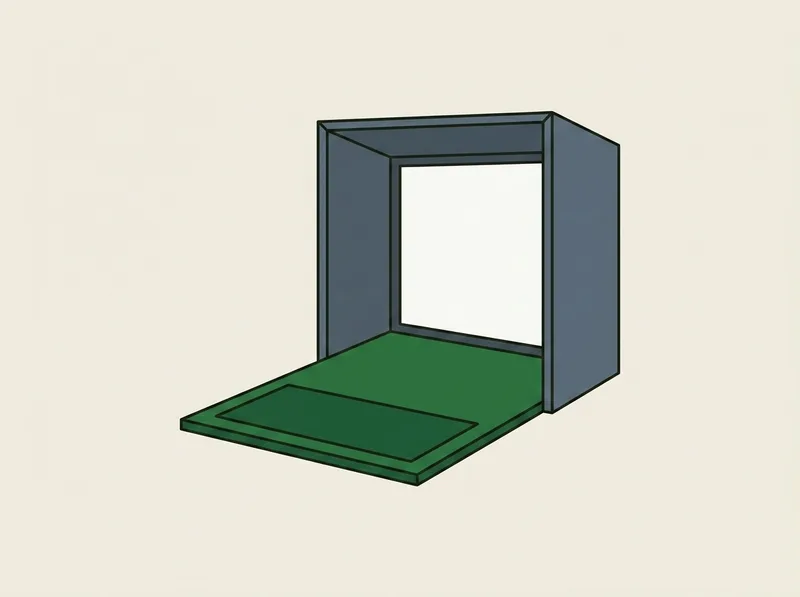 Complete packages from around £1,500, premium and commercial builds £10,000 to £25,000+
GolfBays
- Sensing
- Not one sensor. Carries nine brands including SkyTrak, Uneekor, TrackMan and Foresight
- Software
- Matched to whichever sensor is chosen, not sold on one platform alone
- Setup type
- Full-service retailer, specs the sensor, screen, enclosure, mat and software together
- Space needed
- Anything from a mat-only setup to a full commercial install
- One retailer confirms the sensor, screen, enclosure and mat all fit together, instead of four separate manufacturers and a guess.
- Range runs from accessories under £150 to a full commercial bay, so the advice scales with the budget.
- Carries most major sensor brands, so the choice of sensor is not locked to whichever brand the retailer happens to sell.
- A retailer, not a single product, so there is no one spec sheet to compare against a dedicated sensor or enclosure.
- Buying through a specialist costs a little more than sourcing the same parts separately at the lowest price each one can be found for.
- Not itself a manufacturer, so warranty and support for each component still runs through the original brand.
VerdictThe pick for anyone who would rather have the whole room specified correctly once than research a sensor, a screen and an enclosure separately and hope the dimensions agree. The four systems below are for builders who want to make each of those decisions themselves.
Visit GolfBaysFor the complete build, a specialist retailer such as GolfBays carries enclosures, impact screens, hitting mats, projectors and simulation software alongside launch monitors across nine sensor brands including SkyTrak, FlightScope, Uneekor, Garmin, ProTee, Rapsodo, TrackMan, Foresight and Square Golf. Going through a retailer that carries the whole stack is worth the small premium over shopping four separate websites, because someone else has already confirmed the parts fit.
Uneekor EYE MINI: the one to buy if you only buy one
The Uneekor EYE MINI reads both the ball and the club through two infrared cameras, and Uneekor include full data with no ongoing fee, which is not true of every sensor in this category. It is also built to be portable, so the same unit works on a hitting mat in a garage or mounted permanently in a finished bay.
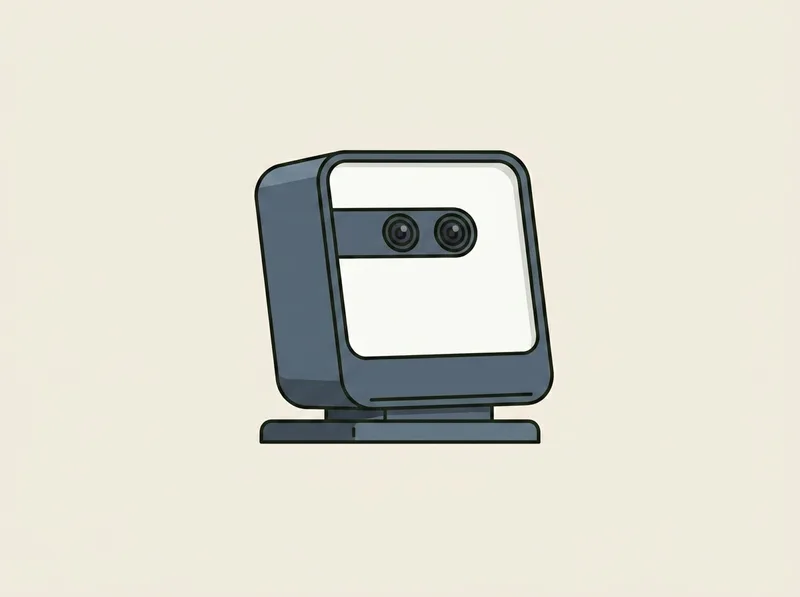 Around £3,000 for the sensor, £7,500 to £8,000 as a package with screen and enclosure
Uneekor EYE MINI
- Sensing
- Two high-speed infrared cameras, full ball and club data
- Software
- Works with GSPro, E6 Connect and TGC, plus Uneekor's own course library
- Setup type
- Sensor only. Needs a separate screen and enclosure
- Space needed
- A dedicated bay, roughly the size of a single garage
- Full club and putting data included with no ongoing data fee, which several rivals gate behind a subscription.
- Compact and portable enough to move between a mat setup and a permanent bay.
- Compatible with several third-party simulation platforms rather than locking you into one.
- The sensor is the whole purchase. Screen, enclosure, mat and projector are separate line items.
- Camera sensors need consistent lighting in the hitting area to track reliably.
- Once a screen, an enclosure and a mat are added, the finished bay costs well over twice what the sensor does on its own.
VerdictThe strongest all-round pick for someone building a proper bay rather than trying a gadget. It reads both the ball and the club without a subscription attached, and it works with more than one piece of simulation software, which matters more once you have owned one for a year.
See the EYE MINIWhat the sensor does not include is everything around it. A screen, an enclosure frame and a mat are separate purchases, covered further down this page. The EYE MINI's real advantage over a cheaper camera sensor is software compatibility: it runs on GSPro, E6 Connect and TGC rather than locking the buyer into one platform, which matters more the longer you own it.
TruGolf Apogee with E6 Connect: the deepest course library
TruGolf sell the Apogee sensor bundled with E6 Connect, one of the oldest and most widely used simulation platforms in both home and commercial bays. The appeal is less about raw sensor specification and more about the software: a large course library, regular updates, and a platform that plenty of commercial venues already run, so the experience is familiar if you have played a simulator at a golf bar or a fitting studio.
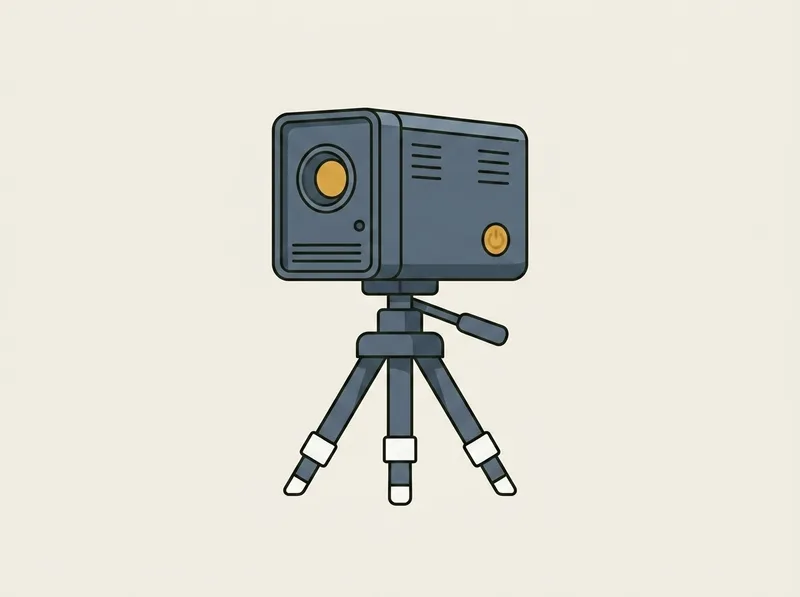 Around £7,500 to £8,500 for the sensor with E6 software included
TruGolf Apogee with E6 Connect
- Sensing
- Camera-based launch monitor
- Software
- E6 Connect included, TruGolf's course library
- Setup type
- Sensor and software bundle. Needs a separate screen and enclosure
- Space needed
- A dedicated bay, comparable to the Uneekor
- E6 Connect is one of the longest-running simulation platforms and its course library is deep.
- TruGolf sell the sensor and the software as one bundle, which removes a decision most other setups leave to the buyer.
- Widely used in commercial bays, so the software is well supported and frequently updated.
- E6 Connect's ongoing subscription tiers add a running cost beyond the initial purchase.
- Still needs an enclosure, screen and mat bought separately, the same as the Uneekor.
- The most expensive sensor on this page at UK prices, and the camera hardware still trails the newest units on raw data points.
VerdictThe pick for someone who cares more about how many courses they can play than about squeezing out the last club data point. The software is the reason to buy this over a rival sensor with similar hardware.
The running cost is the thing to plan for. E6 Connect's subscription tiers add up over a few years in a way a one-off hardware purchase does not, and it is worth pricing that against a platform with a one-time licence before deciding purely on the course count.
Full Swing KIT: one box built to commercial standard
Full Swing built its name on commercial and tour-level simulators, and the KIT is the compact version of that same radar-and-camera approach, with a small built-in display for checking a shot on the unit itself. It costs roughly twice what the cheapest measuring sensor on this page does before an enclosure or screen is added to it, and the build quality reflects a company used to selling into facilities that run for eight hours a day. It is stocked by UK retailers and shipped from within the UK, so it is one of the easier sensors here to buy without an import wait.
 Around £5,000 to £6,000 for the sensor
Full Swing KIT
- Sensing
- Dual-mode radar plus camera, full ball and club data
- Software
- GSPro and Full Swing's own FS Golf software
- Setup type
- Sensor and screen system. Still needs an enclosure and mat
- Space needed
- A dedicated bay, built to the ceiling heights of a commercial install
- Radar and camera together, which is the same broad approach TrackMan popularised at tour level.
- Built by a company whose commercial simulators are used in professional and retail settings, so the hardware is proven at volume.
- Includes a built-in display for checking a shot without a separate screen or laptop.
- Roughly twice the price of the cheapest measuring sensor here before the enclosure and screen are even added.
- The build quality and support model are aimed at commercial buyers, and a home buyer pays for that positioning.
- Overkill for anyone who plays a handful of rounds indoors over the winter rather than running a facility.
VerdictThe pick for a serious home bay or a small commercial space, and the one to skip if the budget has a ceiling. The two cheapest sensors here do the core job for a lot less money.
That commercial pedigree is the whole case for it and also the whole case against it. A golfer hitting balls two evenings a week does not need hardware built for a retail bay running twelve sessions a day. Someone building a genuine home studio, or a small commercial space, gets real value from the extra durability and support.
RSG ONE: the cheapest way in that still measures the ball
This slot used to belong to the OptiShot 2, and it no longer can. OptiShot Golf rebranded to Red Stakes Golf, optishotgolf.com now serves rsgolf.com, and Red Stakes' own help desk records that support for the OptiShot2 and its software has reached end of life, with online play removed and the premium courses withdrawn. A guide should not rank a product in that state.
The RSG ONE is what Red Stakes sell in its place, and it is a different class of thing. Where the OptiShot read the club with an infrared array under a swing pad, the RSG ONE is a camera and infrared sensor unit that reads the ball, and it ships with the RSG Club game engine, ten courses and a putting mode included rather than sold on afterwards.
RSG ONE
- Sensing
- Camera and infrared sensor unit, down the line, ball data with a putting mode
- Software
- RSG Club, 10 courses included, 36 or more on the Premium tier
- Setup type
- Sensor alone, or a starter bundle that adds a mat and a net
- Space needed
- 14 ft by 10 ft minimum for a safe hitting area, per Red Stakes
- The starter bundle ships with a mat, a net and mounting hardware, so it arrives playable rather than as a parts list.
- Ten courses and a putting mode are included with the hardware, with no subscription needed to play them.
- Designed and built in the USA with a 365 day money-back guarantee that Red Stakes extend to international buyers.
- No UK distributor holds stock. Red Stakes publish sterling prices and ship here directly, but import duty and delivery time fall on the buyer.
- Needs a Windows 11 PC, which is not included and is a real line item if you do not already own one.
- Newer than the sensors it competes with, so there is less independent long-term evidence on how it holds up.
VerdictThe cheapest entry on this page that still measures the ball rather than modelling it from the club, and it takes the slot the OptiShot 2 used to hold. It ranks last only because nobody in the UK stocks it, so buying one means ordering from Michigan and waiting. If that does not put you off, nothing else here measures the ball for the money.
The trade is the price, and it is a large one. There is no longer a few-hundred-pound self-contained box at the bottom of this category. What sits there instead is a sensor that measures rather than estimates, sold either on its own or as a starter bundle with a mat and a net, which makes it the only setup here besides GolfBays that arrives ready to hit into rather than as the first of four purchases. It still needs a Windows 11 PC, and the larger course library is a Premium subscription rather than part of the box.
The reason it sits last rather than higher is availability. Red Stakes is a Michigan manufacturer that has only recently opened up to buyers outside North America, and no UK distributor holds stock. It does publish sterling pricing to UK visitors and ships here directly, so the purchase is genuine rather than a forwarding arrangement, but import duty and delivery time are on the buyer in a way they are not with a sensor sitting in a UK warehouse. On price and capability it would rank higher. On how easily a UK reader can actually get one, it does not.
What actually goes into a bay
Three of these four sensors need a room built around them, and that room has four parts beyond the sensor itself.
| Component | What it does | Covered on |
|---|---|---|
| Screen | The surface the ball hits and the image projects onto | Best golf impact screens |
| Enclosure | The frame and side netting that catches a mishit and contains the swing | Best golf simulator enclosures |
| Mat | What you actually strike the ball off | Best golf hitting mats |
| Projector | Puts the course image on the screen | Varies by throw distance and room length |
Buying a sensor is the decision most people research hardest and it is often the smallest line item once the rest of the room is priced in. A mid-range enclosure and screen commonly cost as much as the sensor sitting in front of them, which is the detail that catches first-time buyers out.
How much room you actually need
TrackMan's own published guidance for a garage build recommends a ceiling height of roughly 9 to 10 feet, a width of 10 to 15 feet and a depth of 15 to 20 feet for a comfortable bay, with the exact depth depending on where the sensor sits. A ceiling-mounted or beside-the-ball camera sensor, which covers all three sensor-only setups on this page, generally needs less depth behind the golfer than a radar unit positioned further back.
What it actually costs, start to finish
A full picture, not just the sensor:
- Sensor: around £2,250 for the cheapest measuring sensor here, £3,000 to £8,500 for a higher-end camera or radar unit
- Screen and enclosure: commonly £700 to £3,000 depending on size and finish
- Mat: £80 to £500
- Projector: £300 to £2,000 depending on brightness and throw distance
- Software subscription, where one applies: nothing to around £300 a year
A complete mid-range bay built around a camera sensor typically lands somewhere between £4,500 and £12,000 once every part is accounted for, which is a wide range and an honest one. What golf actually costs covers the sport more broadly, and a simulator sits well outside what most golfers spend on anything else in the game.
None of that figure includes upkeep. A screen wears from repeated impact and eventually needs replacing, a mat compresses and loses its give after enough sessions, and a projector bulb has a working life measured in thousands of hours before the image visibly dims. Setting aside a small amount each year for wear, rather than treating the first build as the only cost the bay will ever have, is what keeps it performing the way it did on day one.
Matching these to a buyer
GolfBays suits anyone who would rather have one retailer confirm the whole stack fits together than research a sensor, a screen and an enclosure separately. The Uneekor EYE MINI suits a buyer building a proper bay who wants full ball and club data without an ongoing fee attached. The TruGolf Apogee suits someone who weighs course variety and a familiar commercial-style experience above the last data point on a spec sheet. The Full Swing KIT suits a serious home studio or a small commercial space with a budget to match the hardware's own pedigree. The RSG ONE suits someone who wants measured ball data and a playable bundle for the least money, already has a Windows PC to run it, and does not mind ordering from the United States and waiting.
Does a simulator round count toward an official handicap?
Usually not, unless the specific course and software combination is one a governing body has approved for that purpose. Most home and small commercial simulators are built for practice and for the experience of playing a course, not for posting a score that counts, and assuming any simulator round is eligible is a common mistake. Anyone who cares about competitive scoring should check directly with the venue or software provider rather than assume it either way.
The other honest option is not building a permanent bay at all. A sensor on a mat with a net behind it, no screen and no enclosure, still gives real ball data for practice, and practising golf at home covers what that smaller setup looks like. Whichever sensor you land on, what the numbers actually mean is worth reading before the first session, because a simulator produces the same kind of data a standalone launch monitor does and the same rules about measured against modelled apply.
Key takeaways
- GolfBays is the strongest starting point for buying the whole room at once: one retailer speccing the sensor, screen, enclosure and mat together across nine sensor brands.
- A golf simulator is a sensor, a screen, an enclosure, a mat and usually software, and no product on this page bundles every one of those into a single box.
- The Uneekor EYE MINI is the strongest all-round sensor here: full ball and club data with no ongoing fee, compatible with more than one simulation platform, and held in stock by several UK retailers.
- The RSG ONE is the cheapest way onto this page that still measures the ball, and its starter bundle adds a mat and a net so it arrives playable. It ranks last only because no UK distributor stocks it.
- The OptiShot 2 no longer belongs in this category. Red Stakes Golf, formerly OptiShot Golf, have taken it and its software to end of life.
- TruGolf Apogee with E6 Connect trades a subscription for one of the deepest course libraries in the category.
- The Full Swing KIT is commercial-grade hardware at a commercial price, and it suits a serious build rather than a casual one.
- Plan the room before the sensor. TrackMan's own guidance suggests roughly 9 to 10 feet of ceiling and 15 to 20 feet of depth for a comfortable bay.
- The screen, enclosure and mat commonly cost as much as the sensor once a full bay is priced out.
Common questions
What is the best golf simulator for a home garage?
For most home garages with the space for a proper bay, a camera-based sensor like the Uneekor EYE MINI paired with a screen and enclosure gives the most complete experience. If the garage cannot spare a permanent bay, the RSG ONE starter bundle pairs the sensor with a mat and a net instead of a screen, which needs far less room and no fixed structure.
How much does a golf simulator cost in total?
Once the sensor, screen, enclosure, mat and projector are all counted, a complete mid-range bay typically runs £4,500 to £12,000. The cheapest honest way in is a sensor and net bundle rather than a full bay, which is around £2,750 for the RSG ONE starter package before a PC to run it.
How much space does a golf simulator need?
TrackMan's published guidance for a garage build suggests roughly 9 to 10 feet of ceiling height, 10 to 15 feet of width and 15 to 20 feet of depth. The exact depth depends on where the sensor sits, and a beside-the-ball camera sensor generally needs less room behind the golfer than a radar unit.
Do you need a launch monitor and a simulator, or are they the same thing?
The launch monitor is the sensor inside a simulator. A standalone launch monitor review, like our best launch monitors guide, covers sensors on their own for practice. This page covers what it takes to build those same sensors into a full room you can actually play a course in.
What is the cheapest way to get a golf simulator?
The RSG ONE starter bundle, at around £2,750 with a mat and a net included, is the cheapest complete package here. Below that, a used camera sensor bought without a screen or enclosure, hit into a plain net, gets real ball data for less than a new commercial screen alone costs.
Does a golf simulator need a special screen, or will any white sheet work?
It needs a purpose-built impact screen. A sheet or a painted wall will not survive repeated full-speed strikes and will not hold a projected image evenly, and the material tiers covered above are what actually decides how long one lasts.
Can a golf simulator be built without an enclosure?
Yes, with a plain net behind a screen, though an enclosure contains mishits far better and blocks ambient light for a clearer projected image, which the frame and netting options covered above go through in full.
Do golf simulators measure real ball data or estimate it?
It depends on the sensor. Camera and radar-based units like the RSG ONE, Uneekor, TruGolf and Full Swing options here measure ball flight directly at or near impact. Older club-reading pads, including the discontinued OptiShot 2, estimate ball flight from the club's path instead, which is a real difference in how trustworthy the resulting numbers are.
What projector works best for a golf simulator?
A short-throw projector suited to the room's depth, bright enough to stay visible with some ambient light, is the general requirement. The right throw distance depends on how far back the projector can be mounted, which is decided by the room rather than by the sensor.
Is a golf simulator worth it for a casual golfer?
For someone who plays a handful of rounds a year and wants to hit balls through a winter, a mat and a net-based sensor setup covers most of the value at a fraction of the cost of a full bay. A complete room with a screen and enclosure suits someone who wants the actual experience of playing a course indoors, which is a different and more expensive goal.
Do simulator software subscriptions expire or get more expensive?
Some do. E6 Connect and similar platforms sell annual tiers that can change price, while other systems, including some Uneekor-compatible platforms, are sold as a one-time licence. Check whether the course library you care about sits behind a subscription before comparing two sensors on price alone.
How we put this together
- Published manufacturer specifications for each system, taken from the maker's own product pages rather than a retailer's summary.
- UK pricing read from UK storefronts and UK-facing manufacturer pages rather than converted from a US figure, because UK retail on this hardware is set separately from US list pricing.
- What each setup includes out of the box against what it assumes you buy separately, because the sticker price and the total cost of a working bay are frequently two different numbers.
- Published room and space requirements where a maker states them, and a note where they do not.
- TrackMan's own published guidance on garage and home simulator dimensions, which is the clearest room-planning reference in the category.
- Which software each system runs, since the course library and the swing analysis depend on the software rather than the sensor alone.
On this page
- How these compare
- GolfBays: buying the whole room from one place
- Uneekor EYE MINI: the one to buy if you only buy one
- TruGolf Apogee with E6 Connect: the deepest course library
- Full Swing KIT: one box built to commercial standard
- RSG ONE: the cheapest way in that still measures the ball
- What actually goes into a bay
- How much room you actually need
- What it actually costs, start to finish
- Matching these to a buyer
- How we put this together

Tom Ashworth
Tom Ashworth is a PGA Professional who has taught golf since 2012, working mainly with beginners and mid-handicappers at club level in Surrey. He reviews the instruction guides on Learn Golf for technical accuracy before they publish.
Most of his teaching is with players in their first three years of the game, and most arrive having been told too much: six swing thoughts collected from videos, half of them contradicting each other. His approach is to check the grip and the alignment before touching the swing, on the basis that most bad ball flight is decided at address.