Best Golf Shoes for Walking: Four Picks for 18 on Foot
Walking 18 holes is a five mile walk with a load on your back, done in a shoe designed around a golf swing. Those two jobs pull in opposite directions, and the shoe you buy decides which one wins.
Some links here earn us a commission at no extra cost to you. It never changes what we recommend or the order we rank it. How this works.
A golf shoe bought on traction and a golf shoe bought for walking are not the same purchase. One is judged on seventy swings, the other on roughly four miles of uneven ground with a bag on your back and a car park at each end. Most shoe marketing addresses the first job. This page is about the second, and about what you give up choosing it.
The four, compared
None of these are the picks on the main golf shoes page, and that is deliberate. That page ranks on traction, warranty and width, which is the right order for a golfer who sometimes takes a buggy. Reorder those criteria around the walk and different shoes win.
| Pick | Best for | Type | Cushioning | Waterproofing | Traction | Price |
|---|---|---|---|---|---|---|
| TRUE Linkswear Antigravity | The shoe built around the walk rather than the swing | Spikeless | Pebax superfoam midsole | Waterproof, sold as a waterproof shoe | Moulded spikeless tread, fixed | £189 at TRUE's own UK store |
| ECCO BIOM C5 | Walking through a wet season without wet feet | Spikeless | FLUIDFORM direct-injected midsole, removable OrthoLite inlay | GORE-TEX Surround membrane | Multi-directional moulded outsole | £169 at UK retail, against a £199 RRP. The BOA closure version costs more |
| Payntr All Day SC | A British shoe built around the word all day | Spikeless | PMXNITROGEN+ midsole, nitrogen infused | Waterproof and breathable membrane fused to the lining, sealed with a bottom gasket | Spikeless TPU outsole with moulded lugs | £159 at UK retail, £159.99 at Payntr's own store |
| New Balance Fresh Foam X Defender SL | A two year waterproof warranty for the least money | Spikeless | Fresh Foam X midsole with a moulded CUSH+ insole | Welded waterproof upper, 2 year waterproof warranty | Exoskeleton spikeless TPU outsole | Not currently sold in the UK |
All four are spikeless, which is not an accident. The section further down explains why a walker leans that way and the one condition under which they should not.
TRUE Linkswear Antigravity: built around the walk
TRUE have spent their whole existence making the argument that golf shoes are too stiff, too narrow and too tall, and the TRUE Linkswear Antigravity is the clearest version of it. The midsole is Pebax superfoam, which is the material family that turned up in elite distance running shoes and then filtered outward. It is light, it returns energy, and it is a genuinely different starting point from the EVA most golf shoes still use.
The other thing TRUE do is shape. The forefoot is wide, the last follows the natural splay of a foot rather than tapering to a point, and the tongue is perforated neoprene so heat can leave. None of that shows up in a swing. All of it shows up somewhere around the fourteenth.
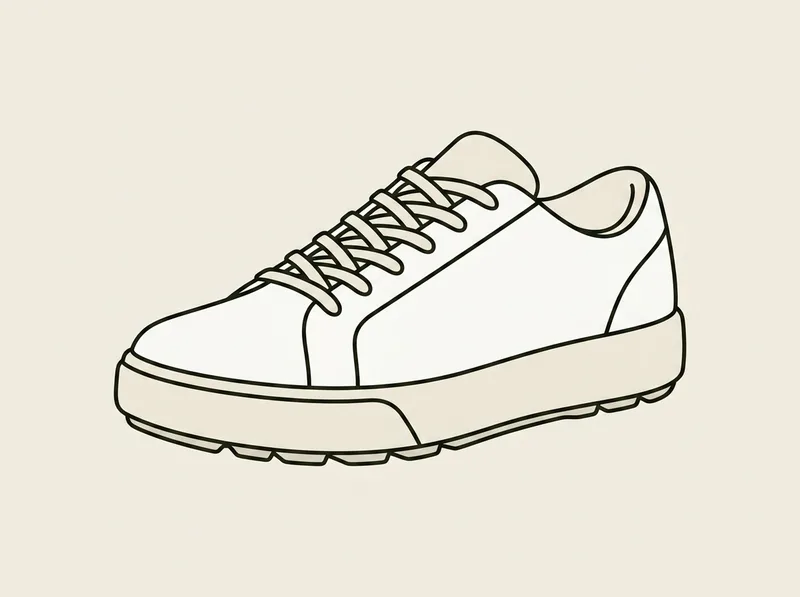 £189 at TRUE's own UK store
TRUE Linkswear Antigravity
- Type
- Spikeless
- Cushioning
- Pebax superfoam midsole
- Waterproofing
- Waterproof, sold as a waterproof shoe
- Traction
- Moulded spikeless tread, fixed
- Upper
- Engineered upper with a perforated neoprene tongue
- Last
- Wide forefoot, natural foot shape
- The midsole foam is the same family used in distance running shoes, which is a different starting point from a golf midsole.
- The widest forefoot of the four, which matters more at the sixteenth than at address.
- Comfortable enough off the course that it survives the drive home and the car park, which spikeless shoes are supposed to do and often do not.
- TRUE publish no waterproof warranty term, so the waterproof claim has no stated length behind it.
- The tread is shallow, and it gives up before anything else here on a wet downhill lie.
- A soft superfoam midsole compresses over time, and when it does the shoe is finished even if the upper looks new.
VerdictThe right buy for someone who walks every round and rates the walk above the last five per cent of traction. It is the only shoe here whose midsole was clearly chosen for the four miles rather than the seventy swings.
The honest weakness is traction. The tread is shallow and moulded, and on a wet downhill lie it gives up before the ECCO does. TRUE also publish no waterproof warranty term, so the waterproof claim sits without a stated length behind it, which is a real gap on the most expensive shoe a British buyer can actually order here.
Soft foam has a second cost that nobody advertises. A superfoam midsole compresses with mileage, and when it has gone flat the shoe is finished as a walking shoe even though the upper still looks new. That is the trade for the cushioning, and it is the reason to think in seasons rather than years.
ECCO BIOM C5: for a wet walking season
ECCO tan their own leather and inject their own midsoles, and the ECCO BIOM C5 is the current version of the shoe that made their reputation among golfers who walk. The upper combines performance leather with engineered mesh, the waterproofing is GORE-TEX Surround, and the midsole is FLUIDFORM, which is injected directly onto the upper rather than glued to it.
That construction detail matters more to a walker than it sounds. A glued midsole has a bond line, and the bond line lives exactly where the shoe flexes at the ball of the foot. Walk five miles a week for three seasons and that is where a shoe usually starts to open up. Direct injection removes the join.
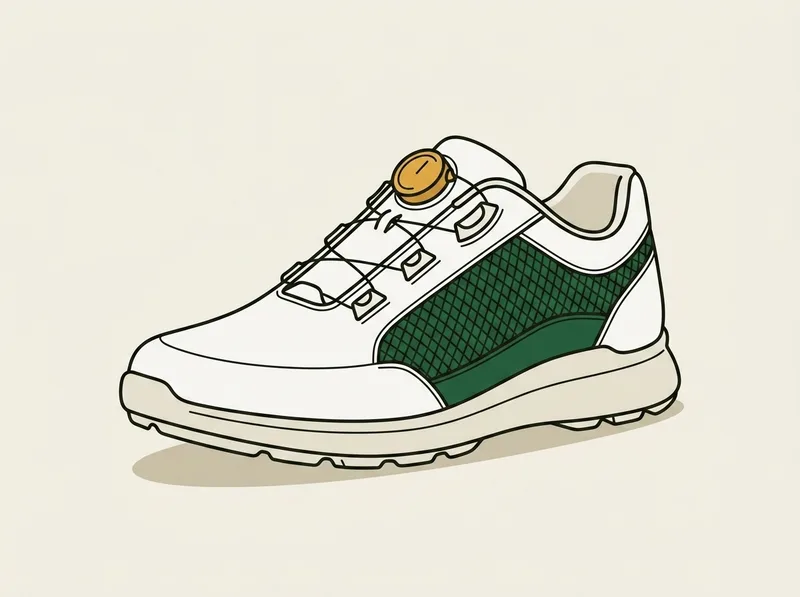 £169 at UK retail, against a £199 RRP. The BOA closure version costs more
ECCO BIOM C5
- Type
- Spikeless
- Cushioning
- FLUIDFORM direct-injected midsole, removable OrthoLite inlay
- Waterproofing
- GORE-TEX Surround membrane
- Traction
- Multi-directional moulded outsole
- Upper
- ECCO performance leather with engineered mesh
- Closure
- BOA dial version sold alongside a lace version
- A GORE-TEX membrane rather than a coating, which is the difference between a barrier and a finish that wears off.
- The inlay lifts out, so the shoe takes an orthotic without fighting it.
- The midsole is injected directly onto the upper rather than glued on, so there is no bond line to fail at the flex point.
- The BOA version is the highest priced shoe on this page, and the lace version is barely below the TRUE.
- ECCO publish a general limited footwear warranty rather than a waterproof term of a stated length.
- The BIOM last is snug by design and there is only one width.
VerdictThe pick for anyone whose walking season includes November through March. You are paying for the membrane and the construction, and both are the best here. What you are not getting is a written waterproof term to compare against the other three.
The gap is the same one the main shoes page found on ECCO's other models. They describe the shoe as waterproof through GORE-TEX and publish a general limited footwear warranty rather than a waterproof term of a stated length. The membrane is probably the best here. The written commitment behind it is the vaguest.
Payntr All Day SC: the one that says what the cushioning does in year three
The Payntr All Day SC is a British shoe with a British storefront, which on this page is worth stating before anything about the shoe itself. Payntr put a nitrogen infused PMXNITROGEN+ foam through the midsole, an Ortholite footbed on top of it, a CLARINO microfibre upper around it and a waterproof breathable membrane fused to the lining and sealed with a gasket where the upper meets the sole.
The specification worth stopping on is the footbed. Payntr state that the Ortholite insert compresses less than 5 per cent, and that is the only number anywhere on this page that describes cushioning over the life of the shoe rather than out of the box. Every foam midsole in golf feels excellent in a shop. The question a walker is actually asking is what it feels like after two hundred rounds, and this is the one maker here that answers it.
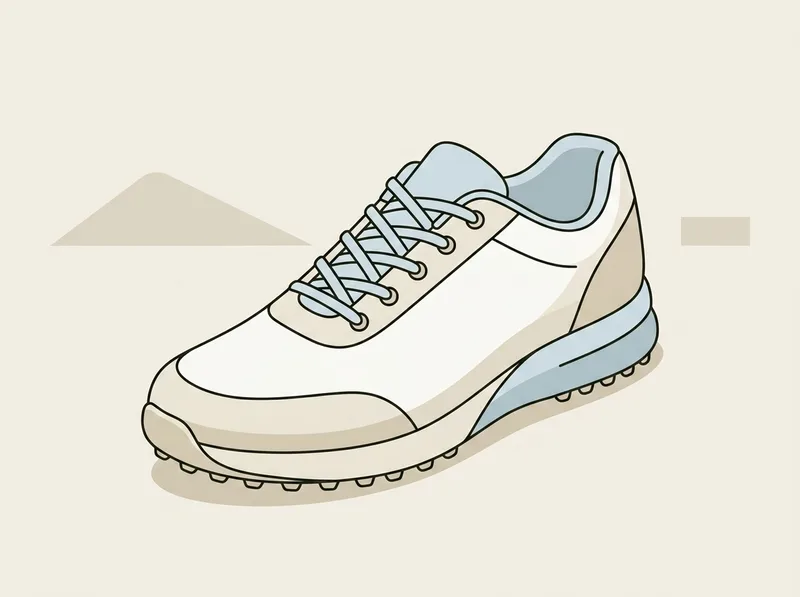 £159 at UK retail, £159.99 at Payntr's own store
Payntr All Day SC
- Type
- Spikeless
- Cushioning
- PMXNITROGEN+ midsole, nitrogen infused
- Waterproofing
- Waterproof and breathable membrane fused to the lining, sealed with a bottom gasket
- Footbed
- Ortholite, stated to compress less than 5 per cent
- Traction
- Spikeless TPU outsole with moulded lugs
- Upper
- CLARINO microfibre with an Ariaprene tongue
- The Ortholite footbed carries a published compression figure, under 5 per cent, which is the only number on this page that describes what the cushioning does after a hundred rounds rather than on day one.
- Nitrogen infused foam through the midsole rather than only under the heel, so the forefoot stays cushioned on the walk in as well as the walk out.
- A British brand with its own UK storefront, so the shoe is priced in pounds by the people who make it rather than by whoever imported it.
- The membrane is fused to the lining and gasket sealed at the sole, which is a construction claim rather than the usual assurance that a shoe is waterproof.
- Payntr publish no waterproof warranty term, so the construction is described and nothing stands behind it for a stated period.
- No published weight, on a page where weight is the specification a walker actually wants.
- Microfibre breathes less well than a knit upper in high summer, which is the trade for wiping clean.
- Their own store runs out of the popular sizes regularly, so buying often means going to a retailer.
VerdictThe pick for a walker who wants the cushioning to still be there in three years, and the only shoe here that publishes a figure for that. It is also the straightforward British buy on a page where two of the four alternatives are awkward or impossible to get hold of.
Microfibre is the compromise. It wipes clean in a way a knit upper never does, which matters on a wet British course, and it breathes noticeably less well in July. The other caveat is stock: Payntr's own store sells out of the common sizes regularly, so the reliable route is a UK retailer, which is where the £159 above comes from.
New Balance Fresh Foam X Defender SL: the value pick
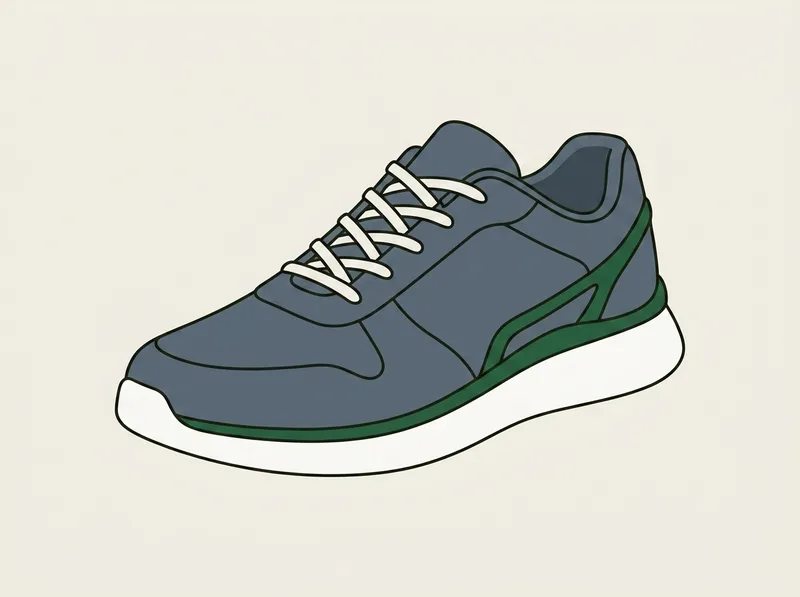
New Balance came to golf from running and brought the midsole with them. The Defender SL uses Fresh Foam X under a moulded CUSH+ insole, wraps it in a welded waterproof upper they call FantomFit, and sets it on a spikeless TPU outsole built as an exoskeleton around the foot.
Two things are unusual for the price. New Balance back the shoe with a two year waterproof warranty, which is longer than anything else here publishes. And they publish a weight, 11.1 ounces per shoe, which almost no golf shoe brand does even though weight is exactly what a walker is asking about.
 Not currently sold in the UK
New Balance Fresh Foam X Defender SL
- Type
- Spikeless
- Cushioning
- Fresh Foam X midsole with a moulded CUSH+ insole
- Waterproofing
- Welded waterproof upper, 2 year waterproof warranty
- Traction
- Exoskeleton spikeless TPU outsole
- Upper
- Welded FantomFit
- Weight
- 11.1 oz per shoe as published
- A two year waterproof warranty, which is the longest stated term on this page by a distance.
- New Balance publish a weight, which almost nobody in golf does.
- The last has a wider forefoot than heel, which is the shape most feet actually are.
- It runs small, so ordering your usual size by post is a coin toss.
- The TPU exoskeleton adds stiffness at the midfoot that some walkers notice by the back nine.
- The outsole traction is the mildest here.
- New Balance do not sell it in Britain. Every stockist found for it is American, so there is no UK route to buy one.
VerdictOn specification it is the value answer, and the two year waterproof warranty makes it more than that. The problem is geography rather than the shoe: New Balance have no UK route to market for it, so buying one means importing it and losing any practical way to use the warranty.
The catch is bigger than any of that, and it is not about the shoe. New Balance do not sell the Defender SL in Britain. Every stockist that turns up for it is American, so a UK buyer is looking at an import, the duty that comes with one, and a two year waterproof warranty that is awkward to claim against from three thousand miles away. It runs small as well, which is a worse problem when returning it is not a five minute errand.
What five miles actually asks of a shoe
Four things change when you take the buggy out of the equation.
Cushioning stops being a comfort feature and becomes the main specification. Golf shoes were built stiff because a stiff platform resists twisting under a fast lower body, and stiffness is exactly what a foot does not want across five miles. Every shoe on this page resolves that tension differently, and the resolution is the product.
Weight compounds. A shoe that is four ounces heavier per foot is not four ounces heavier over a round, it is four ounces lifted somewhere around ten thousand times. That is why the running brands have made progress in golf and why the traditional golf brands started publishing lighter models.
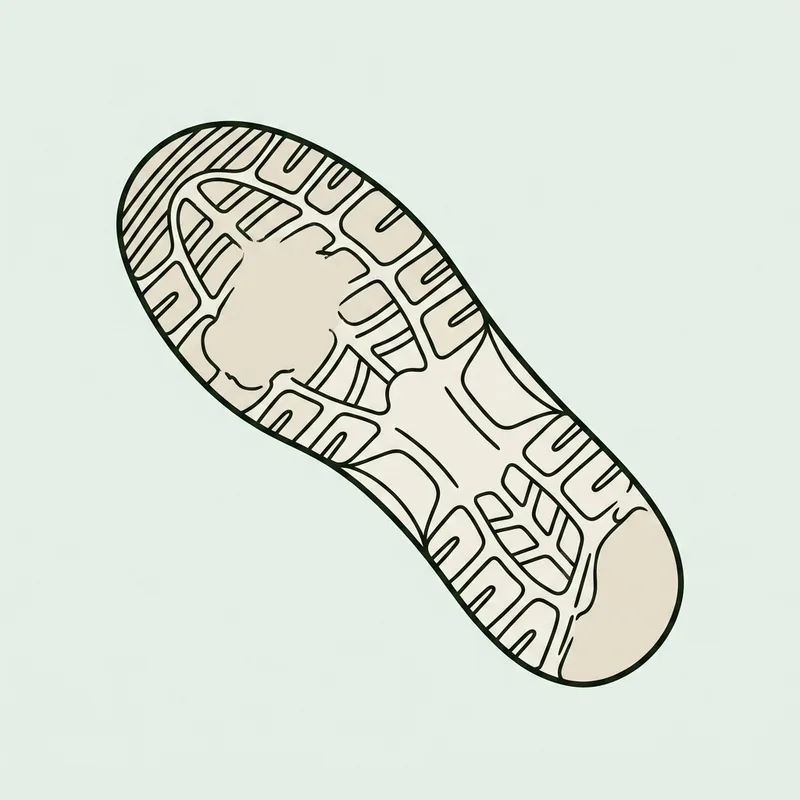
The outsole meets things that are not grass. Cart paths, gravel, clubhouse tarmac and the walk from the car all wear a golf sole faster than turf does, and the wear lands on the outside heel and the ball of the foot rather than evenly. A spikeless outsole that has gone smooth in those two patches is a shoe with no traction left, and it happens quietly enough that most golfers never notice until they slip.
Heat and swelling arrive together. Feet swell over four hours of walking, which is why a shoe fitted to a cold morning foot is a shoe that hurts by the twelfth. Try shoes on late in the day, wearing the socks you actually play in.
Spiked or spikeless when you always walk
The general answer on the parent page is that spiked grips better and spikeless is more convenient. For a walker the calculation shifts, and it shifts far enough to change the recommendation.
| Spiked, walking | Spikeless, walking | |
|---|---|---|
| Feel over five miles | Raised cleats change how the foot rolls through each step | Flat, closer to a trainer |
| Cart paths and tarmac | Cleats click and wear faster on hard surfaces | Outsole wears but the shoe stays quiet |
| Weight | Usually heavier once the cleat plate is included | Usually lighter |
| Traction when worn | Replaceable in minutes | Fixed, and the shoe is finished when it goes |
| Wet ground and slopes | Clearly better, and the gap widens as it worsens | Adequate until it suddenly is not |
Walking pushes hard toward spikeless, and that is why all four picks here are spikeless. There is one condition that overrides it. If your feet move during the swing, on any surface, in any weather, buy spiked and accept the walk. Force that leaks out through a sliding foot never reaches the club, and no amount of midsole comfort compensates.
What else changes when you walk every round
The shoe is one of three decisions and it is not always the one doing the most work. The bag is often the bigger one, because weight on the back changes gait, and a stand bag chosen for weight removes more load than any midsole adds comfort. A push cart removes the load entirely and turns the whole question into a walking question rather than a carrying one.
Socks are the cheapest variable and the most neglected. A cushioned golf sock costs a few pounds, changes the fit of a shoe by roughly half a size, and is the difference between a hot spot and a blister on the walk in. Buy the socks before you buy insoles.
Then there is the obvious thing, which is that walking is the point. Golf is one of the few sports where the exercise is a side effect of the format, and whether golf counts as exercise is a shorter argument than it looks once the buggy is out of it. A four hour walk is a four hour walk.
Durability, and when to replace a walking shoe
Nobody publishes a lifespan and this page will not invent one. What is predictable is which part fails and in what order, and for a walker the order is different from the general case.
On a spikeless shoe carried through a walking season, the outsole and the midsole race each other. The outsole goes smooth in the two wear patches described above. The midsole goes flat, which is harder to see and easier to feel: the shoe stops feeling springy, then starts feeling like standing on a board, and most people put that down to their feet rather than the shoe.
The test for the midsole is comparative rather than absolute. Try on the current model in a shop and walk twenty paces. If the difference is obvious, your pair is done regardless of how the upper looks.
Two habits extend everything. Take the shoes out of the bag after a round rather than leaving them sealed in a wet boot bag, and dry them at room temperature, because direct heat from a radiator is what cracks leather, hardens foam and unglues soles. Alternating two pairs across a week does more for lifespan than anything else, since foam recovers between wearings and does not recover if it never gets the chance.
What the Rules say about shoes
The practical version is that any golf shoe on sale is legal, and the only shoe that will ever be questioned is an old pair with metal cleats found in a garage.
What to spend
| Budget | What it buys a walker | Who it suits |
|---|---|---|
| £70 to £110 | A running-derived midsole, spikeless, and sometimes a real waterproof warranty | Walking twice a month |
| £120 to £170 | Better foam through the whole midsole, a wider last, a breathable upper | Walking weekly, three seasons a year |
| £175 to £220 | A laminated membrane, direct-injected construction, leather that outlives the sole | Walking weekly through winter |
Spending more buys waterproofing and construction rather than comfort. The longest published waterproof warranty on this page belongs to the shoe with the lowest specification elsewhere, which tells you most of what you need to know about how price and specification line up in this category. Shoes sit alongside green fees and balls in what golf actually costs, and they are one of the few lines where the budget option genuinely works.
Rain is the other planning decision rather than a reactive one, because wet feet on a five mile walk are a different problem from wet feet on a buggy. Waterproof jackets and trousers cover the half of it that no shoe can, since water running down a trouser leg into the ankle opening defeats every membrane made. The rest of the outfit matters less than people expect, and what to wear golfing covers the dress codes that still exist.
If walking is currently uncomfortable in a way that shoes will not fix, that is worth separating out. Golf and back pain deals with the load side of it, and carrying versus pushing is usually the lever rather than footwear.
Key takeaways
- Cushioning for a walker is a midsole question, not an insole question. An insole is a twenty pound fix and a midsole is the shoe.
- The TRUE Linkswear Antigravity is the pick if you walk every round: superfoam midsole, wide forefoot, low profile.
- The ECCO BIOM C5 is the wet season answer, with a GORE-TEX membrane and a midsole injected onto the upper rather than glued.
- The Payntr All Day SC is British, sold here in pounds, and the only shoe on this page that publishes what its cushioning does over time: an Ortholite footbed rated to compress less than 5 per cent.
- The New Balance Fresh Foam X Defender SL publishes the longest waterproof warranty here at two years, and New Balance do not sell it in Britain.
- Walking pushes toward spikeless. The one condition that overrides it is feet that move during the swing.
- Spikeless outsoles wear in two patches, under the ball of the foot and at the outer heel, and paths do more of that damage than turf.
- A flat midsole is harder to spot than a worn sole. Try the current model on in a shop and walk twenty paces to test yours.
Common questions
What are the best golf shoes for walking 18 holes?
The TRUE Linkswear Antigravity for most walkers, on the strength of a superfoam midsole and a wide forefoot. The ECCO BIOM C5 is the better buy if your walking season runs through winter. The New Balance Fresh Foam X Defender SL publishes the longest waterproof warranty of the four and is not sold in Britain, which rules it out for most readers here.
Are spikeless golf shoes better for walking?
For most walkers, yes. They are lighter, flatter underfoot and quieter on cart paths, and none of that costs you anything on dry parkland. The exception is a golfer whose feet slide during the swing, who should buy spiked whatever the walk costs, because force lost through a moving foot never reaches the club.
How much cushioning does a golf shoe actually need?
Enough that the midsole rather than the insole is doing the work. Golf shoes were traditionally built stiff to resist twisting, and stiffness is what a foot does not want across four or five miles. Look at what the midsole is made of on the maker's listing, since that is the part you cannot replace.
Do lightweight golf shoes make a difference over a round?
Over a full round, yes, though not in any single step. A shoe four ounces heavier per foot is that weight lifted somewhere around ten thousand times in eighteen holes. Very few golf brands publish a weight at all, which is worth noticing when a shoe is being marketed as light.
How long do walking golf shoes last?
No manufacturer publishes a figure. What is predictable is that the outsole and the midsole fail at roughly the same time on a spikeless shoe, the outsole going smooth under the ball of the foot and the outer heel, and the midsole quietly going flat. Walking on tarmac wears the sole faster than the golf does.
Do I need waterproof golf shoes if I walk?
More than a golfer who rides does. Four hours of walking through wet grass puts water against the upper for the whole round rather than in bursts. The distinction that matters is between a laminated membrane, which is a barrier, and a treatment, which is a finish that wears through at the toe flex point.
Can I wear running shoes to play golf?
Almost anywhere, yes, and the comfort will be good. What you lose is lateral stability, because a running sole is built for straight-ahead motion and a golf swing loads sideways. On dry flat ground the difference is small. On any slope, in any wet, it is not.
Should I size up in golf shoes for walking?
No. Fix width with a wider fitting rather than length, because a longer shoe leaves the heel loose and the foot sliding forward on every downhill step, which is exactly how blisters start on a long walk. Try shoes on late in the day in the socks you play in, since feet swell over a round.
Are golf shoes with BOA dials better for walking?
They are easier to adjust mid round, which is the real advantage when feet swell. What a dial does not fix is fit, and a shoe with the wrong shape is the wrong shoe however precisely you tension it. Treat the closure as a convenience rather than a specification.
Do I need two pairs of golf shoes?
If you walk weekly, it helps more than it sounds. Midsole foam recovers between wearings and stops recovering if it never gets a day off, and a wet pair that dries slowly at room temperature lasts far longer than one dried on a radiator. Two ordinary pairs outlast one expensive pair.
Does a push cart make the shoe choice less important?
It changes it rather than removing it. Pushing takes the load off your back, so the shoe stops carrying extra weight and the emphasis shifts from support to plain walking comfort. It does not change the traction question at all, since you still swing seventy times either way.
How we put this together
- Published manufacturer specifications for each shoe, taken from the maker's own listing rather than a retailer's summary.
- What the midsole is actually made of, because cushioning over five miles is a foam question rather than a footbed question.
- The waterproof warranty term each brand publishes, since a shoe carried through wet grass for four hours every week is asked to do more than a shoe that rides on a buggy.
- How the outsole is built, because a walker puts the sole on tarmac, gravel and clubhouse paths as well as on turf.
- The R&A's published Golf and Health figures for the distance covered in an 18 hole round, which is the load being bought for.
On this page
- The four, compared
- TRUE Linkswear Antigravity: built around the walk
- ECCO BIOM C5: for a wet walking season
- Payntr All Day SC: the one that says what the cushioning does in year three
- New Balance Fresh Foam X Defender SL: the value pick
- What five miles actually asks of a shoe
- Spiked or spikeless when you always walk
- What else changes when you walk every round
- Durability, and when to replace a walking shoe
- What the Rules say about shoes
- What to spend
- How we put this together

Tom Ashworth
Tom Ashworth is a PGA Professional who has taught golf since 2012, working mainly with beginners and mid-handicappers at club level in Surrey. He reviews the instruction guides on Learn Golf for technical accuracy before they publish.
Most of his teaching is with players in their first three years of the game, and most arrive having been told too much: six swing thoughts collected from videos, half of them contradicting each other. His approach is to check the grip and the alignment before touching the swing, on the basis that most bad ball flight is decided at address.