Back pain is the most frequently reported injury complaint in golf, and the one golfers are most likely to play through for a season before mentioning to anyone. This page does not tell you what is wrong with your back, because that is not something an article can do. It covers when to get seen, what the swing is commonly associated with, and the setup and equipment factors that get overlooked.
Start here: when to stop reading and get seen
This section is first because it is the most important thing on the page.
Any new, severe or persistent back pain is worth having assessed by a doctor or physiotherapist. That is true whether or not you play golf, and the fact that it started on a golf course does not make it a golf problem or a technique problem. Working that out is a clinical job.
Some symptoms move it from "worth getting checked" to "get checked now". The US National Institute of Arthritis and Musculoskeletal and Skin Diseases advises seeking medical care if back pain does not improve after a few weeks, or if any of a specific set of symptoms appear, which include numbness and tingling, weakness or pain in the legs, severe pain that does not respond to medication, pain following an injury or fall, fever, trouble urinating, and unintentional weight loss.
Put together with the signs clinicians conventionally treat as urgent, the list to act on is this.
Nothing further down this page is a treatment. It is background on what golfers commonly experience and what the golf-specific literature associates it with, which is useful context to bring to an appointment and no substitute for having one.
How common it is, and what that does not prove
Two numbers set the scale, and both need a caveat attached.
A scoping review of golf and health published in the British Journal of Sports Medicine by Murray and colleagues, drawing on 301 studies, concluded that the incidence of golfing injury is moderate, with back injuries the most frequent. The Titleist Performance Institute's guide to lower back pain in golfers, drawn from over 31,000 players, reports that 28.1 percent deal with lower back pain after every round, and that over 23 percent of professionals play with it.
What the data does establish is that this is not a niche complaint. If your back aches after a round, you are describing the most common physical experience in the sport.
What the golf literature associates with it
TPI's central argument cuts against the instinct most golfers have. Their position is that the lower back is rarely the original cause of the pain, and that it ends up overworked because of restrictions elsewhere in the chain: the ankles, hips, mid back and shoulders.
The anatomy behind that claim is straightforward. TPI's article on rotating without loading the lower back cites Shirley Sahrmann's work putting total lumbar rotation at roughly 13 degrees, around 2 degrees per segment. The thoracic spine, the section the ribs attach to, is supposed to supply the rotation. A golfer whose hips and mid back will not turn does not make a shorter swing. They make the same swing and find the range in a joint that offers 13 degrees. Three patterns come up repeatedly in the golf-specific literature.
| Pattern | What it looks like | What TPI associates it with |
|---|---|---|
| Reverse spine angle | Upper body leaning back or towards the target at the top of the backswing | Called one of the prime causes of lower back pain in golfers, linked to limited trunk and pelvis separation and restricted trail hip internal rotation |
| S-posture | An arched lower back and a tailbone pushed out at address | A setup pattern that switches the abdominals off and loads the lower back muscles heavily |
| Hanging back | Weight staying on the trail side through impact | Forces excessive side bend through the strike |
The first is the one worth knowing by name. TPI defines a reverse spine angle as excessive backward or lateral upper body bend during the backswing, and attributes the resulting tension to inhibition of the abdominal muscles plus compressive load on one side of the spine at impact. It lists insufficient trail hip internal rotation among the physical limitations behind it, which is why the hips keep appearing in a conversation about the back. That relationship is covered in hip rotation in the golf swing.
The equipment and setup half nobody mentions
Swing mechanics get all the attention here and the boring physical inputs get almost none, which is backwards given how much easier they are to change.
A club that is too short. If the clubs are shorter than your build wants, you bend further to reach the ball and every swing starts from more forward tilt than you need. This is common in golfers taller than average who bought a standard set, and it is a fitting question rather than a swing question. What a fitting measures is covered in golf club fitting.
A hunched setup. Rounding the upper back at address shortens the front of the torso and removes available rotation before the club moves, which pushes the body to find the turn elsewhere. It is also the easiest thing here to change, because for most golfers it is a habit rather than a limitation. The hinge that replaces it is in golf posture.
A heavy bag on one shoulder. A carry bag loaded for eighteen holes is an asymmetric load carried four miles, and the single-strap version puts all of it on one side. Double straps split it. A push cart removes it.
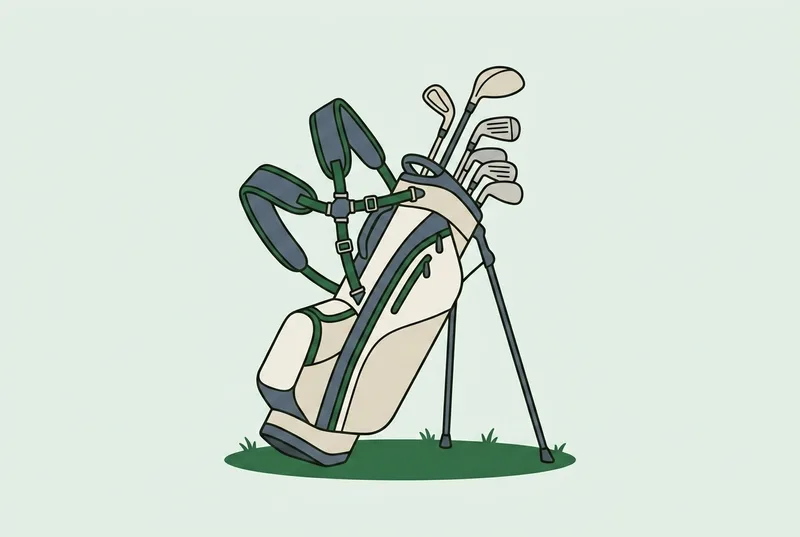
Carrying is not a problem in itself, and it is a large part of what makes golf worthwhile as exercise. It becomes a different proposition on a hilly course, in winter, or with a bag packed for a fortnight. The shortlist of bags built to be carried is in golf bags, and if the honest answer is that you should stop carrying, push carts keeps you walking without the load.
General conditioning for a healthy back
Everything here assumes a golfer who is not currently in pain and not managing a diagnosed problem. If either applies to you, the programme should come from the clinician who assessed you. A generic exercise list handed to a specific injury is how people make things worse.
For a healthy golfer, the case is the one made across the fitness cluster: build range at the joints golf loads, then build the strength to control it. Rotation trained at the hips and mid back gives the body somewhere other than the lumbar spine to find its turn. Anti-rotational work, where you resist being turned rather than turning, builds the ability to hold a shape while the arms move fast. The full structure is in the golf fitness guide, and the mobility side in golf stretches.
The preparation habit with clearer evidence behind it is not making the first fast swing of the day a real one on the first tee, covered in warming up before a round.
Playing while it is being dealt with
If you have been assessed and told golf is fine, several adjustments come up often enough in coaching to be worth knowing. None is medical advice, and all are worth mentioning to whoever assessed you first.
- Reduce the number of full-speed swings before you play. A warm up is not a practice session.
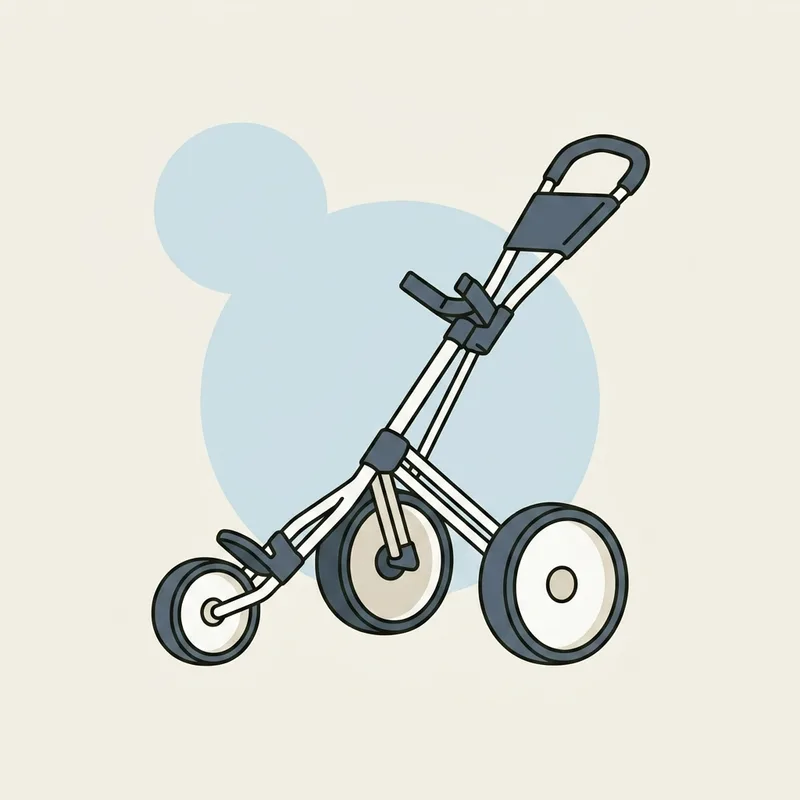
- Take a push cart on days that would otherwise be a long carry, rather than treating carrying as all or nothing.
- Break long practice into shorter blocks. Repetition volume is the variable most golfers never think to change.
- Swing at less than maximum. Controlled speed loads the body less than full effort and costs less distance than golfers fear.
- Bend from the hips to pick the ball out of the hole, or use a retriever. Most of the bending in a round is not in the swing.
The part worth keeping in view
Golf gets treated as an injury risk in conversations like this one, and the whole picture is more favourable. The same scoping review that found back injuries the most frequent golf complaint also concluded that golf provides moderate intensity physical activity associated with improved cardiovascular, respiratory and metabolic profiles. That side of the ledger is in is golf good exercise.
The goal is not to stop playing. It is to get an answer from someone qualified to give one, then change the inputs within your control.
Key takeaways
- Any severe, new or persistent back pain needs a doctor or physiotherapist. An article cannot diagnose a back.
- Radiating leg pain, numbness or tingling, weakness, loss of bladder or bowel control, pain after a fall, night pain, fever, or unexplained weight loss all mean stop and get seen.
- A BJSM scoping review found golf injury incidence moderate, with back injuries the most frequent.
- TPI reports 28.1 percent of golfers in its 31,000-player dataset have lower back pain after every round.
- High prevalence is not proof of cause. Back pain is very common in the general adult population too.
- TPI's position is that the lower back is rarely the original cause, and is overworked because of restrictions elsewhere.
- Total lumbar rotation is roughly 13 degrees, so the lower back is not where a golf turn should come from.
- Reverse spine angle, S-posture and hanging back are the three patterns the golf literature keeps naming.
- Club length, a hunched setup and a heavy bag on one shoulder are all easier to change than a swing.
- No golf mobility programme has been shown to prevent back pain in golfers. Treat conditioning as reasonable, not proven.
Common questions
When should I see a doctor about golf back pain?
If the pain is severe, is not settling after a couple of weeks, or comes with any warning sign: radiating leg pain, numbness or tingling, weakness, loss of bladder or bowel control, pain after a fall, night pain that wakes you, fever, or unexplained weight loss. Loss of bladder or bowel control alongside back pain is an emergency.
Does golf cause back pain?
Nobody can say that cleanly. Back injuries are the most frequently reported golf complaint, and back pain is also extremely common in adults who have never played. The swing plausibly contributes in some cases, and the evidence does not support the simple causal claim.
How common is back pain among golfers?
Common enough to be the defining physical complaint of the sport. TPI's dataset of over 31,000 golfers records 28.1 percent with lower back pain after every round, and over 23 percent of professionals playing with it.
Can I keep playing golf with back pain?
That is a question for whoever assesses you, and the answer is often yes with adjustments. It depends on what is causing the pain, which is why the assessment comes first rather than after a season of playing through it.
Which golf swing faults are linked to back pain?
The golf-specific literature names three: reverse spine angle, meaning the upper body leaning back or towards the target at the top of the backswing, S-posture at address, and hanging back on the trail side through impact. TPI calls reverse spine angle one of the prime causes of lower back pain in golfers.
Will stretching fix my golf back pain?
There is no good evidence that it will, and stretching the area that hurts is often aimed at the wrong place anyway. Mobility work has a coherent argument behind it at the hips and mid back, which is about giving rotation somewhere else to happen. If you have pain now, get the programme from a clinician.
Does carrying my golf bag hurt my back?
A loaded carry bag is an asymmetric load carried several miles, and a single strap puts all of it on one shoulder. Both straps split it, and a push cart removes it while keeping the walk. Whether it is contributing in your case is not something an article can tell you.
Should I use a golf cart if I have a bad back?
Possibly, and it is worth discussing rather than deciding on principle. Riding removes the carrying load and most of the walking, and the walking is the part of golf with the best health evidence behind it. A push cart keeps the walk and drops the load.
Is a strong core the answer to golf back pain?
Core strength is a reasonable part of general conditioning and it is not a cure. Trials showing that any specific golf conditioning programme prevents golfers' back pain do not exist. The stronger case for training is that pooled evidence across sport links strength work to lower injury rates.
Tom Ashworth
Tom Ashworth is a PGA Professional who has taught golf since 2012, working mainly with beginners and mid-handicappers at club level in Surrey. He reviews the instruction guides on Learn Golf for technical accuracy before they publish.
Most of his teaching is with players in their first three years of the game, and most arrive having been told too much: six swing thoughts collected from videos, half of them contradicting each other. His approach is to check the grip and the alignment before touching the swing, on the basis that most bad ball flight is decided at address.