Best Golf Stand Bags: Weight, Legs and Straps Compared
A stand bag lives or dies on four things: what it weighs, how the legs deploy, how the straps sit and how many slots the top has. Here is what four makers publish, and what each choice costs you.
Some links here earn us a commission at no extra cost to you. It never changes what we recommend or the order we rank it. How this works.

A stand bag is a carry bag that has been asked to also stand up, and every design decision in it is a trade between those two jobs. Legs add weight. Dividers add weight. Pockets add weight. The four bags below make that trade in four different places, and all four publish enough numbers to show their working.
The four, compared
Every bag here has legs, a top with slots in it and a strap. What separates them is where each maker chose to spend the weight budget, and the table makes those choices visible in a way the marketing does not.
| Pick | Best for | Weight | Dividers | Pockets | Strap | Price |
|---|---|---|---|---|---|---|
| PING Hoofer Lite | The stand bag most golfers should buy | 5 lb, about 2.3 kg | 4-way top | 9 | Padded convertible shoulder straps | Around £160 to £200 |
| Sun Mountain Eclipse E-2.5 | The lightest full-featured bag here | 4.2 lb, about 1.9 kg | 4-way, 7.5 in top | 8, including a removable ball pocket face | X-Fit dual strap system | Around £175 to £210 |
| Motocaddy HydroFLEX | Full-length dividers and a stated waterproof build | 2.30 kg without the strap, 2.5 kg with it | 5, full length | 5, from the features list | Not published as a specification | Around £200 to £220 |
| BIG MAX Dri Lite Hybrid Prime | Fourteen slots on a bag that still stands up | 2.9 kg, about 6.4 lb | 14-way, full length, 9 in top | 7 | Detachable straps | Around £289 to £300 |
The general decision about whether you should be carrying at all belongs on a different page, and the wider golf bag comparison settles it properly. What follows assumes you have decided you want legs and are choosing between them.
PING Hoofer Lite: the sensible default
The PING Hoofer Lite is the pared-back version of the bag that has been the club golfer's stand bag for two decades. PING publish 5 lb, a four-way top, nine pockets, 300D polyester and padded convertible shoulder straps, which is four hard numbers plus a fabric on a product category where two numbers is normal.
The specification worth pulling out is the least glamorous. PING list leg guards, which exist to help the legs separate cleanly as the bag goes down. That sounds like nothing until you have owned a stand bag where one leg deploys and the other does not, at which point it becomes the only feature you think about.
 Around £160 to £200
PING Hoofer Lite
- Weight
- 5 lb, about 2.3 kg
- Dividers
- 4-way top
- Pockets
- 9
- Strap
- Padded convertible shoulder straps
- Fabric
- 300D polyester
- Legs
- Leg guards to help the legs separate as you set it down
- Leg span
- Not published
- Publishes weight, pocket count, fabric and strap type, which is a fuller specification than most stand bags come with.
- Convertible straps run as a single or a double carry, so the bag suits a short nine and a full eighteen equally.
- The leg guards address the one thing that genuinely fails on a stand bag, which is legs that stop splaying properly.
- Five pounds is not light by 2026 standards, and the lightest bag here saves nearly a pound on it.
- A four-way top on a full set means several clubs share each slot.
- No published leg span, which is the figure that decides whether it stays upright on a slope.
VerdictThe safe default for a golfer who carries most rounds and wants a bag that will still be working in five years, because the specification is complete and the leg design is the part PING have clearly thought hardest about. Anyone counting ounces will find lighter bags on this page for less money.
The convertible strap is the other reason it suits most people. Run it as a double for eighteen holes with a full set, unclip to a single for a quick nine with half a bag, and the bag adapts rather than forcing one carrying style. What is missing is a published leg span, and that is the figure that decides whether the bag stays up on a sloping fairway or lies down in the wet.
Sun Mountain Eclipse E-2.5: the light one
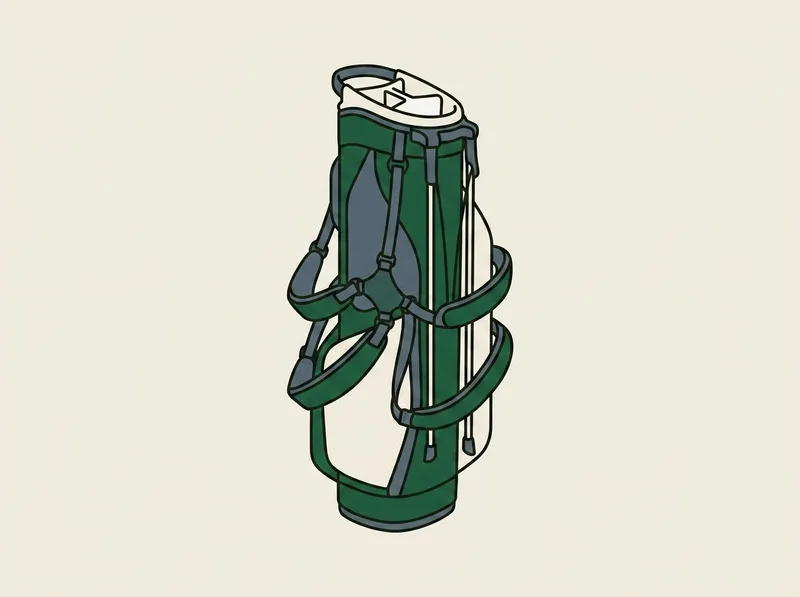
Sun Mountain publish 4.2 lb, a 7.5 inch four-way top, eight pockets, 17.9 litres of pocket volume, an X-Fit dual strap system and an internal compression bottom. The Sun Mountain Eclipse E-2.5 is the lightest bag here that still has eight pockets and a proper harness, and that combination is harder to build than the number suggests.
Publishing pocket volume in litres is unusual and useful. Pocket count tells you how many zips there are. Volume tells you whether the waterproofs will actually go in. At 17.9 litres this is a bag for a jacket, a dozen balls and the usual small items, not for a change of clothes and a flask.
 Around £175 to £210
Sun Mountain Eclipse E-2.5
- Weight
- 4.2 lb, about 1.9 kg
- Dividers
- 4-way, 7.5 in top
- Pockets
- 8, including a removable ball pocket face
- Strap
- X-Fit dual strap system
- Capacity
- 17.9 L
- Base
- Internal compression bottom
- Fabric
- Not published
- 4.2 lb with eight pockets and a dual strap, which is a lot of bag for the weight.
- Publishes pocket volume in litres, which almost nobody in this category does.
- The internal compression bottom is a structural answer to the way light bags go soft and sag once loaded.
- A 7.5 inch four-way top is the smallest opening here, so a full set is a squeeze.
- No published fabric, so there is no way to compare its durability against a 300D or 600D rival.
- Costs more than heavier bags with more pockets.
VerdictThe right bag for someone who walks every round and has already decided that weight beats organisation. The narrow top is the price of that, and anyone carrying fourteen clubs will feel it every time they reach for a wedge.
The internal compression bottom is the interesting structural choice. Light bags go soft as they get lighter, and a soft body means the clubs settle, the balance point moves and the bag starts swinging against the back of your legs. A rigid internal base fights that without adding a moulded plastic foot. What Sun Mountain do not publish is the fabric, so there is no way to line its durability up against a stated 300D or 600D rival.
Motocaddy HydroFLEX: full-length dividers on a light bag
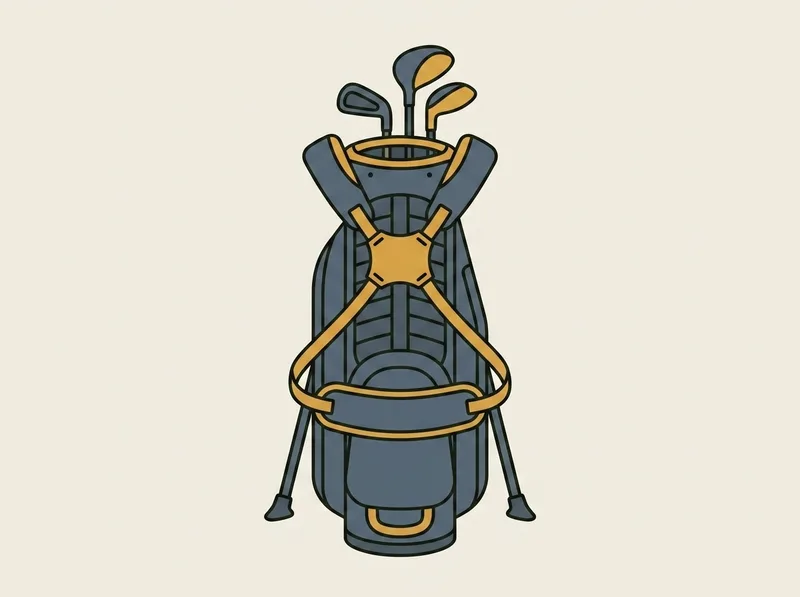
The Motocaddy HydroFLEX is published at 2.30 kg with five full-length dividers, five pockets, TPU coated nylon, thermo sealed and heat welded seams, a twelve month warranty and an EASILOCK base. Then a footnote says it weighs 2.5 kg with the strap fitted.
That 200 gram gap is the reason it is here. Every maker faces the same choice about whether to weigh the strap, the rain hood and the removable pieces, and a published weight without a stated method cannot be compared to another published weight. Motocaddy are the only ones on this page who close that gap.
 Around £200 to £220
Motocaddy HydroFLEX
- Weight
- 2.30 kg without the strap, 2.5 kg with it
- Dividers
- 5, full length
- Pockets
- 5, from the features list
- Strap
- Not published as a specification
- Fabric
- TPU coated nylon
- Dimensions
- 310 x 360 x 930 mm
- Warranty
- 12 months
- Cart fit
- EASILOCK, Motocaddy trolleys only
- The only bag here that states whether its published weight includes the carry strap, and it is 200 g heavier once it does.
- Thermo sealed and heat welded seams rather than a coating, which is a genuinely different level of waterproofing.
- Full-length dividers on a light bag, where most light bags stop the sleeves a third of the way down.
- Five pockets and five dividers is a minimal bag, and the pocket count sits in the features list rather than the specification block.
- EASILOCK only locks it to a Motocaddy trolley, so on any other cart you are back to straps.
- The strap system is described in the marketing and left out of the specification block, on a bag built to be carried.
VerdictThe pick for a golfer who plays through a wet winter and wants full-length sleeves without carrying fourteen walls, because the waterproofing here is structural rather than a finish. The proprietary lock is only an advantage if the trolley is the same brand.
The full-length dividers are the second reason, and they are genuinely rare on a bag this light. Most bags at this weight give you a divided rim and one open cavity below it, which sorts the grips at the top and lets the shafts cross underneath. Five sleeves that run to the base is a different object to live with. The catch is EASILOCK, which locks the bag to a Motocaddy trolley without a lower strap and does nothing at all on anybody else's, and a strap system that never appears in the specification block on a bag built to be carried.
BIG MAX Dri Lite Hybrid Prime: fourteen slots with legs
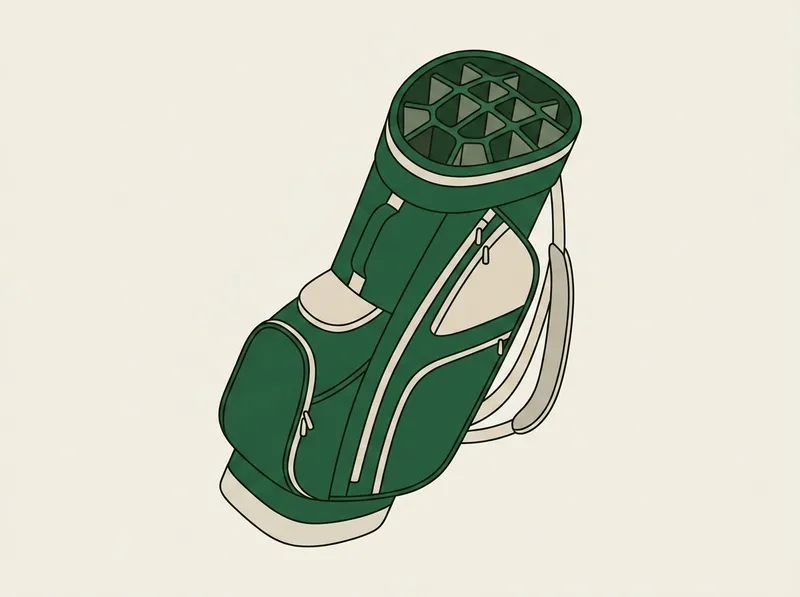
The Dri Lite Hybrid Prime is the odd one out and deliberately so. BIG MAX publish 2.9 kg, a 14-way full-length top on a nine inch opening, seven pockets, SoftGuard vegan PU, detachable straps, and a lowered stand with a leg lock and a trolley-compatible floor.
Fourteen full-length sleeves on a bag that still deploys legs is a combination most makers avoid, because thirteen extra fabric walls running the length of a bag is exactly the weight a stand bag is trying not to carry. BIG MAX build it anyway, and to their credit they print what it costs.
 Around £289 to £300
BIG MAX Dri Lite Hybrid Prime
- Weight
- 2.9 kg, about 6.4 lb
- Dividers
- 14-way, full length, 9 in top
- Pockets
- 7
- Strap
- Detachable straps
- Fabric
- SoftGuard vegan PU
- Base
- Lowered stand with a leg lock and a trolley-compatible floor
- Waterproofing
- Waterproof valuables organiser, three subdivided pockets
- Fourteen full-length sleeves on a bag that still deploys legs, which is a combination most makers will not build.
- Unlike most 14-way stand bags it publishes a weight, so the cost of those thirteen extra walls is visible before you buy.
- The straps detach and the floor is built for a trolley, so it drops onto a cart without a harness flapping around it.
- At 2.9 kg it is the heaviest bag here, and the sleeves are exactly where that weight went.
- Seven pockets against a nine inch top means it is wider than it is well stocked.
- SoftGuard PU looks good and is one more surface to keep clean through a wet season.
VerdictThe pick for a golfer who wants every club in its own sleeve without giving up the legs, and who mostly pushes rather than carries. It ranks here because fourteen full-length walls cost you more than a pound over the lightest bag on this page, and that is a real price to pay on a bag you carry.
That number is why it sits at the foot of this page rather than higher. At 2.9 kg it is more than a pound heavier than the lightest bag here, and on a bag whose entire category is defined by being carried, a pound is not a rounding error. Everything else about it is well specified, and the detachable straps and trolley floor make plain what it is really built for, which is pushing rather than carrying.
What actually breaks on a stand bag
Divider counts and pocket counts are what the listings argue about. Neither is what fails.
Three things go, roughly in this order. The stand mechanism goes first, and almost always the same way: one leg stops swinging out cleanly because the pivot has picked up grit or the spring at the base has lost tension, so the bag half-deploys and topples. Then the zips, usually the ball pocket, because it is opened more than everything else combined. Then the base, where it drags on tarmac between the car park and the first tee.
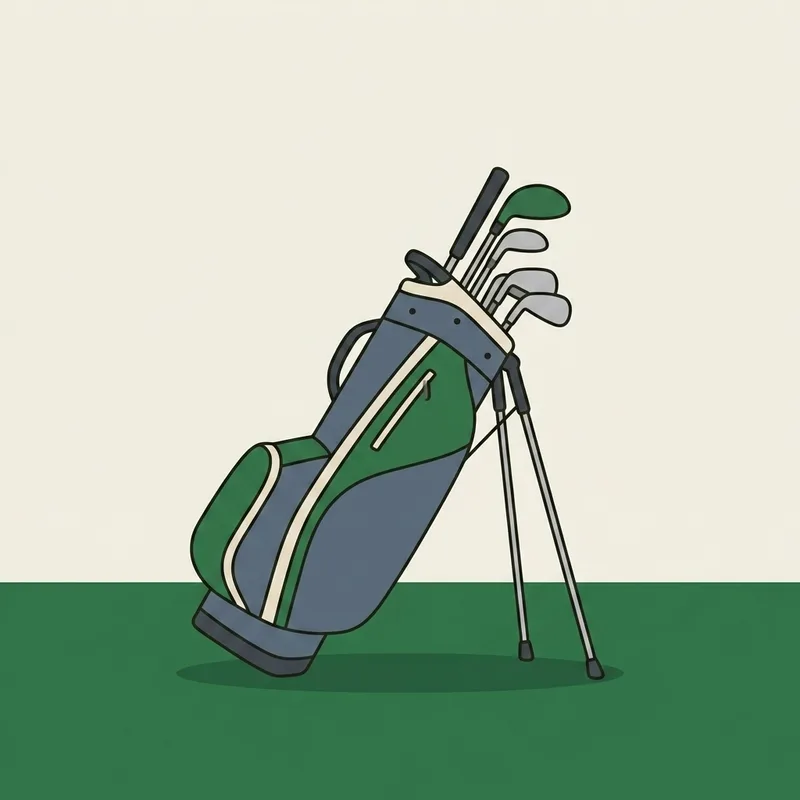
Two of those three are maintenance rather than manufacture. Rinsing the leg pivots and the base with a hose at the end of a wet winter, and drying the bag out of the boot rather than in it, is most of the difference between a bag that lasts four seasons and one that lasts twelve. The third is design: leg guards, wide leg splay and a moulded rather than fabric base are the features that actually correlate with survival.
Four dividers or fourteen
This is the specification golfers over-weight, partly because it is the easiest one to count.
| Top layout | What it gives you | What it costs |
|---|---|---|
| 4 or 5-way, sleeves not full length | Lightest option, grips separated at the rim | Shafts cross below, clubs come out in pairs |
| 4 or 5-way, full-length sleeves | Clubs pull cleanly, no shaft rub, still light | Fewer choices about where each club lives |
| 14-way, sleeves not full length | Every grip has a home at the top | Adds weight and fixes nothing below the rim |
| 14-way, full length | Nothing tangles, nothing rubs, quiet to walk with | Heaviest layout, and the top has to be wide |
Full length matters more than the number. A 14-way rim above one open cavity gives you fourteen holes and the same tangle you had before, plus the weight of the walls that made the holes. Five full-length sleeves beat it on every measure except which grip goes where.
The number to size against is fixed. The R&A's Rule 4.1b caps a player at fourteen clubs for a round, so fourteen is the ceiling any top has to accommodate and no bag needs more. Most golfers carry fewer than fourteen anyway, and how many clubs actually belong in the bag is a shorter answer than the divider count implies.
The strap system, and setting it up
More stand bags are returned over the straps than over anything else, and most of those bags were fine.
A proper double is two straps that meet in a yoke and load both shoulders symmetrically. A single strap split into two halves is not the same thing, because the load still originates from one point and the bag still rotates. The specification word to look for is dual or double as a system rather than as a count.
Then there is the hip pad, which is the part that decides where the weight sits. Set correctly, the pad meets your lower back and the bag rides high and tight with most of the load on your hips. Set wrong, which is how every bag ships, the straps are long, the pad sits between your shoulder blades and the whole bag hangs off your shoulders and swings.
Weight, and what the published number does not tell you
Every figure in the table above is a manufacturer's own number, and only one maker on this page states how it was measured.
That matters more than it sounds. A stand bag ships with a rain hood, a shoulder harness and sometimes a detachable ball pocket face, and any of those can reasonably be included or excluded from a stated weight. The harness on a padded double is not trivial. Motocaddy publish both figures and the strap alone is 200 g, which is most of the gap people argue about. Two bags quoting 4.5 lb where one weighed the strap and the other did not are not the same weight, and on three of these four there is no way to tell from the listing which is which.
The practical consequence is to treat differences under about half a pound as noise and differences over a pound as real. Between the lightest and heaviest published figure here there is about 2.2 lb, which is a real difference rather than a rounding one. Between any of them and a loaded bag there is fifteen pounds, which is the number worth attacking. What actually needs to be in there is a shorter list than most golfers carry.
Stand bags and push carts are one purchase
Almost every stand bag sold now claims to work on a cart, and almost all of them do. What varies is how well, and the failure is always at the base.
Three base designs are in play. A conventional stand base has small feet either side of the leg mechanism, which sits fine in most cradles but can rock. A lowered stand with a trolley-compatible floor, which is what BIG MAX build here, sits square in a cradle and is the most cart-friendly design. And a proprietary receiver, such as the EASILOCK fitting on the Motocaddy, locks positively to a matching trolley and does nothing at all on any other.
The rule of thumb is that a stand bag fits nearly any cart, a proprietary lock fits exactly one brand, and the thing to check before buying either half is the upper bracket rather than the base. Which carts hold which bags covers the bracket question in full.
What to spend
The useful range on a stand bag runs from roughly £100 to roughly £300, and the money buys specific things rather than general quality.
- £100 to £150: a published weight under five pounds, full-length dividers if you choose carefully, a double strap, and fewer pockets than you expect.
- £160 to £210: a complete specification including fabric, a convertible or removable strap system, and leg design that has been engineered rather than assembled.
- £220 to £300: waterproof construction with sealed seams, wider tops, fourteen full-length sleeves, and a base built for a specific cart system.
Above about £320 you are buying materials and a badge. Nothing up there improves how the bag carries, and a bag is a smaller line in a first year than most people expect next to green fees, balls and the clubs a beginner actually needs.
If you play through a wet winter
Waterproofing on a stand bag is two separate claims and they get run together constantly.
Water resistant means a coated or treated fabric that repels rain until the coating wears through at the flex points and the seams, which on a carry bag is exactly where it flexes most. Waterproof, used honestly, means the seams are sealed or welded rather than merely coated. Only one bag here states thermo sealed and heat welded seams in its specification, and that is the difference worth paying for if you play in February.
The rain hood matters as much as the body. Water gets into a bag through the top, over the club heads, not through the fabric, so a hood that actually stays on in wind is doing more than the shell is. Playing in the rain covers the rest of the kit that decision drags with it.
Two other pages sit next to this one. If your clubs never come off a trolley or a buggy, legs are weight you are paying to carry and the cart bag comparison ranks on pocket access and cart-strap channels instead. And if the question is getting clubs onto an aeroplane, that is a completely different product, covered in golf travel bags.
Key takeaways
- The PING Hoofer Lite is the default: 5 lb, nine pockets, 300D polyester, convertible straps and leg guards that address the part of a stand bag that actually fails.
- The Sun Mountain Eclipse E-2.5 is the lightest here at 4.2 lb and the only one publishing pocket volume in litres.
- The Motocaddy HydroFLEX pairs 2.30 kg with full-length dividers and thermo sealed seams, and is the only bag here that says whether its weight includes the strap.
- The BIG MAX Dri Lite Hybrid Prime gives fourteen full-length sleeves on a bag that still stands, and at 2.9 kg it is the heaviest here, which is why it ranks where it does.
- Full-length dividers matter far more than divider count. Fourteen holes above one open cavity solves nothing below the rim.
- Only one maker here states whether its published weight includes the strap, so treat any gap under half a pound as noise.
- Straps ship set too long. Load the bag, then shorten until the hip pad meets your lower back.
- The stand mechanism is what breaks first, and rinsing the leg pivots after a wet winter is most of the fix.
Common questions
What is the best golf stand bag?
For most golfers the PING Hoofer Lite, because it publishes a full specification at 5 lb and its leg design addresses the part of a stand bag that fails. If weight is the deciding factor, the Sun Mountain Eclipse E-2.5 at 4.2 lb. If winter golf is, the Motocaddy HydroFLEX has full-length sleeves and thermo sealed seams at 2.30 kg.
How much should a golf stand bag weigh?
Published figures for current stand bags cluster between roughly four and six pounds. Under about 4.5 lb you are in genuinely light territory and will usually be giving up pockets or divider length to get there. Over about six pounds the bag is drifting towards a hybrid built mainly for a cart.
Are 14-way stand bags worth it?
Only if the dividers run full length, and only if you are not carrying the bag far. Fourteen sleeves means every club pulls cleanly and no shafts rub, which is worth having. Fourteen holes at the rim above one open cavity adds weight and changes nothing about how the clubs behave underneath.
Do stand bags fit on push carts?
Nearly always. A conventional stand base sits in most cradles, a flat footless base sits squarest of all, and a proprietary locking base works only with the matching cart brand. The part that catches people out is the upper bracket rather than the base, so check that before buying either item.
What is the difference between a carry bag and a stand bag?
A carry bag is built only to be carried and often has no legs, fewer pockets and a narrower top. A stand bag adds a leg mechanism so it stands up on its own at the ball, which costs weight and adds the one moving part on the whole product. Most bags sold as carry bags now have legs, so the terms have largely collapsed together.
How do you stop a stand bag falling over?
Set it down across the slope rather than facing up or down it, and push the base in slightly so the legs take the load rather than the base edge. If it still topples on flat ground, the leg pivots need cleaning or the spring has lost tension. Wide leg splay is the design feature that helps most, and almost nobody publishes the span.
Do I need full-length dividers?
They matter more than the number of dividers. Full-length sleeves stop the shafts crossing below the rim, which is what makes clubs come out one at a time and stops graphite rubbing against graphite. If you play fewer than fourteen clubs, five full-length sleeves beat a fourteen-hole rim with nothing underneath.
Can I use a stand bag on a golf buggy?
Yes, though it is not what the shape is for. A stand bag rides on a buggy with the legs folded, held by the cart strap, and the pockets that face out on a cart bag will be facing the wrong way on this one. If your clubs go on a buggy every round, a cart bag gives you better access for the weight you are not lifting.
How long does a stand bag last?
No manufacturer publishes a figure, and the failure order is predictable: stand mechanism, then zips, then the base. Five years is normal for a bag left wet in a boot and twelve is achievable for one rinsed and dried. The maintenance is worth more than the price difference between any two bags here.
Is a lighter stand bag always better?
No. Weight comes out of divider length, pocket count and fabric thickness, and each of those has a cost you will meet later. The useful question is whether the loaded bag is light, and the contents usually weigh three times the bag, so emptying a pocket beats buying a lighter shell.
Are expensive stand bags waterproof?
Some are, and the price does not tell you. Look for sealed or welded seams and waterproof zips named in the specification, not a coated fabric and a reassuring product name. Water mostly enters over the top of the bag anyway, so the rain hood is doing more work than the shell.
How we put this together
- Published manufacturer specifications for each bag, read off the maker's own product listing rather than a retailer's summary, because stand bag weight is quoted far more often by shops than by the companies that build them.
- Whether the maker publishes a weight at all, since on a bag bought to be carried that is the specification the whole purchase turns on, and whether it says what that weight includes, which only one of these four does.
- Divider construction rather than divider count, because a top with full-length sleeves and a top with fourteen holes above one open cavity behave completely differently once the bag is full.
- The strap system as specified: single or double, fixed or removable, and whether a hip pad is part of the design or an afterthought.
- The leg and base design, including how the stand mechanism folds and whether the base is built to seat in a push cart cradle.
- The Rules of Golf limit on how many clubs may be carried, because that is the number a divider layout has to accommodate.
On this page
- The four, compared
- PING Hoofer Lite: the sensible default
- Sun Mountain Eclipse E-2.5: the light one
- Motocaddy HydroFLEX: full-length dividers on a light bag
- BIG MAX Dri Lite Hybrid Prime: fourteen slots with legs
- What actually breaks on a stand bag
- Four dividers or fourteen
- The strap system, and setting it up
- Weight, and what the published number does not tell you
- Stand bags and push carts are one purchase
- What to spend
- If you play through a wet winter
- How we put this together

Tom Ashworth
Tom Ashworth is a PGA Professional who has taught golf since 2012, working mainly with beginners and mid-handicappers at club level in Surrey. He reviews the instruction guides on Learn Golf for technical accuracy before they publish.
Most of his teaching is with players in their first three years of the game, and most arrive having been told too much: six swing thoughts collected from videos, half of them contradicting each other. His approach is to check the grip and the alignment before touching the swing, on the basis that most bad ball flight is decided at address.