Golf has a reputation for being expensive, and roughly half of it is earned. The other half comes from pricing the version people see on television: a private club, a bag of current-season clubs, and a fitting nobody needs in year one. The version most people play costs about what a gym membership and a five-a-side league cost together.
The three versions of a first year
Most answers to this question price one imagined golfer. There are really three, and the gap between them is mostly about where you play rather than what you buy.
| Cost, first 12 months | Lean | Typical | Comfortable |
|---|---|---|---|
| Clubs and bag | £200 to £350 used | £300 to £550 new starter set | £650 to £1,300 |
| Shoes, glove, balls, accessories | £70 to £130 | £160 to £280 | £360 to £700 |
| Playing | £480 to £720, 24 council rounds | £1,100 to £1,800, 36 mid-range rounds | £2,000 to £3,500, better courses |
| Practice | £70 to £140, monthly range visit | £150 to £300, twice a month | £250 to £500 |
| Lessons | £0 to £150 | £250 to £500 | £500 to £1,000 |
| Extras and society days | £50 to £110 | £110 to £220 | £200 to £500 |
| Total | £870 to £1,600 | £2,070 to £3,650 | £3,960 to £7,500 |
The lean column is not a compromised version of golf. It is the same game on the same course under the same rules, with clubs a few years older. The biggest lever in that table is not equipment, it is where you tee off.
Clubs and kit: the one-off you probably overestimate
Equipment is the cost people fixate on and the one that matters least at the start. A five-year-old used set performs close to identically to this year's model at beginner swing speeds, and the full argument is in what clubs a beginner needs.
| Item | Used or budget | New, mid-range | Notes |
|---|---|---|---|
| Set of clubs | £200 to £350 | £300 to £550 | Seven clubs covers everything for a year |
| Stand bag | £35 to £65 | £65 to £130 | Often included with a package set |
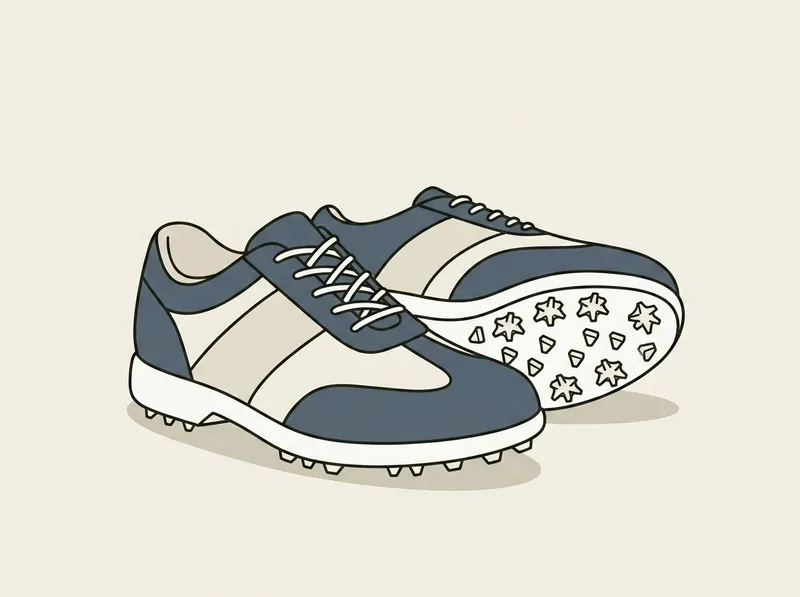
| Shoes | £40 to £70 | £85 to £170 | Trainers are fine for your first few rounds |
| Glove | £10 to £16 | £16 to £25 | Lasts about 15 to 25 rounds |
| Balls | £15 to £25 for 25 to 50 | £20 to £35 a dozen | Lake balls are the sensible beginner buy |
| Tees, markers, pitchmark repairer | £10 to £16 | £10 to £16 | Buy once, lose slowly |
| Trolley | £40 to £95 | £120 to £250 | Optional, and a real help if you walk |
| Waterproofs | £60 to £120 | £150 to £330 | Genuinely worth it, and not optional by October |
Whether a used set is a bargain comes down to the grips and the grooves rather than the badge. Grips harden and go slick with age and cost roughly £8 to £10 a club to replace, which quietly wipes out a cheap set's advantage. Buy from a specialist pre-owned retailer that grades condition rather than a listing with three photographs, and check the points in buying used golf clubs. To buy new, the beginner set comparison covers what each package includes.
Fourteen clubs is a maximum, not a target. Rule 4.1b(1) of the Rules of Golf sets no minimum at all, so a seven-club bag is entirely legal and costs a great deal less. The clubs you skip are also the hardest ones in golf to hit.
Green fees: what you are actually paying for
This is the recurring cost and the one that decides your annual total. Green fees vary more by course category and by region than by anything else, and these are walk-up rates for eighteen holes. Walking is the default in Britain, so a buggy is an extra rather than a built-in cost.
| Course type | Weekday 18 holes | Weekend 18 holes | What you are paying for |
|---|---|---|---|
| Council or municipal course | £15 to £30 | £20 to £38 | Full length, basic conditioning, no membership needed |
| Pay-and-play or proprietary | £22 to £40 | £30 to £55 | Better conditioning, a real clubhouse, online booking |
| Members' club, visitor rate | £35 to £70 | £50 to £95 | Course quality and quieter tee sheets |
| Premium or championship | £100 to £250 | £120 to £300 | Reputation and a tougher test |
| Par 3 or nine-hole course | £8 to £18 | £10 to £22 | Half the time, most of the practice value |
Three things move a green fee more than anything else: the day, the time and the season. Twilight rates typically cut 30% to 50% off for a late afternoon start, midweek is materially cheaper than weekend, and winter rates are routinely half the summer price, which is the single largest discount in British golf and the reason winter golf is worth tolerating.
Nine holes is the other underused lever. It runs roughly 55% to 65% of the eighteen-hole rate, takes half the time, and for someone still learning it is arguably better practice than a long round where the last six holes fall apart. Types of golf course explains what to expect from each.
Membership, and the arithmetic that decides it
Membership in the UK splits into two different purchases, and mixing them up is what makes the numbers look frightening.
| Membership type | What it costs | Who it suits |
|---|---|---|
| Flexible or points membership | £300 to £700 a year | Occasional players who want a handicap and some access |
| Country or five-day membership | £400 to £900 a year | Midweek players happy to give up weekend tee times |
| Full membership, ordinary club | £800 to £1,600 a year | Weekly players who want a home course and competitions |
| Full membership, prestige club | £2,000 to £5,000 a year upward | Full access, a stronger fixture list, often a waiting list |
| Joining fee, where one is charged | One-off, commonly a few hundred pounds | Not charged at all by a large share of clubs now |
The joining fee is the number that has changed most. It used to be near universal and it is not any more: a great many clubs dropped or suspended theirs while chasing members, and plenty of the ones that kept a fee set it low enough to be a formality. Ask, rather than assuming, and ask whether it is refundable, because a few clubs still treat it as a stake rather than a charge.
For everything else the crossover is easy to work out. Divide the annual cost by the green fee you would otherwise pay, and that is how many rounds a year make it worthwhile. An £800 subscription against £30 green fees breaks even at around 27 rounds, a round every fortnight. Most people overestimate how often they will play in year one, so paying as you go and deciding later is usually the cheaper mistake.
Two discounts are worth asking about, because clubs rarely advertise them. Most run heavily reduced junior and intermediate rates for members under about 30, tapering upward year by year until they reach the full subscription. Plenty also sell winter-only memberships at a fraction of the full year, which is a cheap way to test whether a club suits you before committing in spring.
Membership usually includes a handicap, but it is not the only route to one. Every home nation now runs an independent scheme for golfers with no club, starting at £47 a year, and how to get a golf handicap covers what each requires.
Practice, lessons and the range
Practice is where golf is genuinely cheap, and it is the part beginners skip.
| Item | Typical cost | Notes |
|---|---|---|
| Bucket of range balls | £5 to £10 for 50 to 100 | Most ranges price by ball count, not time |
| Range membership or card | £15 to £40 a month | Worth it above roughly four visits a month |
| Lesson with a PGA professional | £25 to £45 per half hour | £30 to £90 for a full hour |
| Block of lessons | £150 to £350 for five or six | Almost always cheaper than booking singly |
| Group beginner course | £60 to £150 for four to six sessions | The cheapest way into the game |
| Putting mat for home | £25 to £80 | The only practice that works in a living room |
The range is also the least intimidating entry point, and the number of people it has brought into the game is easy to underestimate. The R&A recorded 5.6 million on-course adult golfers in Great Britain and Ireland in 2022, the second-highest figure in more than thirty years of monitoring and over 50% up on the 3.7 million counted in 2019. A large share of those players started by hitting balls under a floodlight rather than by walking onto a first tee. Turning up with no clubs and no handicap is entirely normal, and using a driving range covers the practicalities.
Lessons are the highest-return spend in golf and the one people cut first. A block of five with a PGA professional costs about the same as one round at a championship course, and it changes every round afterwards rather than one afternoon. Whether golf lessons are worth it covers when they are not.
The costs nobody warns you about
Small individually, and a meaningful share of the annual total together.
- Lost balls. Beginners lose several a round. At premium prices that is £4 to £8 into the trees each time. Lake balls at 60p to £1.20 each remove the problem, and beginner golf balls explains why a premium ball does nothing for you yet.
- Buggy hire. Rarely included and rarely necessary, but budget £20 to £35 a round if you want one, or £8 to £15 for a powered trolley. Walking is free and most British golfers do it.
- Food and drink. A bacon roll before and a pint after is £10 to £25 a round, which over a season outweighs your shoes.
- Competition entry. Club and society competitions typically cost £5 to £15, plus whatever the sweep is.
- Travel. Twenty miles each way twice a month is real money, and the cheap courses are rarely the nearest ones.
- Society days and golf trips. Usually £50 to £130 a head including food.
- Replacing what wears out. Grips every year or two, a glove every 15 to 25 rounds, shoes every two or three seasons.
Where to cut, and where not to
Cut the equipment first. A used set, a stand bag, trainers instead of golf shoes and lake balls will save a few hundred pounds and cost you nothing you can use yet. Cut course quality second, because council and nine-hole courses are where beginners should be anyway. Leave the trolley and the rangefinder until you know you are staying.
Do not cut waterproofs, lessons or the putter. The waterproofs are not a luxury in a British winter, they are the difference between playing eleven months a year and playing five. The other two are the places where money converts into shots at a rate nothing else matches. Do not cut playing time either. Golf responds to frequency far more than intensity, and four cheap rounds a month beat one expensive one.
If you are still deciding whether to take the game up at all, the honest minimum is a bucket of range balls and a borrowed 7 iron, which is about £8. The complete beginner guide covers the rest of that decision, and what to wear golfing will stop you buying clothing you do not need.
Key takeaways
- A lean first year runs roughly £870 to £1,600. A typical one runs £2,070 to £3,650.
- Where you play matters more than what you buy. Green fees are the recurring cost that decides the total.
- Council courses at £15 to £30, twilight rates and nine-hole rounds are the three biggest savings available.
- Winter rates are routinely half the summer price, which is the largest single discount in British golf.
- A used set performs close to identically to a new one at beginner speeds. Check the grips and grooves.
- Fourteen clubs is a legal maximum with no minimum, so a seven-club bag is cheaper and easier to play.
- Joining fees are no longer universal. Ask whether there is one and whether any of it comes back.
- Ask about intermediate and winter memberships. They are rarely advertised and the discounts are large.
- Waterproofs, lessons and the putter are the three places money reliably converts into golf played and shots saved.
- Lake balls, a range card and off-peak tee times remove most of the recurring cost without changing the game.
Common questions
How much does it cost to start playing golf?
Around £870 to £1,600 for a first year on a used set at council courses twice a month. That covers clubs, bag, shoes, balls, roughly 24 rounds and a monthly range visit. A new starter set and better courses takes it to £2,100 to £3,650.
Is golf an expensive hobby?
It can be, and it does not have to be. Played at council courses with used clubs it costs roughly what a gym membership plus a five-a-side league costs. Played at a prestige club with current-season equipment it costs several times that, mostly because of the subscription rather than the equipment.
How much are golf clubs for a beginner?
A used seven-club set runs £200 to £350 including a bag. A new complete package set runs £300 to £550. Spending beyond that before you have played a full season rarely improves anything, because performance at beginner swing speeds has barely moved in five years.
How much is a round of golf?
£15 to £30 on a council course midweek, £22 to £40 at a pay-and-play, and £35 to £70 as a visitor at a members' club. Championship courses run from £100 upward. Twilight and winter rates cut 30% to 50% off.
Is golf club membership worth it?
Divide the annual subscription by the green fee you would otherwise pay. That is how many rounds a year it takes to break even, usually around 25 to 30. Ask separately whether there is a joining fee and whether any of it is refundable when you leave.
How much do golf lessons cost?
Roughly £25 to £45 for a half hour with a PGA professional, or £30 to £90 for a full hour depending on where you are and who is teaching. Blocks of five or six are cheaper per lesson, and group beginner courses run £60 to £150 for four to six sessions, which is the cheapest structured way in.
How much does a driving range cost?
£5 to £10 for a bucket of 50 to 100 balls at most ranges. Many sell a card or monthly membership that pays for itself above about four visits a month. You do not need your own clubs, since almost every range hires them out for a couple of pounds.
Do I need to join a golf club to play?
No. Council, pay-and-play and proprietary courses take bookings from anyone, and a large share of British golf is played that way. Membership buys access, competitions and a handicap, but every home nation now sells a standalone handicap scheme for golfers with no club, starting at £47 a year.
What is the cheapest way to play golf?
Council courses midweek, twilight tee times, nine holes instead of eighteen, a used set and lake balls. That combination gets a round down to £10 to £25 including balls, which is less than a cinema ticket and lasts three times as long.
How much does golf cost per month?
Roughly £70 to £130 a month for a lean setup once the equipment is bought, covering two rounds and a range visit. A pay-and-play golfer playing three times a month spends £140 to £250. Club members pay the subscription up front and then very little per round.
Tom Ashworth
Tom Ashworth is a PGA Professional who has taught golf since 2012, working mainly with beginners and mid-handicappers at club level in Surrey. He reviews the instruction guides on Learn Golf for technical accuracy before they publish.
Most of his teaching is with players in their first three years of the game, and most arrive having been told too much: six swing thoughts collected from videos, half of them contradicting each other. His approach is to check the grip and the alignment before touching the swing, on the basis that most bad ball flight is decided at address.