Best Golf Bags: What You Actually Carry for 18 Holes
A golf bag is bought on how it looks in a photograph and lived with for five years. Here is what separates four of them, and how to decide whether you should be carrying at all.
Some links here earn us a commission at no extra cost to you. It never changes what we recommend or the order we rank it. How this works.
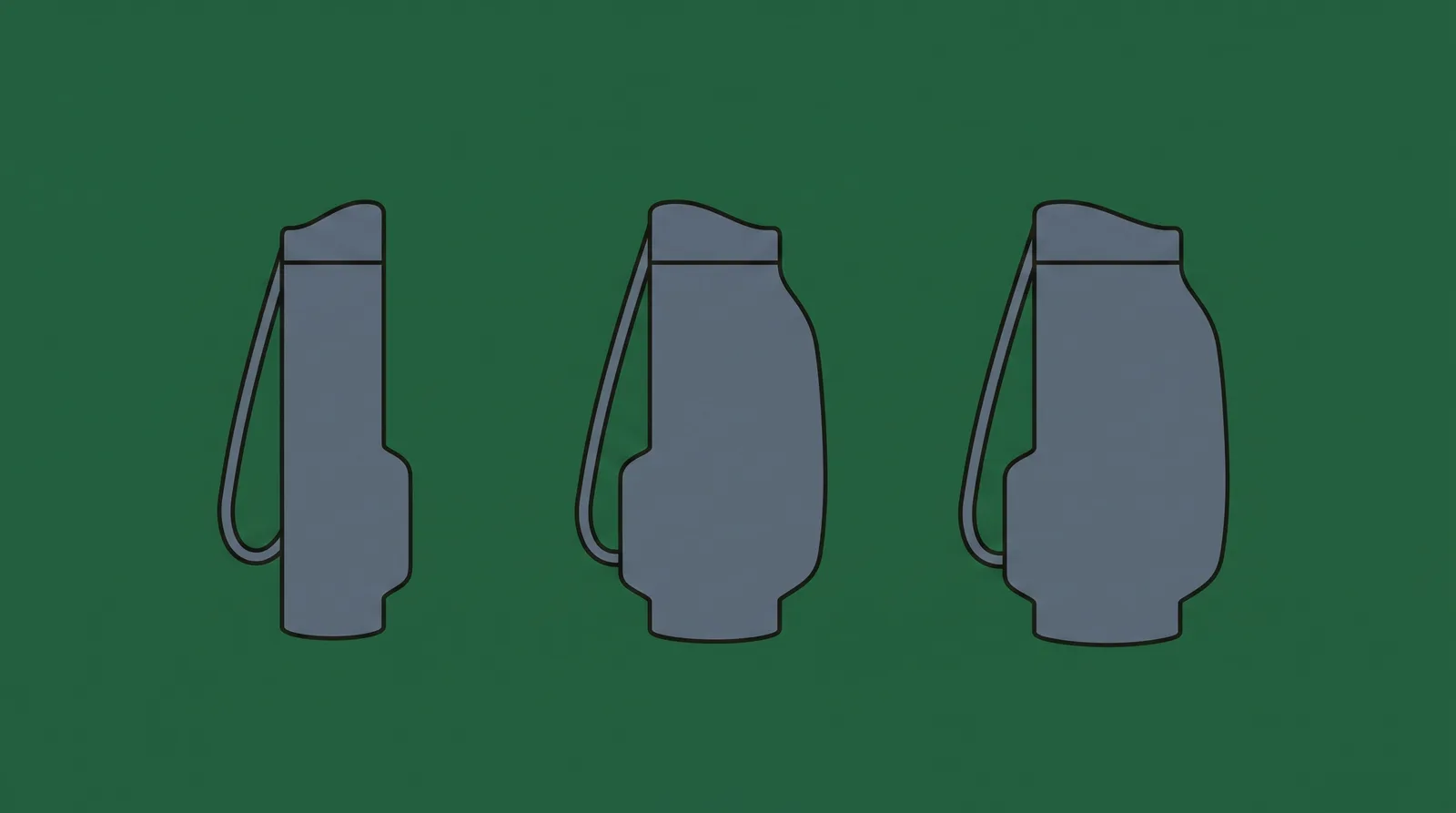
A golf bag is the one piece of kit bought on how it looks in a photograph and then lived with for five years. The specification that decides whether you enjoy owning it is weight, and it is the number manufacturers are least consistent about publishing. Here are four bags, what each maker actually states, and how to settle the question that comes before any of it: whether you should be carrying at all.
The four, compared
One carry bag, two stand bags built to different priorities, and one cart bag. That spread is deliberate: the format decision matters far more than the badge, and a brilliant bag in the wrong format is the mistake most people make once.
| Pick | Best for | Type | Weight | Dividers | Pockets | Price |
|---|---|---|---|---|---|---|
| PING Hoofer 14 | The one bag that does carrying and carting | Stand bag | 5.9 lb, about 2.7 kg | 14-way top | 17 | Around £195 to £240 |
| BIG MAX Dri Lite Seven G | The lightest thing here to carry 18 holes | Carry and stand bag | 3.3 lb, about 1.5 kg | 4-way top | 4 | Around £105 to £130 |
| Motocaddy HydroFLEX | Carrying some weeks and trolleying the rest | Hybrid stand bag | 2.30 kg without the strap, 2.5 kg with it | 5, full length | 5, from the features list | Around £200 to £220 |
| Sun Mountain C-130 | Living on a trolley or a buggy all season | Cart bag | 7.6 lb, about 3.4 kg | 14 full length, with a putter well | 11 | Around £230 to £290 |
Bag weight is the specification most often quoted and least often published by the company that built the thing. Retailer listings will give you a figure to two decimal places for bags whose makers state nothing at all, and those numbers propagate between sites without anyone rechecking them. Where a figure below is missing, it is missing because the maker did not print it.
Carry, stand or cart: settle this first
Everything else follows from this, and it is not really a question about bags. It is a question about how you get round a golf course.
| Carry bag | Stand bag | Cart bag | |
|---|---|---|---|
| Typical published weight | 3 to 4 lb | 5 to 6 lb | 7 to 9 lb |
| Dividers | 4 to 6 | 5 to 14 | 14, usually full length |
| Pockets | 4 to 7 | 8 to 17 | 10 to 14, forward facing |
| Stands up on its own | Sometimes | Yes | No |
| Works on a trolley | Usually | Yes | Yes, it is built for it |
| Carries comfortably | Yes | For 18 holes, just about | No |
A stand bag is the compromise that suits most golfers because most golfers do both: carry in summer, trolley in winter, ride occasionally. That is why three of the four bags on this page have legs.
The specialists get their own pages. If you already know you want legs and nothing else, stand bags in depth goes further into leg mechanisms and hip pads. If your clubs live on a buggy, the cart bag picks rank on pocket access and cart-strap channels instead. And if the question is getting clubs onto an aeroplane, that is a different product entirely and it is covered in golf travel bags.
PING Hoofer 14: the one that does both jobs
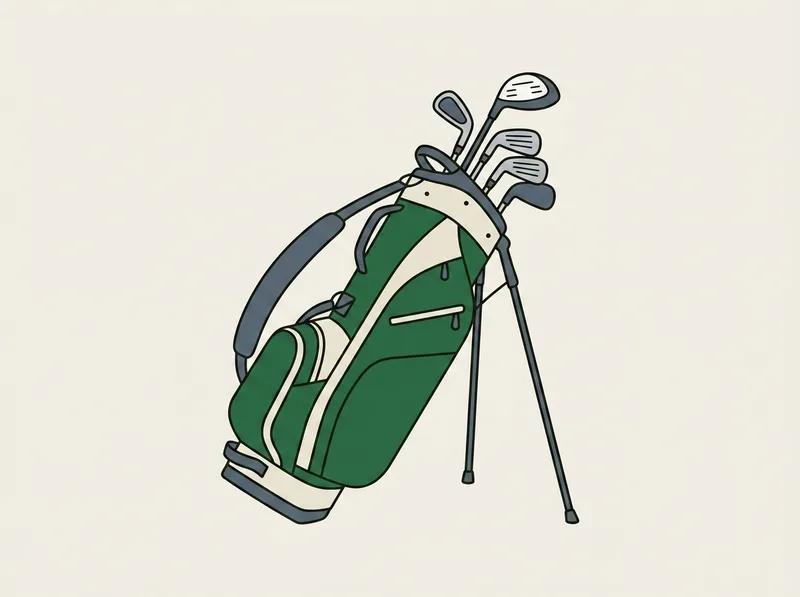
The PING Hoofer 14 has been the default club-golfer stand bag for long enough that the interesting thing about it is what PING publish rather than what it does. The spec sheet states 5.9 lb, a 14-way top, seventeen pockets, 24 litres of pocket volume, padded convertible shoulder straps and 300D polyester. That is five hard numbers on a product category where two is normal.
Fourteen slots is the argument. With a five-way top, three clubs share a compartment, and shafts cross below the divider so that pulling a 7 iron lifts the 8 out with it. Fourteen separated slots removes that entirely, and the cost is the weight of thirteen extra fabric walls running the length of the bag.
 Around £195 to £240
PING Hoofer 14
- Type
- Stand bag
- Weight
- 5.9 lb, about 2.7 kg
- Dividers
- 14-way top
- Pockets
- 17
- Pocket volume
- 24 L
- Strap
- Padded convertible shoulder straps
- Fabric
- 300D polyester
- Leg span
- Not published
- Publishes weight, pocket count, pocket volume, fabric and strap type, which is more of a specification sheet than most bags get.
- Fourteen slots means every club has its own home, so nothing tangles and nothing gets pulled out with its neighbour.
- Convertible straps let it run as a single or double carry, and the base sits properly on a trolley.
- At 5.9 lb it is more than two and a half pounds heavier than the lightest bag here, before a club goes in.
- Seventeen pockets is more than most golfers fill, and the ones you never open still weigh something.
- No published leg span, which is the figure that decides how stable it is on a slope.
VerdictThe default answer for a golfer who carries some rounds and puts the bag on a trolley for the rest, because it is properly specified for both and does not compromise badly at either. Anyone who walks every round with it on their back will feel those extra pounds by the fifteenth.
What is missing is leg span. Retailer listings quote a figure and PING do not, which matters because leg span is what decides whether the bag stays upright on a sloping fairway or lies down in the wet every time you set it. It is the one specification on a stand bag that a photograph cannot show you.
BIG MAX Dri Lite Seven G: the lightest here
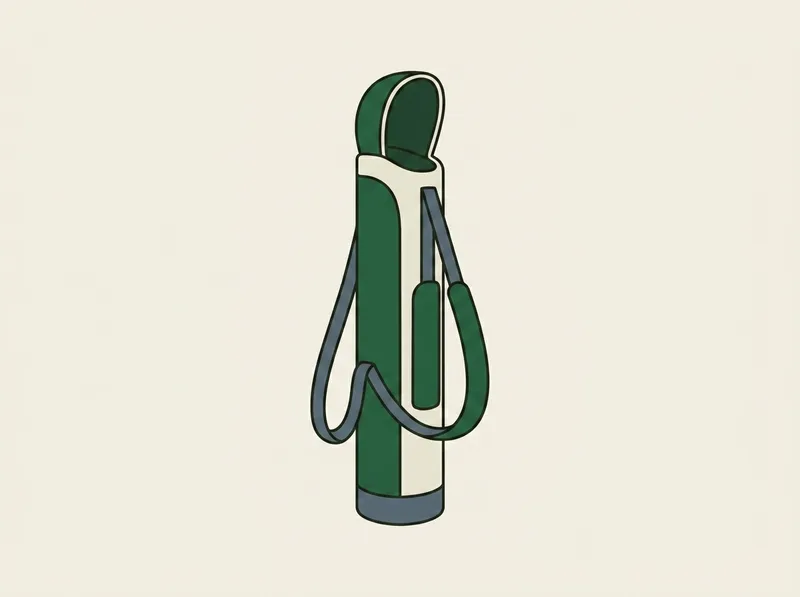
Three and a third pounds is a genuinely different object. The BIG MAX Dri Lite Seven G publishes 1.5 kg, a four-way top, four pockets and a 7.3 inch top opening, and the whole design is an argument that a carry bag should carry rather than store.
The interesting line in their own specification block is the waterproofing, which reads "water resistant" for the fabric on a bag called the Dri Lite, with the waterproof claim reserved for the zips. That is not a small distinction. Water resistant means a treated or coated fabric that repels rain until the treatment wears through at the seams and the flex points. Waterproof, when it means anything, means sealed seams. The name implies one thing about the whole bag and the specification states something narrower.
 Around £105 to £130
BIG MAX Dri Lite Seven G
- Type
- Carry and stand bag
- Weight
- 3.3 lb, about 1.5 kg
- Dividers
- 4-way top
- Pockets
- 4
- Top size
- 7.3 in
- Waterproofing
- Water resistant, with waterproof zips
- Strap
- Two-point padded shoulder system
- Base
- Not published as a specification
- Three and a third pounds is the difference between a bag you carry and a bag you end up dragging.
- Four pockets forces a decision about what actually needs to come, which is the point of a light bag.
- The waterproof zips are named in the specification rather than implied by the product name, which is rarer than it should be.
- BIG MAX's own specification says water resistant for the fabric, while the name says Dri Lite. Those are not the same claim.
- A four-way top on a 14 club set means three or four clubs share every slot and they will tangle.
- A 7.3 inch top is the narrowest here, so a full set is a genuine squeeze rather than a mild one.
VerdictThe right buy for anyone who walks every round and wants to keep doing it into their sixties, because weight is the only specification that compounds over four hours. Anyone carrying a full fourteen clubs should expect to spend some of that saving in fishing for the right one.
Worth knowing before you shop it: BIG MAX's own UK listing and the retailer listings do not agree about this bag. The maker states 1.5 kg and a 7.3 inch top. Several shops state 1.9 kg and an 8.5 inch top for what is sold as the same product. The figures above are the maker's, per the method this page uses throughout, and the gap is a fair warning about how much of a bag specification is copied rather than measured.
The four-way top is the real trade and it is worth being blunt about. If you carry fourteen clubs in four slots, you will spend the round separating grips at the top of the bag. If you carry nine or ten, which is what most golfers under a 20 handicap could sensibly do anyway, it is a non-issue. How many clubs the Rules allow is a shorter list than most bags are built for.
Motocaddy HydroFLEX: the honest weight
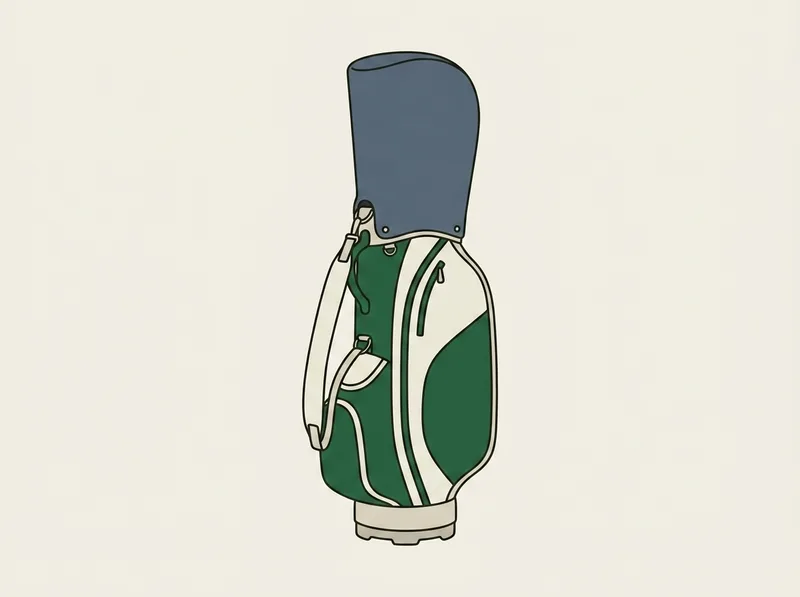
The Motocaddy HydroFLEX is published at 2.30 kg, and then a footnote says it weighs 2.5 kg with the strap fitted. No other bag on this page tells you which way its own figure was measured.
That 200 gram gap sounds trivial and is not, because every maker faces the same choice about whether to weigh the strap, the rain hood and the removable pieces. A published weight without a stated method cannot be compared to another published weight. Motocaddy are the only ones here who close that gap.
 Around £200 to £220
Motocaddy HydroFLEX
- Type
- Hybrid stand bag
- Weight
- 2.30 kg without the strap, 2.5 kg with it
- Dividers
- 5, full length
- Pockets
- 5, from the features list
- Dimensions
- 310 x 360 x 930 mm
- Fabric
- TPU coated nylon
- Warranty
- 12 months
- Trolley fit
- EASILOCK, Motocaddy trolleys only
- The only bag here that states whether its published weight includes the carry strap, and it is 200 g heavier once it does.
- Thermo sealed and heat welded seams rather than a coating, which is a genuinely different level of waterproofing.
- Full-length dividers on a bag this light, where most light bags stop the dividers a third of the way down.
- EASILOCK only locks it to a Motocaddy trolley, so on any other cart you are back to straps.
- Five pockets and five dividers is a minimal bag at a mid-range price.
- The published pocket count sits in the features list rather than the specification block.
VerdictThe pick for a golfer who plays through a wet winter and alternates between carrying and a trolley, because the waterproofing is structural rather than a finish. The proprietary lock is only an advantage if the rest of your kit is the same brand.
The build is the other reason it is here. Thermo sealed and heat welded seams are a construction decision rather than a finish, which is the difference between a bag that keeps working through a wet February and one that starts wicking at the zips. The catch is EASILOCK: it locks the bag to a Motocaddy trolley without a lower strap, and does nothing at all on anybody else's.
Sun Mountain C-130: for a bag that never leaves the trolley
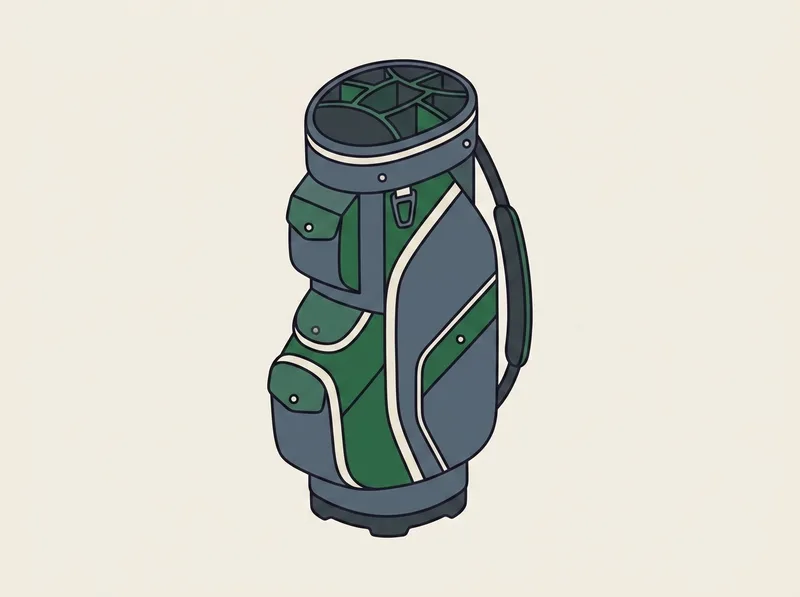
Sun Mountain publish a 9 inch top, fourteen dividers, eleven pockets, a single strap system and 7.6 lb, plus 43.7 litres of capacity stated separately. This is the specification sheet of a bag designed around a completely different assumption: that it will be lifted twice a round, from the boot to the cart and back.
Once that assumption holds, everything about it makes sense. Fourteen full-length dividers with a putter well because organisation costs nothing when you are not carrying the weight. Eleven forward-facing pockets because a pocket you cannot open with the bag strapped to a trolley is not a pocket. And 43.7 litres because there is no reason not to bring the waterproofs.
 Around £230 to £290
Sun Mountain C-130
- Type
- Cart bag
- Weight
- 7.6 lb, about 3.4 kg
- Dividers
- 14 full length, with a putter well
- Pockets
- 11
- Top width
- 9 in
- Capacity
- 43.7 L
- Strap
- Single strap system
- Fabric
- Not published
- Fourteen full-length dividers plus a dedicated putter slot, so the grips never wedge together at the bottom.
- Every pocket faces forward and stays reachable with the bag strapped to a cart, which is the entire point of the format.
- 43.7 litres of published capacity, which is roughly double what a light carry bag holds.
- 7.6 lb is more than double the Dri Lite Seven G and it is a genuine carry only in emergencies.
- No published fabric or overall dimensions, so boot-space planning is guesswork.
- The single strap is a get-it-to-the-car strap, not a carrying system.
VerdictThe correct bag for anyone whose clubs go straight from the boot to a trolley or a buggy and never onto a shoulder. Buy it for the organisation and the pocket access, and accept that the weight makes the carry decision for you.
What Sun Mountain do not publish is the fabric or the overall dimensions, and the second one is a nuisance. A cart bag is a large object that has to share a boot with a trolley, and without a height and a base width you are measuring it in the shop with your hands.
What weight actually costs you over 18 holes
This is where most bag roundups stop being useful, because they treat weight as a comfort preference rather than as the thing that decides how much golf you play in ten years.
The part that surprises people is what the load does not cost you. A study of sixteen low-handicap golfers published in the European Journal of Sport Science measured activity energy expenditure across three competitive rounds and found 688 kcal when carrying, 756 kcal with a manual push trolley and 663 kcal with an electric trolley. The sample is small and all of them played off five or better, so it is not a definitive number for a club golfer. The direction is still clear: the walking is doing the work, not the bag.
So the health argument for carrying is weaker than it is usually presented, and the health argument for walking is exactly as strong as it sounds. If a heavy bag is the reason you take a buggy, a trolley gets you the walk back and costs you almost nothing in effort. Whether golf counts as exercise turns almost entirely on that one decision.
Dividers, and whether full length matters
Divider count is the specification people compare and divider construction is the one that changes anything.
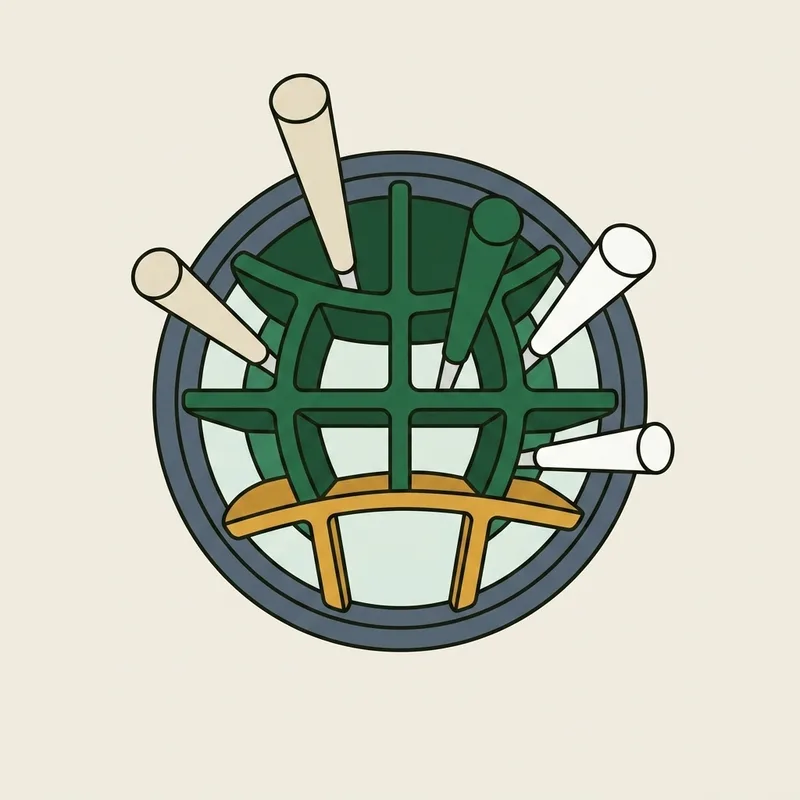
A 14-way top with full-length dividers gives every club a sleeve from the rim to the base. Nothing crosses, nothing tangles, and shafts never rub against each other. A 14-way top without full-length dividers gives you fourteen separate holes at the top and one open cavity below, which sorts the grips and does nothing for the shafts.
The difference shows up in three places. Pulling a club out cleanly, rather than lifting its neighbour halfway. Graphite shafts rubbing, which sands the finish off over a couple of seasons. And the noise, which is the reason a properly divided bag is quieter to walk with.
Full-length dividers cost weight, and that is the whole trade. The Dri Lite Seven G is light partly because there are four walls in it instead of fourteen. If you carry, buy fewer dividers and fewer clubs. If you trolley, buy all fourteen because they cost you nothing you were going to feel.
Pockets, and how many you will actually open
Seventeen pockets is a marketing number. The set that gets used is smaller and fairly consistent: a ball pocket, a valuables pocket you can reach without unclipping the bag, a full-length apparel pocket that takes waterproof trousers, a drinks pocket, and a small one for tees and a marker.
Two are worth checking properly before you buy. The valuables pocket should be lined and should sit where you can reach it with the bag on your back or on a trolley, not on the underside. And the apparel pocket has to be full length: a half-height pocket will not take waterproofs without folding them into a brick, which means you will leave them in the car on the day you need them.
Everything past that is storage you are carrying. What actually belongs in a golf bag is a shorter list than the pocket count implies, and a bag with six well-placed pockets beats one with seventeen badly placed ones.
Straps, and how the bag sits
A carry bag is a rucksack that has been asked to hold something rigid and awkward, and the strap system is what stops it behaving like one.
Three things matter. The strap must be a genuine double, with the two straps meeting in a yoke rather than being one strap split in half, because a single strap loads one shoulder for four hours and that is where the ache comes from. The hip pad should sit against your lower back, not your shoulder blades, so the weight rides on your hips. And the balance point should let the bag hang at roughly 45 degrees, which is what stops the clubs banging against the back of your legs.
The bag and the push cart are one purchase
This is the mistake worth spending a paragraph on, because it is made after both items have been bought and it is expensive to undo.
The general rule is that a stand bag fits almost any cart, a cart bag fits most, and a proprietary lock fits exactly one brand. Buy the bag first if you carry sometimes, and buy the cart first if you never do.
What to spend
The useful range runs from about £75 to about £290 and the money buys different things at each end.
- £75 to £105: the entry point. Fewer dividers, thinner fabric, a strap that works but is not comfortable at four hours.
- £105 to £220: published specifications, a padded shoulder system, and a base built to sit on a trolley.
- £230 to £290: sealed or welded construction, full-length dividers, and a build that survives being left wet in a boot for a week.
Above £300 you are buying leather trim and a brand, and nothing up there improves how the bag carries. A bag is one of the smaller lines in a first-year budget, and what golf actually costs puts it next to green fees and lessons.
Buying a first bag
If this is your first bag, buy a stand bag in the middle of the range and stop thinking about it. It is the format you will still be using in five years even if the specific bag is not. The one thing to avoid is buying a bag to match a set you do not own yet: package sets include one, it is usually adequate, and what clubs a beginner needs is the decision worth spending on first.
Key takeaways
- The PING Hoofer 14 is the default: 5.9 lb, a 14-way top, seventeen pockets, and it works carried or on a trolley.
- The BIG MAX Dri Lite Seven G is the lightest here at 1.5 kg, and its own spec block says water resistant for the fabric and waterproof only for the zips.
- The Motocaddy HydroFLEX is the only bag on this page that states whether its published weight includes the carry strap. It is 2.30 kg without and 2.5 kg with.
- The Sun Mountain C-130 is 7.6 lb and is a cart bag in the literal sense. Buy it only if the bag never goes on your shoulder.
- Bag weight is quoted far more often by retailers than by manufacturers, and the retailer figure has usually been copied rather than measured.
- Divider count matters less than whether the dividers run full length. Fourteen holes at the top with one cavity below sorts the grips and nothing else.
- Carrying burns barely more energy than pushing a trolley. The walking is what counts, so a trolley is not the soft option it is treated as.
- Straps are almost always shipped set too long, which is why a lot of golfers decide carrying is not for them after two rounds.
- The bag and the cart are one purchase, and the bracket fit is the part people get wrong.
Common questions
What is the best golf bag to buy?
For most golfers the PING Hoofer 14, because it publishes a full specification, carries properly and sits on a trolley without complaint. If you walk every round and want the lightest option here, the BIG MAX Dri Lite Seven G at 1.5 kg. If your clubs never leave a buggy, buy a cart bag such as the Sun Mountain C-130 instead.
How much should a golf bag weigh?
A carry bag sits around 3 to 4 lb, a stand bag around 5 to 6 lb and a cart bag around 7 to 9 lb. What matters more is the loaded weight, which is usually fourteen to twenty pounds once clubs, balls and waterproofs are in. Weigh yours before deciding the bag is the problem.
Should I buy a stand bag or a cart bag?
Buy a stand bag if you carry at all, even occasionally, because a cart bag is not realistically carryable. Buy a cart bag if your clubs go from the boot to a trolley or buggy every single round, in which case you get better organisation and pocket access for the weight you are not lifting.
Do full-length dividers actually matter?
Yes, more than the number of dividers does. Full-length dividers give each club its own sleeve from top to bottom, so clubs come out one at a time and shafts do not rub. A 14-way top without full-length dividers separates the grips and leaves one open cavity underneath.
How many dividers does a golf bag need?
Fourteen if the bag lives on a trolley, because the weight costs you nothing. Four to six is fine on a carry bag if you play fewer than fourteen clubs, which most golfers reasonably could. Fourteen clubs in a five-way top will tangle at the top of the bag every round.
Is a lighter golf bag worth paying more for?
Up to a point. Going from around 6 lb to around 3.3 lb is a noticeable difference over four or five miles of walking. Paying a large premium to save the last few ounces is not, particularly when the contents weigh three or four times the bag.
Are expensive golf bags waterproof?
Some are and the word alone does not tell you. Look for sealed or welded seams in the specification rather than a coated or treated fabric, and note that some bags marketed as dry state only water resistant in their own spec block. A rain hood covers the club heads, which is where most water gets in.
Will my golf bag fit on any push cart?
Usually but not always. Stand bags fit almost anything, wide cart bags can sit proud of the upper bracket on smaller carts, and some brands use proprietary locking bases that only work with their own trolleys. Check the bracket before buying either half of the pair.
How long does a golf bag last?
No manufacturer publishes a figure. What fails first is predictable: zips, then the strap stitching, then the base where it drags on tarmac. A bag left wet in a car boot ages several times faster than one emptied and dried, which is most of the difference between five years and fifteen.
Can I carry a cart bag if I need to?
To the car, yes. For 18 holes, no, and it is not really a strength question. Cart bags carry a single strap and no hip pad, so the load sits entirely on one shoulder with nothing balancing it, and the shape swings against the back of your legs when you walk.
How we put this together
- Published manufacturer specifications for each bag, taken from the maker's own listing rather than a retailer's summary, because bag weight is quoted more often by shops than by the companies that build them.
- Where a maker publishes no figure, this page records it as Not published rather than borrowing a number from somewhere else, and treats the gap as part of the comparison.
- Whether a published weight includes the carry strap, since the strap and harness are a meaningful share of a bag under four pounds and only one of these four says either way.
- The R&A's published Golf and Health figures for how far a golfer walks in a round, which is the load a carry bag is bought to survive.
- Peer-reviewed measurement of activity energy expenditure across carrying, manual trolley and electric trolley conditions, because the carry-or-ride decision is a health question before it is a gear one.
- Divider construction, pocket count and strap system, because those three decide how the bag behaves once it is full rather than how it looks empty.
On this page
- The four, compared
- Carry, stand or cart: settle this first
- PING Hoofer 14: the one that does both jobs
- BIG MAX Dri Lite Seven G: the lightest here
- Motocaddy HydroFLEX: the honest weight
- Sun Mountain C-130: for a bag that never leaves the trolley
- What weight actually costs you over 18 holes
- Dividers, and whether full length matters
- Pockets, and how many you will actually open
- Straps, and how the bag sits
- The bag and the push cart are one purchase
- What to spend
- Buying a first bag
- How we put this together

Tom Ashworth
Tom Ashworth is a PGA Professional who has taught golf since 2012, working mainly with beginners and mid-handicappers at club level in Surrey. He reviews the instruction guides on Learn Golf for technical accuracy before they publish.
Most of his teaching is with players in their first three years of the game, and most arrive having been told too much: six swing thoughts collected from videos, half of them contradicting each other. His approach is to check the grip and the alignment before touching the swing, on the basis that most bad ball flight is decided at address.