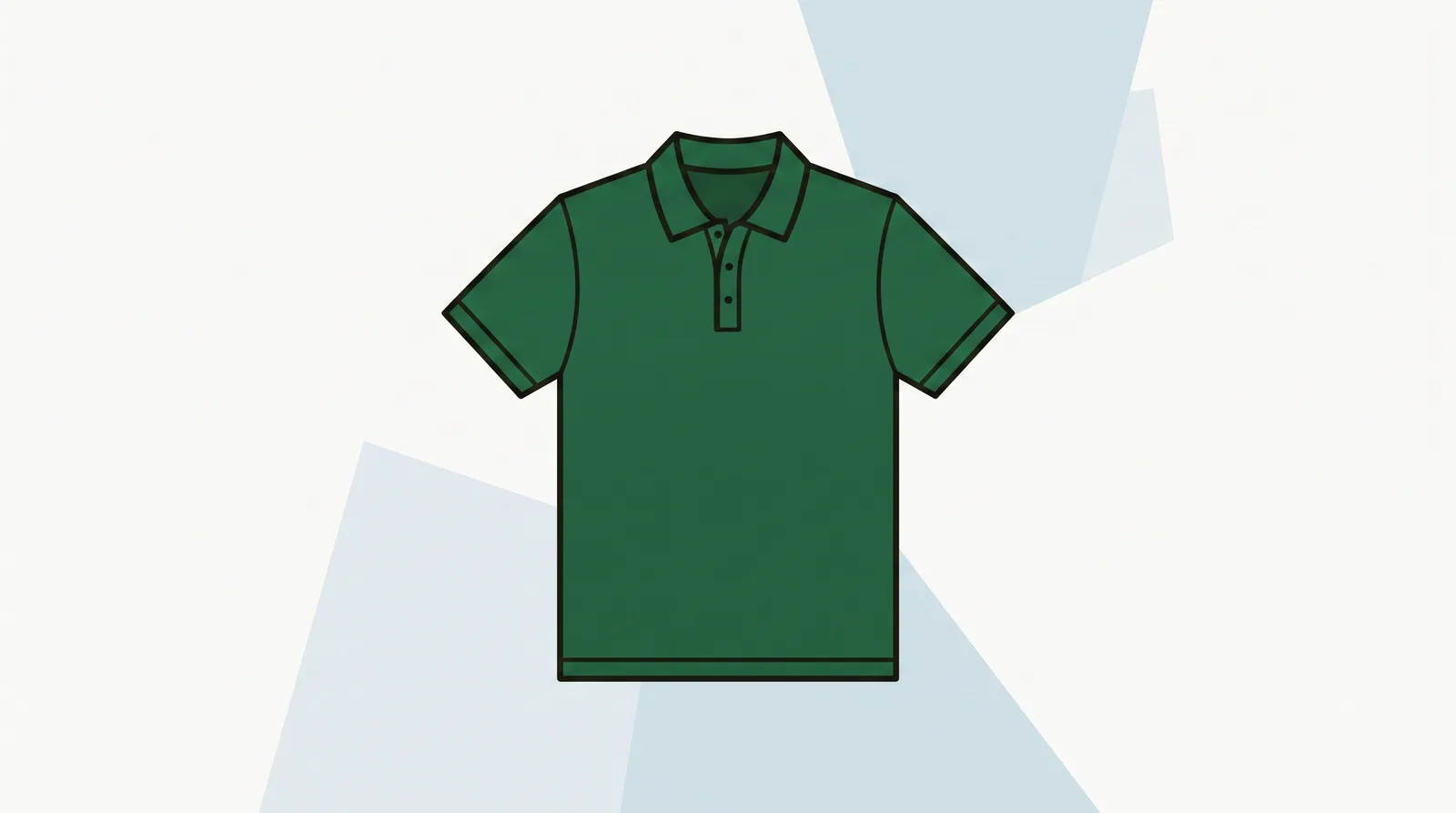
Being turned away at the pro shop for the wrong shirt is a small humiliation that puts people off golf entirely, and it is completely avoidable. There is no single golf dress code, because no governing body writes one. There is a common core that almost every course in the world accepts, and a layer of house rules on top that varies by club, by country and sometimes by the day of the week.
The outfit that works almost everywhere
If you own one golf outfit, make it this one.
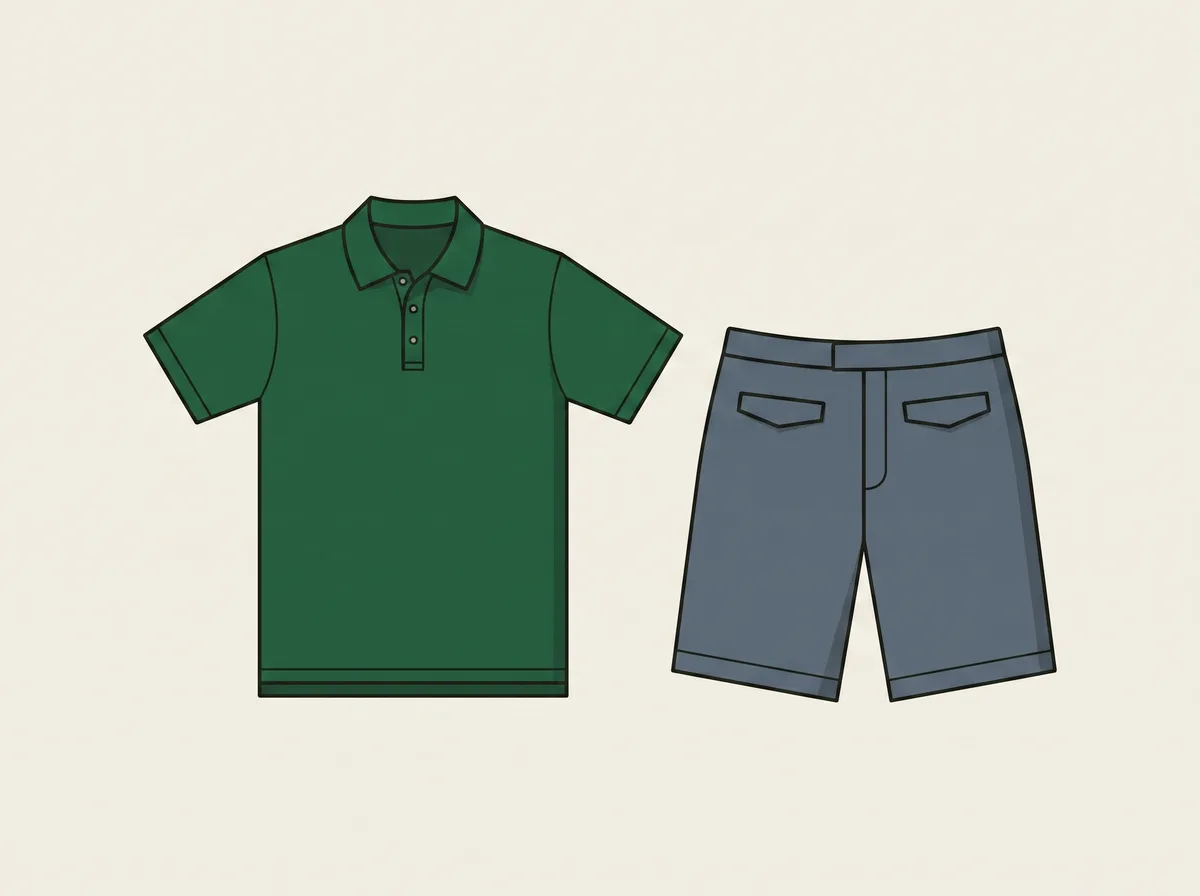
- A collared polo shirt, short or long sleeved, in any plain colour.
- Tailored trousers or tailored shorts, meaning a proper waistband, a fly and no cargo pockets.
- Plain socks, and shoes with a flat or lightly moulded sole.
- A mid layer or a light waterproof, because the weather is the thing you will actually regret.
England Golf's iGolf platform gives the same core and adds the important caveat plainly: dress codes vary from club to club, some venues are strict and others relaxed, and it is worth checking before you go rather than being turned away at the desk.
That caveat is the whole subject in one line. Everything below is about where the variation actually sits.
Why there is no universal code
It surprises people that the Rules of Golf are almost silent on clothing. There is no rule requiring a collar and none prohibiting jeans. The Rules deal with clothing only where it might affect play: Rule 4.3 allows a plain glove that meets the Equipment Rules and prohibits anything that gives an unfair advantage with hand position or grip pressure, and it hands anything else about clothing and shoes to the separate Equipment Rules.
The one piece of footwear regulation that does exist is optional. Model Local Rule G-7 in Section 8 of the Committee Procedures lets a committee prohibit certain types of shoes, which in practice means metal spikes, with the general penalty attached if a club adopts it. It is a local rule, not a rule of golf, which is exactly the pattern for everything else on this page.
So a dress code is the club's own policy, enforced by whoever is on the desk or the first tee. That is why the question has genuinely different answers at a council course and at a members' club twenty minutes away.
What each type of course expects
| Course type | Shirt | Legs | Usually refused | How strictly it is enforced |
|---|---|---|---|---|
| Municipal or council pay-and-play | Collar preferred, often not checked | Shorts, tracksuit bottoms, sometimes jeans | Very little | Rarely, if at all |
| Proprietary pay-and-play parkland | Collared polo | Tailored trousers or shorts | Denim, football shirts, vests | Politely, at the desk |
| Private members' club, visitor rate | Collared polo, often tucked in | Tailored trousers or tailored shorts | Denim, cargo, tracksuits, untucked hems at older clubs | Consistently, and in the clubhouse too |
| Championship or well-known links | Collared polo, waterproofs over it | Tailored only | Denim, tracksuits, crew-neck tops | By the starter, on the tee |
| US resort and daily fee | Collared shirt, near universal | Tailored shorts entirely normal | Denim, open-toe shoes, sandals | At the bag drop |
The rows are a starting point, not a promise. A modern members' club can be more relaxed than the table suggests and an old proprietary course can be stricter. Two minutes on the club's visitor page settles it, and the pro shop will tell you straight if you ring, which is worth doing at the same time as booking a tee time.
Where UK and US norms differ
The core is the same on both sides of the Atlantic. The details that trip visitors up are not.
Shorts and socks. Tailored shorts are normal everywhere now. The difference is what goes with them. Plenty of traditional British and Irish clubs historically required knee-length socks with shorts, and while most have dropped it, a handful still ask. American courses have no such convention at all and ankle socks are standard. If a UK club's website mentions socks, believe it.
Denim. Banned at most British members' clubs on the course and often in the clubhouse too, and frequently fine at a municipal. In the US the ban is if anything more consistent on the course: Pinehurst, as one published example, states that denim, open-toe shoes and sandals are not acceptable on the course or driving range while recommending collared shirts and well-kept trousers or shorts with a belt. Some American clubhouses then allow smart denim for dinner, which catches British visitors out in the opposite direction.
Tucking in. Older UK clubs still ask for shirts tucked in. Many clubs of every kind now accept a polo cut to be worn out, on the grounds that half of modern golf shirts are made that way. It varies enough that if you are unsure, tuck it in on the first tee and take your lead from the group.
The clubhouse is a separate code. This is the one that ambushes people. A course happy with shorts will often want long trousers in the dining room, caps off indoors is close to universal, and a few clubs still have a jacket rule in one specific room. If you are eating afterwards, check that separately from the course code.
Shoes, and the spike question
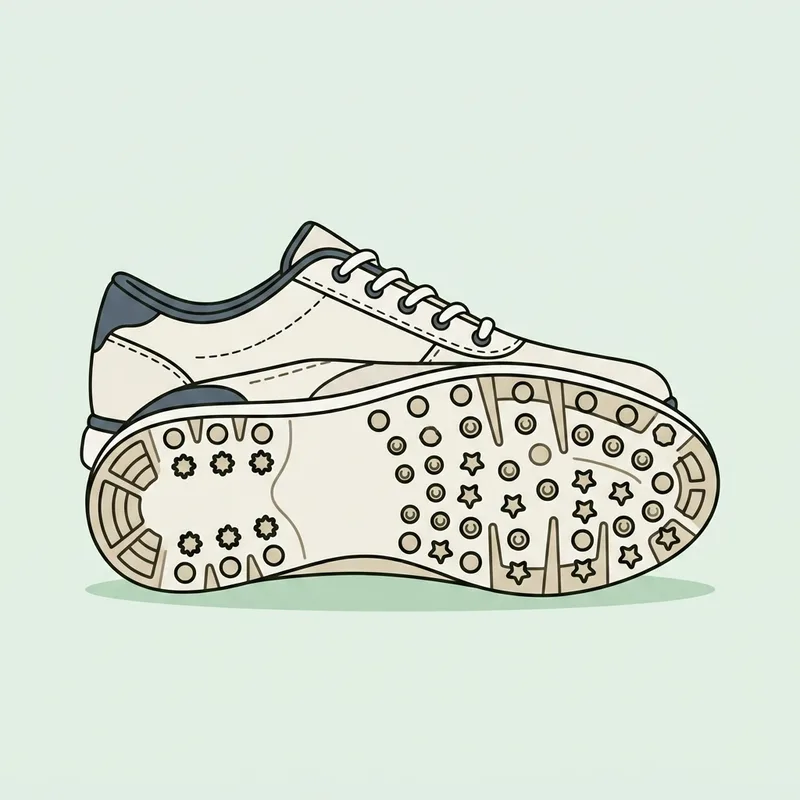
Golf shoes give you grip through a swing on wet grass, and that is the entire argument for them. They are useful rather than compulsory, and a plain pair of flat trainers is accepted for a first round at most pay-and-play courses.
Metal spikes are the exception. Very few courses still permit them, because they damage greens, and where a club has adopted Model Local Rule G-7 it is a penalty rather than a request. Modern shoes come as soft spikes, with replaceable plastic cleats, or spikeless, with a moulded sole that looks like a trainer. Spikeless is the sensible first pair: it walks better, it is fine in the clubhouse, and it holds up in anything short of a very wet winter.
Running trainers are the one thing to avoid, because a thick cushioned sole works against you in a golf swing. If you are buying, what golf costs has the price bands, and a first pair typically runs £40 to £95.
Gloves, hats and layers
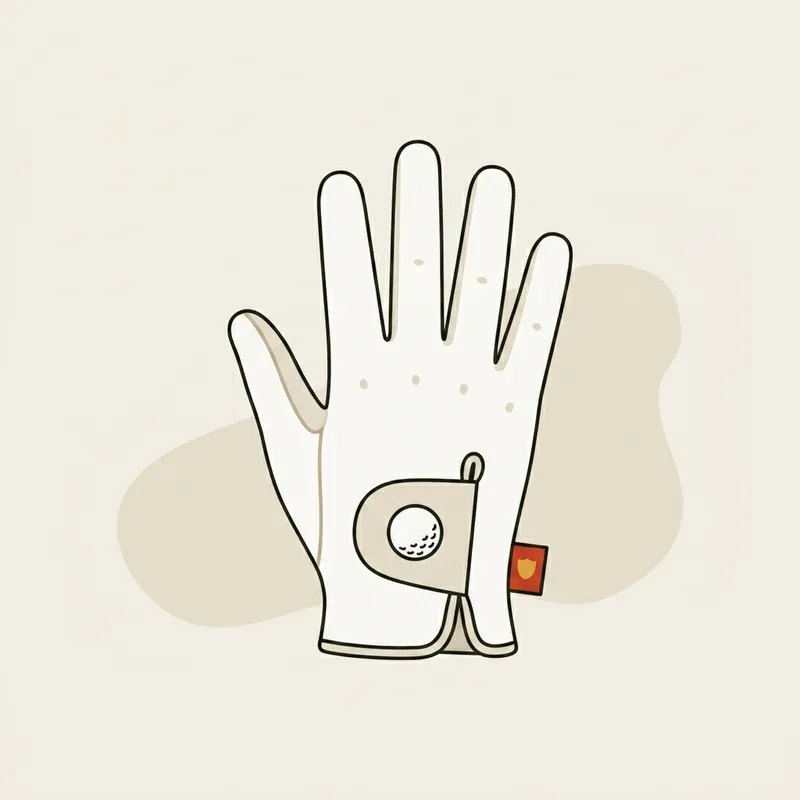
A golf glove goes on the lead hand only, which is the left hand for a right-handed golfer. It is there for grip rather than warmth, and most golfers take it off to putt. The Rules permit a plain glove that meets the Equipment Rules, and nothing more elaborate. A glove wears out in roughly 15 to 25 rounds and costs £12 to £25, so it is the cheapest thing in your bag to replace and the one people leave far too long.
Hats are optional and popular for the obvious reason that a round takes four hours in whatever the sky is doing. A cap keeps rain off your glasses and sun off your face. Caps come off in the clubhouse and at the eighteenth green handshake, which is covered along with the rest of the conventions in golf etiquette.
Layers matter more than any of it in Britain. A round is four hours of walking with occasional violent effort, so you will be too hot within twenty minutes of starting and cold again on the tenth tee. Two thin layers you can strip beat one warm one every time, and a light waterproof jacket lives in the bag from October to April whatever the forecast says. Playing golf in the rain covers what changes once it is actually falling.
Women, juniors and the parts that are least standardised
Women's golf dress codes are the least consistent part of the whole subject, and worth checking rather than assuming. The common core is the same: a collared or golf-specific top, and tailored trousers, shorts, skorts or a golf skirt. Sleeveless tops are usually fine at clubs that require a collar on them, and usually fine without one at relaxed courses, which is precisely the ambiguity to resolve with a phone call. Golf for women covers the rest of what differs.
Juniors are almost always given latitude that adults are not, and most clubs care far more that a child is on the course at all. A polo shirt and shorts is enough at essentially any course.
What not to buy yet
Two categories are worth resisting until you know you are staying. Full waterproof suits are expensive and a light jacket covers most of what you will play in for a first season. Specialist winter kit, thermal mitts and heated grips are for people who play in January by choice.
Practice clothing is not a category. Ranges have no dress code worth the name and a t-shirt is fine, which using a driving range covers alongside the rest of how a range session works. Save the polo for the course.
If the whole prospect still feels like an exam, what a first round involves walks through the day in order, and the honest answer is that nobody on a golf course is looking at your shirt.
Key takeaways
- There is no universal golf dress code. The Rules of Golf barely mention clothing, so every code is the club's own policy.
- A collared polo with tailored trousers or shorts is accepted at almost every course in the world.
- Denim, football shirts, vests and cargo pockets are the four things most likely to be refused.
- Municipal courses are relaxed, members' clubs are consistent, and championship links enforce it on the first tee.
- Check the club's website or ring the pro shop. Two minutes settles it and the shop will tell you straight.
- Metal spikes are prohibited almost everywhere under Model Local Rule G-7, and spikeless shoes are the sensible first pair.
- Trainers are fine at most pay-and-play courses. Running shoes with thick cushioned soles are the one thing to avoid.
- The glove goes on the lead hand, must be plain to meet the Equipment Rules, and lasts 15 to 25 rounds.
- The clubhouse usually has a stricter code than the course, and caps come off indoors.
- Layers beat one warm jacket, and a light waterproof lives in the bag from October to April.
Common questions
What should I wear to play golf for the first time?
A collared polo shirt, tailored shorts or trousers, and any flat-soled shoes you own. That combination is accepted at essentially every pay-and-play course. Add a light waterproof jacket if there is any chance of rain, which in Britain there always is.
Can I wear jeans on a golf course?
Usually not. Most private members' clubs and most US resort courses ban denim on the course outright, and plenty ban it in the clubhouse as well. Municipal and council courses are often relaxed about it, but it is the single most commonly refused item, so check first.
Do I have to wear a collared shirt to play golf?
At most courses, yes. It is the most consistent element of any dress code, and championship courses will enforce it on the first tee. Some municipal courses do not check. Crew-neck t-shirts are the usual refusal, whatever the fabric.
Do I need golf shoes to play golf?
No. Golf shoes give better grip in a swing on wet grass, but a plain flat-soled trainer is accepted for a first round at most pay-and-play courses. Avoid running shoes with thick cushioned soles, which work against a stable swing.
Are metal spikes allowed on golf courses?
Very rarely. Clubs adopt Model Local Rule G-7 to prohibit them because they damage putting greens, and where that local rule is in force there is a penalty attached. Soft spikes and spikeless soles are the modern standard everywhere.
Can I wear shorts to play golf?
At the vast majority of courses, yes, provided they are tailored rather than sports or cargo shorts. A few traditional British and Irish clubs still ask for knee-length socks with shorts, though most have dropped that. American courses have no sock convention at all.
What do women wear to play golf?
A collared or golf-specific top with tailored trousers, shorts, a skort or a golf skirt. Sleeveless tops are generally accepted, though clubs that require collars on men's shirts sometimes require them on sleeveless tops too. Women's codes are the least standardised part of the subject, so ring ahead.
Is there a dress code at a driving range?
Almost never. Ranges are the most relaxed part of golf and a t-shirt and trainers are entirely normal. Save the collared polo for the course, and use the range as the low-stakes way to get used to being around golf.
What should I wear to golf in cold or wet weather?
Two thin layers rather than one thick one, plus a light waterproof jacket. You will be too warm after twenty minutes of walking and cold again when you stop. Waterproof trousers are worth adding only once you know you play through a British winter.
Do I need to tuck my shirt in?
At older private clubs, usually yes. Many clubs now accept polos cut to be worn out, since much modern golf clothing is made that way. If nobody has told you, tuck it in on the first tee and take your lead from the people you are playing with.
What is the dress code in a golf clubhouse?
Usually stricter than on the course, and it catches visitors out. Long trousers are commonly required in a dining room even where shorts are fine outside, caps come off indoors almost everywhere, and a small number of clubs still have a jacket rule for one room. Check it separately.
Tom Ashworth
Tom Ashworth is a PGA Professional who has taught golf since 2012, working mainly with beginners and mid-handicappers at club level in Surrey. He reviews the instruction guides on Learn Golf for technical accuracy before they publish.
Most of his teaching is with players in their first three years of the game, and most arrive having been told too much: six swing thoughts collected from videos, half of them contradicting each other. His approach is to check the grip and the alignment before touching the swing, on the basis that most bad ball flight is decided at address.