
The driver is the club most golfers hit worst and reach for first. It is also the only club in the bag built to be struck on the way up, off a tee, with the ball played well forward in the stance. Most driver faults are a setup that still belongs to a 7 iron. This guide covers the setup, the strike, the three tee misses and what to practise.
Left and right below assume a right-handed golfer. If you play left-handed, swap them and nothing else changes: lead heel still means the foot nearest the target, and the tilt is still away from where you are aiming.
The one club you hit on the way up
Every club that sits on the ground is struck while the club head is still descending. A teed driver is the exception, and that single difference explains most of what follows.
TrackMan's attack angle data puts the PGA Tour average at minus 0.9 degrees with a driver and the LPGA Tour average at plus 2.8 degrees. The average male amateur, measured at a 14.5 handicap, arrives at minus 1.8 degrees, and a bogey golfer at minus 2.1. Those numbers describe a club still travelling downward at a ball that has been deliberately lifted off the ground.
You do not produce an upward strike by lifting, scooping or leaning back through impact. You produce it by moving the ball forward in your stance so the club has already passed the bottom of its arc by the time it arrives.
Your setup is doing most of the work
Nothing on this page is a swing change. Five things at address decide whether the club is rising or falling when it reaches the ball.
- Tee the ball so about half of it sits above the top edge of the driver when the club is soled behind it.
- Play the ball opposite your lead heel, roughly under your lead armpit.
- Widen your stance to just outside shoulder width. The driver is the longest club you own and it needs a wider base.
- Set your trail shoulder lower than your lead shoulder, so your upper body tilts slightly away from the target. Nudging the trail hand down the grip does most of this for you.
- Leave your hands level with the ball rather than pressed ahead of it. Forward shaft lean is an iron position and it adds a downward strike you do not want here.
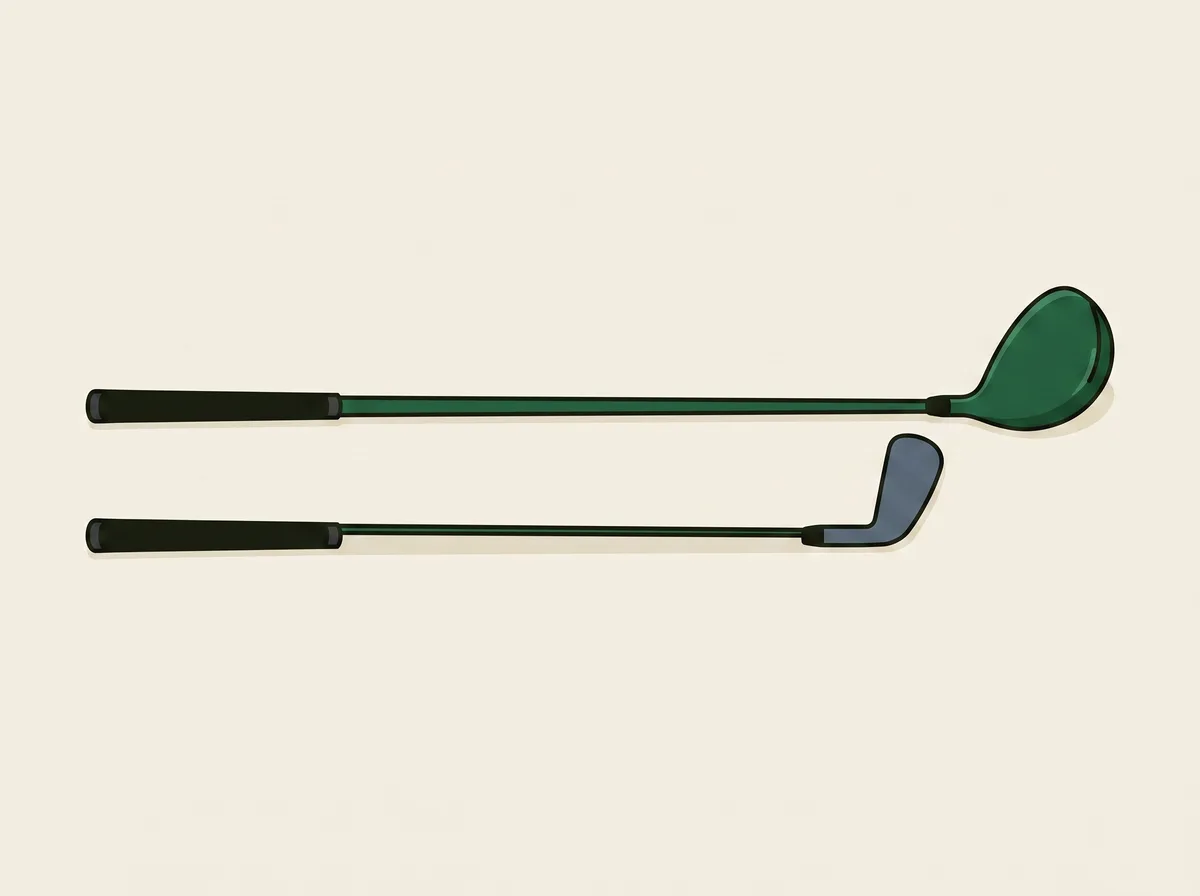
The contrast with a mid iron is the fastest way to remember it.
| Setup point | Driver | 7 iron |
|---|---|---|
| Ball position | Opposite the lead heel | Middle of the stance |
| Stance width | Just outside shoulder width | About shoulder width |
| Upper body at address | Tilted away from the target | Close to level |
| Hands at address | Level with the ball | Slightly ahead of the ball |
| Club at the ball | Travelling upward | Still travelling downward |
| Turf contact | None | A divot starting past the ball |
Tee height changes the strike more than the swing does
Tee height is the cheapest adjustment in golf and the one beginners most often get wrong. Too low and the club is still descending when it arrives, which brings the leading edge into the top of the ball. Too high and the strike drifts up the face and loses speed.
| Club off a tee | Where the ball should sit | Ball position |
|---|---|---|
| Driver | About half the ball above the crown | Opposite the lead heel |
| 3 wood or 5 wood | Ball just clear of the ground, level with the crown | Just inside the lead heel |
| Hybrid | Barely above the turf | A ball forward of centre |
| Iron | Sitting on the grass, tee almost flush | Same as off the ground |
The reference works because it fixes the relationship between the ball and the part of the face you want to hit. A driver face has its sweet spot slightly above centre, so a ball teed at crown height sits where the club is both rising and returning most of its speed. Teed below that, you are asking a club that is still descending to find a spot it has already passed.
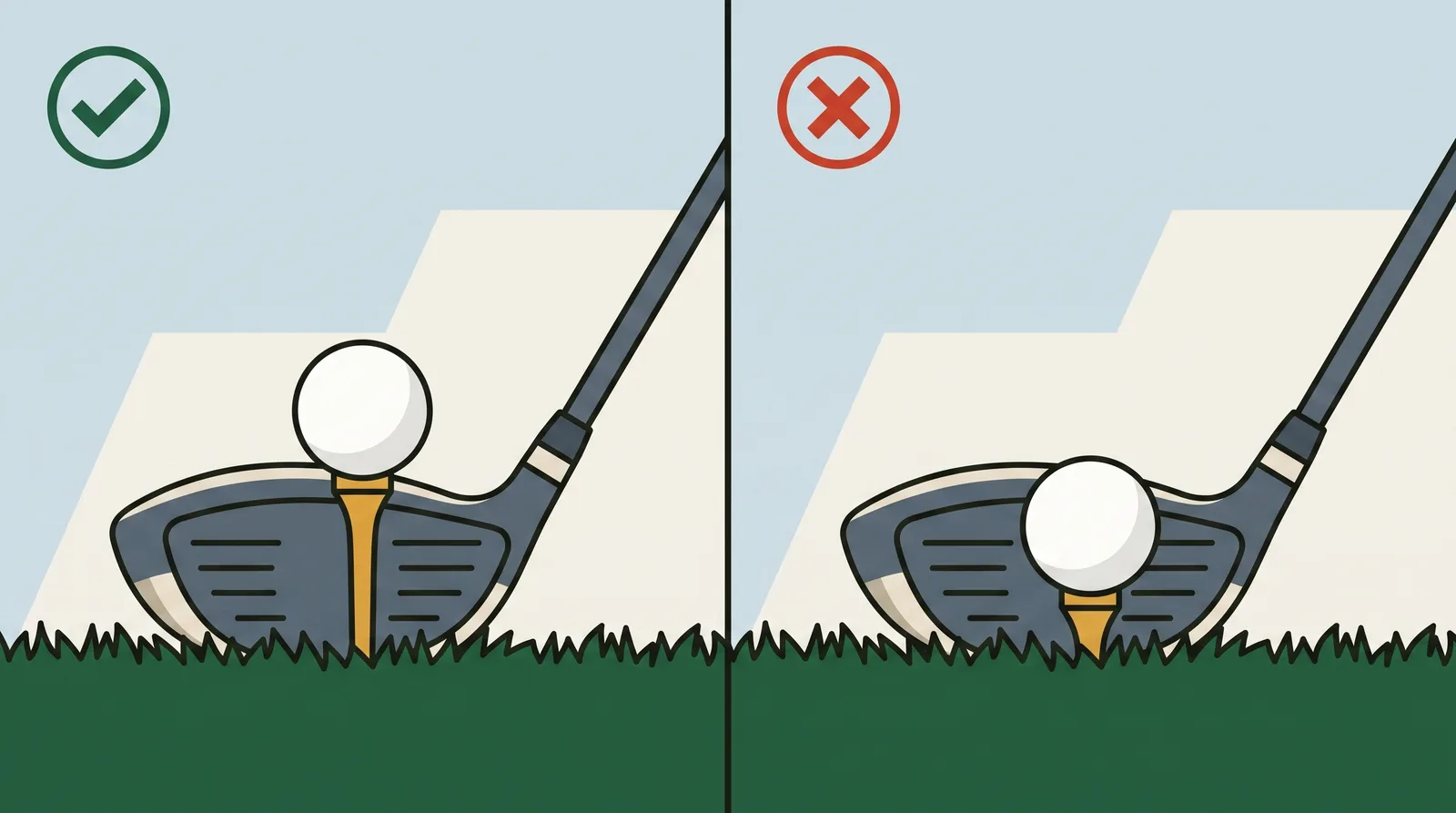
A strong headwind and very firm ground both move that reference down a fraction, because a lower flight is worth more than a high one in those conditions. On a normal day, half a ball above the crown is close enough that you can stop thinking about it.
The swing is not a different swing
There is no separate driver swing to learn. The club is longer, so the arc is wider and the plane is flatter, and both of those happen on their own once the ball is teed and the stance is wide. Trying to build a second swing for one club is how golfers end up with two unreliable ones.
The sequence is unchanged: the lower body starts down, the torso follows, the arms and club arrive last. That order is set out checkpoint by checkpoint in golf swing basics, and it is the same order with every club in the bag.
Effort level matters more with this club than any other. Swinging at everything moves the strike around the face, and the middle of the face is worth more than the extra speed. Around 80 percent of full effort is where most amateurs find both.
Why the driver curves more than anything else in the bag
The club face decides where the ball starts and the gap between the face and the club path decides how much it bends. That relationship is worked through in full in the ball flight laws, and it applies to every club. The driver simply exaggerates it.
Loft is the reason. A lofted club puts more of its spin into backspin, which resists sideways tilt. A driver has the least loft in the bag, so the same mistake tilts more of that spin sideways. TrackMan's face to path examples put a tour driver with a two degree gap at around 19 yards of curve, against about 8 yards for a 6 iron with the same size gap.
If that is your shape, the fix is a sequence rather than a tip, and it is set out in how to fix a slice. Nothing on this page will straighten a face that arrives open, because tee height and ball position do not change what your hands are doing.
Repeatable beats straight
Tee shots are not scored on how many finish in the middle. They are scored on how many are playable, and that is a lower bar than most golfers set for themselves.
A shot that starts on the same side every time can be aimed. A shot that could go either way cannot, whatever its average result looks like. Benchmarks for what a tee shot travels at each handicap are in average driver distance, and the work that changes those numbers belongs in how to hit driver further rather than here.
The three tee misses
Almost every bad drive is one of three, and each has a different cause.
| Miss | What you see | What it usually is |
|---|---|---|
| Skied drive | The ball pops almost straight up, with a scuff mark on the crown | A steep, descending strike into a teed ball |
| Slice | The ball starts left and bends hard right | The face is open to a path travelling left |
| Low heel strike | Low, weak, leaking right with no carry | Standing too close, or the arms throwing out early |
The first one has its own set of fixes in how to stop skying drives, because it is a strike fault rather than a direction fault and it does not respond to aim changes.
Three drills with a dose
Each one attaches feedback to the swing rather than asking you to feel something you cannot feel at 90 mph.
Key takeaways
- The driver is the only club struck while the head is travelling upward, because the ball is teed.
- Tour players average roughly level to slightly up with a driver, while the average amateur is around 1.8 degrees down.
- Ball opposite the lead heel, stance just outside shoulder width, upper body tilted away from the target.
- Tee about half the ball above the crown and stop adjusting it after bad shots.
- Hands stay level with the ball. Forward shaft lean belongs to the irons.
- There is no separate driver swing. The longer club widens the arc on its own.
- The driver curves about twice as much as a 6 iron for the same face-to-path gap, because it has the least loft.
- Scratch golfers only find about half the fairways, so aim for a repeatable side rather than straight.
- Swing at about 80 percent. Centre contact is worth more than the extra speed.
Common questions
How do you hit a driver straight?
Start with the face rather than the swing. The ball launches very close to where the face points, so a repeatable start line comes from a repeatable grip and aim. Then set the ball opposite your lead heel with the upper body tilted away from the target, so the club is rising at impact and the strike is centred.
Where should the ball be in my stance with a driver?
Opposite the lead heel, roughly under the lead armpit. That position puts the ball past the lowest point of the swing arc, which is what allows the club to be travelling upward when it arrives without any lifting from you.
How high should I tee the ball with a driver?
High enough that about half the ball sits above the top edge of the club when it is soled behind the ball. Lower than that encourages a descending strike and a sky mark, higher than that moves the contact up the face and costs ball speed.
Should I hit up on the driver?
Yes, or at least stop hitting down on it. TrackMan puts the LPGA Tour average at plus 2.8 degrees and the average male amateur at minus 1.8 degrees with a driver, which is a club still descending into a ball that was teed up on purpose. Ball position and tilt produce it. Trying to lift the ball does not.
Why do I hit my irons well but not my driver?
Because a good iron setup is an actively bad driver setup. Ball in the middle, hands ahead and a level upper body all produce a descending strike, which is exactly right off the turf and exactly wrong off a tee. Most golfers in this position are hitting the driver like a long 5 iron.
Why do I slice my driver but not my irons?
The driver has the least loft in the bag, so it tilts more of its spin sideways for the same mistake. The same face-to-path gap that produces a small fade with a 7 iron produces a large slice with a driver. The fault is in both clubs, it is just visible in one.
How hard should I swing my driver?
Around 80 percent of what you can produce. Beyond that the strike moves around the face and away from the middle, and a centred strike at 80 percent generally beats an off-centre one at 100 percent. Swing speed still matters, but it is trained deliberately rather than found on the course.
Why do I keep skying my drives?
The club is arriving steeply and descending, so the leading edge reaches the top of the ball. It is a strike fault, not a tee height fault, and lowering the tee makes it more likely rather than less.
Should a beginner use a driver at all?
It is genuinely contested. A 3 wood off the tee is easier to strike and costs less when it misses, and plenty of good coaches start beginners there. The counter-argument is that the learning curve does not disappear, it just gets postponed. Carrying the driver and hitting it at three-quarter effort is a reasonable middle path.
Does driver setup change for left-handed golfers?
Only in the naming. Lead heel means the foot closest to the target for both, so a left-handed golfer plays the ball opposite the right heel and tilts the upper body away from the target in the other direction. Tee height, stance width and attack angle are identical.
Do I need a driver with more loft?
Possibly, and it depends on how you deliver the club rather than how far you hit it. A golfer with a downward attack angle and low speed usually launches too low and spins too much, and more loft helps both. It is the sort of thing a fitting settles in ten minutes.
Tom Ashworth
Tom Ashworth is a PGA Professional who has taught golf since 2012, working mainly with beginners and mid-handicappers at club level in Surrey. He reviews the instruction guides on Learn Golf for technical accuracy before they publish.
Most of his teaching is with players in their first three years of the game, and most arrive having been told too much: six swing thoughts collected from videos, half of them contradicting each other. His approach is to check the grip and the alignment before touching the swing, on the basis that most bad ball flight is decided at address.