Best Golf Alignment Sticks: What Actually Differs
Alignment sticks are round rods with no moving parts, which makes the real differences between sets easy to hide behind a logo. Here is what each maker publishes, what none of them publish, and where a driveway marker does the same job.
Some links here earn us a commission at no extra cost to you. It never changes what we recommend or the order we rank it. How this works.
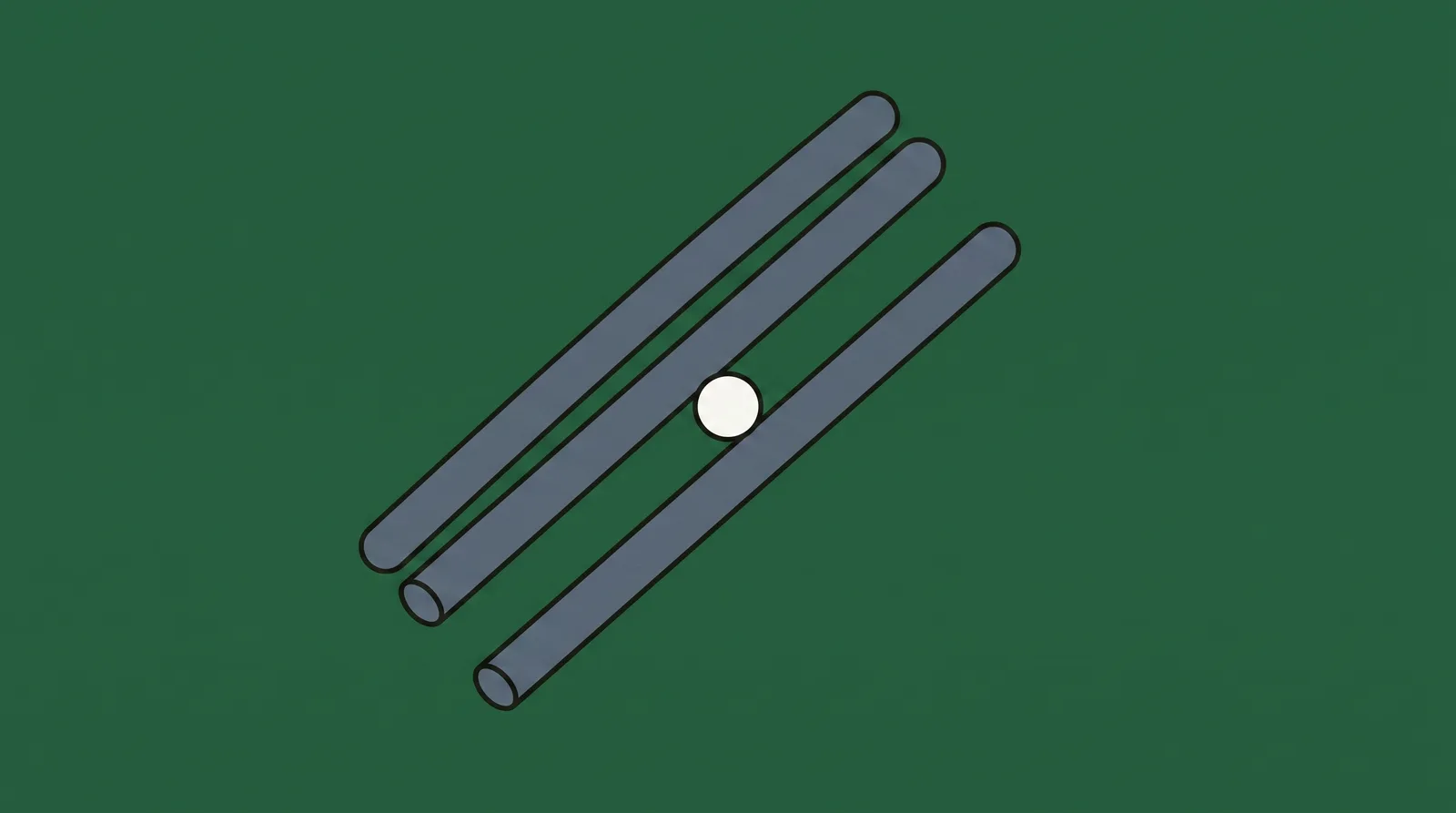
Two rods, no moving parts, and a price that runs from about a tenner to about fifty five pounds for what is visibly the same object. That spread is not explained by performance, because nothing here performs. It is explained by length, material, what happens at the end that goes into the ground, and how many rods are actually in the box. Here is what each maker publishes, and the one number none of them do.
The four, compared
All four are plain rods rather than framed aiming devices, which is the right format for almost everyone: they fit a bag, they set up in three seconds, and they cost less than a lesson. What separates them is entirely construction.
| Pick | Best for | Rods | Length | Material | Ground end | Price |
|---|---|---|---|---|---|---|
| SKLZ Pro Rods | The most complete pack, and the only point-and-cap rod here | 3 | 48 in | Fibreglass | Pointed one end, rubber safety cap the other | Around £15 to £20 |
| Callaway Alignment Stix | Folding down to something a bag pocket will take | 2 | 48 in | Steel | Not published | Around £10 to £20 |
| Longridge Tour Rod Pro Alignment Sticks | Three rods and a tube, from a brand British shops actually stock | 3, two at 44 in and one at 22 in | 44 in, and a 22 in third rod | PVC | Not published | Around £15 to £18 |
| VESSEL Carbon Fibre Alignment Stick Set | A well made object, at three times the money | 2 | 36 in or 48 in | Carbon fibre | Moulded vinyl caps, both ends | Around £55 |
Two of the four are three rod sets and two are pairs. That matters more than it looks, because the drill that catches the fault everyone else misses needs a third rod across the shoulders, and one of the two three-rod sets here gives you a 22 inch stub for that third rod rather than a full one.
What actually differs, once you strip the branding
There are exactly five variables in this product, and most of them are printed inconsistently.
Length. Forty eight inches is the working standard, and there is a reason for it. A rod along the toe line has to be longer than your stance and still visible in peripheral vision at address. Three of the four sets here offer 48 inches; Longridge give you 44, and VESSEL sell 36 and 48 as separate options. Thirty six inches clears a driver head in a bag more neatly and gives you less rod to sight along, which is a real trade rather than a marketing one.
Diameter. This is the number that decides whether a rod feels like a tool or a whip, whether it fits a bag grommet, and whether it is the same object as a garden marker. Nobody in this roundup publishes it. Not the £15 set and not the £55 one.
Material. All four state theirs, and they are four different answers, which makes this the one variable you can genuinely compare. Fibreglass flexes a long way and then splinters. Steel bends a long way and stays bent. Carbon fibre barely flexes at all and then fails suddenly. PVC is a soft plastic rather than a composite, and it is the one you would expect to hold a bend rather than spring back.
The ground end. A pointed end pushes into turf so the rod stands up as a target beyond the ball. A capped end protects your bag and your shins. The best answer is one of each on the same rod, which is what one set here does. One other describes its ends and caps both of them, and two say nothing at all.
What is in the box. SKLZ and Longridge give you three rods, Callaway and VESSEL give you two. Longridge and Callaway both include a tube; VESSEL sell the cover separately. Longridge's third rod is 22 inches, which is the detail the "3 pack" on the front of the packet does not tell you.
SKLZ Pro Rods: three rods, one piece, ends described
The SKLZ Pro Rods are three 48 inch fibreglass rods, pointed at one end to push into the ground and capped in rubber at the other, with nine rings marked along each rod for ball position reference. They do not fold and there is no joint anywhere in the length.
That last point is the quiet argument for them. A rod's only job is to be straight, and every joint is a place where straight becomes approximately straight. Three full length one piece rods also cover every station a golfer needs at once: one on the target line, one along the toes, and one to lay across the shoulders, which is the check that catches the fault the other two miss.
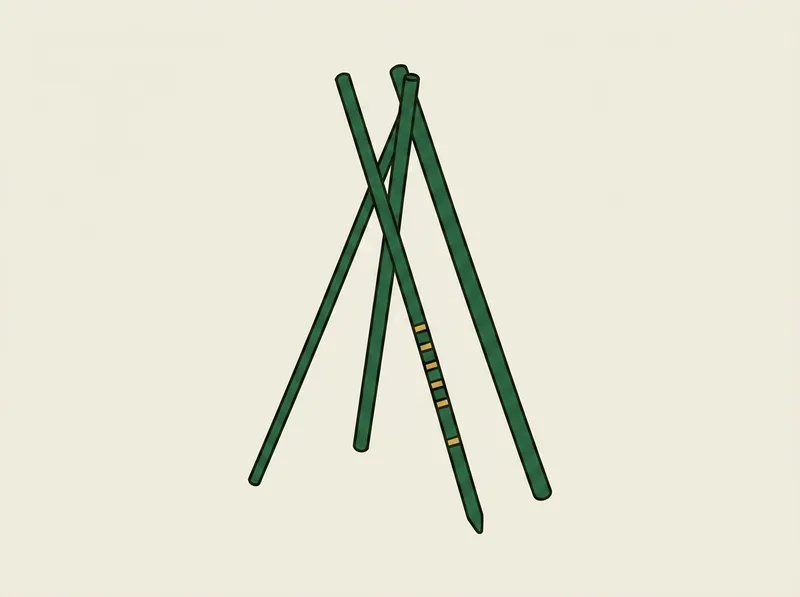 Around £15 to £20
SKLZ Pro Rods
- Rods
- 3
- Length
- 48 in
- Material
- Fibreglass
- Ground end
- Pointed one end, rubber safety cap the other
- Rings
- 9 per rod
- Sections
- One piece, no joint
- Diameter
- Not published by SKLZ
- Warranty
- 1 year
- Three full length rods, which is what the shoulder check and the gate drills actually need.
- The only set here with a point at one end and a cap at the other, which is the arrangement that does both jobs.
- One piece rods, so there is no joint in the middle of the thing you are using as a straight line.
- No published diameter, which is the one number that would tell you how it compares to a garden marker.
- Forty eight inches of rigid rod does not fold, so it lives down the side of a bag rather than in a pocket.
- The nine rings are useful for ball position and useless for anything else, and they are not a reason to pay more.
VerdictThe default buy for almost everybody, because three one piece 48 inch rods with a described ground end is the whole job done properly. Anyone who needs the sticks to disappear into a bag pocket should take the folding set instead and accept the joint.
The nine rings are the part not to pay extra for. They are a ball position reference and they work, but a tee pushed into the ground does the same thing and so does looking at your own feet. Golf ball position covers what the reference should actually be for each club, which is more useful than any marking on a rod.
Callaway Alignment Stix: the pair that fit in a pocket
The Callaway Alignment Stix are two 48 inch shock corded steel rods that fold in half and store in a 19 inch plastic tube sized for a bag apparel pocket. Callaway state the material and the tube length and nothing else: no diameter, no end design, no warranty.
Portability is a real feature rather than a marketing one, and this is the only set here that solves it properly. A golfer who has to remember to bring sticks brings them twice. A golfer whose sticks live permanently in a bag pocket puts one down at the start of every range session, which is the habit that actually matters and is worth more than any specification on this page.
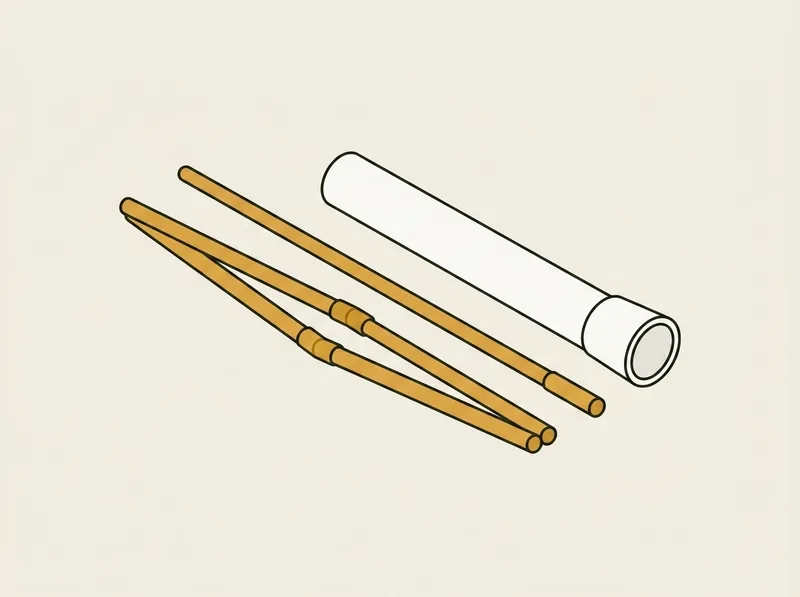 Around £10 to £20
Callaway Alignment Stix
- Rods
- 2
- Length
- 48 in
- Material
- Steel
- Ground end
- Not published
- Sections
- Shock corded, folds in half
- Packs to
- A 19 in storage tube
- Diameter
- Not published by Callaway
- Warranty
- Not published
- Folds to 19 inches and travels in an apparel pocket, which is the difference between owning sticks and carrying them.
- Steel bends rather than splintering, so a trodden on rod is bent instead of broken and sharp.
- The cheapest way onto a pair of full 48 inch rods, and the published tube length is a genuinely useful number.
- Two rods, so the shoulder check needs a spare club or a third rod bought separately.
- Steel that has been bent stays bent, and a rod that is no longer straight is worse than no rod.
- The shock cord joint sits in the middle of the length you are sighting along.
VerdictThe right buy for a golfer who will only use sticks if they are already in the bag, which is a larger group than anyone admits. The trade is a joint at the midpoint and a metal that takes a permanent set the first time somebody stands on it.
Two honest caveats. Steel takes a permanent set: stand on a fibreglass rod and it springs back, stand on a steel one and you now own a curved rod, which is worse than owning nothing because it lies to you. And a two rod pack means the shoulder check needs a club laid across the chest instead, which works fine and is worth knowing before you assume the pack is complete.
Longridge Tour Rod Pro: three rods, a tube, and a catch in the lengths
The Longridge Tour Rod Pro Alignment Sticks are three PVC rods in a PVC storage tube, with a training booklet. The lid of the tube is itself an alignment guide, which is a genuinely neat use of packaging most brands throw away.
The catch is in the lengths, and it is the reason to read the specification rather than the "3 Pcs" on the front. Two of the rods are 44 inches and the third is 22. Forty four inches is four short of the standard, which you will not notice on the target line and will notice along your toes if you have a wide stance. Twenty two inches is a different problem: it is too short to lay across the front of the shoulders, which is the job the third rod in a three rod set exists to do. Use it for ball position and treat this as a two rod set with a useful extra.
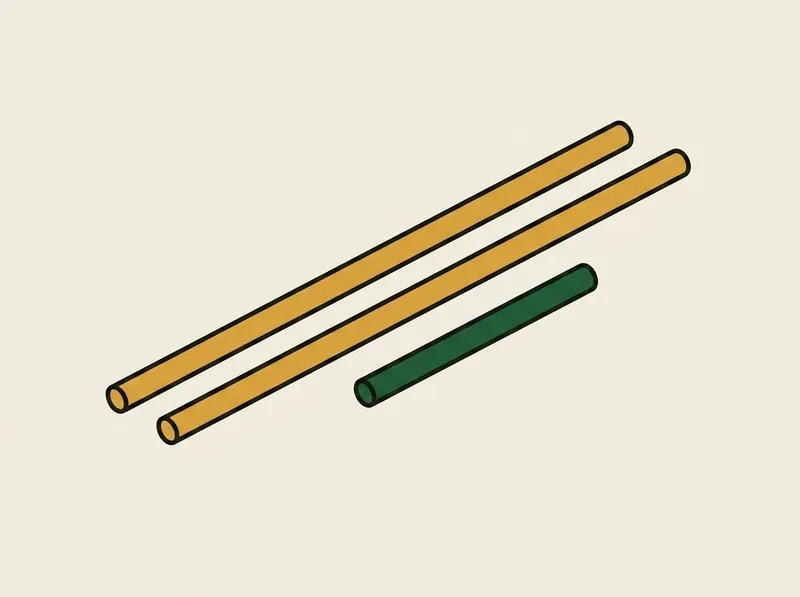 Around £15 to £18
Longridge Tour Rod Pro Alignment Sticks
- Rods
- 3, two at 44 in and one at 22 in
- Length
- 44 in, and a 22 in third rod
- Material
- PVC
- Ground end
- Not published
- Sections
- Not published
- Case
- PVC tube, and the lid doubles as an alignment guide
- Diameter
- Not published by Longridge
- Warranty
- Not published
- Weight
- 0.5 kg for the set
- Three rods and a storage tube for the price of two sleeves of balls, from a brand carried by most British golf shops.
- The tube lid is an alignment guide in its own right, so the packaging is part of the product rather than landfill.
- A training booklet is included, which at this money is more than the sets either side of it give you.
- The third rod is 22 inches, so it will not do the shoulder check the third rod is supposed to be for.
- Forty four inches rather than the 48 everything else here uses, which is four inches less reference along the toes.
- Longridge run no website of their own, so every figure here comes from British retailers rather than a maker's page.
VerdictThe sensible set for a golfer who wants three rods, a tube and change from twenty pounds, and it is the easiest of the four to walk into a British shop and buy. Read the rod lengths before you order, though: two of the three are shorter than the standard and the third is a stub.
What it does have is availability, which on this page is not a small thing. Longridge is carried by most British golf retailers and the set sits between fifteen and eighteen pounds at all of them. There is no maker's website at all behind that, though, so every number above comes from a shop describing somebody else's product, and the material is the only construction detail anyone publishes.
At this price the missing specification matters less than it would at four times the money, and the pointed rod standing upright a few yards beyond the ball is the single best aiming reference in golf, better than the intermediate mark and far better than the flag. That drill and several others are in golf drills worth running.
VESSEL Carbon Fibre set: paying for the object
Carbon fibre, two rods to a set, moulded vinyl caps on both ends, a one year warranty, a cover sold separately, and a choice of 36 or 48 inches. VESSEL run their own British shop in sterling, so this is one of the few sets in the category with a maker's page a UK buyer can actually read, though stock by colour comes and goes.
Vessel are explicit about why the short option exists: it is sized so the rods sit below a driver head in the bag. That is a genuine irritation solved, and it is the only argument here that is about golf rather than about materials. It is also a trade, and the trade goes the wrong way for the main job, so if you are buying these, buy the 48 inch version. A rod along the toe line wants to be longer than your stance and still in view when you look down. Twelve inches shorter is twelve inches less reference exactly where reference is the point.
 Around £55
VESSEL Carbon Fibre Alignment Stick Set
- Rods
- 2
- Length
- 36 in or 48 in
- Material
- Carbon fibre
- Ground end
- Moulded vinyl caps, both ends
- Sections
- Not published
- Cover
- Sold separately
- Diameter
- Not published by VESSEL
- Warranty
- 1 year
- Carbon fibre is stiffer than fibreglass at the same diameter, so even the 36 inch rod stays straight in the hand.
- The 36 inch option is sized deliberately to sit below a driver head in the bag, which is a real annoyance the longer sets ignore.
- VESSEL run their own British shop in sterling, and both ends of each rod are described rather than left blank.
- Three times the price of any other set here for two rods, when the cheapest set on this page gives you three.
- Capped at both ends, so neither end pushes into turf and it cannot stand up as a target beyond the ball.
- Carbon fibre does not bend before it fails. It holds, then it goes, and it goes into splinters.
VerdictWorth the money only to a golfer who values the object and already owns a working pair, because nothing about the aiming is better. Buy the 48 inch version rather than the 36 if you buy it at all: a rod along the toes wants to be longer than your stance, not shorter, and the short one exists to solve a bag problem rather than an aiming one.
The caps are the specification nobody thinks about until the first time they want a target. Both ends are capped, which protects your bag and your shins and means neither end pushes into turf. A rod standing upright beyond the ball is one of the two things sticks are for, and this is the only set here that cannot do it.
Carbon fibre is stiffer than fibreglass at the same diameter, which is a real property and does make a short rod feel solid. It also fails differently. Fibreglass gives warning and splits along its length. Carbon holds until it does not, and then it produces splinters. Neither is a safety crisis with a rod lying flat on grass, but it is worth knowing which one you are treading on.
The driveway marker question
This deserves a straight answer rather than a paragraph of hedging, because it is the first thing a sensible person asks.
Driveway and snow markers are fibreglass rods, commonly sold in the same 48 inch length, in packs of ten or more, for a small fraction of the price per rod. They stake into the ground, they are straight, and they are visible. For laying on the ground to check aim, for a gate drill, and for standing up as a target beyond the ball, they do the job.
The differences people cite are diameter, finish and the ground end. A golf specific rod is generally the thicker of the two, which is what makes it sit in a bag grommet and feel less whippy in the hand, and it usually arrives with a cap on one end. Whether that is worth several times the price per rod is a judgement, not a fact.
What two sticks are actually for
Sticks are worth owning because aim decays silently and nothing about it feels wrong when it changes. They are not worth owning if they sit in the bag.
| The setup | What you put down | What it checks |
|---|---|---|
| The rails | One rod on the target line outside the ball, one along the toes | Feet and clubface at once |
| The shoulder check | A third rod, or a club, laid across the front of the shoulders | The alignment that actually steers the swing |
| The gate | Two rods narrowing towards the ball | Path and strike location |
| The target | One rod pushed upright into the ground beyond the ball | Start direction, without a distant target |
| Ball position | One rod perpendicular to the toe line | Where the ball sits between the feet |
Shoulders are where alignment actually breaks and feet are where everybody looks, which is the case for buying three full length rods rather than two. Note which sets can do the last row and which cannot: a rod needs a point or a bare end to stand up, and a set capped at both ends cannot be a target. The full method, including why correct alignment looks wrong from beside the ball, is in golf alignment.
The rule that costs two strokes
This one is broken casually at club level every weekend, usually by a golfer who thinks picking the object back up makes it fine.
The practical version: rods go in the bag before the first tee in a competition and stay there. Warming up with them on the range beforehand is fine, and so is a casual round where nobody is returning a card, although the habit is the thing worth protecting.
What to spend
The useful range here is narrower than in any other gear category on this site, because the ceiling is set by physics rather than by engineering. In Britain three of these four sets sit inside a ten pound spread of each other.
- A bundle of fibreglass driveway or snow markers from a hardware shop: straight, staked, and cheaper per rod than anything sold as golf equipment.
- £10 to £20: a golf set of two or three rods with a tube. This is where almost every golfer should land, and it covers three of the four here.
- £20 to £30: a one piece three pack with a described ground end, bought at full price rather than on offer.
- £55 and up: materials and finish. Nothing about the aiming improves.
The money genuinely worth spending in this category is on what the sticks organise rather than on the sticks. Two rods and a plan beat four rods and none, and the training aids that get used sets out where the next hundred pounds should go if the setup is already stable.
Sticks also belong in the pre shot process rather than only in practice, in the sense that the routine they teach has to survive without them. A pre shot routine is where that transfer happens, and it is the reason two minutes of rods at the start of a session outperforms half an hour of them at the end.
Key takeaways
- Nothing in this category aims better than anything else in it. You are buying durability, portability and rod count.
- SKLZ Pro Rods are the default: three one piece 48 inch fibreglass rods, pointed one end and capped the other.
- Callaway Alignment Stix fold to a 19 inch tube, which is the only set here that solves the problem of remembering to bring them.
- The Longridge set is three rods and a tube for under twenty pounds, but two rods are 44 inches and the third is a 22 inch stub that will not do a shoulder check.
- The VESSEL set is a pair, sold in 36 and 48 inch lengths, and capped at both ends, so it cannot stand up as a target beyond the ball.
- Not one of these four publishes a rod diameter, which is the specification that would justify the premium over a garden marker.
- All four state a material, and they are four different ones. Fibreglass splinters, steel takes a permanent bend, carbon fibre fails suddenly, PVC is the soft plastic of the group.
- Every joint is a place where straight becomes approximately straight, and one of these four folds at the midpoint.
- Buy three full length rods rather than two, because the shoulder check is the one that finds the fault the feet hide.
- Placing an object to help with aim during a round is a two stroke penalty under Rule 10.2b(3), even if you pick it up again.
Common questions
What are the best golf alignment sticks?
SKLZ Pro Rods for most golfers, because you get three one piece 48 inch fibreglass rods with a pointed end and a rubber cap, which is the whole job done properly. Callaway Alignment Stix are the pick if the sticks have to fit in a bag pocket, and the Longridge Tour Rod Pro set is the easiest to buy on a British high street.
Are expensive alignment sticks worth it?
Not for the aiming, which is identical across every rod that is straight. The money buys durability, a case, a folding design or a nicer material. Once you are past about £20 you are paying for the object rather than for anything that changes where the ball goes.
Can I use driveway markers as golf alignment sticks?
Yes, for laying on the ground, for gate drills and for standing up as a target. They are fibreglass rods in the same common 48 inch length at a fraction of the price per rod. Golf specific sticks are generally thicker and usually have a capped end, although not one of the sets here publishes a diameter to prove it.
How long should golf alignment sticks be?
Forty eight inches is the working standard and the length to buy. A rod along your toes needs to be longer than your stance and still visible when you glance down, so a 36 inch rod gives you less reference exactly where the reference matters, and a 44 inch one gives you slightly less again.
How many alignment sticks do I need?
Three is the useful number and two is the common one. Two cover the target line and the toe line. The third goes across the front of the shoulders, which is where alignment actually breaks and where nobody looks, and it has to be a full length rod to do that job. A club laid across the chest substitutes perfectly well if you only own two.
What are golf alignment sticks made of?
Fibreglass, steel, carbon fibre and PVC, and this page has one of each. Fibreglass flexes and eventually splinters, steel bends and stays bent, carbon fibre is stiff until it snaps, and PVC is a soft plastic that will hold a bend. It is the one specification every maker in the category does publish, which makes it the one you can genuinely compare.
Can I use alignment sticks during a round of golf?
No. Rule 10.2b(3) makes placing an object to help with aiming or with taking a stance a two stroke penalty, and picking it up before the stroke does not undo it because the breach happens when it is placed. Rule 4.3a(6) separately bans using a training aid during a round and names alignment rods.
Do alignment sticks actually improve your golf?
They improve your aim, which is a setup fault most golfers carry without knowing. They cannot improve your swing directly. What they do is stop you building a compensation around a stance that has quietly drifted, which is the reason aim work often feels like it is making things worse for a fortnight.
Are folding alignment sticks any good?
They solve the real problem, which is that sticks left at home do nothing. The compromise is a joint in the middle of the length you are sighting along, and joints work loose. Check a folding rod against a straight edge occasionally and retire it when it stops being straight.
How do I stop losing alignment sticks?
Buy a set with a tube or a bright colour, and keep them in the same pocket every time rather than in the boot of the car. The cheapest fix is buying three rods instead of two, so losing one is an inconvenience rather than the end of the set.
How we put this together
- Published manufacturer specifications for each set, taken from the maker's own listing rather than a retailer's summary or a review site. Where a brand runs no website of its own, that is said plainly and the figures come from British retailers.
- Where a maker publishes no figure, this page records it as Not published rather than repeating a number found elsewhere. Not one of these four states a rod diameter.
- The four things that genuinely separate one set from another: how many rods you get, how long they are, what they are made of, and what happens at the end that goes into the ground.
- Whether the rods are one piece or jointed, because a joint in the middle of a rod you lay on the ground is both a straightness question and a failure point.
- Prices read in sterling at British sellers, and whether each set can be bought here at all, which is the specification most roundups of this category skip.
- Shot Scope's published amateur approach data, which is what decides how much an aim error is actually costing and where it shows up on a card.
- The Rules of Golf position on placing an object to help with aim, which is a two stroke penalty and is broken casually every weekend.
On this page
- The four, compared
- What actually differs, once you strip the branding
- SKLZ Pro Rods: three rods, one piece, ends described
- Callaway Alignment Stix: the pair that fit in a pocket
- Longridge Tour Rod Pro: three rods, a tube, and a catch in the lengths
- VESSEL Carbon Fibre set: paying for the object
- The driveway marker question
- What two sticks are actually for
- The rule that costs two strokes
- What to spend
- How we put this together
Tom Ashworth
Tom Ashworth is a PGA Professional who has taught golf since 2012, working mainly with beginners and mid-handicappers at club level in Surrey. He reviews the instruction guides on Learn Golf for technical accuracy before they publish.
Most of his teaching is with players in their first three years of the game, and most arrive having been told too much: six swing thoughts collected from videos, half of them contradicting each other. His approach is to check the grip and the alignment before touching the swing, on the basis that most bad ball flight is decided at address.