Most range sessions are a bucket, a driver and forty minutes of hoping. The strike improves inside the session, which feels like progress, and then none of it appears on the course, which feels unfair. It is not unfair. A session with no structure trains a skill the golf course never asks for, and the fix costs nothing but the order you do things in.
If you have never been to a range before, the practical side of it, from tokens and mats to which bay to pick, is covered in how to use a driving range. This page assumes you already go and want the session to be worth something.
Why the default session fails
Hitting the same club at the same target repeatedly is called blocked practice, and it does exactly one thing well: it lets you feel a change. That is genuinely useful, and it is also where most golfers stop.
The problem is that the course never gives you the same shot twice in a row. It gives you one 7 iron, then a wedge from a downhill lie eleven minutes later, then a driver on a hole you are slightly nervous about. A session made entirely of repetition prepares you for none of that, and the strike that looked so good on ball forty was partly a product of having just hit thirty-nine identical ones.
Warm up first, and not with the driver
The first ten balls are not practice. They are the price of admission, and hitting them with a driver is the most common way to start a session badly.
Bodies matter here more than golfers like to admit. The Titleist Performance Institute's summary of the science behind a golf warm up reports that static stretching reduces strength immediately by up to 28 percent, and still by around 9 percent an hour later, while dynamic movements increased power output by up to 14 percent across the studies reviewed. Their practical recommendation for amateurs is about ten minutes of movement preparation rather than holding stretches.
So move before you swing, and then start small. Ten balls with a sand wedge at half length, hit at a target you have actually chosen, does more for the rest of the session than any number of full drivers. The full pre-round version, which is a different job from a practice warm up, sits in how to warm up before a round.
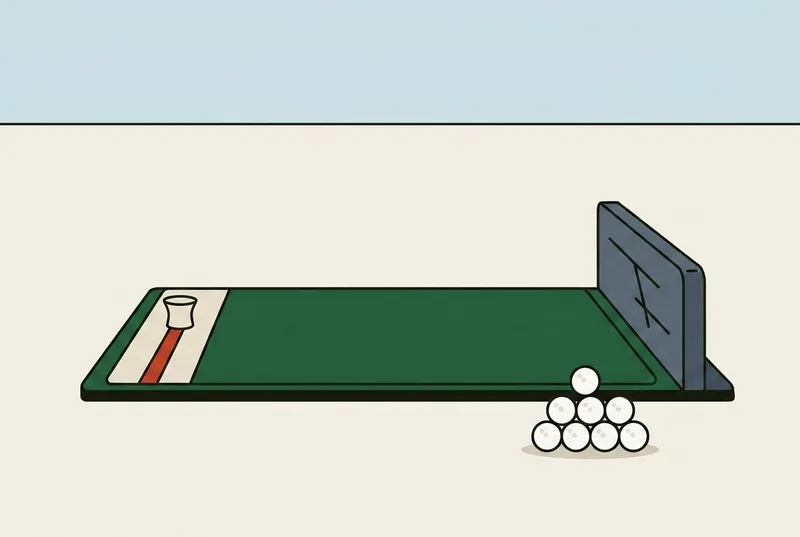
The shape of a sixty ball session
The four blocks below have a deliberate order: warm up, then change something, then test whether the change survives interference, then rehearse producing it once under a routine. Reversing any two of those wastes the session.
| Block | Balls | Roughly | What it is for |
|---|---|---|---|
| Warm up | 10 | 10 min | Wedges at half length, working up. No swing thoughts |
| Block work | 20 | 15 min | One club, one target, one change. This is where a drill lives |
| Random work | 20 | 15 min | Different club and target on every ball, full routine on half of them |
| Play a hole | 10 | 10 min | Imaginary holes, one ball each, no do-overs |
Sixty balls in about fifty minutes is a slower rate than most golfers hit, and that is the point. If you are getting through a bucket in twenty minutes, you are rehearsing a golf swing rather than practising golf.
A shorter session scales down cleanly. Thirty balls becomes five, ten, ten and five. Do not remove the last block to save time, because it is the one that connects everything else to a scorecard.
Block first, then random
This is the part of practice design with real research behind it, and it is worth stating both what the evidence says and where it is argued over.
Blocked practice means repeating the same shot. Random practice means changing club, target or shot on every ball. TPI's article on maximising on-course performance cites a 1994 study on baseball players' throwing accuracy in which retention from random practice was roughly twice as high as retention from blocked practice, and describes a third category, transfer training, which means rehearsing under something like competitive conditions.
| Blocked | Random | |
|---|---|---|
| What it looks like | Twenty 7 irons at one flag | Wedge, 5 iron, driver, wedge, all at different targets |
| Feels | Productive, smooth, improving | Awkward, scrappy, worse |
| Good for | Learning a new movement or position | Retaining it and producing it on demand |
| Poor at | Retention and transfer | Building a change in the first place |
| Where it belongs | The 20 balls after the warm up | Everything after that |
The practical version needs no theory at all. After the block of twenty, never hit the same shot twice in a row for the rest of the session. Change club, change target, or change both.
Know what your clubs actually do
The single most useful thing a range visit produces is not a better swing, it is an accurate set of numbers, and most golfers are carrying numbers that are quietly wrong.
TrackMan's guide to knowing your carry numbers puts the typical overestimate at 10 to 15 yards per club, and separates the two figures that matter: carry, which is how far the ball flies, and total, which includes the roll. Course decisions are made on carry, because every hazard on a golf course is somewhere the ball lands rather than somewhere it stops.
Range balls make this harder rather than impossible. They are older, cheaper and often limited flight, so they fly shorter than the ball you play, and the gap varies by range. Two rules keep the numbers honest: compare your clubs against each other rather than against a published chart, and check a handful of real carry numbers with a launch monitor once a season if you can.
Write the numbers down and keep them in the bag. What to do with them afterwards is in golf club distance chart, and the more precise version for anything inside 110 yards is in wedge distance control.
The last ten balls are the ones that count
Finish every session playing golf rather than hitting balls. Pick a hole you know, hit the tee shot you would hit on it, then hit the approach the result leaves you. One ball each, no second attempts, full routine including the walk in behind the ball.
Ten balls of this is worth more than the previous fifty for one reason: it is the only part of the session that rehearses committing to a shot with no chance to correct it. It also exposes the gap between the swing you own and the shot you were planning to hit, which is where most on-course decisions go wrong. The framework for making those decisions is in golf course management, and the routine that gets you into each shot is in pre shot routine.
How often, and what should change
Two sessions a week beats one long one, and one a week is enough to hold a change in place. The table below is what a realistic block of work looks like for a golfer who plays a couple of times a month.
| Weeks | What the session focuses on | What should be different by the end |
|---|---|---|
| 1 to 2 | One change, mostly blocked, 20 balls of it a session | The change happens when you think about it |
| 3 to 4 | Same change, half blocked and half random | It happens on the first ball of a random sequence |
| 5 to 6 | Mostly random, plus the ten hole balls | It survives a club change and a routine |
| 7 to 8 | Maintenance, one block of ten balls only | It happens without being thought about |
Six to eight weeks is the honest timescale for a swing change to stop needing attention, and it is longer for anything involving sequence. Nothing here promises a handicap or a yardage, because neither is in the gift of a practice routine.
If you cannot get to a range often, the skills that survive being practised indoors are covered in how to practise golf at home, and the drills to run in either place are collected in golf drills. The wider question of how to plan a practice week around limited time is in how to practise golf effectively.
Key takeaways
- Split the bucket into warm up, block work, random work, and playing imaginary holes.
- The first ten balls are warm up, not practice, and they belong to a wedge rather than a driver.
- Dynamic movement before a session helps and static stretching measurably reduces strength.
- Blocked repetition builds a change. Random practice is what makes it survive.
- After the first twenty balls, never hit the same shot twice in a row.
- Sixty balls in fifty minutes. A bucket gone in twenty minutes is rehearsal, not practice.
- Course decisions run on carry distance, and most golfers overestimate theirs by 10 to 15 yards.
- Finish on a shot played with a full routine rather than on a shot that finally came good.
- Give a change six to eight weeks before deciding whether it worked.
Common questions
How many balls should I hit at the driving range?
Around sixty in fifty minutes is a good session for most golfers. Quality falls off sharply once the swing gets tired, and a hundred balls hit quickly usually means the last forty were rehearsing fatigue rather than technique.
What should I practise at the driving range?
One thing at a time, and not the shot you hit worst. Work on the shot that costs you most, which for most golfers is a mid iron or a wedge rather than a driver. Then spend the second half of the session changing club and target on every ball.
Should I hit driver at the range?
Some of the time, and never first. Ten to fifteen driver swings inside a session is plenty, and hitting forty is how a good iron swing gets loose. Warm up with wedges, work in the middle of the bag, and use the driver inside the random block and the last ten balls.
Is it better to practise at the range or play a round?
They do different jobs. A round tests decisions, nerves and recovery. A range session is the only place you can repeat a shot enough to change it. A golfer who only plays stops improving and a golfer who only practises never learns to score.
What is block practice versus random practice?
Blocked practice repeats the same shot; random practice changes club or target on every ball. Blocked practice makes a change easier to feel, random practice makes it more likely to survive to next week. Use blocked practice early in a session and random practice afterwards.
Why do I hit it well at the range and badly on the course?
Usually because the range session was entirely blocked and the course is entirely random, and partly because the range has no consequence attached to a shot. Adding the last ten balls of imaginary holes with a full routine closes most of that gap.
Are range balls shorter than normal golf balls?
Generally yes, and by a variable amount depending on the range and the age of the stock. Use the range to compare your clubs against each other rather than to set absolute yardages, and verify real carry numbers with a launch monitor when you get the chance.
How often should I go to the driving range?
Twice a week is the point where changes start to hold, once a week maintains what you have, and once a month is a social visit rather than practice. Frequency matters more than session length for anything you are trying to change.
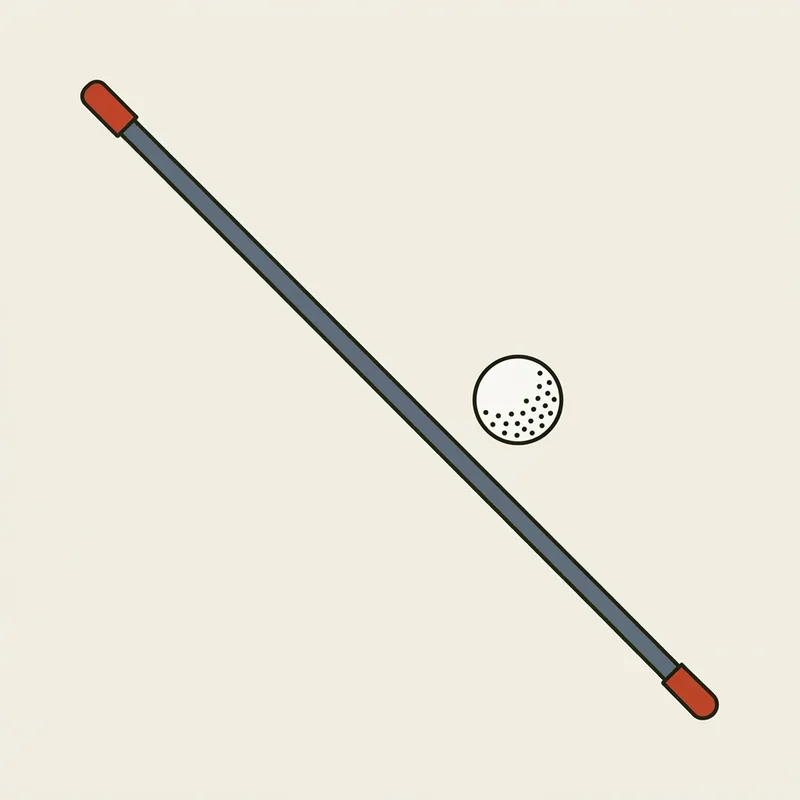
Should I use alignment sticks at the range?
For any session working on strike, path or aim, yes. Aim drifts silently, and a golfer working on a swing change while unknowingly aiming twenty yards right will produce compensations rather than progress. One stick on the ground along your toes covers most of it.
How long before range practice shows up in my score?
Six to eight weeks of consistent work on one change is the realistic timescale, and it usually shows as fewer poor shots before it shows as better ones. Anything faster is normally a setup fix rather than a swing change.
Should I take a lesson before starting a practice block?
If you are unsure what your fault actually is, yes. The most expensive thing in golf practice is six weeks of committed work aimed at the wrong thing, and one diagnostic lesson costs far less than that.

Tom Ashworth
Tom Ashworth is a PGA Professional who has taught golf since 2012, working mainly with beginners and mid-handicappers at club level in Surrey. He reviews the instruction guides on Learn Golf for technical accuracy before they publish.
Most of his teaching is with players in their first three years of the game, and most arrive having been told too much: six swing thoughts collected from videos, half of them contradicting each other. His approach is to check the grip and the alignment before touching the swing, on the basis that most bad ball flight is decided at address.