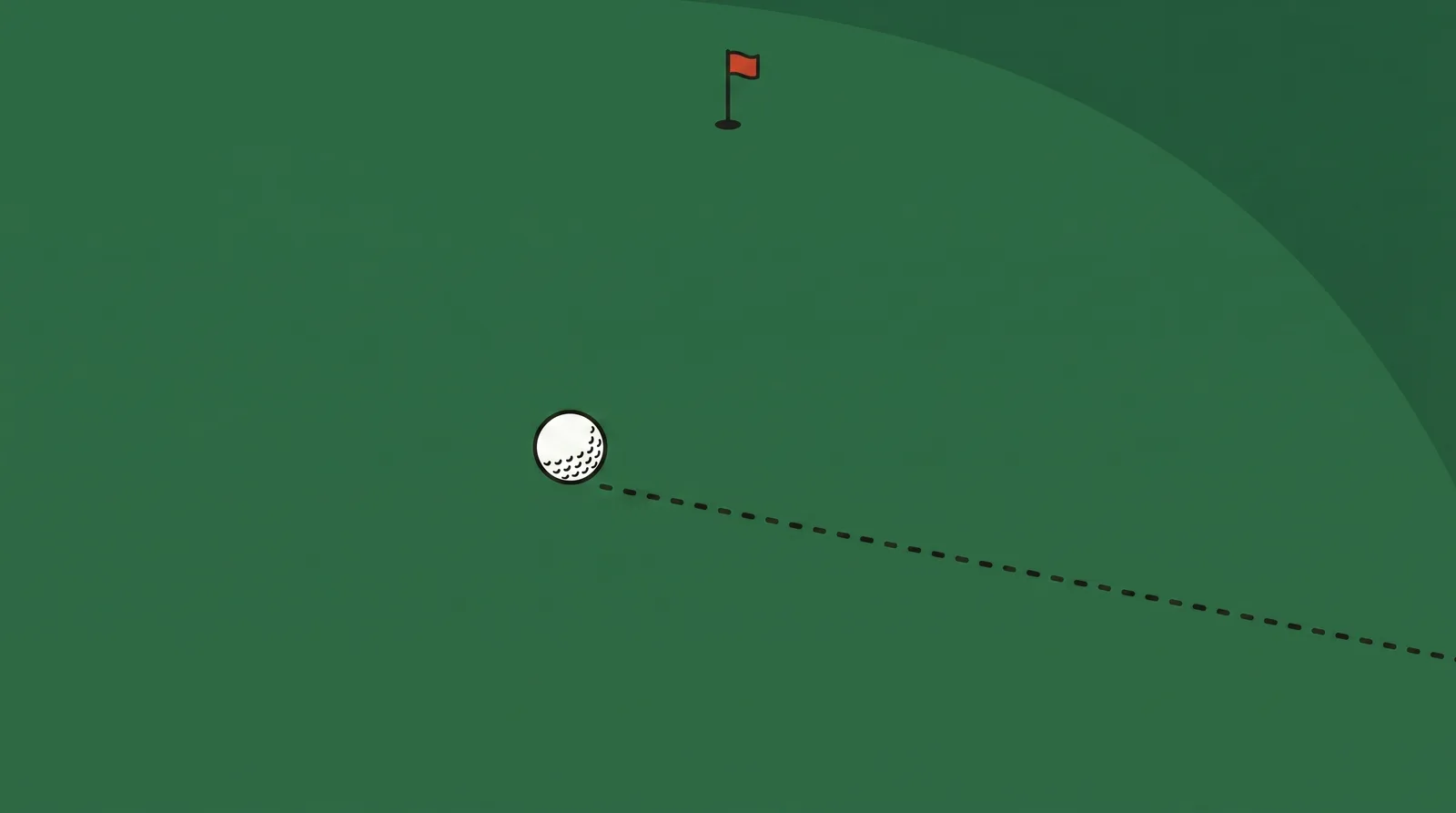
One swing feels identical to the last forty and the ball leaves sideways, low and fast, and finishes somewhere no golf shot should go. Then it happens again, and the club goes back in the bag for the rest of the round. This guide covers what a shank physically is, the four routes that lead a club to the hosel, how to work out which one is yours, and what to do about it on the range and mid-round.
A shank is a strike, not a curve
This is the distinction that makes the shank feel so alien, and the one most advice about it gets wrong.
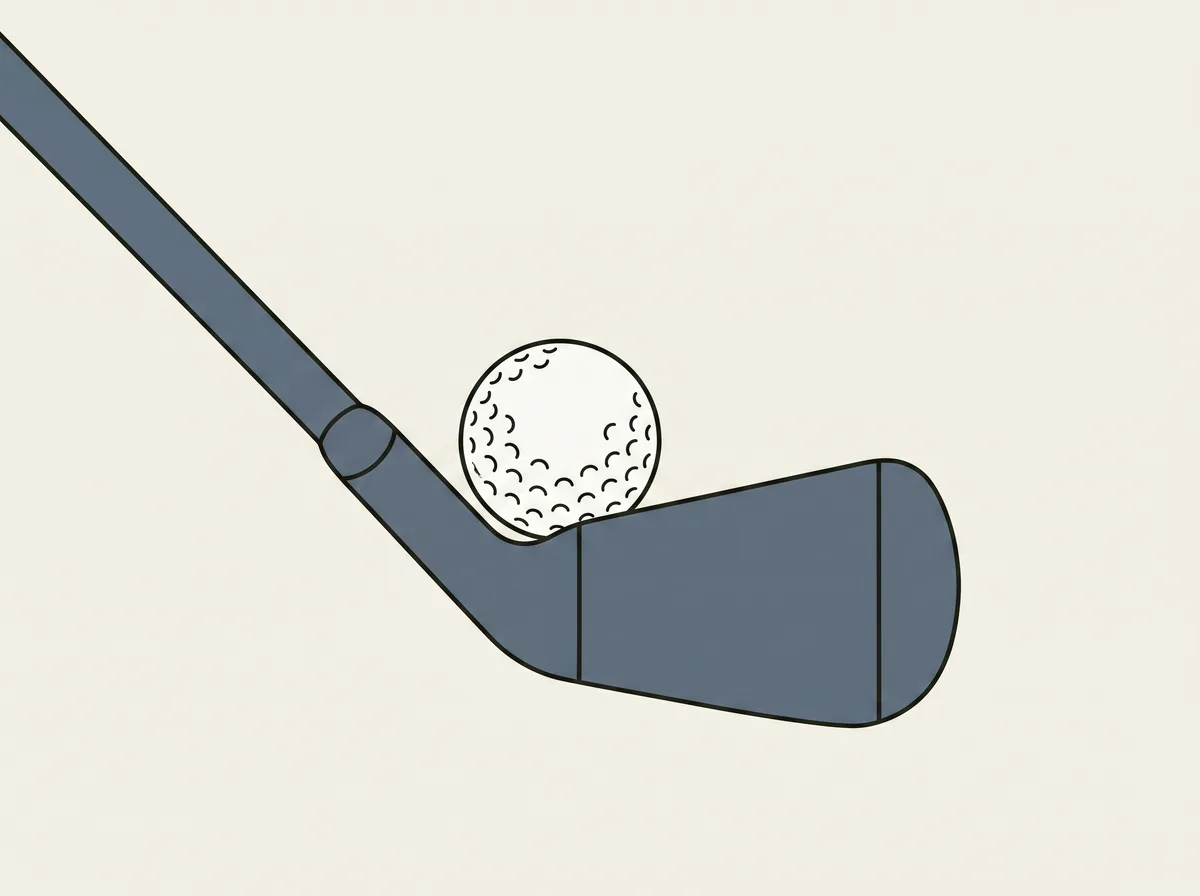
Every other bad shot in golf is a flight problem. The ball is struck on the face and then bends, because the face and the swing path disagree. That is a curve, it builds over the length of the shot, and it is the subject of how to fix a slice. A shank is not that. The ball never touches the face at all.
The hosel is round, so a ball that meets it has no flat surface to launch from and almost no loft acting on it. It leaves immediately, low, with very little backspin, at an angle so sharp it can finish nearly perpendicular to the target. There is no curve because there was never a proper strike. This is why aiming further left, softening your grip, or any of the standard slice fixes do nothing at all.
The four routes to the hosel
Any move that carries the clubhead away from you between address and impact will eventually find the hosel. Four of them account for almost everything.
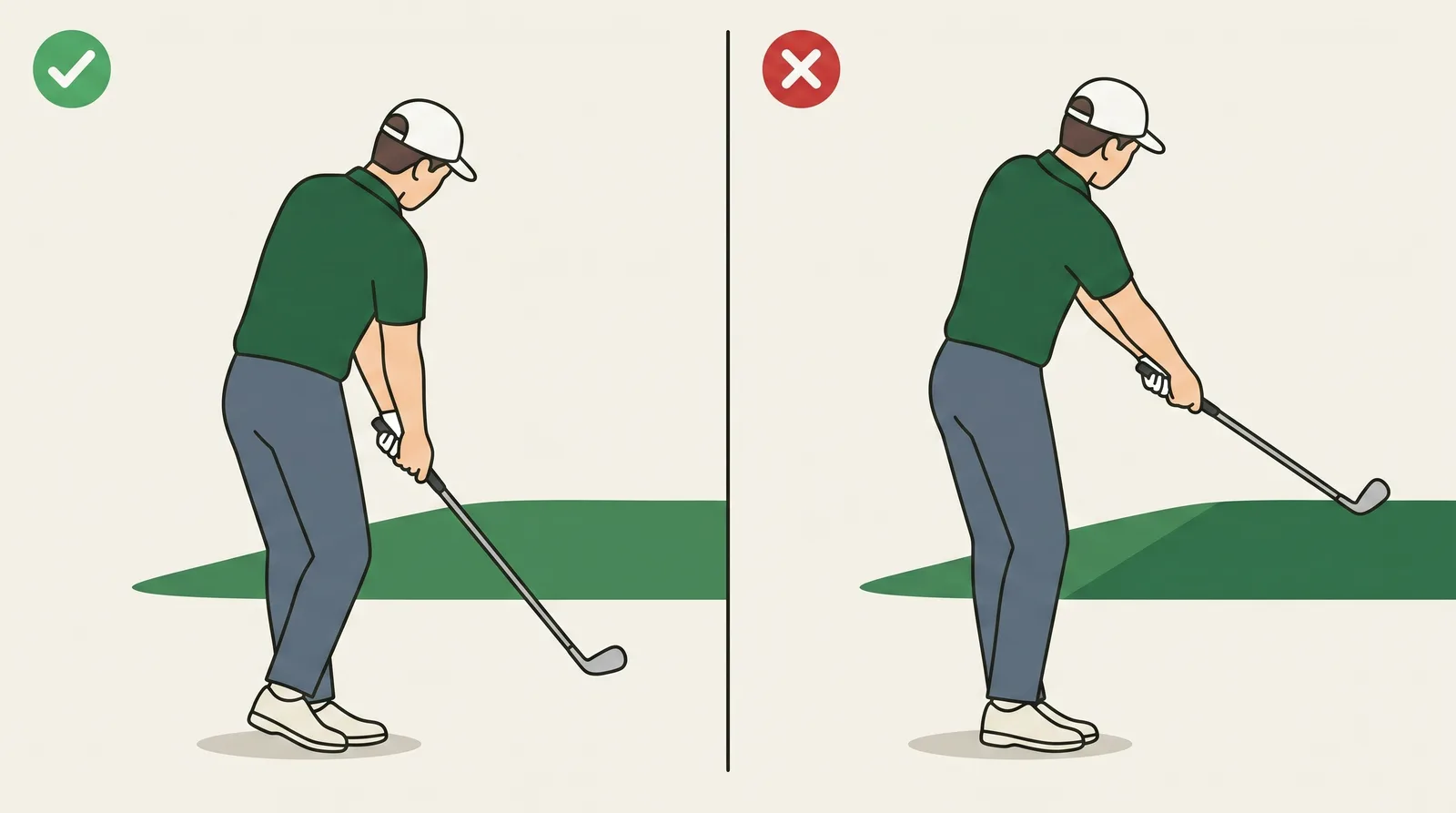
The body moves toward the ball. This is by far the most common, and it has a name. The Titleist Performance Institute's research on early extension, drawn from screening more than 90,000 golfers, found that 67 percent of amateurs move the pelvis toward the ball during the swing, while 99 percent of the tour players they tested do not. TPI lists shanks explicitly among its consequences. When the hips push in, the hands have nowhere to go but out, and the club goes with them.
The hands throw out in transition. If the first move down comes from the shoulders and arms rather than the ground, the club is pushed away from the body before it starts down. TPI calls this move perhaps the most common swing fault among high handicap golfers, and it is treated in full in how to stop coming over the top. It is also why some golfers pull, slice and shank in the same session with no idea the three are connected.
Weight moves toward the toes. If pressure drifts to the balls of your feet during the downswing, your whole upper body tips forward by an inch or two and the club follows. Golfers who shank on a downslope, or off a tight lie they are worried about, are usually falling forward rather than swinging differently.
The club approaches from too far inside. The less common route, and the one that catches better players. A club dropped a long way behind the body has to work back out to reach the ball, and if the face is open on the way through, the hosel leads. This is the shank that turns up in the same round as a hook.
Working out which one is yours
Guessing wastes weeks. Three checks between them will identify the cause in one practice session.
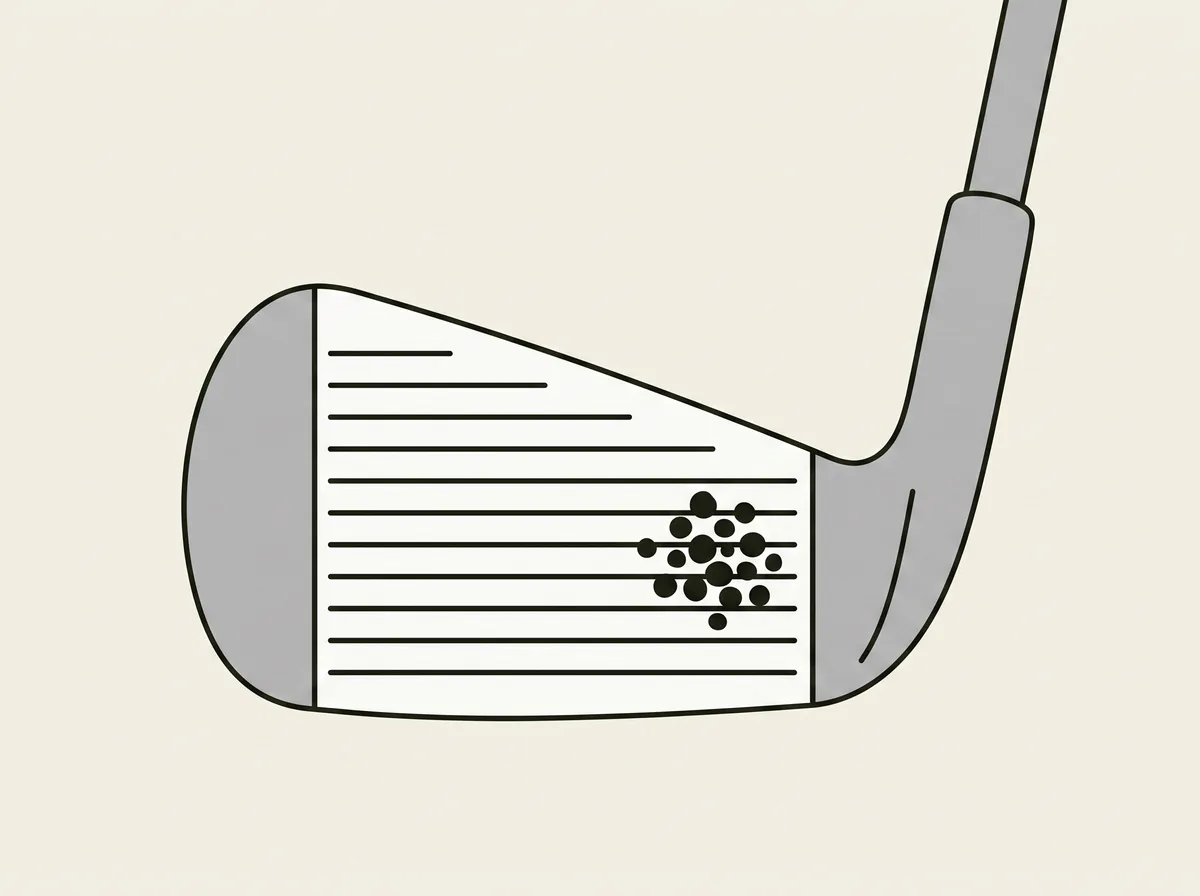
Mark the face. Foot spray, chalk, or a strip of impact tape on the clubface will show you exactly where the ball is meeting it. This is the single most useful thing a golfer who shanks can do, because heel-biased contact appears long before a shank does. If your marks are already gathering at the end of the face nearest the shaft, you are shanking on a delay and the fault is present in every shot you consider fine.
Film yourself from behind, down the target line, with the camera at hip height. Watch your belt line and your backside. If they move toward the ball between the top of the backswing and impact, you have found it. This is easier to see than any club position and it needs no analysis software.
Check your balance. Hit five shots and stop in the finish. If you have to step forward to stay upright, or your weight is on the balls of your feet, the club has been travelling outward all the way down.
The fixes
Work in this order. The setup change costs nothing and sometimes ends it on its own, and there is no point drilling a swing change while standing in a position that guarantees the fault.
Start with where you stand. Set up, let your arms hang from your shoulders without reaching, and let the grip end sit roughly a hand's width from your thighs. Most golfers who shank are standing too close, with the arms already extended and no room to deliver the club. Check this against how far to stand from the golf ball and against your golf posture, since a rounded back at address forces the arms out to reach.
What to do mid-round
None of the above is available to you on the seventh tee. Shanking during a round is a management problem, and the aim is to get to the clubhouse with a score rather than to fix a swing.
Grip down an inch and take one more club. Both shorten the effective club and both slow the swing down, which reduces how far the club can travel outward. Aim to strike the ball off the toe on every shot until the round ends. Make three-quarter swings and keep your chest turning rather than trying to hold the club in.
Above all, do not add a new thought. A shank in a competition is largely a fear problem by the third one, and a golfer holding on to the club to avoid the hosel is a golfer whose hands stop working entirely, which produces something worse. Take less club than the shot needs, swing at eighty percent of the length you would normally use, and accept a shorter shot as the price.
The short game shank
A shank on a full swing and a shank on a chip share a name and very little else, which is why golfers who fix one are surprised when the other survives.
Around the green the club is short, the swing is slow, and early extension is not usually involved. What is involved is the setup. Weight pressed hard forward and toward the toes, the hands shoved well ahead of the ball, a face opened for height, and a ball placed too far back all move the hosel closer to the ball before the club has moved at all. Add a shaft leaning steeply forward and the leading edge lifts while the hosel drops.
The fix is to build the shot properly rather than to swing differently. Ball roughly in the middle, weight balanced between the feet rather than jammed forward, the shaft close to vertical, and the face square unless the shot genuinely needs to be opened. The full setup is in how to chip a golf ball, and the related pattern of heavy contact is covered in how to stop chunking chips.
What to expect
A shank caused by setup can disappear in a session. One caused by early extension takes longer, because it is a movement pattern rather than a position, and often a mobility limitation underneath it. TPI links early extension to poor hip and thoracic mobility, so a golfer who cannot squat without their heels lifting is fighting the swing rather than fixing it.
Give the drills three weeks of three short sessions a week before judging them. Expect the shanks to stop before the strike gets good, and expect a stretch of toe contact and slightly weak shots in between. That middle phase is the reason most golfers abandon the fix a few days before it works.
If contact remains scattered across the whole face once the shanks have gone, the underlying issue is strike quality rather than direction, and the broader diagnosis is in inconsistent ball striking and in what the club should be doing at the impact position.
Key takeaways
- A shank is a hosel strike, not a curve. The ball never touches the face, which is why it has no loft and no bend.
- The single cause is the clubhead being further from you at impact than at address. Everything else is a route to that.
- Early extension is the most common route. TPI screening puts it in 67 percent of amateurs and 1 percent of tour players.
- Throwing the hands out in transition, drifting onto the toes, and an over-inside approach are the other three routes.
- Mark the clubface with spray or tape. Contact creeping toward the end nearest the shaft predicts a shank before it happens.
- Fix where you stand first. Most golfers who shank are too close, reaching, or rounded in the back at address.
- The gate drill, deliberate toe strikes and heel-pressure work address the three common causes in that order.
- Standing further from the ball makes it worse, because reaching pulls the body toward the ball on the way down.
- Mid-round, grip down, take more club, aim to hit the toe and shorten the swing. Do not rebuild anything.
- The short game shank is a setup fault, not a body fault, and it needs the ball forward of where most golfers put it.
Common questions
What causes a shank in golf?
The ball striking the hosel instead of the face, which happens when the clubhead ends up further from your body at impact than it was at address. Most often the hips have pushed toward the ball during the downswing, or the hands have thrown outward from the top, taking the club with them.
Why do I suddenly shank the ball?
Because heel contact has been drifting for a while and finally reached the hosel. Shanks feel sudden and almost never are. Marking the clubface for one session usually shows a cluster of strikes already sitting close to the shaft on shots that felt perfectly acceptable.
Is a shank the same as a slice?
No, and they need opposite work. A slice is a curve produced by the face and the path disagreeing after a proper strike. A shank has no strike on the face at all, no curve, and no loft. If the ball started straight and bent, it was not a shank.
How do I stop shanking immediately?
Grip down an inch, take one more club, and try to hit every shot off the very end of the face. That combination shortens the swing and moves the strike away from the hosel far enough to finish a round. It is a way of getting home, not a fix.
Does standing further from the ball fix a shank?
No, it usually makes it worse. Standing too far away forces you to reach for the ball, and reaching drags the upper body toward it in the downswing, which is the exact move that produces the shank. Set up at a normal distance with the arms hanging.
Why do I shank my wedges but not my long irons?
Wedges are the shortest clubs, so you stand closest to the ball and the margin is smallest. Wedge shots are also usually played with more forward shaft lean and a slightly open face, both of which move the hosel nearer the ball before the swing even starts.
What is early extension and how do I know if I have it?
Any movement of the pelvis toward the ball during the swing. TPI's screening data has it in about two thirds of amateurs. Film yourself from behind at hip height and watch your belt line: if it moves closer to the ball between the top of the swing and impact, you have it.
Why do I shank chip shots?
Almost always a setup problem rather than a swing one. The ball too far back, the hands too far ahead, the face opened for height and the weight jammed forward all move the hosel closer to the ball. Centre the ball, stand the shaft up, and square the face.
Will a different club or shaft stop me shanking?
No. A shank is a strike location, and no equipment moves the club back toward your body. Clubs with a shorter hosel or an offset head very slightly change how much room there is for error, which is not the same as a fix.
How long does it take to stop shanking?
A setup-caused shank can go in one session. One caused by early extension usually takes about three weeks of three short sessions a week, and there is a middle phase of toe strikes and weak contact that most golfers mistake for failure.
Can a shank come back after it has gone?
Yes, most often under pressure or when practice stops, because the underlying movement pattern is still the easier one for your body. Keeping the gate drill in your warm-up as a five-minute habit is what stops it returning rather than any one-off fix.
Tom Ashworth
Tom Ashworth is a PGA Professional who has taught golf since 2012, working mainly with beginners and mid-handicappers at club level in Surrey. He reviews the instruction guides on Learn Golf for technical accuracy before they publish.
Most of his teaching is with players in their first three years of the game, and most arrive having been told too much: six swing thoughts collected from videos, half of them contradicting each other. His approach is to check the grip and the alignment before touching the swing, on the basis that most bad ball flight is decided at address.