Most golfers play on grips that stopped working two seasons ago, because a grip fails slowly and the hands compensate without ever reporting it. Replacing a full set is the cheapest meaningful thing you can do to a bag, and it takes an afternoon. Here is the procedure in the order a club builder does it, what it costs either way, and the two steps where people hurt themselves.
When grips actually need replacing
The honest signal is not a date. It is that you have started holding on tighter without deciding to.
Rubber hardens with age as well as use, so a set stored in a hot car or a garage ages on the calendar even if it never sees a ball. As the surface glazes over, the coefficient of friction between hand and grip falls, and the automatic response is more grip pressure. More grip pressure costs wrist hinge, tempo and clubhead speed, which is why a worn grip shows up in your ball striking long before it shows up in your awareness. It shows up in your forearms too: squeezing a glazed grip through every shot is one of the common routes into golfer's elbow, and it is the cheapest of those causes to remove.
Mitchell Golf, who build the machines club builders use, put the working guidance at replacing grips once a year, rising to two or three times a year for a golfer playing and practising several times a week in humid weather.
Four checks, none of which need equipment:
- Run a thumb across the surface. A working grip has texture you can feel catching. A dead one feels polished.
- Look at the lead hand area, roughly the top three inches. That wears first and hardest.
- Press a fingernail gently into the rubber. Live rubber gives and recovers. Hardened rubber does not.
- Notice whether you re grip after every shot in light rain. If you do, they are already gone.
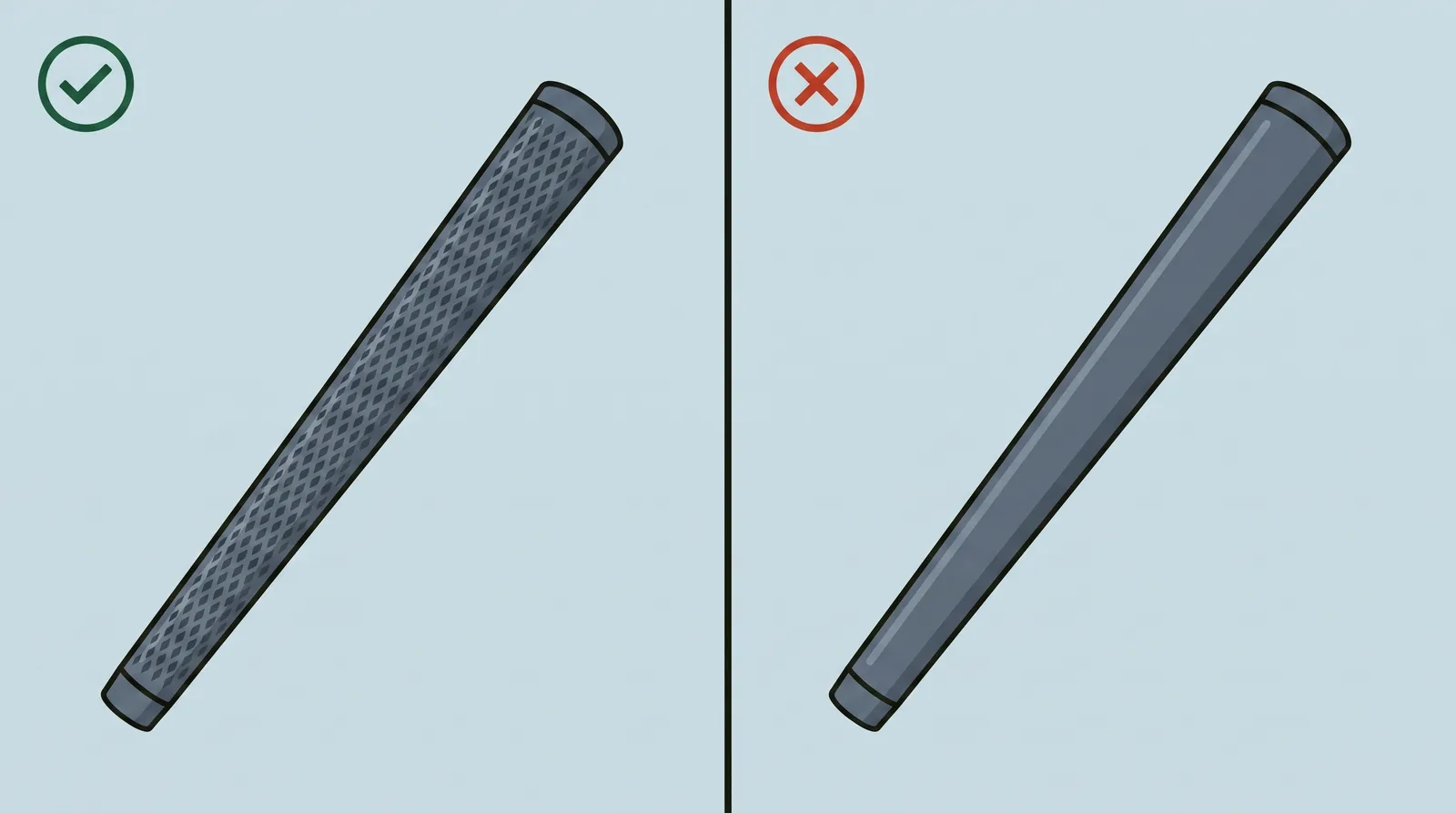
Size is a separate decision and it is worth making before you order thirteen of anything, because the cost of getting it wrong is the whole job again. What the sizes actually measure, and the thirty second check for the one you want, is in the golf grip size guide.
What it costs, done against DIY
The grips themselves dominate the bill either way, and they vary by an order of magnitude between plain rubber and premium corded or hybrid models. That part of the cost is identical whichever route you take, so it is not the number to compare.
What differs is everything else.
| Route | What you are paying for | Worth knowing |
|---|---|---|
| DIY, first set | Grips, plus consumables and one or two tools | A 13 club gripping supplies kit with solvent, pre cut tape strips, a shaft clamp and a sizing gauge runs roughly £15 to £25 from a club component supplier. Grips are extra |
| DIY, every set after | Grips, plus tape and solvent | Consumables are the cheapest part of the job by a long way |
| A shop or club professional | Grips, plus a labour charge per club | Many waive the labour entirely when the grips are bought from them, which is the single biggest lever on the total |
The labour charge is the only genuinely variable number in the table and it moves with location, so two phone calls will tell you more than any published figure. Ask the second question as well: whether labour is waived on grips bought in store. That answer often decides the whole comparison.
There is a break even worth naming honestly. If you have one set of clubs and regrip once a year, paying a shop is defensible, because the tools and the learning curve are spread across thirteen clubs a year. If you have a spare set, a junior in the house, or you buy and sell clubs, the kit pays for itself on the second job.
What you need on the bench
Nothing on this list is exotic and most of it is reusable across every set you will ever own.
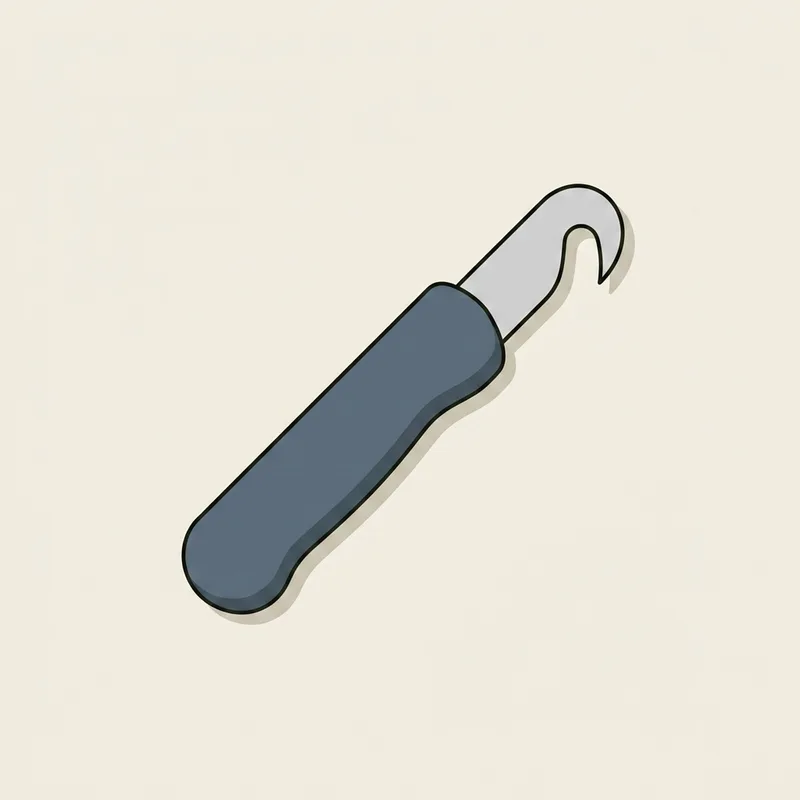
- A hook blade knife for rubber grips, or a purpose made grip removal tool
- Double sided grip tape, two inch width for a full wrap or pre cut strips
- Grip solvent, which is the fluid that reactivates the tape adhesive
- A vise with rubber shaft clamp jaws, or a helper and a steady surface
- A heat gun and a tape stripper if the old tape is stubborn on a steel shaft
- Rags, and a tray or bucket to catch the solvent that runs off
A shaft clamp matters more than it sounds. Clamping a graphite shaft directly in metal jaws is how you crush it, and the crush does not always show until the shaft fails on a swing.
The procedure
This is the sequence used in The GolfWorks regripping instructions, which is the version worth following because it is written by a clubmaking supplier rather than for a video.
- Clamp the club in the vise near the butt, using rubber jaws, with the clubface square so you have a reference to align to later.
- Cut the old grip off. Slide the hook blade under the lip at the open end and pull it along the length of the grip toward the cap. Cut away from your body and away from the shaft. On graphite, a grip removal tool or compressed air is safer than a blade.
- Strip the old tape completely. On steel, warming it with a heat gun for five to ten seconds and working a tape stripper along the shaft removes it fastest. On graphite, peel by hand rather than scraping, then take the residue off with a solvent damp rag. Every trace has to go.
- Wipe the bare shaft down. Even a new shaft carries manufacturing oils, and tape does not bond to oil.
- Apply the new tape lengthwise along the shaft, slightly shorter than the grip, with about an inch of it hanging past the butt end. Peel the backing, wrap it around the shaft, then twist that overhanging inch into a tail and push it down inside the open butt. That plug is what stops solvent running into the shaft.
- Block the vent hole in the end of the grip with a finger, pour a generous amount of solvent inside, pinch the open end shut and shake so the whole interior is wet.
- Pour that solvent out over the tape so the entire taped length is soaked. Both surfaces need to be wet or the grip will seize halfway on.
- Push the grip on in one continuous motion, squaring the open end onto the butt and driving it until the shaft end is seated against the grip cap. Do not stop partway to reposition.
- Align it. Hold the club in the playing position and square the grip to the leading edge of the clubface. GolfWorks are explicit that this has to happen within two to three minutes, before the tape sets.
- Stand the club up and leave it. Repeat for the other twelve.
Step eight is the one that goes wrong, and it goes wrong for one reason: not enough solvent. A dry grip grabs the tape an inch onto the shaft and stops, and once it stops there is no rescuing it without cutting it off and starting again with fresh tape.
Cure time, and the temptation to skip it
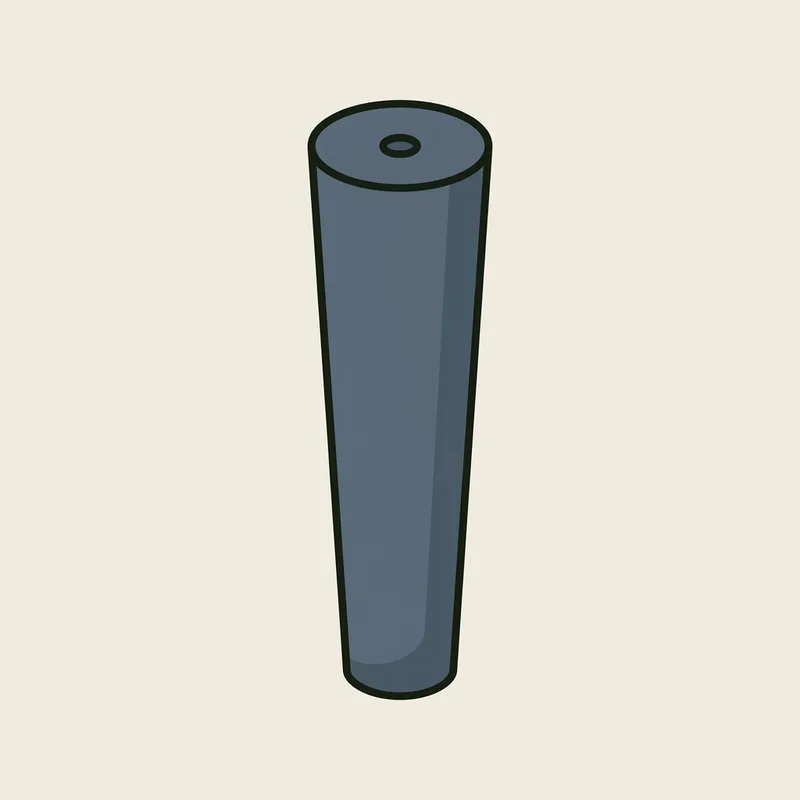
The tape adhesive needs to set with the grip in its final position. Play too early and the grip can rotate on the shaft under load, which puts your alignment out without you noticing why.
GolfWorks state two to three hours of drying before play in their instructions, while their naphtha based Pro Blend solvent is sold on quick dry times with grips usable in under an hour. Both are honest and they measure different things: one is general guidance, the other is a product claim. The sensible reading is to regrip the day before you play rather than the morning of.
The safety part, which is short and matters
Two things in this job can hurt you and both are avoidable.
The blade is the first. GolfWorks put a plain caution on the knife step for good reason, because the cut runs along a round object toward your other hand. A hook blade pulls away from the shaft rather than into it, gloves on the holding hand are sensible, and cutting away from your body is not optional.
The solvent is the second. It is not a novelty fluid. The GolfWorks all purpose grip solvent is mineral spirits based and their Pro Blend is naphtha based, and both product pages carry a California Proposition 65 warning for cancer and reproductive harm. Treat it as you would any petroleum distillate: work in ventilated space or outdoors, keep it away from anything hot or sparking, do not use it near a lit stove or a heat gun that is still running, and dispose of the run off rather than pouring it down a drain.
When to hand it to somebody else
Doing it yourself is the right call for a standard rubber grip on a steel shaft. Three situations are not that.
Graphite shafts are the first. The old tape has to come off without scraping the shaft wall, and a careless blade or a metal scraper can nick the fibres in a way that shows up as a break months later. Plenty of people do graphite at home successfully, but the downside of getting it wrong is a shaft rather than a grip.
Anything involving swing weight or counterbalance is the second. Grip weight changes how the club feels through the swing, so a heavier or lighter model than the one you removed shifts the balance point of every club you did it to.
Sizing with build up tape is the third. Landing on a specific finished diameter rather than a named size is a measurement job that a builder does with a gauge in seconds, and it is part of the same conversation as what a club fitting covers.
What changes afterwards, and what does not
A fresh set of grips will not add distance and nothing here should be sold to you as though it will. What it does is remove a reason to squeeze, and a hand that is not squeezing releases the club more freely and holds tempo better. That shows up as fewer bad misses rather than as longer good ones. It is most obvious in the wet, where a glazed grip is the most common reason a golfer lets go of a club mid swing, and playing golf in the rain covers the rest of that kit.
Grips are also one of the best negotiating points on a used club, since they are cheap to fix and they look terrible, which is covered in checking a used golf club alongside the faults that are not worth fixing at all. The wider used market is in buying used golf clubs.
Putters are a separate job with different rules, since the equipment rules allow shapes there that no other club may use, and what a putter grip is doing explains why so many of them are now enormous. How you actually place the hands, once the rubber is sorted, is in how to grip a golf club.
Key takeaways
- Replace grips when the surface has glazed and you find yourself holding on tighter. Mitchell Golf put the working guidance at once a year, or two to three times a year for heavy play in humid conditions.
- Rubber hardens on the calendar as well as with use, so a stored set can be dead without ever having been played.
- The grips themselves are most of the cost either way. The variable is the shop labour charge, and it is often waived when grips are bought in store.
- A 13 club gripping supplies kit runs roughly £15 to £25 and covers the consumables side of a DIY job, with grips extra.
- Strip every trace of old tape and wipe the shaft. Tape does not bond to residue or to manufacturing oil.
- Tape goes on lengthwise with about an inch overhanging the butt, twisted into a tail and plugged into the shaft to keep solvent out.
- Soak both the tape and the inside of the grip. Almost every failed installation is a grip that seized partway on because there was not enough solvent.
- Align the grip to the clubface within two to three minutes, holding the club in the playing position rather than flat on a bench.
- Allow two to three hours before playing, and overnight if you can. Faster solvent blends claim under an hour.
- Grip solvent is a petroleum distillate carrying a Proposition 65 warning. Ventilate, keep it away from heat, and cut with a hook blade away from your body.
Common questions
How often should you regrip golf clubs?
Mitchell Golf put the general guidance at once a year, rising to two or three times a year if you play and practise several times a week in humid weather. The better test is functional rather than calendar based: if the surface has polished over and you have started gripping tighter, they are finished regardless of age.
Can you regrip golf clubs yourself?
Yes, and it is the one piece of club work that genuinely transfers to an amateur. A standard rubber grip on a steel shaft needs a hook blade, double sided tape, solvent and a clamp, and takes a few minutes per club once you have done two or three. Graphite shafts and any set built to a swing weight spec are the cases worth handing over.
What do you need to regrip a golf club?
A hook blade knife or grip removal tool, double sided grip tape, grip solvent, a vise with rubber shaft clamp jaws, and rags. A heat gun and a tape stripper make old tape on steel shafts far easier. The consumable side is sold as a 13 club kit for roughly £15 to £25, with the grips bought separately.
Can you regrip golf clubs without solvent?
You can, using compressed air, which is what many builders prefer and which leaves nothing behind. Water and washing up liquid is the common improvised substitute and it works, but it leaves moisture trapped between tape and steel, which is how a shaft starts rusting where you cannot see it.
How long does it take grips to dry before playing?
The GolfWorks instructions say two to three hours before play. Their faster naphtha based solvent is sold on grips being usable in under an hour. Regripping the day before you play removes the question entirely, and there is nothing to gain from testing the lower bound.
How much does it cost to regrip golf clubs?
The grips are most of it and they range enormously between plain rubber and premium models, so the total is mostly a function of which grips you choose. Doing it yourself adds consumables, which are inexpensive. Paying a shop adds a per club labour charge that varies by location and is frequently waived if you buy the grips there.
What kind of tape do you use for golf grips?
Double sided grip tape, usually two inch wide for a full lengthwise wrap or supplied as pre cut strips. It goes on lengthwise rather than spiralled, slightly shorter than the grip, with roughly an inch overhanging the butt end that gets twisted and pushed inside the shaft.
How do you get an old golf grip off?
Clamp the club, slide a hook blade under the open end of the grip and draw it along the length toward the cap, cutting away from yourself and away from the shaft. The grip then peels off in one piece. On graphite, use a removal tool or compressed air rather than a blade wherever possible.
How do you line up a golf grip correctly?
Hold the club in your normal playing position rather than lying it on a bench, and square the grip to the leading edge of the clubface. This has to be done within two to three minutes of installation, before the tape sets. Any raised rib or printed alignment feature runs down the centre of the top of the grip in that position.
Does regripping change how a club feels?
Yes, in two ways. Grip weight affects the balance of the club, so a heavier or lighter model than the one you removed shifts how the head feels through the swing. Diameter changes how freely the hands work. Both are reasons to keep a set consistent rather than mixing models across the bag.
Can you regrip a club during a round?
No. Rule 4.1a(3) prohibits making a stroke with a club whose playing characteristics you deliberately changed during the round, and the penalty is disqualification. Repairing a club damaged during the round is allowed under Rule 4.1a(2), provided the damage was not caused by abuse.
Tom Ashworth
Tom Ashworth is a PGA Professional who has taught golf since 2012, working mainly with beginners and mid-handicappers at club level in Surrey. He reviews the instruction guides on Learn Golf for technical accuracy before they publish.
Most of his teaching is with players in their first three years of the game, and most arrive having been told too much: six swing thoughts collected from videos, half of them contradicting each other. His approach is to check the grip and the alignment before touching the swing, on the basis that most bad ball flight is decided at address.