
Almost every golfer who wants more speed tries the same thing first, which is to swing harder. It produces more effort, a worse strike and no more club head speed, because effort and speed come from different places. This guide covers where amateur speeds actually sit, the four levers that move them, and where the popular shortcuts fit.
This page describes what changes and how to measure it. It does not put a number on what you will gain, because nobody honest can, and anyone who does is selling something.
Where your speed actually sits
Before changing anything, know your starting point, and know it against real numbers rather than the figure your playing partner claims.
TrackMan publishes averages from its own Combine testing. Their page on club speed gives a PGA Tour driver average of 115 mph and an LPGA Tour average of 96 mph. The amateur numbers on the same page are the useful ones.
| Player | Driver club speed |
|---|---|
| PGA Tour average | 115 mph |
| Male scratch or better | 110 mph |
| Male 5 handicap | 101 mph |
| LPGA Tour average | 96 mph |
| Male 10 handicap | 95 mph |
| Male average golfer, 14.5 handicap | 94 mph |
| Male bogey golfer | 92 mph |
| Female scratch or better | 90 mph |
| Female 10 handicap | 83 mph |
Source: TrackMan Combine data, as published on the page linked above.
The gap between a bogey golfer and a 5 handicap is around 9 mph, which is smaller than most golfers assume, and smaller than the gap between that 5 handicap and a tour professional. Speed is not what separates most amateurs from each other. What those speeds produce on the course is in average driver distance.
Speed you cannot deliver is not speed
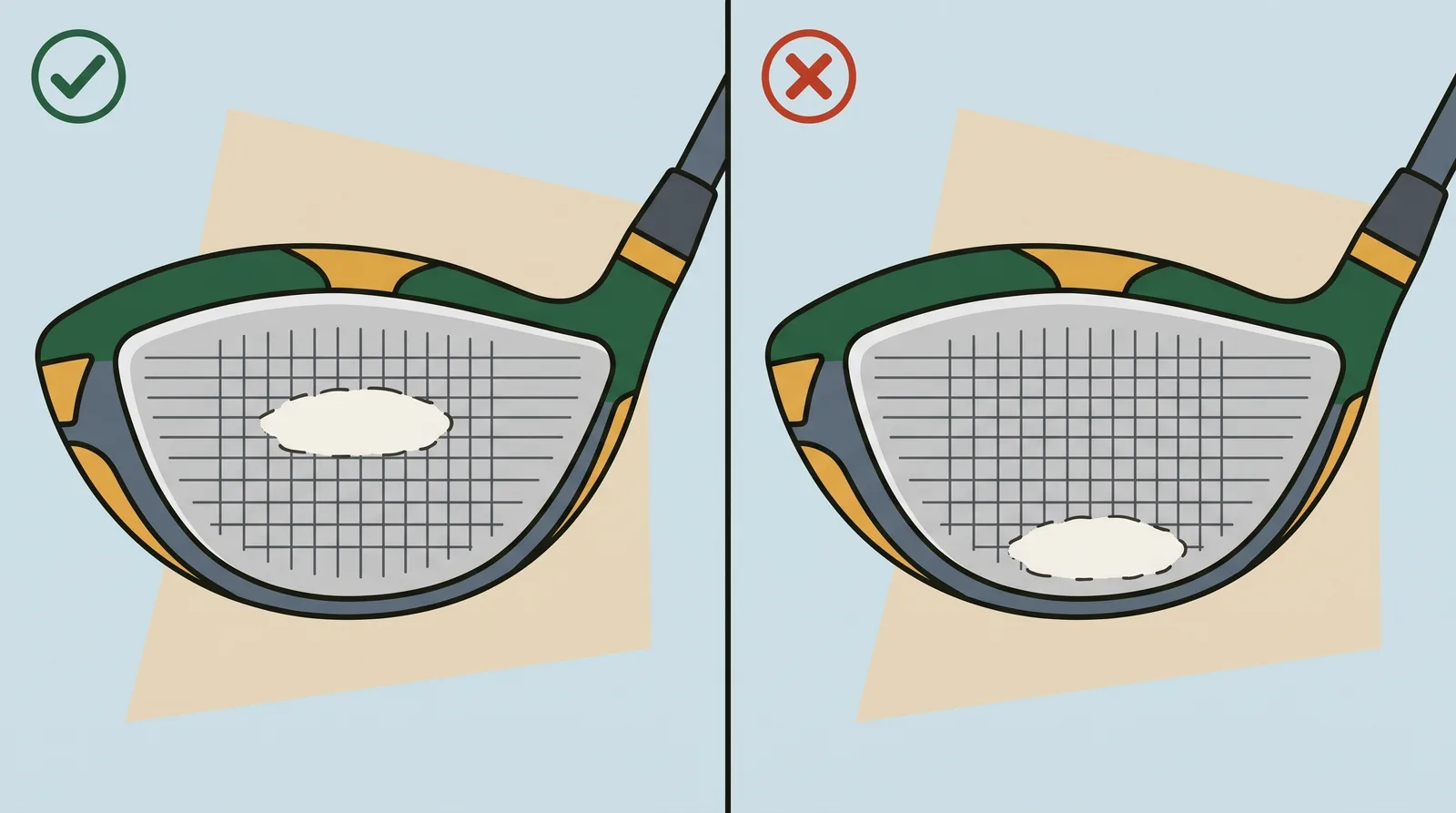
Before adding any, check what you do with what you have. Smash factor is ball speed divided by club speed, the cleanest measure of whether a swing is converting effort into ball.
TrackMan's smash factor page gives 1.49 for a PGA Tour driver and 1.44 for the average male amateur at 14.5 handicap. That gap looks small written down and is not small in practice, because it is a percentage of everything. Better strike quality pays out at every speed you will ever swing, and it needs no physical change at all.
Centre-face contact is a bigger lever for most amateurs than club head speed is, and the two are related: a golfer who swings harder than they can control strikes the face worse, which cancels out whatever speed they added.
Lever one: the order, not the effort
Club head speed is produced by a chain of body segments accelerating in turn and then handing the energy on. Segments that do not slow down never hand anything over, which is why a golfer who hits with the arms feels like they are working hard and is not moving the club quickly.
TPI's ground force research found that elite ball strikers get to their lead side much earlier in the downswing than higher handicappers, and that force applied too late is difficult to translate into club speed at all. Timing, not strength, is what most amateurs are missing.
This is free speed, in that it costs no fitness and no equipment, and it is the slowest to arrive, because an order takes longer to change than a position. The detail sits in the golf downswing, and the wrist angle a correct order produces is covered in lag in the golf swing.
Lever two: the range you have to work with
You cannot accelerate through a range you do not have. A golfer whose hips will not rotate has to stop the turn early or fake it with a slide, and both cut the runway the club has to build speed on.
The screens are quick and worth doing before you spend eight weeks on the wrong thing. Hip internal rotation, thoracic spine rotation, and lead shoulder range cover most of it. The hip side is set out in hip rotation in the golf swing, including the two tests and the mobility work.
Mobility is the lever that gets skipped most often, because it is dull and produces nothing you can see for a month. It is also the one that decides whether the other three are available to you.
Lever three: force, and how quickly you can produce it
This is the one with the strongest evidence behind it and the least mystique. Muscles that can produce more force, and produce it faster, move a golf club more quickly.
TPI's article on why club head speed drops with age makes the case that the decline is not really about chronological age at all, but about losses in strength and power. It notes that muscle power is lost at roughly twice the rate of muscle strength, and cites a 2016 study by Wang and colleagues in which elderly participants achieved a 68% average increase in one-rep-max strength and a 48% average increase in rate of force development after eight weeks of training.
The practical shape is two things, not one: heavy work in low repetitions for maximum strength, and fast work with light loads for rate of force development. Golfers do the second and skip the first, which is backwards, because rate of force development has a ceiling set by how much force there is to develop.
| Lever | What it changes | Cost | Time before it shows | Main risk |
|---|---|---|---|---|
| Sequence | Where the speed peaks | Free | 4 to 6 weeks | Ball striking gets worse first |
| Mobility | The range available to accelerate through | Free | 3 to 8 weeks | None if you stop short of pain |
| Strength and power | How much force there is, and how fast | Gym time | 8 to 12 weeks | Doing power work without the strength base |
| Equipment fit | Whether you can use any of it | Fitting fee | Immediate | Buying before the swing is stable |
Lever four: whether your equipment lets you use it
A shaft too heavy or too stiff for your swing costs speed directly. A shaft too light for your transition costs control, which costs speed indirectly because you stop trusting the swing.
This is the fastest lever and the one people reach for first, which is why it disappoints. Pull it once the swing is stable rather than mid-change, because a fitting captures the swing you have on the day. Starting points are in the golf shaft flex guide, and the wider process is in the golf club fitting guide.
Overspeed training, and why it is contested
Overspeed training means swinging a lighter implement than a club, usually a graduated set of sticks, at maximum effort to teach the nervous system to move faster. It is the default answer to this question online and it deserves more care than it usually gets.
TPI's article on readiness for overspeed training is written by someone who uses the method and is candid about the evidence. Proponents report immediate speed gains inside a single session. The same article states that no studies the author could find discussed longitudinal improvements or their causes, and describes the supporting work as in-house studies with limited sample sizes rather than peer-reviewed research.
It is equally candid about who gets hurt. The category it calls ticking time bombs, golfers whose swing speed percentile already exceeds their power percentile or who fail rotary mobility screens, is described as being at direct risk of injury from this training. They are already swinging faster than their bodies control, and the protocol asks them to swing faster still.
Measure it honestly, or do not measure it
Speed readings move around a great deal between sessions, surfaces and warm-up states, so a single reading tells you almost nothing.
Take five swings at the start of a session and five at the end, and record the average rather than the best. Repeat every fortnight under the same conditions. A best-of-twenty number will always flatter you and it will never tell you whether anything changed. What personal measurement devices can and cannot do reliably is covered in launch monitors.
Expect readings to go backwards during a sequence change. That is normal, it lasts two to three weeks, and it is the most common point at which golfers abandon something that was about to work.
A twelve-week shape
Weeks one to four are mobility and sequence, with no speed work at all. Weeks five to eight add strength: heavy, low repetition, twice a week, while the golf swing stays at three-quarter speed. Weeks nine to twelve add power and, if the screens are clear, overspeed work, in two short sessions a week that never fall on consecutive days.
If distance loss was the starting complaint, the diagnostic in losing distance in golf is worth revisiting here, because the answer is often not speed at all.
Key takeaways
- Effort and speed are different things. Swinging harder usually costs speed at the ball.
- TrackMan Combine data puts the male 14.5 handicap driver average at 94 mph and a bogey golfer at 92 mph.
- Smash factor gaps matter more than most amateurs think: 1.49 on tour against 1.44 for the average amateur.
- The four levers are sequence, mobility, strength and power, and equipment fit.
- TPI research finds elite players get pressure to the lead side earlier, not harder.
- Power declines with age at roughly twice the rate of strength, so heavy work matters as much as fast work.
- Overspeed training is genuinely contested. The immediate readings are real, the durable evidence is thin.
- It is a poor first move for older or deconditioned golfers, who carry most of the injury risk.
- Measure with averages over five swings, not a best-of-twenty, and expect a dip mid-change.
Common questions
What is a good swing speed for an amateur golfer?
TrackMan Combine data puts the average male golfer at 14.5 handicap around 94 mph with a driver, a bogey golfer around 92 mph, and a male 5 handicap around 101 mph. Female averages run lower, with a 10 handicap around 83 mph. Those are useful for orientation and poor as targets, because the gap between handicap levels is smaller than most golfers expect.
How can I increase my swing speed quickly?
The quickest genuine change is usually the strike rather than the speed, because centre contact converts more of the speed you already have. Beyond that, nothing worthwhile is quick. Sequence changes take four to six weeks, mobility three to eight, and strength eight to twelve. Anything promising a result in a week is describing a measurement, not a change.
Does swing speed training actually work?
Strength and power training has solid evidence behind it and it is the most reliable of the four levers. Overspeed stick training reliably produces higher readings inside a session, but as TPI's own article on readiness notes, the longitudinal evidence is thin and largely in-house. Both are real; they are not equally well supported.
Is overspeed training safe?
It depends on the golfer, and this is where the real disagreement sits. TPI identifies golfers whose speed already exceeds their power capacity, or who fail rotary mobility screens, as being at direct injury risk from it. If you are over 55, returning from a back or shoulder injury, or have not trained in years, build strength and mobility first. It is a supplement to a base, not a substitute for one.
Why do I lose swing speed as I get older?
TPI's position is that it is not chronological age doing the damage but the strength and power that go with it. Working motor units decline, fast twitch fibres shrink and reduce in number, and muscle power is lost at roughly twice the rate of muscle strength. That last point is the reason strength training matters more, not less, as golfers age.
Should I use a heavier or lighter club to train?
Both, for different reasons. Heavier implements build the force side and lighter ones train the speed side. Using only one is the common mistake, and the one most golfers pick is the light stick, which is the half that needs a strength base underneath it to be worth anything.
Will a lighter shaft make me swing faster?
Sometimes, and it is the fastest lever of the four. A shaft too heavy or too stiff genuinely costs speed. A shaft too light for your transition costs control, which costs more than the speed was worth. Worth a fitting rather than a guess, and worth doing when the swing is stable rather than mid-change.
How do I know if I am swinging too hard?
Watch the strike, not the reading. If the ball is finding the toe, the heel and the bottom edge in one session, the speed has passed the point your control supports. The other tell is the sound: a swing whose loudest point is up near the trail shoulder is spending its effort somewhere the ball never sees it.
Does flexibility increase swing speed?
It removes a limit rather than adding speed by itself. A golfer who cannot rotate has to stop the turn early or slide, and both shorten the distance the club has to build speed over. Restoring range does not make anyone fast, but without it there is a ceiling no amount of strength work will lift.
How long should a speed session be?
Short. Ten to fifteen minutes of genuine maximum effort work, with full rests between repetitions, and never immediately before a round. Speed work done while tired trains something other than speed, and volume is where most of the injury risk lives.
Can I train swing speed at home?
Yes, and most of it is better done at home. Mobility, medicine ball throws, swishes and strength work all happen away from the golf course and none of them need a ball. Only strike work needs a range, which usefully stops speed sessions from turning into ball-beating sessions.
On this page
- Where your speed actually sits
- Speed you cannot deliver is not speed
- Lever one: the order, not the effort
- Lever two: the range you have to work with
- Lever three: force, and how quickly you can produce it
- Lever four: whether your equipment lets you use it
- Overspeed training, and why it is contested
- Measure it honestly, or do not measure it
- A twelve-week shape

Tom Ashworth
Tom Ashworth is a PGA Professional who has taught golf since 2012, working mainly with beginners and mid-handicappers at club level in Surrey. He reviews the instruction guides on Learn Golf for technical accuracy before they publish.
Most of his teaching is with players in their first three years of the game, and most arrive having been told too much: six swing thoughts collected from videos, half of them contradicting each other. His approach is to check the grip and the alignment before touching the swing, on the basis that most bad ball flight is decided at address.