Every golfer has been told to turn the hips, and most of them respond by sliding sideways, standing up, or spinning the whole torso at once. All three feel like rotation from the inside and none of them are. This guide covers what hip rotation actually is, how to test whether your body can do it, and what to practise if it cannot.
Left and right assume a right-handed golfer. Where a check inverts for left-handers, it is flagged.
What is actually rotating
The pelvis is a single rigid structure, so it does not bend or twist in the middle. When your hips turn in a golf swing, the pelvis is being carried around by the two hip joints underneath it, and each of those joints is doing something different at the same time.
Going back, the trail hip rotates internally, meaning the thigh bone turns inward inside the socket while the pelvis turns away from the target above it. Coming down, the same thing happens on the lead side. That is the whole mechanism, and it is why golfers with tight hips look like they are turning when they are actually pushing the pelvis sideways to fake it.
The Titleist Performance Institute's work on this puts a number on the range required. Their article on hips and the golf swing reports that the average PGA Tour player has over 45 degrees of internal hip rotation on both sides, and links a shortage of it directly to sway and slide patterns.
| Phase | Trail hip | Lead hip | What it produces |
|---|---|---|---|
| Address | Neutral | Neutral | A base the pelvis can turn on |
| Backswing | Rotates internally, absorbs load | Rotates externally | Pelvis turns away, feet stay put |
| Transition | Begins to unload | Starts to accept pressure | The lower body changes direction first |
| Impact | Unloaded, knee softening | Rotating internally, taking load | Pelvis already open, chest catching up |
| Finish | Trail foot up on its toe | Fully rotated, leg straightening | Everything has finished turning |
Nothing in that table asks the pelvis to travel towards the target. It moves a little, because pressure has to shift, but the dominant motion is rotational. The detail on how far the pelvis should be open at the strike is in golf impact position.
Test yours before you practise it
There is no point drilling a motion your joints cannot make. Two screens cover most of it and neither needs equipment.
Lie on your back with one knee bent to a right angle, hold that thigh vertical, and let the lower leg fall outward without the pelvis lifting off the floor. That inward turn at the hip is internal rotation, and it is the range the golf swing spends. TPI describes the same assessment in its lower quarter rotation test, which is the version a coach will run on you.
The second is separation rather than range. Set up in your golf posture with your arms crossed over your chest and turn your pelvis left and right while holding your upper body perfectly still. TPI's pelvic rotation test checks the same thing, and its point is that the ability to move the lower body without the upper body coming with it is a separate skill from flexibility.
Most amateurs fail the second one. They can turn, but only if everything turns together, which removes the stretch the downswing is supposed to unwind.
The three things golfers do instead
Each of these feels like turning. Each of them is a different fault with a different fix, and telling them apart on video takes about ten seconds once you know what you are looking at.
The slide. The pelvis travels towards the target instead of rotating around. The belt line stays square while the whole body drifts. It produces fat shots, pushes and a low point that keeps moving, and it is covered properly in how to stop swaying.
The stand-up. The pelvis moves towards the ball and the body straightens out of its posture. TPI defines early extension as forward movement of the lower body towards the golf ball during the downswing, and lists restricted hip rotation among its causes. The hands lose their space, the arms have to lift, and the strike goes thin or off the heel.
The spin. Pelvis and chest unwind together from the top. There is rotation, but no separation, so the club is thrown outward and arrives from outside the target line. That is the engine behind coming over the top.
| Fault | What you see from behind | Typical miss | First thing to check |
|---|---|---|---|
| Slide | Belt buckle stays square, whole body drifts forward | Fat, then a push | Internal rotation range in the lead hip |
| Stand-up | Seat comes away from its address line, body rises | Thin, heel strikes | Squat depth and glute strength |
| Spin | Shoulders and pelvis arrive open together | Pull, then a slice | Pelvic rotation without upper body |
| No turn at all | Pelvis barely moves in either direction | Short, high, weak | Both hips, and often the trail ankle |
Clearing the hips is not a violent move
The phrase does more damage than almost any other cue in golf. Golfers hear "clear the hips" and produce a fast, shallow spin from the top that opens the shoulders at the same time, which is exactly the fault they were trying to avoid.
Clearing means the lead hip continues rotating out of the way as the arms come down, so the hands have room to pass. It is continuous, not sudden, and it starts from the ground. The order it belongs inside is set out in the golf downswing.
Building rotation you do not have
Range and pattern are separate problems and they need separate work. Mobility takes weeks and happens away from the golf course. Pattern takes reps and happens with a club in your hands.
How much turn is enough
There is no target number worth chasing, and the honest reason is that hip turn measurements vary enormously with how they are taken, what a golfer's build is, and whether the feet are flared. A golfer with 60 degrees of pelvis rotation at the top and a stable base will out-strike one with 45 degrees who got there by lifting a heel and sliding.
The useful question is not how far, but whether the turn is happening at the hip joints. A pelvis that has rotated has done it around the legs. A pelvis that has slid has taken the legs with it. That distinction is visible on any phone video shot from behind, down the target line, with a club laid on the ground for reference.
What changes, and when
Mobility responds first and swing pattern responds last, which is the opposite of what most golfers expect.
Two to three weeks of daily hip work usually produces a noticeable change in how far you can turn in a chair, before anything at all shows up in a golf swing. That is normal. The new range has to become the range your body reaches for under speed, and speed is where old patterns live.
Six weeks is a fair point to reassess with video. Look for the seat staying back against its address line through impact, and for the pelvis being open to the target while the chest is still catching up. Ball flight is a poor judge here, because a golfer who rotates better and has not yet adjusted their aim will start pulling shots, which reads as a step backwards and is not.
Posture at address decides how much of that range is available in the first place, and a rounded setup removes a chunk of it before the club has moved. That side of it is in golf posture, and the speed that better rotation makes available is covered in how to increase swing speed.
Key takeaways
- Hip rotation is the pelvis turning around the hip joints, not the pelvis moving sideways.
- TPI reports the average PGA Tour player has over 45 degrees of internal hip rotation on both sides.
- Test range and separation separately. Most amateurs have some range but no separation.
- The three fakes are the slide, the stand-up and the spin, and each has a different fix.
- Clearing the hips is a continuous rotation, not a fast spin from the top.
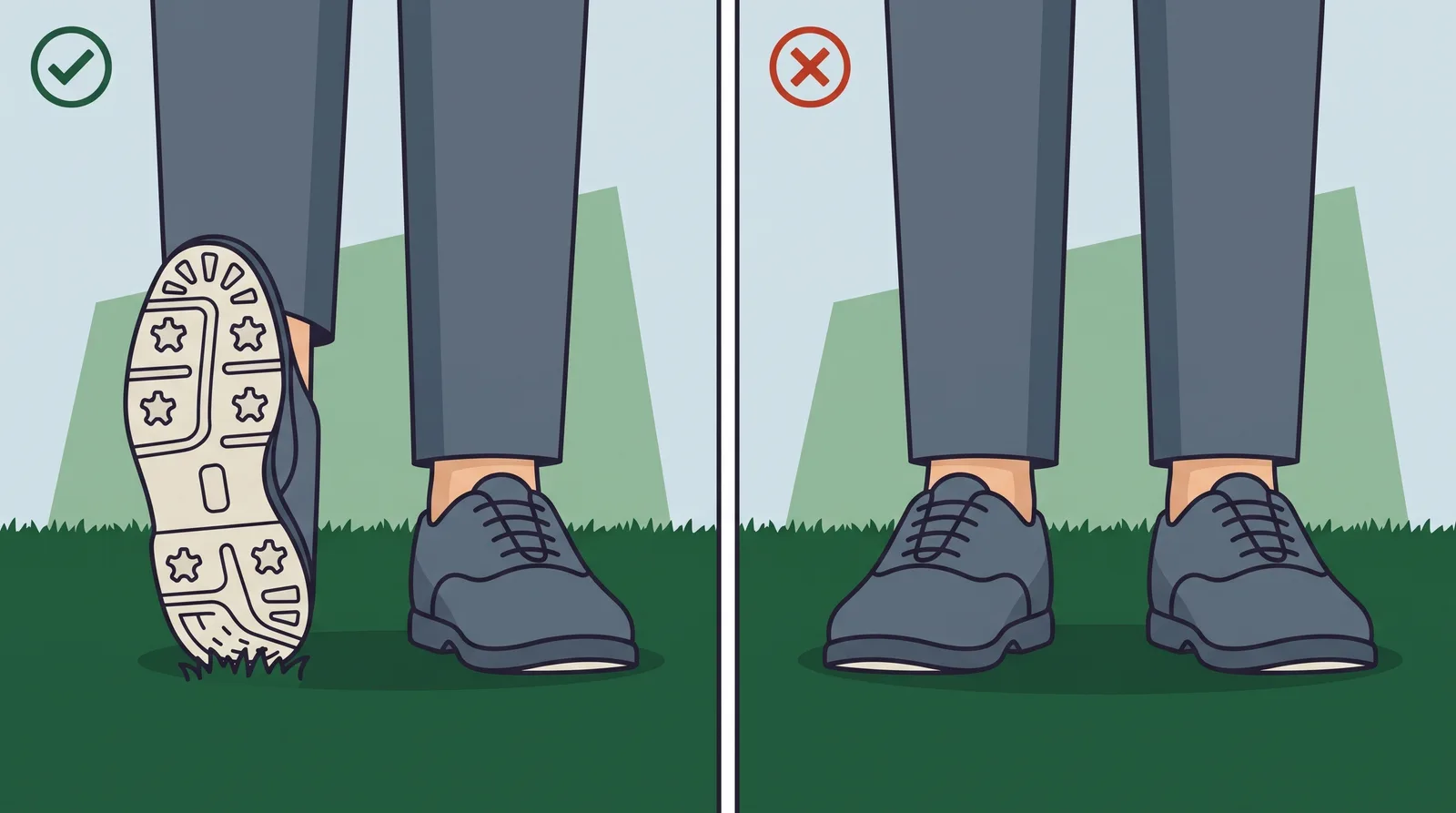
- A visible sole on the trail shoe at the finish means the pelvis kept turning.
- Restricting the hip turn to manufacture more stretch is how backs get hurt.
- Mobility changes in two to three weeks, swing pattern in six or more.
- Expect pulls when rotation improves. That is the turn arriving, not a new fault.
Common questions
How much should my hips turn in the golf swing?
Enough that the pelvis is clearly rotating rather than sliding, which for most golfers is somewhere between 40 and 60 degrees at the top. Chasing a specific number is a poor use of practice, because how the turn is made matters far more than how far it goes. A smaller turn made at the hip joints beats a bigger one made by lifting a heel and drifting.
What does clearing your hips mean?
It means the lead hip continues rotating away and out of the path of the arms as the club comes down, giving the hands room to pass the body. It is a continuous motion that begins in the transition, not a sudden spin from the top. Golfers who interpret it as a violent move open their shoulders at the same time and end up swinging across the ball.
Why do my hips slide instead of turning?
Usually because the lead hip does not have the internal rotation range to let the pelvis turn, so the body finds the nearest available substitute, which is lateral movement. It can also be a habit picked up from being told to shift weight without being told to rotate. Test the range first, because drilling a rotation your joint cannot make just moves the compensation somewhere else.
Should my trail heel stay down in the backswing?
Down is the better default, because it preserves resistance between the pelvis and the ground. Letting it lift is a reasonable compromise for a golfer whose trail hip will not rotate far enough to complete the turn any other way. Coaches genuinely disagree here, and the deciding factor should be your hip range rather than the fashion.
Can you turn your hips too much?
Yes, in the backswing. A pelvis that turns as far as the shoulders leaves nothing stretched to unwind, which is why the classic image of the lower body resisting the upper body exists. In the downswing the risk is not too much rotation but rotation that arrives too early and drags the chest with it.
Is hip rotation the same as weight shift?
No, and confusing them is one of the more expensive mistakes in this area. Weight shift describes where pressure sits under your feet. Hip rotation describes how the pelvis is oriented. A golfer can shift pressure perfectly while barely rotating, and the shot will still be poor.
Why do my hips hurt after practising this?
Most often because a golfer is drilling rotation they do not have the range for, so the movement is coming from the lower back or being forced at the end of the joint's range. Stop, spend three weeks on mobility, and reintroduce the swing drills afterwards. Pinching at the front of the hip in particular is a signal to back off rather than push through.
Do I need a gym to improve hip rotation?
No. Range work needs a floor and ten minutes, and the pattern work needs a chair and a club. Strength work helps and a gym makes it easier, but the mobility side, which is the part most amateurs are missing, needs nothing you do not already own.
How do I know if I am early extending?
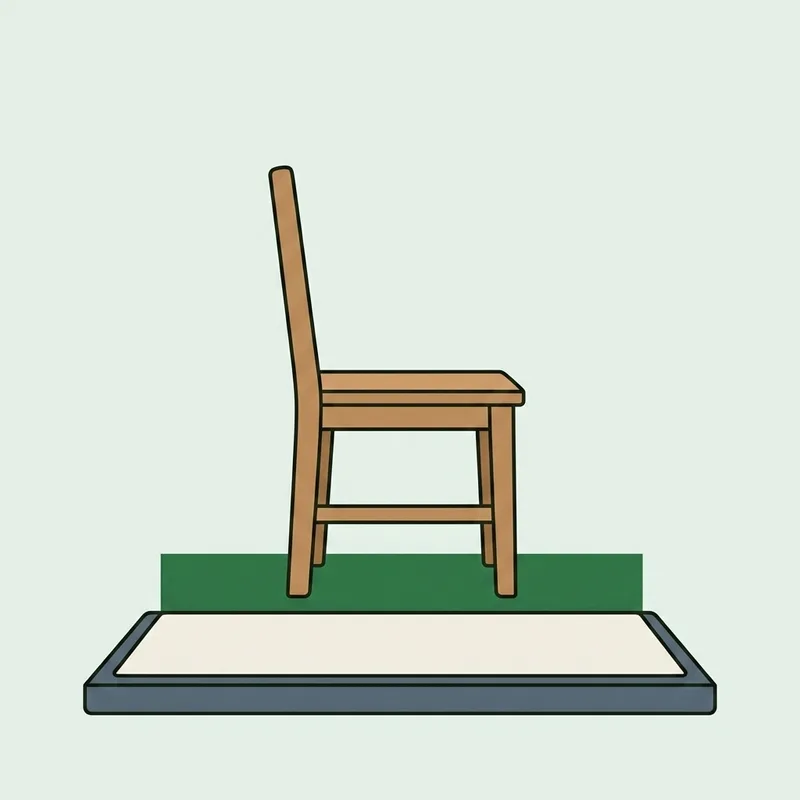
Set up with your seat lightly touching a wall or a chair and make a slow swing. If you lose contact on the way down, your lower body is moving towards the ball. On video from behind, draw a line down the back of your trousers at address and watch whether your seat leaves it during the downswing.
Does better hip rotation add distance?
It changes what is available rather than guaranteeing an outcome. Rotation that happens at the hips rather than through a slide gives the sequence something to unwind against, and it usually improves strike quality before it does anything else. How much of that turns into speed depends on the sequence, the strike and the equipment, so treat it as removing a limit rather than adding a number.
Should older golfers work on hip rotation differently?
The work is the same but the order changes. Range comes first and it takes longer, so give the mobility side six to eight weeks before adding speed to any of it. Forcing a full turn into a hip that will not rotate is a faster route to an injury than to a better swing.
Tom Ashworth
Tom Ashworth is a PGA Professional who has taught golf since 2012, working mainly with beginners and mid-handicappers at club level in Surrey. He reviews the instruction guides on Learn Golf for technical accuracy before they publish.
Most of his teaching is with players in their first three years of the game, and most arrive having been told too much: six swing thoughts collected from videos, half of them contradicting each other. His approach is to check the grip and the alignment before touching the swing, on the basis that most bad ball flight is decided at address.