The ball goes almost straight up, lands embarrassingly short, and the top of your driver has a white streak across it. A skied drive is one of the few faults in golf that leaves physical evidence, and that evidence tells you precisely what happened. This guide covers what the mark means, the four causes behind it, and the order to work through them.
What a sky mark actually proves
A driver face is about 55mm tall. A ball teed at normal height sits with its equator near the top of that face. To leave a mark on the crown, the clubhead has to arrive lower than the ball and still be descending, so it slides under the equator and the leading part of the crown catches the ball on the way through.
That is the entire fault. Not a grip problem, not a tempo problem, not the driver's fault. The club was moving downward at the moment it should have been moving upward.
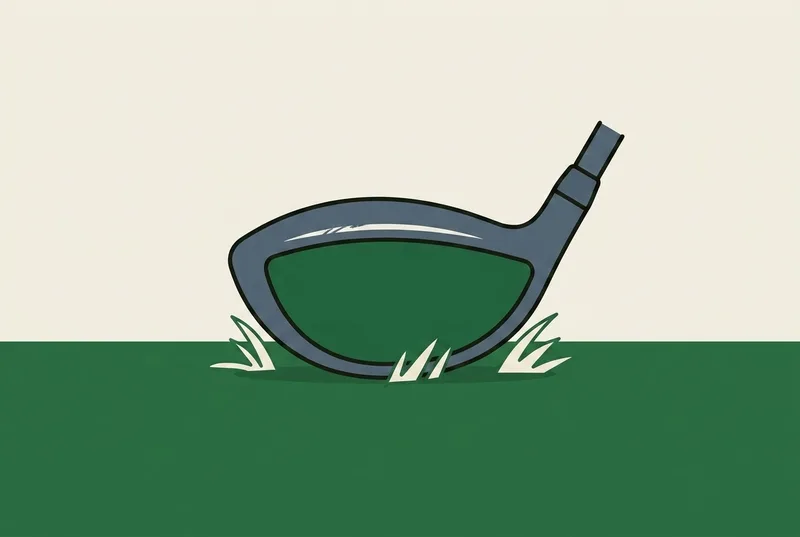
TrackMan's parameters for amateur golfers make the distinction plainly: with irons you want attack angle to be a negative number, and with the driver you want a positive one. Positive means the clubhead is travelling upward through the ball. Skied drives are what a negative number looks like from the tee box.
| Club | What the club is doing at impact | Where the low point sits |
|---|---|---|
| Wedges and short irons | Descending, steeply | Several inches ahead of the ball |
| Mid and long irons | Descending, shallower | Just ahead of the ball |
| Fairway woods and hybrids | Level, sweeping | At the ball |
| Driver off a tee | Ascending | Behind the ball |
That bottom row is the one nobody is taught. The low point of a driver swing should be behind the ball, so the head is already climbing when contact happens.
Cause one: the tee height that gets blamed unfairly
Everyone's first move after a sky is to tee it lower. It sometimes works for a few holes, and it is the wrong fix for most golfers.
Teeing lower does reduce the chance of catching the crown, because there is less ball above the top edge to catch. It also guarantees you never get the upward strike that makes the driver worth carrying, and it usually produces low spinny drives that finish shorter than a 3 wood.
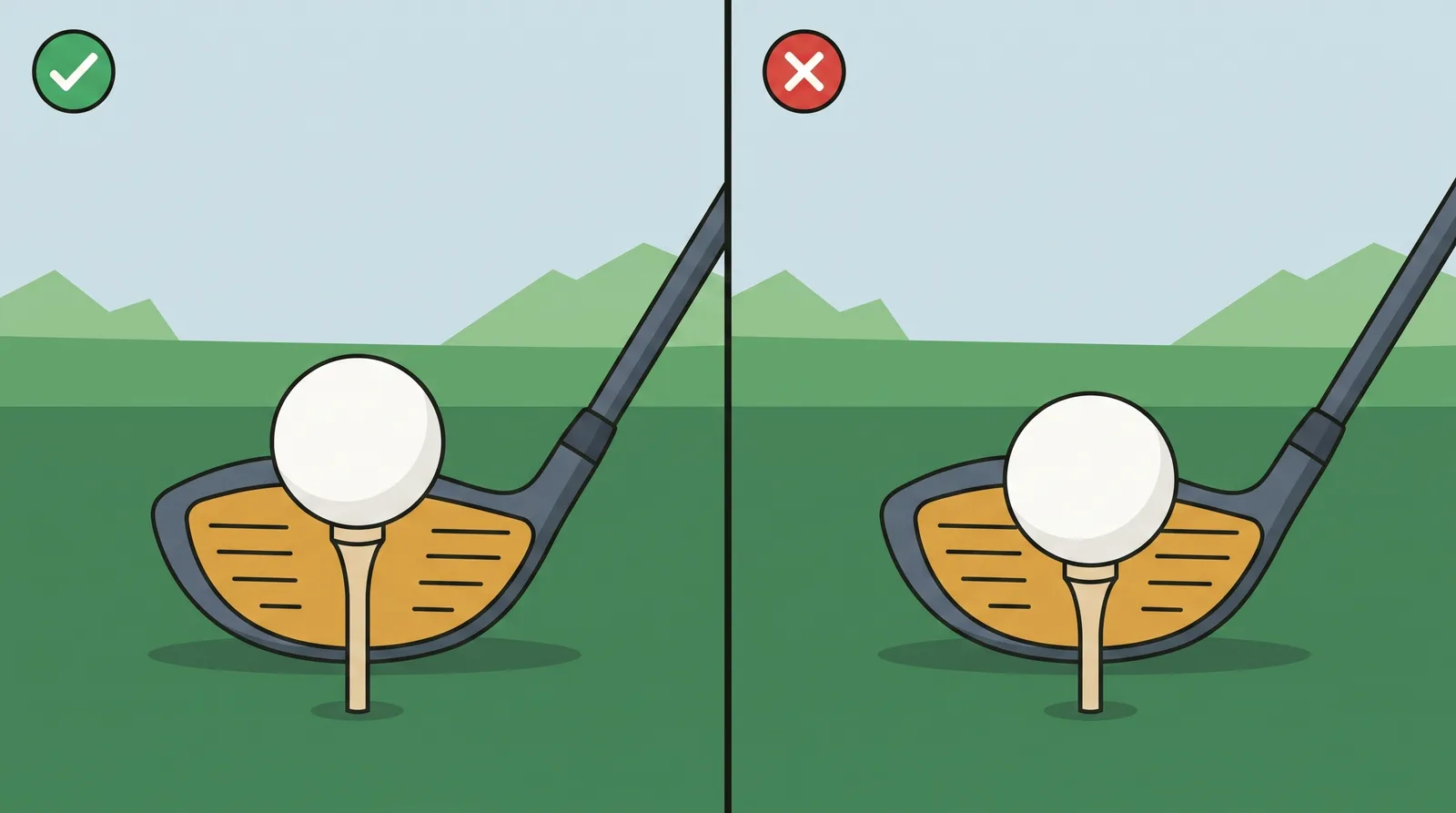
The right height is roughly half the ball above the crown when the driver is soled behind it. If that height produces a sky, the tee is not the problem and the next three causes are.
Cause two: the ball is too far back
This is the single most common genuine cause. If the ball sits in the middle of your stance, the club reaches it before the low point of the arc, which means it is still coming down.
The driver ball position is opposite the lead heel, further forward than any other club in the bag. From there the club has already bottomed out and started climbing when it arrives. Our golf ball position guide covers the reference points for the rest of the set.
Set it properly with a club laid on the ground pointing at your lead heel. Do it every session for two weeks, because ball position creeps backward on its own and nobody notices it happening.
Cause three: the upper body is over the ball at impact
With irons, the chest stays over or slightly ahead of the ball through impact, which produces the downward strike. Carry that into a driver swing and you produce the same downward strike with a club that cannot use it.
For a driver, the head and chest should stay behind the ball as the hips move toward the target. The spine tilts slightly away from the target at address and stays tilted. This is the position that lets the club swing up into the ball rather than down onto it.
The common version of this fault is the golfer who lunges at the ball, driving the chest forward and downward to add power, and moves the low point six inches ahead of where it needs to be. Every yard of that lunge steepens the strike.
Cause four: swinging too hard from the top
Effort from the top of the swing pulls the club steeply down and outside. It is the same move that produces coming over the top in a slice, and on a tee shot it also produces the descending blow that skies.
Nothing about a driver rewards maximum effort. The extra clubhead speed from swinging out of your shoes is small, and it arrives with a strike so far from the middle that the ball goes shorter anyway.
The three drills, in order
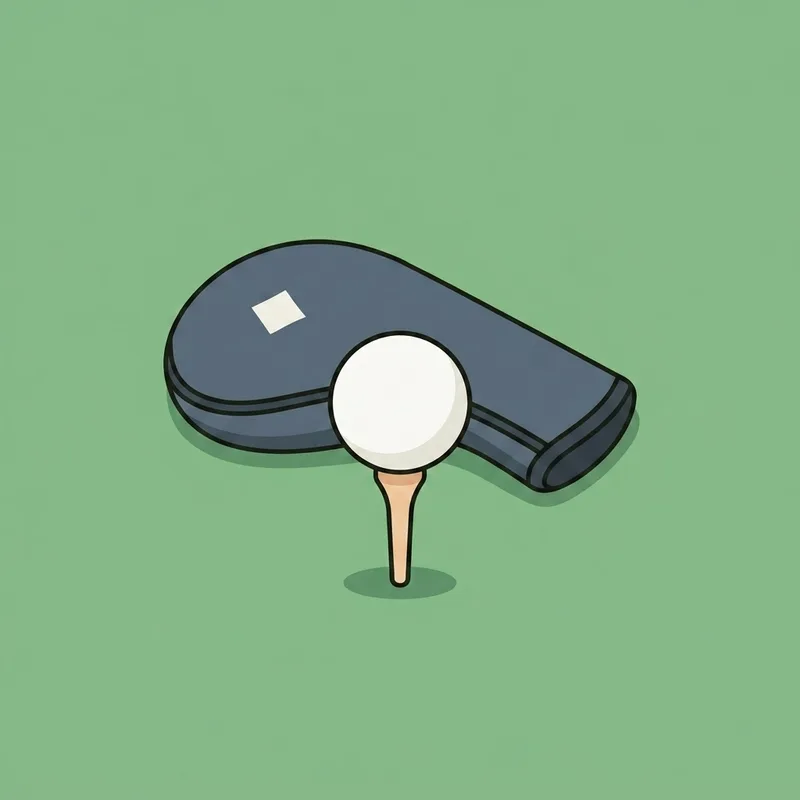
Work through these in sequence. Skipping to the third one without the first two is why skies come back.
What changes when you fix it
The immediate change is that drives start leaving the club lower and flatter than you expect, then climbing. That flat launch feels wrong to a golfer used to seeing the ball balloon, and it is what a properly struck drive looks like.
Distance usually arrives second, a few sessions after the strike changes, once you trust the new low point enough to swing normally. Do not judge the fix on distance in the first week.
The strike you are building here is the same one covered in how to hit a driver, and the low point control behind it is the same idea that governs topping the ball at the other extreme. Both faults are the club arriving at the wrong height, just in opposite directions.
Key takeaways
- A sky mark on the crown proves the clubhead arrived below the ball while still travelling downward.
- The driver is the only club meant to be struck on the way up. Its low point sits behind the ball.
- Teeing the ball lower hides the fault and costs you distance. Half the ball above the crown is correct.
- Ball position too far back is the most common real cause. Driver sits opposite the lead heel.
- Keep the chest and head behind the ball while the hips move toward the target.
- Swinging harder steepens the strike, and the accuracy cost outweighs the small speed gain.
- Expect a lower, flatter launch when it starts working. That is correct, not a new fault.
Common questions
Why do I sky my driver?
The clubhead is arriving below the ball and still travelling downward, so it slides under the equator and the crown catches the ball. It comes from a low point that is ahead of the ball instead of behind it, usually caused by ball position too far back in the stance or the chest drifting forward through impact.
Are sky marks on my driver permanent?
The scuffing is cosmetic on almost all modern crowns and most of it lifts with a soft cloth and a little warm water. It does not affect performance. What it does affect is resale value, which is worth knowing if you rotate drivers often.
Will teeing the ball lower stop me skying it?
It usually stops the mark, but it is a workaround rather than a fix. A low tee removes the upward strike the driver is built for, which costs carry distance and adds spin. Use it for a few rounds if the driver has become frightening, and fix ball position at the same time.
What is the correct tee height for a driver?
Roughly half the ball above the top edge of the clubhead when the driver is soled on the ground behind it. Taller heads need a higher tee than shallow ones, so set it against the club you actually own rather than to a fixed number.
Why do I sky my driver but not my irons?
Because your iron strike is correct. Irons are designed to be hit while the club is descending, and that is what you are doing. The driver is the exception in the bag, and carrying an iron strike into a driver swing produces exactly this fault.
Does skying the ball mean my driver is too long?
Not on its own, though a shaft longer than you can control makes the strike harder to centre. Standard driver shafts have grown over the years and plenty of golfers swing a club an inch longer than suits them. Check ball position and low point first, because those are free.
Why does the ball go so short when I sky it?
The strike is high on the crown rather than on the face, so almost none of the clubhead's energy transfers into the ball, and what does transfer goes into launching it steeply upward with heavy spin. A skied drive is a mishit with the highest launch and lowest efficiency in golf.
Should I hit down on the ball with a driver?
No. This is the single most common misunderstanding behind skied drives. Hitting down works for every club played off the turf and is wrong for a ball on a tee. The tee has already raised the ball for you, so the club should be climbing when it arrives.
Can standing too close to the ball cause a sky?
It contributes. Standing too close makes the swing more upright and steeper, which drags the low point forward. Check your distance from the ball and your posture, since a hunched setup steepens everything. The golf posture guide has the reference points.
How long does it take to stop skying drives?
Ball position changes can stop it inside one session. Making the new low point reliable under normal swing speed takes about three to four weeks of two or three sessions. The drills are short, so add them to sessions you already do rather than making a separate trip.
Do fairway woods sky for the same reason?
Partly. A fairway wood off the turf is meant to be struck level rather than upward, so the low point should sit at the ball, not behind it. A skied fairway wood off a tee is the same fault as a skied driver. Off the deck it is usually a steep, chopping strike instead.
Tom Ashworth
Tom Ashworth is a PGA Professional who has taught golf since 2012, working mainly with beginners and mid-handicappers at club level in Surrey. He reviews the instruction guides on Learn Golf for technical accuracy before they publish.
Most of his teaching is with players in their first three years of the game, and most arrive having been told too much: six swing thoughts collected from videos, half of them contradicting each other. His approach is to check the grip and the alignment before touching the swing, on the basis that most bad ball flight is decided at address.