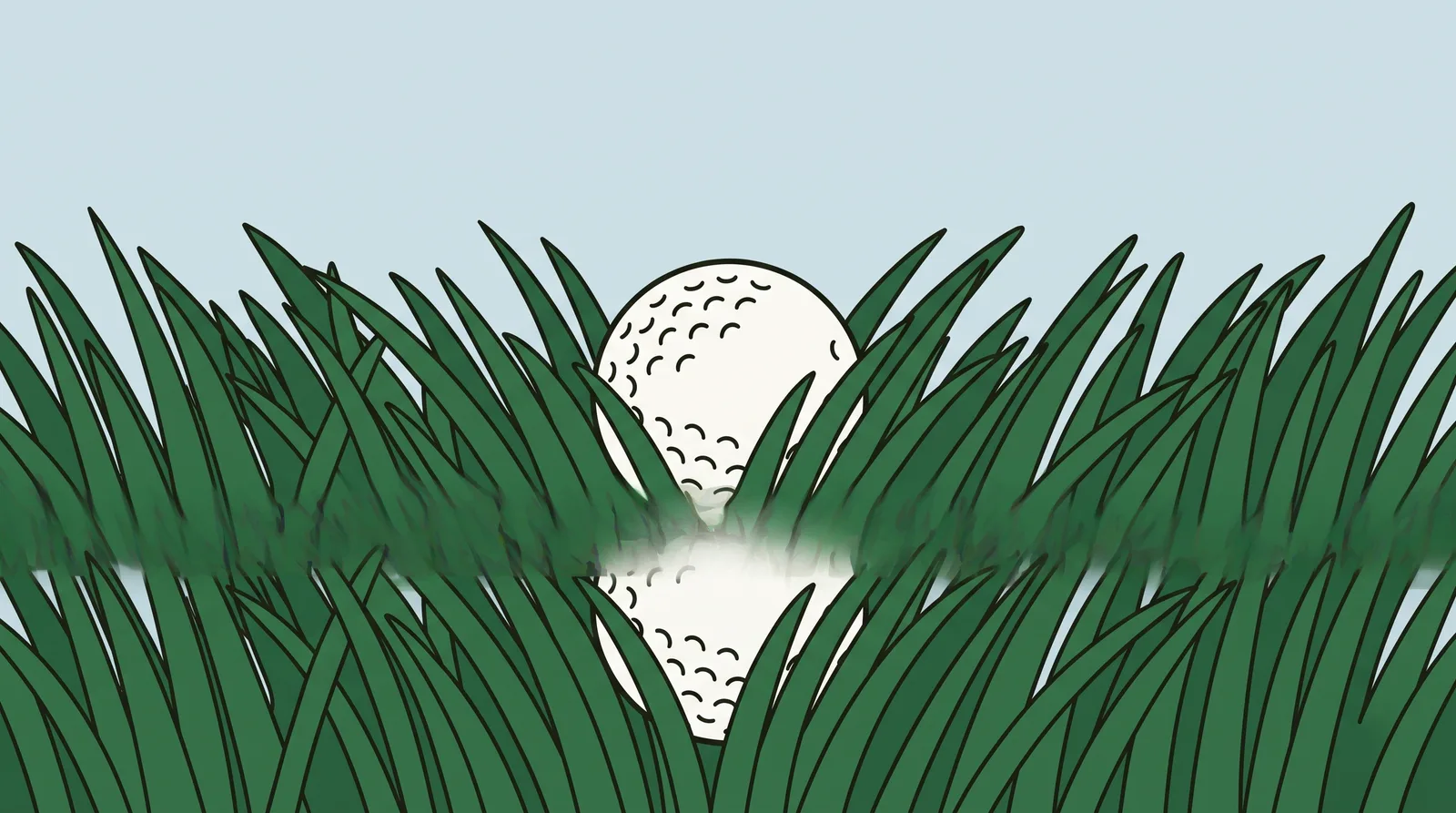
Hooking is the fault nobody warns beginners about, because it usually arrives after a year of hard work. The hands finally release, the club finally comes from the inside, and the ball now dives into whatever is left of the fairway. This guide covers what a hook actually is, how to tell which of the two versions you have, and the fixes for each in the order that works.
Every left and right here assumes a right-handed golfer. If you play left-handed the fault is identical and the ball dives right instead: read a strong grip as one rotated too far the other way, and read aiming right as aiming left.
What a hook actually is
The face and the path decide everything. The clubface sets where the ball starts, and the difference between the face and the direction the club is travelling sets the curve.
TrackMan defines that difference as face to path, and states the rule directly: the ball curves towards the face angle and away from the club path. A hook is therefore a face that is closed relative to the path, and nothing else. The full relationship is worked through in ball flight laws, which is worth ten minutes before you change anything.
The size matters more than most golfers realise. TrackMan's own worked examples put a PGA Tour 6 iron with a five degree face-to-path gap at around twenty yards of curve, and a driver at roughly double that for the same gap. Five degrees is invisible from where you stand.
The curve itself is reported as spin axis, the tilt of the ball's rotation. TrackMan treats anything between minus 2 and plus 2 as straight and puts a spin axis of 10 at roughly 11 yards of curve on a 150 yard shot. A hook is simply that number getting larger in the negative direction.
The two hooks, and why they need opposite work
Both look the same from the tee box. They are not the same fault.
The pull hook starts left of your target and keeps going left. The face is closed to the target as well as to the path, so there is nothing to save it. This is the shot that ends up two fairways across.
The push hook, sometimes called the big miss, starts right of your target and then dives back left. The face is closed to the path but still pointing right of the target, which is why it looks briefly like a good shot before it moves.
| Shape | Starts | Finishes | Face at impact | Path at impact | Fix first |
|---|---|---|---|---|---|
| Pull hook | Left | Further left | Closed to target and path | Roughly neutral or left | The face |
| Push hook | Right | Left of target | Closed to path, still right of target | Well in to out | The path |
| Straight hook | At target | Left | Closed to path | Slightly in to out | The face |
Take three phone videos from directly behind the ball, down the target line, and watch only the first twenty yards. That start line tells you which row you are in. Everything after it is curve, and curve is the gap.
Fix one: your grip is too strong
More hooks come from the hands than from anything in the swing, because the hands are what the face answers to.
Take your normal grip and look down. Two to three knuckles visible on the lead hand is neutral. Four knuckles, with the lead thumb sitting well round the side of the shaft, is a strong grip, and it will deliver a closed face however well you swing. The trail hand does the same job in reverse: if it has crept underneath the grip, it will roll the face shut through impact.
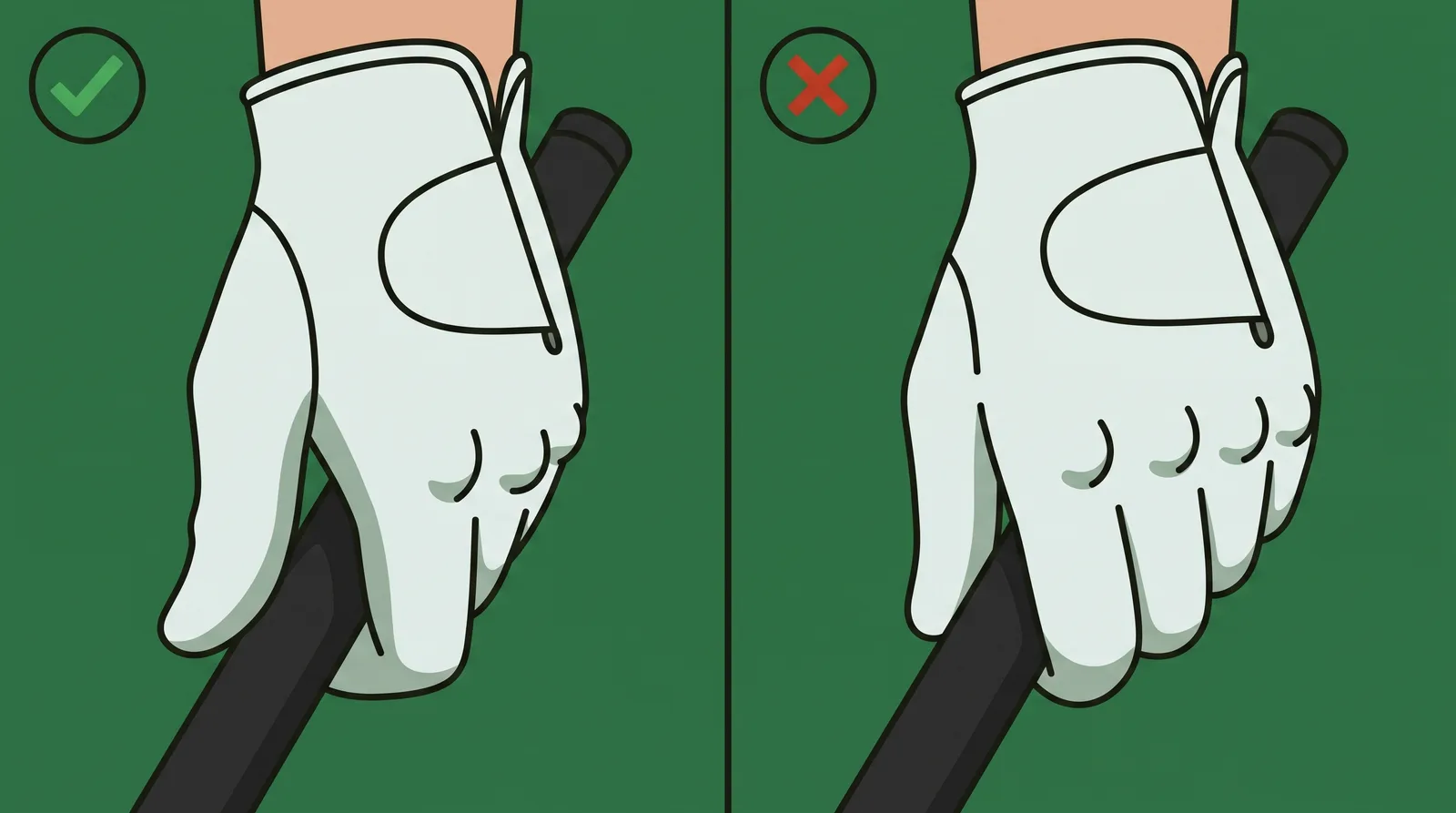
Weakening a grip is uncomfortable and it takes longer than golfers expect. Move the lead hand back until you see two and a half knuckles, not one, because overcorrecting into a weak grip trades a hook for a slice and you will have to do this again from the other side. The three joining styles and what each does to hand pressure are covered in how to grip a golf club.
Fix two: you are aiming right, which feeds the path
Aim is where the hook quietly renews itself, and almost nobody checks it because the feet look fine.
Golfers who hook learn to aim right, because aiming right gives the ball room to turn. The swing then follows the shoulders out to the right, the path gets more in-to-out, the gap between path and face widens, and the ball turns harder. A year of that produces a golfer aiming thirty yards right and hooking forty.
TrackMan's club path convention makes the direction of travel easy to name: a positive number is the club moving right of the target line, which is the in-to-out delivery a hooker already has plenty of. Adding more of it is the opposite of a fix.
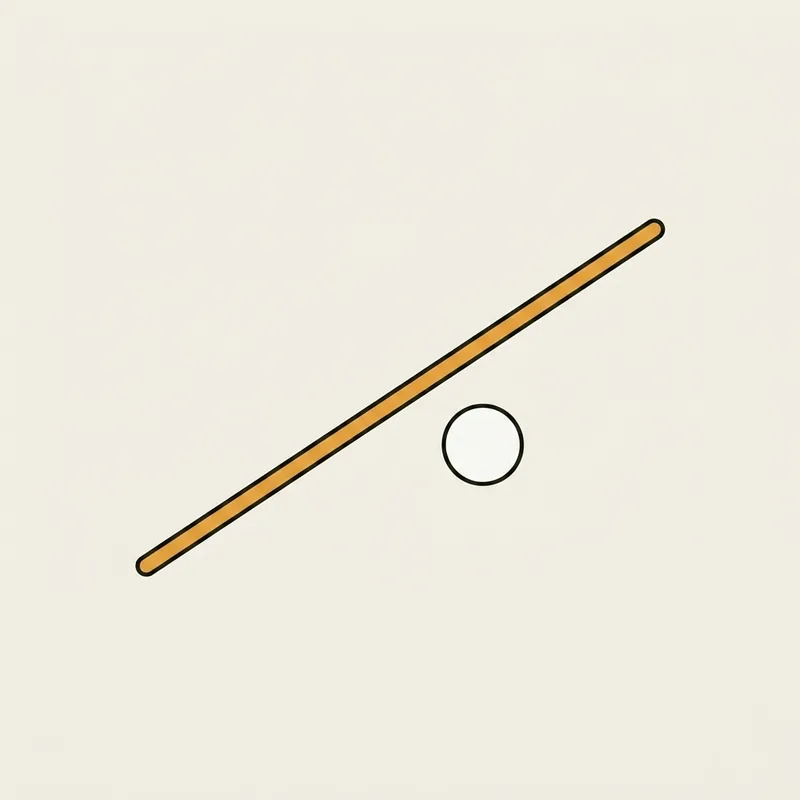
Do it properly. Lay one club on the ground pointing at your target, set your feet parallel to it, then hold a second club across the front of your shoulders and step out of the shot to look. Hookers routinely find the shoulder line aiming ten to twenty degrees right of the feet, which is the closed shoulder position that produces an in-to-out path on its own.
| What you check | Where it should point | The hooker's typical error |
|---|---|---|
| Clubface | Directly at the target | Aimed right, then hooked back |
| Feet | Parallel left of the target line | Closed, with the lead foot dropped forward |
| Hips | Parallel left of the target line | Closed with the trail hip pulled back |
| Shoulders | Parallel left of the target line | Ten to twenty degrees right of the feet |
The complete routine, including how to build it into a pre-shot habit rather than a range exercise, is in golf alignment. Feet are easy to correct and rarely the culprit. Shoulders are the ones that matter, because the club goes where they go.
Fix three: your body stops and your hands take over
If the grip is neutral and the aim is clean and the ball still turns over, the sequence is the cause.
In a hook of this kind the lower body and chest stop rotating early in the downswing. The arms and club, which have nowhere to go, whip past the body and the face rolls shut. Golfers feel this as a fast, handsy release, and it is usually a rotation problem wearing a hands costume.
There is a well-documented physical version of this too. The Titleist Performance Institute reports that 67% of the golfers in its screening database, more than 90,000 players, show early extension, which it defines as the pelvis thrusting towards the ball during the swing. TPI lists a hook among its characteristic misses, alongside the block, and notes that 99% of the elite professionals it has tested do not do it.
How the lower body is supposed to clear, and what it should feel like at full speed, sits in hip rotation in the golf swing. The broader sequence, lower body then torso then arms then club, is set out in golf swing basics.
The equipment that hooks for you
Gear will not create a hook in a neutral swing, but it will hold one in place while you try to fix it.
Lie angle is the one worth checking first. A club that is too upright for your build and posture presents the face left at impact even when your hands are perfect, and it does it consistently, which is why it hides so well. Static fitting charts get you close, and a lie board or impact tape on the sole tells you the truth in five swings. What the number means and how it is adjusted is in golf club lie angle.
Shaft flex and offset both play smaller parts. A shaft too soft for your speed lags behind and closes late, and heavily offset irons are designed to help the face square up, which is exactly what a hooker does not need. Neither is worth changing before the grip, and neither is a fix on its own.
What to work on, and in what order
Order is the whole thing. Working on the path while a strong grip is shutting the face gives you two changes at once and no way to tell which one moved the ball.
Two weeks on the grip alone, half shots with a 7 iron, accepting pushes and weak shots to the right. Those are the face finally arriving square rather than shut.
Two weeks on aim, with a club on the ground and a shoulder check on every single shot. Keep the grip work running underneath it.
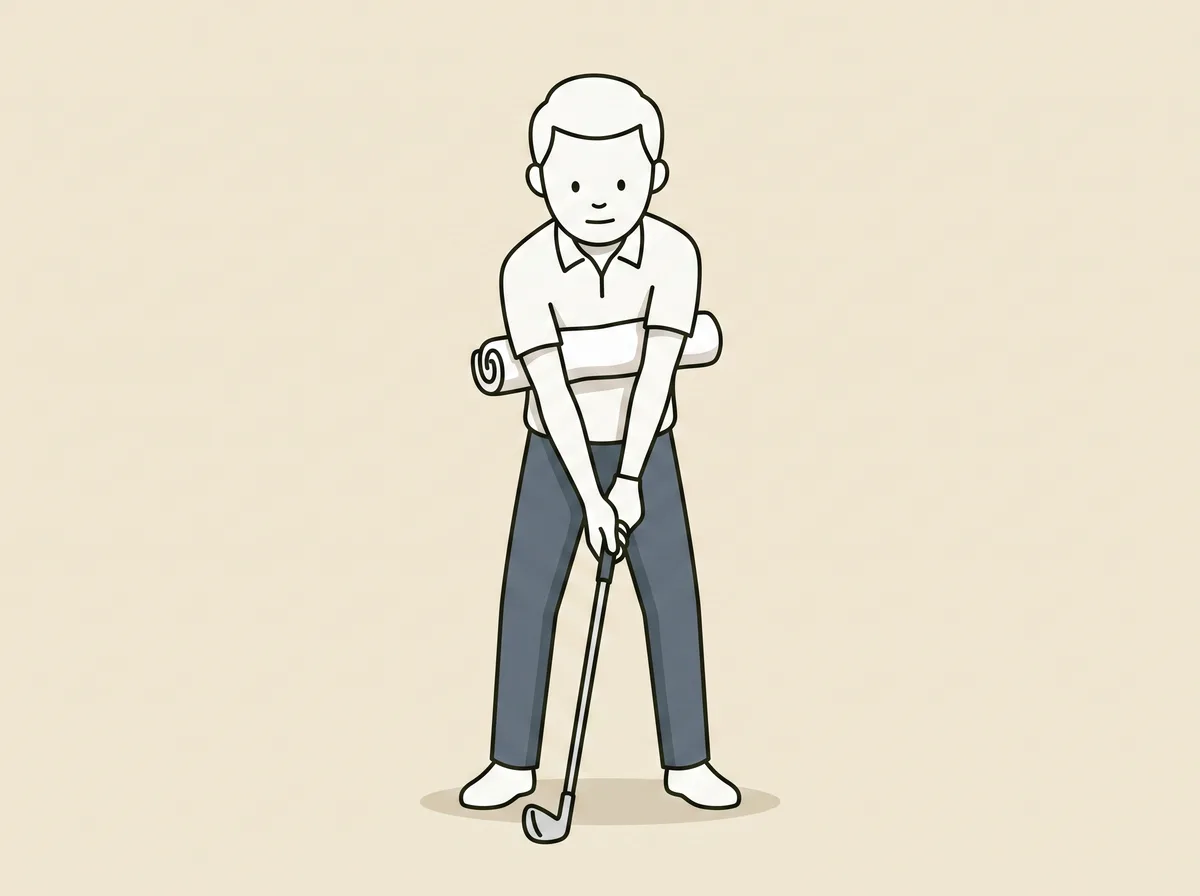
Then, only if the ball still turns, three weeks of the towel drill for the sequence. Give any single change three weeks of consistent practice before you judge it, and change one thing per session rather than three.
If you overcorrect and the ball starts leaking right instead, the sequence of fixes for that is in how to fix a slice, which is this guide's mirror image. If the ball stops curving but starts finishing offline in a straight line, that is a start-direction problem rather than a curve problem, and it is covered in how to fix a push and pull.
When the hook is nearly a draw
A hook is an overdone draw. That is not a consolation prize, it is a description of how close the fix is.
Golfers who hook already own the harder half of a draw, which is a path that comes from the inside. What they do not yet own is a face that matches it within two or three degrees. Once the grip is neutral and the chest keeps turning, the same swing produces a shot that starts right of the flag and works back, which is the shape described in how to hit a draw.
Key takeaways
- A hook is a clubface closed relative to your swing path, not a closed face or an in-to-out path alone.
- Watch the first twenty yards to tell a pull hook from a push hook. They need opposite work.
- Check the grip first. Four visible knuckles on the lead hand delivers a shut face whatever the swing does.
- Weaken the grip to two and a half knuckles, not to one. Overcorrecting buys you a slice.
- Aiming further right widens the gap between path and face and makes the hook bigger.
- Shoulder alignment matters more than feet, and hookers are usually closed by ten to twenty degrees.
- If grip and aim are clean, the cause is a body that stops turning and lets the hands overtake it.
- An upright lie angle presents the face left at impact and will quietly undo every other fix.
Common questions
Why do I hook the golf ball?
Your clubface is closed relative to the direction the club is travelling at impact. The face sends the ball out on its start line and the gap between face and path turns it left. The most common underlying cause is a grip rotated too far away from the target, which delivers a shut face however well you swing.
What is the difference between a hook and a draw?
Only the size of the face-to-path gap. A draw is two or three degrees, which turns the ball a few yards. A hook is closer to eight or ten, which turns it out of play. There is no separate cause to hunt for, which is why the fix is a matter of degrees rather than a rebuild.
Is a hook caused by a strong grip or by swinging inside out?
Usually the grip, and it is the cheaper thing to check. A very in-to-out path with a matched face produces a push, not a hook. It is only when the face is shut to that path that the ball turns, so start with the hands.
Why do I only hook my driver?
The driver has the least loft, so it tilts more of its spin sideways and exaggerates any face-to-path gap. TrackMan's figures show roughly double the curve of a 6 iron for the same gap. It is also the longest club, which gives the face more time to rotate closed. The same fault is in your irons, just smaller.
How do I stop hooking my irons?
Same order as everything else: grip, then aim, then sequence. With irons specifically, check lie angle as well, because a set that is too upright for your posture presents the face left at impact and will keep hooking after your hands are neutral.
What is a duck hook and what causes it?
A duck hook, sometimes called a snap hook, is a low hook that dives almost immediately. It comes from a very shut face combined with reduced loft at impact, usually when the hands flip past the ball early. It tends to appear under pressure, when the body slows down and the arms speed up.
Should I aim right to allow for my hook?
No, and it is the fastest way to make the hook worse. Aiming right encourages a more in-to-out path, which widens the gap between path and face and adds curve. Aim at the target and fix the face instead.
How long does it take to fix a hook?
Give a grip change two weeks of regular practice before judging it, and expect a full pass through grip, aim and sequence to take around six weeks at three sessions a week. It gets worse before it gets better, because a neutral grip feels wide open at first.
Why do I hook the ball when the swing feels good?
Because a hook usually comes from a good release arriving at a face that was already shut, or from the body stopping while the arms keep going. Both feel powerful and well timed. Feel is a poor judge here, which is why the first twenty yards of flight is a better one.
Can the wrong lie angle cause a hook?
Yes. A club that sits too upright at impact points the face left of where your hands aimed it, and it does so on every swing. Check it with impact tape on the sole or a lie board before you accept that the fault is entirely in your hands.
Why did I start hooking after fixing my slice?
Because the grip change that squares the face kept going. A slicer who strengthens the grip and then also learns to release the club can end up several degrees shut. It is a sign the fix worked and then overshot, not a sign you have a new fault.
On this page
Tom Ashworth
Tom Ashworth is a PGA Professional who has taught golf since 2012, working mainly with beginners and mid-handicappers at club level in Surrey. He reviews the instruction guides on Learn Golf for technical accuracy before they publish.
Most of his teaching is with players in their first three years of the game, and most arrive having been told too much: six swing thoughts collected from videos, half of them contradicting each other. His approach is to check the grip and the alignment before touching the swing, on the basis that most bad ball flight is decided at address.