Most golfers who say they want a draw actually want proof that the ball does what they tell it to. A shot that starts right of the flag and turns back is that proof, because it can only happen if two numbers arrived where you sent them. This guide covers what a draw is in measurable terms, the setup that produces one, how to size the curve, and how to tell a draw from the thing that ruins scorecards.
Every left and right on this page assumes a right-handed golfer. If you play left-handed the shape is the mirror image and the words swap completely: a draw still curves towards your lead side, which means it moves left to right across the ground for you. Aim your body left of the target, aim the face at it, and read every "right" below as "left".
What a draw actually is
Two numbers make a draw and neither of them is a swing thought. The club face decides where the ball starts, and the difference between the face and the club path decides which way it bends and by how much.
TrackMan states the start line rule plainly: the ball launches very closely to the direction the face is pointing at impact. Its club path convention then names the other half, where a positive number means the club is travelling right of the target line, which most golfers call in to out.
A draw is those two set deliberately. The path travels right of the target. The face sits left of that path, which is what turns the ball, but still right of the target itself, which is what makes the ball start right of the flag rather than at it. Get the ordering wrong and you have a different shot entirely. The full derivation is in the ball flight laws, and this page assumes it rather than repeating it.
A draw is not a small hook you have learned to live with
This is the distinction the whole page rests on, and it is not a matter of degree.
A hook is a gap you did not choose, produced by a face that shuts because of how you hold the club or how your body stops turning. A draw is a gap you selected, from a start line you selected, and you can make it smaller or larger on request. A golfer who hits a right-to-left shape every time and cannot make the ball go straight does not have a draw. They have a hook that has found a friendly hole.
The test is a start line, not a finishing position. Pick a marker thirty yards ahead and right of your target, hit five balls, and count how many started right of it. One or two means the face is not under control and the curve is luck. If the ball finishes left of where you aimed the face, the gap has run away, and the fixes are in how to fix a hook.
The setup, in the order you build it
Almost all of a draw is aim, and aim is built before the club moves.
- Pick the target, then pick a start point right of it. The distance between them is the curve you are asking for.
- Set the club face at the target first, before your feet go anywhere. The face is the start line, so it gets set first and then left alone.
- Build your stance so your feet, hips and shoulders line up with the start point, not the target. Shoulders matter most, because the club follows them.
- Move the ball about one ball back from where you normally play that club, which gives the club a moment to arrive before the arc swings back to the left.
- Take your normal grip. If it is genuinely weak, with one knuckle showing, move to two, but do not build a draw out of a strong grip.
- Swing along your body line and let the ball get in the way.
| What you set | Where it points | What it controls |
|---|---|---|
| Club face | At the target, or a fraction right of it | The start line, and half of the curve |
| Feet, hips, shoulders | Right of the target by roughly the curve you want | The club path |
| Ball position | About one ball back of normal for that club | Whether the club arrives before the arc turns left |
| Grip | Neutral, two to three knuckles on the lead hand | How easily the face closes to the path |
The aim half of this is a skill in itself, and most golfers who cannot produce a draw are aiming their shoulders somewhere their feet are not. The full check, including how to test it without a coach, is in golf alignment.
How much curve you are actually asking for
Golfers overestimate the size of a good draw by a factor of about three. The tour numbers are startlingly small.
| Player and club | Face closed to path | Resulting curve |
|---|---|---|
| PGA Tour driver | 2 degrees | About 19 yards left |
| PGA Tour 6 iron | 5 degrees | About 20 yards left |
| LPGA Tour driver | 5 degrees | About 32 yards left |
| LPGA Tour 6 iron | 2 degrees | About 6 yards left |
Those come from TrackMan's face to path examples, measured with centred contact. Two degrees, which is far too small to see when you look down at the club, is worth around 19 yards of movement with a driver. That is the whole shape. Nobody is manufacturing ten degrees on purpose.
TrackMan's spin axis data gives the same message from the other end. Anything between minus 2 and plus 2 counts as a straight shot, and a spin axis of minus 10 produces about 11 yards of curve on a 150 yard shot and about 15 yards at 200. A playable draw lives in that range, not beyond it.
The feel, and what it is really doing
Feel is where draws are won and where descriptions of them fall apart, because the sensation is nothing like the geometry.
The body is what makes the path travel right, not the arms. A chest that keeps rotating through the shot lets the club approach from the inside and stay there. A chest that stops leaves the arms to throw the club at the ball, which sends the path left however hard you try to feel otherwise.
Steep is what kills an in-to-out path
There is a physical reason many golfers cannot draw the ball no matter how far right they aim. A steep, descending delivery pulls the path left across the ball on its way down, so aiming further right just widens the gap in the wrong direction.
Your divots tell you. A shallow strip of turf, thin enough to read a newspaper through, comes from a club approaching on a flatter arc. A deep gouge comes from a club descending sharply, and a club descending sharply is travelling left when it arrives.
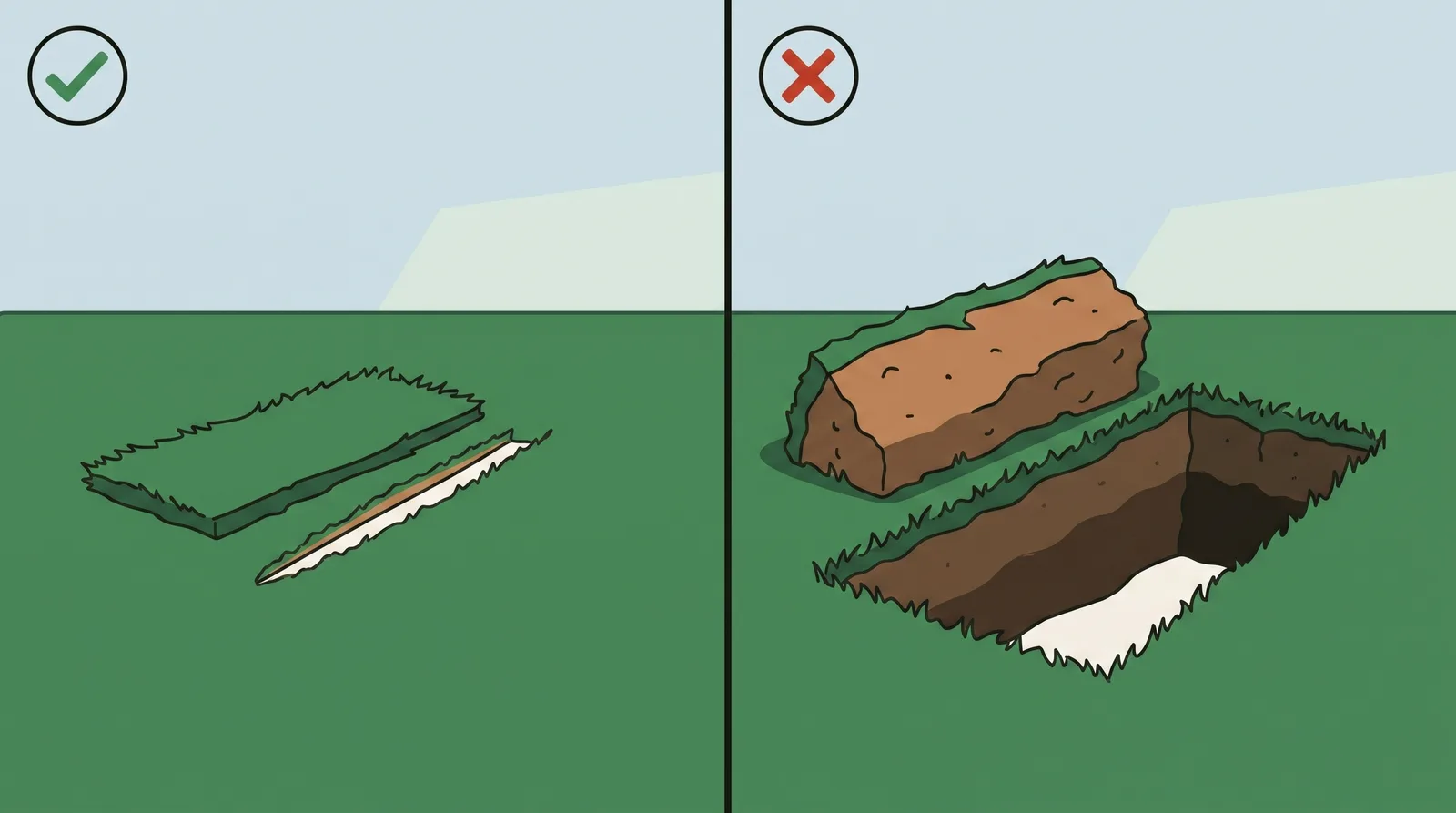
Shallowing the delivery is a bigger job than aiming, and it belongs to the transition rather than to the setup. If your divots are deep and your ball still starts left after a fortnight of the drills below, that is the work to go and do.
Three drills with a dose
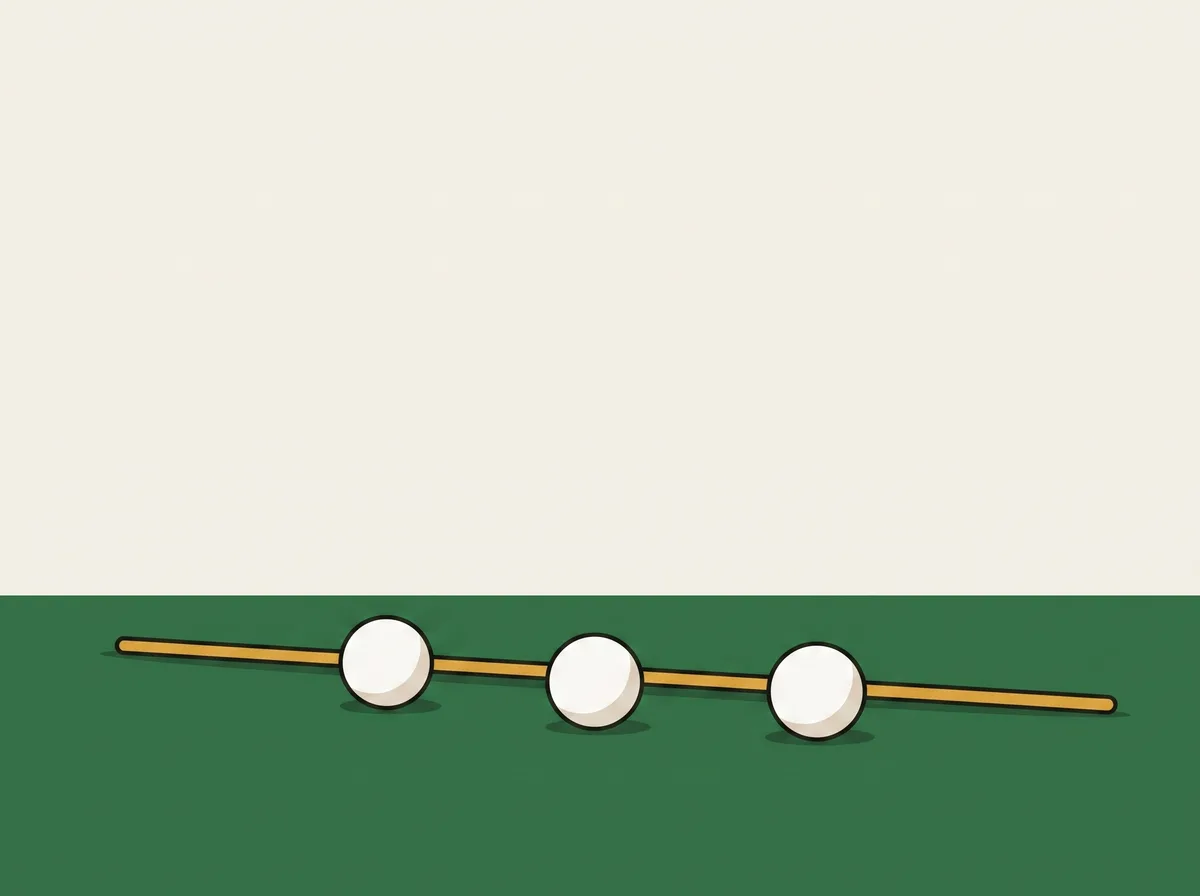
Each of these trains a start line or a path, because those are the two things a draw is made of.
Why you might want one, and when you should not
A draw earns its place for reasons that have nothing to do with looking like a tour player. It launches a little lower with slightly less spin, so it runs on landing, which is useful on firm ground and into a wind. It fits a hole that bends right to left. And it is the natural shape for a golfer whose path already comes from the inside.
It is not free. A shot that turns is a shot with one more variable in it, and the ground it runs out on is ground you cannot always see. Deciding when a shape is worth playing is a course management question rather than a technique one, and golf course management covers the trade properly.
The mirror of this page, with its own start line, its own setup and its own miss, is how to hit a fade. Neither is better. They are the same relationship pointed the other way.
Key takeaways
- A draw is a path travelling right of the target with the face closed to that path but still right of the target itself.
- The face sets the start line, so the face is aimed first and the body is aimed around it.
- Aim the body right by roughly the amount of curve you want, then swing along the body line.
- Two degrees of face to path is worth around 19 yards of curve with a driver. Playable draws are small.
- A shape you cannot switch off is not a draw. Test it on start line, not on where the ball finishes.
- Closing the face at address produces a pull hook, because it moves the start line to the wrong side.
- A steep, descending delivery drags the path left, so shallow out before aiming further right.
- Left-handed golfers mirror everything: a draw still curves towards the lead side, which is left to right across the ground.
Common questions
How do I hit a draw with a driver?
Same recipe as any other club, with one caution. Aim the face at the target, aim your body right of it, and swing along the body line. The driver has the least loft in the bag, so it tilts more spin sideways and turns roughly twice as much as a mid iron for the same gap. Aim your body less far right than you would with an iron.
What is the difference between a draw and a hook?
The size of the gap between face and path, and whether you chose it. A draw is two or three degrees of gap from a start line you picked. A hook is closer to eight or ten from a face that shut without being asked. There is no separate mechanism, which is why one becomes the other so easily.
Why does my draw turn into a hook?
Because the gap widened rather than because a new fault appeared. The usual causes are a grip that has drifted stronger over time, a body that stops rotating and lets the hands overtake it, or aiming further right after a bad shot, which increases the path number and the gap with it.
Should I close the clubface to hit a draw?
No. Closing the face at address moves your start line left, which is the opposite of what a draw needs. The face should point at or slightly right of the target and be closed relative to the path, not relative to the target line.
Does a draw go further than a fade?
A draw usually launches slightly lower with less spin, so it tends to run out more once it lands. Carry distance is decided by speed, strike and launch conditions rather than by the direction of the curve, and any extra total yardage comes from roll on firm ground rather than from the shape itself.
How far right should I aim to hit a draw?
Roughly the amount of curve you want, which for most golfers is five to ten yards on a mid iron. Start at five, hit ten balls and look at the result before going further. Aiming thirty yards right and hoping is how a draw becomes a hook.
Why does my ball start right and never come back?
That is a push, which means the face and the path agreed with each other and both were pointing right. The aim half is working and the face has not been given anything to turn against. Leave the body aim alone and let the face arrive a degree or two closed to the path.
Do I need a stronger grip to hit a draw?
Not if your grip is already neutral at two to three knuckles. A stronger grip closes the face relative to the path and will produce a turn, but it does so on every shot, including the ones where you wanted the ball to go straight. Aim is a per-shot decision, grip is not.
How do I hit a draw if I am left-handed?
Mirror it. Aim your body left of the target, aim the face at the target, and swing along the body line. The ball starts left of the target and turns back right. The curve still moves towards your lead side, and the degrees of gap and the size of the curve are identical.
How long does it take to learn a draw?
Four to six weeks of two or three sessions a week to produce one on demand at the range, and considerably longer before you trust it on a course. Expect the start line to become reliable well before the curve does, because the face is the part you can practise directly.
On this page
- What a draw actually is
- A draw is not a small hook you have learned to live with
- The setup, in the order you build it
- How much curve you are actually asking for
- The feel, and what it is really doing
- Steep is what kills an in-to-out path
- Three drills with a dose
- Why you might want one, and when you should not
Tom Ashworth
Tom Ashworth is a PGA Professional who has taught golf since 2012, working mainly with beginners and mid-handicappers at club level in Surrey. He reviews the instruction guides on Learn Golf for technical accuracy before they publish.
Most of his teaching is with players in their first three years of the game, and most arrive having been told too much: six swing thoughts collected from videos, half of them contradicting each other. His approach is to check the grip and the alignment before touching the swing, on the basis that most bad ball flight is decided at address.