Club selection looks like the simplest decision in golf. Read the yardage, pick the club that goes that far, swing. In practice it is the decision amateurs get wrong most often, and tracked shot data shows the error runs almost entirely one way: too little club, too much loft, and a ball that finishes short of everything.
The number you play to is not your longest number
Every golfer has two distances for each club: the one they hit when everything is perfect, and the one they hit most of the time. Almost everyone plays to the first and scores with the second.
Shot Scope handles this with a metric called Performance Average, which strips the extreme outliers, good and bad, out of the calculation. It is the distance a club goes when the shot is struck reasonably rather than exceptionally, and across their whole database it produces an average driver distance of 225 yards and an average 3 wood distance of 203, published in their analysis of driver against 3 wood off the tee. Write down the number you reach when the strike is fine but unremarkable, and play to that. Building the list properly is covered in a golf club distance chart.
The most predictable mistake in the game is coming up short
Shot Scope went looking for the situations in amateur golf that land closest to a coin toss, and one of them is not random at all. Their analysis of golf's fifty-fifty scenarios found that a 20 handicap playing an approach from 150 yards finishes short of the green half the time. Not left, not right, not long. Short.
Course design makes that expensive. Architects put bunkers, run-offs, thick rough and water short of greens precisely because that is where the average golfer misses, so half of all 150 yard approaches from a 20 handicap feed into the most punishing part of the hole. The fix costs nothing except an admission about how far you actually hit it.
Distance to what, exactly
A yardage marker gives one number and the shot needs three: the front, which has to be carried, the middle, which is the default target, and the back, which tells you how much room there is if you catch one. On a large green that spread is routinely 30 yards, or two clubs. Playing every approach to a single number is why golfers who genuinely know their distances still finish in the wrong place.
What being closer is genuinely worth
The reason distance off the tee matters is not the drive itself. It is that the next shot is played from somewhere better. Shot Scope's work on approach shot proximity shows the effect plainly, and the numbers by handicap in their piece on what club to hit off the tee put a size on it.
| Distance to the flag | Average proximity, 25 handicap |
|---|---|
| 80 yards | 59 feet |
| 100 yards | 77 feet |
| 150 yards | 119 feet |
A 15 handicap follows the same curve less steeply, going from 60 feet at 100 yards to 89 feet at 150, and gaining around 11 feet by moving from 100 yards to 80. Even a scratch golfer tightens from 42 feet at 150 yards to 27 feet at 80.
Read those as putting numbers rather than approach numbers. A ball 119 feet from the hole is roughly 40 yards away and is a three-putt waiting to happen. That is the real cost of the shorter club off the tee, and it arrives two shots later where nobody connects it to the decision that caused it.
Driver against 3 wood, and where the argument gets weak
The received wisdom is that a shorter club off the tee is a more accurate club off the tee. Tracked data says the accuracy part is close to a myth.
| Off the tee, across all handicaps | Driver | 3 wood |
|---|---|---|
| Performance average distance | 225 yards | 203 yards |
| Fairways hit | 46.6% | 47.4% |
| Par 4 scoring average after this club | 4.81 | 5.11 |
The first two rows come from Shot Scope's driver against 3 wood analysis, the third from their tee club study. The accuracy gap is 0.8 of a percentage point, which is nothing, and the distance gap is over 20 yards, which is around two clubs into the green. Shot Scope's own conclusion is that golfers should hit driver wherever it is reasonable to do so.
The hole-by-hole version of this decision, including how to price a hazard in strokes before you choose, sits in golf course management. Where the tee club matters most is the hole that needs two long shots, which is how to play a par 5.
The lie changes the club before the yardage does
A number from a good lie and the same number from a bad one are different shots, and the club has to move.
| Lie | What it does to the shot | Club adjustment |
|---|---|---|
| Fairway | Nothing. This is the baseline | None |
| Light rough | Less spin, more roll, harder to control distance | Usually less club, plan for run |
| Thick rough with the ball down | Removes distance control entirely | Whatever advances it to a full swing number |
| Fairway bunker | Costs loft and clean contact | Two clubs more, and enough loft to clear the lip |
| Uphill lie | Adds height, takes distance | One more club |
| Downhill lie | Takes height, adds run | One less club, and expect it to release |
The proximity data backs the ranking: from 60 to 100 yards, average proximity is 40 feet from the fairway, 46 from the rough and 56 from sand. Awkward stances are covered in uneven lies in golf.
Around the green, the club is nearly always too lofted
The clearest club selection error in amateur golf happens inside 30 yards. Shot Scope's data on club performance found that the typical 15 handicap reaches for a lob wedge on 23 percent of their up and down attempts and converts only one in four of them.
A lob wedge is the least forgiving club in the bag. It needs a precise low point and punishes a heavy strike more than anything else, and it is the club most often picked by the golfer least equipped to use it. A 9 iron landed on the front third of the green and allowed to run does the same job with a swing that survives a mediocre strike.
The full case for the lower option, and when the high one is genuinely required, is in how to chip a golf ball. Partial wedge distances, which is the other half of this problem, are in wedge distance control.
Wind, elevation and temperature
Three conditions move the number before you touch a club, and golfers underclub for all three.
Wind into the face costs more than the same wind behind gives back, because a headwind adds spin and height to a ball that was already climbing. Elevation change is the adjustment most amateurs skip entirely, because the number on the marker does not mention it. And cold air is denser, so a winter round wants more club than the same shot in July. Playing a full round in a real blow is covered in playing golf in the wind.
Fix the gaps before you buy anything
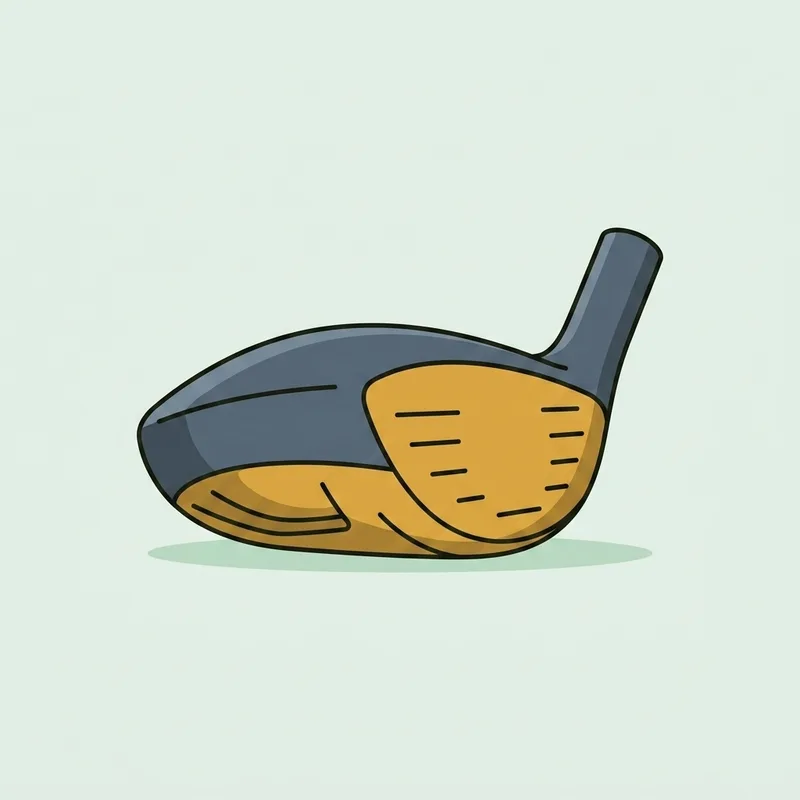
Fourteen clubs only helps if the distances between them are even. A bag with 15 yards between the 7 and 8 irons and 35 yards between the 4 iron and the 5 wood has a hole in it, and that hole shows up as a shot with no right club, which is a shot the golfer manufactures and mishits.
The two places gaps go wrong are predictable. At the long end, most amateurs carry a long iron they cannot launch, which is the argument for a replacement covered in how to hit a hybrid. At the short end, a 46 degree pitching wedge and a 56 degree sand wedge leave a ten degree gap that swallows every shot between 60 and 90 yards. What each club is built to do is in types of golf clubs, and how to spend the fourteen is in how many clubs in a golf bag.
- Get the real number to the front, middle and back of the green rather than one number to the flag.
- Judge the lie and decide whether a full, controlled swing is available from it. If it is not, the club is whichever one gets you back to a full swing number.
- Adjust for elevation, wind and temperature before you look at the bag, not after.
- Ask what sits short of the green and what sits long, then pick the side you would rather miss on.
- Take the club that reaches the middle on an ordinary strike and commit. Changing clubs over the ball produces the tentative swing that comes up short anyway.
Key takeaways
- Play to the distance you hit a club on an ordinary strike, not your best one.
- Amateur approach shots miss short far more than long, and courses are designed to punish exactly that.
- A 25 handicap averages 59 feet from 80 yards and 119 feet from 150, so the shorter approach is worth two putts as often as one.
- Driver and 3 wood find the fairway at almost identical rates, which removes the usual argument for laying back off the tee.
- Reach for a designated fairway club on the specific holes where a penalty area is genuinely in range, not as a general policy.
- The lie decides the club before the yardage does, and a bad lie means picking the club that restores a full swing.
- Around the green, less loft forgives a poor strike and more loft does not.
- Even gaps through the bag matter more than the distance of any single club.
Common questions
How do I know which golf club to use?
Start from the distance you carry that club on an ordinary swing rather than your best ever strike, then adjust for the lie, elevation, wind and temperature. Aim at the middle of the green unless the lie is perfect, and take the extra club when the decision is close, because amateur misses cluster short.
Should I always hit driver off the tee?
Tracked data makes it the default rather than the exception. Driver and 3 wood find the fairway at almost the same rate across all handicaps, while driver leaves the ball more than 20 yards closer, which is roughly two clubs into the green. Take less club on the specific holes where a penalty area or out of bounds is genuinely reachable, not as a general habit.
Why do my approach shots always come up short?
Because the club was chosen for a perfect strike and the strike was ordinary. Shot Scope found a 20 handicap finishes short of the green from 150 yards half the time. Adding a club and swinging smoothly, rather than taking less club and swinging harder, corrects most of it immediately.
How many yards is one club?
Roughly 10 to 15 yards for most amateurs through the irons, and less at the wedge end. The honest way to find your own number is to write down what each club does on the course over several rounds rather than to assume an even spacing.
What club should I use from 100 yards?
Whichever one carries 100 yards on a normal swing from that lie, which for most golfers is a pitching wedge or a gap wedge rather than a sand wedge. If the lie is in the rough or you are between clubs, take the longer one and make a controlled swing rather than a full effort with the shorter one.
Does the lie change which club I should hit?
Yes, and usually before the yardage does. Thick rough removes distance control, a fairway bunker costs both loft and clean contact, and an uphill lie adds height while taking distance. When a full, controlled swing is not available, the club is whichever one returns you to a full swing number.
What club should I chip with?
The least lofted club that will carry the ball onto the putting surface and let it run to the hole, which is often a 9 iron or pitching wedge rather than a lob wedge. Tracked data has a 15 handicap using a lob wedge for nearly a quarter of their up and down attempts and converting only one in four.
How much does wind change club selection?
More into the face than behind, because a headwind adds height and spin to a ball that was already climbing. Take the extra club early rather than after the first shot in the wind comes up short, and swing at the same effort rather than harder.
Should I take more club and swing easier, or less club and swing hard?
More club, easier swing, nearly every time. A harder swing changes tempo, low point and face control at once, which is three new variables to solve a distance problem that one extra club already solved.
On this page
- The number you play to is not your longest number
- The most predictable mistake in the game is coming up short
- Distance to what, exactly
- What being closer is genuinely worth
- Driver against 3 wood, and where the argument gets weak
- The lie changes the club before the yardage does
- Around the green, the club is nearly always too lofted
- Wind, elevation and temperature
- Fix the gaps before you buy anything
Tom Ashworth
Tom Ashworth is a PGA Professional who has taught golf since 2012, working mainly with beginners and mid-handicappers at club level in Surrey. He reviews the instruction guides on Learn Golf for technical accuracy before they publish.
Most of his teaching is with players in their first three years of the game, and most arrive having been told too much: six swing thoughts collected from videos, half of them contradicting each other. His approach is to check the grip and the alignment before touching the swing, on the basis that most bad ball flight is decided at address.