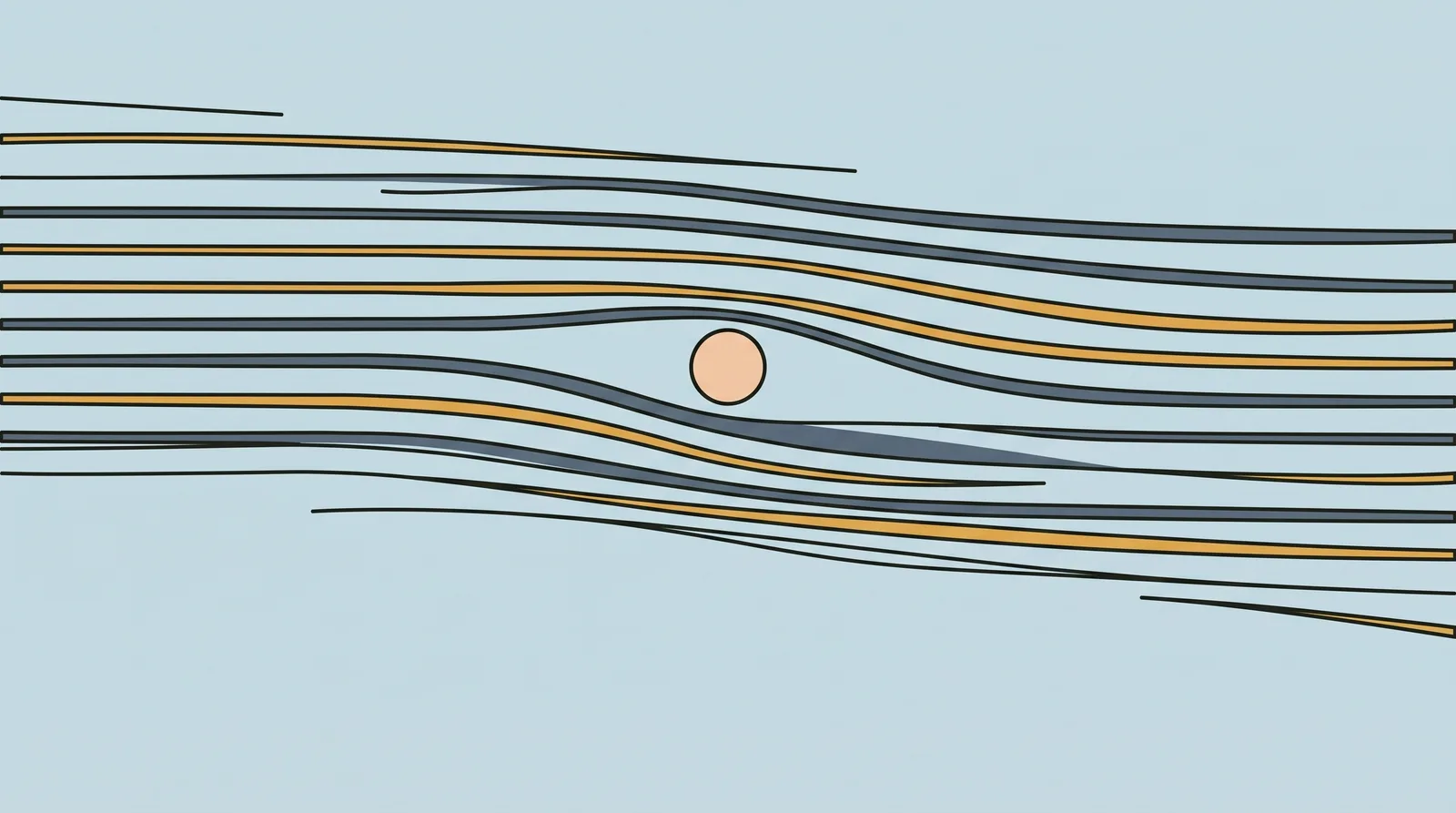
You take one extra club into the wind, swing harder to be sure, and watch the ball climb, stall and drop 30 yards short. Wind is the condition that punishes effort most directly, because the harder you swing the more spin you generate and spin is what the wind feeds on. This guide covers what wind actually does and how to take the sting out of it.
Wind attacks spin, not distance
This is the piece most golfers have backwards. Into a headwind, the air is moving toward the ball, which increases the effective airspeed over it. More airspeed over a spinning ball means more lift, so the ball climbs higher than normal, runs out of speed, and drops almost vertically.
The distance loss is real, but it is mostly a consequence of the ball ballooning rather than the wind physically holding it back. That is why the fix is flight, not force.
Downwind the reverse happens. The air is moving with the ball, so effective airspeed falls, lift falls, and the ball flies flatter and lower than you expect. Downwind shots often come up shorter in the air than golfers assume, then run a long way on landing.
Flighting the ball down
The knock-down is the shot that makes wind survivable. It is not a different swing, it is the same swing with four setup changes.
- Take two more clubs than the yardage suggests. An 8 iron distance becomes a 6 iron.
- Grip down about an inch, which shortens the club and reduces speed and spin.
- Play the ball an inch back of your normal position for that club.
- Set slightly more weight on your lead foot and keep your hands ahead of the ball.
- Swing to about three quarters and, most importantly, finish low. A low finish is the whole shot.
The finish is the checkpoint that matters, because it is the only part you can see. If your hands finish above your shoulder you made a normal swing, whatever you intended. Hands finishing at chest height means the club stayed down and the ball came out flat.
The full version of this shot, including when to use it off the tee, is in how to hit a punch shot.
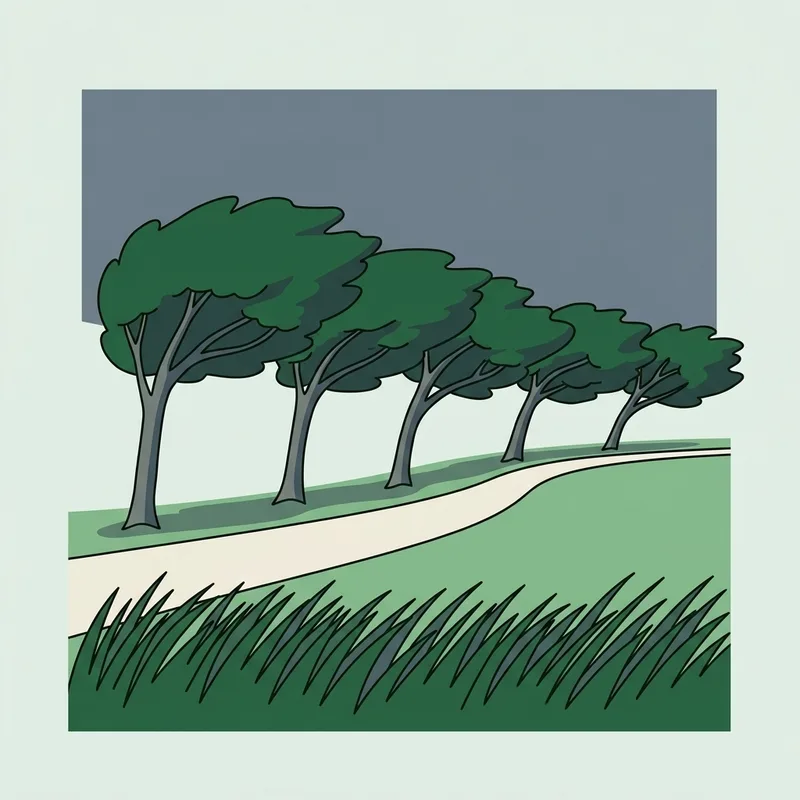
Crosswinds: ride it or hold it
Two schools, and the right answer depends on your reliability rather than your ambition.
Riding the wind means aiming into the wind and letting it carry the ball back to the target. A left-to-right wind, you aim left and let it drift. It is the higher-percentage play because you are working with the wind rather than against it, and if you misjudge the strength you are still on the correct side of the hole.
Holding it against the wind means curving the ball into the wind so the two cancel out, a draw into a left-to-right breeze. It produces a straighter, more penetrating flight and it requires you to shape the ball reliably on demand. Most amateurs cannot, and a failed attempt gets doubled by the wind rather than cancelled.
Ride it, unless you genuinely shape the ball on command. The shot shapes themselves are in how to hit a draw if you want to build the skill.
| Wind | What it does | The play |
|---|---|---|
| Into | Ball climbs, spins up, falls short and steep | Two more clubs, 75% swing, low finish |
| Downwind | Ball flies flatter and lower, then runs | One or two less club, expect big run, land it short |
| Left to right | Pushes the ball right and adds to a fade | Aim left, ride it, allow more than looks right |
| Right to left | Pushes the ball left and adds to a draw | Aim right, ride it, and beware a draw becoming a hook |
| Swirling or gusting | Unpredictable, especially among trees | Club up, keep it low, play to the middle |
Where wind changes the whole plan
Club selection is only half of playing well in wind. The other half is what you aim at.
Downwind approach shots are harder than they look, because the ball lands with less spin and runs. A downwind pin at the back of a green is a genuinely difficult shot, and the miss is long. Land it short and let it release.
Into the wind, the ball lands steeply and stops fast, which means you can be more aggressive at a flag than the conditions feel like they allow.
On the tee, wind exaggerates whatever curve you already have. A slice in a left-to-right wind becomes an unplayable slice. On those holes a 3 wood or a long iron is a better decision than a driver, and the arithmetic behind that sort of choice is in golf course management.
Wind and rain usually arrive together, and the two conditions compound in ways worth planning for, which is covered in how to play golf in the rain.
Key takeaways
- Wind exaggerates spin more than it blocks distance. A high spinning ball suffers most.
- Into the wind, take two more clubs and swing at 75%. Effort adds spin and makes it worse.
- The low finish is the checkpoint. Hands at chest height means the club stayed down.
- Downwind the ball flies flatter and runs. Land it short and expect release.
- In a crosswind, ride the wind rather than fighting it unless you shape the ball on command.
- Read the wind from treetops and clouds, not from the flag in a sheltered green complex.
- Into the wind you can attack a flag, because the ball lands steeply and stops.
Common questions
How much club should I take into the wind?
Two more than the yardage suggests, combined with a three quarter swing. The extra loft you lose by gripping down and shortening the swing is what keeps the ball flight low, and the extra clubs replace the distance. One club and a full swing is the combination that fails.
Why does the ball go so much shorter into the wind?
Because the headwind increases the airspeed over a spinning ball, which increases lift and makes the ball climb. A ballooning ball runs out of speed and drops steeply. The loss comes mostly from the ball going up rather than the wind pushing it back, which is why lower flight is the fix.
How do I hit a knock-down shot?
Take two more clubs, grip down about an inch, move the ball an inch back in your stance, keep your hands ahead, and swing to three quarters finishing with your hands no higher than your chest. The low finish is the part that actually produces the flight.
Should I aim into a crosswind or let it carry the ball?
Let it carry, for almost every amateur. Aiming into the wind and riding it back means a misjudged wind still leaves you on the correct side of the target. Holding a shot against the wind requires reliable shot shaping, and a failed attempt gets doubled rather than cancelled.
Does wind affect putting?
On exposed greens in a strong wind, yes. It can move a ball at rest, which has its own rules implications, and it will affect the pace of a putt noticeably into or downwind. Widen your stance for stability and expect the ball to hold its line less well than usual.
Is it better to hit a lower ball in the wind?
Yes, in almost every direction of wind. A lower, lower-spinning ball spends less time exposed and is deflected less. That is true into the wind, in a crosswind, and even downwind where a lower flight gives you more predictable run.
How do I judge wind strength on a golf course?
Look at the tops of trees and at clouds rather than at the flag, because green complexes are usually sheltered and the flag tells you about ground level only. Throwing grass tells you the same limited thing. The wind your ball flies through is often a club stronger than the wind you are standing in.
Does a headwind make the ball curve more?
Yes, substantially. A headwind exaggerates whatever sidespin you already have, so a small fade becomes a big slice. That is why club choice off the tee matters more in wind: taking a 3 wood or long iron on a tight hole is often the difference between playing the hole and reloading.
Should I use a different golf ball in the wind?
It can help. A lower-spinning ball balloons less into a headwind and is deflected less in a crosswind, while a high-spin premium ball is the one that suffers most. It is a marginal gain compared with club selection and flight, but it is a real one.
Why do downwind shots come up short?
Because the reduced airspeed over the ball reduces lift, so the ball flies flatter and lower than the yardage suggests and does not carry as far in the air. It then runs a long way on landing. Plan for a shorter carry and a much longer roll, and land it well short of the flag.
Tom Ashworth
Tom Ashworth is a PGA Professional who has taught golf since 2012, working mainly with beginners and mid-handicappers at club level in Surrey. He reviews the instruction guides on Learn Golf for technical accuracy before they publish.
Most of his teaching is with players in their first three years of the game, and most arrive having been told too much: six swing thoughts collected from videos, half of them contradicting each other. His approach is to check the grip and the alignment before touching the swing, on the basis that most bad ball flight is decided at address.