
A golf bag is the only piece of luggage in sport that gets packed once and then carried for years without review. Clubs get bought, swapped and argued over. Everything else accumulates. Here is what actually belongs in a bag, how much of it to carry, which pocket each thing lives in, and the honest reckoning about the weight nobody ever uses.
The clubs are the easy part
Fourteen is the maximum under Rule 4.1b, there is no minimum, and which fourteen to carry is its own argument covered in how many clubs in a golf bag. What matters for the bag itself is not which clubs but where they sit.
Divided tops exist so a set can be found by feel. The convention that works is longest at the back, shortest at the front: driver and woods in the top dividers nearest the strap side, irons through the middle in descending order, wedges and putter at the front where they are reached for most. A putter with an oversized grip usually needs its own slot or it jams everything else.
Two habits do most of the work. Clubs go back in their own slot rather than the nearest one, and the bag gets stood up rather than laid flat, because a bag on its side is how head covers migrate and how a wet towel ends up against the grips. Beginners carrying a shorter set have it easier still, and the case for that is in what clubs a beginner needs.
What actually belongs in there
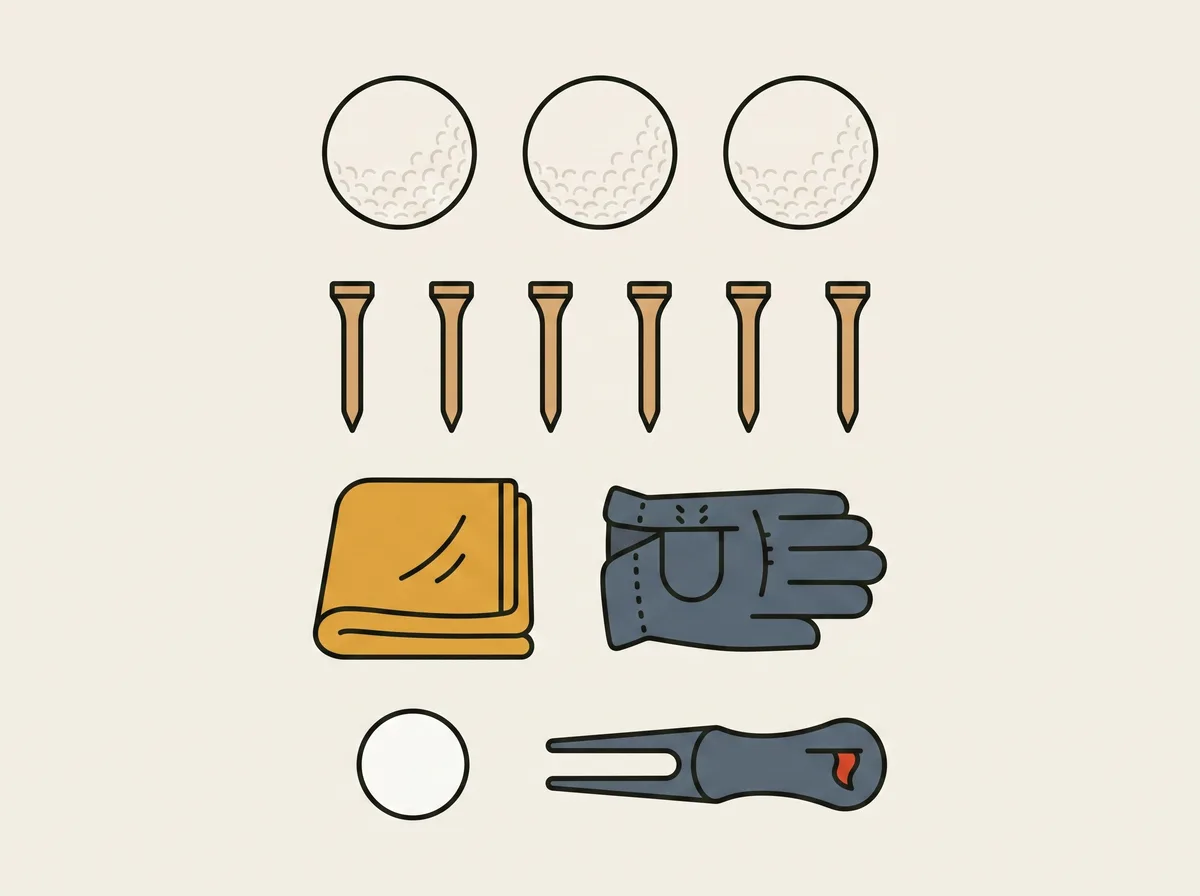
The full list is shorter than most bags suggest. Everything below earns its place by being used, or by being cheap insurance against something that ruins a round.
| Item | How many | Why it earns the space |
|---|---|---|
| Golf balls | 6 to 12, by handicap | Losing three on one hole happens, and borrowing is awkward |
| Tees, long | 6 or more | Driver height, and they snap |
| Tees, short | 6 or more | Irons and par 3 tee shots |
| Ball marker | 2 | One lives in a pocket, one lives in yours, and one of them will be lost |
| Pitchmark repair tool | 1 | Repairing your mark on the green is basic course care |
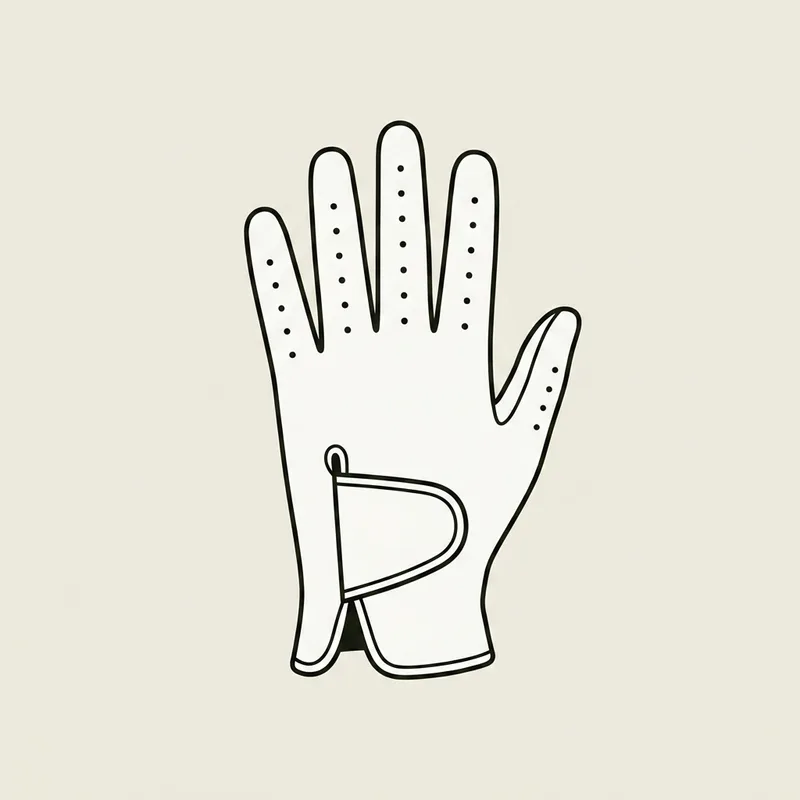
| Glove | 1, plus a spare | A wet glove is useless and does not dry mid round |
| Towel | 1 large, damp | Clubfaces between shots, grips in the rain |
| Rain jacket | 1 | Weather changes faster than a round finishes |
| Water | 1 large bottle, 2 when hot | Four hours of walking, often in sun |
| Sunscreen | 1 small tube | The exposure is four hours, not the ten minutes it feels like |
| Scorecard and pencil | 1 of each | Two pencils if you keep a partner's card |
| Small first aid items | Plasters, blister tape | Blisters end rounds and weigh nothing |
That is the whole of it. A rangefinder or GPS goes on top of that list for anyone who wants one, and a spare pencil is worth more than most of the gadgets that get bought instead.
How many balls to carry
The right number is the one that gets you round without rationing, and rationing is a real thing: a golfer down to their last ball on the twelfth starts steering, and steering costs more strokes than the ball did.
Six is the floor for a mid handicap. Nine to twelve is sensible while you are still losing them regularly, and three or four is enough once you genuinely do not lose balls. A course with water on five holes shifts every one of those numbers up.
The weight is worth knowing because it is the one bag item that scales. The Rules of Equipment cap a ball at 1.620 ounces, so a full dozen is a little over 1.2 pounds at the legal maximum. Carrying two dozen because they were on offer means carrying an extra pound and a half for eighteen holes on the chance of a bad day.
There is also a quality argument that resolves itself. A golfer losing several a round should not be playing a premium urethane ball, and the sensible options are in balls for beginners. Play what you can afford to lose until you stop losing them.
Which pocket, and why it matters
Bag organisation sounds fussy until a four ball is waiting on you while you excavate a pocket for a tee. The principle is simple: frequency of use decides distance from the hand.
- The small top pocket, the one at grip height, holds tees, markers and the repair tool. It is the only pocket opened on a tee box, and it should never contain anything else.
- The large side pocket holds balls. Sleeves stay intact so they do not roll loose, and the pocket keeps its own zip closed.
- The insulated pocket, where the bag has one, holds water. Where it does not, water goes in the deepest pocket so the weight sits low.
- The apparel pocket, usually the largest, holds the rain jacket, spare glove and a warm layer. It is opened once or twice a round at most.
- The valuables pocket, the lined one, holds keys, phone and wallet. It is lined because the lining stops keys scratching a phone, not because it is waterproof.
- Anything left over does not have a home, which is the test it just failed.
Where the pockets are, how many there are, and whether the bag stands up on a slope are the specifications that separate one bag from another, and those are compared in best golf bags. If you are not carrying at all, the calculation changes completely and push cart options covers the version where weight stops being your problem.
The weight nobody uses
This is the part worth being honest about, because carrying a golf bag is not free and the cost is measurable.
Researchers studying spinal and metabolic loading during golf measured stature loss over nine holes under three conditions. Walking alone produced 1.78 mm of shrinkage, playing the golf as well produced 2.53 mm, and carrying the clubs produced 4.76 mm. Carrying also raised oxygen consumption by 15 percent and ventilation by 25 percent against walking normally. The load is doing something to you whether you notice it or not.
A separate study on single against double strap carriage used a double strap bag holding a standard set of clubs at 12.5 kg, which is a little over 27 pounds. Sixteen recreational golfers carried it, and the double strap condition produced lower oxygen consumption, lower heart rate and higher perceived comfort than the single strap.
Two things follow. Carry with both straps, always, and take the second one seriously rather than letting it hang. And interrogate what is in there, because the clubs are not the negotiable part of 27 pounds.
What the rules say about the non club contents
The fourteen club limit applies to clubs only, so nothing else in the bag counts toward it. What the rules do govern is how some of it may be used.
The practical reading for most golfers is that a laser or a GPS watch is fine, and the slope function on a laser is the one to be careful with, since many competitions require it to be switched off by Local Rule. Which device suits which player is compared in best golf rangefinders.
The repair tool is not a rules item but it is the one piece of kit that says most about a golfer. Repairing your own pitchmark takes six seconds and is part of the basic bargain of playing a course, which is covered alongside the rest in on course etiquette.
Seasonal contents, and the weather pocket
A bag is not the same object in July and November, and the golfers who never adjust it carry the wrong things twice a year.
In the warm months, water is the item that scales and everything else shrinks. Two large bottles on a hot afternoon is not excessive, sunscreen goes on before the first tee rather than at the turn, and a cap earns its place more reliably than most of the kit that gets bought instead.
In the cold and wet, the pocket that mattered least becomes the one that decides the round. A rain jacket, a spare glove or two, a dry towel kept sealed in a bag, and mittens for between shots. Wet gloves are the specific failure that ruins scores, which is why the count goes up rather than the quality, and the picks are in golf glove reviews. The rest of the wet weather system is in best golf rain gear, and the technique adjustments that go with it are in playing golf in the rain.
What does not belong
Some things are in most bags and should not be.
Old scorecards, receipts and tees broken to stubs are simply litter and they are why the top pocket takes twenty seconds to search. Range balls mixed in with the good ones cause the switching problem described above. Training aids belong in the car, because the ones that work need a practice ground and the ones that do not need throwing away. Anything glass or pressurised is a bad idea in a bag that gets thrown into a trunk.
The most common genuine mistake is a second set of anything. Two towels, two rangefinders after an upgrade, a glove that no longer fits. Duplicates accumulate silently because nothing prompts their removal, and they are usually the first several pounds a tag test finds.
Key takeaways
- The non club contents come down to balls, tees in two lengths, markers, a repair tool, gloves, a towel, a rain jacket, water, sunscreen and a scorecard.
- Carry six to twelve balls while you still lose them, three or four once you do not. A dozen balls at the legal maximum weight is a little over 1.2 pounds.
- Clubs go longest at the back, shortest at the front, and back into their own divider rather than the nearest one.
- Organise pockets by frequency of use: tees and markers at grip height, balls in the side pocket, apparel in the deepest one.
- Research measured 4.76 mm of stature loss over nine holes when carrying clubs, against 1.78 mm walking, plus a 15 percent rise in oxygen consumption.
- A study of carriage used a bag and standard set at 12.5 kg, a little over 27 pounds, and found the double strap easier on heart rate, oxygen cost and comfort than a single strap.
- The tag test finds the dead weight: mark everything that is not a club, ball or tee, play two rounds, and remove whatever still has tape on it.
- Low probability items like a rain jacket and a spare glove are exempt, because they earn their place by being there rather than by being used.
- Distance measuring devices are allowed under Rule 4.3, but using a device to interpret the information into a recommended club or line is not.
- Nothing except clubs counts toward the fourteen club limit.
Common questions
What should be in a golf bag besides clubs?
Balls, tees in a long and a short length, a ball marker, a pitchmark repair tool, a glove and a spare, a towel, a rain jacket, water, sunscreen, and a scorecard with a pencil. A rangefinder or GPS is optional. Everything beyond that list should have to justify its weight.
How many golf balls should you carry?
Six as a minimum for a mid handicap, nine to twelve while you are still losing several a round, and three or four once you rarely lose one. Adjust upward for a course with water in play. A dozen balls weighs a little over 1.2 pounds at the legal maximum ball weight.
How do you organise a golf bag?
By how often each pocket gets opened. Tees, markers and the repair tool go in the small pocket at grip height, balls in the large side pocket, water in the insulated or deepest pocket so the weight sits low, apparel in the biggest one, and keys and phone in the lined valuables pocket.
What order should clubs go in a golf bag?
Longest at the back, shortest at the front. Driver and fairway woods in the top dividers on the strap side, irons in descending order through the middle, wedges and putter at the front where they are reached for most often. The point is being able to find a club by feel.
How heavy is a full golf bag?
A published study on carrying methods used a double strap bag with a standard set of clubs weighing 12.5 kg, which is a little over 27 pounds. The clubs are the fixed part of that. How much sits on top of them varies enormously between golfers and is the part worth auditing.
Is it bad for your back to carry your golf clubs?
It loads the spine measurably. Research recorded 4.76 mm of stature loss over nine holes when carrying clubs, compared with 1.78 mm from walking the same holes, along with a 15 percent increase in oxygen consumption. Using both straps rather than one lowered heart rate, oxygen cost and perceived exertion in a separate study.
Are rangefinders allowed in golf?
Yes in most play. Rule 4.3 permits getting distance or direction information from a device, but not using a device to interpret it into a recommended club or line of play. Competitions frequently require slope adjusting functions to be switched off by Local Rule, so check the notice board.
Do golf balls and tees count towards the 14 club limit?
No. The limit in Rule 4.1b applies only to clubs. Balls, tees, gloves, markers, towels, rangefinders and everything else in the bag are governed by the separate equipment rules and none of it counts toward your total.
How many gloves should you carry?
Two in dry weather and three in the wet. A glove that gets soaked does not recover inside a round, and the resulting grip pressure is the specific failure that turns a wet round into a bad score. Gloves are cheap relative to what a slipped club costs.
What should not be in a golf bag?
Old scorecards, broken tees, range balls mixed with playable ones, duplicated kit left over from an upgrade, training aids that never come out on a course, and anything glass or pressurised. Duplicates are usually the largest single source of dead weight because nothing ever prompts their removal.
Should you keep a towel wet or dry?
Both, if you can. A damp towel cleans clubfaces and grooves properly, which a dry one does not, and a dry towel sealed in a plastic bag is what saves grips and hands when it rains. Carrying one of each costs a few ounces and covers both jobs.
Tom Ashworth
Tom Ashworth is a PGA Professional who has taught golf since 2012, working mainly with beginners and mid-handicappers at club level in Surrey. He reviews the instruction guides on Learn Golf for technical accuracy before they publish.
Most of his teaching is with players in their first three years of the game, and most arrive having been told too much: six swing thoughts collected from videos, half of them contradicting each other. His approach is to check the grip and the alignment before touching the swing, on the basis that most bad ball flight is decided at address.