Best Golf Cart Bags: Pocket Access and Strap Channels
A cart bag is judged strapped down, not standing in a shop. What matters is whether the pockets still open, whether the top still sorts the clubs and whether the strap sits where the bag was designed for it.
Some links here earn us a commission at no extra cost to you. It never changes what we recommend or the order we rank it. How this works.
A cart bag is bought standing up in a shop and used lying strapped to a trolley, and nearly everything that goes wrong with one comes from that gap. Pockets end up under the strap. The top faces the wrong way. The bag rotates a quarter turn on the second hole and stays there. Here are four, and the specifications that decide whether any of that happens.
The four, compared
All four are built on the same assumption, which is that the bag is lifted twice a round and rides the rest of the time. What separates them is how each maker handles the two things that assumption creates: getting into pockets that are pinned down, and keeping the bag located where you strapped it.
| Pick | Best for | Weight | Top | Pockets | Cart fit | Price |
|---|---|---|---|---|---|---|
| PING Pioneer | The most complete cart bag specification here | 8 lb, about 3.6 kg | 15-way with an enlarged putter well | 16, 35 L of pocket volume | Cart-strap channel | Around £195 to £250 |
| Sun Mountain C-100 | The most capacity for the least weight | 6.0 lb, about 2.7 kg | 14 individual dividers, 8 in by 10 in | 10, plus a zip-off ball pocket face | Front-facing pocket layout, single strap | Around £225 to £250 |
| BIG MAX Dri Lite Silencio 3 | Push cart and buggy, with a channel for each | 4.1 kg, about 9 lb | 14-way full length, 9.5 in | 11 | Separate trolley channel and cart strap channel | Around £215 to £250 |
| Bag Boy Technowater | A full waterproof claim for the least money | Not published | 14 full length, individually divided | 7, all waterproof zippered | Top-Lok bag-to-cart attachment | Around £199 to £220 |
If you have not yet settled whether a cart bag is the right format at all, that decision comes first and the wider golf bag comparison works through it. Everything below assumes your clubs go from the boot to a trolley or a buggy and never onto a shoulder.
PING Pioneer: the complete specification
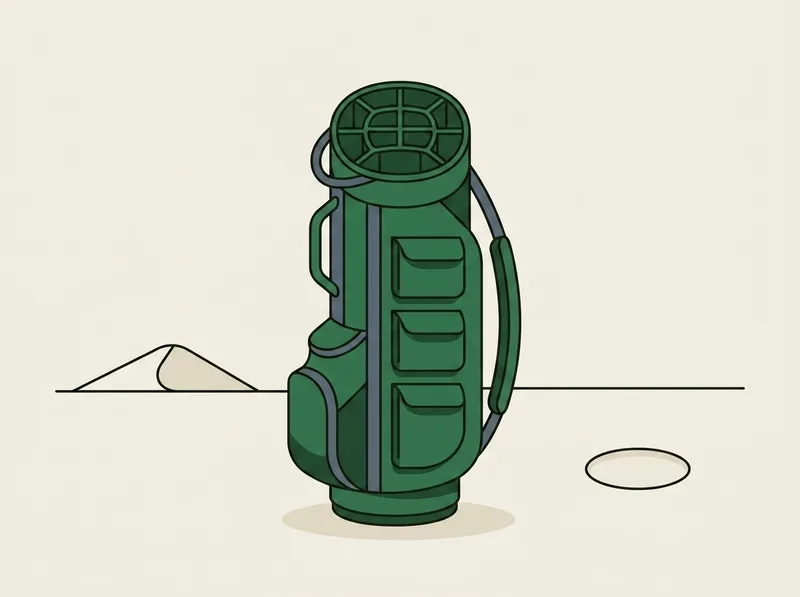
The PING Pioneer publishes 8 lb, a 15-way top with an enlarged putter well, sixteen pockets and 35 litres of pocket volume, plus a cart-strap channel, a magnetic pocket, a trunk handle and alignment stick sleeves.
Two of those deserve pulling out. The enlarged putter well matters because a putter is the one club in the bag with a grip that does not fit the slot it was given, and a modern oversized putter grip in a standard divider wedges against its neighbours until you pull three clubs to get one. A separately sized well fixes it, and most tops do not have one.
 Around £195 to £250
PING Pioneer
- Weight
- 8 lb, about 3.6 kg
- Top
- 15-way with an enlarged putter well
- Pockets
- 16, 35 L of pocket volume
- Cart fit
- Cart-strap channel
- Extras
- Magnetic pocket, trunk handle, alignment stick sleeves
- Insulation
- Insulated pocket, stated as not waterproof
- Fabric
- Not published
- Fifteen slots plus a separate enlarged putter well, so an oversized grip does not wedge against its neighbours.
- Publishes 35 litres of pocket volume rather than only a pocket count, which is the number that tells you whether waterproofs fit.
- PING state plainly that the insulated pocket is not waterproof, which is the sort of disclosure most makers leave out.
- Eight pounds empty, and there is a lighter bag on this page with more capacity.
- No published fabric, so durability cannot be compared against a stated denier.
- Sixteen pockets is more than most golfers will ever fill, and the empty ones still take up boot space.
VerdictThe default cart bag for a golfer who wants everything specified and does not want to think about it again, because the top layout and the pocket volume are both better documented than the category norm. Anyone loading and unloading a boot twice a week will notice the eight pounds before they notice the sixteenth pocket.
The second is the pocket volume figure. Sixteen pockets tells you how many zips there are. Thirty-five litres tells you whether the waterproofs, a spare jumper and a flask actually go in, which is the question. PING also state that the insulated pocket is not waterproof, and a maker volunteering the limit of its own feature is rarer than it should be.
Sun Mountain C-100: light for the size
The Sun Mountain C-100 is 6.0 lb with 42.6 litres of capacity, fourteen individual dividers on an 8 by 10 inch top, ten pockets plus a zip-off ball pocket face, and three integrated lift-assist handles.
Six pounds against forty-two litres is the best ratio here and it is not close. The heaviest bag on this page carries less. That comes from the narrow top: an 8 by 10 inch opening is meaningfully smaller than a 9.5 inch round one, and the fabric, the walls and the rim all shrink with it.
 Around £225 to £250
Sun Mountain C-100
- Weight
- 6.0 lb, about 2.7 kg
- Top
- 14 individual dividers, 8 in by 10 in
- Pockets
- 10, plus a zip-off ball pocket face
- Cart fit
- Front-facing pocket layout, single strap
- Capacity
- 42.6 L
- Handles
- Three integrated lift-assist handles
- Fabric
- Not published
- Six pounds with 42.6 litres of capacity is the best weight-to-storage ratio on this page by a clear margin.
- Three lift-assist handles, which is the specification you use twice a round and nobody thinks about until they own a bag without them.
- Every pocket is positioned to face forward, so the bag works strapped down rather than only standing.
- An 8 by 10 inch top is the smallest opening here, which is what makes the low weight possible.
- Sun Mountain publish no fabric and no overall dimensions, so boot planning is guesswork.
- A single strap and no described cart-strap channel, so it relies on the trolley bracket doing the work.
VerdictThe right buy for anyone who lifts the bag in and out of a car more often than they think about pockets, because six pounds against eight or nine is a real difference across a season. The trade is a narrower top and a specification sheet with two holes in it.
The lift-assist handles are the specification nobody shops for and everybody uses. A loaded cart bag is a heavy, long, awkward object to get out of a boot at an angle, and three grab points around the rim mean you can get a hand on it from wherever you happen to be standing. What Sun Mountain do not publish is the fabric or the overall dimensions, and the second one is a nuisance when the bag has to share a boot with a trolley.
BIG MAX Dri Lite Silencio 3: a channel for each cart
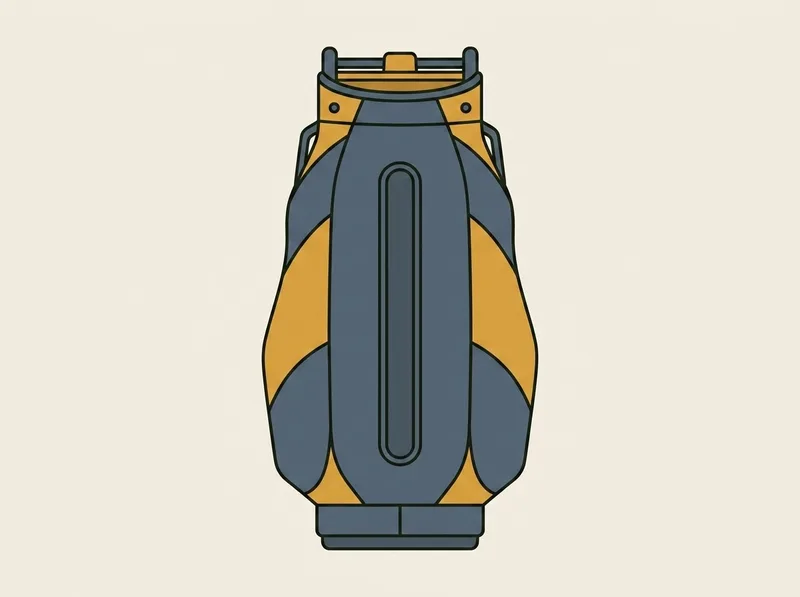
The BIG MAX Dri Lite Silencio 3 is 4.1 kg, which is about 9 lb, with a 14-way full-length top on a 9.5 inch opening, eleven pockets, nylon and SoftGuard PU panels, two seam sealed zips and a two year warranty that extends to three on registration.
The reason it is here is the attachment. Most cart bags have one groove down the back and ask it to work for a push trolley bracket and a buggy strap, which are two different loads pulling in two different places. BIG MAX specify a dedicated trolley channel and a separate cart strap channel, both designed to stop the bag twisting while keeping the pockets reachable.
 Around £215 to £250
BIG MAX Dri Lite Silencio 3
- Weight
- 4.1 kg, about 9 lb
- Top
- 14-way full length, 9.5 in
- Pockets
- 11
- Cart fit
- Separate trolley channel and cart strap channel
- Materials
- Nylon and SoftGuard PU
- Zips
- Two seam sealed
- Warranty
- 2 years, 3 with registration
- The only bag here with a dedicated channel for a push trolley and a separate one for a buggy strap, rather than one groove asked to do both.
- Full-length dividers across all fourteen slots on a top wide enough that they are usable.
- Seam sealed zips named in the specification and a warranty that extends to three years on registration.
- Nine pounds is the heaviest published weight on this page.
- The top is 9.5 inches, so it takes more boot width than anything else here.
- SoftGuard PU panels look good and are one more surface to keep clean through a wet season.
VerdictThe pick for a golfer who pushes some rounds and rides others, because the two attachment channels mean the bag is properly located on either without improvising. Buy it knowing it is the heaviest thing here and the widest across the top.
That twisting is the failure mode worth understanding. A cart bag whose pockets all face forward is a good design only while the bag is still facing forward. One strap across a rounded back panel gives the bag a pivot, and a bag that has rotated thirty degrees puts half its pockets against the frame. Everything else on this bag is conventional and well made, and it is also the heaviest and widest of the published figures here.
Bag Boy Technowater: waterproof as construction
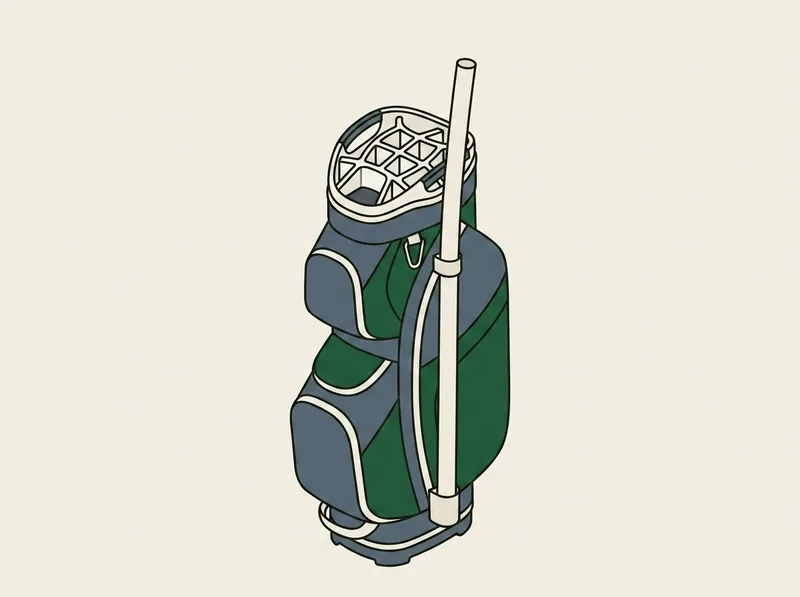
The Technowater is a waterproof nylon bag with a sealed coating, fourteen individually divided full-length sleeves, seven waterproof zippered pockets including a fleece-lined valuables pocket and an insulated cooler, and a Top-Lok bag-to-cart attachment.
The waterproofing is why it is here, and it is the honest kind. Most cart bags marketed as dry are a treated fabric that repels rain until the coating gives up at the seams. This one names the coating and puts waterproof zips on every pocket, which is the difference between a bag that survives a wet February and one that starts wicking at the zip tape in November.
 Around £199 to £220
Bag Boy Technowater
- Weight
- Not published
- Top
- 14 full length, individually divided
- Pockets
- 7, all waterproof zippered
- Cart fit
- Top-Lok bag-to-cart attachment
- Fabric
- Waterproof nylon with a sealed coating
- Extras
- Insulated cooler pocket, fleece-lined valuables pocket, two garment pockets
- Warranty
- 1 year
- Waterproof nylon with a sealed coating and waterproof zips on every pocket, which is a whole-bag claim rather than a treated shell.
- Fourteen individually divided full-length sleeves for the least money on this page.
- The pockets are sorted by what goes in them, with two garment pockets and a cooler, rather than by how many zips the listing can count.
- Bag Boy publish no weight at all, which on a bag lifted twice a round is the figure you most want before buying.
- Seven pockets is the leanest count here and no pocket volume is published.
- Top-Lok is a proprietary fitting and only does anything on a cart carrying the matching receiver.
VerdictThe pick for a golfer who plays through a British winter and wants the waterproofing stated as construction rather than implied by a product name. What you give up is documentation, because Bag Boy publish neither a weight nor a set of dimensions for it.
Two garment pockets and a cooler is a more useful arrangement than a higher pocket count, because it sorts the storage by what actually goes in it. The Top-Lok fitting is the catch: it is a positive lock to a cart with the matching receiver and it is a moulded lump on the base of the bag on any other. So is the missing weight, which Bag Boy do not print anywhere.
How the bag actually attaches
This is the specification that separates a cart bag from a stand bag with the legs taken off, and it is the one least often explained.
| Attachment | What it is | Where it fails |
|---|---|---|
| Cart-strap channel | A recess moulded down the back so a buggy strap sits flush | Nothing, if the strap is tightened over the channel and not above it |
| Trolley channel | A shallower groove sized for a push cart's upper bracket | On a buggy, where the strap is wider and sits higher |
| One groove for both | The common compromise | The bag rotates under one load or the other |
| Proprietary receiver | A moulded fitting that locks to one brand of cart | On every cart that is not that brand |
The practical test before buying is to look at the back panel and ask what happens if the bag rotates a quarter turn. If the answer is that half the pockets end up against the trolley frame, the channel is doing real work and it needs to match your cart. Which carts hold which bags covers the bracket side of the same question.
Pockets, and which ones survive being strapped down
Pocket count on a cart bag is nearly meaningless on its own. Position is the entire specification.
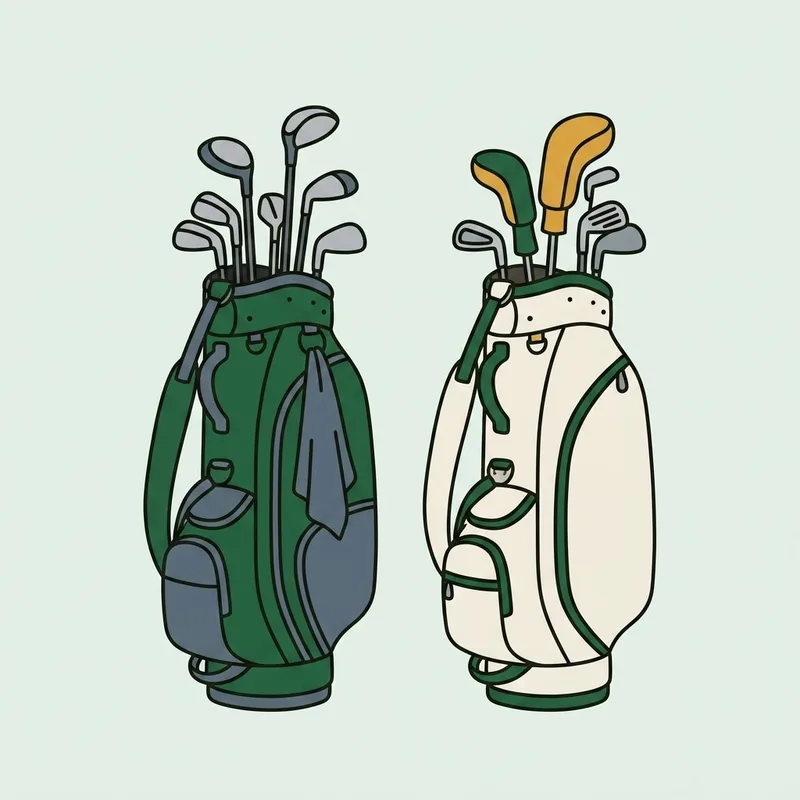
Four pockets matter and the rest are storage. A ball pocket that opens without unclipping anything. A lined valuables pocket you can reach with the bag strapped down and a glove on. A full-length apparel pocket that takes waterproof trousers without folding them into a brick. And a drinks pocket that does not sit against the trolley frame.
Everything past that is weight and boot space. A bag with ten well-placed pockets beats one with sixteen where four of them are under the strap, and the way to check is to look at photographs of the bag on a cart rather than standing on its own. What actually needs to be in there is a shorter list than any of these bags assume.
The top, and why fourteen is the number
Cart bags almost all have fourteen or fifteen slots, and the reason is fixed rather than fashionable.
The Rules cap a player at fourteen clubs for a round, so fourteen sleeves means every club has a home and nothing shares. On a bag that is carried, those thirteen extra fabric walls are weight you have to lift for four miles, which is why stand bags compromise. On a bag that rides, they cost you nothing you were going to feel, which is why cart bags do not compromise.
What does vary is whether the sleeves run full length. Two of the four bags here state plainly that they do. A fourteen-hole rim above one open cavity separates the grips and lets the shafts cross underneath, which is where clubs come out in pairs and graphite rubs against graphite. The difference is audible as well: a properly divided bag is quiet on a path, and a rattling one is not. How many clubs belong in the bag is worth reading before deciding you need every slot.
What a cart bag weighs, and why it still matters
Weight is treated as a stand bag concern and largely ignored here, which is wrong for two reasons.
The first is the boot. A loaded cart bag is fifteen to twenty-five pounds of long awkward object that has to be lifted over a bumper twice per round, plus a trolley, and the difference between six pounds and nine pounds of empty bag is felt in that lift rather than on the course. Anyone with a bad back has already worked this out.
The second is the trolley. Push carts have a stated maximum load and electric trolleys have a motor sized around one, and the bag is the part of that load you choose. None of that is a reason to buy the lightest bag available, and it is a reason to notice that the range on this page runs from six pounds to nine.
What to spend
The useful range runs from roughly £150 to roughly £320 and the money buys specific features rather than general quality.
- £150 to £195: fourteen slots, forward-facing pockets, and dividers that probably do not run full length. A functional bag with a specification sheet that stops early.
- £200 to £250: published capacity in litres, full-length dividers, seam sealed or waterproof zips, and a named attachment system.
- £255 to £320: a separately sized putter well or a rotating top, sixteen pockets, lift handles, and a maker that documents the limits of its own features.
Above about £330 you are buying leather trim and a badge. Nothing up there changes how the bag behaves on a cart. Rounds are slow enough already, and a bag you can get into without unstrapping is worth more to a group than an expensive one is, which is a pace of play point as much as a gear one.
If you sometimes carry
If the honest answer is that you carry two or three rounds a season, a cart bag is still the right buy and you should plan to carry it badly on those days. A single strap with no hip pad puts the whole load on one shoulder with nothing balancing it, and the shape swings against the back of your legs.
If it is more like half your rounds, buy legs instead. A stand bag rides on a trolley perfectly well and carries properly when it has to, and the stand bag comparison covers weight, leg mechanisms and strap systems in the detail that decision needs. And if the question is getting the clubs onto a plane, that is a separate product entirely and golf travel bags is the page for it. Rounds take long enough that comfort compounds, which is worth remembering when working out how long a round takes at your club.
Key takeaways
- The PING Pioneer is the default: a 15-way top with a separate enlarged putter well, sixteen pockets holding 35 litres, and a cart-strap channel.
- The Sun Mountain C-100 gives 42.6 litres at 6.0 lb, the best capacity-to-weight ratio here, plus three lift-assist handles.
- The BIG MAX Dri Lite Silencio 3 is the only bag here with a separate channel for a push trolley and for a buggy strap. It is also the heaviest and widest of the published figures.
- The Bag Boy Technowater states waterproof nylon with a sealed coating and waterproof zips on every pocket, for the least money here, and publishes no weight at all.
- Pocket position matters far more than pocket count. Four pockets do real work and the rest are storage you are carrying in the boot.
- A cart bag that rotates under its strap puts half its pockets against the trolley frame, which is what the channel exists to prevent.
- Fourteen slots is the ceiling because the Rules cap a round at fourteen clubs, and full-length sleeves matter more than the number.
- Measure the boot with the trolley in it before buying. Most of these makers publish no overall dimensions.
Common questions
What is the best golf cart bag?
For most golfers the PING Pioneer, because it publishes a 15-way top with a separate putter well, sixteen pockets, 35 litres of volume and a cart-strap channel, which is a fuller specification than the category usually offers. If weight matters more, the Sun Mountain C-100 carries more in a lighter bag.
What is the difference between a cart bag and a stand bag?
A cart bag has no legs, a wider body, more and larger pockets that all face forward, and a channel down the back for a strap. A stand bag has a leg mechanism, a narrower body and a carrying harness. The cart bag is heavier and better organised because it was never designed to go on a shoulder.
How much does a golf cart bag weigh?
Published figures for current cart bags run from about six to about nine pounds empty. Loaded, expect fifteen to twenty-five pounds. The weight matters at the boot rather than on the course, which is why the lightest bag here is worth noticing even though nothing is being carried.
Can you carry a cart bag?
To the car, yes. For eighteen holes, no, and it is not a strength question. Cart bags carry a single strap and no hip pad, so the load sits entirely on one shoulder with nothing balancing it, and the wide body swings against the back of your legs as you walk.
Do cart bags fit all push carts and buggies?
Most do, and the fit depends on the back panel rather than the base. A cart-strap channel suits a buggy, a trolley channel suits a push cart bracket, and a proprietary receiver works only with the matching brand of cart. Check the upper bracket of your cart against the width of the bag before buying either.
How many dividers should a cart bag have?
Fourteen, or fifteen with a putter well, because the Rules allow a maximum of fourteen clubs and a cart bag pays nothing for the extra sleeves in carried weight. What matters more is whether the sleeves run full length rather than stopping below the rim.
Do I need a separate putter slot?
If you use an oversized or jumbo putter grip, yes. A modern putter grip in a standard divider wedges against its neighbours, so pulling the putter lifts two other clubs with it. Makers solve this either by sizing one slot larger or by fitting an external tube on the outside of the bag.
Are cart bags waterproof?
Some are and the word is used loosely. Look for seam sealed or waterproof zips named in the specification rather than a coated fabric, and note that an insulated pocket is not automatically a waterproof one. Most water enters over the top of the bag, so the rain hood matters as much as the shell.
What size cart bag fits in a car boot?
Tops on current cart bags run from about 8 inches to about 9.5 inches across, and overall length is usually around three feet. Most of the makers here publish no overall dimensions, so the reliable approach is to measure your boot with the trolley already in it and take the tape to the shop.
Is a heavier cart bag better made?
Not reliably. Weight comes from the top width, the number of full-length dividers, the pocket count and the panel material, and only the last of those is really about build quality. The lightest bag on this page carries the most, which is the clearest evidence that weight and quality are separate questions.
How long does a cart bag last?
No manufacturer publishes a figure, and the failure order on a cart bag differs from a stand bag: zips first, then the base where it drags, then the strap channel stitching. There is no leg mechanism to fail, which is one reason cart bags tend to outlive stand bags in the same conditions.
How we put this together
- Published manufacturer specifications for each bag, read off the maker's own product listing rather than a retailer's summary.
- How each bag attaches to a trolley or a buggy, since a cart bag that rotates under its strap makes every forward-facing pocket useless.
- Whether the maker specifies a cart-strap channel, a trolley channel, or a proprietary locking receiver, because those three fit very differently on hardware you already own.
- Top layout and divider construction, including whether a putter well is separate and whether the sleeves run full length.
- Published pocket volume in litres alongside pocket count, because a count on its own says nothing about whether waterproofs will fit.
- Published weight, which on a cart bag is a boot and lift question rather than a carrying one, and is quoted less consistently than it is on stand bags.
On this page
- The four, compared
- PING Pioneer: the complete specification
- Sun Mountain C-100: light for the size
- BIG MAX Dri Lite Silencio 3: a channel for each cart
- Bag Boy Technowater: waterproof as construction
- How the bag actually attaches
- Pockets, and which ones survive being strapped down
- The top, and why fourteen is the number
- What a cart bag weighs, and why it still matters
- What to spend
- If you sometimes carry
- How we put this together

Tom Ashworth
Tom Ashworth is a PGA Professional who has taught golf since 2012, working mainly with beginners and mid-handicappers at club level in Surrey. He reviews the instruction guides on Learn Golf for technical accuracy before they publish.
Most of his teaching is with players in their first three years of the game, and most arrive having been told too much: six swing thoughts collected from videos, half of them contradicting each other. His approach is to check the grip and the alignment before touching the swing, on the basis that most bad ball flight is decided at address.