Best Golf Impact Screens: Four Screens Compared
The screen is the one part of a simulator that gets hit every single shot, and the material tier decides whether it lasts a season or five years. Here are four worth buying and the tier that actually matches how hard you swing.
Some links here earn us a commission at no extra cost to you. It never changes what we recommend or the order we rank it. How this works.
Every other part of a simulator gets hit occasionally. The screen gets hit every single shot, which makes it the component most likely to fail first and the one where paying for the wrong tier shows up fastest, either as a sagging, bouncing surface within a season or as far more screen than a casual setup will ever need.
How these compare
GolfBays sells screens by tier rather than by brand. The four screens below are purpose-built impact and projection screens rather than a stretched sheet or painted surface, and the differences that matter between them are the material tier, how the screen mounts to whatever frame it hangs on, and what level of use each is actually rated for.
| Pick | Best for | Material | Tiers or sizes | Mounting | Best setting | Price |
|---|---|---|---|---|---|---|
| GolfBays | Specifying the right tier for your ball speed instead of shopping brands from scratch | Impact screens in Pro+, Reversible PRO and LITE tiers, plus a QuadPRO at £688 | Tier chosen to match ball speed and session frequency, sized to the room | Specified alongside the enclosure or frame it will hang on | Anything from light home use to a commercial bay | £159.99 for the LITE, £239.99 for the Reversible PRO, £785 for the Pro+ |
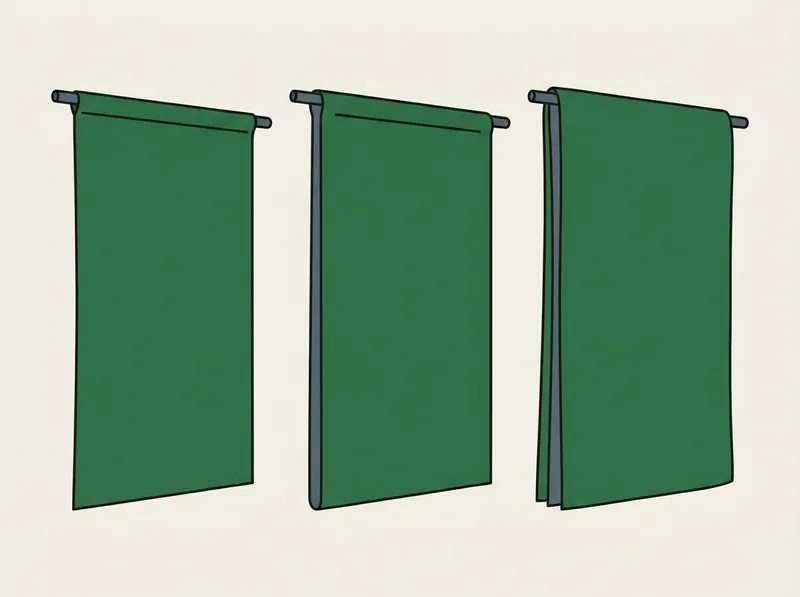
| SimSpace Impact Screen | Choosing the exact tier for your setup | Single layer Elite, dual layer Double Sided, three layer Platinum, plus an UltraMAX step above | Four tiers, each in a range of stock sizes | Grommets with bungee cords, sized to standard enclosure frames | Home use, matched to how often you actually play | £99.99 for the practice grade, £199.99 Elite, £299.99 Double Sided, £399.99 Platinum |
| TEKDEN Pro Golf Impact Screen | A screen cut to a frame that is not a standard size | High-strength polyester blend, with a professional dual-layer kit above it | Cut to the millimetre, widths from 1 to 6 metres | Eyelets, Velcro or hemmed edges, specified at the point of order | A non-standard frame, or a bay hit hard enough to want the dual-layer kit | From around £133 as raw material by the metre, or from £200 finished with edges |
| HomeCourse Pro Retractable Screen | Getting the garage back for the car | Ballistic-grade projection fabric | A small number of motorised sizes | Ceiling-mounted motor housing, remote controlled | A shared space that has to return to normal use | Around £2,000, though UK stock is currently unavailable at both known stockists |
| GoSports HD Impact Screen | Replacing a worn screen on a GoSports enclosure | High-density woven polyester, single layer | One material grade, in three fixed sizes matching the GoSports enclosures | Bungee cords onto a GoSports frame, 36 supplied | Light home use, occasional sessions | Around £215 to £265 depending on size, import charge included |
GolfBays: the tier system without shopping four brands
Screen material is the one part of this category where the tiers genuinely map to how hard and how often you swing, and getting that match wrong either wastes money or wears the screen out early.
 £159.99 for the LITE, £239.99 for the Reversible PRO, £785 for the Pro+
GolfBays
- Material
- Impact screens in Pro+, Reversible PRO and LITE tiers, plus a QuadPRO at £688
- Tiers or sizes
- Tier chosen to match ball speed and session frequency, sized to the room
- Mounting
- Specified alongside the enclosure or frame it will hang on
- Retractable
- Vanish series from £3,359, for a room that has to go back to being a room
- Best setting
- Anything from light home use to a commercial bay
- Three clear tiers make the decision about durability rather than about which of several brands to trust.
- Screen specified alongside the enclosure it will hang on, so mounting fit is confirmed before it ships.
- Covers light home use through commercial, so the advice scales with how often the screen actually gets hit.
- A retailer's tier system, not a single manufactured product, so there is no one fixed spec sheet to compare like-for-like against the four below.
- Costs a little more than sourcing a screen separately at the lowest price it can be found for.
- Warranty for the screen material itself still runs through the original manufacturer, not GolfBays.
VerdictThe pick for anyone who would rather specify a tier against their actual ball speed and usage than compare four separate brands on a spec sheet. The four screens below are for buyers who want to choose the material and brand themselves.
Visit GolfBaysFor the screen itself, a specialist retailer like GolfBays sells impact screens in Pro+, Pro and Lite tiers, so the choice is more a matter of specifying the right tier for your ball speed and space than shopping between competing brands from scratch.
SimSpace: choosing the exact tier for your setup
The SimSpace Impact Screen comes in a clear ladder of material grades: a single-layer Elite, a dual-layer Double Sided, a three-layer Platinum and an UltraMAX above those, with a plain practice-grade screen below them all. The decision is not which brand to buy but which tier actually matches how the room gets used, and every grade ships from a UK warehouse in pounds rather than arriving as an import.
 £99.99 for the practice grade, £199.99 Elite, £299.99 Double Sided, £399.99 Platinum
SimSpace Impact Screen
- Material
- Single layer Elite, dual layer Double Sided, three layer Platinum, plus an UltraMAX step above
- Tiers or sizes
- Four tiers, each in a range of stock sizes
- Mounting
- Grommets with bungee cords, sized to standard enclosure frames
- Best setting
- Home use, matched to how often you actually play
- Four distinct material tiers mean the screen can be matched to actual usage rather than bought as one-size-fits-all.
- Held in a UK warehouse and priced in pounds, so no import charge and no customs wait on any tier.
- A separate noise-absorbing backing and a blackout screen are sold alongside, which is the practical answer to a bay next to a bedroom.
- The step from Elite to Platinum roughly doubles the price, and it is easy to overbuy for how often the room actually gets used.
- Stock sizes only. A frame that is not a standard size needs a screen cut to measure from somewhere else.
- Sold through several UK retailers at different prices for the same tier, so it pays to check more than one listing.
VerdictThe strongest default because the tier system does the hard thinking for you: pick the tier that matches your swing speed and session frequency rather than guessing at one fixed product. Most home users are well served by the middle two tiers rather than the top or bottom.
The trap is overbuying. It is easy to look at four grades and assume the top one is the safe choice, and for most home setups it is not the efficient one. A golfer hitting balls a few evenings a week gets the same practical result from the dual-layer screen that the three-layer gives someone hitting daily, at close to half the price. Worth knowing too: the same range includes a noise-absorbing backing and a blackout screen, which between them solve the two complaints that usually arrive a month after the bay is finished.
TEKDEN: a screen cut to a frame that is not a standard size
Plenty of bays are built on a timber frame, a repurposed structure or an enclosure whose screen is no longer made, and none of those are served by a stock size. TEKDEN cut screens to the millimetre from material held in the UK, in widths from one to six metres, with the edge finish chosen at the point of order: eyelets, Velcro or a hem.
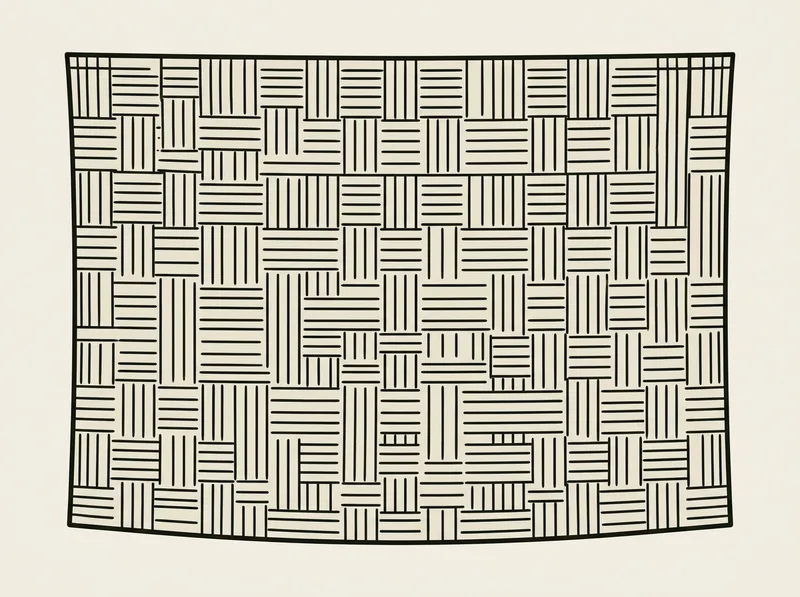 From around £133 as raw material by the metre, or from £200 finished with edges
TEKDEN Pro Golf Impact Screen
- Material
- High-strength polyester blend, with a professional dual-layer kit above it
- Tiers or sizes
- Cut to the millimetre, widths from 1 to 6 metres
- Mounting
- Eyelets, Velcro or hemmed edges, specified at the point of order
- Best setting
- A non-standard frame, or a bay hit hard enough to want the dual-layer kit
- Cut to exact measurements in the UK from stock held here, so an awkward frame size stops being the problem it usually is.
- The edge finish is chosen at order, so the screen arrives ready for whatever the frame actually uses to hold it.
- A professional dual-layer kit sits above the standard material for a bay that gets hit most days.
- The cheapest way in is raw material by the metre, which leaves the hemming and the eyelets to you.
- Cut to order, so it takes longer to arrive than a stock size pulled off a shelf.
- A bespoke screen is hard to resell or reuse if the frame later changes.
VerdictThe answer when the frame is not a standard size, which happens more often than the stock listings suggest, particularly on a homemade or timber frame. Specify the edge finish as carefully as the dimensions, because a screen cut correctly but finished for the wrong fixing is no easier to hang than one cut wrong.
The cheapest way in is raw material by the metre, which leaves the finishing to you and suits anyone comfortable with a sewing machine or a hand eyelet kit. Paying for the finished screen instead is usually the better trade, because an edge that tears is an edge that was fitted badly. Above the standard material sits a professional dual-layer kit for a bay that gets hit most days, which is the option to look at if the room is doing commercial-level work rather than a few evenings a week.
HomeCourse Pro: getting the garage back for the car
HomeCourse's retractable screen solves a different problem entirely. Rather than choosing a material tier, it answers the question of what happens to the room when the simulator is not in use, retracting into a ceiling-mounted housing in under a minute on a battery-powered motor and wireless remote.
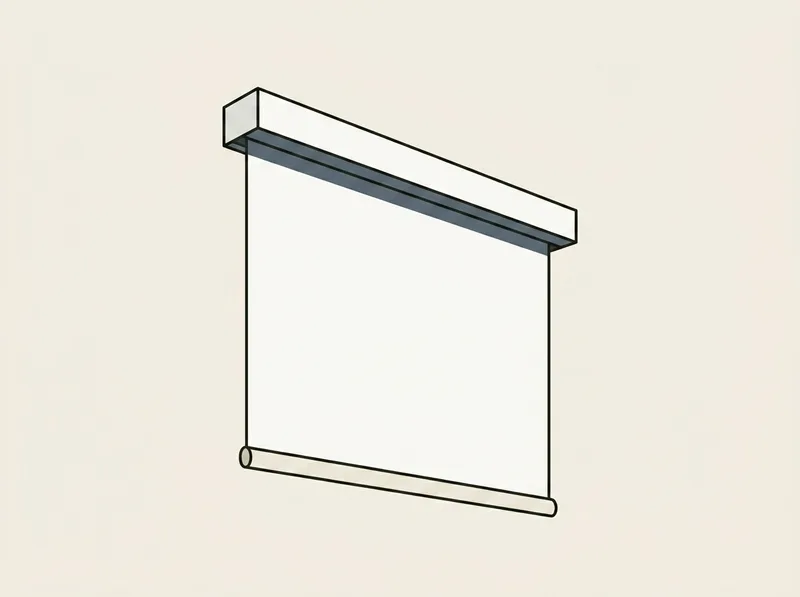 Around £2,000, though UK stock is currently unavailable at both known stockists
HomeCourse Pro Retractable Screen
- Material
- Ballistic-grade projection fabric
- Tiers or sizes
- A small number of motorised sizes
- Mounting
- Ceiling-mounted motor housing, remote controlled
- Best setting
- A shared space that has to return to normal use
- Retracts to the ceiling in under a minute, which is the only real answer to a garage that also has to park a car.
- Battery-powered motor and wireless remote mean no permanent wiring to a wall switch.
- Ballistic-grade fabric rating suggests genuine full-speed durability rather than a light-use compromise.
- Several times the price of a good fixed screen, before an enclosure or netting is added around it.
- A motorised mechanism is one more moving part that can eventually need service.
- Both UK stockists currently list it as sold out and the UK brand site is offline, so getting hold of one means waiting.
VerdictWorth the price only where the room genuinely needs to switch back to another use regularly. If the bay is permanent and dedicated, a fixed screen in the right tier does the same hitting job for a fraction of the cost. Check stock before setting your heart on it, because UK supply has been thin.
It costs several times what a good fixed screen does, and the motor is a mechanical part that a fixed screen simply does not have. For a garage that has to go back to parking a car, or a room shared with another use, that cost buys back the space every time. For a dedicated, permanent bay it solves a problem that does not exist there.
GoSports HD Impact Screen: replacing a worn GoSports screen
The GoSports HD Impact Screen is a single-tier, high-density woven polyester screen sized to match the brand's own enclosure kits, reinforced for real balls at full swing speed and supplied with the bungee cords that fit it to the frame.
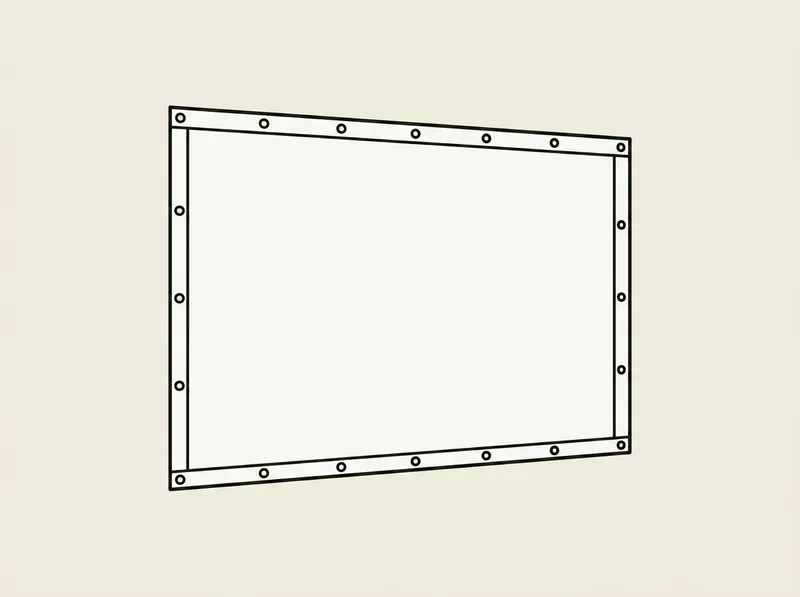 Around £215 to £265 depending on size, import charge included
GoSports HD Impact Screen
- Material
- High-density woven polyester, single layer
- Tiers or sizes
- One material grade, in three fixed sizes matching the GoSports enclosures
- Mounting
- Bungee cords onto a GoSports frame, 36 supplied
- Best setting
- Light home use, occasional sessions
- Reinforced for real golf balls at all swing speeds, which not every screen at this price claims.
- Sized exactly to GoSports' own enclosure kits, so the fit needs no measuring if you already own one.
- Ships with the bungee cords to fit it, so replacing a worn screen is a same-afternoon job.
- GoSports state it is not compatible with any other brand's frame, so it is a replacement part rather than a screen to hang on whatever you own.
- One material grade only, so there is no step up in durability without changing brand.
- No UK stockist. It comes in as a US import through Amazon, which puts it above several UK-held screens on price.
VerdictThe obvious choice if you already own a GoSports enclosure and the screen has worn out, because it is cut to that frame and arrives with the cords to fit it. For anyone else it is the wrong shape of purchase: it will not fit another maker's frame, and at UK landed prices a UK-held screen costs less.
Two limitations put it last here, and neither is about the material. The first is fit: GoSports state plainly that the replacement screen is not compatible with any other brand's enclosure, so this is a spare part for one specific frame rather than a screen to hang on whatever you already own. The second is the route into the UK. There is no UK stockist, so it arrives as a US import through Amazon with the charge folded into the price, which lands it above several screens held in a UK warehouse. If you own the matching enclosure it is still the obvious replacement. If you do not, it is the wrong purchase at the wrong price.
What actually decides the material tier you need
Two things drive the right tier, and neither is the badge on the product listing. Ball speed matters more than most buyers expect: a driver swung by a stronger player generates real force at impact, and a screen rated for casual iron practice will sag and bounce sooner under repeated driver strikes than the same screen would under wedges. Frequency matters just as much. A screen hit fifty times a week wears out faster in absolute terms than one hit fifty times a month, regardless of tier, so matching the material to realistic usage rather than to the fastest swing in the household is the more useful question.
Bounce-back, and why the bottom edge matters
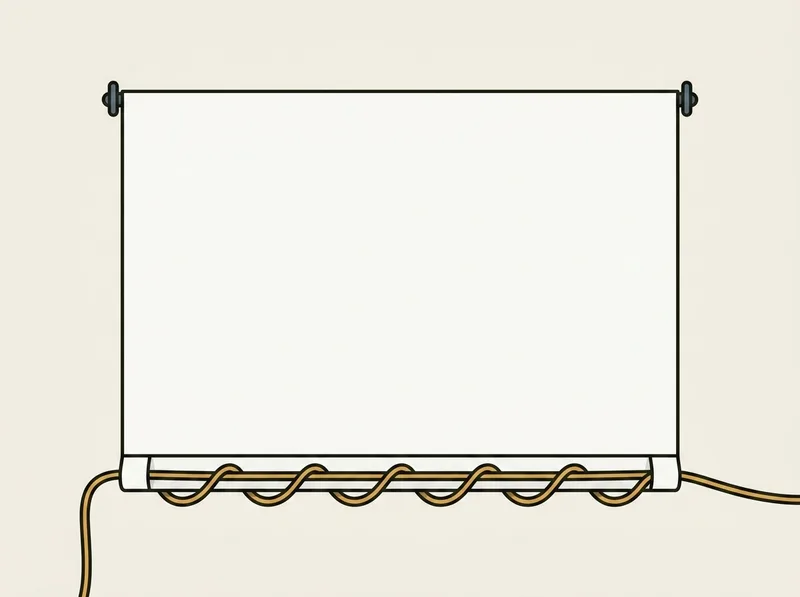
A screen that bounces the ball back hard enough to be a safety issue is usually a mounting problem rather than a material one. The better screens on this page manage that with a cabled or weighted bottom edge that lets the fabric absorb some energy rather than snapping the ball straight back, and a loosely hung screen with no bottom tension does the opposite, flexing unpredictably on impact. Setting up a home simulator covers mounting tension alongside the rest of the room, and it is worth getting right before the first real swing rather than after a ball comes back at someone.
Gain, brightness and why a duller screen often looks better
Gain is the projection industry's term for how much of the light hitting a screen bounces back toward the viewer compared with a flat white reference surface. Home cinema screens are often sold on a high gain number, but a golf simulator screen generally sits at a modest gain on purpose, because a highly reflective surface creates a bright hot spot in the middle of a wide course image projected from a short distance, with the edges falling noticeably darker by comparison. Where a maker offers a high-contrast grey tier, it is usually solving for a room with some ambient light rather than chasing a bigger gain number, and it is worth choosing on that basis rather than assuming higher is always better.
Cleaning and looking after a screen
Screens collect dust and, over time, faint marks from repeated ball strikes, and most manufacturers recommend nothing stronger than a soft brush or a vacuum on a low setting rather than water or any cleaning product, both of which can affect how evenly the surface reflects a projected image. Checking the mounting tension every few months matters more for how long a screen lasts than cleaning does, particularly on a cabled bottom edge, because a screen that has gradually gone slack starts absorbing impact unevenly well before it looks visibly worn or dirty.
Screen, enclosure or both
A screen alone, hung on a simple frame or even a stud wall with the right backing, gets a projected image and something to hit into without the full cost of an enclosure. Best golf simulator enclosures covers the frame side properly, including kits that bundle a screen in with the structure around it, which is worth pricing against buying the two separately.
Matching these to a buyer
GolfBays suits anyone who would rather specify a tier against actual ball speed and usage than compare brands from scratch. SimSpace suits most home buyers precisely because the tier ladder removes the guesswork, matching material to how the room actually gets used rather than forcing one fixed grade on everyone, and it ships from the UK. TEKDEN suits a frame that no stock size fits, because a screen cut to the millimetre is the only real answer to a non-standard bay. HomeCourse suits a shared room that has to go back to being something else entirely, at a price that only makes sense when that flexibility is genuinely needed. GoSports suits one buyer specifically: someone who already owns a GoSports enclosure and needs the screen cut for it.
Whichever screen you choose, it is only doing half the job without a sensor reading the shot in front of it and a proper surface underneath it. Best golf simulators covers the sensor and software side of the same build, best launch monitors covers the same hardware for practice setups that skip the screen entirely, and best golf hitting mats covers what the ball actually gets struck off.
Key takeaways
- GolfBays is the strongest starting point for matching a tier to actual ball speed and usage without comparing four separate brands.
- The SimSpace Impact Screen is the strongest single-brand pick, because its four material grades let the screen match actual usage rather than forcing one fixed product on everyone, and all of them ship from a UK warehouse.
- The TEKDEN Pro Golf Impact Screen is cut to the millimetre in the UK, which is the answer for a timber, homemade or otherwise non-standard frame.
- The GoSports HD Impact Screen only fits a GoSports enclosure, and it reaches the UK as an import, so it ranks last here as a replacement part rather than a general-purpose screen.
- The HomeCourse Pro Retractable Screen solves a different problem: getting a shared room back to normal use, at a real price premium.
- Ball speed and how often the screen gets hit both drive the right tier more than any single specification on a listing.
- A cabled or weighted bottom edge manages bounce-back properly. A loosely hung screen with no bottom tension is the more common safety issue.
- Most home setups are well served by a mid-tier screen. The top tier is built for daily or commercial use and is frequently more than a casual bay needs.
Common questions
What material should a golf impact screen be made from?
A woven polyester baffle designed specifically for golf impact and projection, sold in tiers that trade off thickness, durability and image quality. A bedsheet, painted wall or generic projector screen is not built to absorb repeated full-speed ball strikes and will fail quickly.
How much does a golf simulator impact screen cost?
In the UK, roughly £100 to £200 for a budget single-layer screen, £200 to £800 for a mid-range screen across the material tiers, and around £2,000 for a motorised retractable screen. Size and material tier both move the price more than brand alone, and a screen with no UK stockist can add a third again once import charges land.
How long does a golf simulator screen last?
It depends entirely on tier and usage. A budget screen hit a few times a week can last a season or two. A commercial-grade screen under the same light use can last several years, and the same commercial screen under daily heavy strikes wears at a completely different rate.
Does a golf impact screen stop the ball bouncing back?
A well-mounted screen with a cabled or weighted bottom edge absorbs most of the impact energy and reduces bounce-back significantly, though no impact screen eliminates it entirely. A loosely hung screen with no bottom tension bounces the ball back harder and less predictably, which is more often the actual cause of a hard bounce-back than the fabric itself.
Does a golf impact screen work with any projector?
Most short-throw projectors suited to the room's depth will work, and the screen material is chosen for even projection rather than for one specific projector brand. A high-contrast grey screen tier, where offered, can improve image quality in a room with some ambient light.
What size impact screen does a simulator need?
Sized to the enclosure or frame it hangs on, commonly matching a 4:3 or 16:9 aspect ratio for the projected image. Frame sizing should be decided alongside or before the screen, not after it.
Do impact screens come with the enclosure or are they bought separately?
Both exist. Most complete kits, including the GoSports and SimSpace enclosures, include a screen in the box. Others, such as The Net Return, sell the screen as a related but separate purchase, which lets the frame and the screen be chosen independently but means the advertised price is not the finished one.
Is a more expensive impact screen actually worth it for a casual golfer?
Usually not. The higher tiers and commercial-grade options are built for daily or heavy use, and a casual home setup hit a few times a week gets the same practical result from a mid-tier screen for meaningfully less money.
Can a golf impact screen be repaired if it tears?
Small tears can sometimes be patched, but a screen with a significant hole in the strike zone is generally past a useful repair, because the material's ability to absorb impact evenly is compromised around the damage. Most buyers replace rather than repair once a screen fails in the hitting area.
What is the difference between a white and a grey impact screen?
A grey or high-contrast screen improves black levels and image contrast in a room with some ambient light, which matters if the bay is not fully light-controlled. A standard white screen is brighter overall and works well in a darker, dedicated room where contrast is less of an issue.
How we put this together
- Published manufacturer specifications for each screen, taken from the maker's own product pages rather than a retailer's summary.
- Material tier and construction, since the fabric and its backing are what actually determine bounce-back and how long a screen holds a clear image.
- Mounting method, because a screen bought for the wrong enclosure or frame is a common and avoidable return.
- Which setting each screen is genuinely built for, from a light home setup to a commercial bay running all day.
- UK availability and UK pricing, read from UK storefronts rather than converted from a US figure, because a screen with no UK stockist arrives as an import with a charge on top and a longer wait.
On this page
- How these compare
- GolfBays: the tier system without shopping four brands
- SimSpace: choosing the exact tier for your setup
- TEKDEN: a screen cut to a frame that is not a standard size
- HomeCourse Pro: getting the garage back for the car
- GoSports HD Impact Screen: replacing a worn GoSports screen
- What actually decides the material tier you need
- Bounce-back, and why the bottom edge matters
- Gain, brightness and why a duller screen often looks better
- Cleaning and looking after a screen
- Screen, enclosure or both
- Matching these to a buyer
- How we put this together

Tom Ashworth
Tom Ashworth is a PGA Professional who has taught golf since 2012, working mainly with beginners and mid-handicappers at club level in Surrey. He reviews the instruction guides on Learn Golf for technical accuracy before they publish.
Most of his teaching is with players in their first three years of the game, and most arrive having been told too much: six swing thoughts collected from videos, half of them contradicting each other. His approach is to check the grip and the alignment before touching the swing, on the basis that most bad ball flight is decided at address.