Best Budget Golf Rangefinders: Four Under £200
Every rangefinder on this page sits at or near £200. The interesting question is not which is best but what a cheap laser actually gives up against one costing three times as much, and the honest answer is less than the price gap suggests.
Some links here earn us a commission at no extra cost to you. It never changes what we recommend or the order we rank it. How this works.
Rangefinders used to start around £300. They no longer do, and the gap between a £150 laser and a £400 one has narrowed to the point where the interesting question is not which budget model wins but what the cheap ones actually give up. Four devices below, three of them under £200 and one that has drifted just above it, and an honest account of where the money goes further up.
The four, compared
All four are laser rangefinders, which means they fire a beam at a target and time the return. What they have in common at this price is a 6x optic, slope of some description and a claimed accuracy of about a yard. What separates them is what each maker is willing to print.
| Pick | Best for | Magnification | Max range | Slope | Battery | Price |
|---|---|---|---|---|---|---|
| Shot Scope PRO L2 | The most rangefinder available under £150 | 6x | 700 yards | Adaptive, with an on and off switch | CR2 3V | Around £145 to £150 |
| Precision Pro NX9 Slope | The one that answers the specification questions | 6x, 24 mm objective | 5 to 999 yards, 300 to a flag | Yes, with a switch | CR2 3V | Around £195 to £200 |
| Voice Caddie Laser FIT | Walkers who resent carrying anything extra | 6x | 5 to 800 yards | Yes, with a tournament mode | Rechargeable lithium polymer, 500 mAh | Around £220 to £230 |
| Voice Caddie EL3 | The smallest and simplest device here | 6x | 730 m to a reflective target, flag lock distance not published | Slope ON and Slope OFF modes, the latter stated as competition compliant | Rechargeable lithium, USB-C | Around £180 to £185 |
The ceiling on this page is £200 and it is close to the whole premise. Prices in this category move constantly and a model that sits at £199 in one season can sit at £229 in the next, which is exactly what has happened to the Voice Caddie Laser FIT below, so the bands above are wide on purpose and worth checking against the maker's own page before buying. The full rangefinder comparison covers what happens above this line, where the money buys sealing, lock speed and display technology rather than better distances.
Shot Scope PRO L2: the most for the least
The Shot Scope PRO L2 is the cheapest device here and it comes from a maker whose more expensive lasers compete directly with Bushnell. Shot Scope publish 6x magnification, ranging to 700 yards, adaptive slope with a switch, target lock with vibration, rapid-fire detection, a built-in cart magnet, a CR2 3V cell, a weight of 215 grams and a two year warranty.
Two of those are worth more than the price suggests. The slope switch means the device is legal to use in a competition once slope is off, which is not something every budget model can say. And a cart magnet built into the body rather than clipped to the case means the rangefinder lives on the frame of the cart where you can reach it, which is the difference between using it on every shot and using it on the ones you remember.
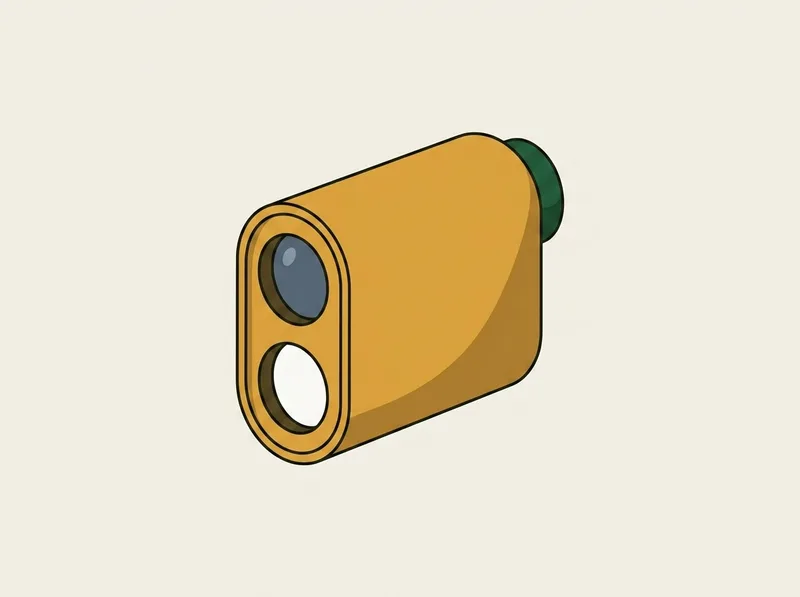 Around £145 to £150
Shot Scope PRO L2
- Magnification
- 6x
- Max range
- 700 yards
- Slope
- Adaptive, with an on and off switch
- Battery
- CR2 3V
- Weight
- 215 g
- Flag lock
- Target lock with vibration, distance not published
- Mount
- Built-in cart magnet
- Warranty
- 2 years
- The lowest price here by a clear margin, from a maker whose more expensive models sit in serious company.
- Slope has a switch to turn it off, and the device is tournament legal with it disabled.
- A two year warranty and a built-in cart magnet, neither of which is standard at this money.
- Shot Scope publish no flag lock distance, which is the one range figure that decides anything.
- 700 yards is the shortest quoted maximum here, although that changes nothing you will ever do.
- No published weather rating, which on a device used in November drizzle is a real gap.
VerdictThe best value on this page and the one to buy if the budget is the constraint, because it does the job a rangefinder exists to do and asks for the least money. The compromises are the two numbers Shot Scope leave off, which are the flag lock distance and a tested weather rating.
The specification sheet has two gaps and they are specific ones. No flag lock distance and no weather rating. Those are the two questions a buyer would most reasonably ask, and the 700 yard maximum range that is published in their place tells you almost nothing, because nobody plays an approach shot from 700 yards.
Precision Pro NX9 Slope: the one that answers questions
The Precision Pro NX9 Slope publishes more than the rest of this page put together: 6x through a 24 mm objective, ranging from 5 to 999 yards with a 300 yard flag range, a slope switch, a CR2 3V battery, 10 oz, dimensions to two decimal places, 18 mm of eye relief, an ABS shell and a two year warranty.
The flag range figure is the one to notice. Quoted maximum range is measured to a large reflective target and is close to meaningless. Flag range is the distance at which the device will confidently find a thin flagstick, and it is typically a third to a fifth of the headline number. Three hundred yards covers every approach shot anyone will ever hit, and being told the figure at all puts this device ahead of most of the category.
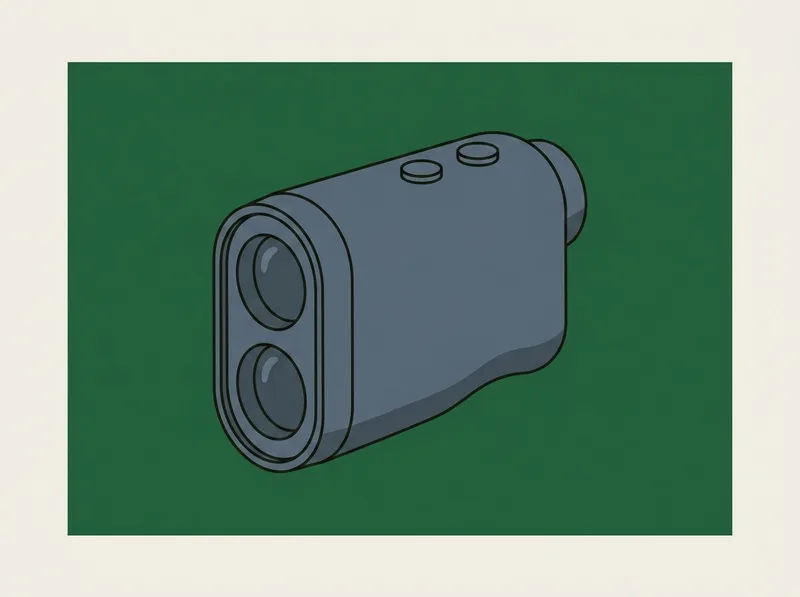 Around £195 to £200
Precision Pro NX9 Slope
- Magnification
- 6x, 24 mm objective
- Max range
- 5 to 999 yards, 300 to a flag
- Slope
- Yes, with a switch
- Battery
- CR2 3V
- Weight
- 10 oz
- Eye relief
- 18 mm
- Warranty
- 2 years
- Publishes a flag range of 300 yards, which is the number that matters and the one most makers leave out.
- Publishes eye relief, weight, battery type and dimensions, which no other maker on this page does in full.
- 18 mm of eye relief, which is what makes a rangefinder usable with glasses on.
- 10 oz is the heaviest device on this page by some way.
- No published weather rating, so the sealing is a claim rather than a number.
- A replaceable CR2 with no published round count, so carrying a spare is guesswork rather than planning.
VerdictThe pick for anyone who wears glasses or who wants the specification questions answered rather than skipped, because it publishes more than the rest of this page combined. The weight is the price of that, and it is noticeable in a pocket over eighteen holes.
Eighteen millimetres of eye relief is the second underrated specification. Eye relief is how far your eye can sit from the eyepiece and still see the full field, and short eye relief is why so many rangefinders are miserable to use with glasses on. Most makers do not publish it. The cost of all this is weight: at 10 oz it is more than twice the Voice Caddie devices here, and you feel that in a trouser pocket.
Voice Caddie Laser FIT: four ounces
The Voice Caddie Laser FIT is 4 oz with 6x magnification, ranging from 5 to 800 yards, accuracy quoted at plus or minus a yard, a rechargeable 500 mAh lithium polymer cell, a stated tournament mode and a one year warranty.
Four ounces changes what the device is. A 10 oz rangefinder is something you decide to bring. A 4 oz one lives in a pocket and gets used on shots you would not have bothered ranging, which is where a rangefinder actually earns its money. Voice Caddie also fit a ball to pin mode, which measures the distance from where your ball has ended up to the flag without you having to walk to the ball first, and that is genuinely useful when you are still deciding which club to take out of the bag.
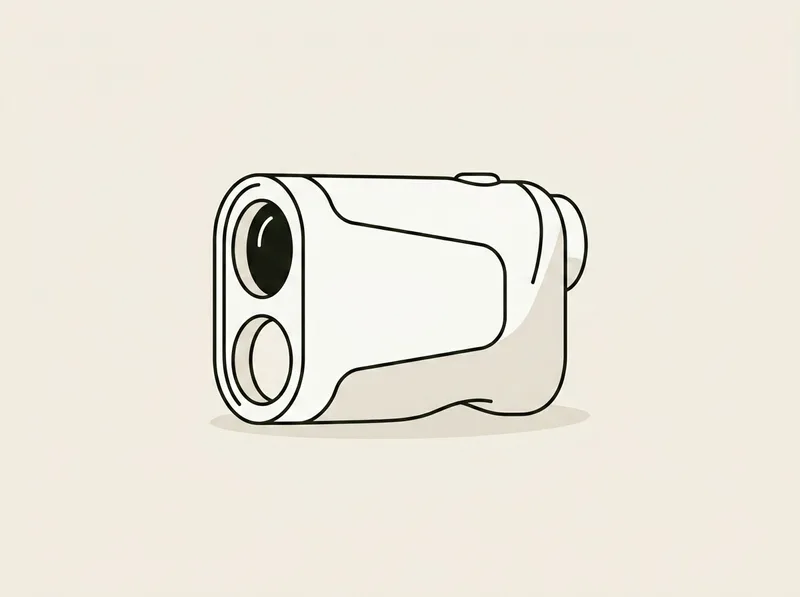 Around £220 to £230
Voice Caddie Laser FIT
- Magnification
- 6x
- Max range
- 5 to 800 yards
- Slope
- Yes, with a tournament mode
- Battery
- Rechargeable lithium polymer, 500 mAh
- Weight
- 4 oz
- Accuracy
- Plus or minus 1 yard
- Warranty
- 1 year
- 4 oz, which is well under half the weight of the heaviest device here and small enough to live in a trouser pocket.
- A stated tournament mode rather than a slope setting buried in a menu.
- A ball to pin mode that measures the shot you have left without walking to the ball first.
- A sealed rechargeable cell, so a flat battery on the ninth tee cannot be fixed with a spare.
- A one year warranty, the shortest here, on the most expensive device on the page.
- No published weather rating and no published flag lock distance.
VerdictThe right buy for a golfer who walks and has already decided that anything they carry has to earn its place, because four ounces is a genuinely different object to own. The argument on the other side is that UK pricing has made it the dearest device here while giving it the shortest warranty.
The trade-offs are the battery, the warranty and, now, the price. A sealed rechargeable cell is lighter and neater and cannot be rescued with a spare on the ninth tee, whereas a CR2 costs a pound or two and lives in a pocket. A one year term against the two year terms on the cheaper devices here is a real difference in what the maker is prepared to stand behind, and UK pricing has drifted this one above the £200 line that the rest of the page sits under.
Voice Caddie EL3: the tiny one
The EL3 is 117 grams and 88 mm long, with 6x magnification, accuracy inside a yard, a USB-C rechargeable cell, a magnetic mount and a one year warranty. It is the smallest device on this page and one of the smallest laser rangefinders currently sold.
USB-C is worth a sentence. A device that charges from the same cable as everything else you own is one you will keep charged, and a proprietary lead is one you will lose. It sounds trivial and it is the reason a lot of rechargeable gadgets end up unused.
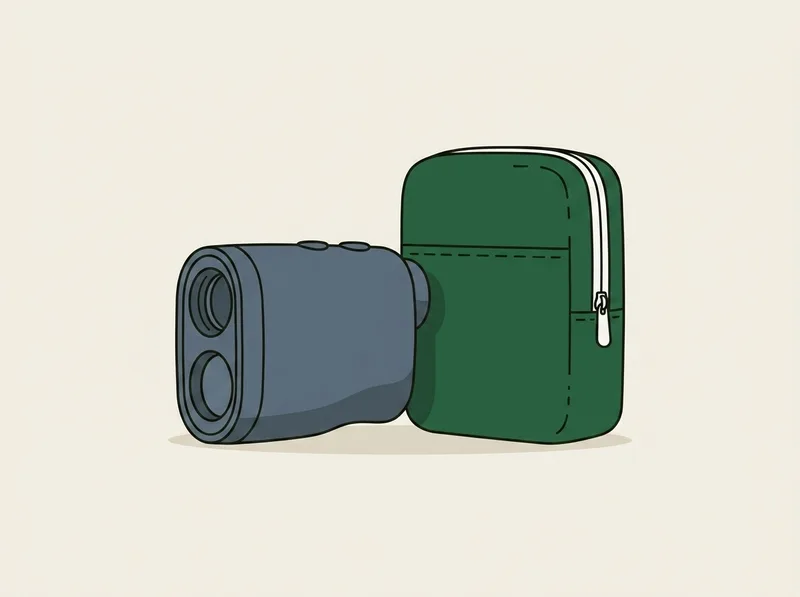 Around £180 to £185
Voice Caddie EL3
- Magnification
- 6x
- Max range
- 730 m to a reflective target, flag lock distance not published
- Slope
- Slope ON and Slope OFF modes, the latter stated as competition compliant
- Battery
- Rechargeable lithium, USB-C
- Weight
- 117 g, about 4.1 oz
- Dimensions
- 88 mm by 33 mm by 51 mm
- Warranty
- 1 year
- 117 grams and 88 mm long, which makes it the most pocketable device on this page.
- USB-C charging rather than a proprietary cable, which is a small thing you will appreciate for years.
- A built-in magnetic mount, so it clips to a cart frame without a separate case.
- No published flag lock distance, so the 730 m headline says nothing about finding a thin flagstick.
- A one year warranty and a sealed battery, so a flat cell mid-round cannot be fixed with a spare.
- Regularly out of stock on Voice Caddie's own European store, which makes it the hardest device here to actually buy.
VerdictA neat, genuinely tiny laser for casual rounds and social golf, at a price that makes it easy to justify as a first rangefinder, and it is better documented than this page once gave it credit for. It ranks last on availability and on a one year warranty rather than on capability.
Two things put it last, and neither is a specification gap. Voice Caddie do publish a maximum range of 730 metres to a reflective target, and they do state a Slope OFF mode described as compliant for competitions where rangefinders are permitted, so the tournament question is answered. What they do not give is a flag lock distance, which leaves the headline range figure doing no useful work. The bigger problem is supply: the EL3 is repeatedly listed as sold out on Voice Caddie's own European store, and a device you cannot buy loses to three you can.
What you actually give up under £200
This is the section the price comparison sites skip, so here is the honest version.
| What changes above £200 | Does it affect a shot? |
|---|---|
| Flag lock speed and certainty | Yes. This is the one real difference |
| Weather sealing with a published IP rating | Yes, over three winters |
| Display technology and contrast in flat light | Sometimes, against a dark treeline |
| Magnification beyond 6x | Rarely, and it amplifies hand shake |
| Quoted maximum range | No |
| Accuracy claim | No. Everything here quotes about a yard |
| Build materials and finish | No |
Lock speed is the honest answer. A premium rangefinder finds a flagstick first time, almost every time, and a budget one takes two or three attempts more often. That is not an accuracy problem, it is a time problem, and it becomes a pace of play problem when a group is waiting. If you range four or five shots a round it barely registers. If you range every shot, it is the reason to spend more.
The second real difference is sealing. Premium models publish an IP rating, which is a tested number. Every device on this page describes weather resistance loosely or not at all. A rangefinder that stops working in the wet is a rangefinder you stop carrying, and three of these four say nothing about it.
Slope, and the switch that matters more on a cheap device
Slope adds or subtracts yards for elevation change. It is the feature everyone wants and the one that carries a rule attached.
That is why the switch design is worth more attention on a budget model than on an expensive one. Premium devices increasingly disable slope with a physical switch or an external indicator light that a marker can see from three feet away. Cheaper devices are more likely to bury it in a menu. All four here state a way to turn slope off, and what varies is how visible that is to somebody standing next to you.
If you never play competitions this does not matter at all. If you play club medals, buy something with a switch, and prefer one that is visible from outside the device.
Do you need one at this price?
A rangefinder is a measuring tool, and a measuring tool only helps if you know what to do with the measurement.
Knowing the flag is 147 yards away changes nothing until you know what 147 yards is in your bag, and most golfers genuinely do not. Building a distance chart for each club costs one range session and a notepad, and it is the prerequisite rather than the follow-up. A device bought before that chart exists tends to sit in a pocket.

Laser or GPS at this money
Under £200 the two categories overlap for the first time, and they solve different halves of the same problem.
A laser is exact and needs a line of sight. It gives you the distance to the flag, the front edge or the bunker you are trying to carry, and it is useless for anything you cannot see, which is most blind tee shots and every dogleg. A GPS is approximate and needs nothing. It gives front, middle and back of the green from your wrist without breaking stride, and it works when the flag is hidden.
At this price the sensible split is that golfers who play one course they know well get more from a laser, and golfers who play a lot of unfamiliar courses get more from GPS. The full comparison of the two works through it properly, and the GPS watch options covers that side. A phone app can also do the GPS job reasonably well for nothing, and the golf apps worth having covers what they can and cannot do. No app can do the laser job, because a phone cannot measure the distance to an object you point it at.
Battery, and the failure nobody plans for
The one genuine reliability difference at this price is how the device is powered, and it splits cleanly.
A replaceable CR2 lithium cell is the traditional answer. It costs a pound or two, lasts a season or more of ordinary use, and can be swapped in ten seconds on the ninth tee if you carry a spare. A sealed rechargeable cell is lighter, avoids the cost of batteries entirely and charges from a cable, and when it goes flat mid-round there is nothing you can do about it.
Neither is wrong. What matters is knowing which you have bought. Two of the four devices here take a replaceable CR2 and two are sealed rechargeables, and every one of them says which. If your golf is spontaneous rather than planned, a swappable cell is worth more than it looks.
What to spend
Within this ceiling the money moves in a narrow band and buys specific things.
- £145 to £185: 6x optics, slope, accuracy inside a yard, a magnetic mount and a short specification sheet. Everything essential and very little documentation.
- £195 to £230: a published flag range, published eye relief and dimensions, and a maker willing to answer the awkward questions, or four ounces and a pocketable body if that matters more than paperwork.
Above this page, from about £220 to £400, the money buys a faster and more certain lock, a tested weather rating, an OLED display that holds contrast against a treeline, and a physical slope switch a referee can see. Those are real, and none of them is worth two hundred and fifty pounds to a golfer who ranges five shots a round.
If the budget is stretching to golf technology generally, note that the same argument runs through the whole category. Budget launch monitors is the same shape of decision at a much higher price, and the conclusion there is less forgiving than it is here.
Key takeaways
- The Shot Scope PRO L2 is the best buy under £200: 6x, 700 yards, a slope switch, a cart magnet and a two year warranty for around £150.
- The Precision Pro NX9 Slope publishes a 300 yard flag range, 18 mm of eye relief, a weight and a battery type, which is more disclosure than anything else here.
- The Voice Caddie Laser FIT is 4 oz with a stated tournament mode, and it carries a sealed battery, a one year warranty and a UK price that has crept above £200.
- The Voice Caddie EL3 is the smallest device here at 117 grams, and it states both a maximum range and a competition-compliant Slope OFF mode. Supply is its weak point rather than disclosure.
- What you give up under £200 is lock speed and a tested weather rating. You do not give up magnification, accuracy or slope.
- Quoted maximum range means almost nothing. Flag lock distance is the number to compare, and most budget makers do not publish it.
- Slope is legal to carry in competition and not legal to read. On a cheap device, check how it is switched off before buying.
- A rangefinder is worth buying after you know your club distances, not before.
Common questions
What is the best budget golf rangefinder?
The Shot Scope PRO L2 at around £150, because it has 6x optics, a slope switch that makes it tournament legal when disabled, a built-in cart magnet and a two year warranty. If you want the specification questions answered, the Precision Pro NX9 Slope publishes far more and costs around £200.
Are cheap golf rangefinders accurate?
Yes. Every device on this page quotes accuracy of about a yard, which is the same claim premium models make, and in practice the error is never the reason a shot missed. The larger risk at any price is locking onto the treeline instead of the flag, which is a lock quality question rather than an accuracy one.
What do you lose buying a rangefinder under £200?
Mainly flag lock speed and a tested weather rating. Cheaper devices take an extra attempt or two to find a thin flagstick more often, and most publish no IP rating at all. You do not lose magnification, accuracy, slope or the basic function, all of which are the same as on devices costing three times more.
Do budget rangefinders have slope?
All four here do, and all four state a way to switch it off. What varies is how visible that is: a physical switch a marker can see is a different proposition from a mode you select in software. If you play competitions, check which you are getting before buying, because carrying a slope device is legal and reading the adjusted number is not.
Is a cheap rangefinder better than a GPS watch?
Neither is better, they answer different questions. A laser gives the exact distance to something you can see. A GPS gives front, middle and back of the green without aiming and works on blind shots. Golfers who play one familiar course usually prefer a laser, and those who play many unfamiliar courses usually prefer GPS.
How long do budget rangefinder batteries last?
It depends on the type. Two devices here take a replaceable CR2 cell and neither maker estimates how many rounds it lasts, which in practice is a season or more of ordinary use. Rechargeable devices publish charge capacity rather than round counts. The practical difference is that a CR2 can be swapped mid-round with a spare in your pocket and a sealed cell cannot.
Can I use a budget rangefinder in a competition?
Yes, provided slope is disabled and the Committee has not prohibited distance devices by Local Rule. Rule 4.3a(1) permits a device that gives distance and direction. The practical caution with cheap models is that the disable method is often less visible than on premium devices, which can be awkward with a marker.
Do I need 7x magnification?
No. All four devices here are 6x, which is the right figure for handheld use, and most premium rangefinders are the same. Higher magnification makes a distant flag bigger and every hand tremor bigger with it, so it only helps if you can brace the device against a cart bar or your ribs.
Are rangefinders waterproof?
Very few genuinely are, and none of the devices here publishes a tested rating. Premium models quote an IP number, which is a measured standard. Where a maker says water resistant with no number, treat it as a claim rather than a specification and keep the device in a pocket rather than clipped to a cart in heavy rain.
Should a beginner buy a rangefinder?
Not in a first season. A precise yardage only helps once you know roughly what each club does, and early on the shot dispersion is wide enough that a ten yard error in the number disappears into the noise. Money spent on lessons at that stage does considerably more.
What is the cheapest rangefinder worth buying?
Around £140 to £150 is the point where devices from established makers with real warranties start, and that is where the value sits. Below about £100 the market is dominated by unbranded units with no published specifications, no warranty support and no maker to contact, and the flag lock is where they fall down first.
How we put this together
- A price ceiling of £200, checked against each maker's own current UK or European listing rather than a retailer's price or a remembered one, with any product now selling above that line called out rather than quietly left in.
- Published manufacturer specifications only. Where a maker does not print a figure, this page records it as Not published rather than borrowing one, and treats the gap as part of the comparison.
- What each specification changes on a golf course, in particular the difference between a quoted maximum range and the distance at which a device will actually find a flagstick.
- How the slope function is disabled, since a budget model that cannot visibly switch slope off is a competition problem rather than a feature.
- Battery type and replaceability, because a sealed rechargeable cell and a swappable CR2 fail in very different ways on the ninth tee.
- The Rules of Golf position on distance-measuring devices, which decides what any of these may legally do during a round.
On this page
- The four, compared
- Shot Scope PRO L2: the most for the least
- Precision Pro NX9 Slope: the one that answers questions
- Voice Caddie Laser FIT: four ounces
- Voice Caddie EL3: the tiny one
- What you actually give up under £200
- Slope, and the switch that matters more on a cheap device
- Do you need one at this price?
- Laser or GPS at this money
- Battery, and the failure nobody plans for
- What to spend
- How we put this together

Tom Ashworth
Tom Ashworth is a PGA Professional who has taught golf since 2012, working mainly with beginners and mid-handicappers at club level in Surrey. He reviews the instruction guides on Learn Golf for technical accuracy before they publish.
Most of his teaching is with players in their first three years of the game, and most arrive having been told too much: six swing thoughts collected from videos, half of them contradicting each other. His approach is to check the grip and the alignment before touching the swing, on the basis that most bad ball flight is decided at address.