Best Golf Rangefinder Cases: Replacements and Mounts
Almost every rangefinder ships with a case, so nobody buys one of these first. This is a replacement purchase, an upgrade purchase, or a sign that the case you were given is the wrong shape for how you play.
Some links here earn us a commission at no extra cost to you. It never changes what we recommend or the order we rank it. How this works.
This is the smallest category on this site and it deserves a short page. Nearly every laser rangefinder is sold with a case in the box, so nobody arrives here first. You arrive because the original case has worn out, because it went missing, or because it is the wrong shape for how you actually play.
Three problems, three different products
Worth being clear before anything else, because the products in this category solve different things and get sold under the same search.
The case has failed. The zip has gone, the clip has snapped, or the fabric has worn through. You want a replacement case, and the choice is between the original part and a universal one.
The case works and you never use the rangefinder. It lives in a bag pocket, getting it out takes ten seconds, ten seconds is longer than you are willing to spend on most shots, and so the device stays in the bag. You do not want a case. You want a mount.
The rangefinder travels. It goes in a car boot, into a hold, or into a bag that gets thrown around. You want a hard shell, and how fast it opens is irrelevant.
| Pick | Best for | Type | Closure | Attachment | Fits | Price |
|---|---|---|---|---|---|---|
| Bushnell Golf Laser Case | The one case that fits rangefinders from several brands | Hard shell EVA with a soft lined interior | Zip, with an elasticated strap inside to hold the device | Carabiner clip at the rear | Bushnell Tour V1 to V4 and PRO X2, plus Nikon, Golf Buddy, Callaway and Shotsaver models | Around £20 to £25 |
| Shot Scope Magnetic Bag Clip | The thing most people actually want | Magnetic mount, not a case | None, the device stays exposed | Clips to the outside of a golf bag | Any rangefinder with a magnetic mount, plus other magnetic accessories | Around £20 |
| Bushnell Replacement Carrying Case | Replacing exactly what came in the box on a current Bushnell | Original equipment replacement case | Clasp | Carabiner | PRO XE, PRO X3 and PRO X3+, plus V4, V4 Shift, V5, V5 Shift, V6 and V6 Shift | Around £20 |
Three products rather than four, and that is deliberate. Most of what sells in this category comes from United States storefronts that neither price in sterling nor ship to Britain as a matter of course, and the rest is unbranded marketplace stock with no published dimensions and nobody to contact when it does not fit. Three things are genuinely worth buying here and are genuinely available in the UK, so three is what this page lists.
Prices are also low and flat to the point of being uninteresting. Every item below costs about twenty pounds, which means the choice is entirely about which problem you have and not at all about budget.
Bushnell Golf Laser Case: the replacement
The Bushnell Golf Laser Case is the direct answer to a worn out case, and the reason it leads this page has nothing to do with the badge on it. It is a hard shell EVA case with a soft lined interior, a zip closure, an elasticated strap inside to stop the device moving, and a carabiner at the back. It measures 13 cm by 11 cm by 5.5 cm.
Those dimensions are the reason it is here. Universal is a meaningless word in this category, and the only way to know whether a case fits your rangefinder is to measure the device and compare it against a stated figure. Almost nobody publishes one. Bushnell also name what it fits rather than gesturing at compatibility: their own Tour V1 to V4 and PRO X2, plus Nikon, Golf Buddy, Callaway and Shotsaver models.
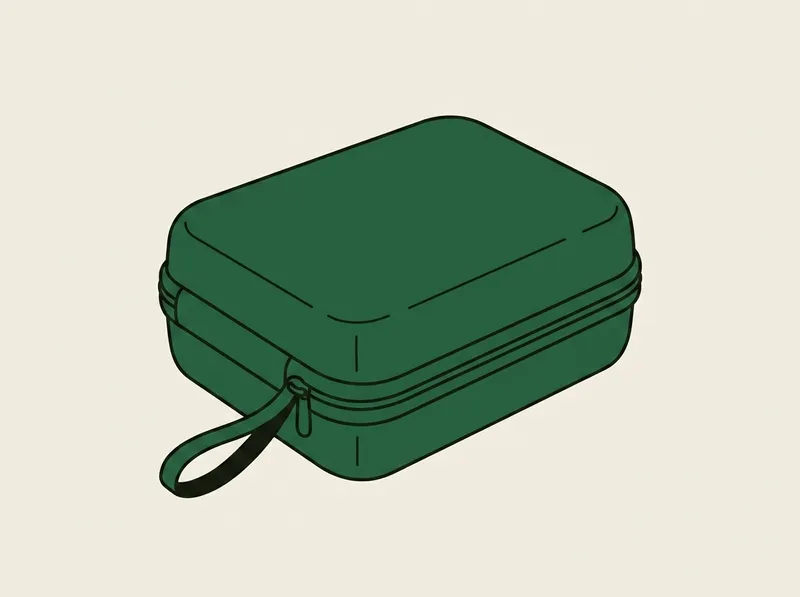 Around £20 to £25
Bushnell Golf Laser Case
- Type
- Hard shell EVA with a soft lined interior
- Closure
- Zip, with an elasticated strap inside to hold the device
- Attachment
- Carabiner clip at the rear
- Fits
- Bushnell Tour V1 to V4 and PRO X2, plus Nikon, Golf Buddy, Callaway and Shotsaver models
- Dimensions
- 13 cm by 11 cm by 5.5 cm
- Publishes its dimensions, which is the only way to check a case against a device you already own.
- A rigid EVA shell is the only thing here that protects the internal optics from a real knock.
- Named compatibility across five brands rather than one, so it works as a genuine universal replacement.
- The Bushnell models named are the older Tour V1 to V4 and PRO X2 rather than the current V6 and X3 range.
- A zip is slower than a clasp, so this is carrying and storage rather than every-shot access.
- 13 cm by 11 cm takes up considerably more room in a bag pocket than a soft pouch does.
VerdictThe default answer for most people arriving here, because it is the only case on this page that names devices from more than one maker and prints the dimensions to check them against. Buy it for protection and for travel rather than for speed, since a zip is never going to be quick.
A rigid shell is also the only thing on this page that survives a real impact. Rangefinders are optical instruments with a lens and a set of internal prisms, and the failure that finishes them is not water, it is a knock that puts the optics out of alignment. If your bag goes into a car boot with a trolley on top of it, this is what you want.
The trade is speed and coverage. A zip is slow, a rigid box takes up considerably more room in a bag pocket than a pouch, and the Bushnell models named are the older ones. If you own a current PRO X3 or V6, the original part further down this page is the better fit.
Shot Scope Magnetic Bag Clip: not a case, and probably what you want
The Shot Scope Magnetic Bag Clip is worth including on a page about cases specifically because it is not one. It is a steel clip with a rubberised coating and a magnetic pad, and it fastens to the outside of a golf bag so that a magnetic rangefinder sits where you can reach it.
Shot Scope describe it as industry-grade steel rather than moulded plastic, which is the part that matters over a season. The failure mode of a cheap mount is not dramatic: it slowly stops gripping, and one day the rangefinder is not there any more.
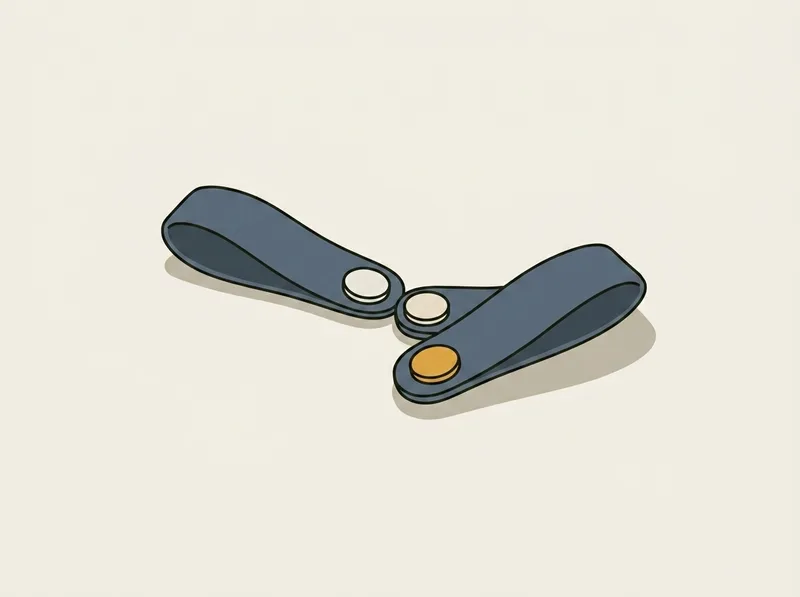 Around £20
Shot Scope Magnetic Bag Clip
- Type
- Magnetic mount, not a case
- Closure
- None, the device stays exposed
- Attachment
- Clips to the outside of a golf bag
- Fits
- Any rangefinder with a magnetic mount, plus other magnetic accessories
- Build
- Industry-grade steel with a rubberised coating and a metal pad
- The device sits on the outside of the bag, so reaching it takes a second rather than a rummage.
- Steel and a rubberised coating rather than plastic, which is what stops a mount rattling loose over a season.
- It works with whatever case you already own, because it replaces nothing.
- It is not a case. The rangefinder is exposed to rain, dust and whatever the bag brushes past.
- It only holds devices that are already magnetic, so a rangefinder without a magnet needs something else.
- Shot Scope publish no dimensions and no weight for it.
VerdictThe pick if the real problem is that you never use the rangefinder because it lives at the bottom of a pocket. It solves that completely and protects the device from nothing, which is why it belongs alongside a case rather than instead of one.
What it gives you is access. The device sits on the outside where you can grab it in a second, which is the only way a rangefinder gets used on every shot rather than on the ones where you can be bothered. What it gives up is everything a case does: the lens is exposed to rain and dust, and an expensive device is visible on the outside of your bag in a car park.
There is one precondition. The clip holds magnetic things, so it works with a rangefinder that already has a magnet in its body or in its case, and does nothing for one that does not. Check before buying rather than after.
The sensible arrangement is both. Mount for the round, case for everything else.
Bushnell Replacement Carrying Case: the original part
Bushnell sell a replacement carrying case through their European store at £20.00, with a clasp closure and a carabiner. The European listing covers the PRO XE, PRO X3 and PRO X3+ as well as the V4, V4 Shift, V5, V5 Shift, V6 and V6 Shift, which is a wider list than the equivalent American part, and it is quoted at three to five business days.
Buying the original part removes any question about fit, which is the main argument for it. It is also the answer for the current Bushnell range, which the universal case at the top of this page does not cover: that one stops at the Tour V4 and the PRO X2.
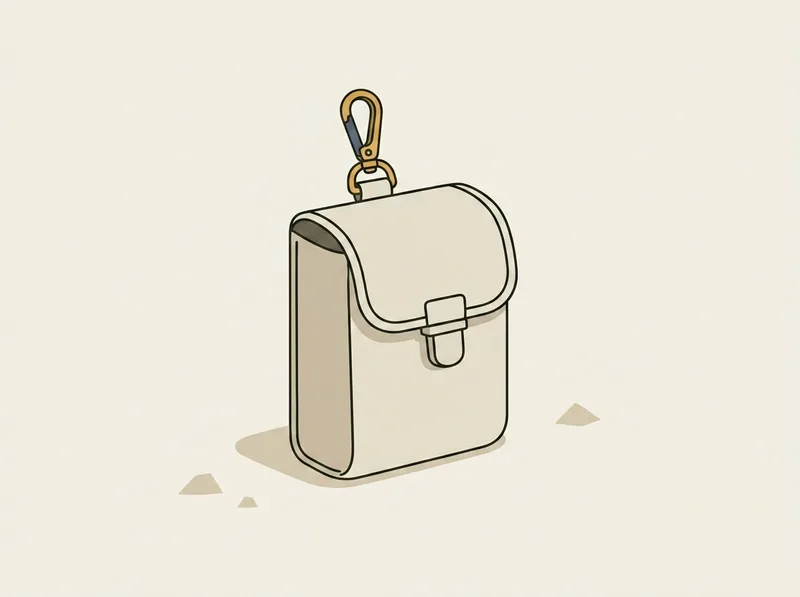 Around £20
Bushnell Replacement Carrying Case
- Type
- Original equipment replacement case
- Closure
- Clasp
- Attachment
- Carabiner
- Fits
- PRO XE, PRO X3 and PRO X3+, plus V4, V4 Shift, V5, V5 Shift, V6 and V6 Shift
- Price
- Published at £20.00 on Bushnell's European store
- Availability
- In stock, quoted at 3 to 5 business days
- Bought straight from Bushnell's European store, so fit is not a question you have to research.
- A clasp is faster than a zip and more secure than a magnet, which is a reasonable middle ground.
- It covers the current PRO X3 and V6 range, which the universal case above does not.
- Model specific, and useless to you if your rangefinder is not a Bushnell.
- Bushnell publish no material or dimensions for it.
- A clasp and a carabiner is the whole specification. There is no padding claim and no weather rating.
VerdictThe right buy if you own a current Bushnell and want the original part back rather than something that merely fits. It ranks third only because it helps nobody on another brand, and because a clasp closure protects less than the rigid shell above it.
A clasp sits between the two other closures here. It is quicker than a zip and more secure than a magnet, and for a case that lives in a bag pocket rather than on a rail that is a sensible middle. What you do not get is a rigid shell, so this protects against scratches and pocket clutter rather than against a real knock.
What actually kills a rangefinder
Worth knowing before deciding how much protection you are buying, because the failures are not the ones people expect.
Optical misalignment. A laser rangefinder measures by timing a pulse and it aims through a lens system. A hard enough knock can shift the internal alignment, at which point the device still reads and reads wrong, which is worse than not working. This is the failure a hard shell prevents and a soft case does not.
Lens scratching. The objective lens sits proud on most devices, and a rangefinder loose in a pocket with tees, a divot tool and a spare glove will get scratched. A lined interior deals with this completely and costs almost nothing.
Water ingress. Most current rangefinders are sealed to some degree and the better ones are properly waterproof, so this is less of a problem than it was. Where it still bites is the battery compartment on devices that use a coin cell behind a screw cap, since a cap not screwed down is an open door.
Losing the thing. The most common failure by a distance. A rangefinder left on a cart rail or a tee box is gone, and no case prevents that, which is one more argument for a mount that keeps it attached to something.
Universal or original
| Original part | Universal case | |
|---|---|---|
| Fit | Exact, no measuring needed | Depends on published dimensions |
| Availability | Often limited, sometimes out of stock | Always available |
| Price | Usually cheapest | Usually a little more |
| Closure options | Whatever the maker chose | Magnetic, zip or clasp, your choice |
| Upgrade potential | None, it is the same case | You can buy something better |
The rule of thumb: if you own a device from a big brand and just want the original back, buy the part. If the original case was the reason you stopped using the rangefinder, buy something with a different closure, because that is the only thing about the case that changes your behaviour.
Where this sits against the device itself
None of this matters if the rangefinder is the wrong device. A case protects an investment that starts somewhere around a hundred pounds and goes several times that, and golf rangefinders covers what separates one from another. If yours is old enough that the case has worn out, it is worth checking whether the device itself is now the weak link, since budget rangefinders have moved a long way and slope-enabled models are no longer expensive.
There is also the question of whether a laser is the right tool at all. Watches solve the access problem completely by being on your wrist, which is the same problem a magnetic mount is trying to solve with straps, and GPS watches do less precisely and much faster. Which of the two suits you is a genuine decision rather than a formality.
For travel, the case goes inside a bigger problem. A rangefinder in a hold-checked golf bag is relying on whatever surrounds it, and travel bags differ enormously in how much padding they actually have. The safest answer is that the rangefinder goes in your hand luggage and the hard case is what it travels in.
Where it lives during a round comes down to how the bag is set up. Most bags have a small valuables or accessory pocket that is the intended home, and golf bags vary in whether that pocket is lined, reachable while walking, or a token gesture.
What to spend
| What you want | What it buys | Who it suits |
|---|---|---|
| A universal hard shell | Impact protection and published dimensions to check | Anyone replacing a worn out case, on most brands |
| A magnetic mount | Access, at the cost of all protection | Golfers who own a rangefinder and never use it |
| An original replacement part | An exact fit from the device maker | Anyone on a current Bushnell who wants the part back |
All three cost about twenty pounds, so the budget column that would normally sit here does no work. There is no version of this page where spending more improves anything about your golf. The one purchase here that changes behaviour is the mount. Everything else is protecting a device you already own from failures that are, mostly, avoidable by not putting it loose in a pocket with a divot tool.
Key takeaways
- Most rangefinders ship with a case, so this is a replacement or an upgrade rather than a first purchase.
- Decide which problem you have first: a broken case, a device you never use, or a device that travels. They have three different answers.
- The Bushnell Golf Laser Case is the straightforward replacement, because it names devices from five brands and prints the dimensions to check them against.
- The Shot Scope Magnetic Bag Clip is not a case. It is a magnetic mount, and it solves the access problem better than any case can.
- Three products rather than four, because most of this category is sold from United States storefronts that do not ship to Britain or price in sterling.
- A hard shell with published interior dimensions is the only thing that protects against the failure that actually ends rangefinders, which is optical misalignment from a knock.
- Universal is a meaningless word unless the maker publishes internal dimensions. Measure your device.
- A case that is too big is worse than a snug one, because a device that moves inside its case absorbs every knock the case takes.
- The most common way to lose a rangefinder is leaving it on a cart rail, which no case prevents and a mount does.
Common questions
Do I need a case for my golf rangefinder?
Almost certainly you already have one, since nearly every rangefinder ships with a case in the box. You need a new one if the original has worn out, if it is the wrong closure for how you play, or if the device travels and the bundled pouch offers no impact protection.
What is the best golf rangefinder case?
The Bushnell Golf Laser Case for a general replacement, because it is a rigid shell, it names devices from five brands and it publishes its dimensions. The Bushnell original part if you own a current PRO X3 or V6. If the real problem is that you never get the rangefinder out, a magnetic mount solves that and a case does not.
Are magnetic rangefinder cases any good?
The closure type is a trade rather than an upgrade. A magnet opens one handed, which genuinely changes how often you use the device, and it is the least secure closure available. If the case lives on the outside of the bag where it stays upright, a magnet is excellent. Buried in a pocket, it can open. None of the picks here uses one: the UK-available options close with a zip or a clasp, and the magnetic answer in this category is a mount rather than a case.
Will a universal rangefinder case fit my device?
Only if you check. Universal means the maker has not committed to anything, so the only reliable method is to measure your rangefinder and compare it against a published internal dimension. Most makers do not publish one, which is a reason in itself to buy from the ones that do.
Should I get a hard case or a soft case?
Hard if the rangefinder travels, gets checked into a hold, or lives in a car boot, because a rigid shell is the only thing that protects the internal optics from a real knock. Soft if you use the device during rounds, because a hard case is slow to open and takes up much more room in a bag pocket.
Can I attach a rangefinder to my golf cart?
Yes, with a magnetic mount rather than a case. Most cart rails and frames take a strap, and mount systems use a magnetic connection so the device pulls off in one movement. Check the published circumference limits against your device, especially if it has a rubber armour ring around it.
What actually damages a golf rangefinder?
A knock that shifts the internal optics, which is the failure that matters because the device carries on reading and reads wrong. After that, lens scratches from being loose in a pocket, and water getting past a battery cap that was not screwed down. A dropped rangefinder is a bigger problem than a wet one.
Do rangefinder cases fit all brands?
No, and case makers describe fit inconsistently. Original replacement parts are model specific and often exclude models within the same range. Third party cases claim broad compatibility and mean the ones they have measured. Interior dimensions are the only reliable comparison.
Where should a rangefinder live in a golf bag?
In a lined valuables or accessory pocket you can reach while the bag is on your shoulder, otherwise you will stop using it. If your bag does not have one in a sensible position, a mount on the outside of the strap is a better answer than moving it between pockets.
Is it worth replacing the case that came with my rangefinder?
Only if the original is failing or if it is the reason you do not use the device. If a zip is stopping you from getting the rangefinder out on approach shots, replacing it with a magnetic case or adding a mount is a twenty pound fix to a problem that is costing you shots.
How we put this together
- Published manufacturer specifications for each case, taken from the maker's own listing rather than a retailer's summary.
- Whether the case is soft or hard shelled, since those protect against completely different failures.
- How the case closes and how it attaches, because access speed and security pull in opposite directions.
- Published internal dimensions where they exist, which is the only reliable way to check a universal case against a specific device.
- Whether the product is actually a case at all, since the best selling accessory in this category is a mount.
On this page
- Three problems, three different products
- Bushnell Golf Laser Case: the replacement
- Shot Scope Magnetic Bag Clip: not a case, and probably what you want
- Bushnell Replacement Carrying Case: the original part
- What actually kills a rangefinder
- Universal or original
- Where this sits against the device itself
- What to spend
- How we put this together

Tom Ashworth
Tom Ashworth is a PGA Professional who has taught golf since 2012, working mainly with beginners and mid-handicappers at club level in Surrey. He reviews the instruction guides on Learn Golf for technical accuracy before they publish.
Most of his teaching is with players in their first three years of the game, and most arrive having been told too much: six swing thoughts collected from videos, half of them contradicting each other. His approach is to check the grip and the alignment before touching the swing, on the basis that most bad ball flight is decided at address.