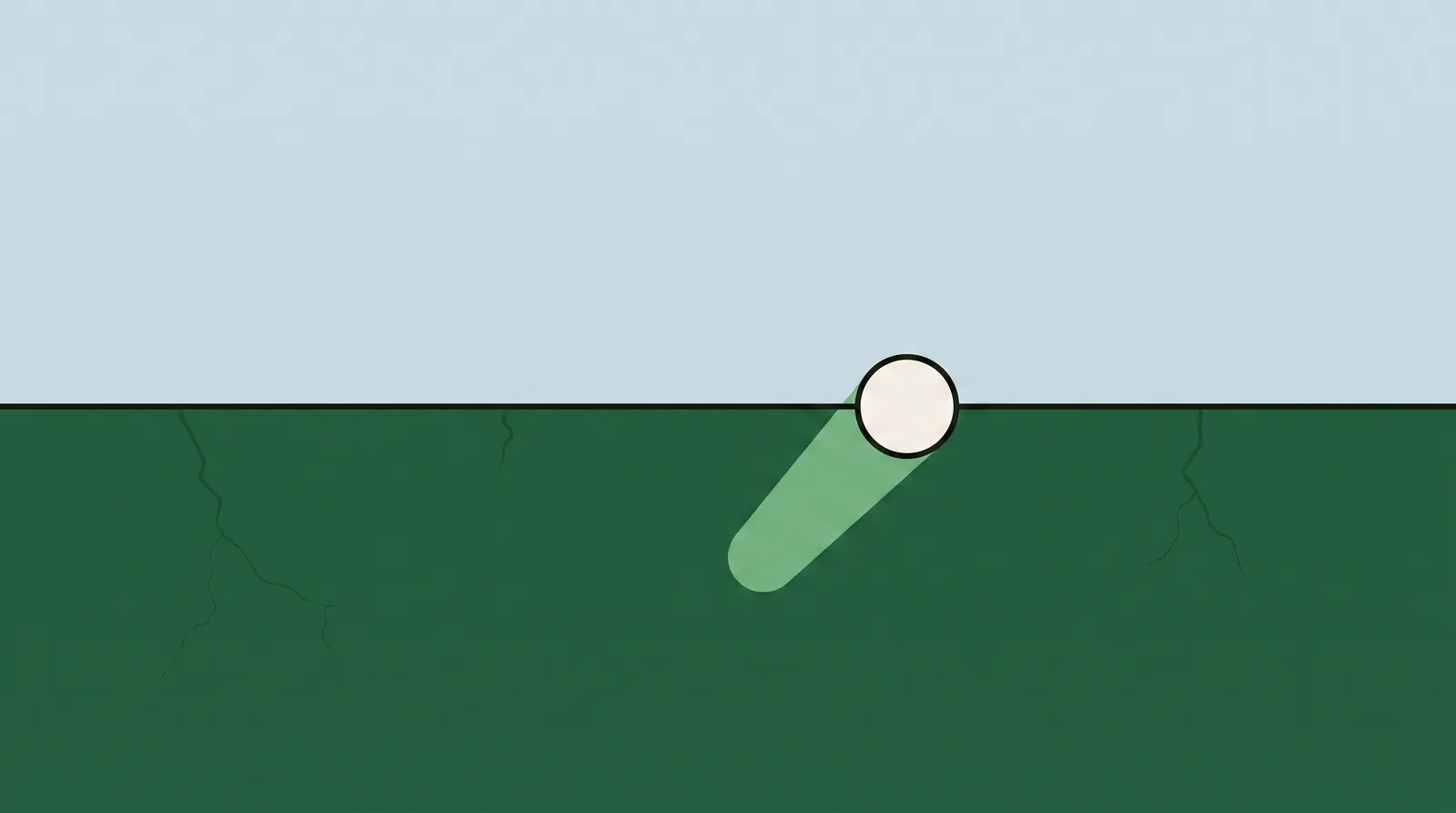
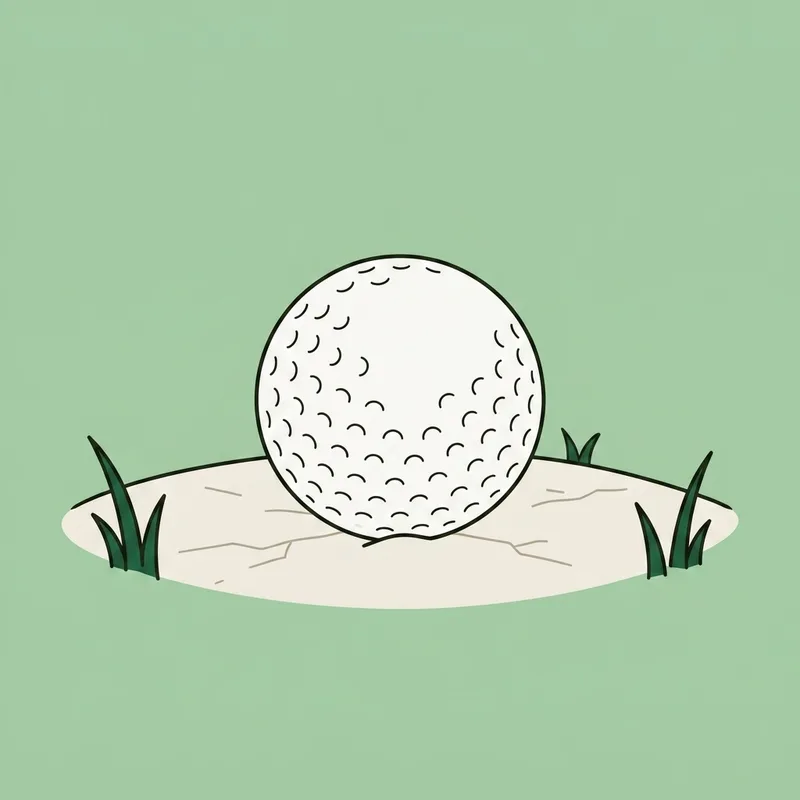
Hardpan, a worn cart path edge, a dried-out summer fairway, a divot. The ball sits on the ground with nothing underneath it, and the margin that normally forgives a strike an inch early has gone. This guide covers why bounce turns against you on a bare lie and the setup that gets the leading edge to the ball first.
Why bounce becomes the enemy
Every wedge and most irons have bounce: the sole angles down from the leading edge so that the trailing part of the sole contacts the ground first. On soft turf and in sand, this is what stops the club digging. It is one of the most useful design features in golf.
On firm ground it works against you. Bounce makes the sole skid off a hard surface rather than cutting into it, and a skidding sole raises the leading edge into the middle of the ball. That is the thinned shot that scuttles across the green, and it is the standard tight-lie miss.
Opening the face makes it worse, because opening the face is precisely how you add bounce. This is why the tight-lie technique inverts almost everything taught for greenside shots from good lies.
The setup
Five changes, and they are all at address.
- Play the ball back of centre, further back than you would from a good lie with the same club.
- Push your hands ahead of the ball so the shaft leans toward the target and loft is reduced.
- Set about 60 to 70% of your weight on your lead foot and keep it there through the shot.
- Keep the clubface square. Do not open it, whatever the shot would normally ask for.
- Grip down slightly for control and stand fractionally closer.
From there the swing is a normal one delivered to a forward low point. Ball first, ground second, and the ground contact should be a brush rather than a dig.
Club selection changes more than technique does
The reliable answer on a tight lie is usually a different club rather than a better swing.
| Situation | Club | Why |
|---|---|---|
| Greenside, green to work with | 8 or 9 iron, running shot | Least bounce risk, biggest margin for error |
| Greenside, must carry something | Pitching wedge, hands well ahead | Some loft, less bounce than a sand wedge |
| Greenside, short-sided | Low bounce lob wedge, square face | Highest risk shot in golf from hardpan |
| Fairway, full shot | Normal club, ball back one inch | The lie matters less on a full swing than golfers think |
| Fairway, long approach | Hybrid or fairway wood, swept | Wide sole helps if the ground is firm but not bare |
That bottom row is worth noting. A hybrid off firm, tight turf is often easier than a long iron, because the wider sole resists digging. On genuinely bare ground it is the opposite, and a club with less sole width and a sharper leading edge is the safer tool.
The greenside version of this shot has its own guide in chipping from rough and tight lies, which covers the short game side in more detail.
Where tight lies come from
Knowing where they appear helps you plan rather than react.
Summer and drought conditions. Firm, thin fairways are normal on links courses and on any course in a dry spell. This is the version most golfers meet.
Worn areas. Around greens where traffic concentrates, near cart paths, and on tee boxes late in the season.
Divots. The single most annoying version, because you played a good shot to get there. A ball in a divot is a tight lie with walls, and the technique is identical: ball back, hands ahead, steep and committed. There is no free relief from a divot in the general area under the Rules of Golf, so it has to be played.
Bare patches under trees. Where grass does not grow, and usually combined with an awkward stance.
Bounce and grind are the specifications that decide how a club behaves here, and they are the least understood numbers on a wedge. The golf wedge loft guide explains what to look for if you play a firm course regularly.
Key takeaways
- On a tight lie the club must reach the ball before the ground. There is no cushion to hide an early strike.
- Bounce is helpful on soft turf and harmful on firm ground, because the sole skids instead of cutting.
- Never open the face on hardpan. Opening the face is how you add bounce.
- Ball back of centre, hands clearly ahead, weight forward and staying forward.
- Take less loft than usual and plan for a lower ball that runs out.
- A running 8 or 9 iron is the reliable greenside default from bare ground.
- A ball in a divot gets no free relief in the general area, so it has to be played this way.
Common questions
How do you hit a golf ball off hardpan?
Play the ball back of centre, keep your hands ahead of it, set your weight forward and keep the clubface square. The leading edge has to reach the ball before the ground does. Take less loft than the distance suggests and expect the ball to come out low and run.
Why do I thin the ball off tight lies?
Because the low point of your swing is behind the ball, or because you opened the face. On firm ground the bounce on the sole skids off the surface instead of cutting into it, which lifts the leading edge into the ball's equator. Square the face and get your hands ahead.
Should I use a sand wedge off a bare lie?
Usually not. A sand wedge typically has the most bounce in the bag, which is exactly what causes the club to skid on firm ground. A pitching wedge with the hands well forward, or a running 8 or 9 iron, is far more reliable.
What is bounce on a golf club?
The angle between the leading edge and the lowest point of the sole, which makes the trailing part of the sole contact the ground first. It stops the club digging in soft turf and sand, and it works against you on hard ground where you need the leading edge to reach the ball first.
Can I get relief from a divot?
No. A ball in a divot in the general area is played as it lies under the Rules of Golf, which is a rule that most golfers find unfair and that has been debated repeatedly. Treat it as a tight lie: ball back, hands ahead, steep and committed.
Is a hybrid good off a tight lie?
It depends how tight. On firm turf that still has grass, a hybrid's wide sole helps because it resists digging. On genuinely bare ground the wide sole works against you the same way bounce does, and a club with a sharper leading edge is safer.
How do I get height from a tight lie?
Accept less of it than you want. If you genuinely need to carry something, use a low-bounce lob wedge with the face square and the hands slightly ahead, and commit fully. Opening the face to add loft is the mistake that produces the thinned shot across the green.
Does a tight lie affect full shots as much as short ones?
Less than golfers expect. A full swing already has a descending strike with the low point ahead of the ball, so the lie matters less. Move the ball back an inch and swing normally. It is the short, delicate shots where the missing cushion does the damage.
Why are tight lies more common in summer?
Because firm, dry ground grows less grass and the turf thins out, particularly on links courses and on any course through a dry spell. Worn areas near greens, cart paths and tee boxes get bare for the same reason, and the effect compounds late in the season.
What is the safest shot from hardpan around the green?
A running shot with an 8 or 9 iron, played with the ball back and the hands ahead, landing on the front of the green and releasing to the hole. It has the largest margin for error of anything available, because a slightly heavy strike still produces a usable result.
Tom Ashworth
Tom Ashworth is a PGA Professional who has taught golf since 2012, working mainly with beginners and mid-handicappers at club level in Surrey. He reviews the instruction guides on Learn Golf for technical accuracy before they publish.
Most of his teaching is with players in their first three years of the game, and most arrive having been told too much: six swing thoughts collected from videos, half of them contradicting each other. His approach is to check the grip and the alignment before touching the swing, on the basis that most bad ball flight is decided at address.