A net turns a garage or a corner of a garden into somewhere you can swing a club on a Tuesday evening, which is worth more than most range memberships. It also removes ball flight entirely and introduces a small set of genuine risks that nobody selling one talks about. This guide covers the room, the safety, and how to get real information out of a session where the ball stops after two feet.
Measure the room, not the net
Nets are sold on the size of the opening and used in the size of the room, and those are different numbers. Three dimensions decide whether the thing you ordered is usable, and only one of them appears on the box.
| What to measure | How to measure it | Why it decides the purchase |
|---|---|---|
| Ceiling height | Hold your longest club vertically above your head and add clearance for the arc | The club goes higher than you do, and joists, lights and garage door tracks sit in that arc |
| Floor depth | Net depth plus how far you stand back plus room behind you | A deep net eats several feet before you have stood anywhere |
| Width at the hitting position | Arm span plus club length, both sides | Backswing and follow-through both need wall clearance, not just the swing itself |
| Clearance behind the net | Distance from the back of the netting to the nearest solid object | The netting travels backward when a ball hits it, and it needs somewhere to go |
TrackMan's guidance for building into a garage recommends roughly 9 to 10 feet of ceiling height for a full swing. That figure is for a simulator bay, and it is the right starting point for a net too, because the constraint is the club rather than the screen. Taller golfers and anyone using a long driver need more.
The test that settles it takes thirty seconds. Take a driver into the room, address a spot on the floor, and swing it through in slow motion at full length, watching the head at the top and again at the finish. Do it standing exactly where the mat will go, not in the middle of the room.
How far back to stand
Almost no maker publishes a recommended distance, so this gets worked out from what the net has to do rather than from a specification.
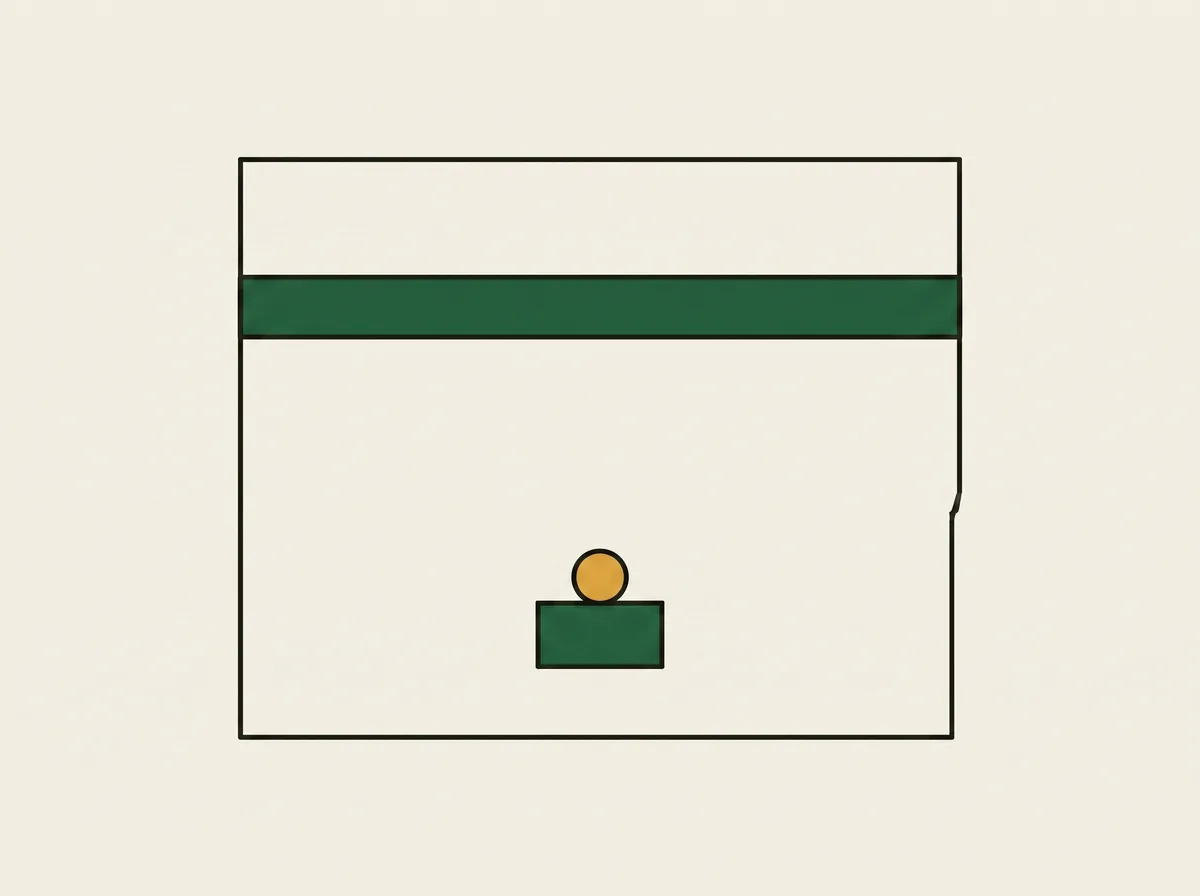
Standing too close is the common error and it has two costs. A shallow net stops the ball hard rather than absorbing it, so the rebound is faster and it arrives sooner. It also puts the frame edges inside your dispersion, which means the shot that misses the middle of the net misses the net entirely.
Standing too far back trades that for a wider cone. Every foot you retreat, the same few degrees of face error covers more sideways distance by the time the ball arrives, and a freestanding net is not wide.
The practical middle is close enough that the net's opening comfortably covers where your bad shots go, and far enough back that the netting has time and slack to slow the ball down. Find it by hitting wedges first and watching how far the netting travels rearward before the ball drops, then set your clearance behind the net from that, with margin.
The rating, and what to do when there is not one
Speed ratings on golf nets are quoted in ball speed rather than club speed, and the two are very different figures. TrackMan's smash factor page gives the conversion: a good driver strike returns about 1.49 times the club speed as ball speed, so a 95 mph swing produces roughly 140 mph of ball.
That is the number a rating has to clear, with margin, and most makers publish nothing to compare it against. The one common exception publishes it plainly: The Net Return states that its Pro Series netting is UV-treated and designed to absorb ball speeds up to 225 mph. Which nets publish a figure and which do not is set out product by product in best golf nets.
Where nothing is published, there is nothing to check, and the only sensible policy is to treat the net as an iron and wedge net until the maker gives you a number in writing. That is not excessive caution. A driver produces the highest ball speed in the bag by a wide margin, and the energy the netting has to absorb rises faster than the speed does, from a few feet away, usually indoors, often with somebody else in the house.
If you have never had your speed measured, that is a one-session job and it settles the question properly. The methods and what each one actually reports are in measuring your club speed.
Netting wears out and does not announce it
This is the part of net ownership nobody plans for. Netting is a consumable, and it degrades from two directions at once.
Sunlight is the first. UV exposure breaks down the fibres, which is why UV treatment appears on the better specifications and why a net left outdoors through two summers is not the net that was delivered. The second is simply shot count. The Net Return's own warranty terms are stated as three years or 250,000 shots, whichever comes first, which is an unusually honest way of saying that netting has a working life measured in impacts.
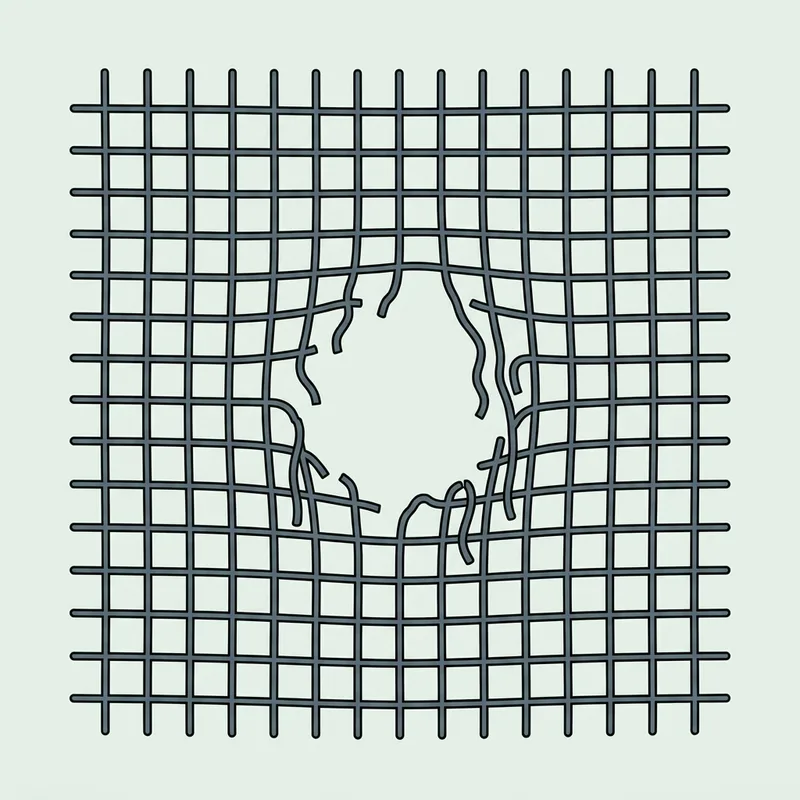
A ball that passes through worn netting keeps most of its speed. It does not dribble through. That is the reason the wall behind the net is a safety decision rather than a decorating one.
Build an inspection into the routine. Every few sessions, run a hand over the panel where the balls actually land, which will be a patch about the size of a dinner plate rather than the whole net. Look for fibres that have gone pale and stiff, strands that have parted, and any hole at all. A single broken strand is a repair; a hole is a replacement, and most makers sell the netting separately from the frame for exactly this reason.
What goes behind and beside it
Assume the net will fail once, and set the room up so that the failure is boring.
A second layer is the cheapest insurance there is. A heavy moving blanket, an old net, or a sheet of plywood behind the hitting area turns a ball through the mesh into a thud rather than a repair bill. Position it to cover the patch the balls actually land on rather than the whole wall.
Then check what is inside the danger area. Windows and glazed doors are the obvious ones, and the ones people forget are shared walls, cars in a garage, water heaters and boilers, consumer units, bicycles that can be knocked over, and any door that opens into the room while somebody is swinging. A bolt or a note on the outside of that door is a reasonable habit.
Ball choice sits in the same decision. Foam and limited flight balls remove the risk entirely and they are the right answer in any garden with neighbours or people in it, in any room where the rating is unknown, and for anybody sharing the space. Real balls are for a properly rated net with clearance behind it and nobody else in the room.
What a net genuinely cannot teach you
A net removes ball flight. That is the point of it and it is also the whole limit, and being precise about which half of your game survives is what stops a winter of net practice going to waste.
| What you are practising | Does a net report it | Why |
|---|---|---|
| Strike location on the face | Yes | The mark on the face and the sound both survive |
| Contact quality, fat and thin | Yes | You feel it and hear it before the ball reaches the net |
| Tempo and rhythm | Yes | Nothing about timing depends on the ball flying |
| Setup, grip and posture | Yes | These are positions, and a mirror or a phone judges them |
| Start direction | No | The ball is stopped before it has established a line |
| Curvature | No | Two feet is not far enough for any face to path gap to show |
| Carry distance | No | Nothing about the flight exists to measure |
| Wind, lie and slope | No | None of them are present in a room |
Getting feedback anyway
The useful trick is to stop asking the net for information it does not have, and instrument the things it does.
Spray the face. Foot powder or impact tape over twenty shots gives you a strike pattern, which is the single most valuable thing available indoors and one of the few readings that is just as good at home as it is at a range.
Listen deliberately. A thin strike, a fat one and a centre strike sound different, and the difference is easier to hear indoors because there is no wind and no next bay.
Read the mat. A scuff starting well behind the ball is a low point behind the ball, and it is far more visible on a mat you own than on one you share with a queue.
Film down the line. A phone on the floor at address height catches the two things that drift silently at home, which are grip and posture.
Count the tempo. Counting the backswing and downswing out loud, or using a metronome, gives the session a measurable variable that has nothing to do with where the ball went. The reasoning is in swing tempo.
A launch monitor puts some of the missing numbers back, with a caveat. Indoor units calculate the flight from launch conditions rather than watching it, so the yardage on the screen is a model. That makes it a good comparison tool within one session and a poor absolute, and what each unit measures rather than models is covered in launch monitors.
A session that is worth doing
Twenty minutes on three or four evenings beats one long weekend session, because contact and tempo are motor patterns and motor patterns respond to frequency. Open with five wedges at half speed to warm up and to check the netting is behaving, run the ladder above, then finish with five full swings taken with a complete routine rather than as ball number twenty-six.
Take it outside every few weeks and test it. The net keeps a swing ticking over, and a session with a target and a measured yardage is what tells you whether anything actually changed, which is what the driving range routine is structured around.
Key takeaways
- Measure ceiling height with a club, not with your own height, and swing one slowly in the room before ordering anything.
- Floor space is the net's own depth plus how far you stand back plus clearance behind the netting.
- Ratings are quoted in ball speed. A good driver strike returns about 1.49 times club speed, so a 95 mph swing is roughly 140 mph of ball.
- No published rating means unknown. Treat the net as an iron and wedge net until the maker gives you a figure.
- Netting is a consumable. UV degrades it and impacts wear it, and one maker states a warranty of three years or 250,000 shots.
- A ball through worn netting keeps most of its speed, which is why the wall behind the net is a safety decision.
- Plan for the shank. No freestanding net catches it, so what sits beside the net matters as much as the net.
- Foam and limited flight balls are the right answer in any shared space or where the rating is unknown.
- A net reports strike, contact and tempo, and reports nothing about direction, curvature or distance.
- Instrument the rest yourself: face powder, sound, the mark on the mat, and a phone filming down the line.
Common questions
How much space do I need for a golf net?
Enough ceiling height for a full swing, which is around 9 to 10 feet for most golfers, plus the net's depth, plus the distance you stand back, plus clearance behind the netting so it can travel when a ball hits it. Height is usually the binding constraint indoors, and it is the one that cannot be worked around.
How far should I stand from a golf net?
Far enough back that the netting has slack and time to absorb the ball, and close enough that the opening still covers where your bad shots go. Start by hitting wedges and watching how far the netting travels rearward, then set your position and your clearance behind the net from that.
Can I hit a driver into a golf net?
Only into a net whose published rating clears your ball speed with margin. A 95 mph driver swing produces around 140 mph of ball speed at a good strike, so a rating has to sit comfortably above that. Where a maker publishes no rating at all, the safe policy is irons and wedges.
What happens if a ball goes through a golf net?
It keeps most of its speed and hits whatever is behind. That is the reason to hang a moving blanket, an old net or a plywood sheet behind the hitting area, and the reason not to set a net up in front of a window, a car, a boiler or a door somebody might open mid-swing.
How do I know if my golf net is worn out?
Inspect the patch where the balls actually land, which is smaller than the net and usually about the size of a dinner plate. Pale, stiff fibres mean UV damage, parted strands mean the panel is failing, and any hole at all means replacement rather than repair. Most makers sell replacement netting separately from the frame.
Can I use real golf balls in a net?
With a properly rated net, a proper mat, clearance behind it and nobody else in the room, yes. Without a published rating, or in a garden with neighbours, windows or people in it, foam and limited flight balls do the same job for tempo and contact work and remove the risk.
Does hitting into a net improve your golf?
It improves the parts that do not need ball flight: strike quality, contact, tempo, and the setup positions that drift silently between range visits. It cannot improve or even measure direction, curve or distance, so it works as maintenance between range sessions rather than as a replacement for them.
Will a net tell me if I am slicing?
No. The ball is stopped after two feet, which is nowhere near far enough for a face to path gap to bend it. A net will show you where on the face you struck it, which is useful and related, but the curve itself only exists in flight and has to be checked somewhere the ball can fly.
Do I need a hitting mat as well as a net?
Yes, unless you are willing to destroy a patch of lawn. Hitting off concrete puts the shock of a fat shot into the lead wrist, and a thin mat over a hard floor both risks the same injury and hides the fault by letting the club skid into the ball rather than digging.
Is a golf net loud?
Louder than people expect, and depth is what changes it. A shallow net stops the ball abruptly, which is a sharp noise, while a deep net turns the same shot into slow fabric movement. If you practise in the evening in a shared building, depth is worth more than any other specification.
Can I set up a golf net in a garage?
Often yes with irons and wedges, less often with a driver, and ceiling height is usually the deciding factor rather than the net itself. Check the door mechanism and the light fittings, which sit exactly where the club head travels, and remember the net's own depth eats into the floor before you have stood anywhere.
Tom Ashworth
Tom Ashworth is a PGA Professional who has taught golf since 2012, working mainly with beginners and mid-handicappers at club level in Surrey. He reviews the instruction guides on Learn Golf for technical accuracy before they publish.
Most of his teaching is with players in their first three years of the game, and most arrive having been told too much: six swing thoughts collected from videos, half of them contradicting each other. His approach is to check the grip and the alignment before touching the swing, on the basis that most bad ball flight is decided at address.