Nobody is nervous about a first round because of the golf. They are nervous because they do not know the shape of the day: when to turn up, who hits first, where to stand, what to say in the pro shop, how long any of it takes. That uncertainty is what turns a game into an exam. Here is the day in order, from booking it to walking off the eighteenth.
Booking it: when, where and how many holes
The slot you choose changes the day more than anything else you decide. A weekday afternoon at a municipal or pay-and-play course is quiet, cheap and forgiving. A Saturday morning at a members club is the opposite of all three, because the course is full and everyone behind you is playing a competition.
Nine holes is the better first round for most people. It is around two hours instead of four, costs roughly half, and ends before concentration and legs both give out. Plenty of courses sell a nine-hole rate on the same eighteen-hole layout, so you simply walk in after the ninth green.
Two practical things to settle before the day. The clubs: borrow or hire if you can, because a short borrowed set is fine and the clubs a beginner needs is a decision better made after a few rounds. The clothes: most pay-and-play courses will take a plain polo shirt and shorts without comment, while older clubs are stricter, and what to wear golfing covers where the lines usually sit. The mechanics of getting a slot, including what the shop will ask you on the phone, are in how to book a tee time.
The half hour before you hit a shot
Arrive thirty minutes before your tee time. Not ten, and not ninety.
That half hour covers parking, changing shoes, checking in at the pro shop, paying, collecting a scorecard and reaching the first tee with a couple of minutes spare. Pick the card up even if you have no intention of counting, because it carries the yardages, the hole map and any local rules the club has adopted.
Tee times are not casual suggestions. The R&A's pace of play guidance on starting intervals recommends at least eight minutes between two-balls and eleven or twelve minutes between four-balls, which means the whole day behind you is stacked in fixed slots. Turning up two minutes before your time does not cost you two minutes. It puts you on the tee flustered, in front of a group who were ready.

With the time left over, putt rather than hit. The practice green tells you how fast the greens are running that day, which is the most useful thing you can learn before you start and it costs nothing. A bucket of balls before a first round mostly produces tiredness and a swing thought you did not have when you arrived. If you would rather arrive having hit something, do it earlier in the week: using a driving range explains how a range session works, and warming up before a round covers the short version.
The first tee
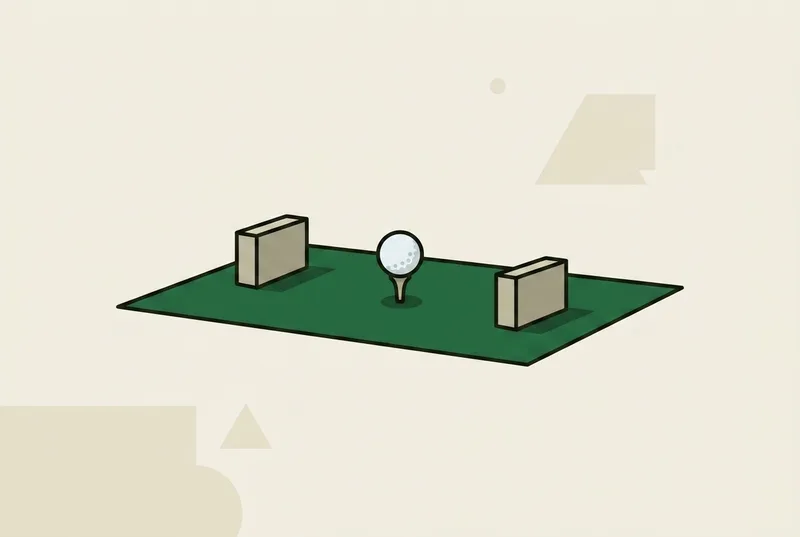
The teeing area is the strip of ground between the two markers, and it runs two club-lengths back from them. You may tee the ball anywhere inside that rectangle, and you may stand outside it, which is worth knowing under Rule 6.2b when the flat bit of grass is not directly between the markers. Play from the forward tees. Nobody is impressed by a beginner playing the back tees and everybody behind you will notice.
Order of play is usually settled by tossing a tee peg. After that the player furthest from the hole goes first, except that most friendly groups hit when they are ready instead, which the Rules encourage in stroke play. That, and the conventions about where to stand and when to stay quiet, are in golf etiquette.
If the prospect of swinging in front of strangers is the part keeping you awake, that is common enough to have its own name and its own fixes, covered in first tee nerves.
How one hole actually plays
A par 4 for a beginner is not four shots. It is six or seven, and each one has exactly one decision attached to it. Here is the shape of it.
| Shot | Where you are | The only decision that matters |
|---|---|---|
| 1 | On the tee | A club you can launch, aimed at the widest part of the hole |
| 2 | Fairway or light rough, a long way out | Advance it. Distance, not the flag |
| 3 | Sixty or seventy yards short | Land it on the green somewhere, any part of it |
| 4 | Just off the putting surface | Get it onto the green, even if that leaves thirty feet |
| 5 and 6 | On the green | First putt near the hole, second putt in |
Notice what is missing. There is no shot on that list where aiming at the flag is the right answer, and no shot that requires a club you cannot hit. Beginners lose most of their strokes attempting a shot the situation never asked for.
Putting is where the number quietly grows. Shot Scope's tracked amateur data on how often golfers three-putt has a 25 handicap three-putting roughly once every 7.6 holes, against once every 16.7 holes for a 5 handicap, and the same dataset finds the average golfer leaves 55% of putts short of the hole. Two or three three-putts in a first round is normal, not a disaster, and hitting the first putt hard enough to reach the hole fixes more of them than aim ever will.
If a ball disappears, the rule is one penalty stroke and a replay from where you last hit, and there is a three-minute limit on searching. That single line covers most of what will happen to you, and the full set is in the beginner rules guide.
Keeping up, and what to do when a hole collapses
Pace is measured against the group in front of you, never the group behind. If there is an empty hole ahead, you are slow. If the group ahead is still on the green you are about to play to, you are fine, whatever the four-ball behind you looks like.
The other recovery tool is picking the ball up. On any hole that has turned into a demolition, put it in your pocket, walk to the next tee and start again. This is normal, it is what experienced golfers do in friendly rounds, and it saves the group behind more time than any other single habit. How long a round of golf takes breaks the timings down by format and group size.
The turn
The ninth green usually sits near the clubhouse, and the walk from there to the tenth tee is called the turn. Some courses have a halfway house selling coffee and a bacon roll, some have a vending machine, and plenty have nothing at all.

Take five minutes there if you want one, but not fifteen. The group behind you does not stop for the turn just because you did, and a long break at the ninth is the most common way a round that was moving fine ends up an hour behind. If you booked nine holes, this is where you walk in, and doing so is completely normal.
Two hours to two hours fifteen for the front nine is a healthy pace on foot. Much beyond that and eighteen holes will run past four and a half hours.
Finishing, and the card
The eighteenth green has one custom attached to it, and it is universal: everyone shakes hands, and caps come off. That is the whole ceremony.
Then walk off the green before doing anything with the card. Scores get added up on the next tee during the round, and at the table or in the car park at the end, never on the putting surface with a group waiting in the fairway.
What the card says on a first round is close to meaningless, and most people do not complete every hole anyway. Two or three good shots in an afternoon is a normal first-round return and it is the reason people come back. If the terminology is unfamiliar, golf scoring explained covers par, bogey and the rest in one page.
Key takeaways
- Book a quiet weekday slot at a pay-and-play course, and choose nine holes over eighteen for a first round.
- Arrive thirty minutes early. Tee intervals are eight to twelve minutes, so the day behind you is fixed.
- Spend the spare time on the putting green rather than the range. Green speed is the useful thing to learn.
- The teeing area is the rectangle between the markers and two club-lengths back, and you may stand outside it.
- Use a club you can launch off the first tee, not the longest one in the bag.
- Every shot has one decision: advance the ball. Aiming at the flag is almost never the right answer.
- Pace is judged against the group in front, never the group behind.
- Pick the ball up on any hole that collapses, and search briefly for lost balls.
- Keep the turn to five minutes, and expect a little over two hours for the front nine.
- Handshakes on the eighteenth green, arithmetic somewhere else.
Common questions
What should I expect on my first round of golf?
Roughly four hours for eighteen holes or two for nine, a lot of walking, and far more shots than you planned. Expect to lose balls, to take six or seven strokes on holes designed for four, and to hit two or three that feel genuinely good. That last part is what brings people back.
How early should I arrive for a tee time?
About thirty minutes. That covers parking, changing shoes, checking in and paying at the pro shop, collecting a scorecard, and getting a few putts in before you are called. Arriving five minutes before your time means starting the round flustered in front of the group behind you.
Should I play 9 or 18 holes for my first round?
Nine, if the course sells it. It is around two hours and half the green fee, it includes every type of shot eighteen would, and it finishes before tiredness turns the golf into a chore. Most courses sell a nine-hole rate on the same layout.
What score should a beginner expect on a first round?
Higher than you think, and it does not matter. Most first-timers do not complete every hole, and picking up on a bad one is entirely normal in a casual round. Counting how many holes felt like golf is a better measure of the day than the total on the card.
Do I need my own clubs to play a round of golf?
No. Most courses hire sets out by the round, and borrowing a short set from a friend works just as well. Buying clubs before you know whether you enjoy the game is the single most common way beginners waste money on golf.
What do I wear for my first round of golf?
A collared polo shirt with shorts or tailored trousers is accepted almost everywhere. Municipal and pay-and-play courses are relaxed about the rest. Older private clubs are stricter about denim, football shirts and untucked tops, and it is worth asking when you book.
How long does a first round of golf take?
Around four hours for eighteen holes walking, or a little over two for nine. A slow four-ball can push eighteen holes past four and a half hours. Your own pace matters less than staying in touch with the group in front of you.
Can I pick my ball up if a hole is going badly?
Yes, and you should. In a casual round there is no penalty and no bookkeeping. Put the ball in your pocket, walk to the next tee and start the hole fresh. It is the fastest way to give the group behind you their time back.
What actually happens on the first tee?
Someone works out the order, usually by tossing a tee peg or by who is nearest the markers. Each player tees up between the two markers, plays, and the group walks off together. After that, most friendly groups simply hit when they are ready rather than strictly furthest first.
Do I need to know all the rules before I play?
No. Play the ball where it lies, count every stroke, carry no more than fourteen clubs, and take a penalty stroke when a ball is lost. Anything more complicated than that can be asked about on the spot, and golfers are almost uniformly happy to explain.
Is it all right to play my first round on my own?
Yes, and many people prefer it. Playing alone removes the audience and lets you go at your own speed, though a single golfer has no standing on the course and should let groups through. A quiet weekday afternoon is the easiest slot to get.
Tom Ashworth
Tom Ashworth is a PGA Professional who has taught golf since 2012, working mainly with beginners and mid-handicappers at club level in Surrey. He reviews the instruction guides on Learn Golf for technical accuracy before they publish.
Most of his teaching is with players in their first three years of the game, and most arrive having been told too much: six swing thoughts collected from videos, half of them contradicting each other. His approach is to check the grip and the alignment before touching the swing, on the basis that most bad ball flight is decided at address.