Best Golf Tees: Height Matters, Brand Mostly Does Not
A tee costs a few cents and the tee you use matters far less than the height you push it to. Here is the part that is real, the part that is marketing, and four packs worth buying.
Some links here earn us a commission at no extra cost to you. It never changes what we recommend or the order we rank it. How this works.
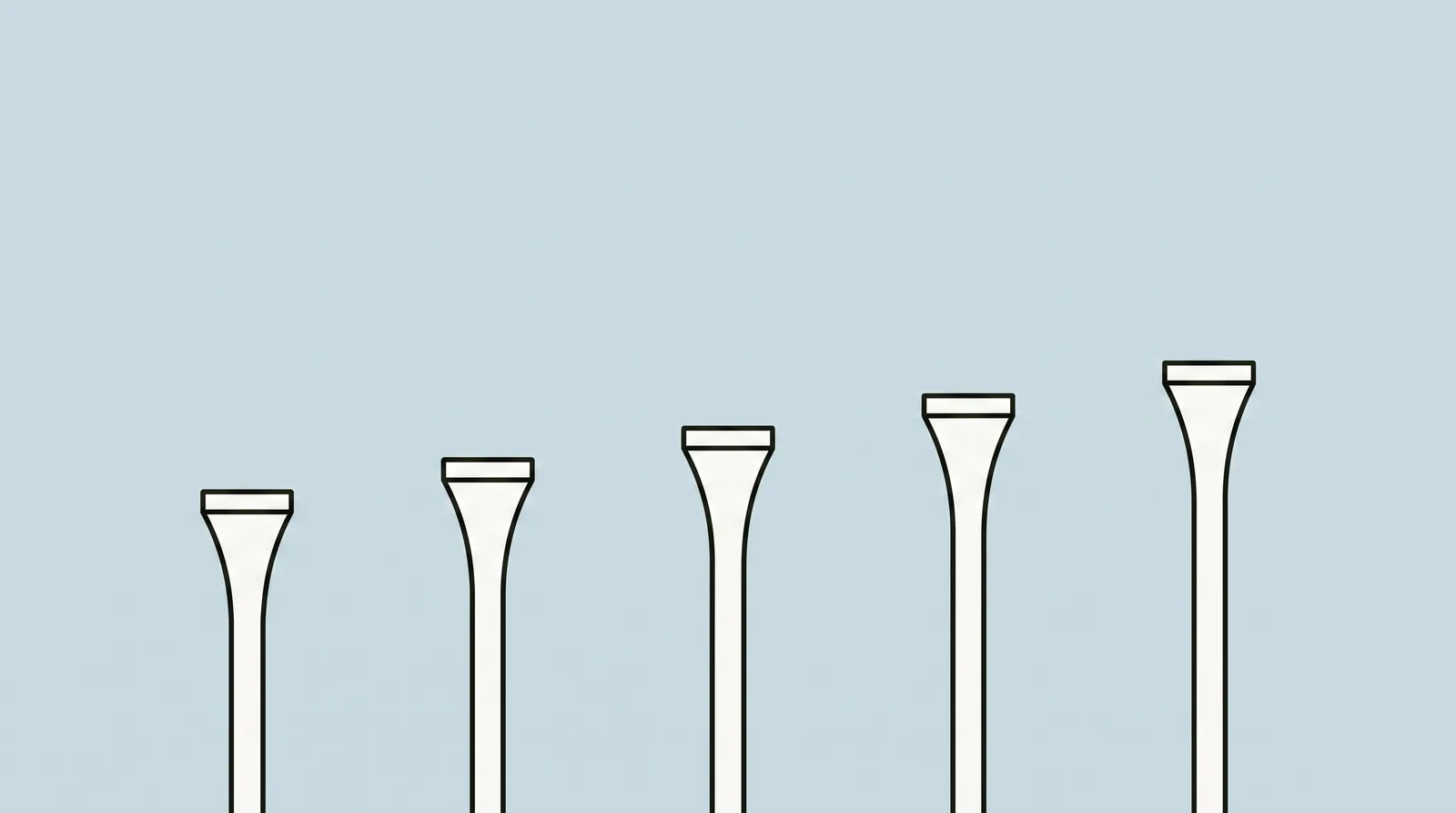
Golf tees are the cheapest thing in the bag and the category with the highest ratio of marketing to substance. Every performance tee is sold on distance, none of the distance claims come with a published test, and meanwhile the variable that genuinely changes a drive costs nothing and is entirely under your control. Here is the honest version.
The four, compared
There are two real specifications on a tee, which are what it is made of and how long it is. Everything else is head shape, and head shape is where every performance claim in the category comes from.
| Pick | Best for | Material | Lengths | Head | Sold in | Price |
|---|---|---|---|---|---|---|
| Pride Professional Tee System | The tee to buy if you have not thought about tees | Premium hardwood, described as Maine birch | Five wooden lengths: 1 1/2, 2 1/8, 2 3/4, 3 1/4 and 4 inches | Standard cup, with micro head and step versions sold alongside | Bulk packs from 50 up to 175, plus 10 packs of the plastic version | Around £5 to £14 a pack |
| Zero Friction Tour 3-Prong | Least contact with the ball, most tour use | Bio-composite | 2 3/4 in and 3 1/4 in | Three prong crown | Packs of 30 and 40, around £12 to £15 in the UK | Around £11 to £15 a pack |
| Martini Step-Up Tee | The same height every single time | Proprietary polymer resin | 3 1/4 in | Wide cup with a step collar on the shaft | Packs of five, and a twenty pack at around £20 in the UK | Around £14 to £18 for five |
| GreenKeepers 4 Yards More | The flex crown, and four lengths of it | Plastic with an elastomer crown | 1 3/4 in, 2 3/4 in, 3 1/4 in and 4 in | Six prong flexible crown | Packs of four | Around £5 to £8 for four |
Prices per tee are almost meaningless because the pack quantities differ by a factor of twenty. In the UK a hundred wooden tees costs about the same as four performance ones and roughly half what five of the polymer ones cost, and if you lose tees at the rate most golfers do, that arithmetic matters more than any head design.
Pride Professional Tee System: the sensible default
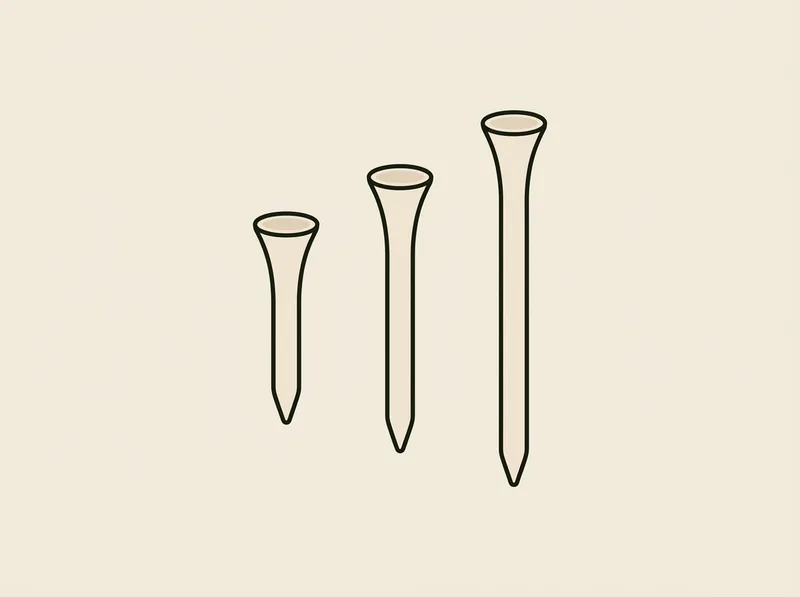
The Pride Professional Tee System is a printed colour coding system across five wooden lengths, made from premium hardwood. That is the entire product, and the reason it is first is that the system is the feature.
Most golfers own one length of tee, which means they have one tee height, which means their driver and their 3 wood and their long iron all get teed the same. The whole point of a graded system is that picking a tee becomes a decision instead of whatever was in the pocket, and the decision is worth more than any head design on this page.
 Around £5 to £14 a pack
Pride Professional Tee System
- Material
- Premium hardwood, described as Maine birch
- Lengths
- Five wooden lengths: 1 1/2, 2 1/8, 2 3/4, 3 1/4 and 4 inches
- Head
- Standard cup, with micro head and step versions sold alongside
- Sold in
- Bulk packs from 50 up to 175, plus 10 packs of the plastic version
- UK availability
- Full UK distribution, including a dedicated British PTS stockist
- Range
- Wood, plastic and titanium-reinforced versions in the same system
- System
- Printed colour coding to match tee length to club
- Five published lengths in one system, so you can actually pick a height rather than accept one.
- Hardwood snaps cleanly and biodegrades, which matters if you leave a few behind every round.
- The cheapest way per tee to get consistent height, which is the only thing on this page that changes a strike.
- Wooden tees break, and a driver at full speed will break several a round.
- Pride's own system page says there are five lengths without printing the measurements, so you have to get them from a stockist.
- No performance claim at all, which is honest and also means nothing here is doing anything clever.
VerdictThe default answer and the one most golfers should buy. Its whole value is that it makes tee height a decision rather than an accident, which is the part that genuinely affects a drive.
Wooden tees break. A driver at full speed will snap several in a round, which is the trade for a tee that costs a few pence, biodegrades and never deforms. Pride's own system page is oddly coy about the numbers, saying only that there are five lengths. British stockists print them, and they run 1 1/2, 2 1/8, 2 3/4, 3 1/4 and 4 inches, which is the full span from a par three iron up to the legal maximum.
Zero Friction Tour 3-Prong: less contact, more durability
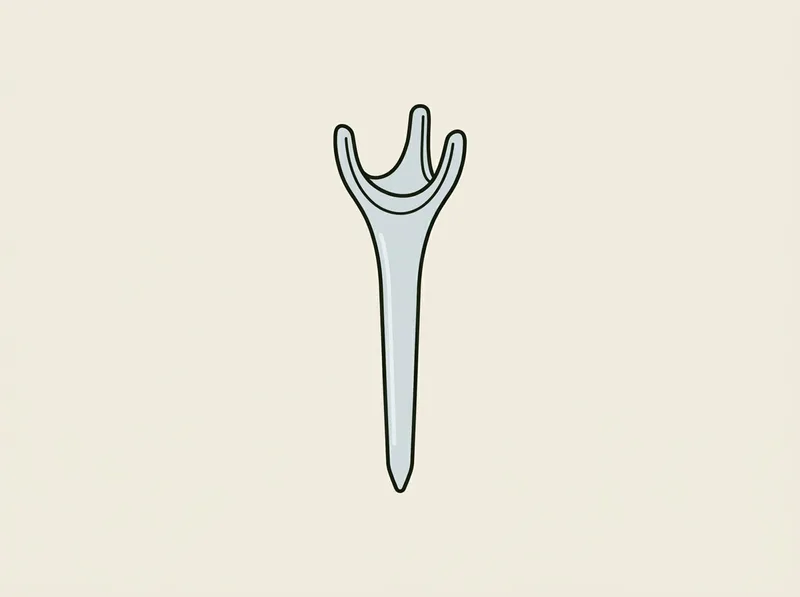
The Zero Friction Tour 3-Prong is a bio-composite tee whose top is three slim prongs rather than a solid cup, sold in 2 3/4 inch and 3 1/4 inch lengths. Reaching Britain means Amazon UK rather than a golf shop, at around thirteen pounds for a pack of thirty. Zero Friction's argument is that three prongs touch less of the ball than a cup does, which reduces resistance at impact and therefore adds distance.
The first half of that is straightforwardly true. Three narrow prongs are less contact area than a cup, and the ball does sit on less material. The second half is where it gets slippery, and it gets slippery in exactly the same way for every performance tee sold.
 Around £11 to £15 a pack
Zero Friction Tour 3-Prong
- Material
- Bio-composite
- Lengths
- 2 3/4 in and 3 1/4 in
- Head
- Three prong crown
- Sold in
- Packs of 30 and 40, around £12 to £15 in the UK
- UK availability
- Amazon UK and eBay UK only, no British golf stockist
- Claim
- Less resistance and therefore more distance, per the maker
- Alignment
- Maker recommends one prong pointed at the target
- The prong design genuinely does reduce the contact patch between ball and tee, which is a real mechanical effect.
- Bio-composite rather than plain plastic, so a lost one is less of a problem.
- Lasts several rounds where a wooden tee lasts a few swings.
- The distance claim is the maker's own and no independently published test supports a figure.
- Only two lengths, so it is a worse system than Pride's for choosing a height.
- Prongs deform after enough strikes and the tee stops sitting straight.
- No UK golf retailer carries them, so a British buyer goes through Amazon UK at an imported price.
VerdictA good tee that lasts and a distance claim to be sceptical about. Buy it because you are tired of snapping wooden tees, not because you expect it to add yards.
Where these earn their place is durability. A bio-composite tee survives many rounds where a wooden one survives a few swings, so the pack lasts and the per-tee cost stops looking bad. The prongs do eventually deform and stop holding the ball straight, which is the point to bin them.
Martini Step-Up Tee: the same height every time
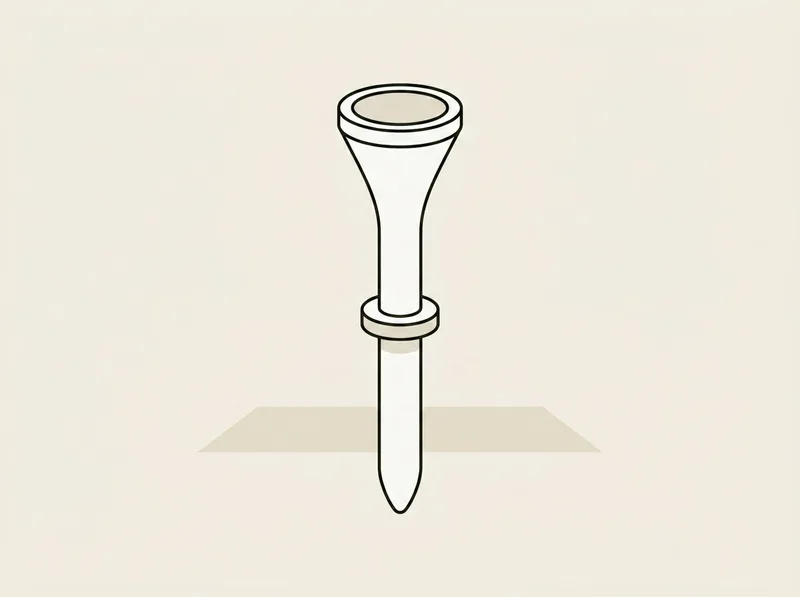
The Martini Step-Up Tee is a thick 3 1/4 inch tee in a proprietary polymer resin, with a wide cup on top and a small raised collar partway down the shaft. The collar is the product. Push the tee in until the collar meets the turf and the tee is at the same height it was on the last hole and the one before.
That solves a real problem that almost nobody identifies as one. Tee height wanders when you push a tee in by feel, particularly on hard ground in summer and soft ground in winter, and a drive teed a quarter of an inch lower than the last one is a different strike. A physical stop removes the variable entirely.
 Around £14 to £18 for five
Martini Step-Up Tee
- Material
- Proprietary polymer resin
- Lengths
- 3 1/4 in
- Head
- Wide cup with a step collar on the shaft
- Sold in
- Packs of five, and a twenty pack at around £20 in the UK
- Durability
- Described by the maker as virtually unbreakable
- Origin
- Made in the USA
- UK availability
- Amazon UK and eBay UK only, no British golf stockist
- The step collar is a physical stop, so the tee goes in to the same depth every time without you thinking about it.
- Genuinely hard to break, which is why five in a pack is not a joke.
- The wide cup makes teeing up easier for anyone with stiff hands or poor eyesight.
- One length only, so if 3 1/4 inches is not your height this is the wrong product.
- The wide cup is noticeably more visible behind the ball, which some golfers find distracting.
- Martini publish laboratory testing claims for distance and straightness without publishing the test.
- Imported into the UK rather than distributed here, and five tees for the price of a hundred wooden ones is a lot to ask.
VerdictThe pick if your tee height wanders from hole to hole, which is more common than golfers think. The step does one thing and it does it perfectly, and everything else about the tee is a side effect. The UK price is the sting, because importing puts five of these well above a hundred wooden tees.
One length is the limitation. If 3 1/4 inches is not the height you want for your driver, the step is solving your problem at the wrong altitude, and there is nothing to be done about it.
The other limitation is British. No UK golf retailer stocks Martini, so a pack of five arrives through Amazon UK at roughly twice what the same five cost an American buyer, and comfortably more than a hundred wooden tees. The step collar is still the only thing in the category that removes the variable, but the value case is much weaker here than it is in the United States.
GreenKeepers 4 Yards More: the flex crown
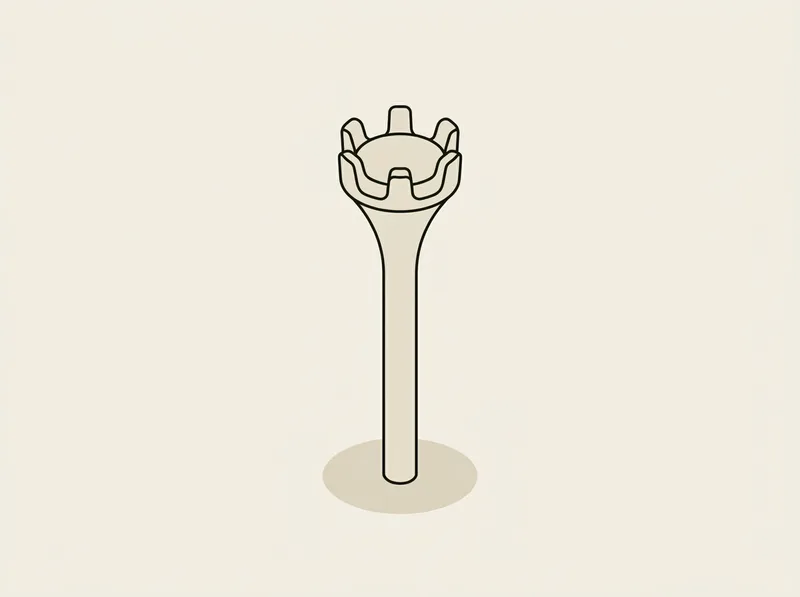
The 4 Yards More tee replaces a rigid cup with six short flexible prongs, on the argument that a crown which bends out of the way at impact takes less energy from the ball than one which has to be knocked aside. GreenKeepers cite robot and field testing behind the name.
The design is sound and the flex is the right approach to prong tees, because a rigid prong that deforms stays deformed and a flexible one comes back. It is also the only performance tee here in four lengths, including a 1 3/4 inch version that is genuinely useful for teeing an iron.
 Around £5 to £8 for four
GreenKeepers 4 Yards More
- Material
- Plastic with an elastomer crown
- Lengths
- 1 3/4 in, 2 3/4 in, 3 1/4 in and 4 in
- Head
- Six prong flexible crown
- Sold in
- Packs of four
- Claim
- Distance gain claimed from robot and field testing by the maker
- Note
- The 4 in version is the longest the Rules permit
- UK availability
- Proper UK distribution through Brand Fusion, stocked by UK golf retailers
- Four published lengths, which is the best range of any performance tee here.
- A flexible crown rather than rigid prongs, so it deforms and returns instead of deforming and staying.
- The 1 3/4 inch version is genuinely useful for irons off a tee, which most brands ignore.
- The only performance tee here on a British shelf rather than an import, and the cheapest of the three.
- The product name is a distance claim, which sets expectations no tee can meet.
- Four tees to a pack at this price is expensive per tee if you lose them.
- The maker cites robot testing but does not publish the test data.
VerdictA well made tee with a name that oversells it. If you like the flex crown idea, the length range makes this the most useful version of it, and treat the four yards as a brand rather than a specification.
The name is the problem. A number in a product name reads as a specification, and no tee maker publishes the test that would let you check it.
It is, however, the one performance tee on this page with real British distribution, carried into the UK by Brand Fusion and stocked by ordinary golf retailers. That makes it both the cheapest and the easiest of the three to actually buy here, which matters more than the head design does.
Do performance tees add distance?
The honest answer is that the mechanism is real, the magnitude is unproven, and any number you have seen came from the company selling the tee.
Here is what is not in dispute. A ball resting on a tee is touching something. At impact the clubhead pushes the ball forward off that something, and whatever the ball is touching absorbs a small amount of energy in the process. Reduce the contact area and you reduce that loss. That is basic and it is why prong and crown designs exist.
Here is what is in dispute. Whether the loss being reduced is large enough to see on a launch monitor, let alone on a golf course, in among the far larger variables of strike location, attack angle and where the ball actually was on the tee. Nobody in this category submits to independent published testing, and the claims that circulate all trace back to manufacturer test programmes whose data is not published.
The practical position: buy performance tees if you like that they last, not because you expect yards. Buy wooden tees if you like that they are cheap and biodegrade. Neither choice is wrong and neither is worth a shot.
Tee height, which is the part that genuinely matters
This is the real content of the category and it costs nothing.
With a driver, the ball should sit high enough that roughly half of it is above the crown of the club when the driver is soled behind it. That is not a preference, it is geometry: a driver is designed to be struck slightly on the upswing and above the centre of the face, and both of those require the ball to be sitting up.
Tee it too low and two things happen together. You have to hit down on it to reach it, and you make contact low on the face, which is the combination that produces high spin and short carry. Tee it too high and the club can slide under the ball, which is a sky mark on the crown and a shot that goes nowhere. Skying is one of the most common driver faults there is, and why drives get skied covers the ball position and attack angle side of it, which is the other half.
| Club | Rough tee height | What you are trying to achieve |
|---|---|---|
| Driver | Half the ball above the crown | Strike above centre on a slight upswing |
| 3 wood or 5 wood off a tee | Ball just clear of the turf | Sweep it, not hit up on it |
| Hybrid or long iron | Tee barely visible, ball almost sitting on grass | Normal descending strike with a clean lie |
| Par 3 with a short iron | Same, or none at all | A clean lie, nothing more |
The other half of tee height is the driver itself. A large head sits higher off the ground than an old one, so tee height that suited a driver from fifteen years ago is too low for a current one. If your driver is new and your drives have got worse, that is a plausible reason, and how to hit a driver covers the setup that goes with it. Loft interacts with all of this too, and driver loft decides how much of the launch you get for free.
What the Rules say about tees
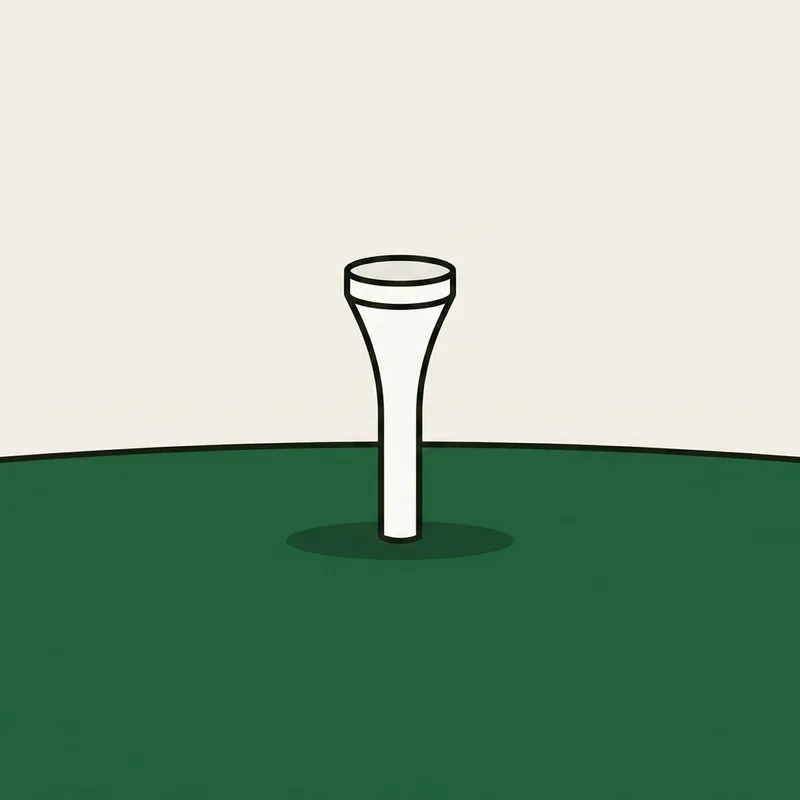
The practical consequence is that head shape is a free-for-all, which is why the category looks the way it does. Anything that reduces contact area is legal, so everything that can be tried has been.
What to spend
| Budget | What it buys | Who it suits |
|---|---|---|
| £2 to £8 | A hundred or more wooden tees, in one or more lengths | Everyone, honestly |
| £6 to £12 | A small pack of flexible crown performance tees | Golfers who want to test the claims cheaply |
| £12 to £20 | A bio-composite pack, or a polymer tee with a height stop | Golfers who snap wooden tees and find it irritating |
Nobody has ever improved because of a tee. What a good tee does is remove a small inconsistency, and the tee with a physical height stop removes more of one than any head design. If you buy one thing from this page, buy a system with more than one length in it and start choosing.
Two small habits are worth more than the purchase. Put broken tees in a pocket rather than leaving them in the teeing area, which is basic course etiquette and takes a second. And keep the tees you actually use somewhere fixed in the bag rather than loose in a pocket with everything else, which is covered along with the rest of the setup in what to carry in a golf bag.
If distance is the reason you are on this page, the tee is the wrong lever by roughly two orders of magnitude. Where driver distance actually comes from is the honest version of that conversation, and the head on the end of the shaft matters far more than the plastic under the ball, which is what the driver itself is for.
Key takeaways
- Tee height is the only thing about a tee that reliably changes a strike, and it is free.
- With a driver, roughly half the ball should sit above the crown of the club at address.
- The Pride Professional Tee System is the default buy because five graded lengths make height a decision rather than an accident.
- Performance tees reduce contact area, which is a real mechanism. No maker publishes the test data behind the distance claims.
- The Zero Friction Tour 3-Prong is the pick if snapping wooden tees annoys you, and it lasts many rounds.
- The Martini Step-Up has a collar that stops the tee at the same depth every time, which removes a variable most golfers do not know they have, though a UK buyer pays an import price for it.
- Only the Pride and the 4 Yards More tees have real British distribution. The Zero Friction and the Martini reach the UK through Amazon rather than a golf shop.
- Ground firmness changes tee height for the same push, so check the ball against the crown rather than the tee against the turf.
- The Rules allow anything up to 4 inches that does not indicate the line of play or influence the ball's movement, which is why head designs vary so wildly.
Common questions
What are the best golf tees?
For most golfers, a graded wooden system such as the Pride Professional Tee System, because having more than one length available is the thing that actually changes anything. If you find yourself snapping tees constantly, a bio-composite tee such as the Zero Friction Tour 3-Prong lasts many rounds.
What size golf tee should I use for a driver?
Usually 2 3/4 or 3 1/4 inches, though the number to check is not the tee length but where the ball sits. With the driver soled behind it, roughly half the ball should be above the crown. Larger modern driver heads generally need a longer tee than older ones did.
Do plastic golf tees go further than wooden ones?
There is no published evidence that they do. The mechanism the makers describe, that less contact area means less energy loss, is real. The size of the effect is not established by any independent test, and it is far smaller than the effect of changing your tee height or moving your strike toward the centre of the face.
Does tee height really matter?
Yes, and it is the one part of this whole subject that clearly does. Teed too low, you have to hit down on the driver and you catch it low on the face, which spins the ball up and short. Teed too high, the club can slide under it, which is a sky mark and a lost drive.
What length tee should I use for irons and hybrids?
Short, and often none at all. On a par 3 with a short iron the ball should sit almost on the grass, because you are making a normal descending strike and only want a clean lie. A 1 3/4 inch tee pushed most of the way in is enough for a hybrid or long iron.
Are 4 inch golf tees legal?
Yes. The Equipment Rules set the limit at 4 inches, so a 4 inch tee sits exactly at the maximum and conforms. What is not allowed is any tee designed to indicate the line of play or to unduly influence the movement of the ball.
How long do golf tees last?
A wooden tee often lasts a few driver swings and sometimes one. A bio-composite or polymer tee usually lasts many rounds, until the prongs deform enough that the ball no longer sits straight. If you are losing tees rather than breaking them, the cheaper option is the better one.
Are wooden or plastic golf tees better?
Wooden ones are cheaper, break cleanly and biodegrade if you leave one behind. Plastic and composite ones last far longer and cost more per tee. Neither performs better in any way that has been demonstrated, so buy on which annoyance you would rather avoid.
Why does my tee keep breaking?
Because you are hitting it, which is normal and often a sign of a decent driver strike rather than a bad one. A driver striking the tee hard is a driver moving through the ball. If you are breaking tees with irons, the tee is probably too high for the shot.
Do golf tees affect spin?
Indirectly, through height. A ball teed low is struck lower on the face and higher on the descent, which increases spin and reduces carry. A ball teed correctly is struck above the centre of the face on a slight upswing, which is the low spin and high launch combination a driver is designed around. The tee itself does none of that.
Should I use the same tee height on every hole?
Yes, for the same club, and that is harder than it sounds because turf firmness changes through a round and a season. Either judge the height by the ball against the crown of the driver each time, or use a tee with a step collar that stops at the same depth.
How we put this together
- Published manufacturer specifications for each tee, taken from the maker's own listing rather than a retailer's summary.
- The lengths actually offered, because length is the only specification on a tee that changes a strike.
- What the head is shaped like, since that is where every distance claim in the category comes from.
- Whether the maker publishes a distance claim, and what kind of testing they say sits behind it.
- The Equipment Rules limits on tees, which are short and rule out less than people expect.
- Prices recorded as GBP bands from UK listings rather than converted from US ones, and UK availability graded separately, because two of these four have no British stockist.
On this page
- The four, compared
- Pride Professional Tee System: the sensible default
- Zero Friction Tour 3-Prong: less contact, more durability
- Martini Step-Up Tee: the same height every time
- GreenKeepers 4 Yards More: the flex crown
- Do performance tees add distance?
- Tee height, which is the part that genuinely matters
- What the Rules say about tees
- What to spend
- How we put this together
Tom Ashworth
Tom Ashworth is a PGA Professional who has taught golf since 2012, working mainly with beginners and mid-handicappers at club level in Surrey. He reviews the instruction guides on Learn Golf for technical accuracy before they publish.
Most of his teaching is with players in their first three years of the game, and most arrive having been told too much: six swing thoughts collected from videos, half of them contradicting each other. His approach is to check the grip and the alignment before touching the swing, on the basis that most bad ball flight is decided at address.