Best Golf Stocking Stuffers: Small, Cheap, Actually Used
Small golf gifts are where novelty wins and usefulness loses, because a joke towel photographs better than a bag of tees. Here is the version that survives past the first round.
Some links here earn us a commission at no extra cost to you. It never changes what we recommend or the order we rank it. How this works.
Small golf gifts are where novelty beats usefulness more often than in any other part of the sport. A joke headcover, a cigar holder shaped like a divot tool or a towel with a slogan on it all look better in a shop than a bag of tees does, and all of them go straight into a drawer. The items below fail that test on charm and win it on use.
The four, compared
These sit in four different places: the tee box, the practice ground, the ball pocket and the bag itself. That spread is deliberate, because four versions of the same small accessory is exactly what a stocking does not need.
| Pick | Best for | Price | Fits a stocking | Sizing | Runs out | Price |
|---|---|---|---|---|---|---|
| Pride Professional Tee System tees | The cheapest genuinely useful thing on this page | Around £5 to £14 a pack | Yes, easily | None, though tee length is a real choice | Yes, constantly | Around £5 to £14 a pack |
| Longridge Alignment Sticks, 3 piece | The best value practice tool in golf | Around £15 at UK retail | No. The tube is 44 inches, so it props alongside one | None | No | Around £15 at UK retail |
| Srixon Distance golf balls | A dozen balls a golfer can lose without minding | Around £15 a dozen at UK retail, against a £20 RRP | Yes | None | Yes, faster than the recipient expects | Around £15 a dozen at UK retail, against a £20 RRP |
| PGA Tour golf club brush set | The tool that makes every other club in the bag work properly | Around £10 at UK retail | Yes | None | No, though the bristles wear | Around £10 at UK retail |
The only column that needs any thought is the last one. Consumables are the safest small gifts in golf, because there is no risk of duplication: nobody has too many tees.
The spread is tighter than it looks. A brush is about ten pounds, rods and a dozen balls are both about fifteen, and only the tees go meaningfully cheaper. That means the choice between them is about the golfer rather than the budget, which is not true of any other gift category on this site.
What not to put in a golf stocking
The small end of the golf market is where the highest concentration of genuinely pointless products sits, and it is worth naming the categories rather than individual items.
Novelty accessories are first. Branded headcovers, slogan towels, drink holders and anything shaped like a golf club but not usable as one all exist because they are easy to sell in December, not because a golfer wanted one. The test that catches all of them: would they buy a second one when the first wore out.
Groove sharpeners are second and worth a specific warning. A tool that files fresh edges into worn grooves can take a conforming wedge outside the equipment rules and, more practically, tends to leave a rougher and less consistent face than it started with. Cleaning grooves is useful. Recutting them is not. British retailers sell both side by side and the packaging looks almost identical, so read which one you are buying.
Pride Professional Tee System: the cheapest thing that gets used
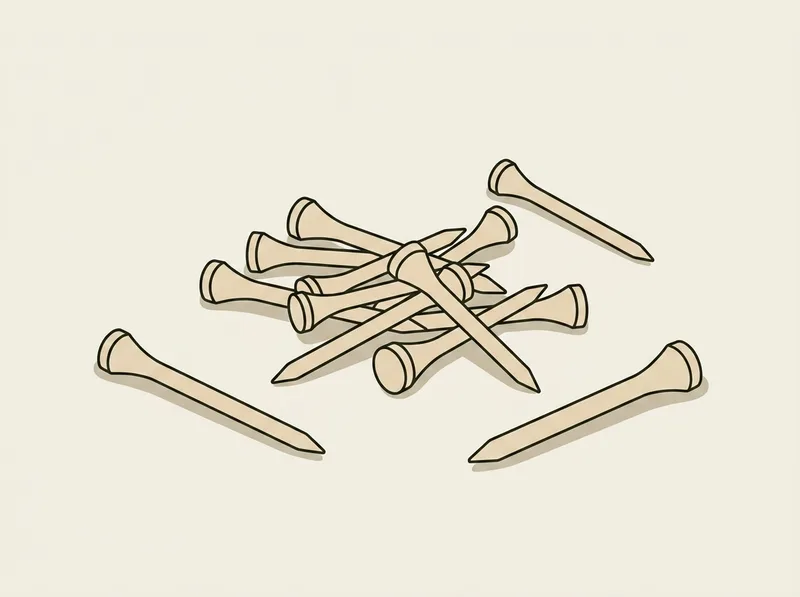 Around £5 to £14 a pack
Pride Professional Tee System tees
- Price
- Around £5 to £14 a pack
- Fits a stocking
- Yes, easily
- Sizing
- None, though tee length is a real choice
- Runs out
- Yes, constantly
- Lengths
- Five wooden lengths: 1 1/2, 2 1/8, 2 3/4, 3 1/4 and 4 inches
- Materials
- Wood, bamboo and plastic versions in the same system
- UK availability
- Full UK distribution, including a dedicated British PTS specialist as well as the mainstream golf retailers
- Golfers lose and break tees on almost every hole, so a large pack is never wasted
- The lengths are colour graded within the range, which makes matching a tee to a driver or an iron straightforward
- The cheapest thing on this page, and a standard pack costs about half what a dozen budget balls does
- It is a bag of tees, which is a hard thing to make feel like a present on its own
- Tee length genuinely matters for a driver, so the wrong length is mildly useless rather than merely dull
- Wood tees snap, and plastic ones do not biodegrade, which some courses now care about
- The bulk packs reach fourteen pounds, which is more than the brush and not far off a dozen balls, so buy on length rather than count
VerdictThe most reliably used item on this page and the cheapest, which is a rare combination. Buy the longer lengths for a driver, around 3.25 inches upward, and a shorter pack for irons rather than one length for everything.
The Pride Professional Tee System is a range of tees offered in five lengths from 1.5 inches up to 4 inches, colour graded so the length is identifiable at a glance in a pocket. That sounds like a trivial feature and it is the reason this pack is more useful than a random bag of tees.
Tee height genuinely matters. A driver needs enough tee that roughly half the ball sits above the crown of the club at address, which needs a long tee, and an iron off a par three needs barely any tee at all. Most golfers carry one length and compromise on both ends of the bag. Two standard packs of different lengths costs about the same as a dozen budget balls and fixes that.
Watch what you are actually buying, though. A single length pack sits around eight pounds and the bulk counts run to fourteen, which is more than the brush and close to a dozen balls. Two lengths at the standard count is a better gift than one enormous bag of the same length.
For a golfer who is still working out what belongs in their bag at all, this pairs naturally with the wider question of kit. What actually needs to be in a golf bag covers the rest of it, most of which is cheaper than people expect.
Longridge Alignment Sticks: the best value item in golf
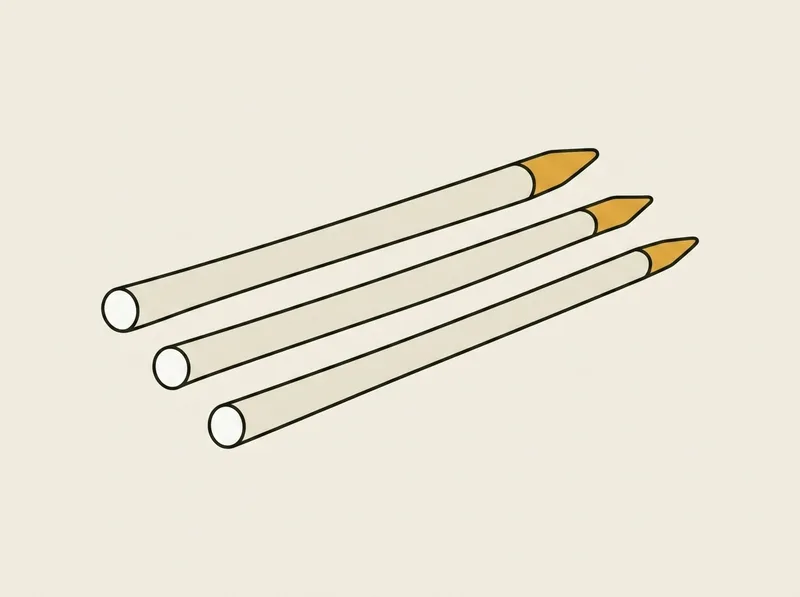 Around £15 at UK retail
Longridge Alignment Sticks, 3 piece
- Price
- Around £15 at UK retail
- Fits a stocking
- No. The tube is 44 inches, so it props alongside one
- Sizing
- None
- Runs out
- No
- Contents
- Two 44 inch sticks and one 22 inch stick in a PVC tube
- Extra
- The tube lid doubles as an alignment tool, and a training booklet is included
- UK availability
- Full UK distribution. Longridge is a British accessory brand carried by the main UK retailers
- Fixes aim, ball position and swing path drills with nothing to break and no battery
- Three sticks rather than the usual two, so one can be left at home, one in the bag and one still lost
- The short 22 inch stick is the one most sets leave out, and it is the useful length for ball position and putting drills
- Cheaper than almost any other practice tool and used by coaches at every level
- The 44 inch tube will not fit inside a stocking and has to be propped alongside it
- Rods do nothing on their own; the golfer needs a drill to point them at
- The Rules of Golf prohibit using them to help with alignment during a round
- Level with a dozen balls on price, which makes it the joint dearest thing here
VerdictAlignment rods are the best value item in golf at any price, and the one thing on this page most likely to still be in use in three years. This set is the sensible British version of a category full of imported names: three sticks, a tube, a booklet and no electronics. Give them with a specific drill in mind, because a golfer who does not know what to do with them will leave them in the garage.
This set is three sticks in a PVC tube: two at 44 inches and one at 22 inches, with the tube lid doubling as an alignment tool and a training booklet in the box. Alignment rods remain the most useful practice purchase in golf at any price, which is why almost every coach carries a set.
Three sticks rather than two is the reason to pick this one, and the short 22 inch stick is the part most sets leave out. Two long rods handle aim and swing path. A short one is the right length for ball position and for putting drills, where a 44 inch rod is simply in the way.
Two rods laid on the ground fix the single most common invisible fault in amateur golf, which is aiming somewhere other than where you think you are aiming. One along the toe line and one at the ball position turns a vague sense of alignment into something you can see. How golf alignment actually works explains why an aim error feels correct from over the ball, which is the whole reason a rod is needed to catch it.
Two practical notes. The tube is 44 inches, so this goes alongside the stocking rather than in it. If that genuinely matters, folding sets exist: British retailers sell trifold drill sticks that pack down to about 45 centimetres and cost slightly less, at the cost of a joint that can rattle. And rods are for practice only. The Rules of Golf prohibit using an alignment device to help line up a shot during a round, so laying one down on the tee in a competition is a breach. The full alignment stick comparison covers the alternatives if a three rod set is more than you wanted to spend.
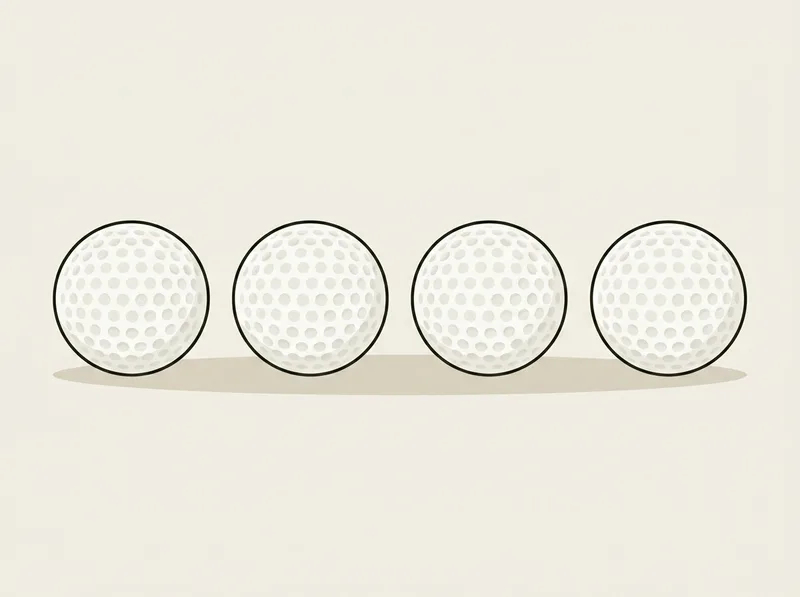
Srixon Distance: a dozen balls nobody minds losing
 Around £15 a dozen at UK retail, against a £20 RRP
Srixon Distance golf balls
- Price
- Around £15 a dozen at UK retail, against a £20 RRP
- Fits a stocking
- Yes
- Sizing
- None
- Runs out
- Yes, faster than the recipient expects
- Construction
- Two piece, FastLayer core under a 1.45 mm ionomer cover
- Dimples
- 324 speed dimple pattern
- Compression
- 89, published on Srixon's European store
- UK availability
- Full UK distribution through Srixon's European arm
- Made by a company that also builds tour balls, sold at a price that makes losing one painless
- The right ball to hand a golfer who plays courses with water and trees on it
- Srixon publish the compression, cover thickness and dimple count, which almost nobody does at this end of the market
- No preference to guess at in the way there is with a premium ball
- A firm ionomer cover spins less around the green than a urethane one, which is the standing cost at this price
- Joint dearest item on this page, level with the alignment sticks
- A golfer who has settled on a specific ball will not switch for a gift, cheap or otherwise
VerdictA dozen cheap balls is the sensible ball gift when you do not know what they play, because nobody minds receiving cheap ones and everybody minds receiving twelve of the wrong premium ones. This is the version with real specifications behind it rather than a badge, and it is properly distributed here, which is more than can be said for several better known budget lines.
The Srixon Distance is a two piece ball with a FastLayer core, a thin 1.45 mm ionomer cover and a 324 speed dimple pattern, and it exists for exactly one situation: a golfer who loses several balls a round and would rather that not be expensive. That describes most amateurs on most courses.
The reason it beats the other budget dozens is that Srixon publish the numbers. Compression is 89, the cover thickness is stated, and the dimple count is stated, on the maker's own European store. Almost nothing else at this price does that, which means every other cheap dozen has to be taken on trust or on somebody else's testing.
It is also the safe ball gift when you have no idea what they play. Handing a golfer twelve of the wrong premium ball is a mild insult wrapped as a compliment, since ball choice at that end is deliberate and personal. Handing them twelve cheap ones is simply useful. Cheap balls worth playing covers how the budget end compares.
The honest cost is greenside. A firm ionomer cover spins less around the green than a urethane one, so chips and pitches run out further. For a golfer losing three balls a round, that is a trade worth making. For one who does not, it is not.
PGA Tour club brush set: the tool that makes wedges work
 Around £10 at UK retail
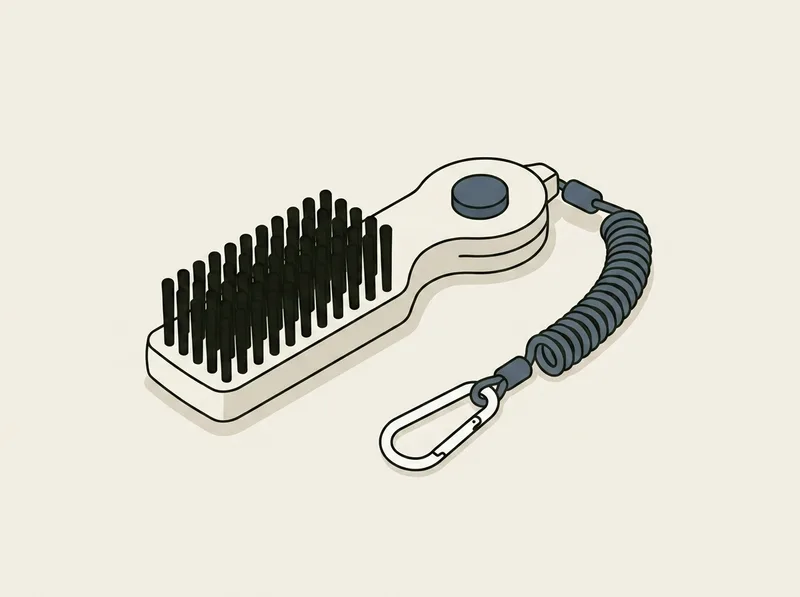
PGA Tour golf club brush set
- Price
- Around £10 at UK retail
- Fits a stocking
- Yes
- Sizing
- None
- Runs out
- No, though the bristles wear
- Features
- Nylon bristles for woods and wire bristles for irons, plus a groove cleaning spike with a safety cap
- Attachment
- Retractable two foot snap-back cord with a carabiner clip
- UK availability
- Stocked by the main UK golf retailers
- Packed grooves are one of the most common and least noticed causes of inconsistent wedge spin
- Two bristle types, so the same tool is safe on a driver crown and effective on an iron face
- Clips on and retracts, so it stays with the bag instead of being left on a tee box
- Small enough and cheap enough to pair with anything else here without pushing the total up much
- It is a brush, and it will never be the exciting part of anyone's Christmas morning
- Bristles flatten with heavy use and the head eventually needs replacing
- Does nothing at all for a golfer who already cleans their clubs properly
- The groove spike is a cleaning tool, not a sharpener, and treating it as one is how wedges get ruined
VerdictA genuinely useful small gift for anyone whose wedges are full of last week's mud, which is most golfers. At around ten pounds it is the cheapest way to make the clubs already in the bag work properly, and it is best given alongside something else rather than as the whole present.
Grooves packed with dried mud and grass do not grip the ball, and the golfer almost never notices, because the shot that comes out is only slightly worse rather than obviously wrong. A brush with a retractable cord clipped to the bag is the fix, and at around ten pounds it is the cheapest thing here after the tees.
The two bristle types matter more than they sound. Wire on a driver crown leaves marks; nylon on a muddy wedge face achieves very little. A set with both means the same tool is used on the whole bag instead of being used carefully on half of it and roughly on the other half. The spike is for clearing a packed groove, not for recutting one, which is the distinction the previous section is about.
It is the least exciting item on this page and it belongs in a stocking alongside something else rather than on its own. Paired with a pack of tees or a dozen balls it reads as a considered kit refresh rather than an afterthought.
Pairing small gifts so they land
Individually, none of these is much of a present. Together, two of them cost less than a single mid priced accessory and read as one thought rather than two fillers.
| Pairing | Rough UK total | Suits |
|---|---|---|
| Tees and a brush | Around £15 to £24 | Anyone, and it needs nothing known about them |
| Cheap balls and tees | Around £20 to £29 | A golfer who loses balls, meaning most of them |
| Alignment rods and tees | Around £20 to £29 | Somebody who actually practises |
| Cheap balls and a brush | Around £25 | A beginner building a bag from nothing |
For a genuine beginner, the balls half of that equation matters more than it looks. A new golfer playing an expensive ball is losing money on every wayward shot, and balls suited to beginners covers what to look for beyond simply cheap.
If several small gifts are heading into the same stocking, it is worth being deliberate about whether they support anything. Rods, a brush and tees is a practice kit. Rods, a novelty headcover and a slogan towel is a pile. How to practise golf properly is the thing that turns the first version into something used.
Buying small for a junior golfer
Children playing golf are the one group where small gifts genuinely outperform large ones, and the reasons are practical rather than sentimental.
Almost everything sized for a junior is outgrown rather than worn out, which makes anything expensive a poor investment on a twelve month view. Clubs in particular get replaced by height rather than by preference, so a set bought as a gift is frequently the wrong length within a season. Consumables have no such problem: tees, balls and a brush all work whatever height the recipient is next summer.
Tees matter more for juniors than for adults, because a shorter swing arc and a lighter club mean more topped and mis-hit shots, and each of those tends to send a tee somewhere it will not be found. A large pack is genuinely used. Cheap balls matter for the same reason, with the added benefit that losing one does not become an event.
The item worth adding for a junior specifically is anything that turns practice into a target rather than a chore. A putting target, a small chipping net or a marked spot to aim at all give a shape to a session that hitting balls does not. Getting children started in golf covers what actually holds attention at different ages, and it is a shorter list than the shops suggest.
When a stocking filler is the whole gift
There is a version of this page that matters more than the pairings, which is buying for a golfer you barely know: an office exchange, a friend of a friend, a new partner's father. In that situation the correct move is to stay entirely inside the consumable column.
A large pack of tees, a dozen cheap balls and a brush costs around thirty five pounds together, cannot be duplicated in any meaningful way, cannot be the wrong size, and will be used. Nothing on the novelty shelf does all four of those things. If the budget stretches further than that, the sub fifty pound picks are the next tier up, and the main gift guide covers what to do with a real budget.
Key takeaways
- Consumables are the safest small golf gifts, because tees and balls cannot be duplicated and cannot be the wrong size.
- A colour graded tee pack in two lengths beats a single length pack, since a driver and an iron need genuinely different tee heights.
- Alignment rods are the best value practice item in golf at any price. A standard tube is 44 inches and props alongside the stocking, though folding sets that pack to about 45 centimetres do exist.
- A dozen cheap balls is the right ball gift when you do not know what they play. Twelve of the wrong premium ball is not.
- A club brush is unexciting and fixes packed grooves, which quietly cost wedge spin without the golfer noticing. Buy one with both nylon and wire bristles.
- Skip novelty accessories and groove sharpeners. The first never gets used and the second can take a wedge outside the equipment rules.
- Pair two small items rather than buying one slightly larger compromise. It reads as one thought rather than two fillers.
- Everything here is properly distributed in Britain, which is a filter rather than a footnote: several of the best known small golf accessories are American brands with no UK route at all.
Common questions
What is the best golf stocking stuffer?
A large pack of tees, because golfers break or lose them on almost every hole and nobody can own too many. It is the cheapest thing on this page, cannot be the wrong size, and will genuinely be used. Buy two lengths rather than one, since drivers and irons need different tee heights.
Are golf balls a good stocking stuffer?
Yes, if they are cheap ones. A dozen budget balls suits any golfer who loses a few a round, which is most of them, and about fifteen pounds buys a dozen from a maker that also builds tour balls. Twelve of the wrong premium ball is a different matter, because ball choice at the top end is deliberate and a golfer who has settled on one will not switch for a gift.
What small golf gifts should I avoid?
Novelty accessories, slogan towels, anything shaped like a golf club that is not one, and groove sharpeners. The novelty items never get used, and a groove sharpener can take a wedge outside the equipment rules while leaving the face rougher than it started. A groove cleaning spike is a different and useful thing.
Can you fit alignment sticks in a stocking?
Not the standard sets. Full length rods are 44 to 48 inches and come in a tube of the same length, so they get propped alongside the stocking rather than in it. Folding drill sticks that pack down to about 45 centimetres are sold in the UK and do fit, at the cost of a joint in the middle of each rod.
Is a golf glove a good stocking filler?
Only if you know the size and the hand. Gloves are the right price and shape for a stocking and come in eight or more sizes per hand, so guessing rarely works. The size is printed inside the cuff of the one they already own, and right handed golfers wear it on the left hand.
How much should a golf stocking stuffer cost?
Most of the genuinely useful small items sit between about £5 and £20. Tees start around five pounds, a brush is about ten, and alignment rods and a dozen budget balls are both about fifteen. Two items from that range together, at roughly £15 to £29, generally read better than one item at the top of it.
What is a good golf gift for someone who just started?
A dozen cheap balls and a pack of tees, in that order, for about twenty pounds together. New golfers lose balls at a rate that makes expensive ones a bad idea, and they usually own no tees at all. Anything aimed at technique is premature until they know what their own misses are.
Does a golf club brush actually do anything?
Yes, on wedges and short irons. Grooves packed with dried mud and grass grip the ball noticeably less, and the resulting shot is slightly worse rather than obviously wrong, which is why golfers rarely notice the cause. A brush clipped to the bag is the fix, and the ones with both nylon and wire bristles cover the whole set rather than half of it.
What tee length should I buy?
Longer tees, around 3.25 inches and up, for a driver, and shorter ones for irons and par threes. A driver needs about half the ball sitting above the crown of the club at address, which a short tee cannot deliver. Buying two lengths rather than one covers both ends of the bag.
Do small golf accessories sell out before Christmas?
Tees, balls and brushes are stocked deeply and rarely disappear, but specific multipacks, colours and alignment rod sets do go in and out of stock through December, often down to a handful of units at any one retailer. If a particular pack matters, buy it in November rather than the last fortnight.
How we put this together
- A size and price ceiling applied first: anything that would not fit in a stocking, or that costs more than about thirty pounds, was cut regardless of how good it is.
- Published manufacturer specifications taken from each maker's own site. Where a maker does not publish a figure, this page records that rather than repeating a number from a review site.
- One usefulness test: would a golfer buy a second one when the first wore out or ran out.
- A deliberate split across the tee, the practice ground, the ball pocket and club maintenance, rather than four variations on the same accessory.
- Prices recorded as GBP bands from UK listings rather than converted from US ones, since small accessories are the most heavily discounted category in golf between October and December.
- British availability applied as a filter rather than a footnote. The small accessory market is full of American brands with no British distribution, and several obvious picks were cut on that basis alone. Every item below is stocked here in sterling.
On this page
- The four, compared
- What not to put in a golf stocking
- Pride Professional Tee System: the cheapest thing that gets used
- Longridge Alignment Sticks: the best value item in golf
- Srixon Distance: a dozen balls nobody minds losing
- PGA Tour club brush set: the tool that makes wedges work
- Pairing small gifts so they land
- Buying small for a junior golfer
- When a stocking filler is the whole gift
- How we put this together
Tom Ashworth
Tom Ashworth is a PGA Professional who has taught golf since 2012, working mainly with beginners and mid-handicappers at club level in Surrey. He reviews the instruction guides on Learn Golf for technical accuracy before they publish.
Most of his teaching is with players in their first three years of the game, and most arrive having been told too much: six swing thoughts collected from videos, half of them contradicting each other. His approach is to check the grip and the alignment before touching the swing, on the basis that most bad ball flight is decided at address.