Best Golf Gadgets: The Ones That Survive Past February
Most golf technology is bought in December and abandoned by spring, and the reason is almost never the accuracy. It is how much the device asks of you before it tells you anything.
Some links here earn us a commission at no extra cost to you. It never changes what we recommend or the order we rank it. How this works.

Golf technology has an unusually high abandonment rate, and accuracy is almost never the reason. Devices get abandoned because of what they demand before they give anything back: an app, an account, a pairing routine, a charge, a tripod, a subscription renewal. The gadgets that survive are the ones with the shortest distance between picking them up and getting an answer.
The four, compared
These four answer different questions: how far is it, how far is it when I cannot see it, where are my shots actually going, and what is my swing doing. Which matters depends entirely on the golfer.
| Pick | Best for | Price | What it measures | Setup | Subscription | Price |
|---|---|---|---|---|---|---|
| Bushnell Tour V7 Shift | The gadget with the highest chance of still being used in July | Around £380 to £400 | Line of sight distance to a target, with optional slope | None. Point and press | None | Around £380 to £400 |
| Garmin Approach S44 | Distances without pointing at anything, including over a hill | Around £240 to £260 | Distance to front, middle and back of the green, plus hazards | Charge it, pair it once, then it works on its own | None for the golf features | Around £240 to £260 |
| Arccos Smart Sensors | Finding out which part of the game is actually costing shots | Around £220 to £225, plus a subscription after the first year | Every shot you hit, by club, distance and location | Under ten minutes to fit, then it records automatically | First year included, then billed annually | Around £220 to £225, plus an annual subscription after year one |
| Rapsodo MLM2PRO | Practice at home, with real numbers rather than guesses | Around £550 to £650, plus a subscription for full features | Ball speed, club speed, launch angle and direction, angle of attack, club path, plus spin with marked balls | Tripod, phone, space to hit into, every session | A trial period is included, then a paid membership for full features | Around £550 to £650, plus a subscription for full features |
The column most people skip is setup, and it is the one that predicts whether a gadget is still in use in July. A device that works the moment it comes out of a pocket gets used. A device that needs a tripod and a phone gets used on the days somebody was already going to practise.
Why most golf gadgets get abandoned
There is a pattern to which technology survives, and it has almost nothing to do with the specification sheet.
The first filter is friction. Anything requiring setup gets used on the days practice was already happening, which is not when a practice aid is needed. Anything that works instantly gets used on the days it was not planned, and those are the days that compound.
The second filter is actionability. A device that reports a number is only useful if the golfer knows what to do with that number. Swing sensors and shot trackers both produce genuinely accurate data and both frequently produce nothing else, because the gap between a chart and a change in behaviour is where most golfers stop. What launch monitor numbers actually mean is the missing half of that for anybody buying in this category.
Bushnell Tour V7 Shift: the one that gets carried
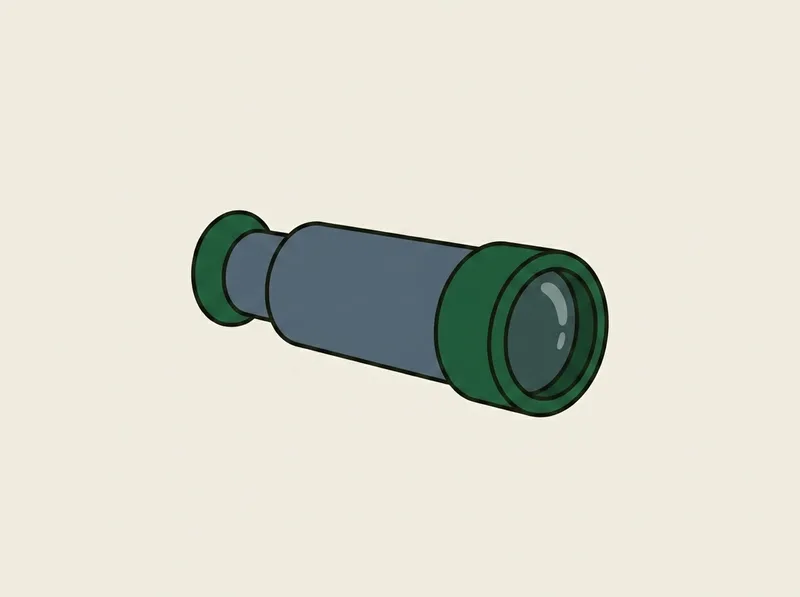 Around £380 to £400
Bushnell Tour V7 Shift
- Price
- Around £380 to £400
- What it measures
- Line of sight distance to a target, with optional slope
- Setup
- None. Point and press
- Subscription
- None
- Range
- 5 to 1,300 yards, with flag lock to 500 yards
- Magnification
- 6x
- Battery
- 3 volt lithium CR-2
- Weight
- 9 oz
- Needs no phone, no pairing, no account and no charging routine, which is why it gets carried
- The physical slope switch makes it obvious whether the device is legal for competition that day
- Locks onto a flag at up to 500 yards, so it works from anywhere a yardage is actually useful
- Expensive for a device that answers exactly one question
- A laser needs a clear line of sight, so it is useless on a blind tee shot or a dogleg
- Slope readings are not permitted in competition, and switching it back is on the golfer
VerdictThe safest technology gift here, because it does one thing instantly and demands nothing in return. Anyone who plays a course they do not know by heart will use it every round; anyone who plays the same nine holes weekly will not.
The Bushnell Tour V7 Shift ranges from 5 to 1,300 yards with 6x magnification, locks onto a flag out to 500 yards, weighs 9 ounces and runs on a single CR-2 lithium cell. There is no app, no account, no pairing and no charging routine. Take it out of the bag pocket, point it at the flag, and it tells you the number.
That is the entire argument for it as a gift. Every other device on this page asks the golfer to do something first, and every one of those requirements is a place where the habit breaks. A laser has one requirement, which is a clear line of sight to the target, and one honest weakness, which is that a blind tee shot or a dogleg gives it nothing to aim at.
The Shift in the name refers to the physical slope switch, and that matters for more than convenience. Slope compensation is not permitted in competition, and a switch you can see the position of is considerably harder to forget than a setting buried in a menu. The rangefinders worth comparing covers the alternatives if this sits above your budget.
The rule that catches slope users out
This costs golfers real penalties in club competitions every season, almost always through ignorance rather than intent.
That rule also rules out one whole category of gift. Devices and apps that recommend a club for the shot are fine in a casual round and are not permitted in competition, so a golfer who plays club events needs to know which mode they are in before the first tee.
Garmin Approach S44: distances the laser cannot get
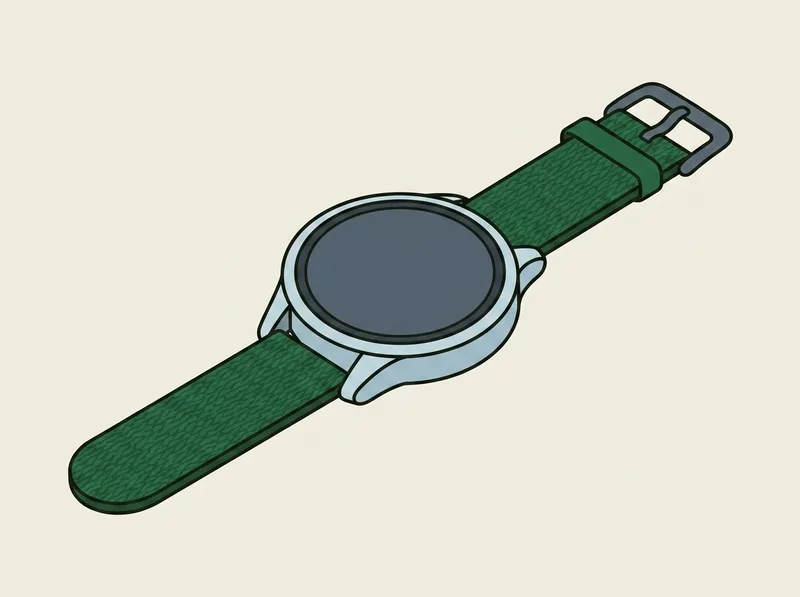 Around £240 to £260
Garmin Approach S44
- Price
- Around £240 to £260
- What it measures
- Distance to front, middle and back of the green, plus hazards
- Setup
- Charge it, pair it once, then it works on its own
- Subscription
- None for the golf features
- Display
- 1.2 inch colour AMOLED touchscreen
- Courses
- More than 43,000 preloaded
- Battery
- About 15 hours in golf mode
- Works on blind shots and doglegs, where a laser cannot see the target at all
- Gives front, middle and back numbers, which is more useful than a single flag distance for approach play
- Wears as an ordinary watch off the course, so it does not need remembering separately
- GPS distances are to the green rather than to the actual pin position that day
- Needs charging, and a flat watch on the first tee is a normal watch
- The step up model in the same range does more, which makes this feel like a compromise to anyone comparing spec sheets
VerdictThe better buy than a laser for a golfer who plays hilly or tree lined courses where line of sight is often blocked. It is a compromise on precision and a large gain on coverage, which suits most amateurs better than the reverse.
The Garmin Approach S44 carries more than 43,000 preloaded courses on a 1.2 inch colour touchscreen, runs about 15 hours in golf mode, and gives front, middle and back distances to the green plus hazard yardages without pointing at anything.
That last point is the whole case for GPS over a laser. On a blind tee shot, a dogleg, or a green tucked behind a mound, a laser has nothing to shoot at and a watch still knows where you are. The trade is precision: a GPS distance is to the green, not to where the pin happens to be cut that morning, which can be a difference of several clubs on a deep green.
Which of the two suits a given golfer is genuinely a real question rather than a marketing one, and it depends mostly on the courses they play. Rangefinder versus GPS, honestly compared works through the trade properly, and the GPS watches worth owning covers the rest of the category including the step up models.
Arccos Smart Sensors: finding where the shots go
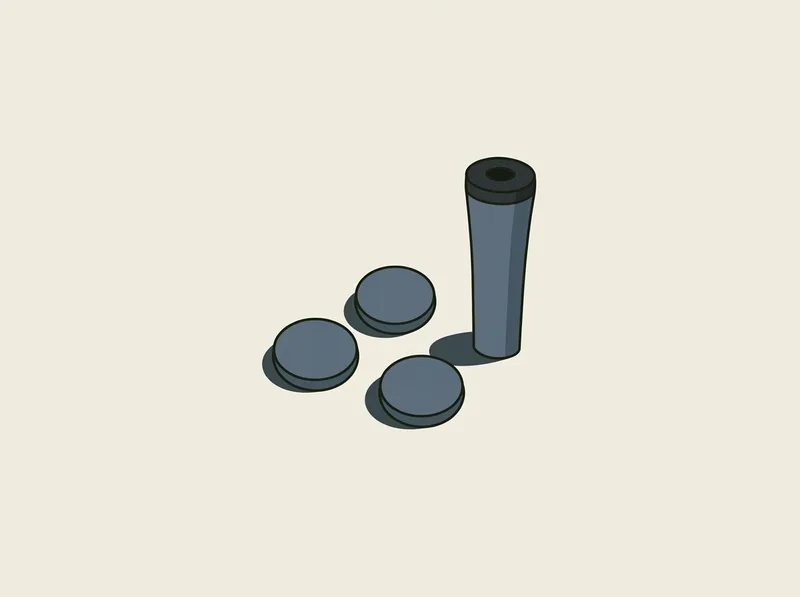 Around £220 to £225, plus an annual subscription after year one
Arccos Smart Sensors
- Price
- Around £220 to £225, plus a subscription after the first year
- What it measures
- Every shot you hit, by club, distance and location
- Setup
- Under ten minutes to fit, then it records automatically
- Subscription
- First year included, then billed annually
- Contents
- 15 club sensors plus 1 putter sensor
- Fitting
- Twist-in, replacing the butt cap of each grip
- Warranty
- 2 years
- Records automatically once fitted, so there is nothing to remember during a round
- Answers the question most amateurs get wrong, which is where their shots are actually going
- Sixteen sensors covers a full bag, including the putter
- The subscription after year one is a real ongoing cost, and the data becomes less useful without it
- Sensors are not user serviceable, so a failed one is a replacement rather than a repair
- It produces statistics, not instructions, and a golfer who will not act on them gets a chart
VerdictThe right buy for a golfer who already practises and wants to know where to point that practice. For someone who plays socially and does not want to think about their game between rounds, the annual cost is money spent on data nobody reads.
Arccos Smart Sensors ship as 15 club sensors plus a putter sensor, twist into the butt end of each grip in under ten minutes, and then record every shot automatically for as long as the phone is in a pocket. The first year of membership is included and it renews annually after that.
The value is in answering a question amateurs are consistently wrong about, which is where their strokes are actually going. Most golfers can name their worst shot and very few can name their worst part of the game, and those are different things. Once the data exists, it changes what practice should look like and it changes club selection on the course, which is where course management starts doing real work.
Two honest caveats. The subscription after the first year is a genuine ongoing cost that the sticker price does not show, and it is worth saying out loud when giving this as a present. And the sensors produce statistics rather than instructions, so a golfer who will not act on them ends up paying annually for a chart. If the interest is in the swing rather than the scorecard, swing analysers is a different and more direct answer.
Rapsodo MLM2PRO: only with somewhere to hit
 Around £550 to £650, plus a subscription for full features
Rapsodo MLM2PRO
- Price
- Around £550 to £650, plus a subscription for full features
- What it measures
- Ball speed, club speed, launch angle and direction, angle of attack, club path, plus spin with marked balls
- Setup
- Tripod, phone, space to hit into, every session
- Subscription
- A trial period is included, then a paid membership for full features
- Included
- Unit, tripod, case, charging cable and a small number of marked balls
- Spin data
- Requires the specific marked balls supplied
- Measures ball and club data directly rather than estimating it, within its published parameter list
- Turns a net session at home from guesswork into something with a number attached
- Portable enough to take to a range bay as well as use in a garage
- The most expensive item here, and the subscription makes the true cost higher than the sticker
- Spin numbers depend on using the specific marked balls, which is an ongoing consumable
- Needs setting up every session, which is precisely the friction that kills gadget use
VerdictExcellent for a golfer who already has somewhere to hit balls at home and practises weekly. A poor gift for anybody else, because a launch monitor with nowhere to hit into is an expensive box in a cupboard.
The MLM2PRO measures ball speed, club speed, launch angle, launch direction, angle of attack and club path directly, and adds spin rate and spin axis when used with the marked balls supplied. It comes with a tripod, a case and a small number of those balls, and a trial membership that converts to a paid one for full features.
The reason it sits fourth is not quality, it is the precondition. A launch monitor requires somewhere to hit a golf ball, which means a net, a garage, or a range bay you take it to. Given to a golfer without any of those, it is an expensive box that waits for a summer that does not come. Given to one who already practises at home weekly, it turns guesswork into numbers.
What each gadget actually costs to keep
Purchase price is the smaller half of the question for two of these four, and gift buyers rarely see the second half until the renewal arrives.
| Device | Bought once | Ongoing cost | Also needed |
|---|---|---|---|
| Laser rangefinder | Yes | None | A replacement battery occasionally |
| GPS watch | Yes | None for the golf features | A charging cable |
| Shot tracking sensors | Yes | Annual subscription after year one | A phone carried during play |
| Launch monitor | Yes | Membership for full features | A net or a range bay, plus marked balls for spin |
If the recipient is the sort of person who cancels subscriptions on principle, the top two rows are the only honest options. That is not a small point: a shot tracker without its membership loses most of what makes it worth owning.
Matching a gadget to the golfer
The right device follows from how they play far more than from the specification.
| If they | Buy | Why |
|---|---|---|
| Play new courses often | A laser rangefinder | Instant, precise, nothing to set up |
| Play hilly or tree lined courses | A GPS watch | Works where a laser cannot see |
| Play the same course weekly | Neither, at least not first | They already know the yardages |
| Practise weekly and want to know why | Shot tracking sensors | Data on where shots actually go |
| Have a net or garage already | A launch monitor | It has somewhere to live |
| Play four times a year | Nothing on this page | Buy balls, a round, or a lesson |
That last row matters more than the rest. Golf technology rewards frequency, and for an occasional golfer almost anything on the main gift guide does more than any device here. If the budget is committed to technology regardless, budget launch monitors covers the cheaper end of the practice category honestly.
Key takeaways
- Setup friction predicts abandonment better than any specification. The gadget with nothing between picking it up and getting an answer is the one still in use in July.
- The Bushnell Tour V7 Shift needs no phone, no account and no charging routine, which makes it the safest technology gift for most golfers.
- A GPS watch beats a laser on blind shots and doglegs and loses to it on precision, since GPS reads to the green rather than to the pin.
- Rule 4.3a(1) allows distance information but not measuring elevation change, so slope must be off in competition unless the Committee says otherwise.
- Shot tracking sensors answer where the strokes are going, and carry an annual subscription after the first year that the purchase price does not show.
- A launch monitor needs somewhere to hit balls. Without a net, a garage or a range bay it is an expensive box in a cupboard.
- For a golfer who plays a few times a year, nothing on this page beats balls, a green fee or a lesson at the same price.
Common questions
What is the best golf gadget to buy as a gift?
A laser rangefinder for most golfers, because it needs no phone, no account and no setup, and answers its question instantly. That lack of friction is what decides whether a device is still being used months later. If they play courses with blind shots and doglegs, a GPS watch is the better fit.
Is a rangefinder or a GPS watch better?
It depends on the courses. A laser is more precise because it reads to the actual flag, and needs a clear line of sight. A GPS watch works on blind shots and doglegs where a laser has nothing to aim at, but reads to the green rather than to the pin position. Neither is universally better.
Can you use a rangefinder with slope in a competition?
No, unless the Committee has permitted it. Rule 4.3a(1) allows distance and direction information but not measuring elevation changes, so slope must be switched off. A device with a visible physical switch is easier to remember and to demonstrate than one with a menu setting.
Are golf shot trackers worth it?
For a golfer who practises regularly and will change what they do based on the data, yes, because amateurs are consistently wrong about which part of their game costs the most shots. For somebody who does not want to think about golf between rounds, the annual subscription buys a chart nobody reads.
Do golf gadgets need a subscription?
Some do. Laser rangefinders and most GPS watches have no ongoing cost for their golf features. Shot tracking sensors and launch monitors commonly include an initial membership period and then charge annually, which can make the real cost considerably higher than the purchase price.
Is a launch monitor a good gift?
Only for someone who already has somewhere to hit balls, meaning a net, a garage or a range bay they visit regularly. Without that, it is the single most expensive way to buy a box that sits in a cupboard. Confirm the space exists before spending anything.
What is the cheapest useful golf gadget?
A free GPS app on a phone they already own, which gives green distances with no hardware at all. If a physical device is wanted, entry level lasers and GPS watches exist below the models on this page, though very cheap distance devices are frequently inaccurate enough that golfers stop trusting them.
Will a golf gadget improve someone's game?
Not directly. Distance devices remove a guess, and trackers tell you where shots are going, and both of those help a golfer who acts on the information. None of them changes what the club does at impact, which is what a coach or a feedback training aid is for.
What golf gadget should I avoid buying?
Anything the recipient commented on rather than asked about, and anything requiring a setup routine they do not already have. Very cheap distance devices are also worth avoiding, because an inaccurate yardage is worse than no yardage and the golfer will abandon it quickly.
Are golf gadgets discounted before Christmas?
Heavily, and this is the category where discounting moves the most. The catch is that deep discounts in the final fortnight are frequently the previous generation rather than the current model, so check the model number rather than the family name if a specific version matters.
Do golf watches work as ordinary watches?
Most modern golf watches do, which matters more than it sounds. A device that lives on the wrist all week is one the golfer cannot forget to bring, which removes the most common reason a gadget stops being used.
How we put this together
- Published manufacturer specifications for every device, taken from the maker's own product page rather than a retailer's summary.
- One filter applied throughout: how much the golfer has to do before the device gives them anything, because that is what decides whether it survives the first season.
- Ongoing cost recorded alongside purchase price, since two of these four charge a subscription after the first year and that changes the real price substantially.
- A deliberate spread across on-course distance, on-course tracking and off-course practice, rather than four devices answering the same question.
- The Rules of Golf position on distance measuring devices, taken from The R&A's text of Rule 4, because it catches out slope users every season.
On this page
- The four, compared
- Why most golf gadgets get abandoned
- Bushnell Tour V7 Shift: the one that gets carried
- The rule that catches slope users out
- Garmin Approach S44: distances the laser cannot get
- Arccos Smart Sensors: finding where the shots go
- Rapsodo MLM2PRO: only with somewhere to hit
- What each gadget actually costs to keep
- Matching a gadget to the golfer
- How we put this together

Tom Ashworth
Tom Ashworth is a PGA Professional who has taught golf since 2012, working mainly with beginners and mid-handicappers at club level in Surrey. He reviews the instruction guides on Learn Golf for technical accuracy before they publish.
Most of his teaching is with players in their first three years of the game, and most arrive having been told too much: six swing thoughts collected from videos, half of them contradicting each other. His approach is to check the grip and the alignment before touching the swing, on the basis that most bad ball flight is decided at address.