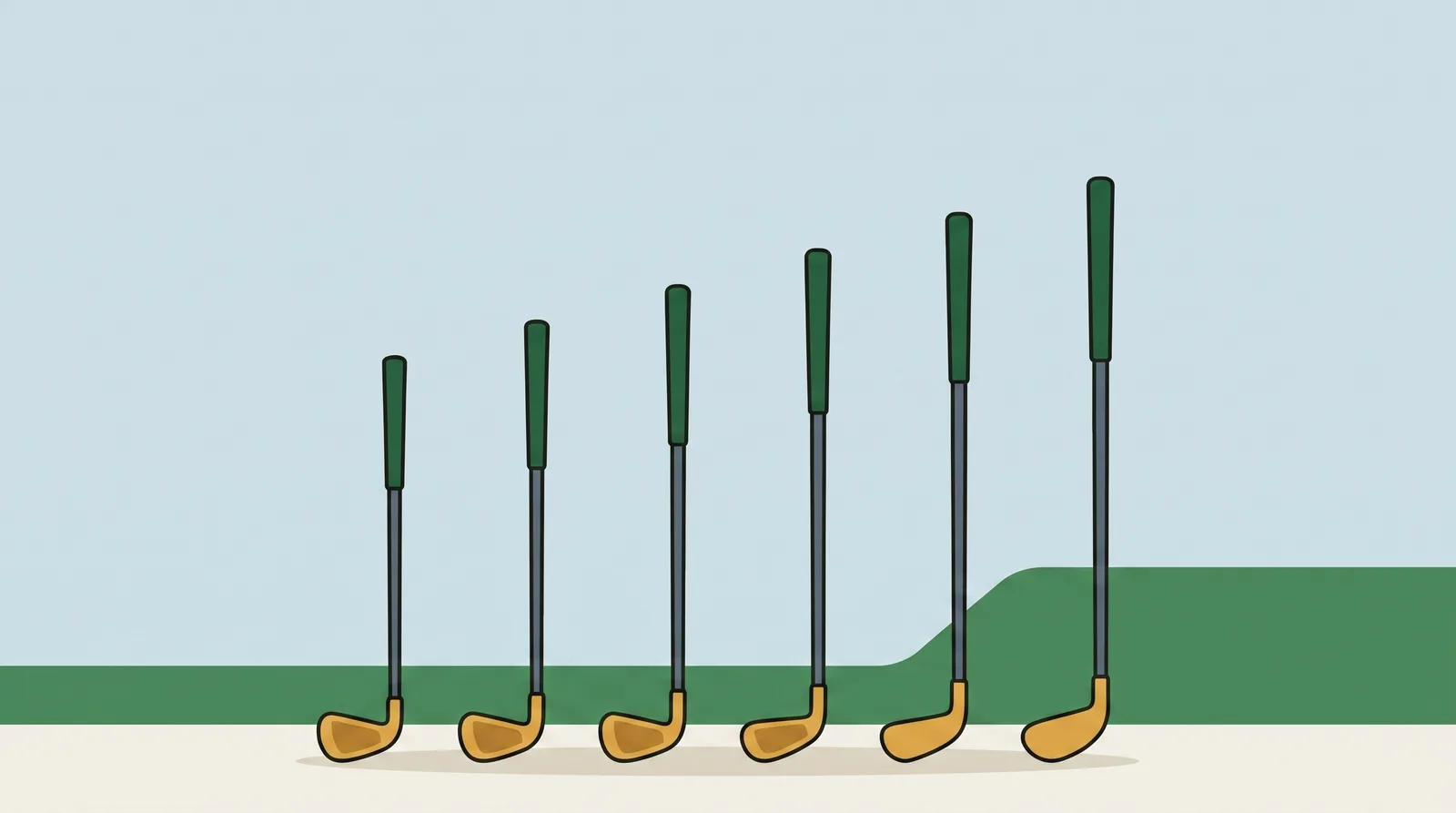
Most junior golf advice starts with the wrong question. It asks what age to start, which nobody can answer, instead of what the child is holding, which decides almost everything. A child swinging a club that is too heavy learns a compensation, and the compensation outlives the club. This page covers sizing, session structure and the formats that keep children playing.
Equipment first, because it decides everything else
An adult golf club weighs what it weighs because an adult swings it. The head is a fixed mass, the shaft is built to a target weight, and the whole assembly is balanced for a swing that produces adult speed. A child cannot accelerate that assembly, so they do the only thing available: they heave it with the arms and the upper body, they hang back on the trail foot to get it airborne, and they learn a swing that only works with a club that is too heavy for them.
Junior equipment is not a scaled-down toy. It is a different weight class, with lighter heads, dramatically lighter shafts and thinner grips, and the difference in what a child can do with one is not subtle.
Sizing is by height. U.S. Kids Golf, which makes the most widely used junior sets, fits by player height rather than by age, and publishes eleven height bands running from 36 inches to 69 inches. It also gives a clean marker for graduating: once a player's driver swing speed reaches 90 mph or more, they are ready for adult equipment.
| Child's height | Set to look for | What matters most |
|---|---|---|
| 36 to 45 inches | Smallest junior bands, three or four clubs | Total weight. Anything they cannot swing freely is too heavy |
| 45 to 54 inches | Mid junior bands, five or six clubs | Grip diameter, so the fingers can actually close |
| 54 to 63 inches | Upper junior bands, six to eight clubs | Shaft weight, which is where junior sets differ most from adult |
| 63 to 69 inches | Top junior band or a light adult build | Swing speed decides. Height alone stops being enough here |
Measure the height, buy the band, and expect to replace it. Children grow through a band roughly every twelve to eighteen months, which is annoying and is also why the used and trade-in market for junior sets is so active.
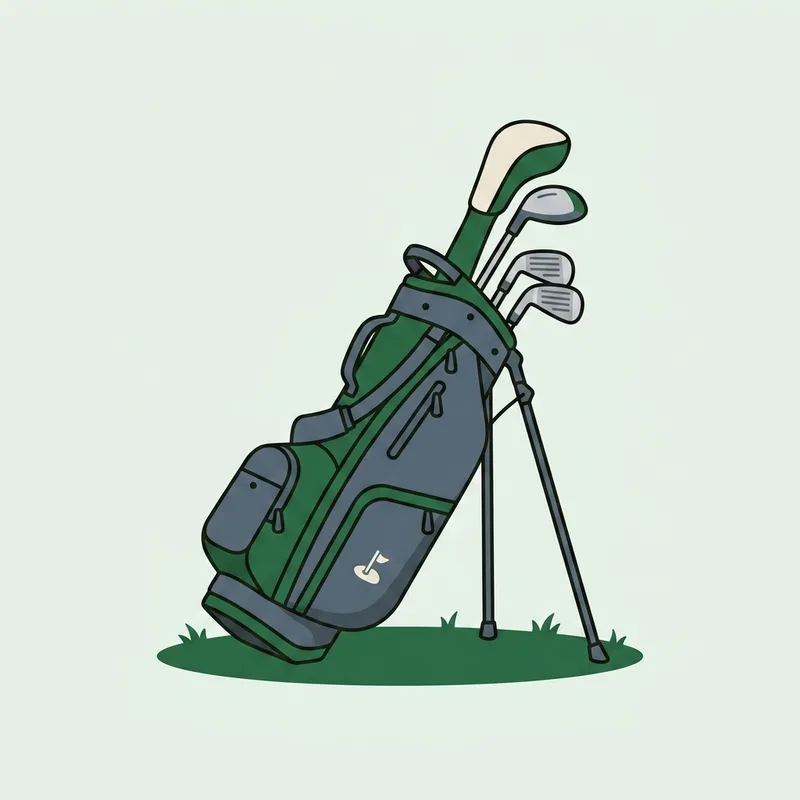
A child needs three or four clubs, not a set. Something to hit off the tee, a mid iron, a wedge and a putter covers every shot on a course. The reasoning is identical to the argument in our guide to what clubs a beginner needs, only more so: fewer clubs means faster decisions, a lighter bag they can carry themselves, and no clubs they cannot hit sitting there to be reached for.
Starting age, and why nobody can tell you
There is no governing body that publishes a minimum age for golf, and no equipment maker that fits by age. That is not an oversight. It is because height, coordination and interest vary so widely between children of the same age that the number carries almost no information.
The practical answer is that a child can start whenever they can swing a properly sized club without straining, which for most is somewhere in the range where a junior set fits them at all. Whether they should is a different question, and it is answered by whether they ask to go again.
Session length, and the rule that matters most
The single most useful piece of junior coaching advice is not about technique. It is to stop before they want to.
Thirty to forty-five minutes is a working default for a first year, split into short blocks rather than run as one continuous activity. A session that ends with a child asking for ten more minutes produces a child who wants to come back. A session that runs until they are bored produces the opposite, and it takes several good sessions to undo one long one.
Structure the time rather than filling it. Three blocks of twelve minutes with a target and a score in each will hold attention far longer than thirty-six minutes of hitting balls, because each block has an ending.
Practice at home fills the gaps well, and it is where most junior progress actually happens because it is unsupervised and low-stakes. A putting mat in a hallway costs very little and gets used far more than a range membership. Our guides to practising golf at home and our picks in best putting mats cover the setups worth the money.
Change the format, not the technique
The reason children lose interest in golf is almost never the swing. It is that eighteen holes of stroke play is a four-hour test with no feedback until the end, designed for adults, and it is a genuinely poor format for a beginner of any age.
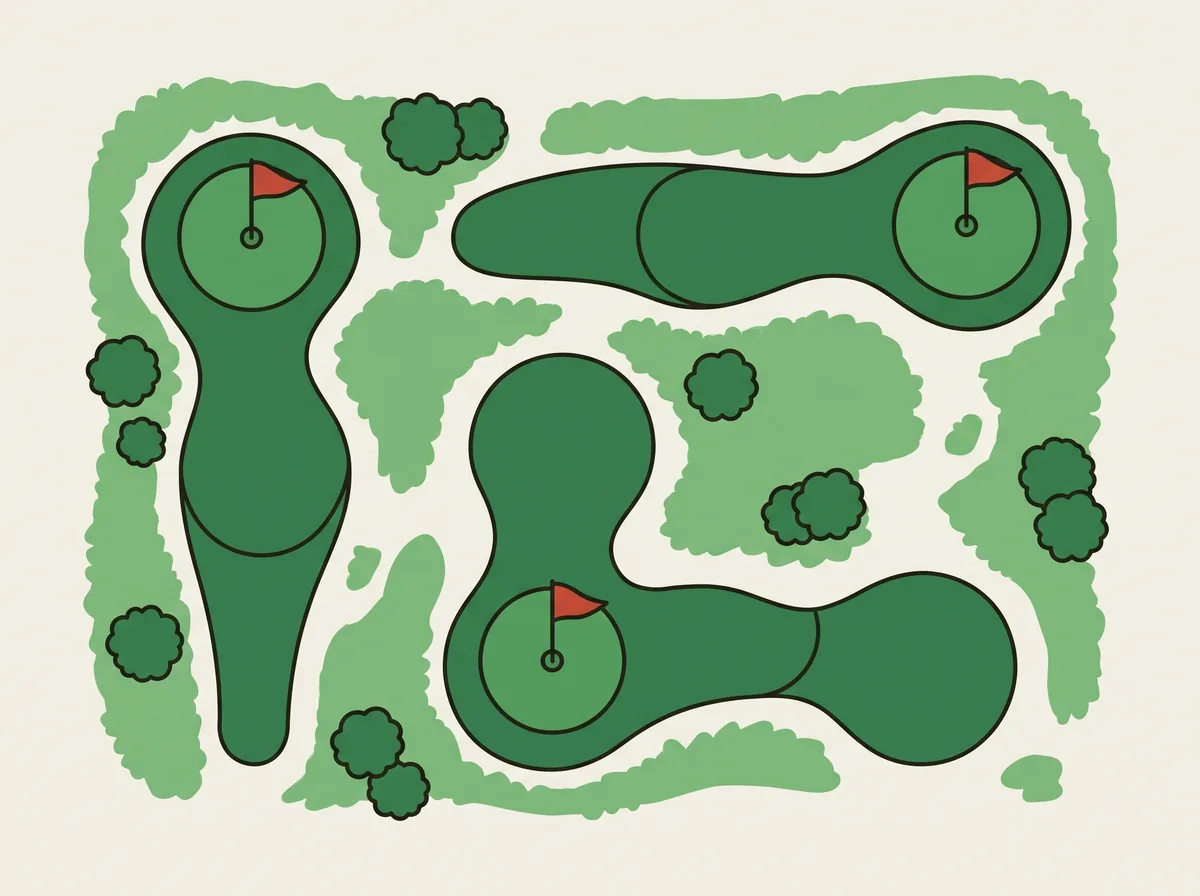
Change the game instead. Every one of these is legal in a social round and every one shortens the gap between action and result.
- Play from wherever you like. Tee it up in the fairway, in the rough, anywhere. The rules can arrive later.
- Set a maximum score per hole, usually double par. Pick up when it is reached and move on.
- Play three or six holes, not nine or eighteen. Finish while it is still fun.
- Start on the green and work backwards: putt first, then chip, then the approach, then the tee shot.
- Play scramble with an adult. Both hit, play the better ball, and the child gets to play from good positions.
- Score points for outcomes rather than strokes: on the green, past the flag, out of the bunker first time.
Point five is the one that changes the most. A child who only ever plays their own ball spends most of the round hitting from places that are hard for an adult, which is the opposite of how anyone learns anything.
Coaching, etiquette and the parts to leave alone
Grip is worth getting right early, because it is the one fundamental that becomes genuinely hard to change later and it costs nothing to establish now. Everything else can wait. Our how to grip a golf club guide covers what to check, and the only junior-specific note is that a grip too thick for the hand forces a palm hold no instruction will fix.
Beyond that, resist coaching. Children learn golf swings the way they learn most movements, by attempting them repeatedly with a clear target and not much commentary. A parent who supplies three swing thoughts per shot produces a child who thinks about swings instead of targets.
Etiquette is the part worth teaching early, and it is easier for children than for adults because none of it is embarrassing yet. Where to stand, staying quiet, raking a bunker and repairing a pitchmark are five-minute lessons that make a child welcome anywhere. Our golf etiquette guide has the full list, and the safety points are the ones to be firm about.
A word on cost, since junior sets get replaced often. A child's first year is genuinely cheap if you buy used and play municipal courses, and our breakdown of what golf costs has the US numbers. Many courses run junior rates that are a fraction of the adult green fee, and many ranges do not charge for children at all.
If the child wants the full picture of the game rather than the junior version, our complete beginner guide works for a twelve-year-old as well as it does for an adult. Nothing in it needs translating.
Key takeaways
- Size junior clubs by height, not age. U.S. Kids Golf publishes eleven height bands from 36 to 69 inches.
- Cut-down adult clubs are worse than no clubs: stiffer, head-heavy, and with a grip too fat for small hands.
- Three or four clubs is a full junior bag. Nothing is gained by more.
- 90 mph of driver clubhead speed is the marker for moving to adult equipment.
- No governing body publishes a starting age, and nobody who names one can support it.
- Thirty to forty-five minutes, and stop while they still want more.
- Change the format rather than the technique: three holes, a maximum score, tee it up anywhere, play scramble with an adult.
- Establish the grip, then coach very little. Give them a target and a score instead.
Common questions
What age should a child start playing golf?
There is no evidence-backed answer, which is why no governing body publishes one and no manufacturer fits by age. A child can start when a properly sized club is available to them and they want to. Interest is a better signal than any birthday.
How do I size golf clubs for a child?
By height. U.S. Kids Golf fits across eleven bands from 36 to 69 inches, and most other junior makers use a similar system. Measure the child in their shoes, buy the band, and expect to move up roughly every twelve to eighteen months.
Can I just cut down old adult clubs for my kid?
It is the worst common option. Shortening a shaft makes it substantially stiffer, the adult head mass stays at the end so the club feels heavy rather than light, and the grip is still sized for an adult hand. A cheap junior set beats a cut-down adult set decisively.
How many clubs does a junior golfer need?
Three or four. Something off the tee, a mid iron, a wedge and a putter cover every shot on a golf course. A lighter bag they can carry themselves is worth more to a child than the clubs you would add to it.
How long should a kid's golf practice session be?
Thirty to forty-five minutes in the first year, broken into short blocks with a score in each. End the session while they still want more. One session that runs too long undoes several good ones.
When is a child ready for adult golf clubs?
U.S. Kids Golf puts the marker at a driver clubhead speed of 90 mph or above. Height alone stops being a reliable guide in the top junior bands, because two children of the same height can swing at very different speeds.
How do I keep a child interested in golf?
Change the format rather than the technique. Play three holes instead of eighteen, cap the score at double par, let them tee it up anywhere, and play scramble alongside them so they hit from good positions. All of it is fine in a social round.
Should my child have golf lessons?
Group junior sessions are usually better value and better fun than one-to-one at the start, because children learn a lot from copying each other. One-to-one becomes worthwhile when there is a specific fault to fix, and then the coach should make one change and stop.
What should I actually teach my child about the golf swing?
The grip, and then very little else. Children calibrate against outcomes faster than they process instruction, so supply a target and a score and let the swing organise itself. A parent giving three swing thoughts a shot creates a child who thinks about swings instead of targets.
Is golf expensive for children?
Less than most parents expect. Junior green fees are often a fraction of the adult rate, plenty of ranges do not charge for children, and junior sets have an active used and trade-in market precisely because everyone outgrows them.
When can a child start playing on a real golf course?
As soon as they can get round without holding people up, which is usually a question of pace rather than ability. Start with a quiet weekday evening, play three or six holes, and go out with one adult rather than a full group.
Tom Ashworth
Tom Ashworth is a PGA Professional who has taught golf since 2012, working mainly with beginners and mid-handicappers at club level in Surrey. He reviews the instruction guides on Learn Golf for technical accuracy before they publish.
Most of his teaching is with players in their first three years of the game, and most arrive having been told too much: six swing thoughts collected from videos, half of them contradicting each other. His approach is to check the grip and the alignment before touching the swing, on the basis that most bad ball flight is decided at address.