Nothing confuses a new golfer faster than being told there is one golf swing and then watching a professional do something visibly different with a driver than with a wedge. The motion really is the same. What changes is where the ball sits and how long the club is, and those two things do the rest by themselves. This guide covers what genuinely differs, what only appears to, and the handful of shots that really are a different action.
Left and right assume a right-handed golfer.
The numbers do differ, and that is the confusing part
Measure a tour player with a driver and then with a 6 iron and you get two clearly different sets of numbers. That is what makes golfers think there are two swings.
TrackMan's page on attack angle, the up or down movement of the club head through impact, reports a PGA Tour driver average of minus 0.9 degrees against minus 3.7 degrees with a 6 iron. On the LPGA Tour the driver figure is plus 2.8 degrees, meaning the club is genuinely travelling upward at the ball, against minus 2.3 degrees with the 6 iron.
| Club | PGA Tour attack angle | LPGA Tour attack angle |
|---|---|---|
| Driver | minus 0.9 degrees | plus 2.8 degrees |
| 6 iron | minus 3.7 degrees | minus 2.3 degrees |
Source: TrackMan, on the page linked above.
Club speed differs too. TrackMan's club speed page puts the PGA Tour driver average at 115 mph and the 6 iron at 94 mph, with LPGA figures of 96 mph and 80 mph. So a professional swings a driver roughly 20 mph faster than a mid iron.
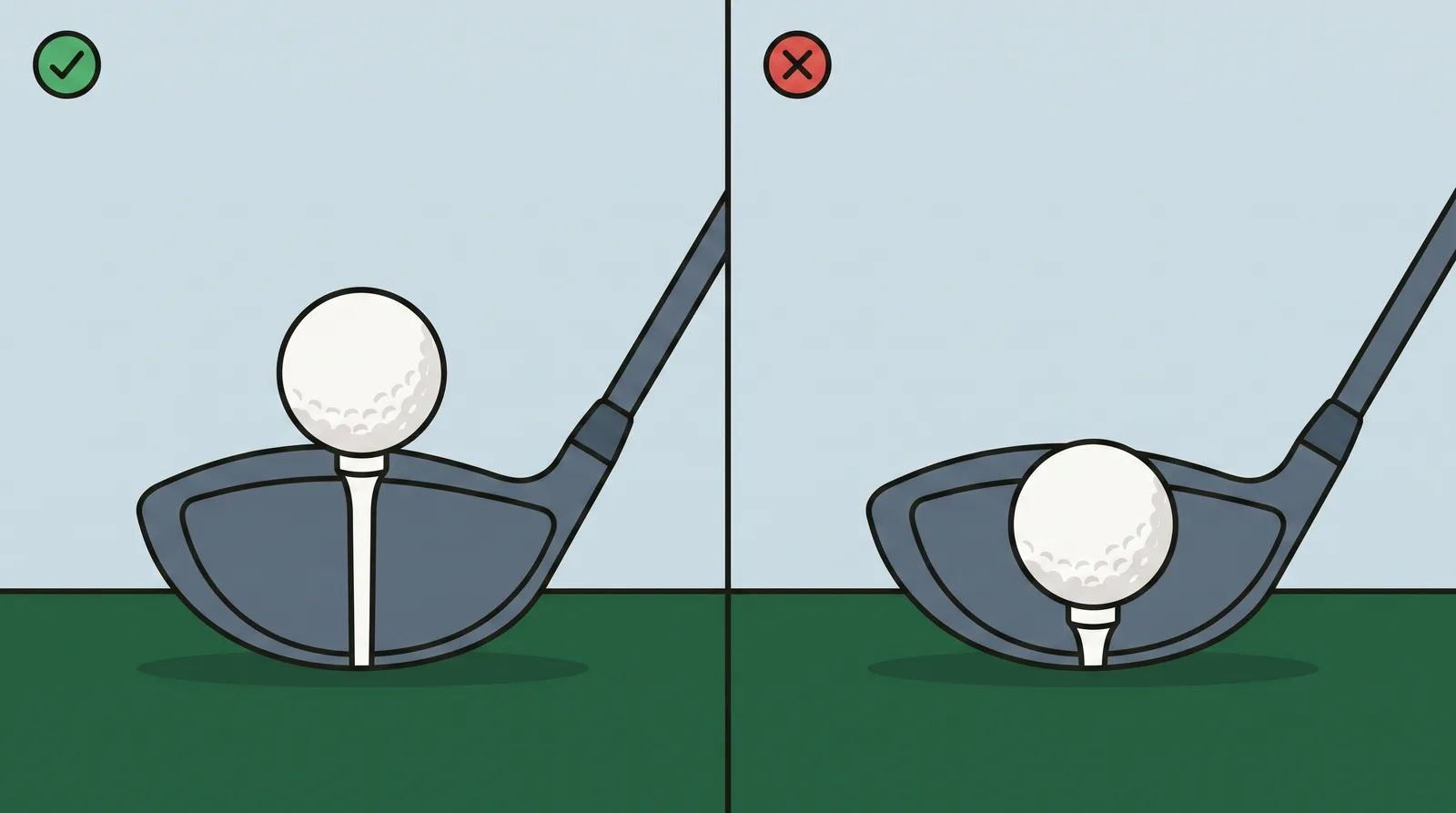
Here is the part that matters. None of those differences require a different motion. A longer club has a longer arc, so the head travels further in the same time, which is more speed for the same effort. A ball teed forward of the low point is met on the way up. A ball sitting on turf behind the low point is met on the way down. Same swing, different geometry.
What actually changes, club to club
Five things, and every one of them happens before the club moves.
| What changes | Driver | Mid iron | Wedge |
|---|---|---|---|
| Ball position | Inside the lead heel | Around the middle, slightly forward | Middle |
| Stance width | Widest, roughly shoulder width | Slightly narrower | Narrowest |
| Where the ball sits | On a tee | On the turf | On the turf |
| Swing plane | Flattest, because the shaft is longest | In between | Most upright |
| Where the club bottoms out | Behind the ball | After the ball | After the ball |
Ball position does most of the work, which is why it is the single most useful thing a beginner can get right. The full club-by-club version is in golf ball position.
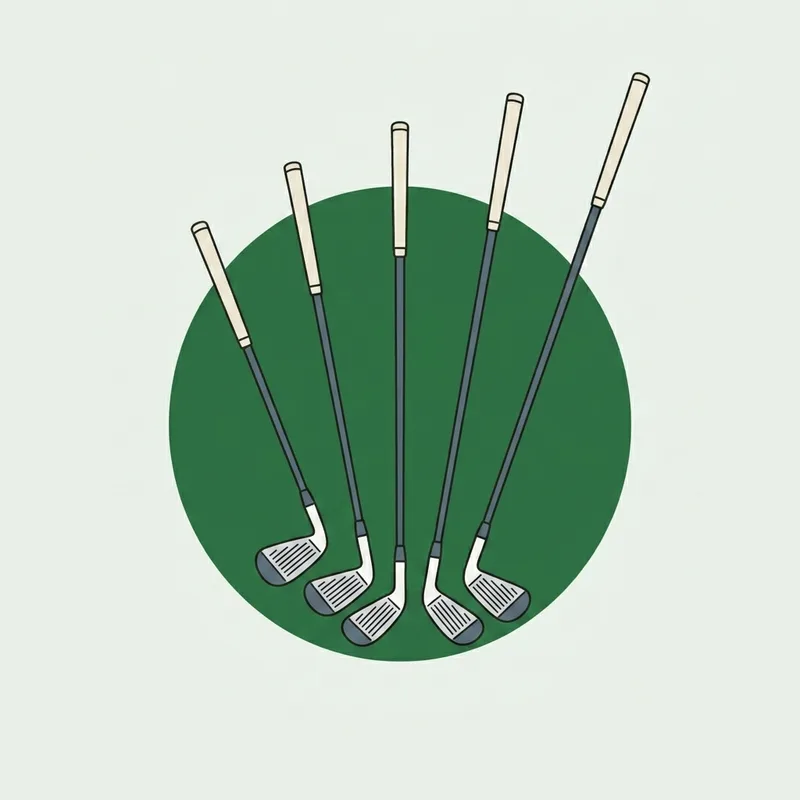
Shaft length does the rest. A driver is the longest club in the bag, so you stand further from the ball and the shaft sits at a shallower angle to the ground. A wedge is the shortest, so you stand closer and the shaft is more upright. Your body has not changed anything. The club has forced a different plane on you and you have simply gone along with it. The way the set is built to do this is covered in golf club types explained.
What does not change
The list is much longer and much more important, and it is the reason the one-swing idea survives.
Grip stays the same. Posture stays the same, allowing for the fact that a longer club moves you further from the ball. The takeaway is the same. The sequence is the same: pressure into the lead side, pelvis, torso, arms, club, in that order, whatever is in your hands. Tempo is the same, and golfers who speed up for a driver are the ones who find the toe with it.
That last one is worth sitting with. Almost every amateur who says the driver is a different swing has made it one by swinging it harder. The club is already longer and already faster. Adding effort on top produces a worse strike with more speed, which is a net loss. The specifics of setting up to a driver are in how to hit a driver, and the descending strike an iron needs is in how to hit irons.
Where the swing genuinely is different
Being honest about the exceptions is what makes the rule useful. Four shots are not a scaled version of the full swing, and treating them as one is a common source of frustration.
The greenside bunker shot is the clearest case. The club is aimed to strike the sand rather than the ball, the face is held open, and the divot is the shot. That is a genuinely different action, set out in how to hit out of a bunker.
Chipping and pitching are the second. They are shorter and quieter, with less wrist and much less body, and they are governed by distance control rather than power. The technique is its own thing rather than a small full swing, which is why how to pitch a golf ball reads nothing like this page.
The flop shot and the low punch are the other two. Both deliberately change the loft the club presents, one by adding it at setup and one by taking it away. They are specialist shots that borrow the full swing's sequence and alter the delivery on purpose.
Is the driver a different swing? Coaches disagree
This is a genuine split in teaching, and it is worth knowing which side an instructor is on before you pay them.
One camp treats the driver as a distinct motion, taught separately, on the grounds that hitting up on a ball off a tee is a different task from compressing one off turf. The other treats it as the same swing with a different setup, on the grounds that teaching two motions doubles what a golfer has to maintain and gives them two things to lose.
Our view is that it is one swing with a different setup, for most golfers, most of the time. The exception is worth naming: a golfer whose driver is consistently struck low on the face despite a correct tee height and ball position often does need a separate feeling for it, usually more tilt away from the target at address. That is one adjustment, not a second swing.
The drill that proves it to you
How to practise a set, not a club
Most amateurs practise one or two clubs and hope the rest follow. That is how a bag ends up with two reliable clubs and twelve strangers in it.
Rotate through the bag every session rather than grooving one club. Change club every three balls, which also stops you from settling into a rhythm the golf course will never give you. And measure what each one actually does rather than what it should do, because the gaps between clubs matter more than the numbers themselves. That side of it is in the golf club distance chart.
The setup is where the whole idea lives or dies, so it is worth being fussy about. A stance that is the same width for every club will make a driver feel unstable and a wedge feel clumsy, and the golfer will fix it by changing their swing instead. The reference positions are in golf stance.
Key takeaways
- There is one golf swing. Ball position, stance width and shaft length produce the differences.
- TrackMan reports PGA Tour attack angle at minus 0.9 degrees with a driver and minus 3.7 degrees with a 6 iron.
- LPGA Tour drivers average plus 2.8 degrees, so the club really is rising at the ball.
- A longer club produces more speed for the same effort because the arc is longer, not because the swing is harder.
- Grip, posture, takeaway, sequence and tempo do not change between clubs.
- Irons get airborne because the club descends and the loft works, not because you lift them.
- Bunker shots, chipping, pitching, flops and punches genuinely are different actions.
- Whether the driver deserves separate teaching is contested. One swing with a different setup is the safer default.
- Practise by rotating clubs every three balls rather than grooving one.
Common questions
Do you swing every golf club the same way?
Essentially yes. The grip, posture, takeaway, sequence and tempo stay the same for every full shot. What changes is where the ball sits in your stance, how wide your feet are, and how long the club is, and those three things create the differences you can see on video without you having to do anything differently.
Why do you hit up on a driver and down on an iron?
Because of where the ball is. A driver ball is teed and positioned forward, past the point where the swing bottoms out, so the club is already rising when it arrives. An iron ball sits on the turf behind that point, so the club is still descending. The swing arc is the same shape in both cases.
Should my stance be wider for a driver?
Yes, roughly shoulder width, narrowing as the clubs get shorter. A wider base supports a longer, faster swing and a narrower one lets you rotate more freely on a shorter shot. It is a setup change, not a swing change, and it is one of the few adjustments genuinely worth making by club.
Is a driver swing different from an iron swing?
Coaches genuinely disagree. The mainstream position, and the one this page takes, is that it is the same swing with a different setup, because teaching two motions gives a golfer twice as much to lose. Some instructors teach the driver separately, and their case is strongest for a golfer who consistently strikes low on the face despite a correct tee height.
Why do I hit my irons well but not my driver?
Usually because the driver is being swung harder rather than differently. It is already the longest and fastest club in the bag, so adding effort mostly costs you the centre of the face. Check the tee height and the ball position first, then hit twenty drivers at the tempo you use for a 7 iron and compare.
Does the swing plane change with different clubs?
It does, and you do not have to do anything to make it happen. A longer shaft sits at a shallower angle to the ground and puts you further from the ball, so the club swings on a flatter plane. A wedge does the opposite. The club changes the plane, not the golfer.
How far back should the ball be for a wedge?
Around the middle of the stance for a standard full wedge, moving slightly back for a lower flight and slightly forward for a higher one. What matters more than the exact spot is that it sits behind the point where your swing bottoms out, so the club can strike the ball before the ground.
Do I need a different tempo for different clubs?
No, and this is the most common accidental change. Golfers speed up for long clubs and slow down for wedges without noticing, which is why the driver finds the toe and the wedge comes up short. One tempo across the bag is a genuine skill and it is worth practising deliberately.
Is chipping just a small golf swing?
No. Chipping and pitching use much less body, far less wrist and a completely different set of priorities, with distance control replacing power. Treating them as scaled-down full swings is one of the reasons short games stall, and they are worth learning as their own technique.
Why do professionals look different with each club?
Because the geometry differs and the camera catches it. The shaft is at a different angle, the plane is flatter or steeper, and the strike is rising or descending. Watch the same player's transition and sequence across clubs and you will see the same motion every time.
How many swings do I actually need to learn?
Two, plus a putting stroke. The full swing covers every shot from a wedge to a driver, and the short-game action covers chips and pitches. Bunker shots and specialist shots are variations on those two rather than new ones, which means the answer is far fewer than a bag of fourteen clubs suggests.

Tom Ashworth
Tom Ashworth is a PGA Professional who has taught golf since 2012, working mainly with beginners and mid-handicappers at club level in Surrey. He reviews the instruction guides on Learn Golf for technical accuracy before they publish.
Most of his teaching is with players in their first three years of the game, and most arrive having been told too much: six swing thoughts collected from videos, half of them contradicting each other. His approach is to check the grip and the alignment before touching the swing, on the basis that most bad ball flight is decided at address.